Personalized Learning: How To Apply It And Why Each Child Deserves It
reviewed by Jo-ann Caballes
Updated on November 21, 2025

When we’re talking about education in 2026, a one-size-fits-all approach is no longer an option. Personalized learning is the new trend, as it honors the unique style and pace of each student.
I am a professional tutor, and in this article, I will help you understand the meaning of personalized learning, explore its best examples, and explain how to apply it in your own teaching.
Key Points
- Personalized learning definition means a teaching method that allows educators to adjust how they teach based on the child’s specific needs and goals.
- Personalized learning helps students achieve higher test scores, retain information longer, and develop stronger problem-solving skills, according to research.
- Brighterly, a math and reading platform for children in grades 1–9, is one of the most affordable options on the market to use this teaching mode.
What is personalized learning?
Personalized learning is a teaching method that allows educators to adjust their approaches to the individual needs and preferences of each student.
Specifically, with this method, each kid gets a customized plan based on their learning needs, gaps, preferences, and style. All that, however, has to be aligned with the school’s standards and follow the state’s guidelines.
Here’s what Shenella Karunaratne, a Licensed Professional Counselor, said when we asked her to define personalized learning:
“Kids come with many differing styles and preferences for how they learn.”


How does personalized learning work?
Personalized learning in K-12 education works by adapting lesson plans, teaching approaches, and pace to students’ needs. It offers support in specific knowledge gaps and encourages children to focus on their own skills rather than blindly following standardized benchmarks. Personalized learning experiences include technology, AI, adapted assessments, and teacher guidance.
Now, to the question of how does personalized learning affect student achievement?
Note: Personalized learning strategies are vital when it comes to achieving higher test scores, retaining information longer, and developing stronger problem-solving skills, according to research.
What does a personalized learning curriculum include?
A personalized learning curriculum helps children with specific areas of improvement and is designed around their goals, needs, and interests. Here’s how it would look in real life.
Let’s say a student struggles with fractions. Instead of moving forward with the rest of the class, personalized education allows them to spend extra time on targeted exercises and progress at their own pace. Lessons would also include interactive activities, real-world applications, and even some gamification. Teachers also provide positive reinforcement, feedback, and instruction adjustments.
The goal, of course, is to make learning meaningful and provide value, showing kids that they are capable of dealing with what might have seemed like an undoable task.
Key components of personalized learning plans
- Individual learning: adapted to the children’s goals and corresponds with the students’ interests.
- Students’ voice: students are welcome to voice their opinions and impact the learning journey by selecting topics and projects.
- Adaptive lessons: lessons are adjusted to the kids’ learning styles and their pace to promote better progress.
- Feedback and reflection: teachers share their feedback to help students self-reflect and encourage them to make progress and celebrate achievements.
Personalized learning with Brighterly
At this point, you might think that personalized learning is an unachievable goal for a traditional classroom. While some K-12 American schools have successfully integrated some level of personalized learning, this is not a universal trend. Implementation depends on district resources, leadership, and strategy.
Online learning platforms have more space to integrate personalized learning. Brighterly math and reading platform, for one, is among them.
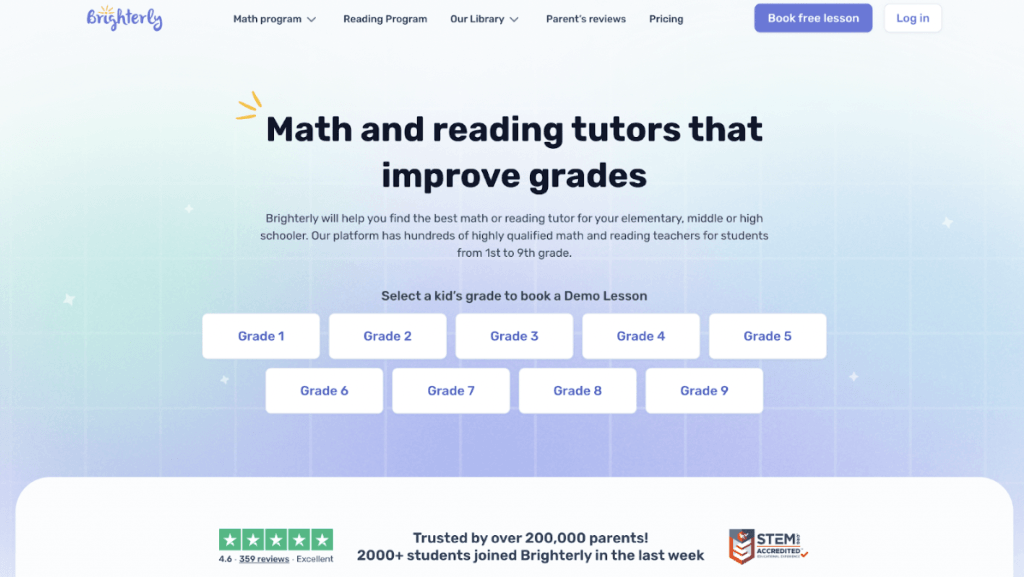
This e-learning service connects K-9 students with professional tutors. It offers one-on-one customized lessons adapted to the children’s needs and goals. With an excellent score on Trustpilot (check out the Brighterly reviews here!), Brighterly is one of the most promising tutoring options on the market.
Let’s explore why I think Brighterly is a perfect choice for personalized learning for teens and elementary students.
Brighterly’s personalized approach to learning + best features
- 1:1 online lessons that promote personalized learning paths
- Personalized curriculum for every child
- Free educational resources
1:1 online lessons that promote personalized learning paths
Brighterly offers one-to-one tutoring sessions for math and reading in grades 1–9, and each student gets undivided attention from tutors. Instead of forming groups, the platform operates on an individual basis and implements personalized learning in each plan, giving kids the ability to focus on their needs, ask questions, and improve their skills in the most effective way.
Personalized curriculum for every child
The Brighterly’s personalized reading learning, and math lessons are fully customized. The platform supports and implements principles of personalized learning and adapts its teaching techniques to each student. All while being 100% aligned with the school standards.
Note: The school-aligned curriculum means that the program follows the grade-level US requirements, and the progress made at home with a tutor directly translates into performance in school.
Free educational resources
Good reading and math worksheets aren’t that easy to find, but this is not the case with Brighterly. On their website, you can get free sheets in PDF format. No signup or credit card needed — download and practice math and reading skills anytime.
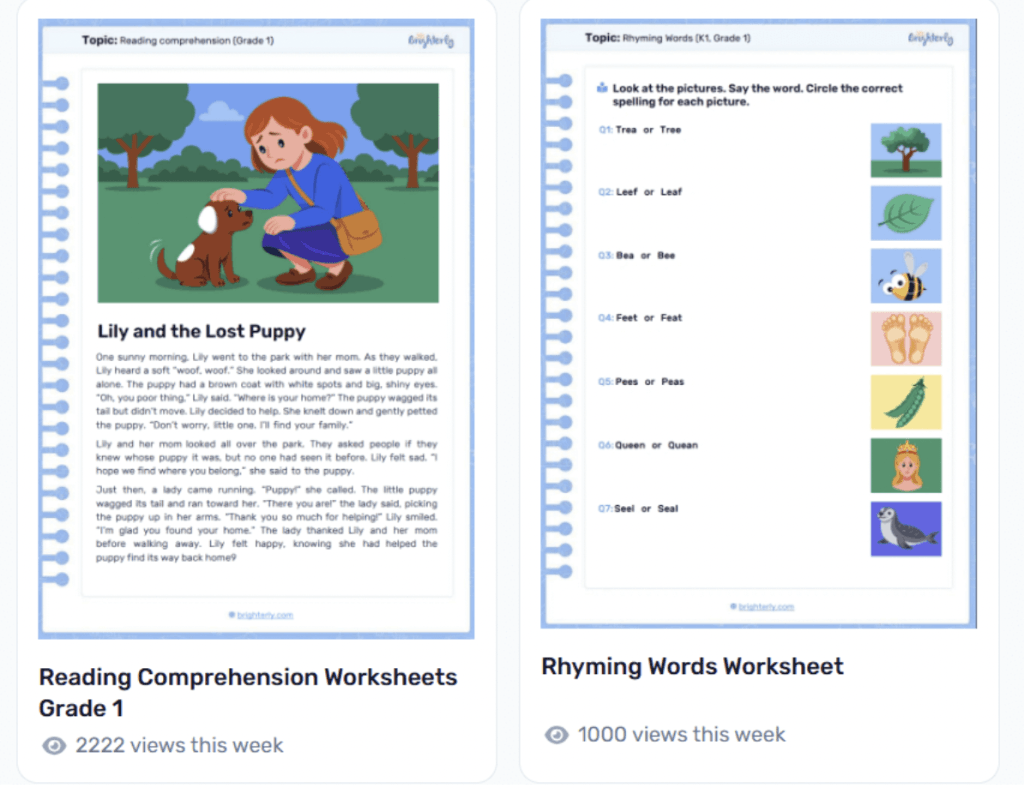
In addition to math and reading worksheets, your child can be tested on Brighterly with free tests that let you assess their current skill level. All you need to do is go to the Library tab on the website and tap on Math or Reading tests. They all take under 5 minutes.


Why is personalized learning important?
Personalized learning is important because it allows children to work on their unique needs and skills that require improvement. Personalized teaching helps them progress at their own pace, build stronger foundations, improve engagement, and enhance long-term retention.
Note: The first ideas of individualized instruction spread across the U.S. in the 1960s. However, the term “personalized learning” became mainstream in the American education policy and classroom practice only in the 2010s.
Benefits of personalized learning
- Better school performance
- Fits the child’s individual needs
- Lowered dropout rate
- Better student-teacher cooperation
- Education becomes student-centered
Better school performance
When students are introduced to a study process that accounts for their personalized learning goals and preferences, they feel more responsible and engaged. This is not something surprising — kids are more inclined to content that resonates with them, leading to greater mastery and higher scores.
Here’s what Jen Jones, renowned educator and literacy expert, has to say about it:
“As an educator for over 30 years, I have seen how personalized learning affects achievement.”

Fits the child’s individual needs
As I’ve mentioned before, traditional learning may not account for each child’s specific characteristics. And when teachers take the stage, guiding children strictly, without adjusting their methods, learning can become difficult. In the end, it’s not strange that some of the kids fail along the way.
Personalized learning for kids is different — it flips the narrative by allowing children to take lead roles and boost skills they need the most help with.
Lowered dropout rate
As kids become more engaged in the subject, they are less likely to fail during their tests and drop out. They also have more chances to successfully enter their college or university. It’s a win-win combo.
There’s an example: research shows that a smaller, more personalized high school environment (like “schools-within-schools”) correlates with higher attendance and lower dropout rates.
Better student-teacher cooperation
A personalized approach is also referred to as individualized learning. And individualized learning means better student-teacher cooperation.
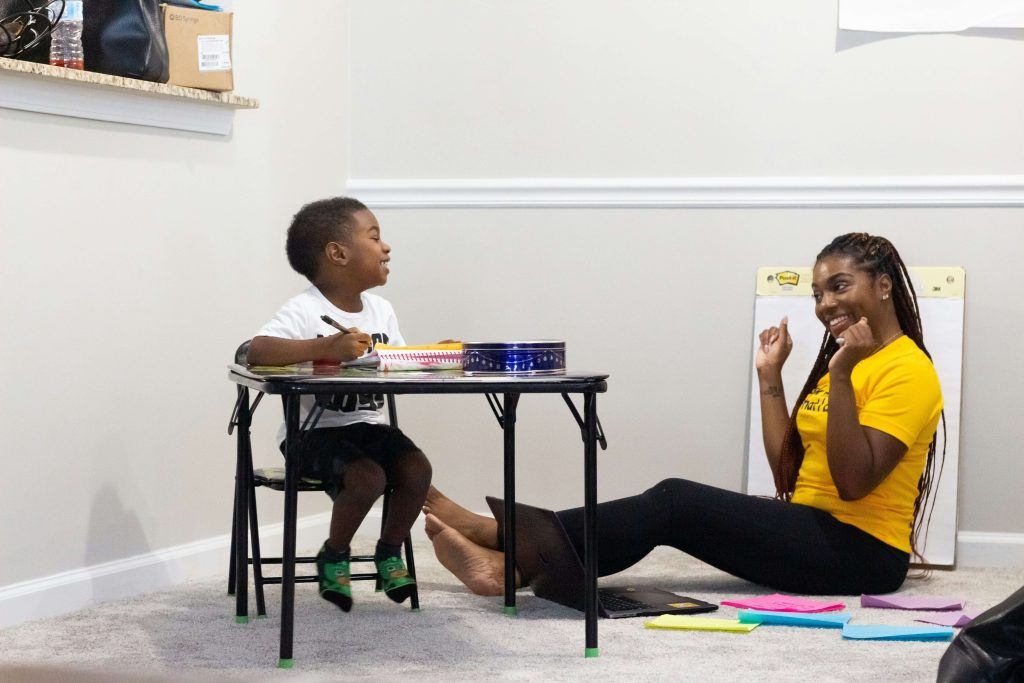
The trick with a personalized learning curriculum is that it’s where teachers actually start understanding their students and vice versa. As they build stronger bonds, the two become friends. Eventually, it’s more fun and productive to learn a subject with a friend than with some solemn, distant adult, agree?
Education becomes student-centered
This methodology allows students to choose their preferred learning style and follow it. The teacher is only meant to support and guide them.
At the same time, traditional grades aren’t the primary goal of personalized learning. Instead, the value gained moves to the forefront.
What are personalized learning strategies?
Personalized learning strategies are how teachers teach and the methods they use to ensure that the methodology is utilized. They include flexible pacing, small-group instruction, adaptive tasks and assessments, student choice, and targeted support for closing skill gaps.
The main goal of personalized learning is to help kids stay engaged, confident, and achieve stronger outcomes. Personalized learning in math, for example, does so by introducing concepts gradually and adapting plans to each child’s unique math skill gaps.
Examples of personalized learning strategies
Let’s go over two examples of how personalized learning plays out in real life.
Imagine there’s a fourth-grade math class. If several students struggle with long division, here’s what a teacher would do:
- They create two groups. The first group practice division with visual aids and step-by-step guidance. The second group solves multi-step word problems with attention when needed.
- Students receive targeted support until they’re confident enough to move on and master the next concepts.
Naturally, this approach is not executed perfectly in schools — teachers still have to manage large classes, limited time, and standardized testing requirements.
Another example is an online one-on-one class. Imagine a child who is advanced in geometry but struggles with fractions.
- The tutor spends 15 minutes helping the child practice geometry to keep the skills sharp.
- The rest of the time is spent on practicing fractions and concepts related to them.
- The difficulty of each question is adapted to the child’s needs.
- A personalized homework is created to help the child reinforce skills.
Conclusion: Why personalized learning matters for your child
Personalized learning is gaining traction these days, and for a good reason. It promises a more individualized approach, student-centered studying, and better knowledge acquisition. And it tackles those tasks quite successfully. Obviously, personalized learning examples will become must-follows for anyone who wants to account for their kid’s preferences, pace, and style.
Are you one of this kind? Then don’t hesitate to book free lesson with Brighterly!



Parents choose to homeschool for different reasons — flexibility, customized learning, access to high-quality education regardless of the location, or children with special needs. No matter the reason why you’re homeschooling, you have a common need with all the other parents teaching at home — high-quality homeschooling resources for parents. In this article, we’ll outline […]

Sep 18, 2024

Math is a challenging subject, so even the best students can face some academic difficulties here and there. However, the proper elementary and middle school math intervention can help seal your kid’s potential knowledge gaps, developing a strong math foundation. Let’s find out how effective interventions are and what strategies you can use to ensure […]
Oct 01, 2024
Math & reading from 1st to 9th grade
Looking for homework support for your child?
Choose kid's grade

Math & Reading for Grades 1–9
Build real confidence for your child with a Brighterly math or reading tutor.