Pros and Cons of Homeschooling: Full Parent Guide 2026
reviewed by Jo-ann Caballes
Updated on July 13, 2026
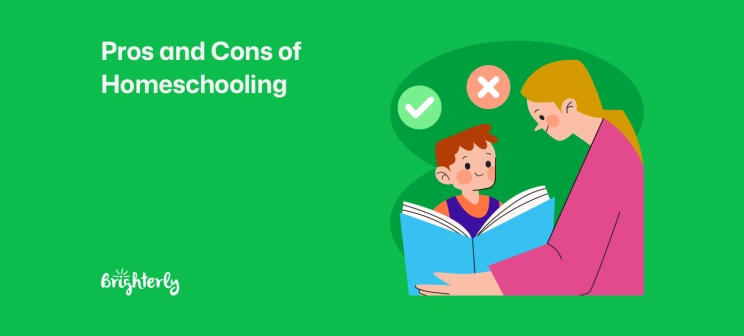
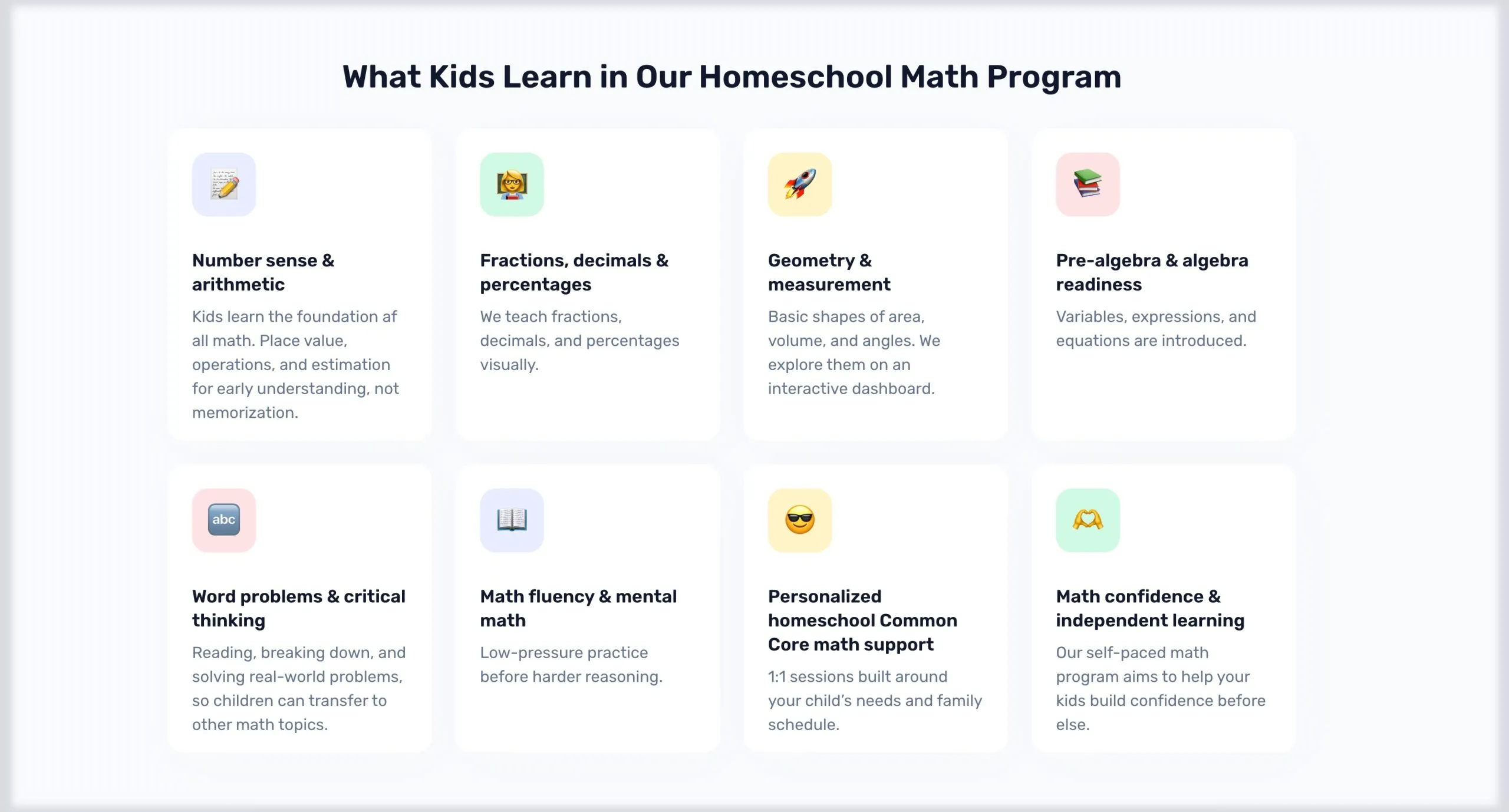
Key Points: Choosing how to educate your child is one of the biggest decisions a parent can make. Rising numbers of parents are looking towards less traditional forms of education. Before deciding on alternative education for your child(ren), take a look at the homeschooling pros and cons, common challenges, and how to overcome them. Homeschooling, defined by the NHERI as any “parent-controlled, home-based, privately funded education” has many pros and cons. Flexibility, individualized learning, and improved academic performance (home-educated students typically score 15-25 percentile points higher on standardized testing than public-school students) are commonly cited as key upsides, with financial commitment, parental responsibility, and stress as the major downsides. Claire Law, MBACP (Accd.), Registered Integrative Psychotherapist, university counselor, and mental health expert, shares her thoughts on homeschooling: “I know how vital a nurturing learning environment is for kids. Many parents nowadays are considering homeschooling for the first time.” Explore Brighterly Learning Experience Learn exactly how Brighterly helps students thrive through expert sessions, online tools, and proven feedback from thousands of satisfied parents Homeschooling allows you to tailor your child’s entire learning experience to their needs, strengths, and goals. You can progress through the homeschool curriculum at your kids’ speed and dive deeper into their special interests. A personalized learning curriculum also allows you to match lessons to your child’s learning style, whether visual, hands-on, or discussion-based. Note: If you need help, the Brighterly homeschool math program and homeschool reading program offer 1:1 tutoring customized to your family’s preferences. Unlike traditional schools, our tutors prepare an individualized learning plan and materials that support your homeschooling efforts without compromising your teaching philosophy. You can book a free lesson to test our program.
See where your child stands today
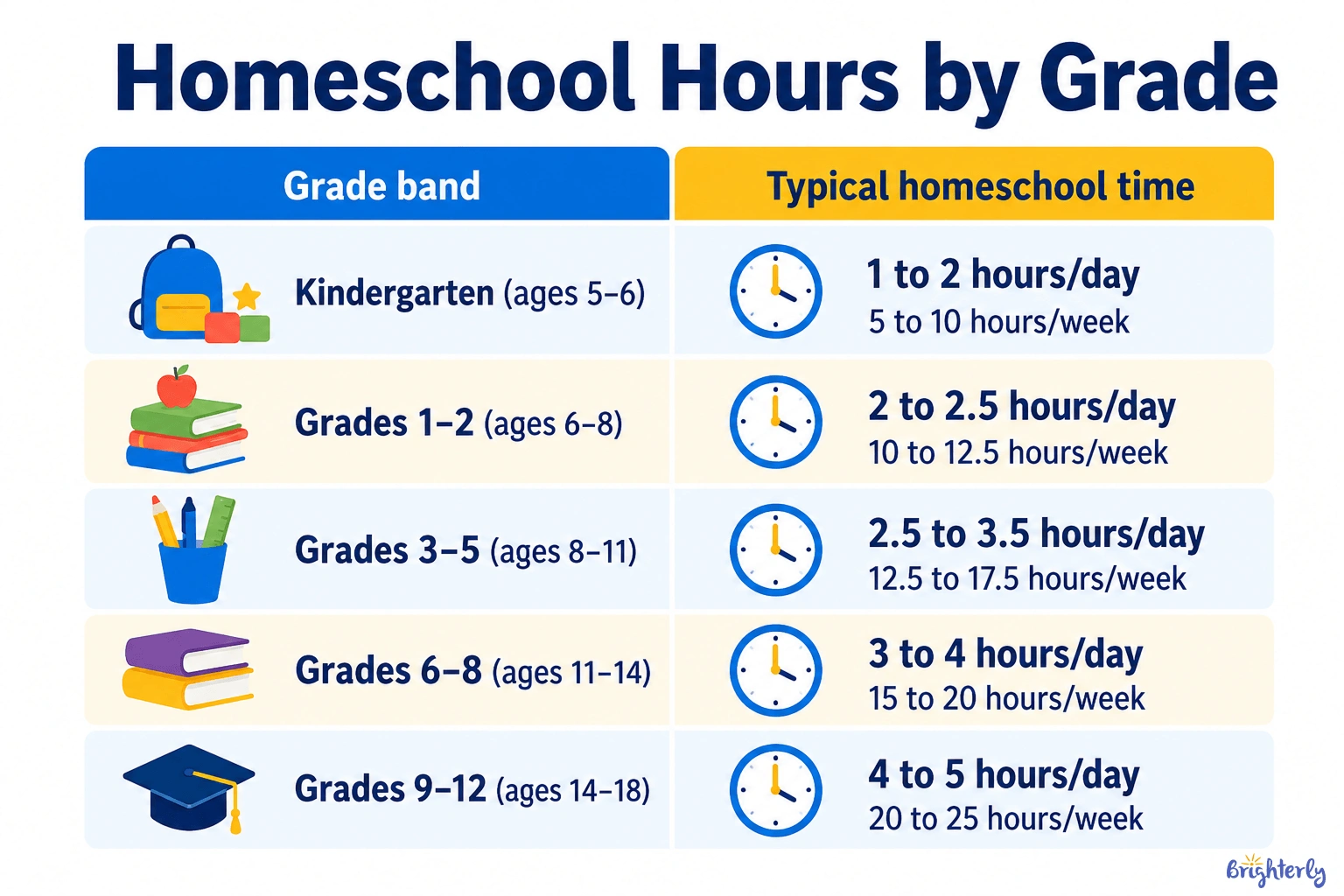
A free assessment shows exactly which math and reading skills need attention One of the key benefits of homeschooling is how much time it allows families to spend together. EBSCO shows that many families choose home education to align education with shared family values and beliefs. Home-ed can lead to strong parent-child relationships and enable more meaningful daily interactions. Instead of limited interaction after school, families can create a positive learning environment and spend more time together creating memories and sharing experiences. Homeschooling gives you the opportunity to create a safe, supportive learning environment, especially for kids who have experienced bullying, anxiety, school-refusal, or burnout. According to the National Center for Education Statistics, 19.2% of students aged 12-18 experienced bullying in the 2021-2022 school year, which can negatively affect a child’s mental health and academic progress. Parents also find they can introduce their children to concepts and values on their own timeline, not that of the child’s peers. One of the biggest benefits of home schooling is that homeschooled students often perform better academically. According to a 2026 NHERI article, 62% of academic studies found significant advances in the academic achievement of homeschooled students compared to peers. Small group environments enables self-paced learning, allowing children to build strong foundations. Homeschooling can be particularly useful for gifted kids, enabling them to work at the level of their ability rather than their age. One of the many advantages of homeschooling is that parents can tailor both the curriculum and the learning environment to their child’s needs. Parents and tutors can work with a child on a 1-to-1 basis, providing them with more attention and resources than a traditional school can and tailoring the environment to their needs. Note: Our online math tutors and reading tutors are trained to work with students with special educational needs and can help you customize homeschooling to their specific condition and requirements. One of the major perks of homeschooling is that it gives families full control over their schedule, allowing them to fit learning around their lifestyle. Some homeschooling families even travel full-time, opting for roadschooling. Learning on the go can be incredibly effective and rewarding. Studying history in the places it took place, learning about geography amongst natural wonders, and immersing yourself in a second language bring education to life, helping to create a deep love of learning. Looking at the advantages and disadvantages of homeschooling, child-led learning often features at the top of parents’ lists. Every child has unique interests, strengths, and challenges and homeschooling allows for child-first learning. Studies can be designed around interests rather than the one-size-fits-all approach of traditional schooling. Within your state’s guidelines, you can prioritize topics your child is passionate about, integrate real-life experiences, and adjust goals as their interests evolve. Some families choose to homeschool because it allows their child to devote more time to extracurricular interests. For children who are gifted at a sport or activity, it can be easier to manage training schedules, classes, and travel while homeschooling. Homeschooling options are continuously evolving, with many more families choosing to utilize some form of online education every year. Whether that’s 1-to-1 tutors or signing up for an online school, parents can choose the best fit for their kids. When parents ask themselves, ‘Why is homeschooling better?’ they often find that the ability to mix education with real-world experiences is near the top of their list. Trips to museums to learn about art, nature walks to observe ecosystems, and observing food production in real life, can spark passion and cement learning. Many parents also mix life skills in with home education. Kids have time to help around the family home, volunteer in the community, or even start their own business, giving them skills often overlooked by traditional schools that teach resilience, independence, and other skills vital for adult life. When looking at homeschool pros and cons, many parents highly value the ability to teach through their worldview. History and science lessons can reflect the parents’ perspective and religion, and families can discuss sensitive topics in a private setting. Parents get to decide which concepts to teach their children and when. They also find that children are often able to avoid external pressures to conform to specific ideologies or behaviors from peers. When considering home schooling pros and cons, one of the first questions families ask is “How much does homeschooling cost?“ Thankfully, in 2026, many states offer financial support to help homeschooling families offset the costs. Several states now offer direct funding through Education Savings Accounts (ESAs) or refundable tax credits. No, federal tax credits for homeschooling do not currently exist. However, some states offer state-level tax benefits or education savings programs that can help homeschooling families. With this, you can claim thousands of dollars back to cover educational expenses like tutors, online curricula, and supplies. Looking at the pros and cons of home schooling, parental time commitment is often the biggest setback. According to homeschooling statistics from NSLDA 2024, families spend 2-3 hours/day on instruction, without counting lesson preparation or any external activities. Jeff Blum, a part-time K-12 tutor at LA Tutors 123, highlights the importance of planning your homeschooling journey: “The transition to homeschooling doesn't have to be painful or difficult, but it does require some planning.” While emergencies and unexpected events will happen during the school year, it is generally significantly easier to transition over the summer rather than mid-semester. Grade requirements are a good baseline for understanding what parents need to cover, but they should not be the only factor in considering what will be taught during homeschooling. If your child is high-achieving, you probably want to aim to cover more material than simply the baseline grade requirements. Solution: Try to start homeschooling at the beginning of the school year. This gives you time to research and choose tutors, curricula, and resources. Cost is one of the downsides of homeschooling. While it’s difficult to gauge exactly how much families spend on homeschooling, the Great Homeschool Conventions estimated the annual cost of homeschooling to be between $700 to $1,800 (as of May 2026), while Connections Academy estimated costs to be between $500 to $2,500 a year. Solution: Reduce costs by using cost-effective homeschooling resources, borrowing materials from libraries, and supplementing your efforts with an online tutor instead of a full homeschool curriculum. Homeschooled children can have fewer opportunities to socialize. In 2024, Dr. Monique Winnett, a licensed clinical psychologist at St. Joseph’s Health in Syracuse, highlighted that homeschooling can lead to socialization problems if parents don’t put enough effort into taking advantage of available opportunities. Solution: Enroll your child in a homeschool co-op, sports clubs, or community activities to provide regular social interactions. Using tutors can give your child a wider range of learning experiences. Homeschooling adds parental pressure as the responsibility for your child’s education falls entirely on you. Amanda Schenkenberger, homeschooled as a kid and now a homeschool coach, weighs in on the pros and cons of being homeschooled: “Choosing to homeschool is a big decision for everyone involved. It isn’t just an educational shift; it’s a lifestyle shift.” Solution: Make sure both parents and kids are on the same page and follow a schedule that fits your lifestyle and your child’s needs. Co-ops can help share responsibility and knowledge, while private tutoring can help relieve parental pressure and support your child’s learning goals, especially in areas that are difficult to teach.
Does homeschool math feel hard? You’re not alone
Book a free 1:1 lesson and see how a tutor lightens the load.
When talking about homeschooling advantages and disadvantages, it’s important to note that homeschooling can limit access to educational resources, such as science labs, AP courses, and sports programs. These resources require dedicated facilities and certified instructors that are difficult for parents to replicate at home. Solution: Fill in gaps by using community college classes, local sports leagues, homeschool co-ops, and online programs with advanced subjects. With so many different homeschooling schools of thought, parents can find it hard to know what to follow. In 2026, the Johns Hopkins Homeschool Research Lab found that 88% of homeschooling parents use educational support and resources (compared to 44% of parents overall ), including microschools, co-ops, online courses, or hiring a tutor. Solution: Use state guidelines to guide the basis of your curriculum before adding extra courses. Consider speaking to other homeschooling families in the area to get a good understanding of what is required before making a decision. Public School Homeschool Learning Pace Fixed by the school requirements Personalized for the child The Number Of Students For One Teacher 20–30 students One-on-one Schedule Usually around 8:00 AM – 3:00 PM Absolutely flexible Curriculum Standardized Personalized/Interest-led (must meet state guidelines) Homeschooling may be a better option when: Public school may be a better option when: Every parent wants what’s best for their kid, which is why deciding how to educate your child can be such a difficult decision. Homeschooling offers families many benefits, from flexible timetables to customized curricula. As a result, more and more families are choosing to opt out of traditional schooling and take their children’s education into their own hands. However, parents need to be aware of the drawbacks, including parental time commitment, stress, and financial expenditure. Taking time to plan and investing in resources, like Brighterly 1-to-1 tutors, can help parents overcome the disadvantages and successfully implement homeschooling into their lives. In 2026, homeschooling is legal in all 50 US states and DC, as confirmed by the Home School Legal Defense Association (HSLDA). However, each state sets its own rules and requirements for notifications, curriculum, parent qualifications, and assessment, so you need to review the specific laws of your state before getting started. State-level information is available on the HSLDA website. If you’re weighing up the pros and cons to homeschooling and trying to decide if it is a good fit for your family, then ask yourself these questions first. Firstly, do you have the time, resources, and space to give your child an enriching homeschooling experience? If yes, what is it you’re hoping homeschooling will offer that public schooling doesn’t, and lastly does your child want to be homeschooled? The answer to these should help you determine if it’s the right fit for your kid. According to 2026 NHERI data, homeschooled children go to college at the same, or higher rate, than their conventionally educated peers. The NHERI also notes that while at college, homeschoolers perform, or outperform the general public. Yes, you can still homeschool if you work full time but whether it’s practical or not will depend on your individual family set-up. As long as you meet your state’s legal requirements for homeschooling then there is no limit on how much parents can work. Realistically though, it can be difficult to manage both full time work and homeschooling. However, many families make it work by working remotely, working flexible hours, or by using co-ops, online tutors or online school. Common mistakes that new homeschooling parents make include underestimating the time required, lacking a clear plan, and not enlisting enough support. Jenn Sutherland Miller, a homeschool consultant, spoke to Business Insider and highlighted that many new parents spend a lot of money on resources. Alternatively, she suggests that parents focus on investing more in areas they struggle with rather than in an entire curriculum and enlisting family, friends, co-ops or other homeschoolers to help. Yes, homeschooling can be a strong option for children with ADHD or special needs. Many educational platforms offer a special homeschool curriculum for ADHD and special educational needs. Children with ADHD can really benefit from the personalized and flexible approach that homeschooling offers, making it a popular choice for many parents of children with SEN. In certain states, the government allots between $7,000 and $10,000 per student for educational expenses through ESA (Education Savings Account) programs. The exact details will vary state-by-state, but an ESA allows parents to spend money on things that are necessary to educate their child within certain limitations. Generally speaking, ESA funds can be used to finance private tutoring, education materials, and educational therapies, although parents should check exactly what their state guidelines say first. The top pick among the online math tutoring services depends on your learning needs. Brighterly gets you a 1:1 personalized online math & reading tutor, while services like Princeton Review and Learner help with test prep. The guide compares the 9 best online math tutoring services based on their price, focus, features, and pros and […] May 01, 2024 SAT is a unified test colleges and universities use to assess students’ skills and decide if they are qualified enough to enter. The examination includes testing of core writing and reading skills along with math proficiency, and it’s where most students stumble. But indeed, each applicant can prepare for what is expected. All they need […] May 14, 2024
What Are the Pros and Cons of Homeschooling?
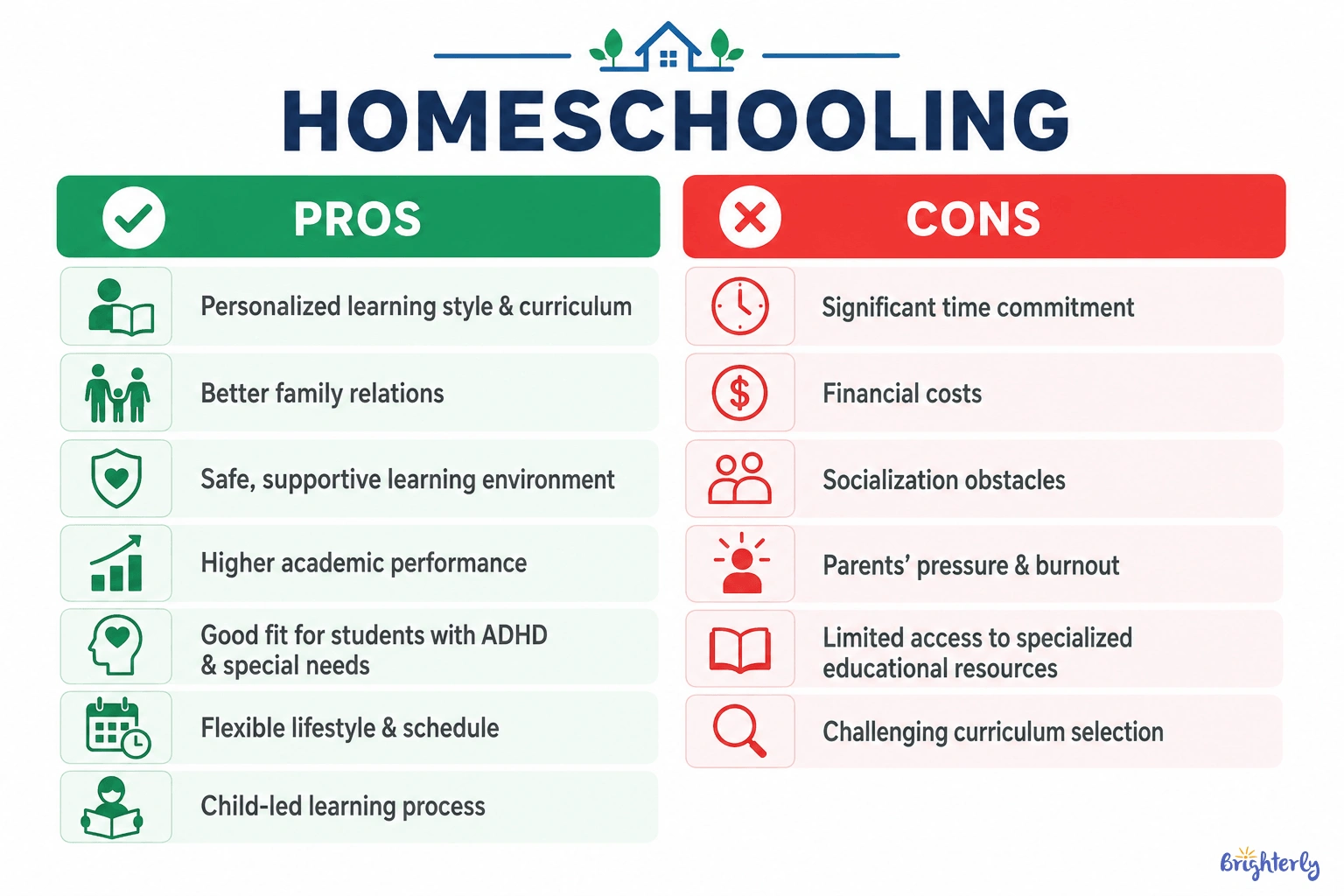


10 Pros of Homeschooling
Personalized Curriculum and Learning Style


Stronger Family Bonds
Safer Learning Environment and Better Mental Health
Stronger Academic Results
Ideal for Students with Special Educational Needs
Flexible Schedule and Lifestyle
Child-Led Learning
Extracurricular Activities and Sports
Real-World Experience
Teaching Through Personal Worldview and Values
Financial Benefits of Homeschooling
What States Pay Families to Homeschool?
Do Homeschool Parents Get a Tax Break?
ESA Programs, 529 Plans, and Homeschooling Funding Options
6 Cons of Homeschooling
Time Commitment for Parents

Financial Cost of Homeschooling
Socialization Challenges
Parental Pressure and Risk of Burnout

Limited Access to Specialized Resources
Curriculum Selection Challenges
Public School vs Homeschooling: Key Differences
When Homeschooling May Be Better
When Public School May Be a Better Fit
How Long Does Homeschool Take Per Day?
Conclusion
Frequently Asked Questions
Is Homeschooling Legal in All States?
Is Homeschooling Right for Your Child?
Can Homeschooled Students Go to College?
Can You Homeschool If You Work Full Time?
What Are the Biggest Mistakes New Homeschooling Parents Make?
Is Homeschooling Good for Children with ADHD or Special Needs?
What Is the “$10,000 to Homeschool” Parents Ask About?





Math & reading from 1st to 12th grade
Looking for homework support for your child?

Choose kid's grade

Math & Reading for Grades 1–12
Build real confidence for your child with a Brighterly math or reading tutor.