Counting Games for Kids to Build Early Math Confidence
reviewed by Rachelle Bencio Yu
Updated on July 23, 2026
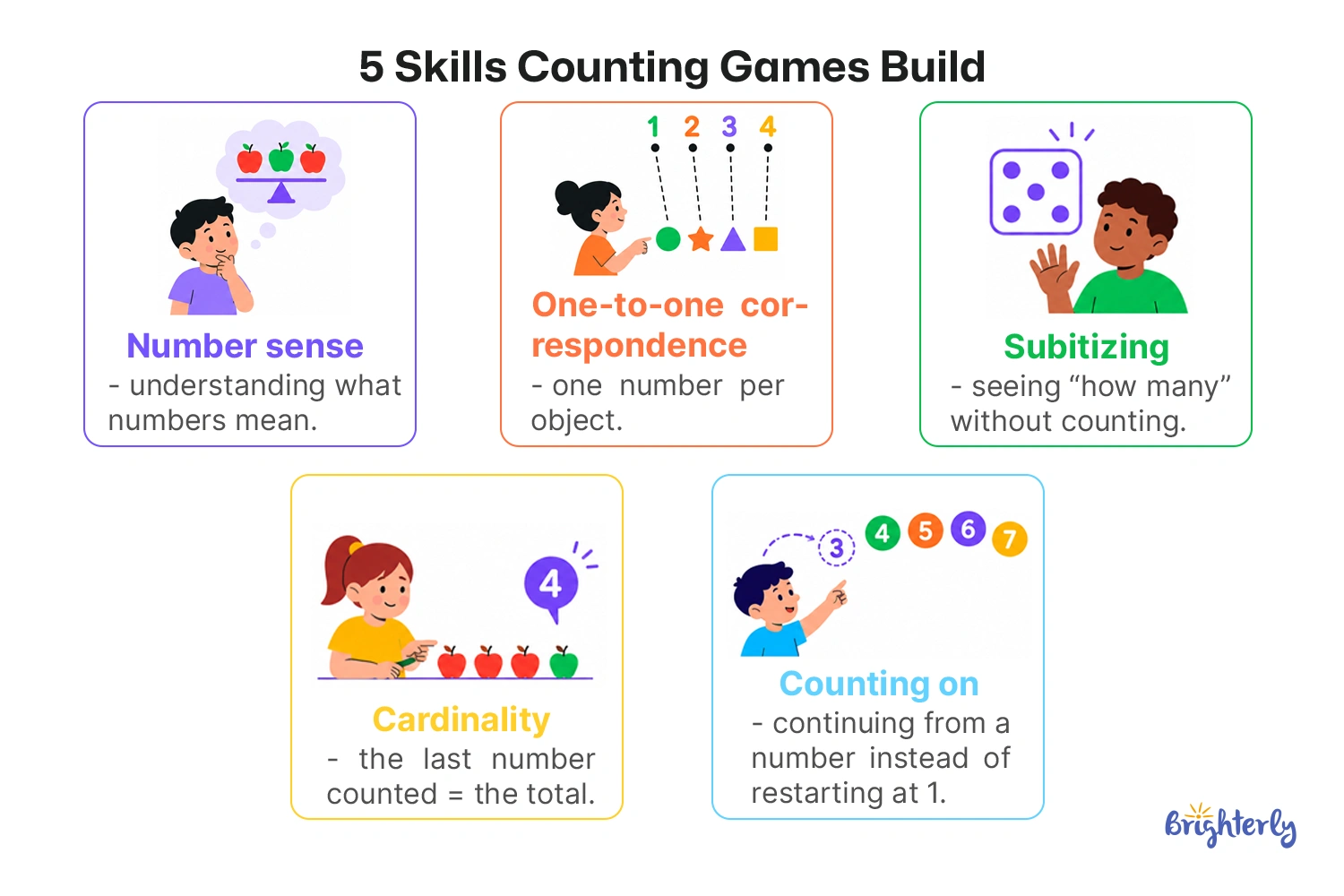
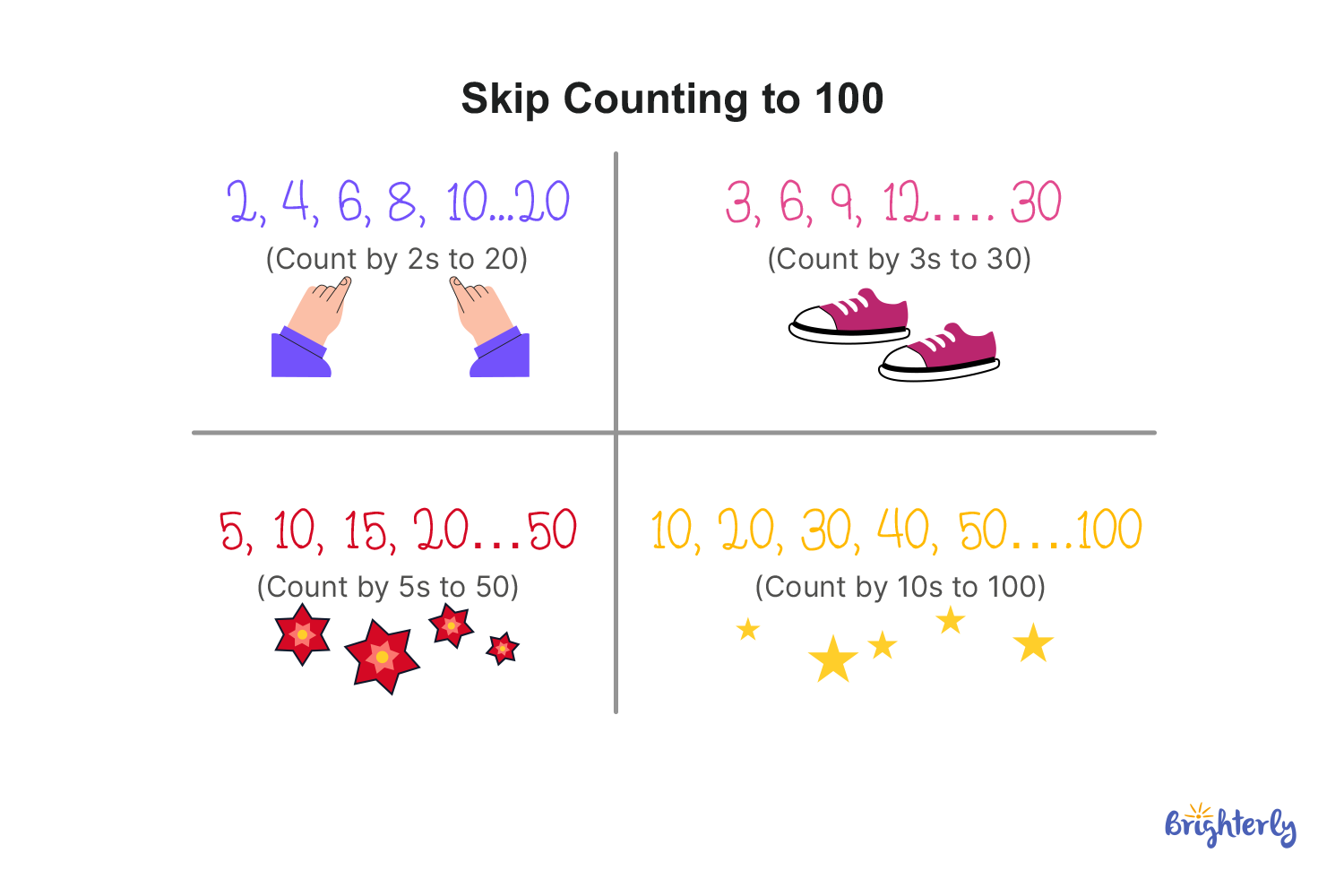
Key Points Multiple counting games for kids make learning fun and exciting, while helping improve math confidence. For example, using food items to learn counting while going outdoors, counting various things that come nearby, or playing fun games with cars and flower pots are enjoyable ways to teach math to young children. Let’s discuss more hands-on indoor and outdoor counting games for children by age in detail. Children of all ages can learn counting with everyday objects and fun games, including Bingo, dice board games, card games, and others. Age Counting Skills Recommended Games Counting Games for Toddlers (Ages 2-3) Pointing to objects and rote counting from 1 to 5. Finger counting, counting toys, and listening to counting nursery rhymes, like Five Little Monkeys. Counting Games for Preschoolers (Ages 3-4) Counting from 1 to 10, number recognition, and one-to-one correspondence. Block counting, snack counting, card counting game, and object or number matching. Counting Games for Kindergarten and Grade 1 (Ages 5-7) Count to 100, early skip counting, cardinality and subitizing. Counting money games, skip counting games, math card games, bingo and dice board games.
Not sure where to start with math?
See where your child stands with a quick, free check-in. Explore Brighterly Learning Experience Learn exactly how Brighterly helps students thrive through expert sessions, online tools, and proven feedback from thousands of satisfied parents Arithmetic works as a building block to develop a child’s basic math skills (Devlin, Moeller, Sella, & Education, 2022). The easiest and most fun way to study arithmetic is to start by learning to count with hands-on games, like different counting activities. Beanbag number toss is one of the fun counting games for toddlers and preschool children that helps teach number sense. To play and set up this game, you will need a beanbag, some paper, tape, a pair of scissors, and a marker. Like the UNO card game, you will have to cut out ten big cards and draw numbers from 1 to 10 individually on each card. Then paste a small piece of tape on the back of each card. Stick each card on the floor where you will play the game with a two- or three-step space between each card. To play the game, say a number out loud and ask your child to throw the beanbag on that card, or ask your child to say that particular number when you toss the beanbag to a card. You can modify the game differently as your child’s learning progresses. Counting walk is another great counting game for kindergarten math that requires no extra preparation or setup. It’s about asking your child to count objects when you go outside. Whenever you plan an outdoor trip with your child, assign an everyday object and ask them to count it. For example, ask your child to count the number of dogs on the street, the number of buses that pass by, or the number of shops that come across your walk. Snack-time counting is a counting game for kids that helps your child to eat healthy and learn counting simultaneously. Pick your child’s favorite plus healthy snacks, like chocolate, whole-grain cereals, grapes, apple peanut butter slices, fruit skewers, or others, and count them in total. Eat a few of those snacks with your child and then ask them how many are left. Then eat a few more and ask your child again to count how many are left. Note: Snack-time counting is also a fun way to teach addition to kids by counting and adding snack items. Parking lot number match is an exciting number recognition game for kids who love cars. You will need 20 toy cars, cardboard to draw parking lots, and number stickers to paste on each car. Start by drawing a parking lot on the cardboard and then number each lot from 1 to 20 with a marker. Paste number stickers on each toy car from 1 to 20. Ask your kid to place and match each car in the parking lot according to their numbers. This counting game is great for kids who are learning number recognition and developing early math skills. You will need at least 10 to 20 bottle or jar caps to play this game. Start by numbering each bottle cap from 1 to 10 or 1 to 20. Then take a paper and draw cap circles and number each circle like you did on the bottle cap. Ask your child to place and match each cap on the paper, having similar numbers. To play this game, you will need flower pots and several flower sticks. Mark numbers on each flower pot and line up the pots in a row. Say out any pot number and ask your kid to place the number of sticks in that specific pot. You can play multiple counting songs and rhymes for your kids, like five/ten little ducks or monkey’s, one potato, two potatoes, the ants go marching, and ten little buses, several times a day and sing along with them. Note: Learning from video songs and rhymes helps children improve their collaboration, communication, and critical thinking skills (Su Sinn & Ku Wing, 2026). For those in search of further counting ideas, our learning platform offers entertaining counting games, free worksheets, assessments, and personalized 1:1 tutoring. Whether you are looking for 1st grade math worksheets or elementary math support, a wide range of resources can help support your child’s learning. Different websites and apps offer free counting games online, like Brighterly worksheets, Khan Academy Kids, Starfall, and Splash Learn. These websites have thousands of playful activities, videos, and books that allow fun learning at your child’s own pace.
Looking for experts to build your child's math skills?
Take a free demo to learn more about personalized math tutoring.
Counting to 10 games help toddlers learn counting with a variety of objects, like household or food items, outdoor stuff, or others. Other counting to 10 activities can include building a tower of ten blocks, drawing 10 objects and then counting them, or purchasing various counting toy games, like an abacus, counting puzzles, a card counting game, or others. Counting to 20 games are great for preschool children or toddlers who excel in counting to 10. Counting to 20 games include number games, like counting daily objects, counting picture objects on worksheets, pasting 20 objects on paper, or playing games, like counting walks, counting money games, and parking lot number matches. Counting to 100 games are for older children in kindergarten or grade 1 and onwards. Kids may require parents’ help to play these games and learn counting to 100. Counting to 100 games can include: Kids can start playing counting games from as early as 2 to 3 years of age. As they grow older, from 4 to 5 years, you can level up the games by helping them add, subtract, and compare numbers through fun games. The difference between rote counting and meaningful counting is that rote counting is saying numbers from memory, while meaningful counting is saying or counting numbers after assigning one number to each object. An example of rote counting is saying 1,2,3,4 and 5 from memory without any proper counting or pointing to objects. Meaningful counting is counting after pointing at an object, like 1,2,3 and 4 pens; there are 4 pens. It is done to determine a quantity. Kids should practice counting for 10-20 minutes daily, depending on their age and learning capacity. If they enjoy playing counting games, you can increase the time to 30-35 minutes with breaks in between. Repeat or skip counting is completely normal as your child is still in the learning phase and their mind is processing information. With more practice daily, slower counting, and one-to-one correspondence, which involves touching each object only once while counting, they will master how to count without skipping or repeating numbers. Counting games work best for younger children aged 3 years or less for introducing math concepts, while worksheets are better for children who need practice with larger numbers. For example, worksheets are essential for 1st grade math where students require practicing addition, subtraction, and place value. Yes, counting games from day-to-day activities can help a child who struggles with math by making learning fun and engaging without being hard on a child’s developing mind. Involving your child in everyday kitchen tasks or meal preparation, like counting the number of eggs, onions, and potatoes, and how many are left after using some items, can make good number counting games with everyday household items. Finding the math board games that are just right for your child can be tricky, but once you do it, the results won’t make you wait for long. This article looks into some of the best 15 math board games for kids. With these games, you can make learning math fun, so that your child […] Jul 28, 2022 Geometry games help kids learn shapes, angles, perimeter, and area by playing instead of memorizing, and the best ones match what your child is learning in school. This guide covers 15+ games for kindergarten through 5th grade, from shape-matching and 3D shape games for the youngest learners to angle, perimeter, and area challenges for upper […] Aug 17, 2022
Counting Games Breakdown by Age
Hands-On Counting Games to Play at Home
Beanbag Number Toss
Counting Walk
Snack-Time Counting
Parking Lot Number Match
Bottle-Top Count and Match
Flower Pot Counting
Counting Songs and Rhymes
Free Online Counting Games and Apps
Counting Games by Number Range
Counting to 10 Games
Counting to 20 Games
Counting to 100 Games
Tips to Get the Most Out of Counting Games
Frequently Asked Questions
When Should Kids Start Playing Counting Games?
What’s the Difference Between Rote Counting and Meaningful Counting?
How Many Minutes a Day Should Kids Practice Counting?
Why Does My Child Skip or Repeat Numbers when Counting?
Are Counting Games or Worksheets Better for Early Math?
Can Counting Games Help a Child Who Struggles with Math?
What Everyday Household Items Make Good Counting Games?




Math & reading from 1st to 12th grade
Looking for homework support for your child?
Choose kid's grade

Math & Reading for Grades 1–12
Build real confidence for your child with a Brighterly math or reading tutor.