Geometry Games for Kids: Fun Ideas by Grade (K-5)
Updated on October 12, 2026

Key points
- Geometry games make abstract ideas concrete. Kids practice shapes, angles, perimeter, and area through play, which keeps them engaged better than repetitive drills.
- Kindergarten games focus on shape basics. Games like Dino Crunch: 3D Shapes, Shapes Hopper, and Ice Cream Attack build shape matching, 2D vs. 3D recognition, and pattern skills.
- Grades 1-2 move to building and describing shapes. Tangrams, hexagon puzzles, and edge-and-vertex hunts help children construct and compare shapes, and hands-on 3D building with straws or toothpicks and marshmallows adds practice off-screen.
- Grades 3-5 target measurement and reasoning. Games on perimeter, area, angles, lines, and polygons prepare kids for harder concepts, such as measuring angles from 0 to 180 degrees.
- Extra support is available. If a concept still feels hard, Brighterly’s math tutors can provide 1:1 help.
Geometry games help kids learn shapes, angles, perimeter, and area by playing instead of memorizing, and the best ones match what your child is learning in school. This guide covers 15+ games for kindergarten through 5th grade, from shape-matching and 3D shape games for the youngest learners to angle, perimeter, and area challenges for upper elementary.
Kindergarten Geometry Games
Think again if you believe that your kindergartener is too young to learn geometry. Your child’s foundational skills in matching shapes, distinguishing 2D and 3D, fitting shapes together to create new forms, and completing patterns will be honed with kindergarten geometry games. Use these kindergarten math games to help your child enjoy arithmetic.
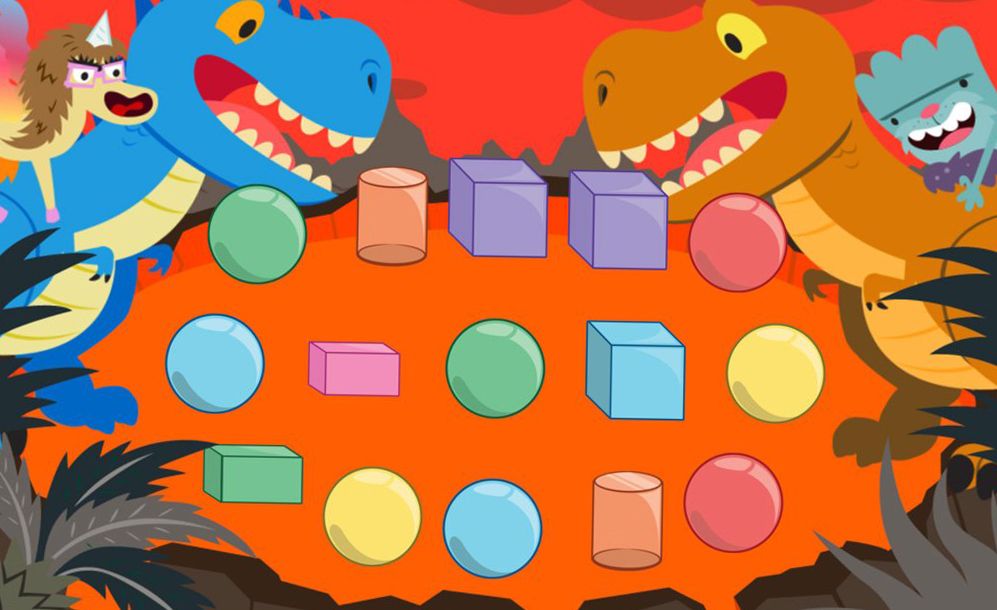
1. Dino Crunch: 3D Shapes
This beautiful geometry game introduces your kindergarteners to learning early geometry concepts. The game features dinosaurs hungry for 3D shapes, but they need assistance to differentiate between shapes such as rectangular prisms, spheres, pyramids, cubes, and cylinders.
It is possible for a player to play alone or with another dinosaur. Dinosaurs need players to assist them figure out what shapes to consume.
2. Shapes Hopper
Kindergartners benefit greatly from playing this game since it aids in their development of shape discrimination skills. Cuz-Cuz, a character in the game, is a fan of getting dirty like many children.
Your children’s job is to aid Cuz-Cuz in his mud-rolling endeavors by applying their shape-knowledge. As Cuz-Cuz continues to roll around in the muck, you can have your child compare and contrast the shapes they see. As soon as the child correctly recognizes a certain shape, Cuz-Cuz will leap headfirst into the mud bank with pleasure.
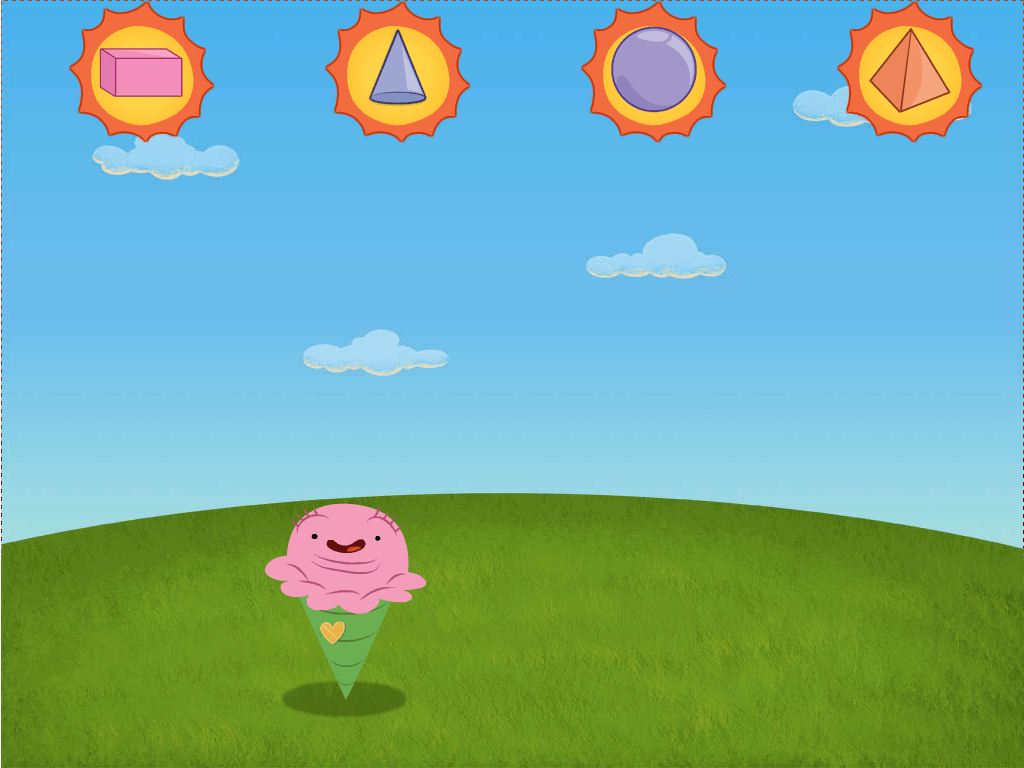
3. Three Dimensional Shapes Ice Cream Attack
As a way to cool down during a hot summer, kids can play this fun geometry game. To keep the ice cream from melting, students learn to identify 3D shapes in this game.
When a player correctly identifies a three-dimensional shape, the sun is effectively frozen. Players must also exercise caution when answering questions regarding shapes because each incorrect response brings the sun closer to the ice cream, speeding up the melting process.
Explore Brighterly Learning Experience
Learn exactly how Brighterly helps students thrive through expert sessions, online tools, and proven feedback from thousands of satisfied parents
Geometry Games for 1st Grade
Students in 1st-grade learn to build shapes, describe them, recognize conventional and non-conventional shapes, and more. Geometry games can help children build a solid foundation in the subject and prepare them for more difficult concepts.
1. 2D and 3D Shape Sort: Car
Muggo and Floyd are two characters in the game who have opposing views on character design. Muggo is fond of two-dimensional shapes like triangles and squares. On the other hand, Floyd is a huge fan of 3D shapes like cubes and cylinders.
Assist Muggo and Floyd by packing their favorite shapes in this game for first graders.
Learners can practice using visual features and labeling different shapes in this online geometry math game. In addition, your youngster will learn how to distinguish various forms.
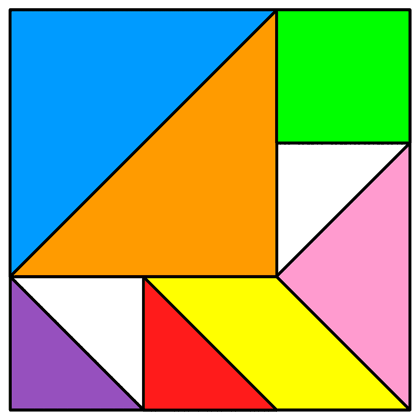
2. Square Tangram
Your children will have a blast playing Square Tangram, an online geometry math game, while they do reconstructive surgery on a robot named Muggo. Students can use this tangram to have fun and learn about larger forms like triangles, parallelograms, and squares while trying to bring Muggo back to life.
3. Dino Crunch: Attributes of 2D and 3D Shapes
Using Dino Crunch, your children can distinguish between 3D shapes with and without flat faces. Shapes, including cubes, rectangular prisms, and spheres will be introduced to your children as they play.
A fun dinosaur-themed workout routine and refresher of geometry concepts are provided by these online games for grade 1 students.
Determine which features are best suited for a certain shape by testing your critical thinking skills.


Keep Practicing Geometry Beyond the Game Screen
Practice with a tutor to reinforce shapes, perimeter, and angles.
Geometry Games for 2nd Grade
For grade 2 pupils, geometry games are an excellent way to get prepared for the world of shapes. A variety of shapes can be identified, and parameters can be sorted by playing geometry games.
1. Hexuzzle 2
Students in the second grade can take off into space and learn more about hexagons thanks to this game. Hexagons can be formed by putting several shapes together in the correct order.
Rotating the hexagon allows a child to see a simpler side of a form that at first glance appears to be incredibly complex.
2. Three Dimensional Shape Building
It is possible to give your kids precious materials to use in this game to make 3D objects. Toothpicks and marshmallows can be substituted for the straws.
If you want your students to make curved objects, give them laces, licorice, or any other flexible material. The ideal material for this activity is the one that is difficult to work with but also useful in that it can be shaped into numerous different shapes.
If you have a class of pupils, assign them to groups and give them a list of shapes to build in those groups. Some examples of these geometric forms include square pyramids, rectangular prisms, cylindrical shapes, spheres, and cone shapes.
It’s possible to declare two winners at this point in time: one team that completed the most shapes in the time limit and one that obtained the most votes for the greatest shape creations.
3. Space Hunt for Edges and Vertices
“Vertice Space Hunt” follows an ice cream officer who requires help to be successful in his pursuit of vertices within space. Three-dimensional shapes are being sought by the officer in search of various points of intersection.
Prisms, cubes, rectangles, and more geometric objects are all part of the student’s journey in this action-packed geometry game. Players need to prepare for the next adventure after identifying shapes as instructed.
Geometry Games for 3rd Grade
Grade 3 geometry games teach your students how to divide an object into thirds, halves, and other fractions. Shapes like quadrilaterals and triangles will also be taught to the children. These geometry games are a great way to have fun while learning:
1. Question Claim Game
The more questions a teacher can put up on the classroom wall, the better off he or she will be. A topic-based question bank is an excellent resource. A question on fractions might be placed on the wall in one corner. On the other side of the room, you’ll find questions about multiplication and division, as well as questions about geometry. If you’d like, you can also mix and match your answers to the questions.
Dividing your students into groups and assigning them a color will help the students learn more effectively. Students in each group should be able to use the same stickers or felt pens to mark their group’s color.
Students should be gathered in a central location in class, where they should be asked to answer any and all questions that are posted on the classroom walls. For the purpose of answering the question, each group is required to choose the color of their choice to write their responses on a piece of paper.
Other groups are prevented from answering the same question if two groups successfully answer it during the answering session.
When the timer goes out, the teacher will award points to each group based on how many questions they successfully answered. The winning group will be the one with the most points.
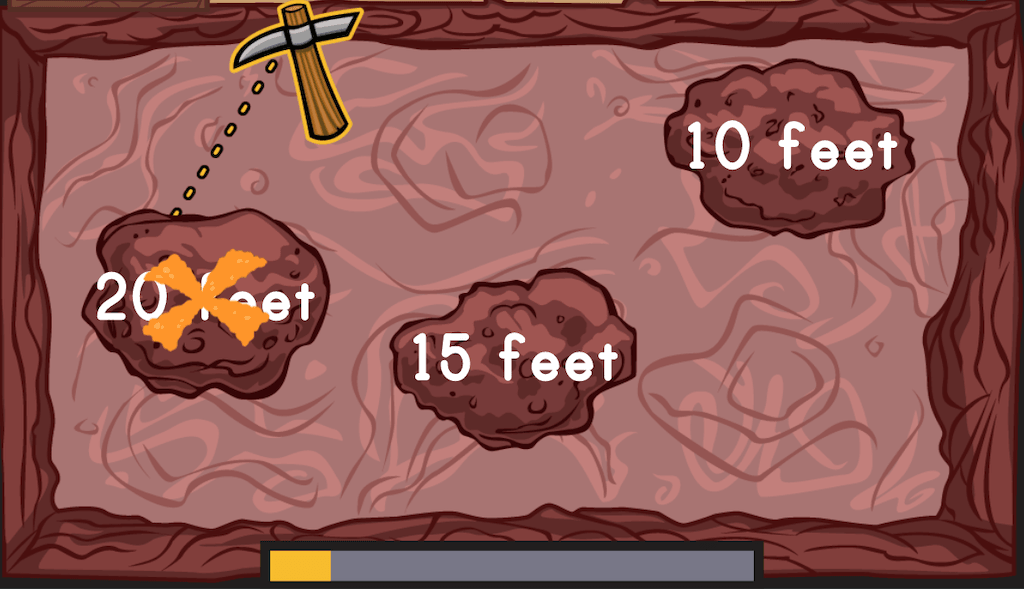
2. Dino Bones: Perimeter
Dino Bones: Perimeter is a math game for third graders that teaches perimeter calculations in a fun and engaging way. Players must pay attention to the word problem prompts in order to progress through the game. After that, they’ll use the text hints to work out geometry problems. It is much easier to find the archeological assignment when a child accurately answers questions.
3. City Building: Square Unit Practice
A journey on the moon awaits those students in grade 3 who can construct a colony for future generations. The goal of the game is for players to create structures for their moon colony while adhering to a set of instructions.
This game also serves as an engaging and participatory way to teach students to the notion of area.
Geometry Games for 4th Grade
Geometry games for grade 4 kids are perpendicular and parallel line games, line games, angle games, and other types of activities. Engaging geometry games like the following will help your students grasp these difficult concepts easily:
1. City Building: Missing Area Factor
It’s up to the players in this geometry game to set out on an adventure into outer space. In the event that a player accepts this mission, they will be sent to the moon to begin building a colony.
The expedition to uncover the missing dimension for the development of new moon dwellers will be a lot of fun for children. The educational aspect of the game is to assist kids improve their arithmetic skills in area calculations and better grasp the relationship between length and area.
2. Circus Angle Measurement
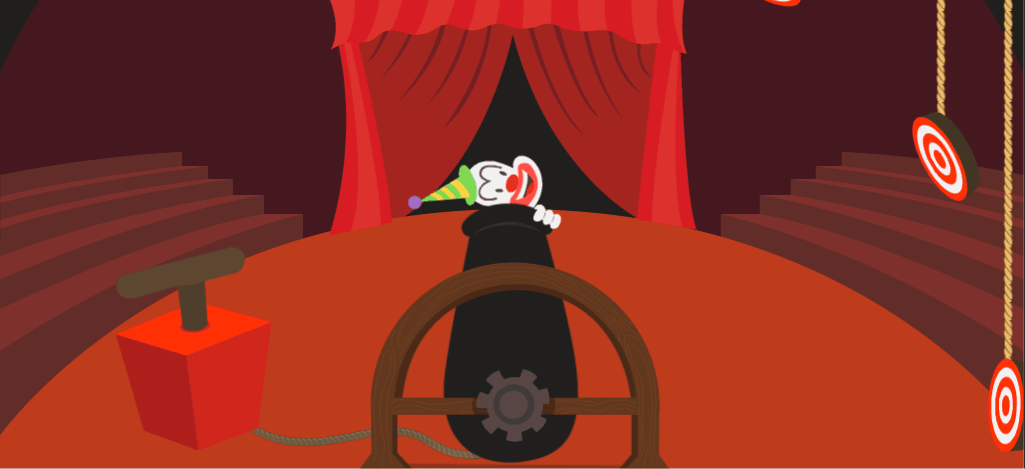
This is a circus-themed mathematics game for fourth graders that helps kids learn about angles by taking measurements.
Help the clowns hit their goal by playing this game. You’ll have to help them find the perfect angle and aim it precisely in order to send the Bozo careening across the tent with no resistance.
Learners will benefit from this game’s emphasis on angles and lines. Benchmark angles of 30, 90, and 180 degrees can also be taught in a pleasant approach to the students.
3. Spot the Lines
Grade 4 is the year when your child begins to grasp the concept that a line is more than a line. Lines can be applied in a variety of ways in mathematics.
Learning about line segments and numerous sorts of lines is made easier by this game. The game of line geometry is based on Penelope’s drawing, and it challenges players to swiftly click on the correct line when the game’s built-in narrator calls out the lines.
4. Angles Treasure Sort
Players sort angles into acute, right, obtuse, and straight to unlock the treasure. It’s a quick way to practice recognizing angle types, a key 4th-grade skill.
5. Parallel Sides in Shapes
Kids count the pairs of parallel sides in different shapes and pick the correct answer. The game closely mirrors how parallel lines are taught in 4th-grade classrooms.
6. Triangle Challenge
Players identify and classify triangles by their sides (equilateral, isosceles, scalene) and angles (acute, right, obtuse) through a series of short challenges.
Turn Shape Games Into Real Geometry Confidence
Brighterly tutors make shapes, angles, and area click through fun 1:1 lessons.
Geometry Games for 5th Grade
Understanding common characteristics of shape and volume and coordinating planes are some of the principles that students study in grade 5. These geometry math games for 5th graders make it easy for you to instruct your kids.
1. Warship
A two-player strategy game in which players call out coordinates on a grid to find and sink each other’s hidden ships. It’s a fun way to practice plotting points on the coordinate plane, a core 5th-grade skill.
2. Polygon Playing Cards
To keep up with the quick pace, players must design and name random polygons. Students can be asked by their teachers to draw a card and measure a straight line in millimeters. It is possible that the card number will also be reflected on the line.
Draw a new line in the direction of your choice or at the end of the original line, whichever is more convenient for you.
Students are tasked with creating as many polygons as they can while also giving each one a unique name. A pupil gets a point for every polygon they build. A student can score many points with polygons that have more sides. Students can receive three points for an equilateral triangle and eight points for a normal octagon.
You may make the game even more exciting by requiring kids to write down the perimeter or area of each form they create.
Note: Brighterly is a great place to play these games during lessons. Our geometry tutors pick suitable games as per kids’ needs and actively implement them into lessons.
Conclusion
Every year, many parents and educators worry about their children’s development. An excellent technique to assist children develop specific life skills while having fun is through the use of online geometry games.
Even while geometry is chock-full of core ideas that can aid pupils in developing crucial abilities, not every child learns best by doing countless repetitions in the classroom. To guarantee that children are actively engaged in the learning process, teachers and parents can tie the geometry lesson plans to the real-world application by employing relevant games. Finally, geometry games can help develop a child’s reasoning abilities, such as logic, analytical reasoning, problem-solving, and deductive reasoning.
Frequently Asked Questions
How Long Should My Child Play Geometry Games Each Day?
Short, focused sessions work better than long ones. About 10-20 minutes a few times a week is a reasonable starting point for most elementary-aged children. Stop while your child is still enjoying the game, and follow your school’s or pediatrician’s screen-time guidance.
Can Kids Learn Geometry Without Screens?
Yes. Everyday objects make good geometry practice, such as a shape scavenger hunt around the house, building 3D shapes from craft sticks or clay, or drawing shapes and naming their sides and corners. Folding paper and puzzle-style tangrams also build spatial reasoning. Screen-free play is a good way to reinforce what a child has seen in an online game.
Are Geometry Games Enough to Teach the Subject?
Games are a strong way to practice and build interest, but they work best alongside other learning, not on their own. Pair them with worksheets, hands-on activities, and conversation, such as asking your child to explain why a shape is a triangle. School lessons still introduce the concepts and vocabulary that games reinforce.
What Should I Do if My Child Gets Frustrated With a Geometry Game?
Move to an easier level or an earlier grade’s game so your child can succeed first, then build back up. Play together and talk through the problem aloud instead of giving the answer. If frustration continues, take a break and try a hands-on activity with the same concept.



Multiple counting games for kids make learning fun and exciting, while helping improve math confidence. For example, using food items to learn counting while going outdoors, counting various things that come nearby, or playing fun games with cars and flower pots are enjoyable ways to teach math to young children. Let’s discuss more hands-on indoor […]
Jul 28, 2022
Interactive addition games for kids are among the best ways to make repetitive addition math drills fun and engaging. These games can help your kid understand addition better, learn to calculate quickly in fast-paced situations, and get more accurate answers, practice different types of problems like number facts and word problems, and much more. Best […]

Aug 17, 2022
Math & reading from 1st to 12th grade
Looking for homework support for your child?

Choose kid's grade

Math & Reading for Grades 1–12
Build real confidence for your child with a Brighterly math or reading tutor.