Reading Comprehension Strategies: 13 Ways to Make Your Child a Better Reader
reviewed by Franz Jerby Delos Santos
Updated on April 25, 2026

Reading comprehension strategies can make a real difference for kids’ growth. Why? They offer ways to learn to comprehend texts and words, gain new knowledge, and perform well at school and at home. Wonder how to apply them? Read on to get an insightful overview of key methods and useful tips to implement them.
Top Recommendations
- The key strategies for improving kids’ reading comprehension include tutoring, asking and answering questions, summarizing and retelling, predicting, using metacognition, and making inferences.
- At the same time, kids can benefit from such comprehension strategies for reading as visualizing, rereading, using graphic organizers, working with key ideas, and self-monitoring.
- It means you have lots of tools and frameworks to use, from Question-Answer Relationship Strategy and “What’s in a bag” method to the 5 W’s model, inference scenarios, and frameworks.
Types Of Reading Comprehension Strategies
| To Build Comprehension | For Monitoring And Regulation | To Synthesize Knowledge |
| Predicting | Using metacognition | Summarizing |
| Making inferences | Self-monitoring | Retelling orally |
| Visualizing | Rereading challenging parts | Building graphic organizers |
| Asking and answering questions | Asking questions | Identifying key ideas and details |
Note: One can classify the list of reading strategies based on the time, like before, during, or after reading. Yet, the table categorizes strategies based on how the kids mind works, illustrating how a parent can support the thinking process behind reading.
Explore Brighterly Learning Experience
Learn exactly how Brighterly helps students thrive through expert sessions, online tools, and proven feedback from thousands of satisfied parents
13 Reading Comprehension Strategies
- Personalized tutoring
- Answering questions
- Asking questions
- Summarizing
- Retelling orally
- Predicting
- Using metacognition
- Making inferences
- Visualizing
- Rereading challenging parts
- Building graphic organizers
- Identifying key ideas and details
- Self-monitoring
Personalized Tutoring
About strategy: Professional tutoring may be the best way to boost reading comprehension capabilities among children of all ages and grade levels.
How? It allows a professional to identify the gaps and find appropriate interventions or strategies to address specific reading needs.
Usually, when tutoring comprehension sessions take place, they combine different strategies, so it’s also one of the most universal approaches.
When And How To Use The Brighterly Tutoring Platform?
If your kid loses confidence or is behind in a reading class, one of the options is to resort to an online tutoring platform that offers 1:1 sessions with a tutor.
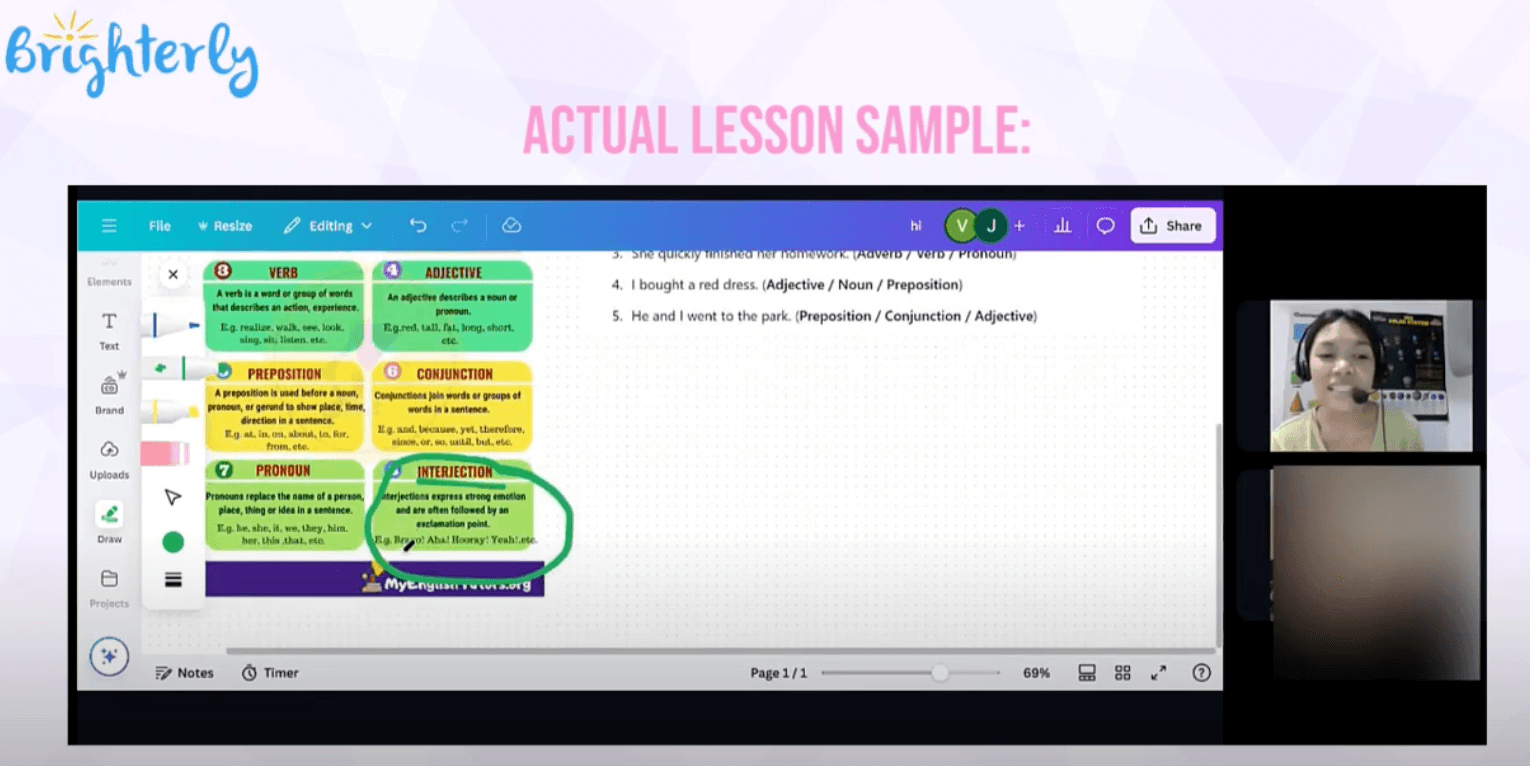
Brighterly is such an online learning platform providing personalized lessons, certified tutors, and feedback for parents.
How Can It Help?
- First, an expert from the Brighterly team will evaluate child’s reading level, speed, and comprehension to identify their individual strengths and weaknesses.
- Next, based on a diagnostic reading test and session assessment, they will match your child with the best fit among Brighterly reading tutors.
- Once there’s a match, specialists will provide a customized plan or individualized program for reading tutoring for kids.
Improve your child’s reading comprehension!
Help your kid regain confidence with an individualized Brighterly reading plan & 1:1 sessions. 

Answering Questions
Best for: Readers in grades 1-12
About the strategy: Answering questions is one of the most widely used strategies to help children better understand the text.
What is it about? It contemplates reacting to the text and gaining a comprehensive understanding of the text, ideas, structures, and goals through it.
The classic example is the systematic application of the 5 W’s reading comprehension strategies.
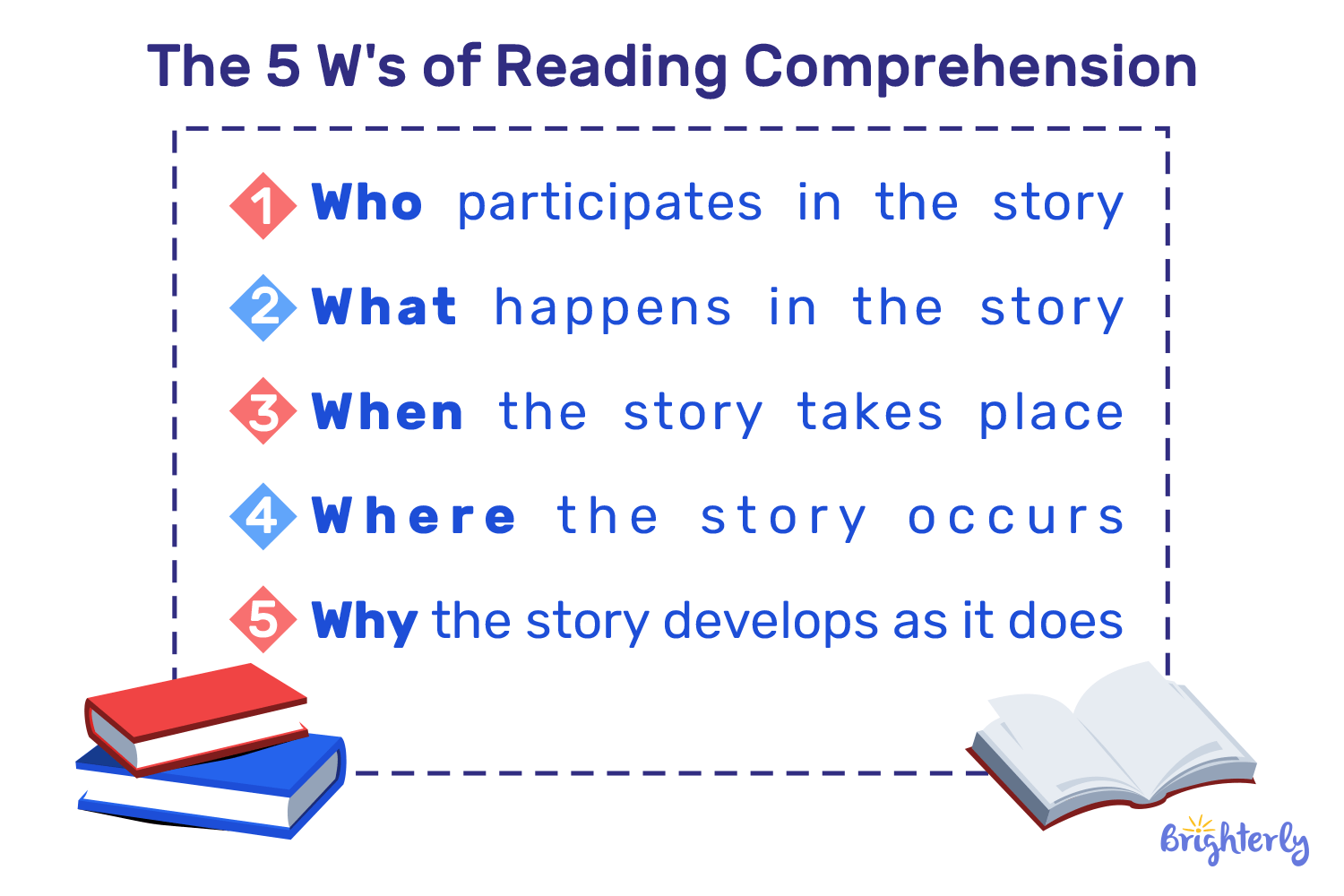
With these questions, kids look behind the word and explore the meaning and context. Besides, such processes offer the basis for active reading and background knowledge-building. The kids can use the latter in future readings.
Note: Answering is a crucial part of the Question-Answer Relationship (QAR) strategy that can be successfully applied to students at each grade, via modifying the questions to the kids’ level.
How To Comprehend Better And Encourage Answering Questions?
Even though parents may ask questions at any time during the practice, students get the most out of the strategy when they have already read something and gotten a chunk of information.
Thus, for best results, pause during reading and ask learners questions that they can answer aloud or in writing.
To further amplify the impact of answering strategies for reading comprehension, you can ask the child how they were able to find the answer to the question. Offer them one of three options and let them explain:
- They found the answer directly in the text.
- The answer was not provided directly, but it was implied in the text.
- They had to use background knowledge from outside the story.
Asking Questions
Best for: Readers in grades 4-9
About the strategy: Another technique that develops reading comprehension is for the students themselves to ask questions about the stories and books they read.
This is appropriate for slightly older children who have already learned to respond to the questions asked by their teachers and parents. Once they cover this first strategy, they can stop along the text and think about important questions related to the story. This can be done mentally or in writing.
In the long run, this reading comprehension strategy allows parents to develop their kids as independent readers and support critical thinking.

When And How To Use This Comprehension Reading Strategy?
You can use it whenever you like, as asking questions is important at any stage, both before, during, and after.
Yet, the questions may aim at different goals. There, they may use different techniques:
- Think questions, like “why” and “how,” are great for deeper understanding because they need evidence.
- The thin questions under the 5 W’s approach mentioned earlier have a different goal. They are effective for clarification and understanding of a story.
- A “What’s in a Bag” questioning strategy teaches to analyze and gather clues by looking at the book as if it’s a bag with contents that the questioner knows nothing about.
Summarizing
Best for: Readers in grades 2-12
About strategy: Summarizing is another strategy; it aims to teach finding out the most important parts and details.
Secondly, when summarizing, learners need to figure out the most efficient way to present the core events and meanings in a concise and well-organized manner and connect the rest of the plot to the central idea.
That way, learn to separate main ideas from details and practice sequencing and paraphrasing, which allows text to be reproduced and improves comprehension.
When And How To Use Summarizing Strategies For Reading Comprehension?
Well, summarizing is best applied during and after the reading to overcome the confusion and retain information. For parents, it may be a tool to monitor the process.
How Can Children Apply Summarizing?
- They can do chunking, pausing after a chapter or paragraph to summarize and prevent cognitive overload.
- Start with the 5 W’s model to have a structure for summarizing.
- Use their own words to rephrase words so they understand the ideas, not just copy.
Boost your child’s reading and storytelling.
Answer your kids' specific learning needs with personalized, real-time, 1:1 reading tutoring.
Retelling Orally
Best for: Readers in grades 1-6
About the strategy: Retelling orally is a simpler version of the summarization technique, as it doesn’t require so much distinction between more and less important events and ideas.
Readers as young as grade 1 can practice orally retelling stories to help them comprehend the plot, the characters, and the setting. So, this strategy is good for smaller learners as it develops memory skills and gives confidence.
When And How To Improve Reading Comprehension For Kids With Oral Retelling?
Oral retelling works well after independent reading or read-alouds, as well as daily reading practice. If you want to encourage your kid to try orally retelling, you can:
- Model the retelling by showing an example via retelling a different story, but focusing on structure.
- Integrate props and puppets to make it engaging for a kid.
- Use prompts, pictures, and “story sticks” like hints to help them proceed with retelling.
Predicting
Best for: Readers in grades 1-5
About the strategy: This approach entails children making predictions about what might happen in the story before they start reading it.
They need to use their previous experience and knowledge and draw conclusions about the most likely events. Besides improving reading comprehension skills, this strategy is also lots of fun and grows imagination.
How To Improve Reading Comprehension By Predicting?
Well, before any reading practice, it’s a great way to activate kids’ brains, especially if a new reading piece refers to previous reading. At the same time, when a kid reads a chapter, the prediction of what can happen next can make them more engaged.
Also, the prediction can be a monitoring tool for you, showing how well they get what they read before or where they are attentive.
Using Metacognition
Best for: Readers in grades 4-12
About the strategy: Metacognition, or thinking about thinking, refers to a strategy activating the reader’s control over the reading process. That’s why it is usually good for slightly older children. Prior to reading, the child needs to think about the story and what they hope to get from it.
When used as one of the during reading strategies, kids should stop occasionally and think about what they have read. Afterward, they should analyze their understanding of what they have just read. Of course, teachers and parents should support the establishment of this process with tips or frameworks, at least initially.
When To Use Metacognition Strategies To Improve Reading Comprehension?
- When you want to promote reflection and self-reflection
- If you see that kids can advance to the next level in becoming independent readers
- During a struggle, it can help them regulate their reading and see why by themselves.
Making Inferences
Best for: Readers in grades 3-12
About the strategy: Making inferences is another technique that works really well for a bit older children, as they find it really entertaining and engaging.
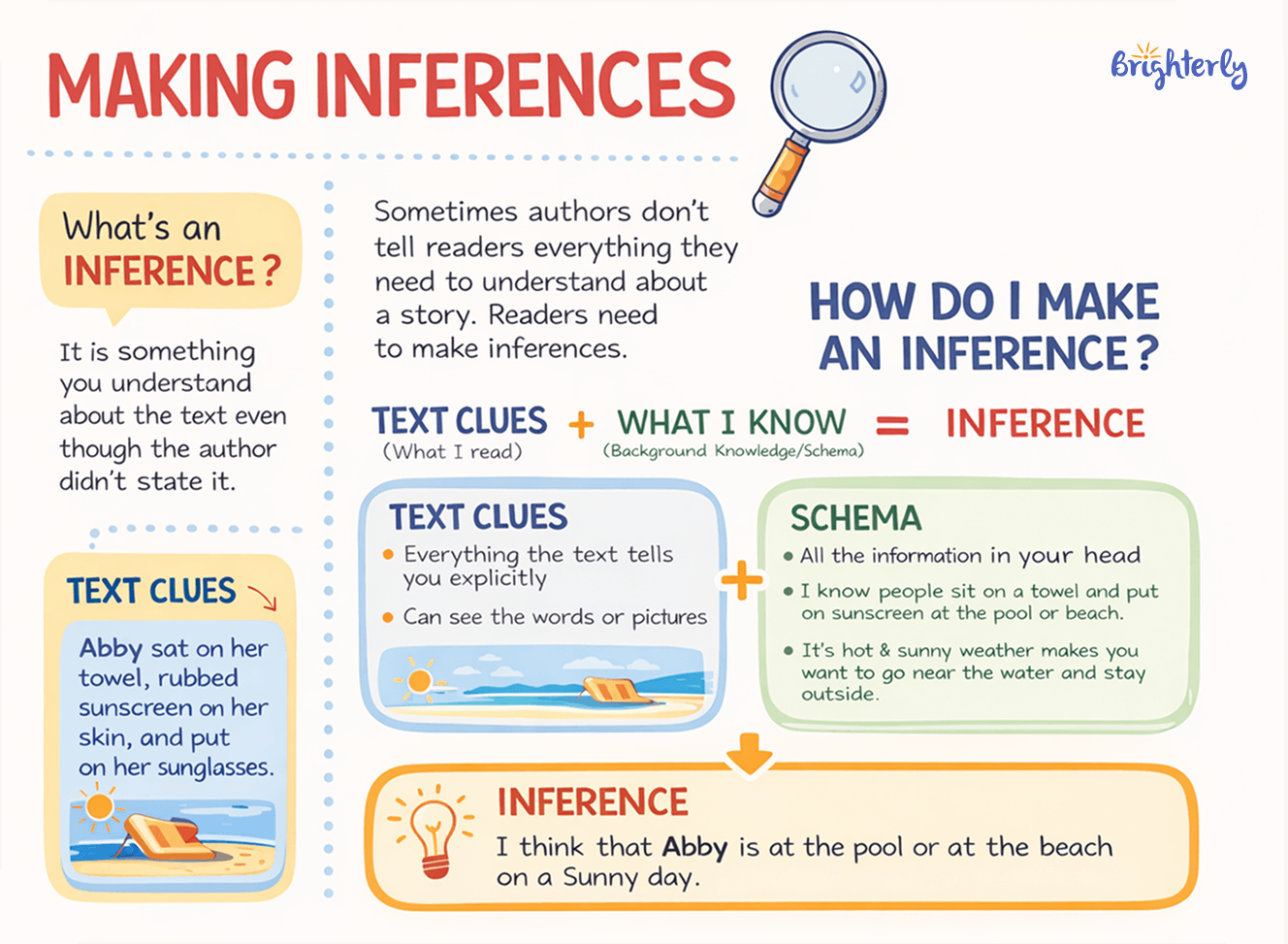
This method refers to taking pauses during reading to make suggestions and guesses about what the author is trying to say without actually saying it.
In other words, its reading comprehension help lies in developing a deeper level of reading comprehension beyond the basics of the plot, characters, and setting. It is concerned with the schema, the background information necessary for comprehension.
Inference Scenario To Practice
To make inferences, kids should take what they know and combine it with the events in the story. Here’s how it works.
- An instructor reads to students: Rob put on his coat, put on snickers and went outside. A few seconds later, he came back to get his boots and umbrella.
- Then, he asks: What happened?
- The answer: It’s raining outside (it’s an inference)
How do kids know? By reading clues and using shema (background). They know that people use umbrellas and rain boots when it’s wet or raining heavily outside.
Visualizing
Best for: Readers in grades 1-6
About the strategy: One of the leading evidence based reading comprehension strategies is visualizing the text.
Creating visual images to go along with what is being read helps children better understand the story as it draws connections between the abstract and the concrete.
Note: As Abigail Marshall provides in her 2023 dyslexia blog post, mental imagery is a predictor of comprehension ability, proving a strong link between visualizing and reading comprehension.
How To Get Better At Reading Comprehension Via Visualization?
As a parent, you can try visualizing when reading a short passage. Use a modelling technique and describe how you see the passage in the book based on your experience. Then, ask a kid to do the same with the next passage.
It’s a great technique to try when kids read novels or a selection with highly descriptive pieces.
There, ask questions and give hints if their image doesn’t match the words, and reward them if they do a good job.
Rereading Challenging Parts
Best for: Readers in grades 1-12
About the strategy: This is a very intuitive strategy where students are encouraged to read the most difficult-to-understand parts of a text again. This approach works particularly well for kids who are generally struggling with reading, regardless of their grade level.
How To Be A Better Reader With Rereading?
- First of all, it works as a fix-up strategy targeting confusing parts.
- Besides, if the text is complicated, rereading reduces cognitive load as the memory can focus on the deeper meaning the second time, not on decoding words or structure.
- Rereading adds to metacomprehension and allows one to identify more subtle details.
Building Graphic Organizers
Best for: Readers in grades 1-12
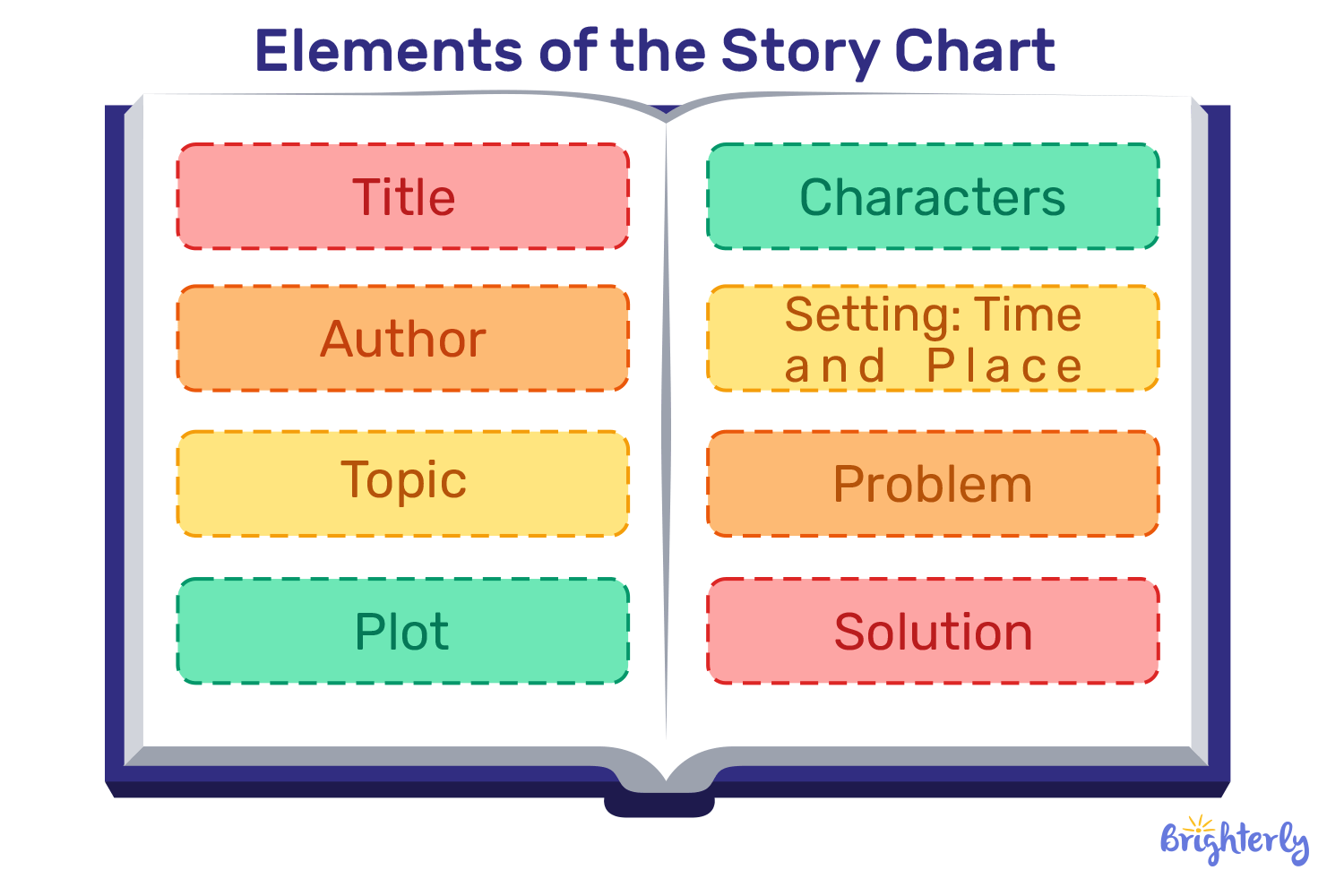
About the strategy: Graphic or semantic organizers are great at helping readers organize their reading process and comprehension in a visually enhanced way.
They can use maps, graphs, webs, Venn diagrams, frames, clusters, and other visual depiction tools to put their thoughts and ideas together in a clear manner. Younger students might need some instruction and support from teachers and parents as they work on this approach.
When To Use Graphic Organizers For Greater Reading Comprehension
- While practicing elements of a story
- To explain a concept or vocabulary (English language)
- When tracking a story plot
- To connect ideas and causes
- If you want to support the schema process for inferring
- To compare and contrast texts
Identifying Key Ideas And Details
Best for: Readers in grades 5-12
About the strategy: With this approach, teachers or parents encourage children to find out and highlight the most important ideas and passages in the text. This can be done by underlining or highlighting parts of the text and/or writing notes in the margins.
This strategy generally works better with older children, grade 5 and up.
How To Use The Framework Method For This Reading Comprehension Strategy?
Apply a specific framework that allows kids to identify main events and break the narrative into parts. Here’s what it’s about:
- Somebody (implies the main character)
- Wanted (contemplates the motives and wants of the character)
- But (requires mentioning the problem or conflict before the character)
- So (implies what they did)
- Then (offers the conclusion or results of the actions)
At the same time, a kid may highlight key sentences and scan for repeated ideas to have a big picture.
Self-Monitoring
Best for: Readers in grades 3-12
About the strategy: Finally, this approach requires self-motivation and active participation on behalf of the reader.
Children need to monitor their reading and comprehension in order to spot where they have problems and take action to fix them. This strategy needs to be applied after students have already been taught other techniques that they can use to boost their reading understanding and fluency.
Turning Silly Mistakes Into Reading Strategies For Comprehension
One of the ways for kids to self-monitor is via modelling silly errors. It can be pretty popular among younger kids as it’s fun for them. For instance, you can write “This small dough loves to bark” and read it to them to sound very silly.
You can even try making such errors while reading stories aloud. Make it obvious so that kids pay attention and fix them.
Conclusion: Improving The Reading Comprehension Skills Of Your Child
By teaching reading comprehension strategies mentioned above, you can help your child improve their reading comprehension skills to perform better at school and be prepared for success afterwards.
Importantly, these techniques prove to be most effective when they are combined. Asking questions is for sure the most used, while personal tutoring is the most universal.
Wonder how it can enhance your child’s reading comprehension? Book reading class from Brighterly for free today and enjoy the results!
Frequently Asked Questions
Which Strategy Would Most Likely Improve A Student’s Reading Comprehension?
Asking kids questions is a strategy that is likely to improve a student’s reading comprehension the most. The rationale is that it ensures active engagement, supports metacognition, and allows focus on meaning. Besides, it fosters critical thinking and can be a great basis for other strategies, including tutoring and summarizing.
What Are The 5 W’s Of Reading Comprehension Strategy?
The 5 W’s of reading comprehension are:
- Who: To identify the narrator and the characters of a story
- What: To analyze the plot of the story and the main idea of the narrative
- When: To find out the time when the story happens
- Where: To discuss where the action takes place
- Why: To analyze the reasons and motivations behind the events of the story
What Are The Best Reading Comprehension Strategies For Elementary Students?
The most effective reading comprehension strategies elementary school students can use include 1:1 tutoring, answering questions, making predictions, retelling, and visualizing elements of the story. Techniques applied by this age group should be easy to implement and aim at developing the foundation of love for reading and early literacy fluency.
What Are The Most Effective Reading Comprehension Strategies For Middle School?
The optimal reading comprehension strategies for students at middle school comprise reading tutoring, summarizing, asking questions, and making inferences. These children are old enough to start to monitor their reading process and comprehension to identify issues and find solutions, with the support of a teacher or parent.
What Are The Most Effective Reading Comprehension Strategies For High School?
The best strategies for students in high school include personalized tutoring, applying metacognition, identifying the main ideas and details, summarizing, and self-monitoring. It is essential for children at this age to have already developed good reading comprehension skills and continue improving them with longer, more complicated texts.

Reading too slowly can prevent students from keeping up with academics. The good news is that the speed at which children read is not set in stone. Check the 12 effective strategies on how to increase reading speed without compromising comprehension. Usually, these strategies work better when combined. Take a reading speed test to know […]

Jul 07, 2025
We’re happy to introduce Travis G., a sixth-grader who has a natural love for math and a strong desire to become an expert in it. His dedication and enthusiasm brought him the victory in the second Brighterly Math Equity Scholarship. Travis G. — Brighterly scholarship awardee A few features make Travis G. stand out. These […]

Jul 15, 2025
Math & reading from 1st to 12th grade
Looking for homework support for your child?

Choose kid's grade

Math & Reading for Grades 1–12
Build real confidence for your child with a Brighterly math or reading tutor.