Online summer programs differ in price model (free/paid), length (class format or offline camp for several weeks), and age group (for elementary, middle schoolers, or high schoolers).
As of June 2026, the cost for summer school math programs ranges between $4/class (Outschool model of 1-lesson seminar) to up to $8,000/full program (6-week PROMYS offline summer camp).
Applications for the most demanding summer programs (like Simons, SAMS, RSI, MathPath, Epsilon Camp, IDEA Math programs, and AwesomeMath) usually start in December and close in March-April.
Knowledge gaps due to summer slide and pandemic are real problems in math education in 2026, so choosing one of the summer math programs can help prevent summer learning loss. This guide covers the 30 best programs for summer 2026 by grade, format, pros and cons, and price.
Math & reading from 1st to 12th grade
Exploring alternatives?
Take our quick quiz to discover the perfect learning solution based on your child’s needs.
Online (3 weeks) or residential (4 weeks) summer math camp
Closed for 2026
Ross
Y. 15-18
Full cost $7,500
6-week residential program
Closed for 2026
HCSSiM
Y. 15-18
Up to $7,208
6-week exploration-first program
Closed for 2026
Note: All pricing options in this article are relevant as of June 2026.
The overview includes 30 programs with proven 2026 availability and verified user feedback. The list is grouped by age, covering different options in terms of formats, pricing, and learning goals from elementary to high school level.
Math summer programs for kids are the simplest way to improve math comprehension and stop the summer slide, which can reach an average of 39% according to the 2020 research in the American Educational Research Journal. This study remains relevant today because it highlights the ongoing influence of out-of-school learning and socioeconomic factors on student achievements.
In summer tutoring programs and camps, instructors have time to explain math concepts to children and help them overcome their learning problems and excel academically.
Complicated Math Concepts Mastered
For gifted children, the school curriculum may not be sufficiently challenging. Math summer programs cover their need for additional stimulation, introducing more complicated math problems and guiding students through their solutions.
Creative Problem Solving
Math problems require critical thinking, and children usually have two choices to solve them: use a familiar solution or come up with a new one. Math summer programs encourage the second way of thinking.
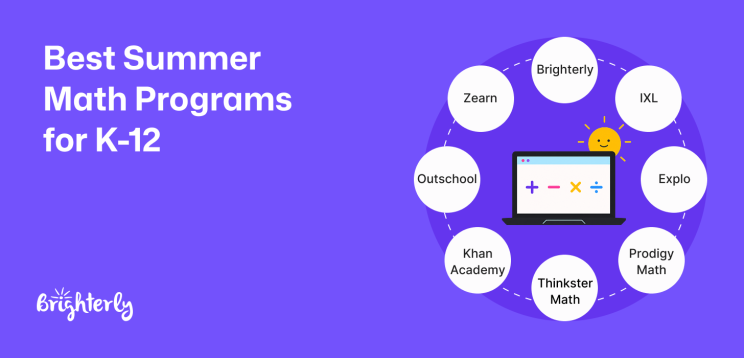
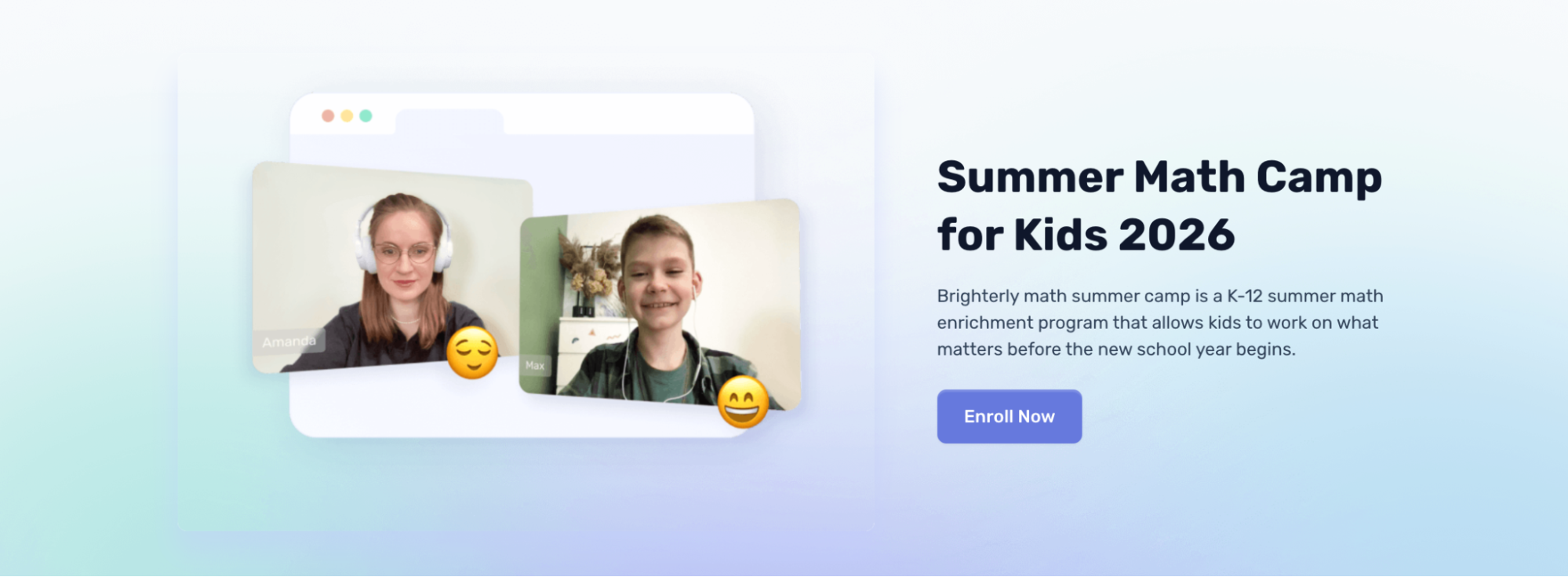
Brighterly Summer Math Program
Age group: K-12
Best for: Personalized, fun, and effective summer math tutoring that adapts to your child’s level
Our online summer math camp prevents summer slide and helps your child build a math foundation and confidence during easy-going 1:1 tutoring sessions.
We match kids with an online math tutor who applies play-based learning strategies. Our tutors are experts at motivating, inspiring, and energizing kids, helping them learn mathematical concepts through modern, research-based teaching techniques.
Best for: Parents who want to test homeschooling during summer
Time4Learning is a homeschool curriculum provider, helping families guide at-home practice for their kids. During the summer holidays, it provides math materials for those who want to catch up with the school program.
Pro
Con
Great for homeschooling
Pre-recorded video format requires parental oversight
Pricing: The Time4Learning cost is fixed at $39.95 per month for PreK-5 and Grade 6-12 curricula.
Outschool
Age group: K-12
Best for: Math students enjoying group sessions and mini-camps
Outschool is a marketplace with Zoom tutoring classes (both individual and group sessions). Their 1-week mini-camps are the perfect choice for kids who don’t have enough concentration for long math summer programs.
By “camps,” Outschool offers multi-day, fixed-length online courses on set days in a mini-group (up to 12 students). They encourage gamified and social learning and offer highly specified courses, like math skills for Minecraft fans or the Lego club.
Pro
Con
A variety of live and self-paced math courses
Choosing among too many options may be confusing
Pricing: Outschool summer classes start from $4/class and can range to $90/class, depending on the chosen format, method, and learning standards.
Mathnasium Summer
Age group: K-12
Best for: Structured math practice nearby
Mathnasium is a network of over 1,000 centers in the US that offers personalized summer programs and camps in 2026. The learning adopts the authoritative Mathnasium Method that includes STEM-based math challenges and puzzle practices in small groups.
Pro
Con
Structured curriculum and many centers across the US
A small-group setting may not suit summer learning needs
Pricing: Based on prices and recommended studying frequency, the monthly Mathnasium cost is between $200 and $420.
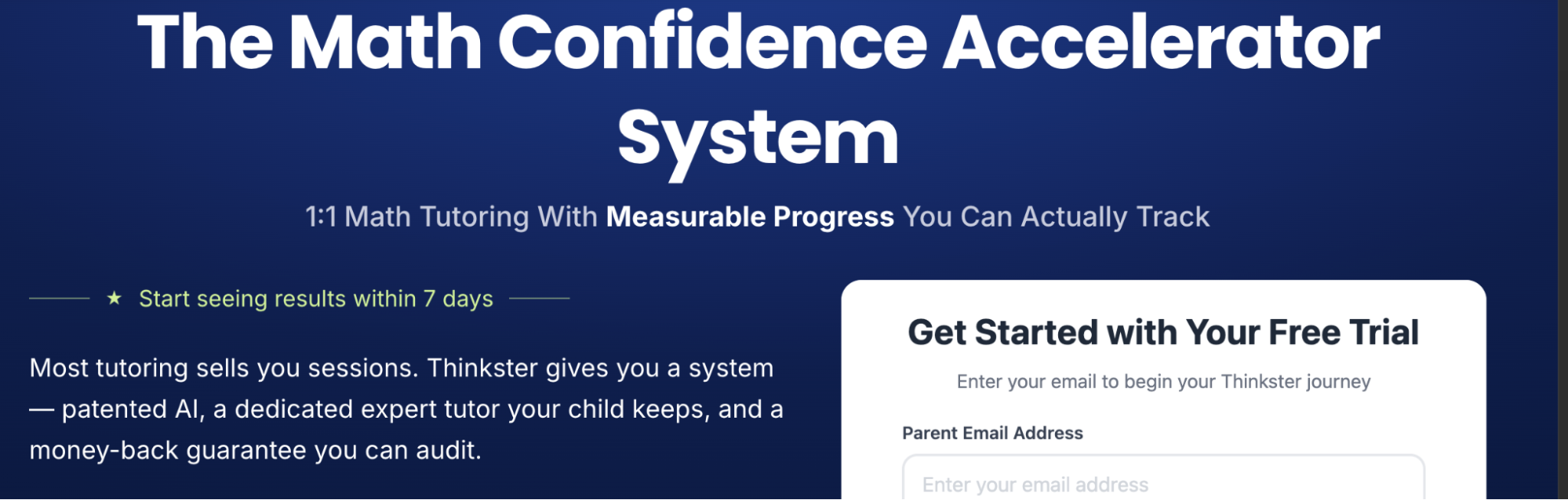
Thinkster Math
Age group: K-8
Best for: Kids seeking summer math tutoring with a 24/7 AI math coach
Thinkster Math is a tutoring platform that offers AI-powered personalized plans and 1:1 weekly sessions with math tutors. The separate test prep program for high school math is available.
Pro
Con
Blends the benefits of human and AI-powered tutoring
Pricing: The pricing plans at Thinkster start from $22.50 per session (K-8), with a prior 7-day free trial.
Khan Academy: Camp Khan Kids
Age group: 2-8 years old
Best for: Families who want to find engaging math activities for their kids
Khan Academy offers on-screen adventures and fun activities during its Camp Khan Kids digital program for ages 2-8. In 2026, the weekly themes include Backyard Safari, Let’s Build It, A World of Color, and From Seed to Table.
For 3rd-12th graders, Khan Academy usually offers a separate “Get Ready” Camp Khan math course with tracking and motivational tools, but the application for this program has not been announced yet.
Pro
Con
Completely free and fun for young kids
No live or 1:1 sessions for guidance
Pricing: Summer math content from Khan Academy is totally free. It makes this option one of the best in terms of self-paced, self-motivated, and flexible math learning (based on Khan Academy reviews). Those who require in-person instruction or individualized tutoring, however, might wish to add additional resources to this program.
Math program
Get math tutor to make math practice effective
1:1 math tutor sessions make math fun and understandable
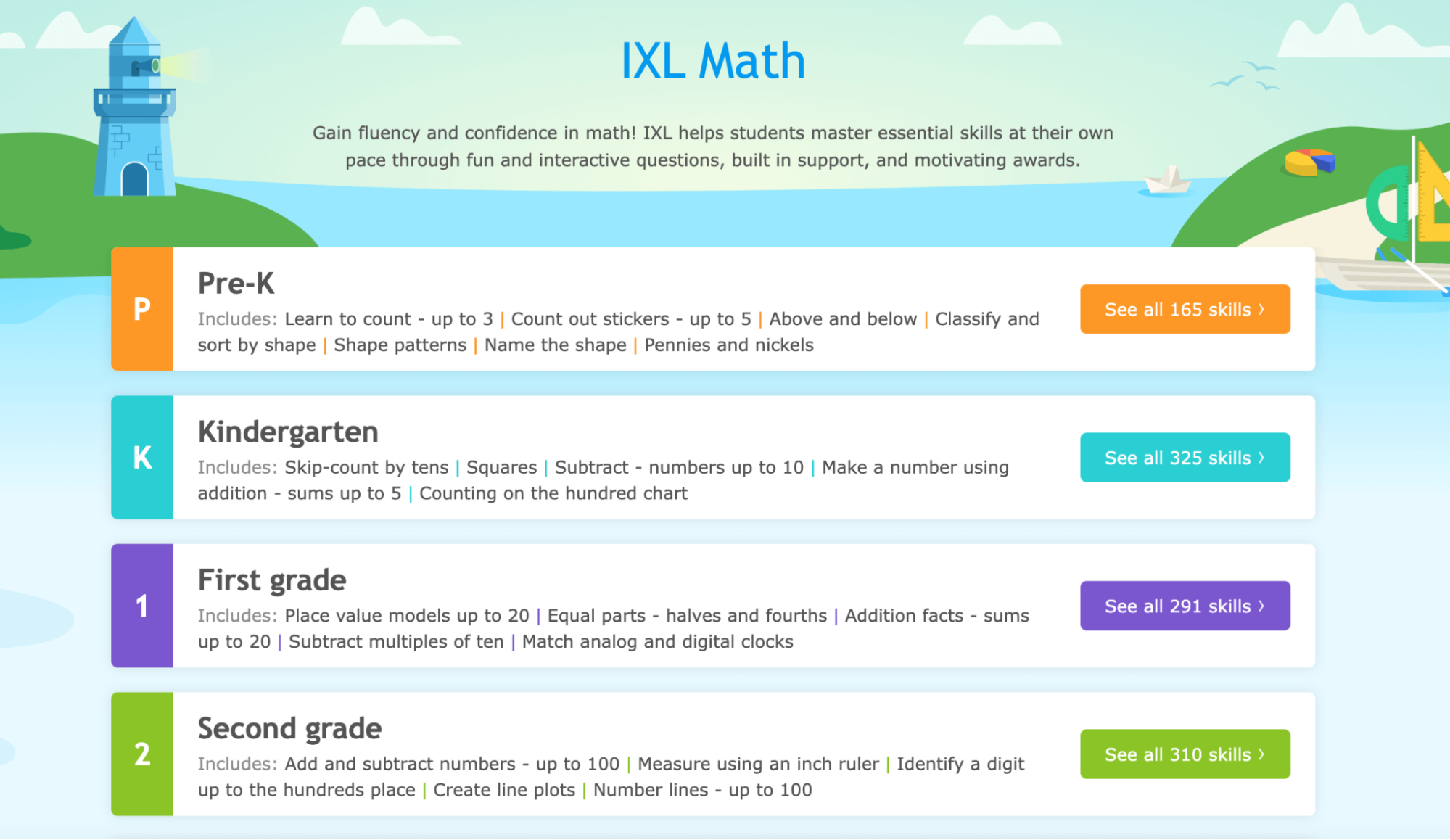
Best for: Parents seeking adaptive skill drills and contests for their kids
IXL is a subscription-based interactive platform for children to practice drills of different complexity. Parents choose this platform for Summer Boost Skill Plans, IXL’s grade-specific, ready-made sets of math skills.
In summer 2026, IXL offers boost skill plans, parent handouts, IXL Summer Adventures, gamified resources, and an annual Study in the Sun Contest with VISA gift card prizes (June 8 – August 2, 2026).
Pro
Con
Gamified challenges and contests with valuable prizes
IXL reviews note a strict skill-learning structure with no live support
Pricing: The price for the IXL subscription starts from $9.95/month, with a free 30-day trial and discounts for new subscribers.
Prodigy Math
Age group: K-8
Best for: Elementary and middle schoolers seeking a math game for summer practice
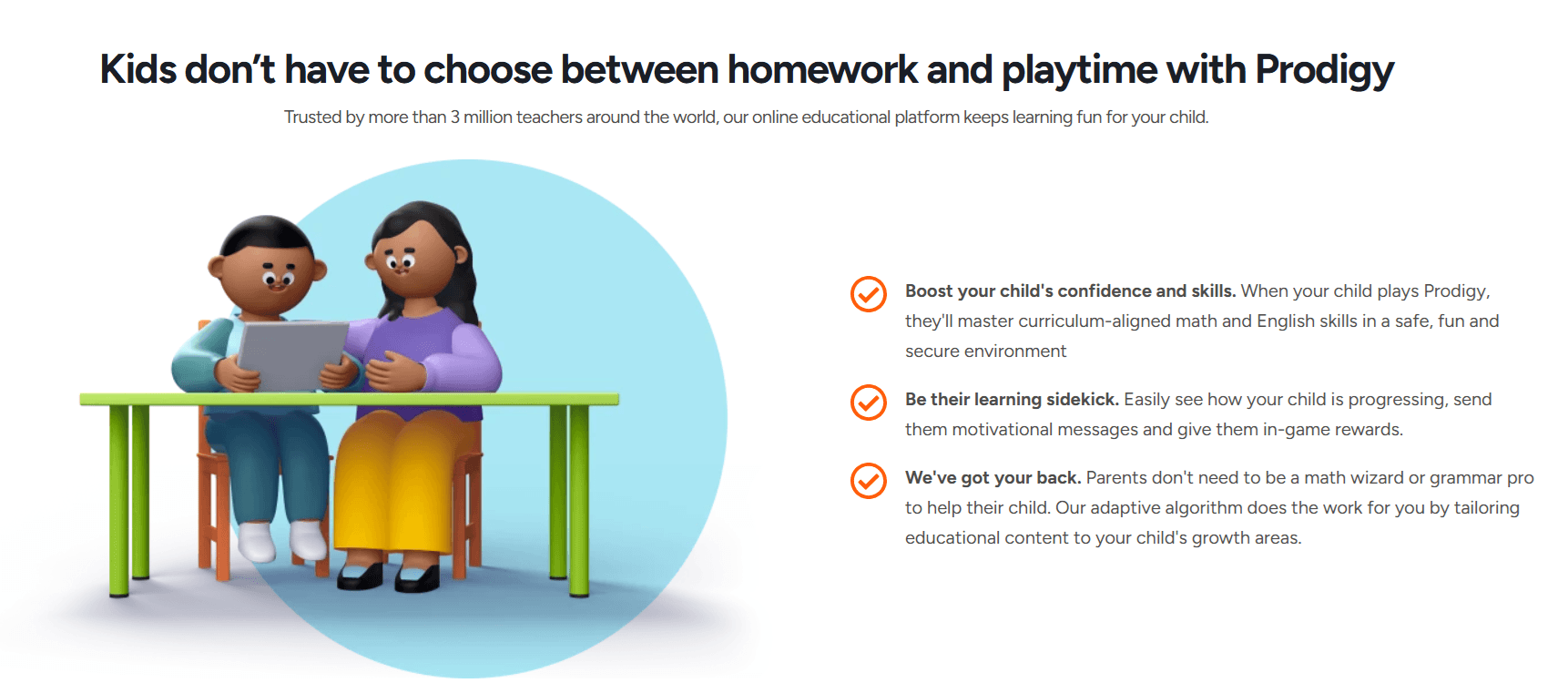
Prodigy Math is a role-playing game that covers a math curriculum aligned with US state standards for grades 1-8. The basic functionality is free to try, with more gaming opportunities available upon subscription.
Pro
Con
Highly engaging for kids
More of a game than a learning material
Pricing: As of June 2026, the monthly Prodigy membership cost starts at $9.95/month, with an option to pay $4.91/month within an annual plan (billed at $58.95 every year).
Zearn Summer Intensive Series
Age group: Grades 1-9
Best for: Independent learners seeking series for foundational math skills
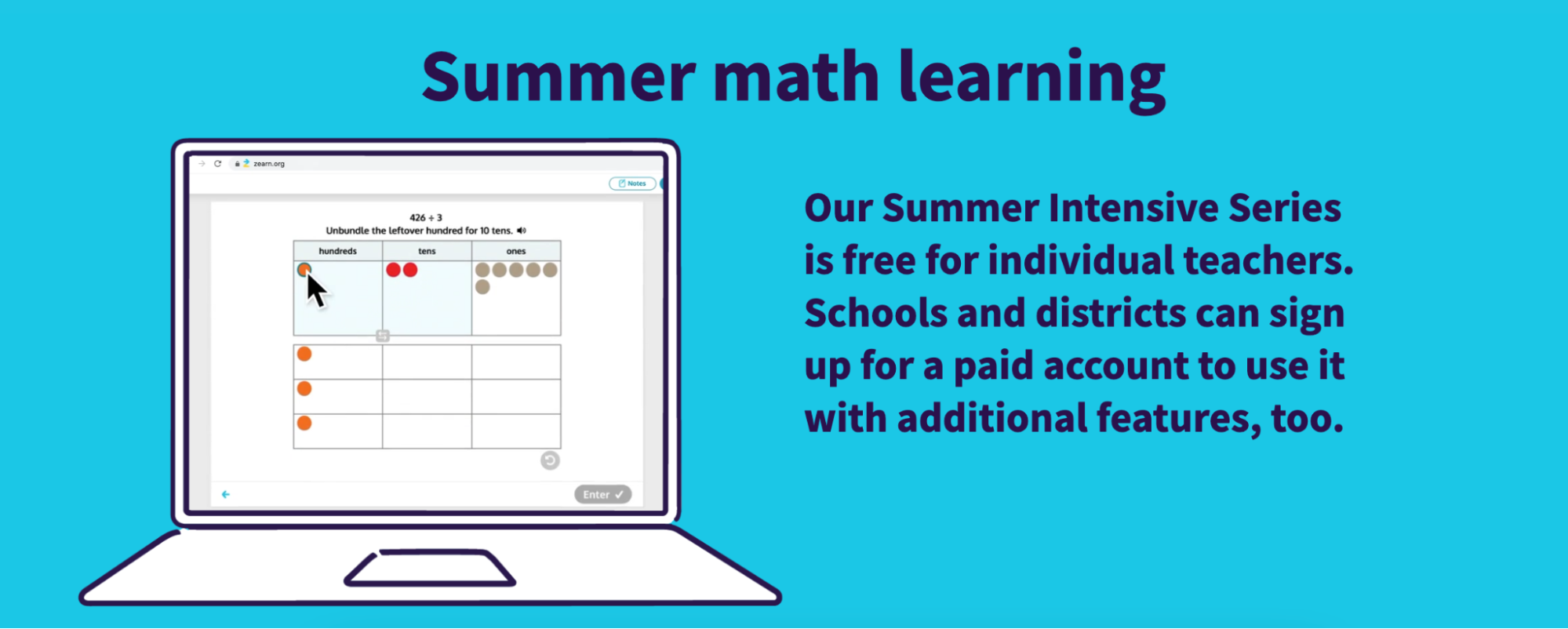
The Zearn platform offers Summer Intensive Series, or special summer math learning, for grades 1-9 and individual teachers. These are daily online lessons for independent learning with real-time adaptive support and comprehensive insights. Their focus is to build strong foundational skills before the upcoming school year.
Pro
Con
Engaging and free lessons with videos and gamification
No live instruction or tutoring
Pricing: Materials from Zearn are free for individual teachers and families and come at a negotiable price for schools and districts, which makes them a good supplement for tutoring.
Epsilon Camp
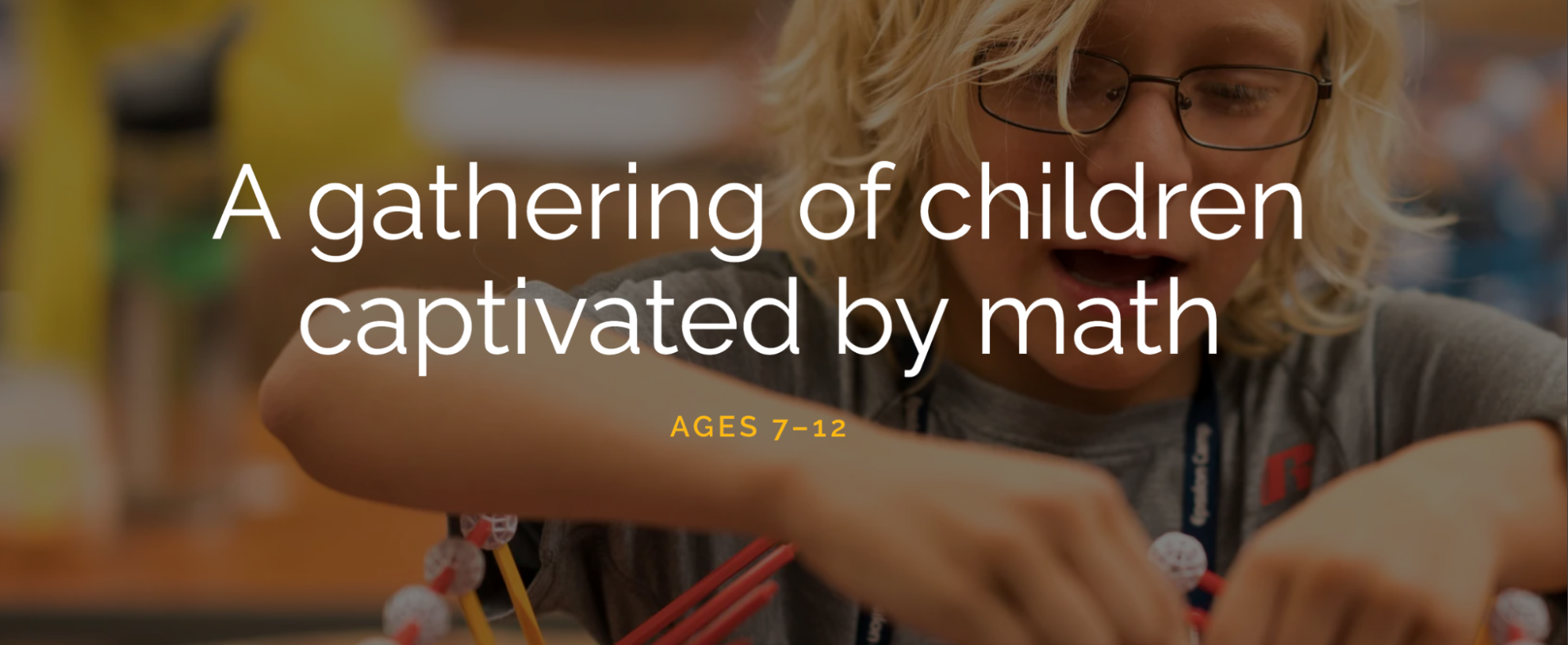
Age group: 7-12 years old Best for: Gifted children captivated by math
Epsilon Camp is a 2-week summer camp for profoundly gifted children that will take place from July 19 to August 2, 2026, at Utah State University. The program includes daily classes with mathematicians and parallel seminars with parents.
The camp is highly selective and offers instruction from professional mathematicians and a separate parent program with workshops, roundtables, and math talks.
Pro
Con
Advanced math curriculum led by pro math experts for young talents
High participation cost and selectiveness
Pricing: The full participation cost (including tuition, housing, and meals) for 2026 is $3,250 for one kid and one adult. Additionally, the camp offers financial aid to some families from the USA.
Math program
Get math tutor to make math practice effective
1:1 math tutor sessions make math fun and understandable
Best for: Rising talents looking for math creative projects
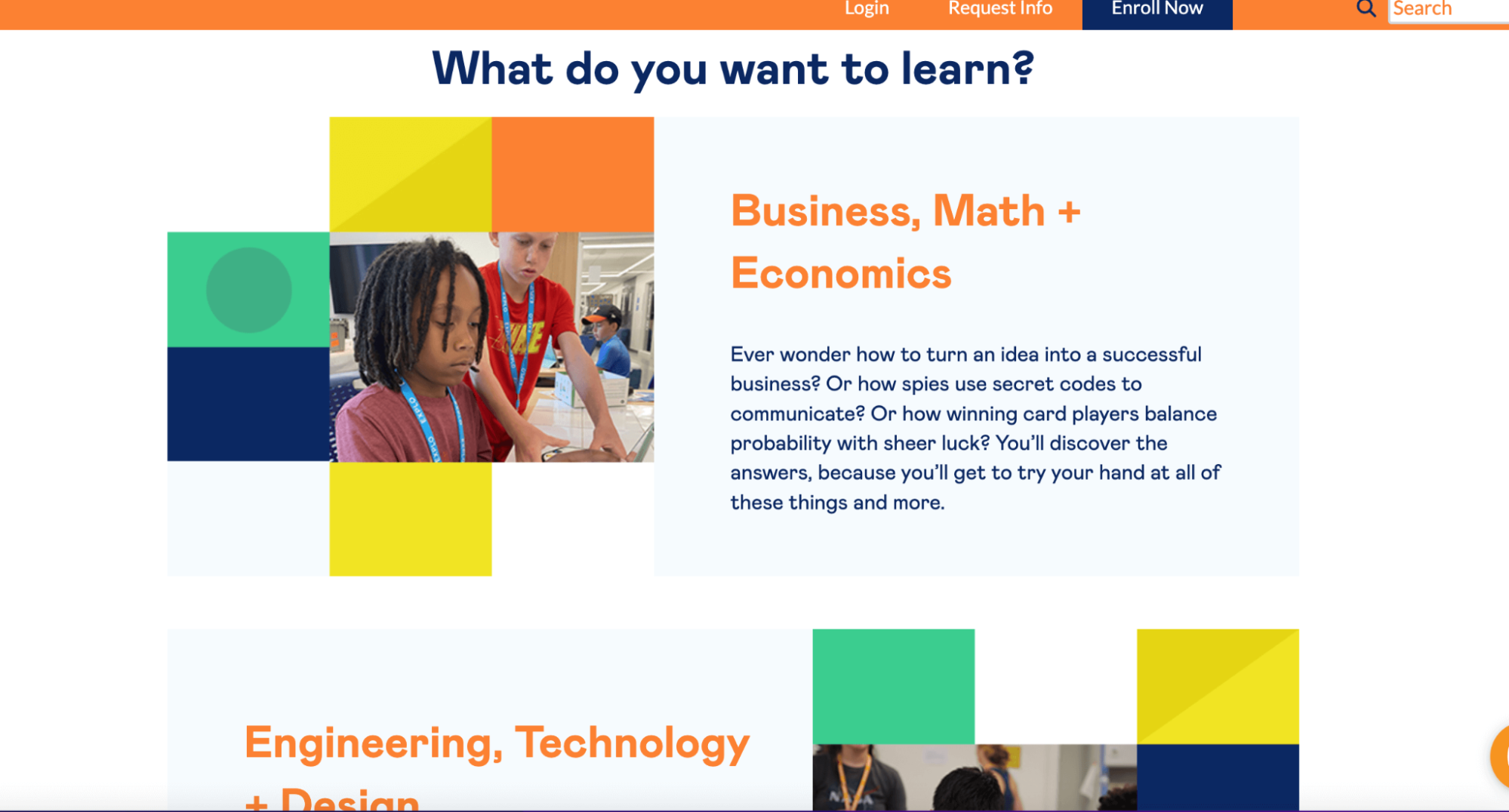
In the Explo Boston-based summer camp, students are encouraged to adjust their curriculum from 40+ courses and workshops. Also, their summer math programs focus on learning by doing, with labs, group projects, and field trips.
Pro
Con
Hands-on and interdisciplinary approach in a customized and practical program
High program cost
Pricing: In 2026, the minimum full tuition cost for a 2-week residential program starts at $4,045 ($6,295 if overnight). The cost doesn’t include possible additional fees like course fees, damage deposit, and trips & sundries. Parents can also apply for a 4-week program that costs $7,790 to $12,090 (as of June 2026).
AlphaStar Summer Camp
Age group: Grades 4-12
Best for: High schoolers seeking Olympiad-style courses
AlphaStar is an intensive Olympiad-style camp for serious problem-solvers in grades 4-12; classes focus on algebra, geometry, and number theory. The summer camp offers online and offline formats of intensive math training for competitions like AMC, AIME, MathCounts, and USA Math Olympiads.
Pro
Con
Decent preparation for math competitions with flexible online and offline courses
An intense course with a high participation cost
Pricing: The cost for participating in AlphaStar ranges from $1,150 (online live 5-day event) to $3,550 (in-person 15-day fundamental course). The rotation of courses happens June 8 – June 26, June 29 – July 17, and July 20 – August 7, 2026.
SMSSP
Age group: Grade 6-7
Best for: Free online math program for middle schoolers
Stanford Middle School Scholars Program (SMSSP) is a free 3-week online course that prepares middle schoolers for high school-level math. The 2026 program is from July 6 to 24, 2026, and the application period closed on March 25, 2026.
Pro
Con
Stanford virtual program with live instruction
Limited by grade and household income
Pricing: Free for students from households earning under $90,000.
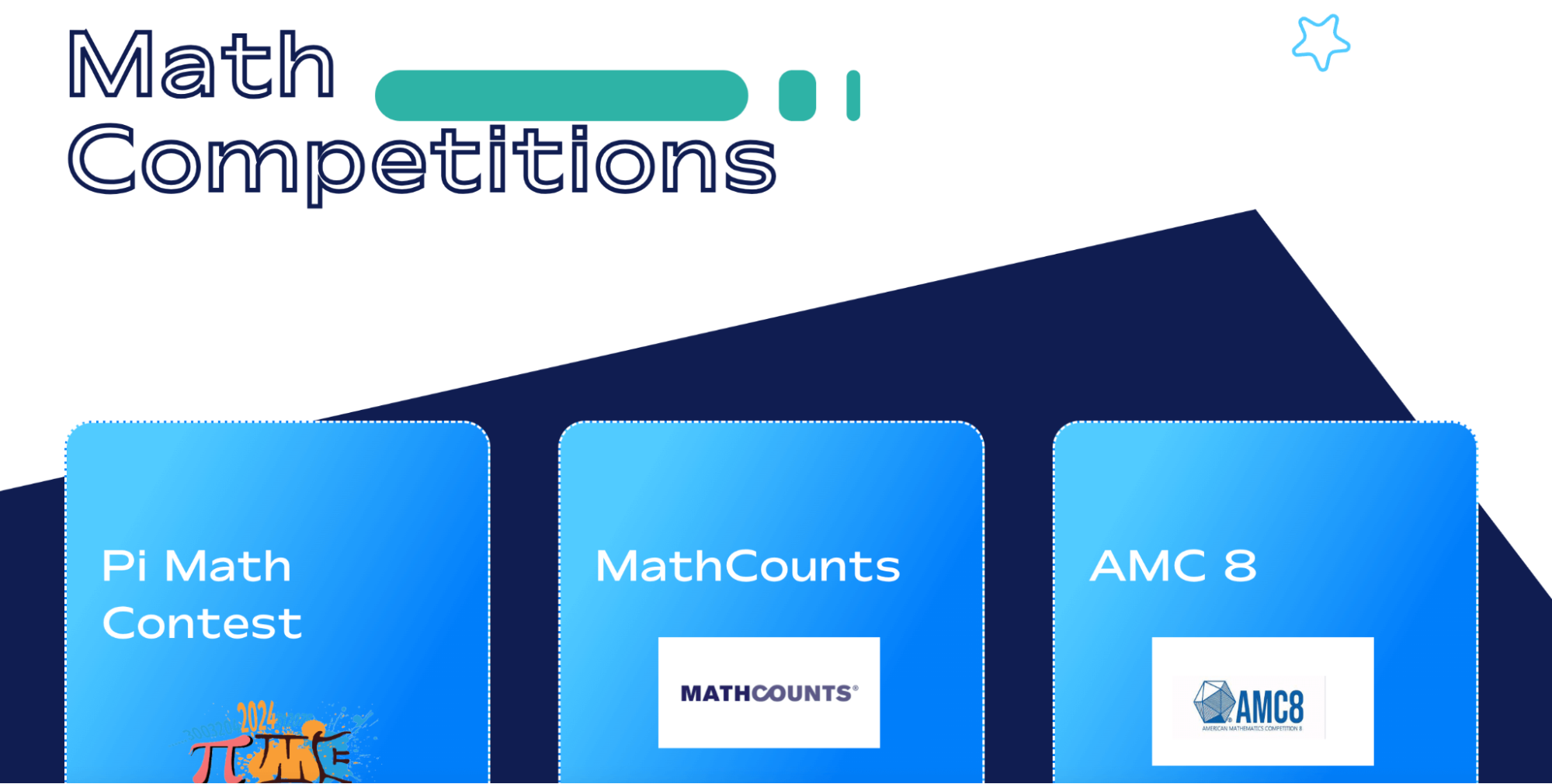
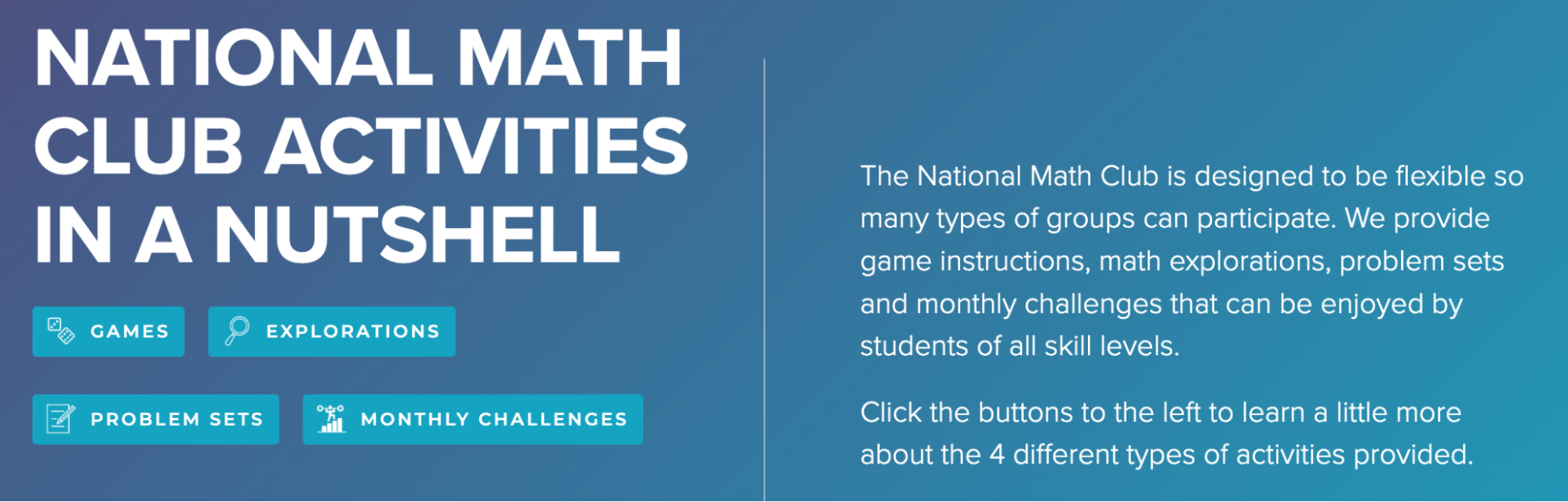
Mathcounts National Math Club
Age group: Grades 6-8
Best for: Non-competitive social math enrichment environment
Mathcounts is a national math club designed to unite middle schoolers and help them practice math together. The program is functioning in a club format, meaning that kids gather together during informal meetings and study math with free materials provided by the instructor.
Pro
Con
Free, non-competitive format for free collaboration
Limited to middle schoolers
Pricing: All the Mathcounts materials are free for schools and non-school groups.
MathPath
Age group: Ages 11-14
Best for: Math students seeking a whole-month residential camp experience
MathPath is a 4-week residential camp specifically designed for mathematically talented 11- to 14-year-olds that takes place from June 28 to July 26, 2026, at the University of Portland.
MathPath students explore math deeply, tackling number theory, combinatorics, and proofs in small, lively classes. To make the 4-week curriculum more entertaining, the program includes annually rotating locations, recreational activities, and social events.
Pro
Con
Supportive community for middle schoolers of different math levels
High participation cost and early application process
Pricing: The MathPath 2026 program fee is $6,600, with free application placement and the ability to request financial aid. The application process usually closes in March.
MathILy-Er
Age group: Ages 14-17
Best for: Talented youth looking for math summer programs for middle school students
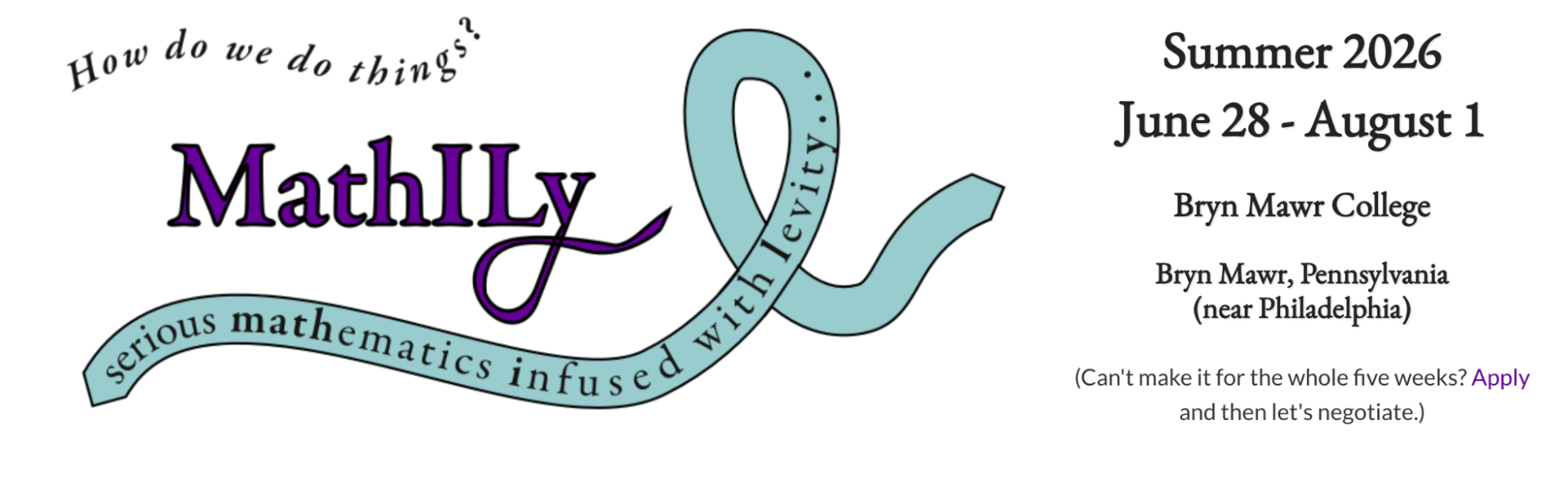
MathILy-Er is an intensive early-research math program targeted at mathematically talented students aged 14-17. In 2026, it takes place between June 28 and August 1 at Bryn Mawr College. The summer camp curriculum involves interactive discrete math learning, including combinatorics, binary linear algebra, and probability theory.
Pro
Con
Collaborative and interactive community for advanced and research-focused math work
High program cost and selective format
Pricing: The program fee for 2026 is $6,175, with financial aid available. As of June 2026, MathILy-Er still receives applications to reach a total number of students of around 30.
IDEA Math Summer Camp
Age group: Grades 6-12
Best for: Gifted math students who prefer to work in small groups
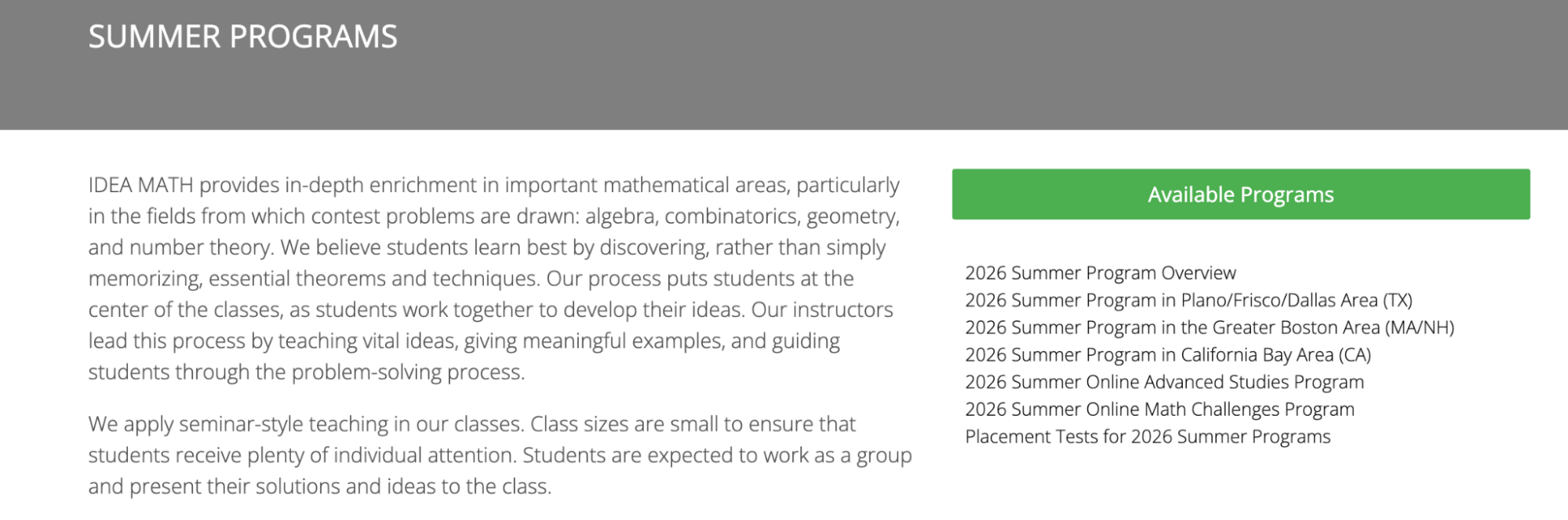
IDEA Math Camp is a 4-week residential program (multiple US sites) that trains students for AMC/AIME competitions and deeper problem-solving.
The camp format combines online and offline activities for an extensive curriculum that is aligned with math challenges. The course takes 50 academic hours per course, and the size of the class is about 6-20 students.
Pro
Con
Curriculum beyond regular K-12 education
High cost of participation and a competitive format that may be stressful for some students
Pricing: Participation in IDEA Math Camp programs in 2026 starts at $1,395 (early enrollment with tuition paid before March 15, 2026).
AwesomeMath
Age group: Ages 12-18
Best for: Advanced math students seeking a 3-week pro intensive
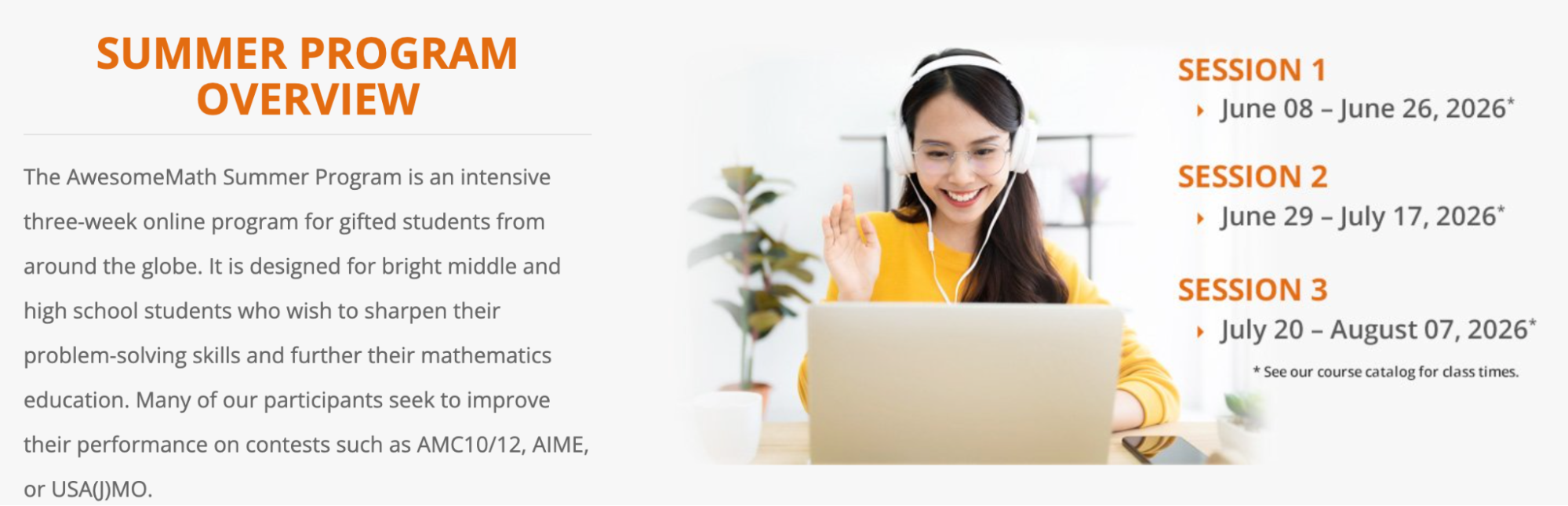
AwesomeMath is known for a 3-week instructor-led program that prepares students for AMC/AIME-level contests with a focus on algebra, combinatorics, geometry, and number theory.
During 3 weeks, students take classes that feature a 90-minute lecture and a 60-minute problem-solving session, along with daily homework and assignment tests. The application requires a math teacher recommendation and passing the admission test.
Pro
Con
Olympiad-level preparation for gifted students
Requires early admission and is not suitable for beginners or students below an advanced math level
Pricing: The tuition for the 3-week AwesomeMath Summer Program is $1,275-$1,575 (the exact price depends on the payment date). No free trial is available, so the program is for kids and parents who can afford the demands and costs.
Canada/USA Mathcamp
Age group: 13-18 years old
Best for: Mathematically talented teens
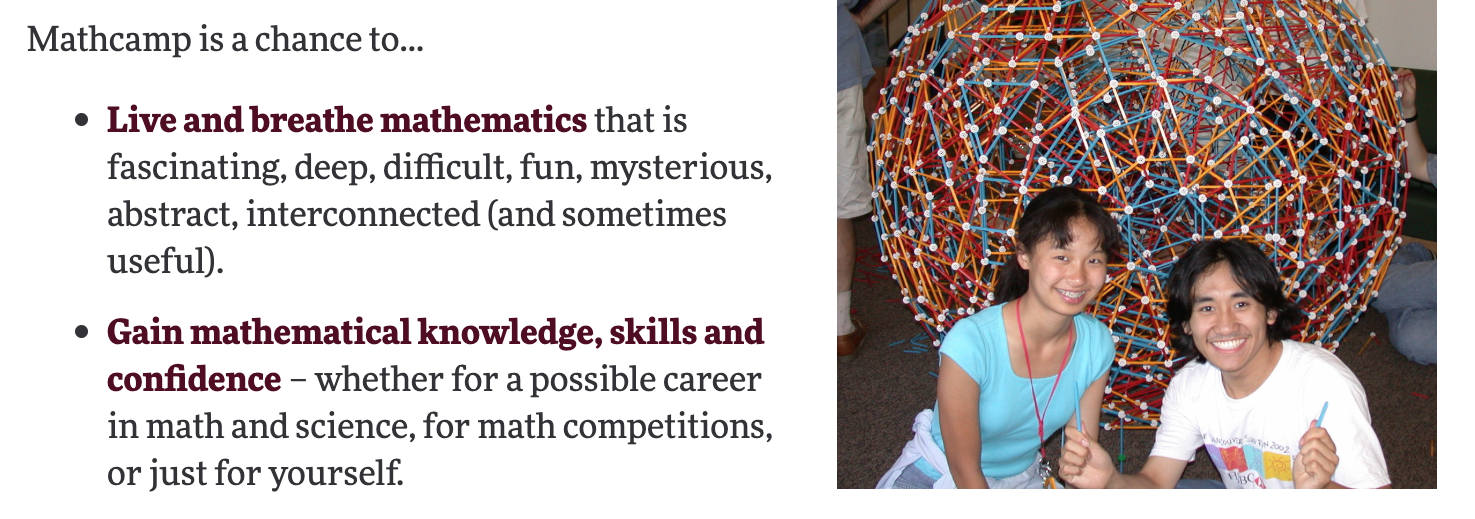
Mathcamp is an intensive 5-week-long summer program for advanced math at the undergraduate and graduate levels. In 2026, Mathcamp takes place from June 28 to August 2 at Champlain College.
Pro
Con
Rigorous math curriculum with real camp vibe
Highly selective and expensive
Pricing: Mathcamp tuition costs $7,500, with a free tuition opportunity for US and Canadian families with household incomes under $100,000.
√mathroots at MIT
Age group: 14-18 years old
Best for: Math talents from underrepresented communities interested in MIT programs
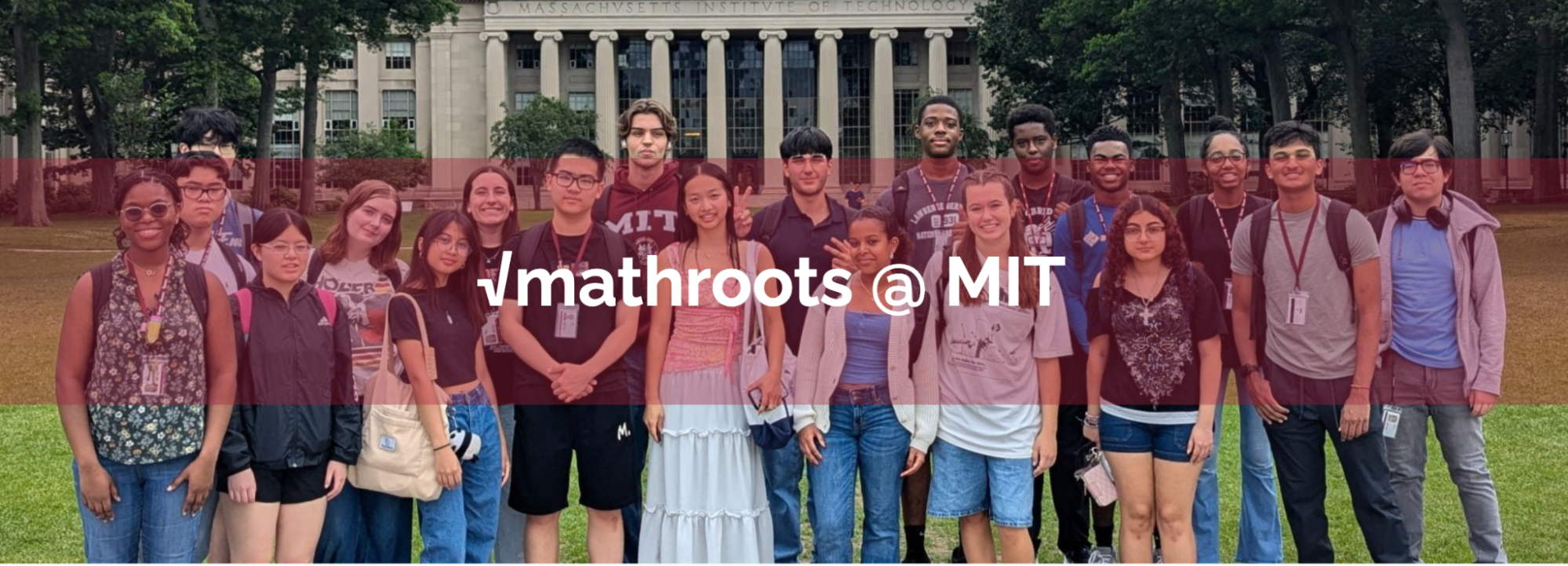
√mathroots offers 14-day offline summer math enrichment programs designed to support high-potential high schoolers with demonstrated ability to overcome learning difficulties. In 2026, the program takes place between July 1 and July 15.
Pro
Con
Free program with MIT campus experience
Highly selective and limited to 2 weeks
Pricing: Free for students who have passed the selection process. All expenses covered except commuting to and from MIT (eligible for a separate scholarship).
(MS)²
Age group: Grade 9
Best for: Math talents looking for a free residential summer camp
Math and Science for Minority Students, or (MS)², is a 5-week free residential summer program at Phillips Academy (June 30 – August 2, 2026). It’s designed for 9th graders from underrepresented groups with a strong interest in math explicitly.
Pro
Con
Strong network and support for low-income students
Highly limited target group
Pricing: Free for eligible students, with a stronger preference for those who are in the top 10-20% of their class.
NYU Summer Math Program for Young Scholars
Age group: Grade 9-11
Best for: High school students with math grades B- and higher
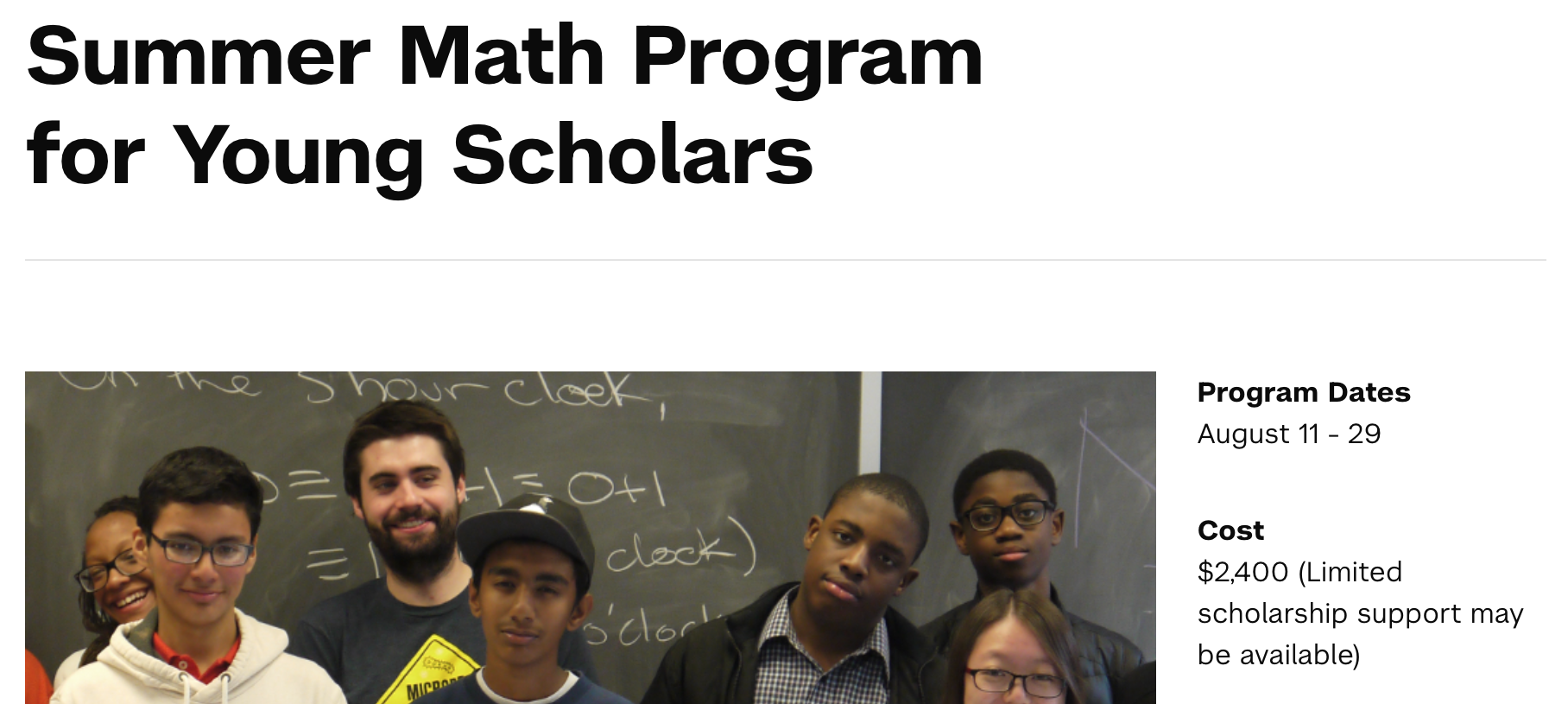
The Summer Math Program for Young Scholars from New York University is an intensive, in-person, 3-week-long summer course. Taking place between August 11 and 29 this year, NYU math summer programs for high school students teach high schoolers college-level math.
Pro
Con
Affordable residential program option
Doesn’t provide grades or credits (pass/fail system)
Pricing: The program cost is fixed at $2,400, with limited scholarship opportunities.
LSU Math Circle
Age group: Grade 9-12
Best for: High schoolers interested in virtual summer camps
LSU Math Circle runs a 3-week virtual summer camp in two sessions (June 8 – 27 and July 13 – August 1, 2026). Students study weekdays in small groups and complete a math research colloquium at the end of the program.
Pro
Con
Convenient learning format and flexible application deadline
Online only
Pricing: LSU Math Circle has a fixed $1,200 cost, with registration still open.
PROMYS
Age group: 14-18 years old
Best for: Students from low and mid-income families seeking demanding summer learning opportunities
PROMYS, or Program in Mathematics for Young Scientists, is a 6-week residential program at Boston University focused on intense number theory study. The 2026 program runs between June 28 and August 8.
Pro
Con
Financial aid for all the students (full or partial)
Intensive math curriculum
Pricing: Free for domestic students whose families make under $80,000 per year, with potential cost up to $8,000 for families whose income is higher.
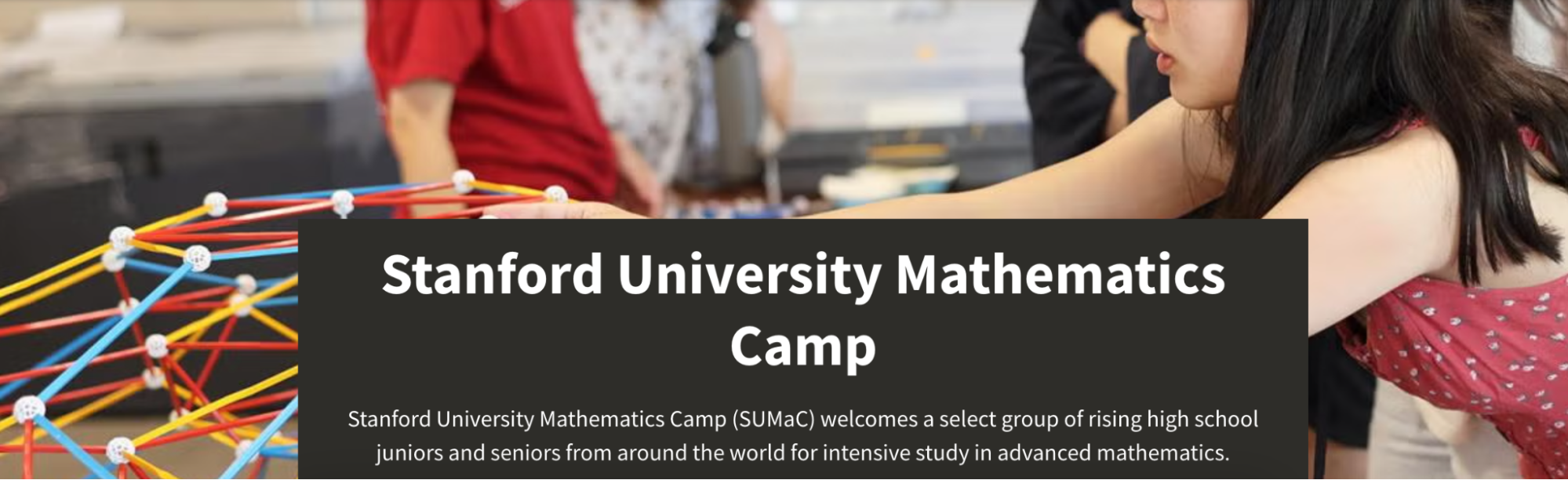
Stanford University Mathematics Camp (SUMaC)
Age group: Grades 10-11
Best for: High schoolers with a passion for math and ambition to study at Stanford
SUMaC is a 30-year summer program from Stanford that specializes in advanced maths and is known for intensive learning. In 2026, the program lasts 3-4 weeks and has two sessions (mid-June – mid-July and July). Applications for 2026 have already been closed.
Pro
Con
Summer education with the Stanford community
A residential camp is very expensive
Pricing: Online tuition at SUMaC costs $3,750. The residential program is $8,950, covering housing, meals, course materials, field trips, and in-camp transportation.
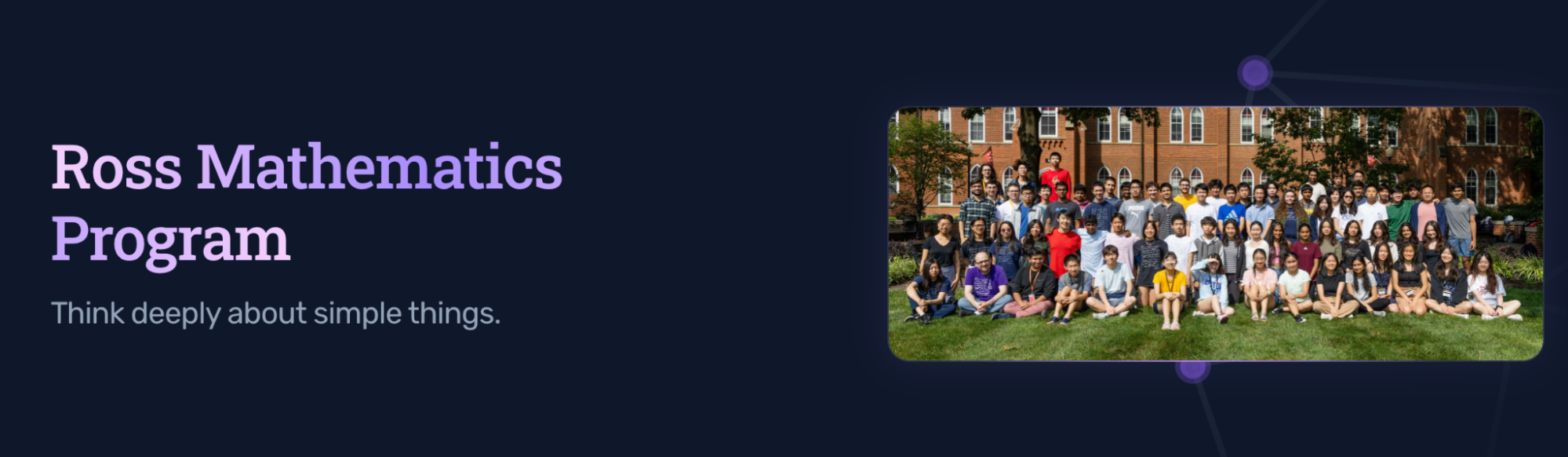
Ross Mathematics Program
Age group: 15-18 years old
Best for: Pre-college students who want to boost math fluency
Ross Math Program is a 6-week program focused on number theory learning to encourage students to think more deeply and mathematically. In 2026, the program takes place between June 14 and July 24 at Otterbein University and Rose-Hulman Institute of Technology.
Pro
Con
Strong focus on number theory
Not suitable for students seeking variety
Pricing: In 2026, the program costs $7,500, with financial aid and scholarship opportunities from Mu Alpha Theta, the Davidson Institute, and the Jack Kent Cooke Foundation.
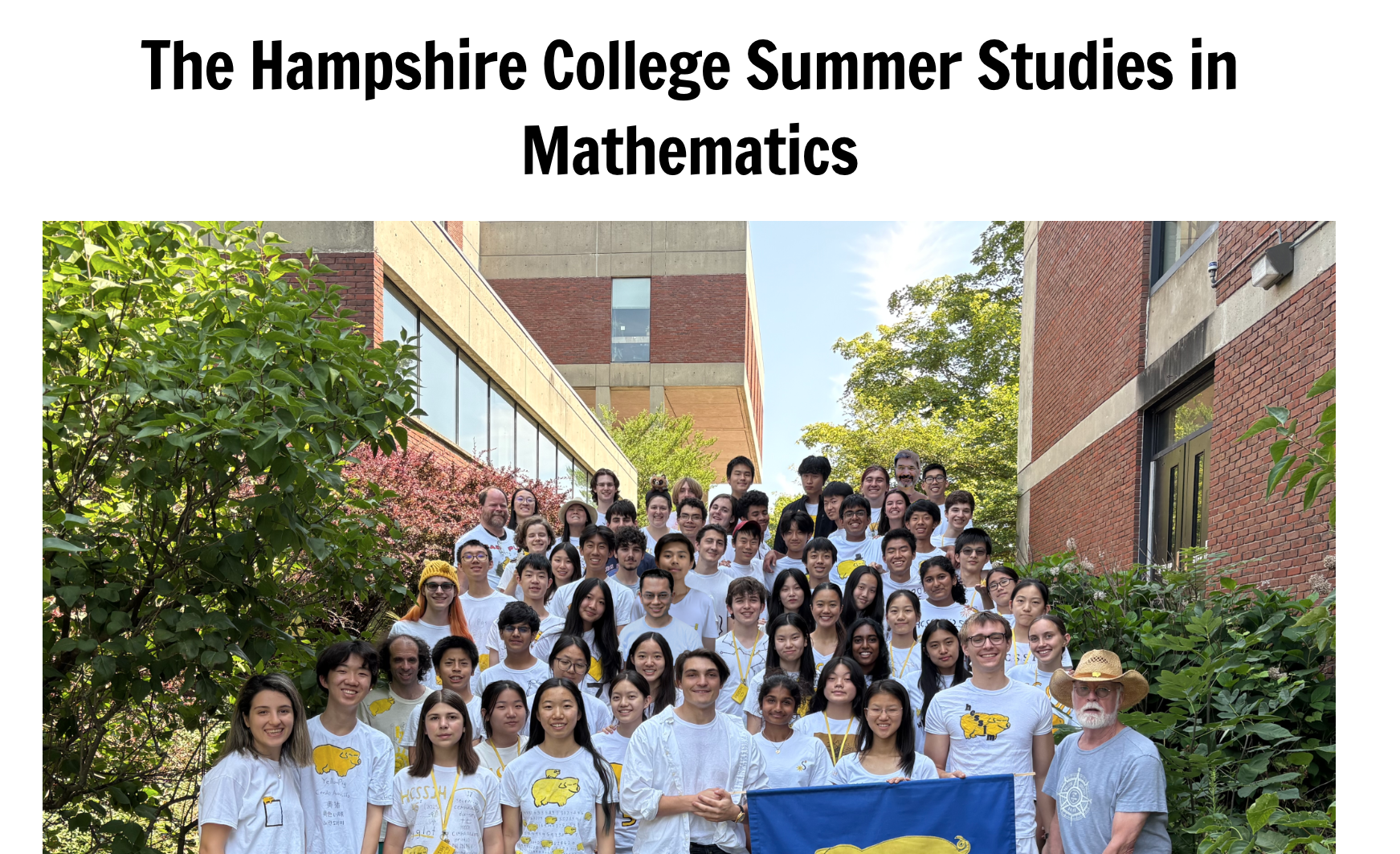
HCSSiM
Age group: 15-18 years old
Best for: Math-curious high schoolers looking for a non-competitive summer math camp experience
HCSSiM, or Hampshire College Summer Studies in Mathematics, is a 6-week residential program between June 28 and August 8, 2026, with an exploration-first approach to advanced math study.
Pro
Con
Different support tiers for families with household income below $187,000
Rural location and non-standard curriculum
Pricing: The fixed 2026 HCSSiM cost is $7,208 (covering meals, tuition, and dorm room), with a full scholarship opportunity for students whose family household income is under $85,000 and additional travel grants.
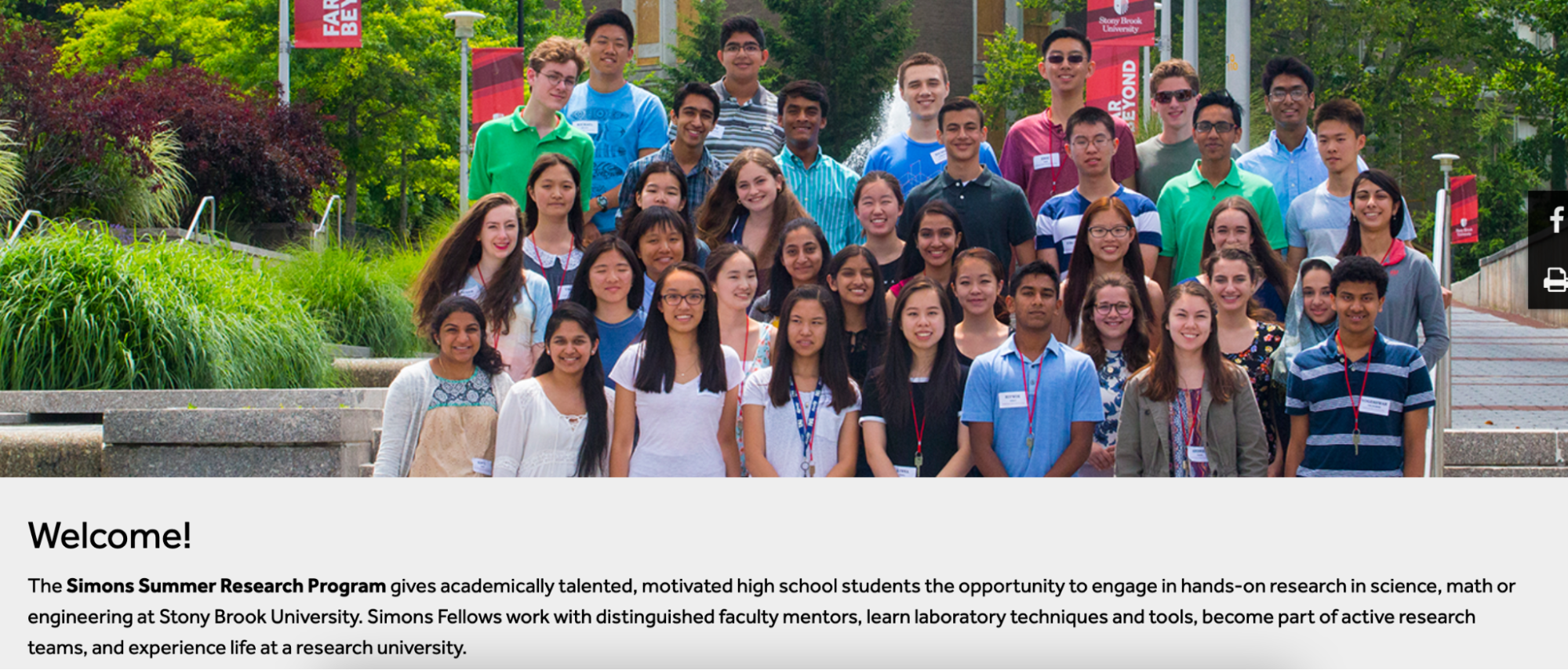
Simons Summer Research Program
Age group: Grade 11
Best for: High schoolers with a genuine interest in STEM
Simons is a 6-week summer research program where high school juniors get mentorships in math, science, and engineering. In 2026, the program dates are June 29 – August 7.
Pro
Con
Unique university research experience
Limited by grade and highly competitive
Pricing: The Simons program is totally free for eligible students.
SAMS Summer Math Tutoring Programs
Age group: Grades 11-12
Best for: Rising math seniors seeking a 6-week camp
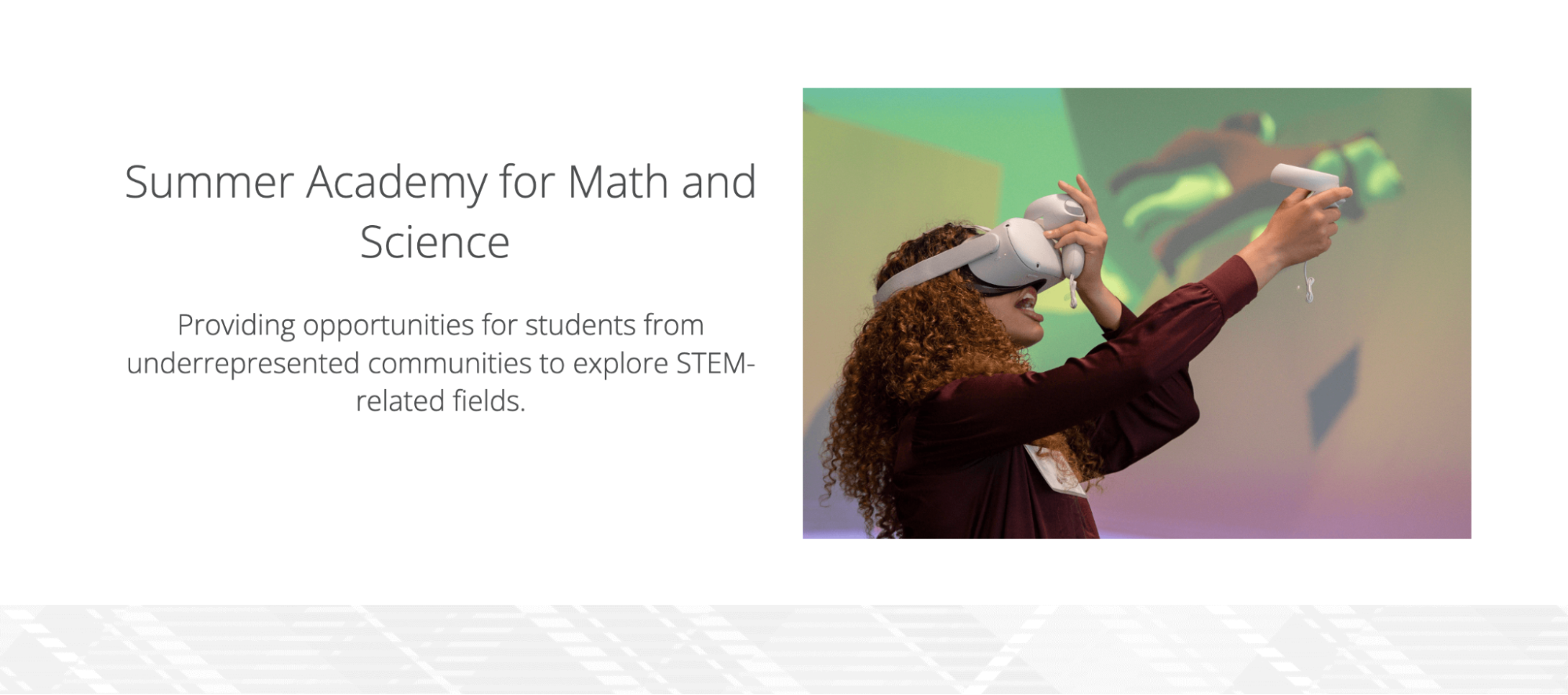
SAMS, or Summer Academy for Math and Science from Carnegie Mellon, is a 6-week, tuition-free STEM academy for rising high school seniors, with rigorous math modules.
The rigorous curriculum develops a deeper understanding of STEM on top of traditional K-12 education. It consists of three parts: a required virtual Jumpstart to build necessary skills, a 6-week in-person pre-college program, and ongoing virtual enrichment sessions.
Pro
Con
Prestigious and rigorous STEM curriculum
Highly selective merit-based admission
Pricing: The SAMS program is free for selected students from underrepresented communities. In 2026, the program will take place between June 30 and August 11.
RSI Summer Math Programs
Age group: Grade 11
Best for: Top math seniors who want to study at MIT
RSI, or Research Science Institute (MIT), is a 6-week residential research program where ~100 top rising seniors spend one week in advanced math classes and five weeks on a mentored research project.
The program is exceptionally selective and combines STEM lectures with unique mentorship in math, science, and engineering. The camp program also includes a research symposium to present the independent project.
Pro
Con
Free and covers traveling
Extremely selective
Pricing: Participation is free for 100 selected students, including tuition and housing.
Conclusion
To choose among the summer camp options in 2026, consider your needs and your kid’s circumstances:
For Olympiad-style training, apply to online training from AwesomeMath or offline camps from AlphaStar, Epsilon, and Explo.
For fun summer activities, choose between Khan Academy and Outschool.
For summer math camps for middle schoolers, go for MathPath and MathILy-Er.
For free summer camps, apply to RSI and SAMS.
Our summer camp adapts to any goal, any grade, and any schedule — no application deadline, no waitlist. Book a trial lesson today to see your options.
Frequently Asked Questions
How to Choose a Summer Math Program?
Choosing a math summer program depends on learning goals (catching up, preventing summer loss, or getting ahead of grade level), current grade level (highly relevant for summer residential programs), preferred learning format (offline camp, virtual classroom, or math center near me), and budget constraints.
How Much Do Summer Math Programs Cost?
Prices for summer programs may differ dramatically, ranging from $4/class (Outschool) up to $7,500-8,000 for a 5-6-week residential summer camp. The exact cost depends on the pricing model and the duration of the program, with math apps for kids usually costing less than enrichment programs offered by universities.
What Is the Best Summer Math Program for Elementary Students?
Khan Academy, Brighterly, Mathnasium, and Prodigy Math are top summer math programs for elementary students. Choose the best one based on your child’s needs and preferred learning style, as they differ based on the teaching format (live sessions vs group settings vs pre-recorded videos) and style (gamified practice vs offline centers vs online tutoring).
When Should I Sign My Child Up for a Summer Math Program?
Most residential programs open their application periods in December and January and close them in March or April, and summer math programs for high school students are especially competitive. Thus, checking options at the beginning of the year increases your chances of getting into a summer program.
Are There Free Summer Programs?
Khan Academy, Zearn, SMSSP, MathCounts, √mathroots, (MS)², Simons, and SAMS are top free summer programs in 2026. Additionally, students from low-income families with great academic results and interest in math are eligible for scholarships in expensive summer camps like Canada/USD MathCamp, PROMYS, and HCSSiM.
How Do I Prevent the Summer Math Slide?
Enrolling in a summer math program, setting inspiring summer goals, and finding ways to trace math in things around are the key methods to prevent summer slide. For summer programs, parents can choose among different learning formats like residential camps, virtual courses and contests, online tutoring sessions, or offline math centers.
Rachelle Bencio Yu is a qualified tutor with more than 15 years of experience teaching math to children from Pre-K to 12th grade. Currently, she is one of the best teachers at Brighterly educational platform and an author of educational content on the Brighterly blog.
Preschool is the perfect time to show your kid what their future education process will look like. Meanwhile, you should still remember that they still just want to have fun. To ease your parenting journey, we’ve gathered 11 different preschool philosophies and briefly explained each of them. Let’s dive into the world of youth education! […]
Jessica Kaminski
Jun 27, 2022
Next article
ParentingMath in the Real World: Everyday Examples for Kids (2026)
People use math daily – from shopping and cooking to playing sports and managing money. Whether your child is just starting to learn numbers or tackling advanced math concepts, this guide gives you examples of how to apply math in the real world by category and age, plus careers that use math most intensively. Why […]
Jessica Kaminski
Jun 30, 2022
Table of Contents
Math & reading from 1st to 12th grade
Exploring alternatives? Take a short quiz!
Choose kid's grade
Grade 1
Grade 2
Grade 3
Grade 4
Grade 5
Grade 6
Grade 7
Grade 8
Grade 9
Math & reading from 1st to 12th grade Looking for homework support for your child?
Best reading comprehension apps include Brighterly for personalized, gamified learning, Read Along by Google for free fluency development, and I Read for engaging stories. This guide walks parents through the 10+ best reading comprehension apps that help children practice focus, vocabulary, fluency, and critical thinking. Paid Reading Comprehension Apps: Comparison Explore Brighterly Learning Experience Learn […]
You can consider educational websites the best if they’re effective and affordable. The following 35+ most popular and widely used edu platforms for kids compare in subject focus, learning formats, instruction methods, pricing plans and commitment periods, and how they ultimately boost (or not) your child’s academic outcomes. Best Online Learning Sites for Kids – […]
Ever heard a story read in a flat, robot voice? Not fun! Reading with expression lets kids make characters laugh, whisper, or sound surprised. That little sparkle of tone and rhythm can turn simple words into a full adventure, keeping every listener engaged and excited. Key points Expressional reading transforms ordinary words into captivating tales. […]
Marvi M. Andres
Oct 07, 2025
We use cookies to help give you the best service possible. If you continue to use the website we will understand that you consent to the Terms and Conditions. These cookies are safe and secure. We will not share your history logs with third parties.
Learn More