How to Help My 3rd Grader With Reading: 10 Tips That Work
reviewed by Marvi M. Andres
Updated on March 12, 2026

Third grade reading skills lay out the foundation that will affect the entire upcoming learning process. That is why parents usually pay extra attention to their child’s reading level at that grade. In this article, you can pick some of the most effective tips to use at home to help your 3rd grader perfect reading.
Key Points
- Third grade is a major turning point in studies when kids start learning to extract meanings and analyze information while reading, rather than just read words.
- Using reading strategies for 3rd graders can be very effective in improving the kids’ reading levels.
- In 2024, only 31% of 4th graders were at the proficient level in reading.
- Brighterly offers customized, one-on-one lessons where reading activities for struggling 3rd graders are designed to help kids learn grammar, comprehension, and gain reading confidence overall.
What are the common reading challenges for a 3rd grader?
Common reading challenges for a third grader include difficulties pronouncing complex words, maintaining the reading speed, and comprehending what a text means. Also, there are challenges like having trouble remembering details from longer pieces or losing motivation when the reading material becomes more complicated.
However, all kids are different, so this set of issues and their intensity may differ for each child.
Why 3rd grade reading is crucial?
Reading importance for 3rd grade lies in the fact that it’s a pivotal transition year in the educational system when students shift from simply learning to read to using reading for learning. Basically, that’s when kids need to reach a reading level sufficient to understand more complex, subject-specific material in the following academic years.
To ensure that, 26 states even have specific retention laws that either allow or require repeating the 3rd year if the kid doesn’t have a literacy level considered necessary to handle the 4th grade curriculum (according to the 2024 report information).
Is it normal for a 3rd grader to struggle reading?
Yes, it’s totally normal for a 3rd grader to struggle with reading, especially in terms of comprehension abilities. The thing is, third grade reading, like the entire curriculum, becomes much harder, demanding a larger vocabulary and greater analytical skills from kids. No wonder many of them start feeling overwhelmed and may need additional help from a parent or a tutor to successfully get through the program.
How to help my 3rd grader with reading comprehension? 10 tips that work
- Work with a professional tutor
- Practice with worksheets
- Read aloud together
- Ask open-ended questions
- Establish a daily reading routine
- Use visualization tools
- Create an encouraging environment
- Include writing in a reading practice
- Play word games
- Try book tracking apps
Work with a professional tutor
Best for: Building strong reading skills based on professional feedback and mentoring.
Research conducted in 2023 by Kalena Cortes, Karen Kortecamp, Susanna Loeb, and Carly D. Robinson shows that regular lessons with a tutor, even if they last from 5 to 7 minutes, can make a big impact on a kid’s reading skills. So, when looking for reading help for 3rd graders, this is definitely an option to consider. After all, a tutor is a professional who not only provides undivided attention and feedback to your child but also knows how to identify and target the problems that hold them back.
Online reading lessons with Brighterly
Brighterly math and reading learning platform is where parents can get expert reading support for their kids. Tutors here use various interactive tools and personalized lesson plans to address each child’s specific learning gaps and ensure that every student is comfortable and excited while learning.
Also, the experts on the Brighterly reading program know how to tutor a 3rd grader in reading even if a child struggles with dyslexia or ADHD, which inevitably complicates the learning process. In such cases, tutors apply relevant techniques and teaching styles that help a neurodivergent kid learn effectively.
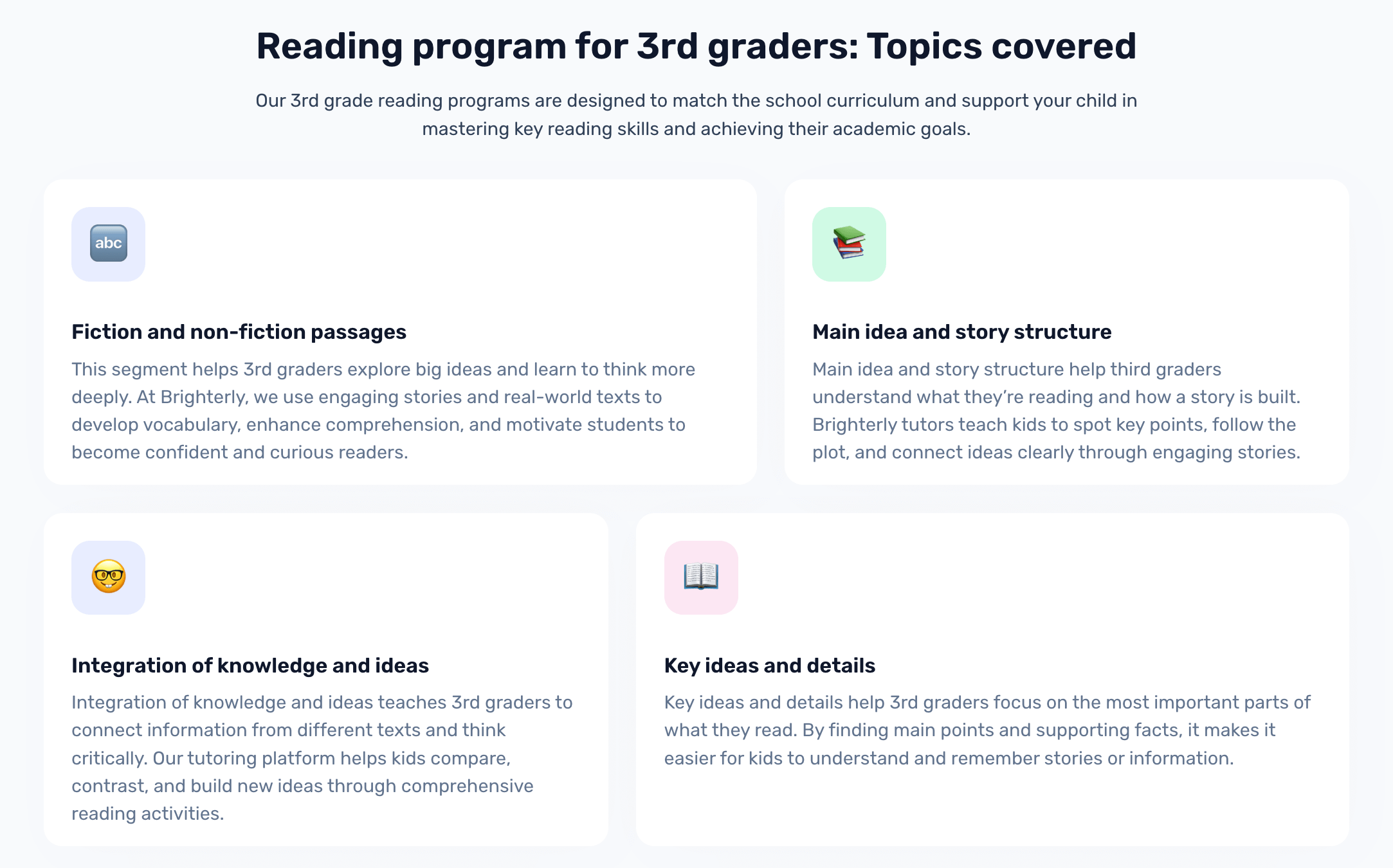
The platform also offers free access to its reading tests and reading worksheets, so that parents can see the current reading level their kid has now and practice to improve it whenever they want.


Practice with 3rd grade reading comprehension worksheets
Best for: Regular exercise without the need for any preparation.
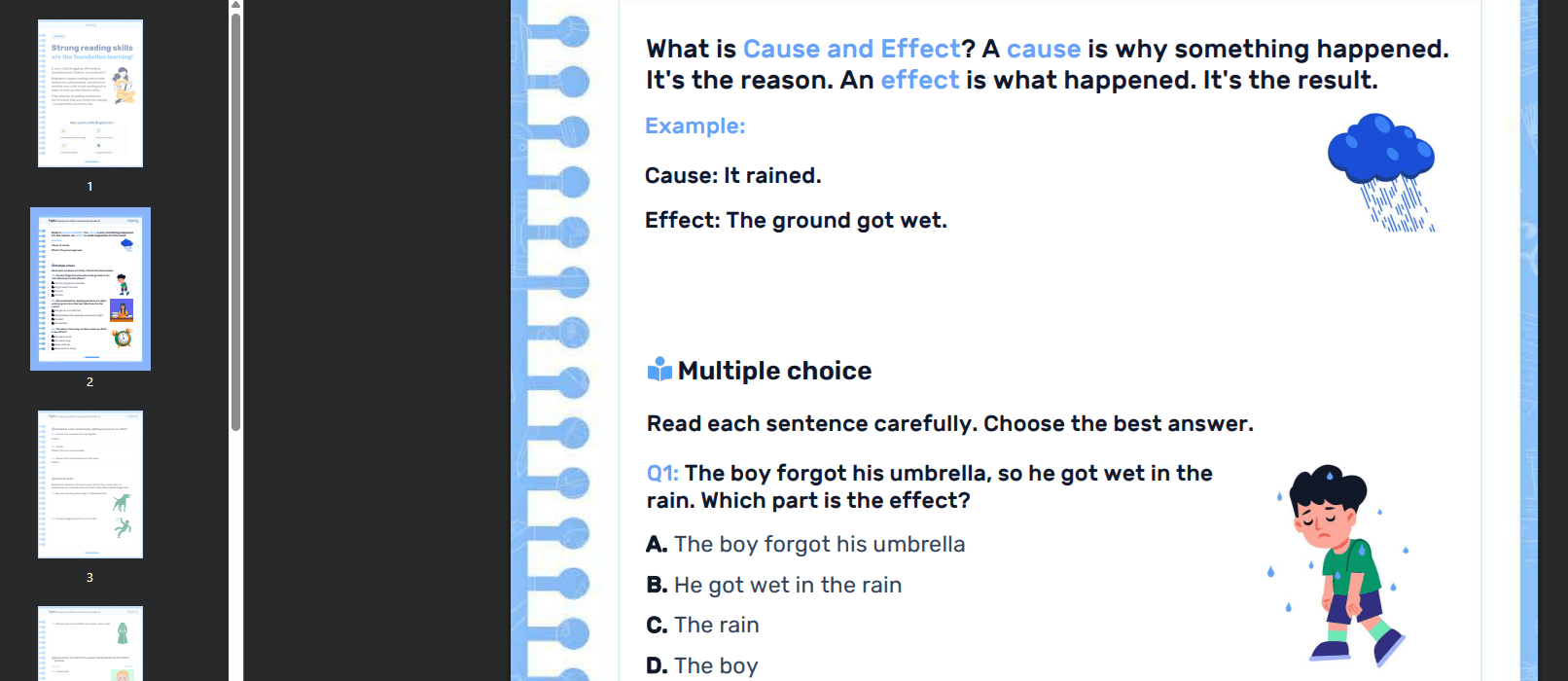
Reading comprehension worksheets for 3rd grade are a great way to make reading an easy and interesting routine. These materials are already pre-structured, and all you have to do is basically read short stories and answer related questions.
This method allows kids to train their critical thinking and memory skills, as they have to analyze and remember the main parts of the text to give the right answers. To see how that works, parents can start by downloading a 3rd grade reading comprehension PDF.
Read aloud together
Best for: Improving fluency and building vocabulary.
Reading aloud together can help kids pick up the right reading pace, tone, word pronunciation, and understand how punctuation influences the flow and mood of a sentence. Altogether, this helps build reading comprehension in 3rd grade through an auditory activity.
Of course, the benefits of reading aloud will be the most visible among kids who absorb information best through listening. But even if it’s not the primary learning style for your kid, it’s still worth trying, since it can turn out to be a great way to introduce a kid to texts slightly above their own reading level, giving them a chance to hear how more complex words are pronounced, for example.
Ask open-ended questions
Best for: Training critical thinking.
Open-ended questions help deepen the understanding of a text. All you need to do is pause while reading a story and ask related questions that will require the kid to analyze character motivations, predict future plot turns, or summarize the events they just read. So, it can’t be “yes” or “no” type of questions.
For example, you can ask why a character made a specific choice in a particular situation, which will challenge a kid to make connections between character motivation and actions.
Establish a daily reading routine
Best for: Building consistency.
To teach reading comprehension for 3rd grade, it might be necessary to make reading a daily routine, meaning dedicating a specific, uninterrupted time each day to reading only. The thing is, when reading becomes a daily occurrence, it can turn into a habit for a kid rather than a school-related task they need to get through.
Besides, the more the kids read, the easier it becomes for them, as they inevitably learn new words, improve their pace, and improve their comprehension. So, if you’re wondering “How parents can help with reading comprehension at home”, encouraging a kid to spend 20 minutes a day with a book can be a great start.
Use visualization tools
Best for: Organizing thoughts.
Using visualization tools helps kids comprehend the story’s meaning by organizing thoughts on paper. It could be by drawing mind maps, diagrams, or flowcharts that illustrate connections among characters, events, and ideas. All these allow a child to literally see the story not as a complex text but as a visual picture. This takes off the stress of having to keep everything in mind, which helps a kid to concentrate on what’s important.
This method is great for most kids, but will be especially effective for 3rd graders who process information best through images rather than words.
Create an encouraging environment for reading
Best for: Motivating kids to read more.
An encouraging environment for reading is not only about a comfortable place with proper lighting where kids can read, but also about letting them choose a book or story. By allowing them to explore pieces they genuinely care about, you help them develop a positive attitude towards reading as something enjoyable, not a school-related task.
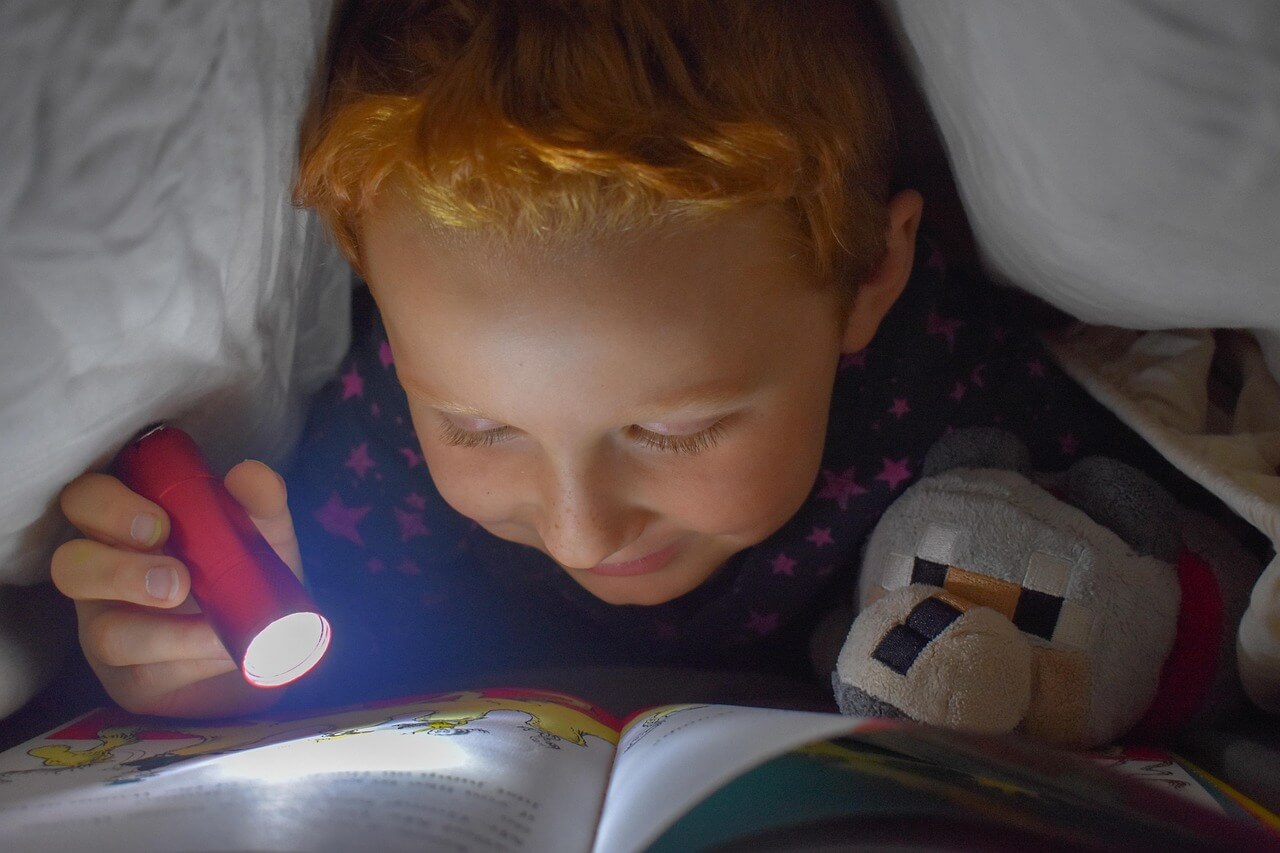
Whether your kid prefers graphic comics, magazines, or books, they all help naturally improve reading skills. Besides, the freedom of choice will only add to reading motivation, which is critical to consider when providing 3rd grade reading help.
Include writing in a reading practice
Best for: Improving text analysis skills.
Writing and reading are very interconnected, so using one skill to improve the other can be quite effective. For example, to incorporate writing into a reading practice, you can ask a child to write a short summary of a book or story they just read. This will help them learn to identify the main points and structure them both in their heads and in writing, training both analytical and grammatical skills.
To make it more interesting, you can ask them to write this summary from a character’s point of view or create an alternative ending.
Note: You can also first explore the reading and writing learning style to pick the practices that can potentially bring the most benefit.
Play word games to improve vocabulary
Best for: Expanding vocabulary and increasing reading speed.
One of the reading comprehension strategies a 3rd grade student will most likely enjoy is gamification of the learning process. It could be different types of word games, crosswords, etc. Such games help a kid learn what the words mean and how they look, which is essential for increasing reading speed and expanding vocabulary.
Note: If you’re looking to improve automaticity in reading, this guide can be a good point to start.
Try book tracking apps
Best for: Motivating kids to read more.
To stay motivated to read, kids may need to see how they progress and get better. That is where book tracking apps can help. Some of those create kid-friendly interfaces where a child can track their reading progress in numbers, graphs, etc. For example, they can see how much they read, how fast, and more, which can be very encouraging and help turn reading into a fun game.
What if reading issues aren’t addressed in 3rd grade?
If reading issues are not addressed in the third grade, they may intensify, pile up, and cause further learning problems in the following years. Besides, we’ve already covered that in some states, a kid might even have to repeat the 3rd year if they don’t meet the grade-specific requirements.
Note: According to the National Report Card, only 31% of 4th graders are proficient in reading, which means it’s best to pay attention to reading skills earlier.
Conclusion
To support your child’s literacy journey, it’s important to acknowledge how important 3rd grade actually is, but make sure not to frustrate the kid. Pick and try strategies depending on what a child likes, what they respond to the best, and what yields the best results.
If you want professional academic support from tutors who know how to teach a 3rd grader to read, try Brighterly. Their educators will choose the most effective teaching strategies for your kid. Book free reading lesson and see the difference personalized tutoring can make.


RAFT writing is a specific strategy that helps kids better organize their thoughts and engage more deeply with a school subject. In this article, as a teacher, we break down what’s behind this method, why it works so well, and provide the top 5 tips for making the most of it. Key points: RAFT writing […]

Mar 10, 2026
Math & reading from 1st to 9th grade
Looking for homework support for your child?

Choose kid's grade

Math & Reading for Grades 1–9
Build real confidence for your child with a Brighterly math or reading tutor.