Interactive Learning Statistics 2026
reviewed by Marvi M. Andres
Updated on January 5, 2026
If you have doubts regarding active or interactive learning effectiveness, you’re in the right place. In this overview, you’ll find all the relevant interactive learning statistics, with key numbers and trends.
Key stats
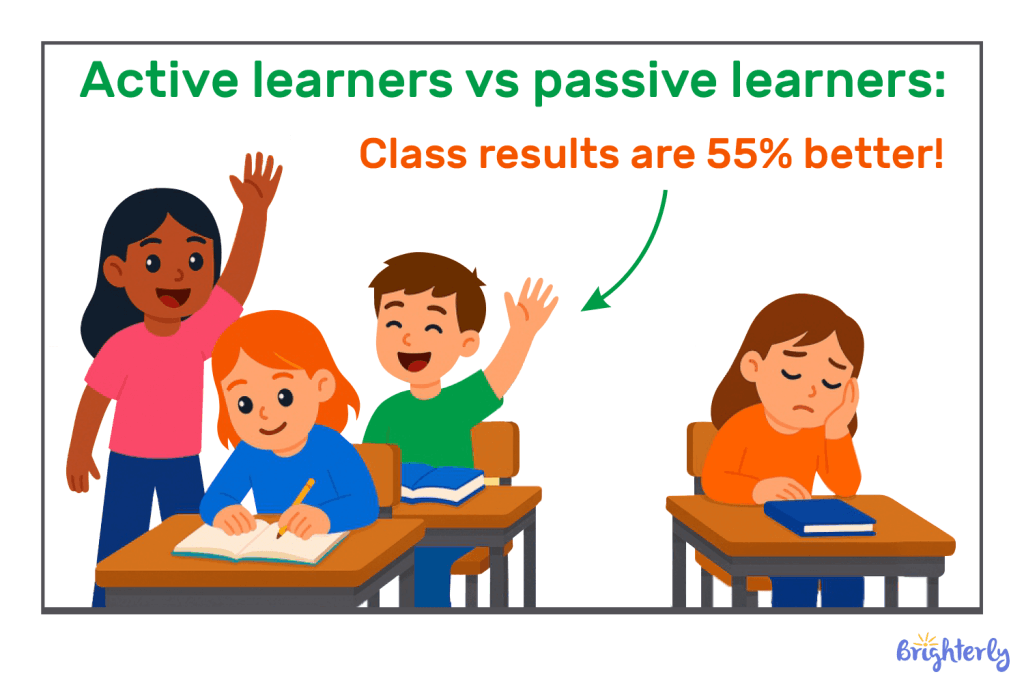
- Based on the introductory infographic, traditional lecturing failure rates are 55% higher compared to their active learner peers.
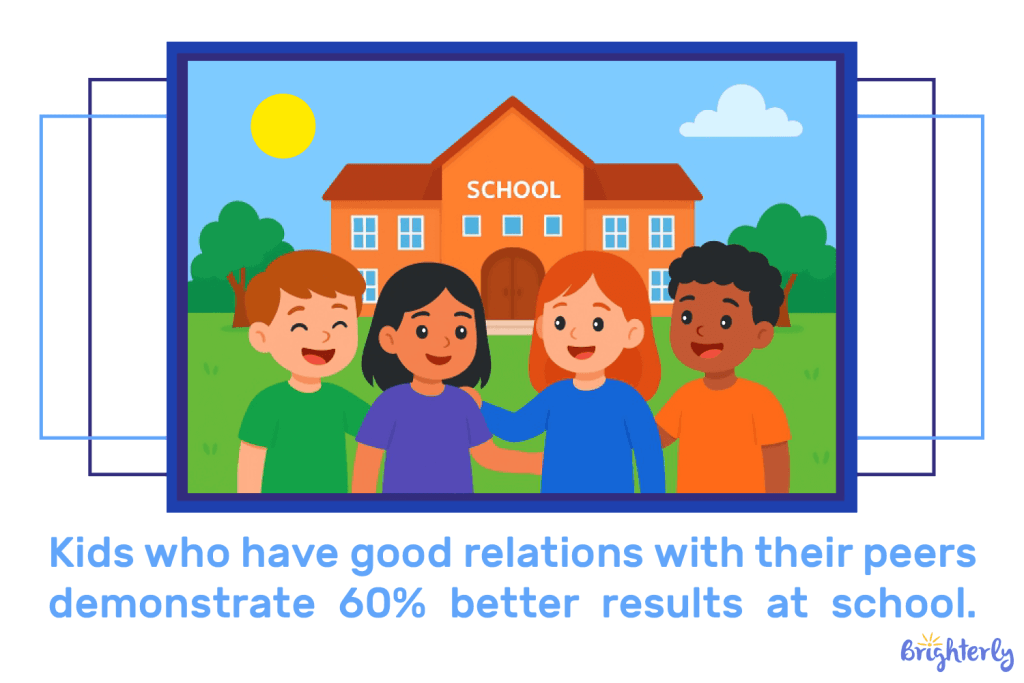
- 60% of kids perform better at school thanks to their good relations with peers.
- Around 72% of parents are not happy with traditional school learning methods.
- Since the COVID-19 pandemic, the trend for online learning has started. Currently, it’s steadily strengthening with interactive learning methods.
How much more effective is interactive learning?
Based on Freeman et al.’s findings in Proceedings of the National Academy of Sciences of the United States of America (PNAS), traditional lecturing increases failure rates by 55% compared to active learners. Based on these interactive learning statistics, it’s a scientifically proven learning method that helps students study more effectively compared to traditional lecturing.
As part of active learning that encourages kids to engage with learning material in different ways, interactive learning introduces in-class social interaction as a teaching method. This way, students work in groups, participate in collaborative brainstorming, and remain in an open dialogue with an instructor or tutor.
You can try relying on such interactive learning for kids statistics as a part of your class activities or switch to this method entirely to start seeing better performance results in students.
How do kids’ interactions improve in-class performance?
Based on interactive learning numbers, peer relationships serve as a mediator and boost engagement in class. In particular, nearly 60% of kids demonstrate good results at school by having satisfying peer relationships that inspire them and motivate them to learn more.
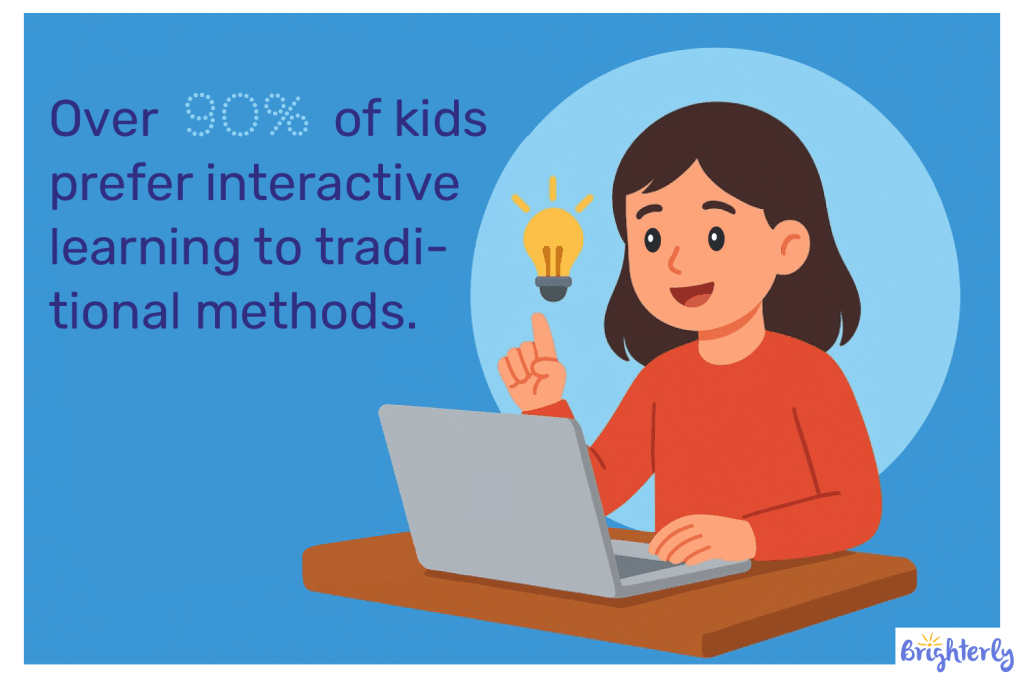
Given these benefits, over 90% of students prefer peer-assisted teaching to traditional methods.
How can tutoring-based interactive learning boost in-class performance?
For statistics on interactive learning, private tutors address the kids’ need for social integration, especially for those who study under remote and homeschool models. Based on homeschooling statistics, nearly 72% of parents opt for the homeschool model as a response to dissatisfaction with the academic quality of traditional public schools. At the same time, the absence of proper socialization is one of the major concerns of homeschooling.
In this situation, a private tutor who acts both as a teacher and as a learning partner can cover this gap. By maintaining an open dialogue and carefully choosing teaching methods to address their strengths and weaknesses, tutors actively engage children in the learning process. This way, they address the key active learning and interactive learning data benefits.
How does Brighterly interactive learning platform work?
Brighterly math and reading platform offers 1:1 private tutoring classes for elementary and middle schoolers under a personalized learning plan that heavily relies on interactive learning methods.
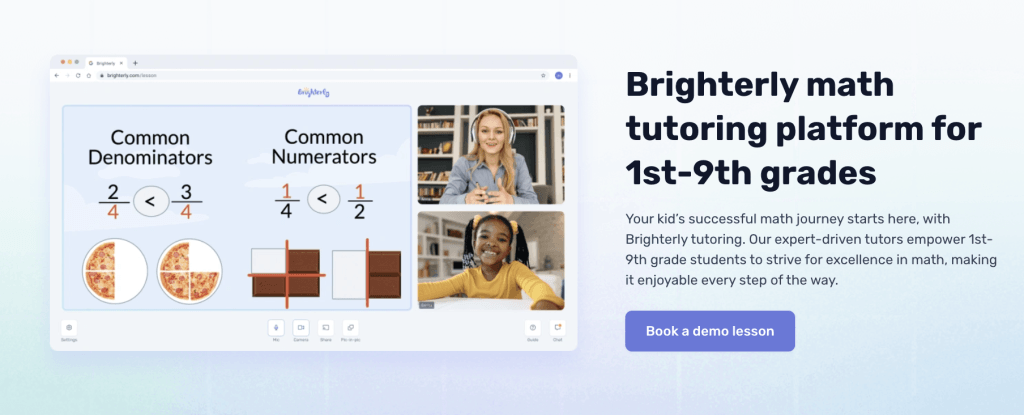
The key platform features are:
- Friendly tutors: Brighterly teachers help with complex tasks like advanced math or reading comprehension for kids with ease and fun.
- Interactive learning plan: A Brighterly reading and math program based on an interactive learning model, tailored to your child’s needs.
- Engaging free materials: For parents to supplement kids’ homework practice, free math worksheets and reading worksheets with engaging activities and fun drills are available on the website. Also, you can start with a free math or reading class from Brighterly tutors to see how the service works.


Interactive learning statistics: 2021-2026
Not much interactive learning research has been conducted since Freeman et al.’s findings in 2014 (PNAS). Their research demonstrated that failure rates averaged 33.8% under traditional lecturing versus 21.8% under active learning and contributed to a 55% relative increase in failure under lecturing.
The key interactive learning statistics 2021-2026, with prevailing trends and key numbers, are presented in the table below.
2021 |
2022 |
2023 |
2024 |
2025-2026 |
|
| Key trend | Online classes | Online learning programs | Digital learning platforms and systems | eLearning with interactive tools | Interactive eLearning |
| Supporting data |
The number of Internet users increased by 17% and reached 63% worldwide, helping with hybrid education |
A global demand for massive open online courses increased from 300,000 to 220 million (McKinsey, 2022) | 53.1% students in the US are enrolled in online degree programs (25.6%) or some sort of online education (27.5%) (NCES, 2023) | In grades 1–3 and 4–6, interactive learning improvements are 24.6% and 22.2% in math (Mengru et al, 2025) | Stats TBD, but most studies concentrate on the role of AI, VR, and other interactive learning methods in education (Mengru et al, 2025-2026) |
All in all, the broader application of online learning with the steady incorporation of interactive learning methods is evident. In 2026, the role of gamification, AI, video-based learning, and peer-based learning has become crucial, also shaping the future of interactive learning.
Interactive learning trends
Microlearning
Small-sized, interactive lesson units are among the top interactive learning trends due to the increasing lack of long-term focus problems in recent years.
We live in a high-paced digital world, and social media contributes to the information overload people currently struggle with. In this regard, microlearning combines the best from traditional classrooms and interactive learning, breaking down big, complex learning plans into easy-to-follow tasks with quick rewards.
The most effective learning apps (like Duolingo) involve competition, making students eager to learn from their peers, feel their support, and overcome them on the leaderboard.
Gamification
Based on the interactive learning and gamification in education statistics, an impressive 85% of youngsters aged 12-17 in the US play video games these years. Thus, to be effective, learning models should include gamification elements too, be that online microlearning or offline traditional classroom.
Games relieve stress and increase engagement in the learning process, also contributing to better academic performance and facilitating interactivity in the classrooms.
Artificial intelligence (AI)
AI is shaping education statistics and trends in several directions: kids are frequently using chatbots for completing their homework, gaining new knowledge, or as a learning pal to discuss classroom problems.
In addition to individual AI adoption, many companies and platforms apply AI technology to improve their services with auto-generated answers, video chatbots, or digital avatars. And given the current dynamic, the role of AI will be more and more important in online learning.
Video-based learning
Video technology is another important direction of interactive learning development, as video content has the highest engagement levels compared to photos, text, and audio.
Once applied in education, video has both strengths and weaknesses. On the one hand, it’s more interesting for online students these days, and you can also utilize AI dubbing to convert your lesson plans in language of your students’ native language. Yet oftentimes, video-based learning is passive and hard to track. This is why video course content should be strengthened by other teaching methods.
In this regard, video-based tutoring platforms offer the best combination of video content with tutoring interactions. Kids are engaged by both what they see and the dynamic a tutor offers them, supported by an individualized learning plan and undivided attention to their style and needs.
Why is interactive learning important?
Interactive learning is crucial if your teaching goal is to increase motivation, retention, and subject comprehension in kids. It’s important to add the element of interactivity as often as possible to make studying more interesting and help kids reach higher academic results.
Based on the OECD and other interactive learning studies, the role of other children, caregivers, and tutors is key to a child’s development. Thus, setting the environment where they can freely and interactively learn from other people is key to their future success.
Given the benefits of interactive learning, it’s important to introduce its key elements in the teaching process. If you stick with passive lecturing only, it’s hard to achieve complex objectives like creative thinking and a proactive approach.
Benefits of interactive learning
- Greater learning quality
- Leads to better academic outcomes
- Good for student engagement and retention
- Encourages life-long learning
- Broadens kids’ horizons
- Fosters communication skills
Greater learning quality
Based on interactive learning numbers, it significantly contributes to developing complex skills like critical thinking and analysis abilities. With this teaching method, students are encouraged to critically evaluate the learning material and build their own link with the course content to further defend their position in front of their peers.
This way, interactive learning helps kids to be more likely to participate actively in class, search for their own answers, and train their critical thinking and argumentation abilities in open discussions with their peers. All this leads to increasing the quality of learning compared to rote memorization encouraged in traditional classrooms and passive lecturing.
Leads to better academic outcomes
Based on the key interactive learning statistics, this approach increases the likelihood of getting better grades at school, with up to 55% higher test score probability (PNAS). The reason behind this is that kids naturally enjoy learning while socializing, and collaborative projects leave a deeper impression on them.
By getting encouragement, support, and real-life feedback during interactive learning sessions, kids are more likely to engage openly, deepen their interest even in the most complex terms, and self-correct before being asked to pass the test that checks their knowledge.
Good for student engagement and retention
Better achievement of learning objectives with interactive learning is possible because it’s more interesting to them. Given the fact that interactive learning increases genuine interest in the subjects, helps kids better communicate with their peers, and makes lessons more fun, they are more eager to learn something new and overcome difficulties together with their peers.
This way, higher engagement and retention contribute to better academic performance and increased interest in the subject learned and studying as a process.
Encourages life-long learning
Interactive learning data makes it possible to state that it encourages initiative to keep learning even after graduation from school. Studying together with peers is helpful in building positive associations and good memories, and kids are very likely to keep relying on their cognitive abilities and use interactive learning to their advantage in adult life.
As interactive learning encourages self-regulation, curiosity, and autonomy, kids become more confident and independent learners and need less external pressure to learn something new. Later on, these skills can become critical for future success, helping them become leaders in their lives.
Broadens kids’ horizons
With interactive learning, children are trained to be open to new knowledge and alternative views. The more actively they are encouraged to participate in discussions with their international peers, the more they can learn about different cultures, histories, and viewpoints.
To achieve this benefit of statistics about interactive learning, it’s helpful to introduce online learning, multicultural games, and cultural exchange projects as early in the kids’ lives as possible. By asking questions, exploring, comparing, and analyzing information with their peers, they can learn more about the context of the subject compared to the classrooms where they are asked to passively absorb information.
Fosters communication skills
Interactive learning is frequently used to rely on soft skills to train hard ones. But it can work vice versa: the context of a “hard” subject like math and reading can be a starting point for social interaction skills and empathy in kids.
In this scenario, it’s important to introduce techniques like role-play and peer-to-peer teaching to train kids’ abilities to listen, respond, and adapt to others’ ideas.
Conclusion
In a nutshell, Interactive learning shows strong statistics compared to traditional classrooms and passive lecturing. By introducing social interactions as a teaching method, interactive learning can significantly boost learning quality and in-class engagement and retention. Thanks to these advancements, kids are more likely to show better academic results and rely on their learning abilities to build a better career and a happier life.
If you want to try adding more elements of interactive learning into the studying process of your child, you can start with private tutoring. In this scenario, a tutor will act both as a mentor and a buddy, guiding kids under the individualized learning plan and helping them search for their answers instead of pushing them to memorize the right ones.
To check out how interactive private tutoring works, book free lesson from Brighterly! You can see how this service works and ask more questions about the interactive learning approach.


Does your child read well but still struggles to understand the text? You’re not alone: in American middle schools, about two out of three students have trouble with reading comprehension. This is the reason why I, as a reading teacher, want to share with you a wonderful method – a questioning reading strategy. It’s a […]

Nov 29, 2025

There are hundreds of Generation Genius reviews out there. But you don’t need to browse them all. I did it for you. And in this article, I’m going to share what users think about its methodology, effectiveness, customer support, and pricing. Key points Features: 8/10. Its videos are engaging, resources are helpful, and lessons are […]

Dec 01, 2025
Math & reading from 1st to 9th grade
Looking for homework support for your child?

Choose kid's grade

Math & Reading for Grades 1–9
Build real confidence for your child with a Brighterly math or reading tutor.