Teaching Main Idea: Simple Reading Strategies for Children
reviewed by Marvi M. Andres
Updated on December 24, 2025
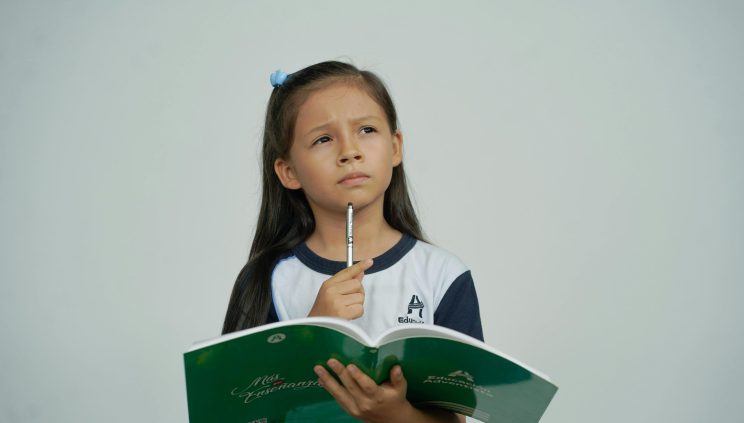
Teachers often ask kids to find the main idea and it’s not “just because.” This skill helps children understand what really matters, both in reading and in daily life. If your child has been struggling with it, don’t worry – just don’t skip it. As a reading teacher, I’ll explain why teaching main idea is so important and how you can support your child at home.
Key points
- Teaching main idea and details helps a child grasp what’s important and what’s not. When this skill is mastered, a child can think more logically, think faster, and remember information more easily.
- The main idea of a text is the main information that tells the reader what the text is really about. But it’s important not to confuse the main idea with the message or the topic.
- Supporting details describe the main idea. They often include words like who, what, when, where, why, or how.
- The best strategies for teaching main idea are asking kids more questions, looking at real-life examples, and practicing. Plus, working with a tutor.
- Brighterly math and reading platform helps your child learn how to work with a text in a full, well-rounded way. One-on-one lessons with qualified teachers help build strong results.
What is main idea?
The main idea of a text is the main information that tells the reader what the text is really about – the big point the author wants to say. It’s like the central message of the passage.
It’s important to explain this to a child, because in reading, there are many similar terms, like the message, the purpose, or the topic. To help you and your child not mix them up, I’ll explain how they’re different through a quick table and a short bee story.
Finding the main idea in a passage: Example
“Bees play a crucial role in keeping our ecosystems and food supply thriving as they move from flower to flower collecting nectar, and pollen grains stick to their bodies. When they visit the next plant, some of this pollen rubs off, helping flowers produce fruits, seeds, and new plants. This simple act of pollination helps to grow countless crops, from apples and berries to cucumbers and almonds. Without bees, many of the foods we rely on would become scarce. Their tiny wings may seem small, but the impact bees have on our world is enormous.”
Concept |
What is it? |
Guiding question |
Example |
| Main idea | This is the main idea definition, the central point of the passage. It tells what the text is mostly about. | What is the most important idea here? | Bees are important for nature because they pollinate plants. |
| Main message | The lesson or moral the reader should learn. | Why does this matter? | We should protect them. |
| Author’s purpose | The reason the author wrote the text. | What does the author want to do? | To persuade readers to protect bees. |
Note: The main idea is always the big picture, even when the text has many extra details. Sometimes the main idea covers more than one paragraph. This can happen in news stories or when the writer has a lot to say about one topic.
How Brighterly helps kids understand the main idea
Brighterly helps kids understand and define main idea through structured one-on-one lessons. Additionally, Brighterly tutors know every step in reading matters, so they teach children to work with a text from all sides. The program and tasks are fully adapted to each child.
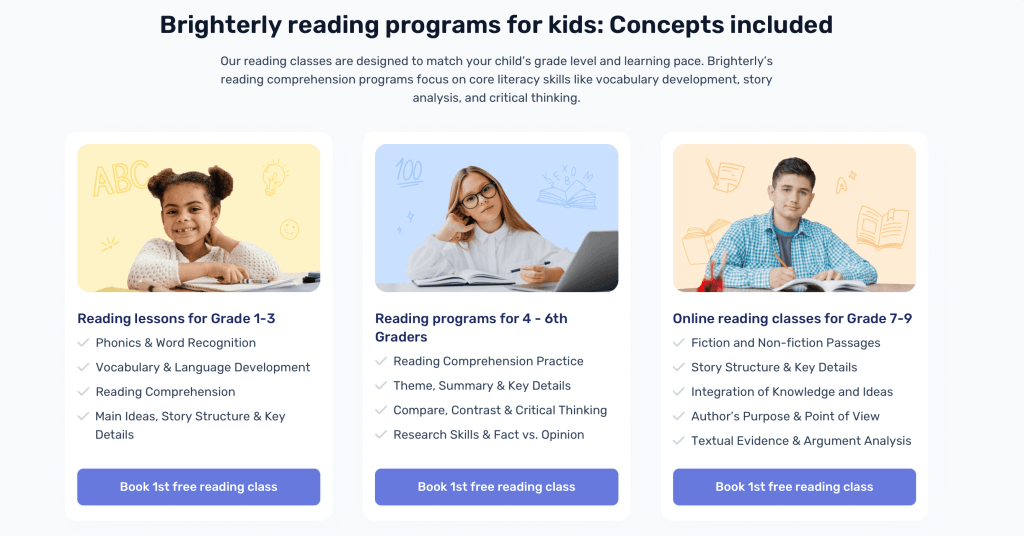
Interactive tutoring + worksheets = faster understanding
A lot depends on the teacher when it comes to a student’s results and practice. The Brighterly reading program chooses qualified mentors. They have years of experience working with K-12 students. The tutors know how to help your child with challenges.
For fun learning, the teacher uses animated presentations, games, and colorful texts. Every lesson, kids try something new, including teaching the main idea of a text. From time to time, the tutor checks the student’s knowledge with reading tests.
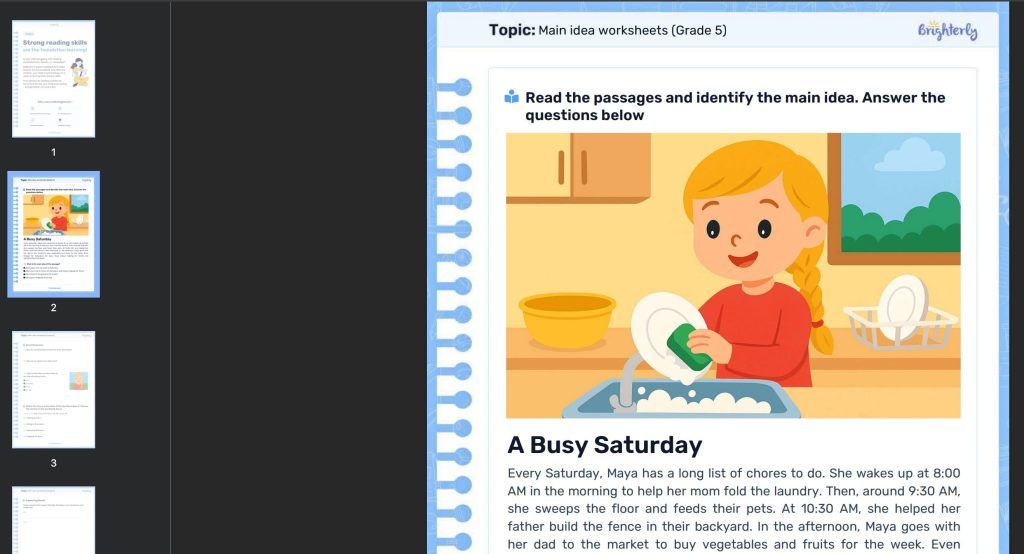
Reading worksheets are also used. These are colorful, engaging sheets that make learning faster. Children can have the same practices at home and build a strong routine. One great resource is Main Idea Worksheets 5th Grade. It challenges kids with short passages, multiple-choice questions. I’d recommend trying it, this is free.
Additionally, of course, all lessons in the program help kids do better in school. That’s because the program follows US school standards, including strategies used for teaching main idea in second grade, so students learn exactly what they need at the right level.


What are supporting details?
Supporting details are the sentences that explain, prove, or describe the main idea. In simple words, these are details that describe or explain something and help the reader in the comprehension of the idea better. Without supporting details, a text feels empty, like a house with no walls.
On top of that, supporting details often have words like who, what, when, where, why, or how. Or they answer these questions. All of this together helps kids connect information and remember the text.
Note: You can help your child practice logical thinking. After reading a text, ask them to pick three details and connect them into one simple sentence.
How to find the main idea of a story?
You can quickly find the main idea of a story by asking your child, “What did you just read?”, and “What is this story about?” If that works, great! But often, kids focus on small details like “The wolf was gray,” “The bunny jumped,” or “The girl saw a little house.” So what do you do then?
Quick tips for finding the main idea
- Try reading the story again with your child, but skip all the descriptions of characters, locations, and dialogues. This helps teaching the main idea.
- Ask your child: “If you told this story to a friend in one sentence, what would you say?”
- Look at the story’s title or topic – sometimes this alone can give you the main idea.
- Go through the text with your child and notice which words or phrases appear most often. These keywords can help form the main idea.
How to find the main idea of a passage?
To find the main idea of a passage, try asking yourself: “What is the topic?” and “What is the author really trying to say about it?” Check the first and last sentences; they usually repeat the main point. The title and introduction are also helpful, they give clues about what to focus on in the passage.

A simple guide to finding the main idea of a passage
- First, give the passage a quick read and check out the title and intro. This usually gives you a hint about the topic and helps with finding main idea and supporting details.
- Next, ask yourself, “Who or what is this passage about?” That’s your topic.
- Keep an eye on words or ideas that pop up more than once, those are usually clues to the main idea.
- Also, check the first and last sentences of each paragraph. Often, they say the main point right away.
- Sometimes pictures or a graphic beside the text give helpful tips too – they often show what the paragraph is mostly about.
- Finally, the intro and conclusion help too. The first paragraph usually sets things up, and the last paragraph often reminds you what it was all about.
Main idea and supporting details examples
I hope you got the theory. Now, let me show you in a text what the main idea and supporting details actually look like. This will help you see how main idea teaching ideas work in real examples and make it easier to identify the most important point in a passage.
Example of short paragraph with main idea and supporting details #1
“Sharon always gets excited when she visits her aunt Jessy. Her aunt lives near a picturesque lake surrounded by tall forest. Each time Sharon comes over, she feels happy and curious about all the things she can do there. Sharon’s favorite thing is to go on little nature walks with her aunt.
After their walk, Sharon with Jessy like to sit on the wooden dock. They watch the ducks across the water and listen to the gentle waves. In the background, they can hear birds singing in the trees. Sharon feels relaxed and safe there. Soon, the sun begins to set, and that is time to come back home. Sharon often sighs. “I wish I could stay a little longer.”
Main idea: Sharon loves spending time at her aunt’s home near the lake.
Supporting details: Sharon enjoys nature walks and peaceful time by the lake with her aunt.
Example of short paragraph with main idea and supporting details #2
“Ants are tiny insects that work hard and cooperate to care for their colony. Most ants you see outside are called worker ants, and they have many important jobs. First, worker ants search for different food such as crumbs, seeds, or small insects.
When a worker ant finds food, it carries the pieces back to the nest. There, other worker ants help break the food apart and share it with the rest members of the colony. Every ant in the colony has a specific job. Together, the ants gather food, protect their nest, and take care of the young. Ants show how even the smallest creatures can achieve big things when they work together!”
Main idea: Ants are small insects that work together to take care of their colony.
Supporting details: Worker ants find food and bring it back for other ants to share.
Example of main idea in a short passage
Next, a slightly trickier task – finding the main idea of a passage. You can try doing this with your child using texts like these to pick out the main point together.
Example for main idea definition for kids
“One of my favorite vacation places is New York City. I really like visiting because there is always something exciting to do. The people are busy but very friendly. The food is amazing, and you can find restaurants from all over the world. New York City has many famous sights, including the Empire State Building, which is one of America’s tallest skyscrapers. If you are planning a trip, you should definitely walk around Times Square to see all the city’s bright lights.”
Main idea: New York City is a cool place to visit.

7 tips for teaching the main idea to kids at home
- Ask, “What is this mostly about?” after every short text. Kids actually learn faster when they hear the same simple question again and again.
- Use highlighters. Let kids mark the sentences that seem important. Seeing it helps a lot.
- Summarize in one sentence. Challenge your child to explain the text in 10 words. It’s fun and makes them think.
- Cover details with sticky notes. Then ask, “What’s still true even without the little stuff?”
- Try videos before reading. Kids can find the main idea in a short cartoon first, then move to the text. Visual arts are helpful.
- Practice with real life. Ask, “What was the main idea of your day?” or “What’s the main idea of that movie?”. This strategy of answering boosts your child quickly.
- Work with worksheets. Follow the instructions and build confidence.
Conclusion: Mastering main idea and supporting details with tutoring
As you probably know, being able to pick out the main idea in a text is a really important skill. The sooner your child learns it, the easier learning will be. You can help your child overcome this at home, but it’s much easier with a professional team.
With Brighterly reading program, your child will take much more confident steps and quickly improve reading skills and English language in general. After the lessons, your child will be able to find the main idea of a text like a breeze – simple and smooth.
What your child gets with Brighterly:
- A personalized program
- Highly qualified reading mentors
- Interactive lessons
If you’re curious about how it works, you can book free reading lesson and see if this approach is a good fit for you and your child.

Many online tutoring platforms promise convenience and personalized education for your kid, but not all deliver the same experience. If you’ve been thinking about giving Tutor.com a try, but aren’t sure how it works and what sets it apart, this Tutor.com reviews article is for you. Here, I take a close look at Tutor.com’s features, […]
Nov 25, 2025
Are you a parent choosing between ABCmouse vs Kiddopia? Choosing an educational platform is an ordeal, and in this 2026 comparison, I’ll make it easier for you. I am a professional tutor, and today I’ll break down how each stands up in terms of program, age range, cost, best features, and impact so you can […]

Nov 25, 2025
Math & reading from 1st to 9th grade
Looking for homework support for your child?

Choose kid's grade

Math & Reading for Grades 1–9
Build real confidence for your child with a Brighterly math or reading tutor.