Classifying Triangles Worksheet
Updated on December 25, 2025
Do your kids get mixed up between scalene and right triangles? If so, no worries, our classifying triangles worksheets clear up that confusion. Learning to name a triangle requires two separate classifications. One based on its sides, and one based on its angles. Let your child use these focused exercises to simplify the dual-naming system.
Classify triangles worksheet: Examples

These worksheets are impactful because they isolate the two main rules of identification. As you probably know, it’s named by side length and by angle size.
Precisely repeated visual practice helps kids instantly recognize that a single shape can, say, be both ‘acute’ (by angle) and ‘isosceles’ (by side). The anticipated result over time? The elimination of confusion and solidification of key vocabulary (like scalene or obtuse, for instance). Plus, it’s a great way to build the overall foundational geometric awareness needed for proofs.


Classifying triangles worksheet PDF: Free download
Grab your classifying triangles worksheets PDF free and get the practice needed to correctly use both angle terms (like acute) and side terms (like equilateral) together. So, if your child is ready to start becoming a geometry master, this extra tool ensures they’ll nail every single geometric definition.
More triangles worksheets
- Similar Triangles Worksheets
- Area of a Triangle Worksheets
- Angles in a Triangle Worksheets
- Triangle Congruence Worksheets
- Special Right Triangles Worksheets
Once you’ve mastered classification, feel free to check out our even deeper resources. Brighterly offers specialized sheets for finding the area of a triangle, understanding angles in a triangle, and transitioning to the challenging details of similar triangles worksheets.
Benefits of a triangle classification worksheet
- Improving shape recognition
- Reducing triangle confusion
- Understanding triangle types
- Building geometry vocabulary
- Practicing logical classification
Classifying triangles worksheet with answers in PDF improves shape recognition
Using classifying triangles worksheets with answers is the fastest way to improve your kid’s shape recognition in geometry. Constant exposure to different visual examples – be it scalene, isosceles, right, or obtuse – trains the eye.
With time, students can quickly spot the defining characteristics. The more regularly they engage in visual practice, the faster they identify a triangle by its angles and sides. No more confusion of one geometric shape with another!
Note: Research with 4th grade students shows that spatial visualization training, including practice recognizing and mentally manipulating two-dimensional shapes, leads to significant improvements in geometry and measurement skills.
Classifying triangles worksheet free printable chance to reduce triangle confusion
Confusion often arises from inconsistent diagrams. The classifying triangles worksheets free exercises use standardized visual marking. That could be arc marks or tick marks to show adjacent angles or equal sides. Employing them clearly denotes angles or equal sides. Our clear diagrams also help kids avoid confusing exterior lines with the sides of the triangle.
This consistent visual language minimizes misinterpretation. That, in turn, makes the entire classification process clearer and much more immediately recognizable. That way, all unnecessary confusion strips away.
Understanding all triangle types by sides and angles
These worksheets provide the necessary structure for your child to truly grasp the different types of triangles. Students also learn that sides and angles can be opposite each other. Consistent practice teaches them that triangles are classified using a dual system. That’s once by their sides (scalene, equilateral) and again by their angles (acute, right). Such a clear practical focus ensures they understand the core geometric rules.
Note: The dual classification of triangles by sides and angles strengthens spatial reasoning. Studies confirm that this skill highly predicts overall math achievement and success in future STEM careers.
Building strong geometry vocabulary through real shape practice
A classifying triangles worksheet 5th grade provides the critical link between the visual shape and its complex geometric name. Students stop seeing just three sides. They start using the proper terms like acute, obtuse, and equilateral. This repetitive labeling ensures that instead of mere memorization, they truly understand the meaning of each geometry term.
Classifying triangles worksheet for practicing logical classification
These worksheets force students to engage in logical classification. They do so by analyzing shapes using an if/then mindset. They must logically check if a triangle meets the specific requirements for an equilateral, right, or isosceles label.
A classifying triangles worksheet with answer key strengthens sequential, rule-based thinking. It also ensures the systematic application of geometric definitions across all problems. Plus, it enables checking the correctness right away.
Note: Research shows that learning to classify geometric shapes effectively requires logical deduction. It helps students analyze attributes and distinguish between critical and non-critical aspects systematically.
Worksheets and tests: Practice
The practice sheets paired with the math tests create a powerful feedback loop. Students use worksheets to apply the rules. Then, they may take the test to identify immediate knowledge gaps.

Start this effective routine by visiting Brighterly’s 4th Grade Math Worksheets page.


Need help with Geometry?
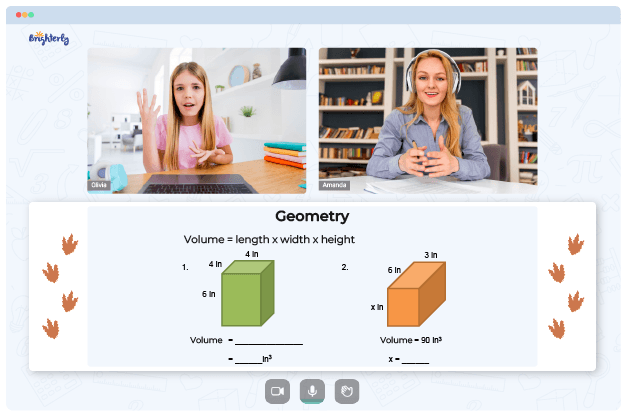
- Does your child struggle with understanding the fundamentals of geometry?
- Try studying with an online tutor.
Choose kid's grade

Is your child having trouble mastering geometry? An online tutor could provide the necessary guidance.
Book FREE lesson