Skip Counting by 3 Worksheets
Updated on October 22, 2026
Skip counting by 3 worksheets help students in Grades 2–3 recognize number patterns by repeatedly adding 3. Brighterly’s printable activities let children complete sequences, fill in missing numbers, and connect counting by threes with early multiplication.
A basic skip-counting sequence starts:
3, 6, 9, 12, 15, 18, 21, 24, 27, 30
Each number is 3 greater than the number before it.
Skip Counting by 3 Worksheet: Examples


Brighterly’s skip counting by 3 worksheets use number sequences and missing-number activities to help students recognize the repeated +3 pattern.
For example:
3, 6, 9, __, 15
Since each number increases by 3, the missing number is 12.
Counting by 3s Worksheet [Download for Free]
Download Brighterly’s free skip counting by 3 worksheets for Grades 2–3. Students can practice completing sequences, identifying missing multiples of 3, and building fluency with repeated addition.
For broader practice with different counting intervals, students can also use Brighterly’s skip counting worksheets. Brighterly’s guide on how to find multiples of a number also shows how skip counting connects directly with multiplication.
Students who need extra help moving from number patterns to multiplication can practice these skills through Brighterly’s 3rd grade math program.


See how well number patterns are clicking
A quick quiz can reveal which number skills need more practice
How to Skip Count by 3
To skip count by 3, begin with 3 and repeatedly add another 3:
3 → 6 → 9 → 12 → 15 → 18 → 21 → 24 → 27 → 30
Students can also think of the sequence as repeated addition:
- 3 + 3 = 6
- 6 + 3 = 9
- 9 + 3 = 12
- 12 + 3 = 15
Recognizing that every step adds the same amount helps children predict which number comes next without returning to ordinary counting by ones.
Skip Counting by 3 to 30
A useful early goal is being able to continue the multiples-of-3 pattern through 30:
3, 6, 9, 12, 15, 18, 21, 24, 27, 30
Students can cover one or two numbers in the sequence and identify what is missing. They can also start in the middle — for example at 12 — and continue with 15, 18, 21, and so on.
Skip Counting by 3 and the 3 Times Table
Skip counting by 3 provides a useful bridge to multiplication because each number in the sequence is a multiple of 3.
For example:
- 3 = 1 × 3
- 6 = 2 × 3
- 9 = 3 × 3
- 12 = 4 × 3
- 15 = 5 × 3
Once students understand equal groups, the familiar skip-counting sequence can support fact recall. For wider multiplication practice, use multiplication worksheets for Grade 3.
Skills Students Practice While Counting by 3s
Complete Number Sequences
Students continue a pattern by repeatedly adding 3 and identifying the next value.
Find Missing Numbers
Missing-number exercises require students to use the surrounding values to determine which multiple of 3 belongs in a sequence.
Recognize Multiples of 3
Repeated exposure to 3, 6, 9, 12, and other values helps students become familiar with the multiples of 3 before formal multiplication facts become automatic.
Use Repeated Addition
Skip counting shows that multiplication can be understood as adding equal groups repeatedly.
Build Number Pattern Fluency
Students learn to recognize a consistent numerical rule and apply it forward through a sequence rather than counting every number individually.
Other worksheets
- Count by 2 worksheets
- Counting by 5s worksheets
- Skip counting by 4 worksheets
- Skip counting worksheets
- Multiplication worksheets Grade 3
Frequently Asked Questions
How Do You Skip Count by 3?
Start at 3 and add 3 each time. The sequence begins 3, 6, 9, 12, 15, 18, 21, 24, 27, and 30. Students can use repeated addition or look for the pattern between consecutive numbers.
What Grade Do Students Learn to Skip Count by 3?
Students can begin practicing skip counting patterns in Grade 2 and use counting by 3s more extensively in Grade 3 as they connect repeated addition with multiplication and the 3 times table.
How Does Skip Counting by 3 Help With Multiplication?
Each number in the skip-counting sequence is a multiple of 3. For example, 3, 6, 9, and 12 correspond to 1 × 3, 2 × 3, 3 × 3, and 4 × 3. This helps students connect repeated addition with multiplication facts.


Need help with Counting?
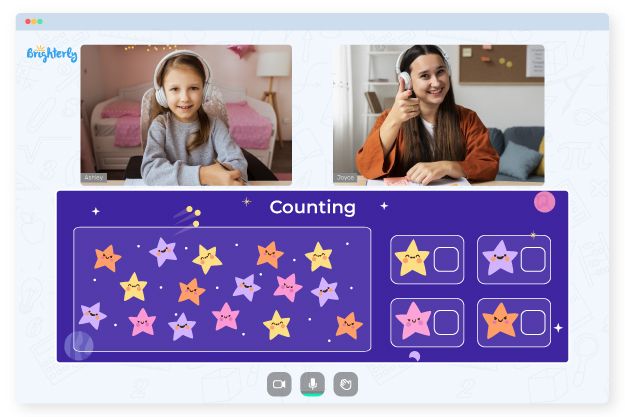
- Does your child have difficulty grasping counting concepts?
- Try learning with an online tutor.
Choose kid's grade

Is your child finding it tough to keep up with counting? Start studying with an online tutor.
Book FREE lesson