Measurement Worksheets Grade 1
Updated on August 31, 2026
Measurement worksheets grade 1 introduce young learners to core concepts like height, length, and weight using hands-on activities with everyday objects like rulers, pennies, and batteries. Filled with eye-catching imagery, these worksheets make measuring fun while building a strong foundation for future math skills.
Measurement worksheets grade 1: Examples
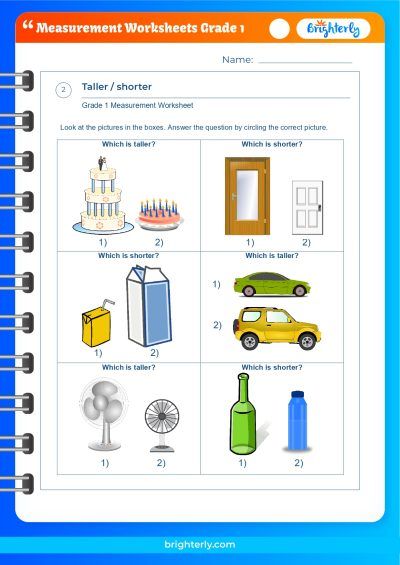
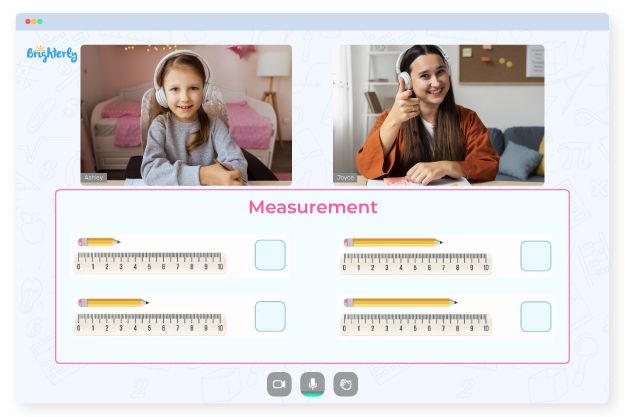
Here are some sample problems from Brighterly’s measurement worksheets for grade 1 below.
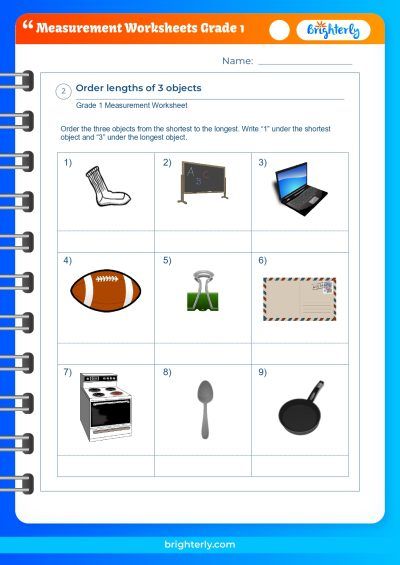
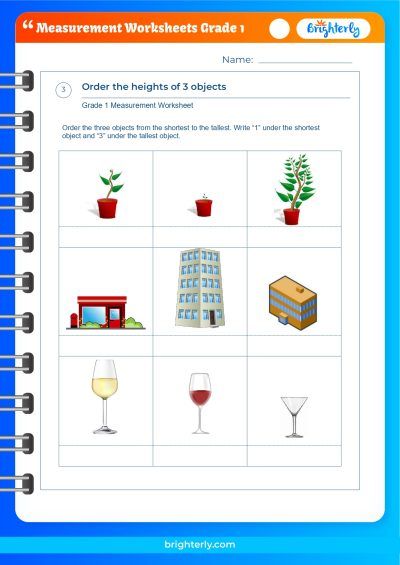
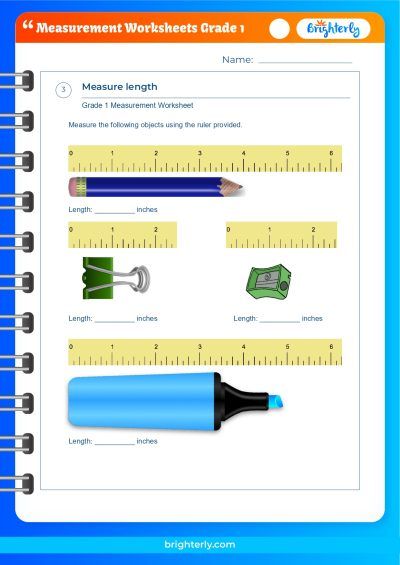

Benefits of measurement worksheets for grade 1
#1: Introduction to measurements
Our measurement worksheets for first graders give kids a comprehensive introduction to measurements, including different units, puzzles and activities involving real-life measuring.
#2: Building coordination skills
Kids will use objects like pennies and rulers to measure objects in our measurement worksheet for class 1. These hands-on activities build strong coordination skills.
#3: Independent study
With an answer sheet included, our nonstandard measurement worksheets allow kids to study independently from a young age. This builds confidence and self-study skills.
FAQ
What measurement concepts do 1st graders typically learn?
First graders usually focus on comparing lengths and heights, using non-standard units like paperclips or blocks, and beginning to explore standard tools like rulers. They also start learning basic vocabulary like “longer,” “shorter,” “heavier,” and “lighter” to describe and compare objects around them.
Why do 1st graders start with non-standard units before rulers?
Non-standard units, like counting how many blocks tall an object is, help kids grasp the concept of measurement before introducing the abstract markings on a ruler. This hands-on approach builds intuitive understanding first, making the transition to standard units like inches and centimeters much smoother later on.
What tools are commonly used in grade 1 measurement worksheets?
Grade 1 worksheets often use everyday objects like pennies, batteries, paperclips, and rulers to measure length and height. Using familiar items keeps measurement practical and relatable, helping kids see math as a useful, everyday skill rather than an abstract classroom concept.
How can I tell if my child is ready for measurement worksheets?
If your child can count accurately and compare sizes using words like “bigger” or “smaller,” they’re likely ready for structured measurement practice. Most kids in kindergarten or early 1st grade start developing this readiness naturally through everyday comparisons and hands-on play.
Why is measurement an important skill in early math?
Measurement teaches kids to quantify the physical world around them, connecting math to real life in ways that pure counting doesn’t always show. It also builds the foundation for later topics like area, perimeter, volume, and using measurement tools accurately in science and everyday tasks.


Trouble with Measurement?
- Does your child struggle with understanding measurement?
- Try lessons with an online tutor.
Choose kid's grade

Is your child finding it hard to understand measurement concepts? An online tutor might be able to help.
Book FREE lesson