3rd Grade Reading Level: Complete Parent Guide & Recommendations
reviewed by Marvi M. Andres
Updated on March 4, 2026

As a parent of a third grader, you should know what your child should be achieving as they progress through their education. This includes understanding if they’re at the correct reading level.
As a tutor, I compiled this guide to explain where your child’s third grade reading level should be, the tests they will face in school, and some recommendations for improving reading levels for those falling behind.
Key points
- Reading levels show you whether your child has the reading comprehension skills required by 3rd grade
- Different states offer different tests to assess whether children are at the expected reading level in 3rd grade, including the IREAD-3 (Indiana), MAAP-ELA (Mississippi), and TCAP (Tennessee)
- For parents asking, “What reading level should a 3rd grader be at?”, they should be able to easily comprehend simple texts, explain them back, and have good automaticity
- Third graders can improve their reading level with personalized tutoring, grade-level resources like worksheets, age-appropriate books, and writing about what they read
Third grade reading level: Main difficulties & concerns
In third grade, your child will likely take standardized reading tests that vary by state. That’s why it’s so important to understand your local testing structure.
Indiana IREAD-3 test
If you’re based in Indiana, your child will take the IREAD-3 test. This exam assesses your child’s foundational reading skills, usually exploring vocabulary and including literary and non-fiction tests.
Children must achieve a score of 446 out of 650 to pass the IREAD-3 test, which equals 68% of correct answers. Usually, if children don’t pass, they don’t progress to fourth grade, but some schools can use “good cause exemptions” to prevent children from being held back if they feel they don’t need to be.

According to Chalkbeat Indiana, scores have significantly improved over the last year, but many children still remain behind the required reading level for 3rd grade. IREAD-3 scores in 2025 showed a five-percent improvement from the previous year, resulting in 87.3% of students passing the test. However, many parents still argue that their children may not be ready for formal testing and that it could negatively impact their future learning.
Mississippi MAAP-ELA test
Meanwhile, in Mississippi, children will face the English II MAAP-ELA test in the spring, widely considered one of the most difficult reading tests in the US. The passing score is 1050, and this is carried out with assessments in math and science, too. If children don’t pass, they won’t graduate to fourth grade.
Jet, like Indiana, Mississippi’s scores are improving. Due to the Mississippi Department of Education report, the 2025 English II MAAP-ELA results showed improvements over 2024, with 77.3% of students passing the test.
Tennessee’s TCAP test
Tennessee’s TCAP English Language Arts test is considered the most stressful. It assesses children’s ability to read thoroughly, have a strong grasp of the English language, write responses to prompts, and analyze passages of text in third grade level reading books.
Chalkbeat Tennessee reports that fewer than half of third-graders were proficient in reading in 2025. Still, the percentage of proficient readers has increased from 40.9% to 41.7% from 2024.
According to the Fox 17 report, parents criticize the TCAP test not only because the exam is stressful, but also because of the time it takes to receive results. The test is administered in spring, but children often don’t receive their results until June. This often leaves parents scrambling to support struggling students over the summer and address learning challenges through initiatives like summer school.


Check the basics behind this term
Take our quick quiz to discover the perfect learning solution based on your child’s needs.
Multi-state reading tests
Many other states, including New York, Iowa, and Nevada, use the NWEA Read by 3 program. In Ohio, for example, the MAP Growth and MAP Reading Fluency tests are administered to assess children’s reading comprehension across different grades.
MAP Growth is administered in grades 1–6, while MAP Reading Fluency is administered to students in kindergarten through third grade. This consistent testing means children’s reading proficiency is tracked more closely, and poor performance can be addressed promptly if they fall behind in reading level 3rd grade.

Reddit users have noted as of October 2025 that MAP tests are relative to state-wide performance, so instead of showing how well your child is doing individually, it shows how well they’re doing in comparison to other students.
Note: Standardized testing can be stressful for both children and parents, which is why many turn to one-to-one tutoring with e-services like the Brighterly math and reading platform for strong test preparation and filling knowledge gaps.
What is a 3rd grade reading level?
A 3rd grade reading level should sit at around the 570L Lexile level, which means children can read books with basic language and sentence structures. Using the Guided Reading Levels assessment, children should sit in the N, O, or P grades, which correlate to grade 3. Children should confidently be able to read independently and at a decent pace.
So, how many words per minute should a 3rd grader read? A 3rd grader reader should be able to read around 107–162 words per minute.
Note: If you think that your child doesn’t match those numbers, you can check the article How to increase reading speed for some working tips to use at home.
But speed isn’t the only objective. A child should also be able to understand what they are reading, so retelling the gist of a story aloud to a parent or peer is a good strategy to check their comprehension. Reading aloud also helps a lot. According to the 2020 research published in the International Electronic Journal of Elementary Education, this strategy helps improve child’s understanding of written texts. For more benefits of reading aloud, please check this comprehensive article.
Additionally, children should have good automaticity, aka the ability to recognize words quickly, which boosts reading speed. Find out how to improve automaticity in reading with this simple guide.
Note: The research on Information Week shows that children who aren’t at their expected reading level by third grade are four times less likely to graduate. That’s why it’s important to address any related issues promptly.
What Lexile level is 3rd grade?
The average Lexile level for third graders is anywhere between 330L and 700L. However, a good Lexile level for the grader would place learners in the 90th percentile and above, which is 880L.
Some 3rd grade reading level examples are:
- 300L: A Lexile score that is more commonly associated with first grade reading comprehension levels. Children understand and can use basic words and simple sentences.
- 570L: Generally considered a good Lexile score for third grade children. Students can read basic books with simple language and sentence structures.
- 700L: This is considered a good Lexile score for third graders. They can read more comprehensive books with complex structures and ideas.
The Lexile score assesses children’s reading comprehension by indicating how well they can read books at certain levels of difficulty. Lexile scores can also reflect how difficult a book is, helping parents understand if it’s right for their child. The Lexile score goes from 0L (beginner reader) to 1600L (advanced reader). Learn more about Lexile levels with our informative article that covers a third grade reading level example, what the Lexile score is, and more.
How to help with 3rd grade level reading at home?
- Address a professional tutor
- Use worksheets
- Conduct regular knowledge checks
- Read grade-specific books
- Incorporate writing exercises
Address a professional tutor
Enlisting the support of an online tutor is an effective way to improve children’s grade 3 reading level. This is especially true of personalized tutoring, like that offered by the Brighterly math and reading platform, because it addresses children’s exact needs.
Brighterly’s reading tutors identify children’s reading deficiencies with an initial diagnostic test, which they then use to create a fully personalized curriculum. This addresses children’s learning gaps, ensuring they can catch up to their expected reading grade.
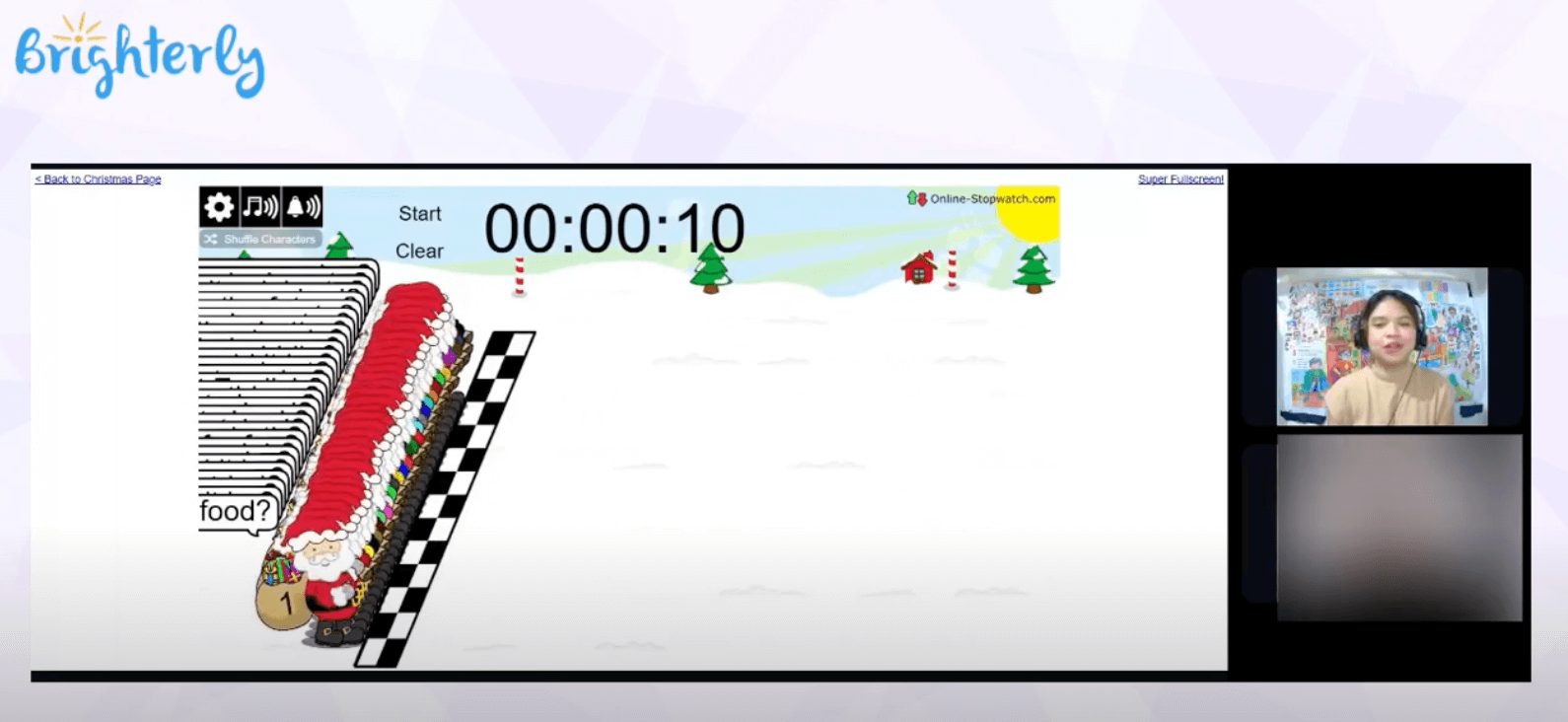
In addition to improving reading comprehension, Brighterly’s tutors are experienced at boosting children’s confidence. Kids can often lack self-belief if they struggle with reading, so having a dedicated support system helps them understand that they can achieve anything they put their mind to.
Hiring a private tutor for your child in third grade can have long-term benefits, as we know that children who are poor readers are less likely to graduate. The Brighterly reading program is aligned with state-specific educational standards across the US, so you can be confident it will bring your child up to their required grade level.
Check the basics behind this term
Take our quick quiz to discover the perfect learning solution based on your child’s needs.
Use worksheets
Completing reading worksheets outside of the classroom means that kids are continually learning and cementing their knowledge from the school day.
Brighterly’s 3rd grade reading level worksheets are designed to improve your child’s reading comprehension and focus on a range of key concepts, from sight words to persuasive writing. These worksheets focus on storified learning, which means that with every story that your child reads, their comprehension improves.
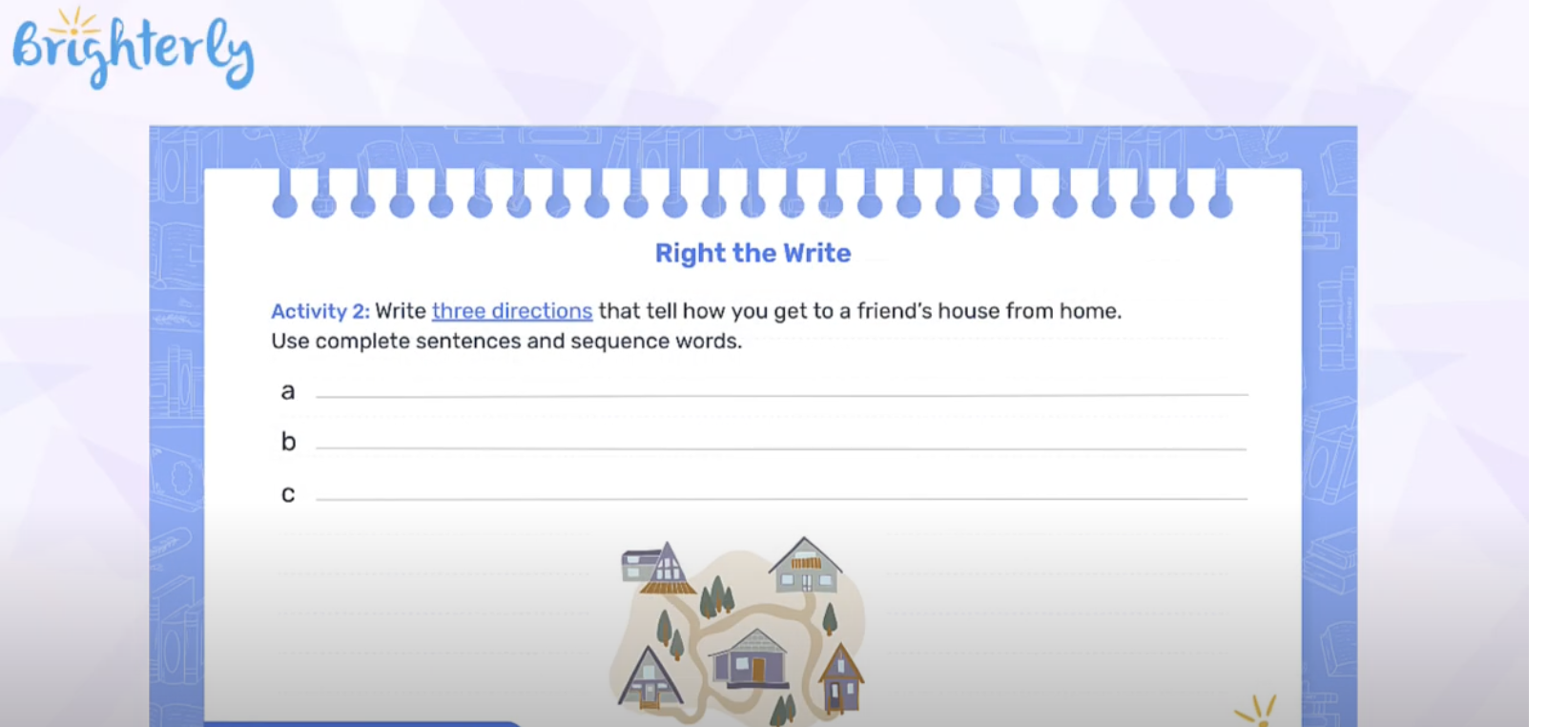
These resources are freely available online in a printable format. This is especially important if you consider the studies published at the Guardian stating that children exhibit deeper reading — and therefore become more proficient — when working with paper-based resources compared to digital resources.
Conduct regular knowledge checks
If you don’t know your child’s current third grade level reading, you won’t be able to understand whether or not they need support. Regular knowledge checks ensure you’re always aware of where they are and ready to spring into action, should it get worse.
It’s important to test both across the grade performance, i.e., how well your child reads generally, as well as testing them on specific age-appropriate topics. Brighterly’s worksheets help children assess their narrow knowledge, while this 3rd grade reading level test assesses your child’s knowledge against grade-specific requirements.

The best way to take these reading tests is to do one right away, then redo the test after some time — and notably, after activities designed to improve reading comprehension like tutoring or completing worksheets — to see if there’s been any improvement. If your child had been struggling previously and you’ve taken action to improve their 3rd grade reading levels, you should see a noticeable change in their score.
Utilize 3rd grade reading level books
Reading consistently is a proven way to improve a child’s reading comprehension — and studies have shown the results are apparent with just 15 minutes of reading a day. According to the Guardian statistic, the number of children who read for fun has been plummeting since 2003.
It’s important to improve your child’s reading motivation to boost their comprehension and provide a fun, educational hobby. One of the best ways to do that is with third grade reading level books. Story books are a sure-fire way to capture attention, but they can also engage in nonfiction books on topics they’re interested in, like animals or space. If your child isn’t a confident reader, guided reading is a good starting point.
You can use the Lexile score to determine suitable books for your child and their reading ability; here is a list of some recommended books for children who sit in the average third grade Lexile level:
- Charlie the Tramp
- It’s Only the Wind
- Rainbow Road
- The Nancy Drew series
- Mouse Deer and the Crocodiles
- Jojo and the Bake Sale
- The Curse of Heartwood Academy
These books are a good answer to the question, “What should third graders be able to read?”
Incorporate writing exercises
Reading and writing go hand in hand. According to the research published in the English Language Teaching journal, writing has been proven to boost students’ reading skills. This is especially true when children write about things that they have read. Through this activity, they understand the content they’ve consumed more deeply and can expand their vocabulary by writing about it without copying it.
When your child reads books, it’s a good idea to set them an exercise to write about it afterwards. They could summarize the story, write about the key themes and deeper meaning, and review the book itself. Each exercise requires children to deeply understand what they’ve read in order to provide a summary or analyze it on a deeper level. Children can also read 3rd grade level reading passages and summarize them if working with a full book is too challenging to begin with.

But children can write about other experiences too. If you’ve taken a recent trip, your child could write all about that. They could write about their school day or keep a journal that details their daily life, thoughts, and feelings. Every time they write, they get a little better at reading.
Conclusion
Now you have learnt all about reading level 3 and know the essential information, from children’s average reading scores to the challenges they face in school. I have also provided actionable tips to help you improve your child’s reading comprehension if they are falling behind their third-grade level.
Third grade is a key stage in your child’s reading education, and could even predict their chances of graduation in the future. That’s why it’s important to take steps now to ensure their continued success.
Book free reading lesson with Brighterly today and see how individualized lessons can make your child a better reader.

Many latest ABCya reviews point out its recent 2025 shift from a free to a paid edu games service. Consequently, many parents wonder now if it’s worth it. This guide on ABCya is based on real user reviews and dispels common doubts about its features, new pricing model, effectiveness, and overall family experiences. Score summary […]

Feb 16, 2026
When it comes to writing, sticking to correct spelling is often a struggle for kids. In that case, parents might consider a good homeschool spelling curriculum that can help. As a tutor, I’m constantly asked which one is the best. So, I’ve made this guide of some of the most effective options for you to […]

Feb 17, 2026
Math & reading from 1st to 9th grade
Looking for homework support for your child?

Choose kid's grade

Math & Reading for Grades 1–9
Build real confidence for your child with a Brighterly math or reading tutor.