
How to Learn Math: Best Ways to Study and Get Better
reviewed by Jo-ann Caballes
Updated on September 17, 2026
Key Points This guide covers how to learn math for students at any level — from learning math from scratch to figuring out how to get better at math you’re already working on. You’ll find practical strategies for building stronger foundations, practicing effectively, and getting help when you need it. The most effective ways to learn math for students focus on consistent practice, conceptual understanding over rote memorization, and applying math to real situations. Improving math skills comes down to these three areas, and the strategies below cover all of them — they can be combined into a study routine that works for any grade level. To master any skill or topic, you need to practice active learning regularly. You should set aside time to practice math on a regular basis — whether that’s reviewing classwork, completing worksheets or taking practice tests — to ensure the knowledge sticks. Base your study sessions on how long your attention span is; this generally increases with age. Younger students in elementary school should keep sessions shorter than 30 minutes. In middle school, you can extend them to an hour. High schoolers and college students can study for longer sessions. Consistency matters more than how the sessions are scheduled. As Brighterly Educational Advisor Claire Smizer puts it, the right routine is half the battle: “Consistency matters far more than volume” It’s also important to make sure your study environment is optimal, from creating a positive space to removing distractions.
Practice with a qualified Brighterly tutor
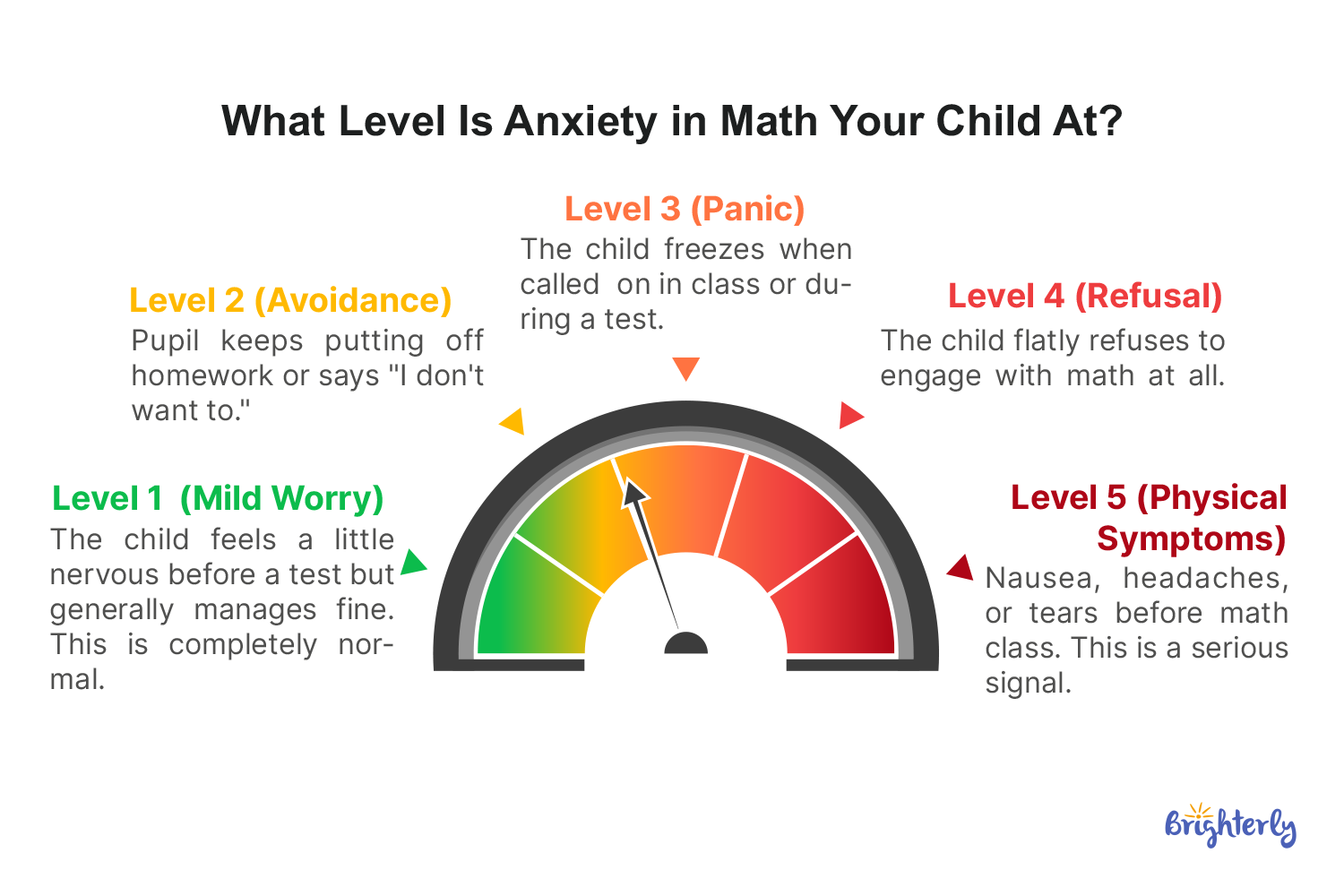
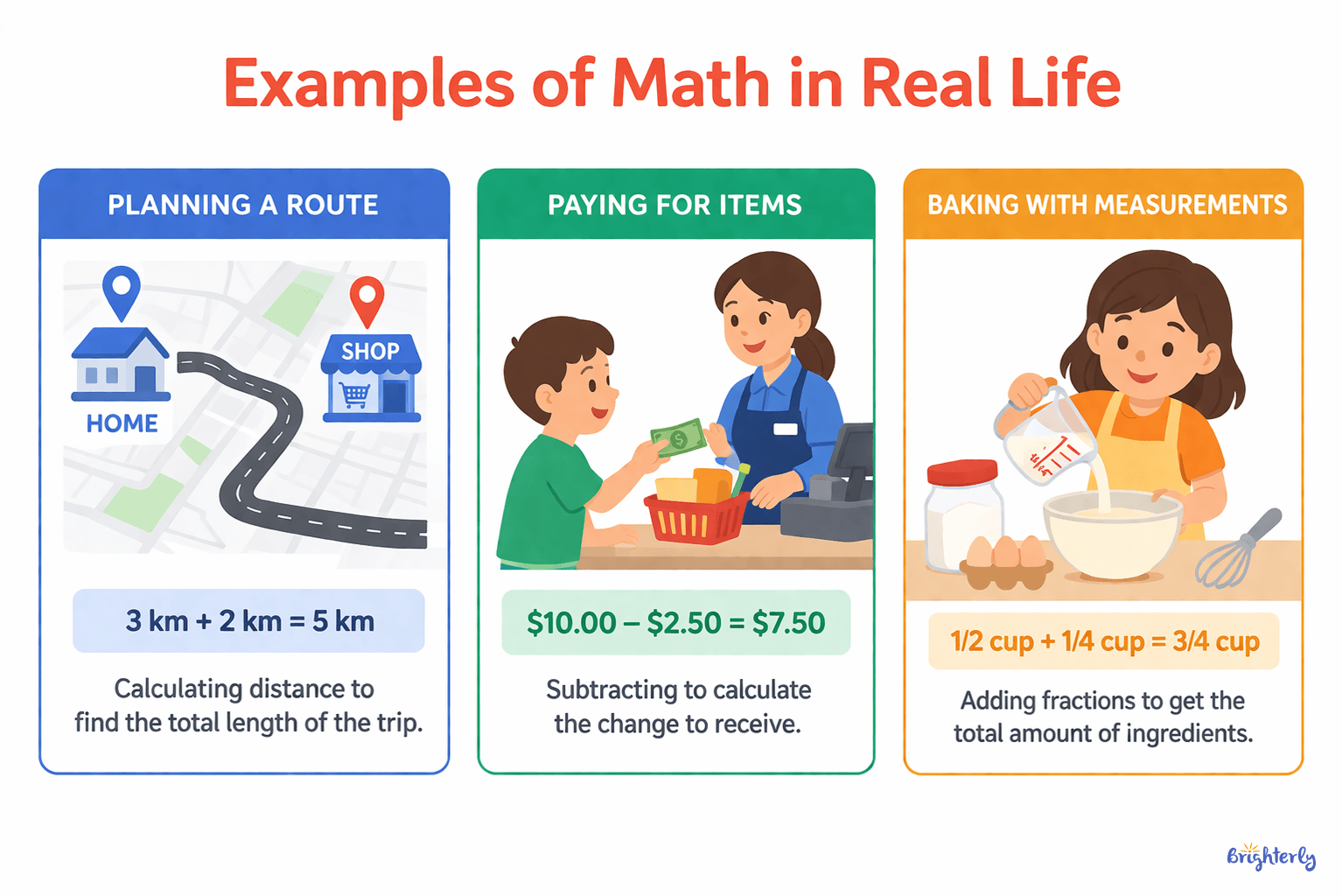
Regular learning with a tutor can help you understand math more deeply and improve your knowledge. To become knowledgeable about a subject, you need to start with the basics. Before moving on to tricks on how to get good at math, it helps to build a solid understanding of the math fundamentals — you can’t be expected to understand advanced algebra if you haven’t learned the basics of the four operations (addition, subtraction, multiplication and division). Just like languages, biology, or music, math builds on itself, and each new topic relies on what has come before. When looking at how to study math, you should take some time to focus on basic mathematical concepts, and review prerequisite skills before moving on to more advanced topics. Here’s a breakdown of the core areas, the skills they build, and simple ways to strengthen each one: Concept Skills Ways to get better at math Arithmetic Precalculus and calculus Sashank Penmatsa, Math and Physics Teacher, explains exactly why fundamentals matter so much: “Unaddressed prerequisites from previous years continue to pile up” Math can feel difficult when concepts seem abstract or when earlier knowledge gaps make new topics harder to understand. To work through it, you need strong foundational knowledge as well as problem-solving, critical-thinking, and abstract-reasoning skills. Here are some key reasons why math can feel difficult: For some students this shows up as real math anxiety — a genuine feeling of discomfort that many people experience for specific reasons — rather than simple disinterest. You might be afraid to make a mistake, look foolish in front of the class, or be judged by the teacher. If that’s left unaddressed, it’s easy to start avoiding math, which only makes things worse. Math is all around us, and understanding the role it plays in your life can help you both strengthen your knowledge and appreciate the subject. You’ll use math every day, whether you’re spending your pocket money or understanding how long it takes to walk to the store. Connecting math to everyday situations can make abstract concepts easier to understand and remember. You should pay close attention when math enters your daily life, but also create opportunities to use it more. You could bake with friends or a parent and practice measuring ingredients or plan a trip and work out timings. According to a 2023 IJCRD study, applying math to real-life situations prepares students for future success. Early childhood expert Tracee Perryman, PhD agrees: “Look for ways to incorporate recommended strategies from your child's school as well as online resources into your daily routines A few ways to practice this yourself: You can find out some more examples of math in the real world. Learning math yourself is important because it builds independent study skills. But sometimes, students need extra help. One-to-one tutoring with Brighterly can help by identifying and addressing your knowledge gaps in math. You start by completing a diagnostic math test, which your tutor uses to create a fully personalized curriculum, so your sessions focus on the areas where you need the most support. These live 1:1 lessons are part of one connected Learning Platform, so learning doesn’t stop when the lesson ends — between sessions, you can keep building the same skills through the Platform’s self-practice features. Brighterly offers 1:1 math support for K-12, starting from $17.70 per lesson. A qualified math tutor can help you strengthen challenging areas, build confidence, and support your progress in class. It also helps to know when it’s time to reach out. Here are signs that you might need extra professional support:
Get ahead of the class with tutoring
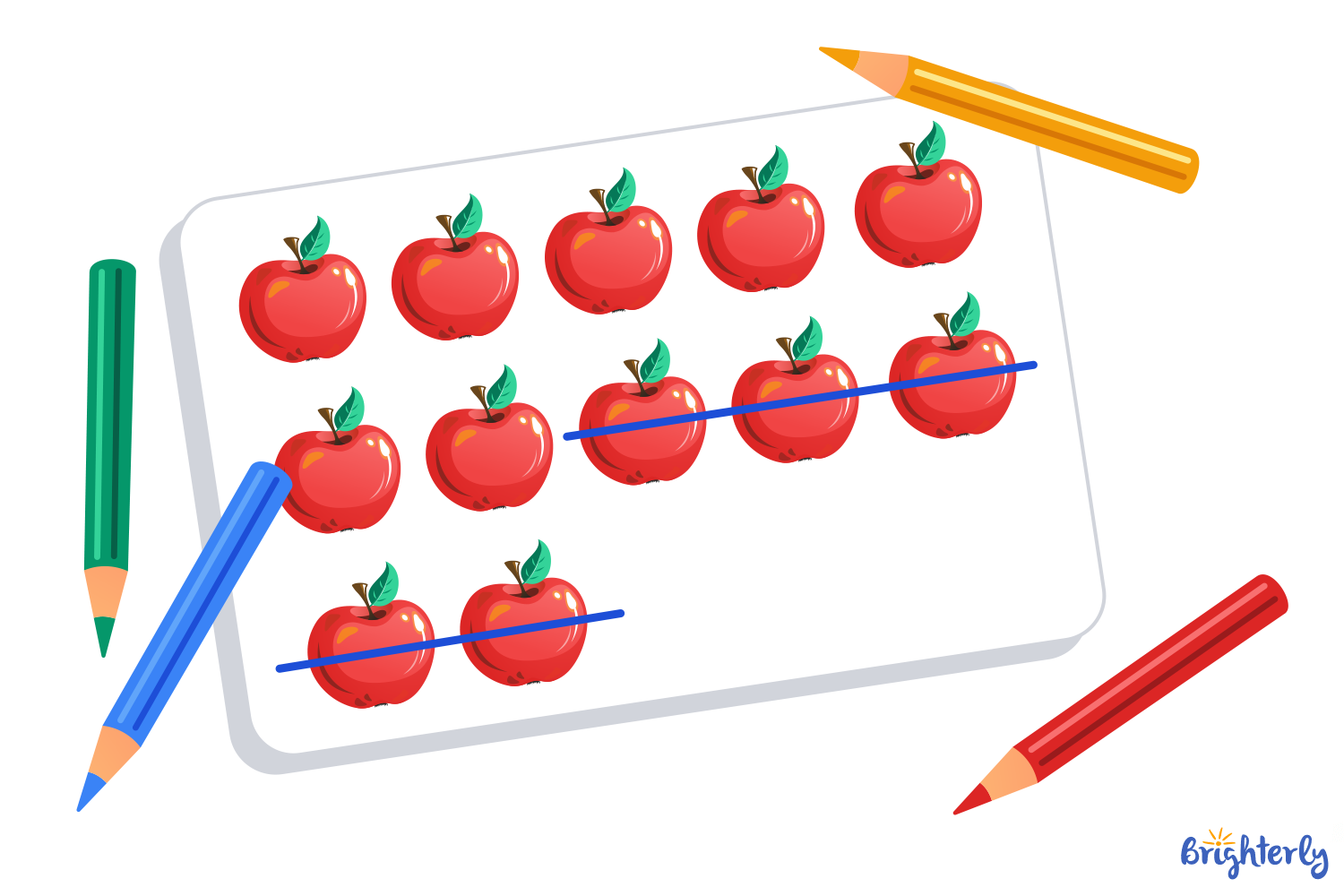
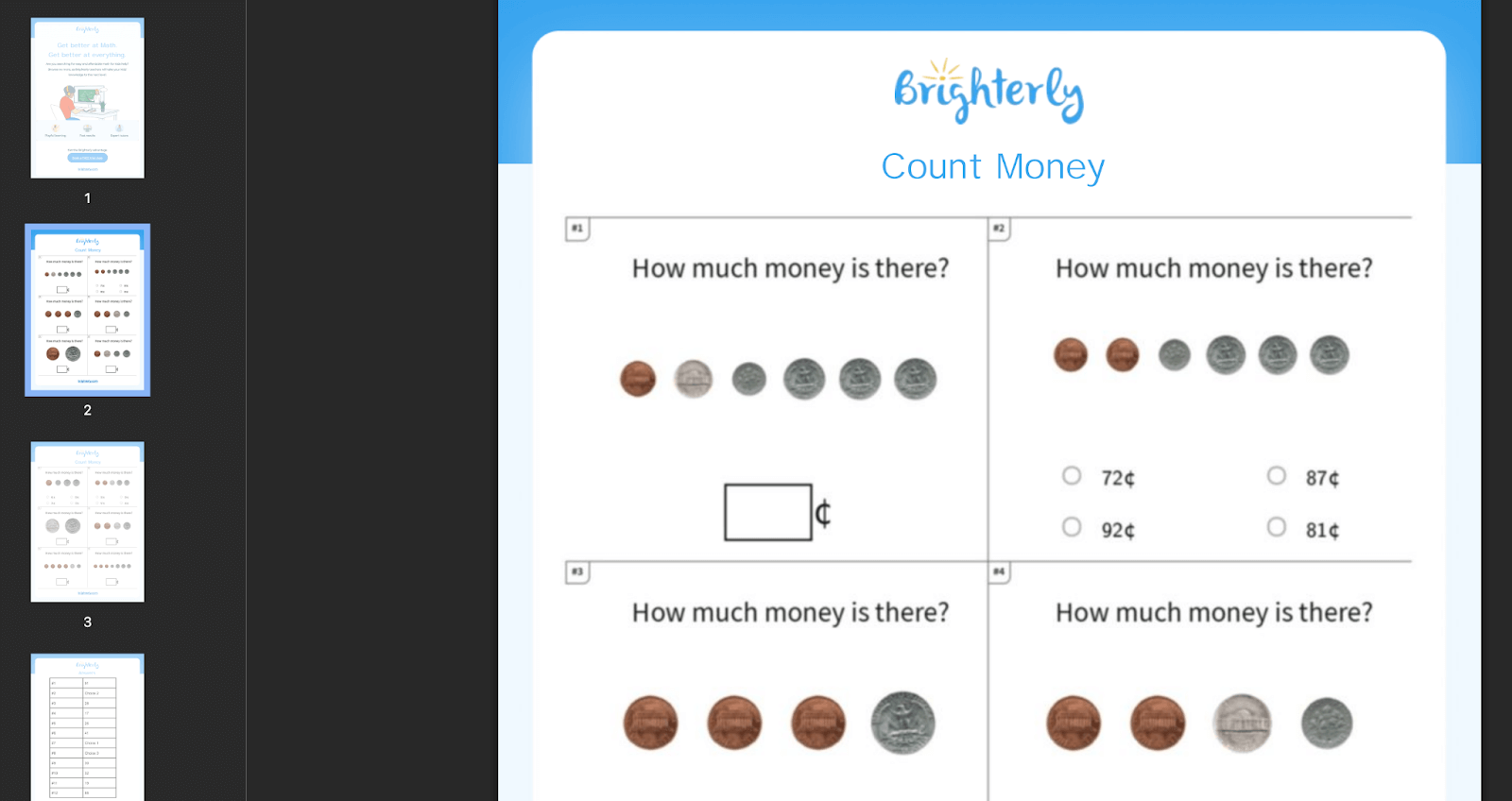
Soar to the top of the class with personalized tutoring from Brighterly. There’s no single right way to approach a math problem, and using different ways to represent the material can make it click. Seeing a concept visualized often makes it more concrete, so try drawings, diagrams, or real-life objects when something feels abstract. For example, if you’re working on a scenario-based problem, such as how many apples someone will have if they start with 12 and give away 5, drawing those apples and crossing out or erasing the 5 can help you see the answer instead of just calculating it. Hands-on materials help too — real-life objects and manipulatives can bring a tricky concept to life, while verbal explanations and plenty of practice problems reinforce it from another angle. Mixing these approaches is especially useful if you’re homeschooled, since you can experiment with what works best together with a parent or tutor. You might also want to explore your homeschool math online options. Learning a subject deeply means understanding how it works instead of just memorizing facts and times tables. Spending time focusing on how math works, instead of just applying rote memorization, is key to your math learning. Understanding the reasoning behind formulas — not just memorizing them — improves problem-solving skills and makes it easier to tackle more advanced topics later. Two habits help you understand math more deeply. This is also the idea behind Brighterly’s Homework Helper on the Learning Platform: instead of handing over answers, it walks kids through each math problem one step at a time, with hints and guiding questions so they reach the solution themselves. The backward design method changes this: first, identify the result needed, then write down the steps to get there. This makes the process clearer and helps spot gaps before any calculations. Sean Ivester, founder of Pivot Tutors, confirms it works: “It may seem time-consuming, but having a roadmap of sorts actually helps students reduce errors and waste less time in the long run.” One of the most effective techniques for learning is to teach — this is known as the protégé effect: when you teach someone else, you’re forced to delve deeper into the topic, organize your thoughts, and notice your own gaps in understanding. To impart wisdom on others, you must understand math yourself. As a bonus, you can help your friends too — or show your parents how smart you are! Geillan Aly, Founder and CEO at Compassionate Math, emphasizes that true mathematical understanding goes beyond memorizing rules. Students need to create examples and explore why they work and why a similar one doesn’t: “The hard part is coming up with similar examples” Instead of letting mistakes in math get you down, use them as a learning tool. Reviewing your errors is one of the simplest ways to improve math skills, because understanding where you went wrong means you’re less likely to make the same mistakes in the future. Every time you get a question wrong, dig into how and why it happened. Understanding why you made the mistake can help you recognize and avoid the same error next time. A teacher or math tutor can help you if it’s not instantly obvious. Every student makes mistakes in math, and some errors can become habits if they aren’t reviewed. Learning how to improve in math often starts here, because the most common mistakes quietly hold you back: memorizing formulas instead of understanding them, skipping fundamentals, practicing too little, and giving up too early. Reviewing your errors is one of the simplest ways to become better at math over time. Mistake Why it happens Fix Memorizing instead of understanding It seems faster at first. Learn the “why” behind every formula. Ask yourself, “Why does this work?” Skipping fundamentals Topics may seem unrelated, so gaps go unnoticed. Review basic concepts regularly. Foundational gaps often cause problems later. Too little practice Math can feel overwhelming, which makes it easy to avoid. Short, consistent practice sessions are more effective than occasional cramming. Over-relying on the calculator Calculators provide answers instantly. Work through the steps by hand first to understand the process. Quitting too early Progress in math can feel slow or difficult to notice. Encourage persistence. Improvement usually comes from consistent practice over time. Not reviewing errors Mistakes can feel frustrating or embarrassing. Revisit incorrect answers and identify what went wrong. Doing math passively Reading solutions can feel like studying. Actively solve problems and explain the reasoning behind each step. Learning resources are a powerful aid and one of the most important ways to learn math. They can come in many forms, from workbooks to online video tutorials. At Brighterly, we offer math worksheets for kids from 1st to 12th grade. These worksheets include practice problems and answer keys, so you can check your work and understand your mistakes. If you need extra help, Brighterly also offers math homework support and free math tests for different grade levels, and a structured integrated math program if you want a more guided path. These resources can supplement the at-home work you receive from school. Brighterly’s Math Practice and Reading Practice add interactive, self-paced activities that adapt to your grade level and turn practice into a game-like learning path with progress tracking and rewards. They’re rolling out gradually to Brighterly families with an active subscription. Learning math doesn’t have to be boring — you can even do it as part of your hobbies to make it fun. Math games are an engaging way to learn the subject without feeling like you’re studying. You could play board games like Monopoly to learn more about budgeting or online games that have a math element. This low-pressure environment means games are one of the most fun ways to learn math. Explore Brighterly Learning Experience Learn exactly how Brighterly helps students thrive through expert sessions, online tools, and proven feedback from thousands of satisfied parents You don’t have to figure math out entirely on your own. Parents, teachers, tutors, and even classmates can help you identify gaps, stay motivated, and work through difficult topics. A small summary of what actually helps: When it comes to the best way to learn math, you should consider many factors, from regular practice to incorporating resources. When building a study schedule, you should incorporate a mix of these tips. Remember, getting better at math is not about talent, it’s about the right approach, consistent practice, and knowing when to ask for help. Adapting to your own learning style will always be important, as will practicing regularly. Once you build a routine that incorporates these tips, improving your math skills becomes a matter of time, and you’ll be on your way to becoming a math whiz. Still feel you need extra support? Explore whether an online math program is right for you. The easiest way of learning math is to first master the fundamentals, which include number sense and basic operations (addition, subtraction, multiplication, division). Practicing with actual problems frequently and breaking down problems into simpler steps can also make learning mathematics easier. There is no way to become good at math overnight, but there are ways to get better fast. The fastest way to learn math is by practicing regularly with real problems and simplifying them where possible. You should also focus on mastering the basic mathematical concepts first and track where you make mistakes to avoid making the same ones in the future. Yes, absolutely. Struggling with math doesn’t mean you lack mathematical ability. Math skills build over time, and gaps in earlier topics can make new material feel much harder. So, if you’ve missed a basic topic somewhere, the next ones will seem difficult. Rather than assuming you’re just not a “math person,” a better idea is to find the gap and close it. ADHD can make math more challenging for some students, particularly when tasks require sustained attention, working memory, or multiple steps. A 2023 study in the Frontiers in Human Neuroscience journal found that students with ADHD are more likely to experience significant math difficulties. Breaking math into smaller steps and studying in short bursts can help. Learn more about how ADHD affects learning more broadly. The 4 C’s are broader learning skills that also play an important role in math: Four major areas students encounter in mathematics are arithmetic, algebra, geometry, and statistics. Together, they build a well-rounded foundation for mathematical thinking. To get better at SAT math, you should focus on taking mock SAT tests first. These tests give you an idea of what to expect on your real SAT exam. Then, once you know the subjects likely to come up, you can explore resources focused on those topics. Create a study routine that is consistent to ace your SAT. For more tips, read our blog on how to get a high SAT score. The 6174 trick in math is Kaprekar’s constant, a phenomenon where you reach 6174 from almost any four-digit number by repeating a few steps. Take any four-digit number that has at least two different digits, arrange its digits from largest to smallest, then from smallest to largest, and subtract the smaller number from the larger one. Repeat the process with the result, and you will always reach 6174 in at most seven steps. How much practice helps depends on age and focus, and consistency matters more than long sessions. Younger students in kindergarten and elementary school should keep sessions short at 15-30 minutes so it doesn’t become overwhelming. As you get to middle school, you can bump this up to 60 minutes as your focus improves. High schoolers and college students may study for 1.5-2 hours with breaks for intensive learning. If your kid has dyscalculia, you shouldn’t despair. I’ve put together 8 strategies on how to help a child with dyscalculia that I’ve seen work most effectively during my career as a math teacher. They’re easy to implement at home and will definitely make math more accessible to your little learner. Key points Dyscalculia affects […] May 23, 2024 Math activities for kids are educational strategies that make abstract math concepts practical and gamified, employing physical movement, everyday household objects, social interaction, and storytelling to teach numbers, geometry, logic, and problem-solving. Math play minimizes math anxiety, connects the abstract with the concrete, provides context and relevance, and altogether makes math less stressful and more […] Jun 01, 2024
How to Learn Math Effectively
Practice Regularly




Learn the Basics First
Core Math Areas and How to Practice Them

Understand Why Math Feels Hard
Use Math in Real Life

Explore Tutoring
Use Different Ways to Learn Math
Focus on Understanding, Not Memorizing

Teach Others

Review Your Mistakes
Find Helpful Learning Resources
Play Math Games
Build Your Support System
Conclusion
Frequently Asked Questions
What Is the Easiest Way to Learn Math?
Can You Get Better at Math Overnight?
Is It Normal to Struggle with Math?
Can ADHD Make Math More Difficult?
What Are the 4 C’s in Math?
What Are the Main Areas of Math?
How to Get Better at SAT Math?
What Is the 6174 Trick in Math?
How Much Math Practice Should Students Do Each Day?





Math & reading from 1st to 12th grade
Looking for homework support for your child?

Choose kid's grade

Math & Reading for Grades 1–12
Build real confidence for your child with a Brighterly math or reading tutor.