How to Teach Syllables: 12 Strategies That Work
reviewed by Maila Caliao
Updated on December 8, 2025
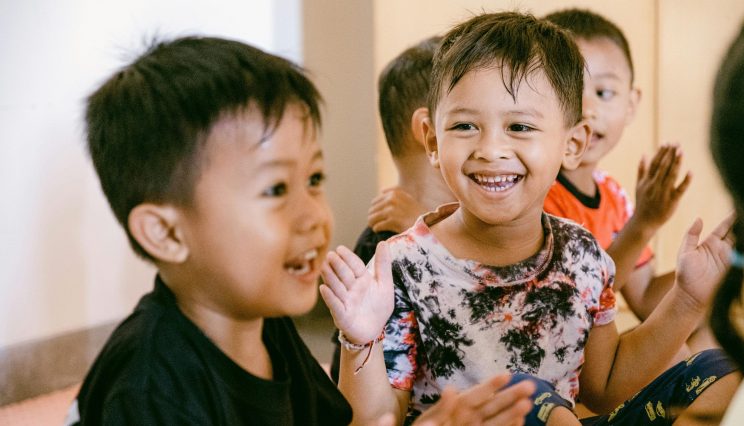
When I started teaching syllables to first-graders, I noticed how kids got mixed up with words we rush through. Let’s take, for example, the word “animal,” which they often hear as just an-mal, missing the middle part completely. Over time, I found some methods that helped my students clearly hear and count every syllable. Here they are.
Key points
- One can learn syllables faster through rhythm, visuals, and simple modeling.
- Short games, worksheets, and multisensory practice help children count and divide words.
- Kids who struggle with syllables can benefit from 1:1 guidance from experienced reading tutors.
What is a syllable for kids?
A syllable for kids is one beat in a word — to put it simply. Each such beat has a vowel sound, and every time your mouth opens to make that sound, you hear a new syllable. As in the example above, the word “animal” has three beats: a-ni-mal.
The simplest explanation of these quite complex things would be:
“A syllable is a part of a word you can clap.”
Typically, I use this syllable definition for kids, together with movements to better present how it works. When we tap, clap, or place a hand under the chin to feel it drop for each vowel sound, we actually FEEL those syllables and develop phonological and phonemic awareness.
What is the best way to explain syllables?
The best way to explain syllables is to start with something kids already understand: rhythm. When children say a word slowly and feel its rhythm, they naturally notice the parts that make it up.
Visual cues also help a lot. Color-coded markers, boxes, or circles can represent each part of a word. They give children a clear picture of how syllables are structured, not just how they sound.
Another approach to consider is modeling. Say a word slowly, stretch the vowel sound, and let kids hear how the word breaks apart.
I’ll walk you through each method below to answer most questions you might have as to how to teach syllables to kids. I’ll also provide explanations and practical tips you can use at home, in class, or during tutoring sessions.
How to teach kids syllables? 12 strategies
- Working with a tutor
- Using worksheets
- Clapping and tapping
- Utilizing the chin drop technique
- Exploring color-coding syllable types
- Stretching vowel sounds
- Using vowel patterns
- Teaching open and closed syllables
- Sorting words by syllable types
- Using “mouth shape” awareness
- Teaching syllable stress with a quick pattern
- Using “beat-and-break routines”
Teaching syllables by working with a tutor
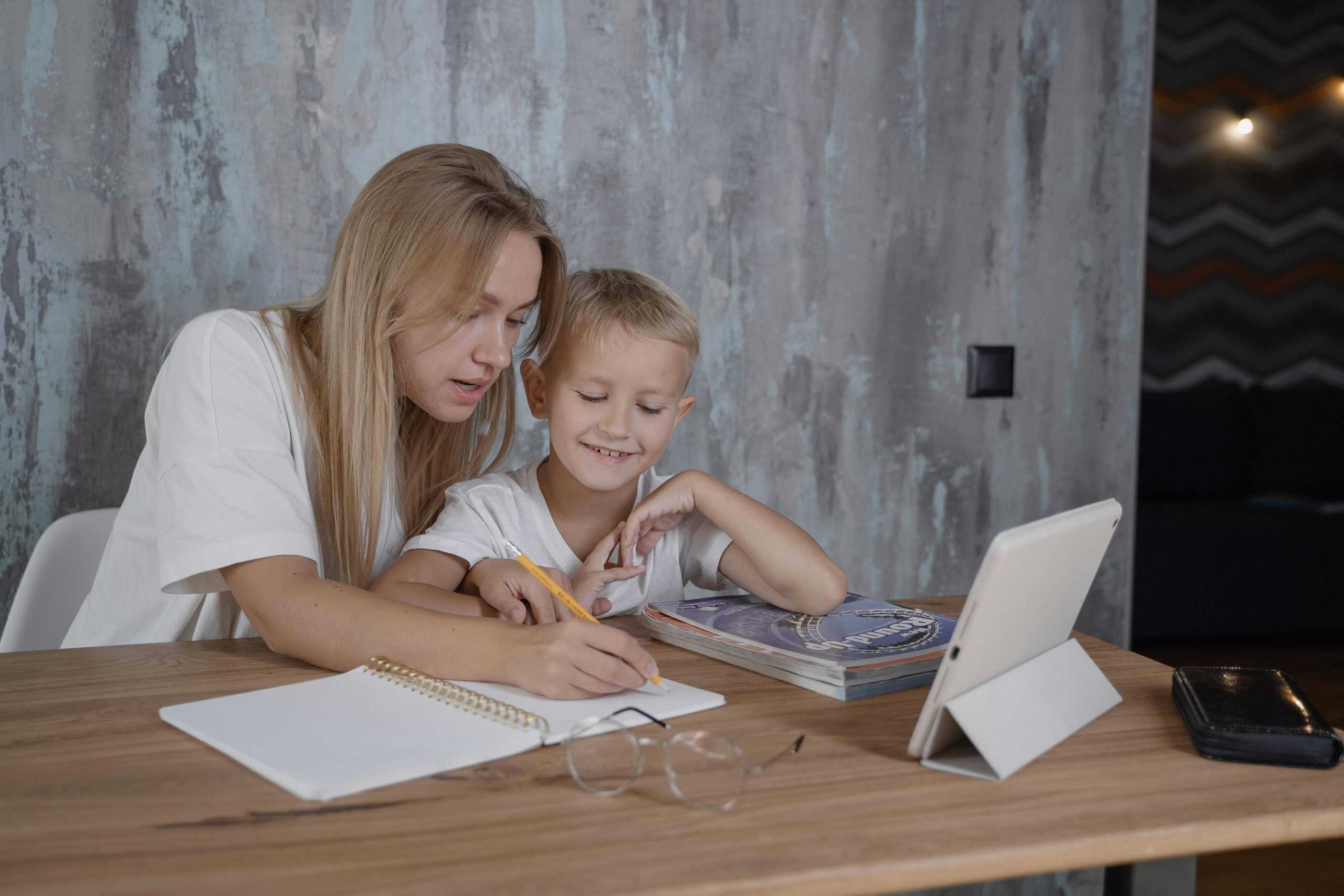
It’s quite a headache for parents when a child struggles with syllables for months. Kids notice they’re falling behind, compare themselves to classmates, and begin to lose confidence in their reading abilities.
A good tutor always finds a remedy to this trouble with consistent practice and friendly advice. Kids receive the support that school alone can’t always offer. And I know for sure: when a child doesn’t feel judged, their progress speeds up dramatically.
How can Brighterly tutors help in learning syllables?
The Brighterly math and reading platform builds on what school teaches, but adapts it to your child. Its reading tutors spot exactly where syllable skills break down and rebuild them patiently, step by step. Lessons stay aligned with state standards but are personal, supportive, and kid-friendly to help achieve steady progress.
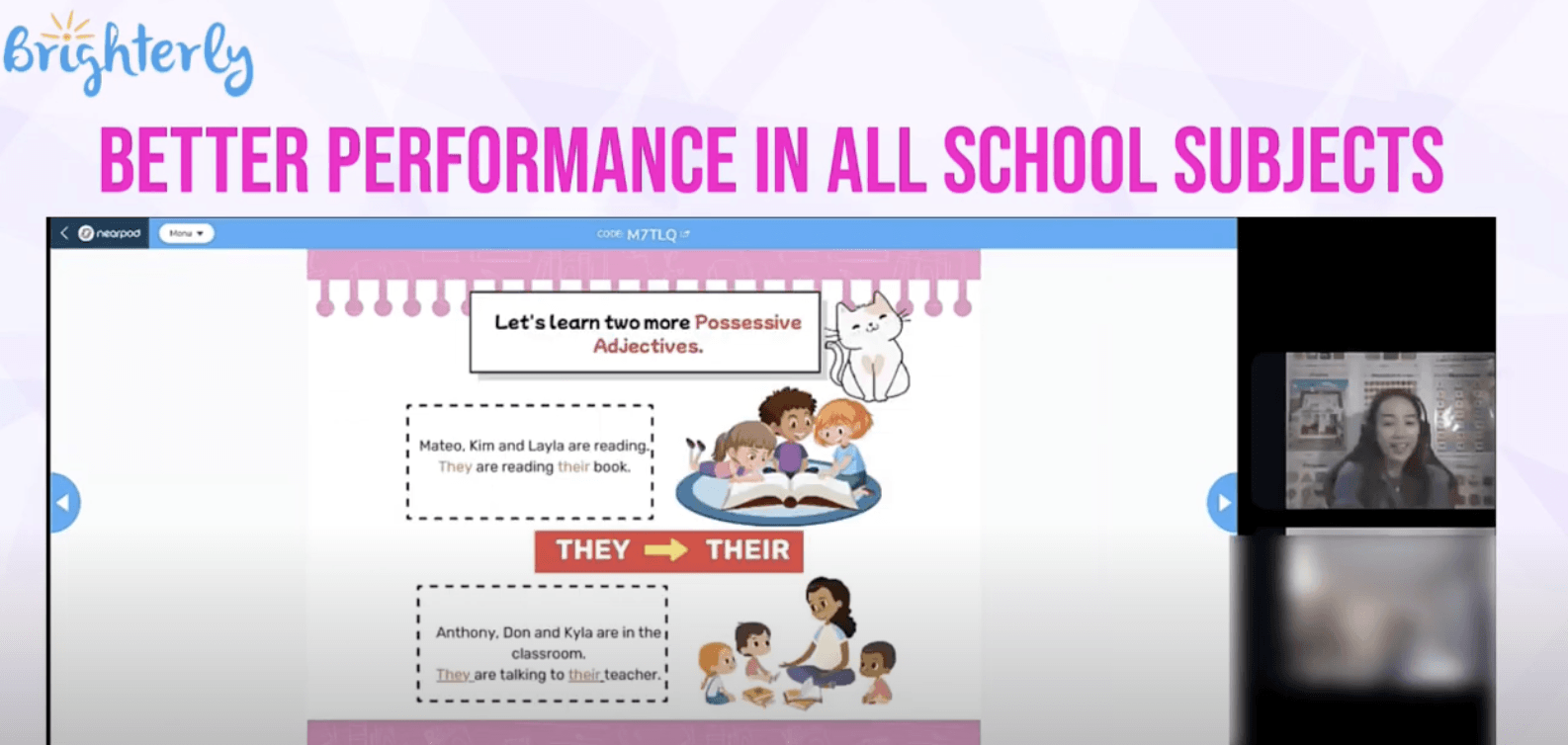
Brighterly tutors use a mix of rhythm-based activities, multisensory tasks, and step-by-step explanations that really match your child’s personality and learning style.
In a 1:1 session, a tutor can:
- model syllables clearly, adjust the pace instantly if a child seems confused
- connect syllable learning with stories, games, and movement
- celebrate small wins to build confidence in reading
- correct mistakes gently, so kids don’t feel discouraged.
The dedicated teachers do their best to help any child understand syllables and enjoy the process rather than fear it.

How to teach syllables to a child through worksheets
Worksheets look simple at first sight, but they do work. When I teach syllables to beginners, I often use short tasks from worksheets with other hands-on activities, like:
- clap-and-count tasks (e.g. circle the number of syllables)
- match pictures to syllable count
- simple morning-work style starters kids can do in 3 minutes
- seasonal, holiday, and fun animal-themed worksheets that are perceived as multi-games.
What’s good about sheets is that a child sees progress right away and feels proud of themselves. Worksheets also help kids slow down, making learning more visual. Last but not least, worksheets create routine. Five minutes a day is enough for most kids to get better at learning syllables, counting beats, and dividing longer words.
Brighterly worksheets for better syllable understanding
Reading worksheets developed by Brighterly focus on one skill at a time. Kids shade, circle, match, or sort words by the number of beats. The tasks are short enough to keep attention high, yet informative to approach the topic from different angles.
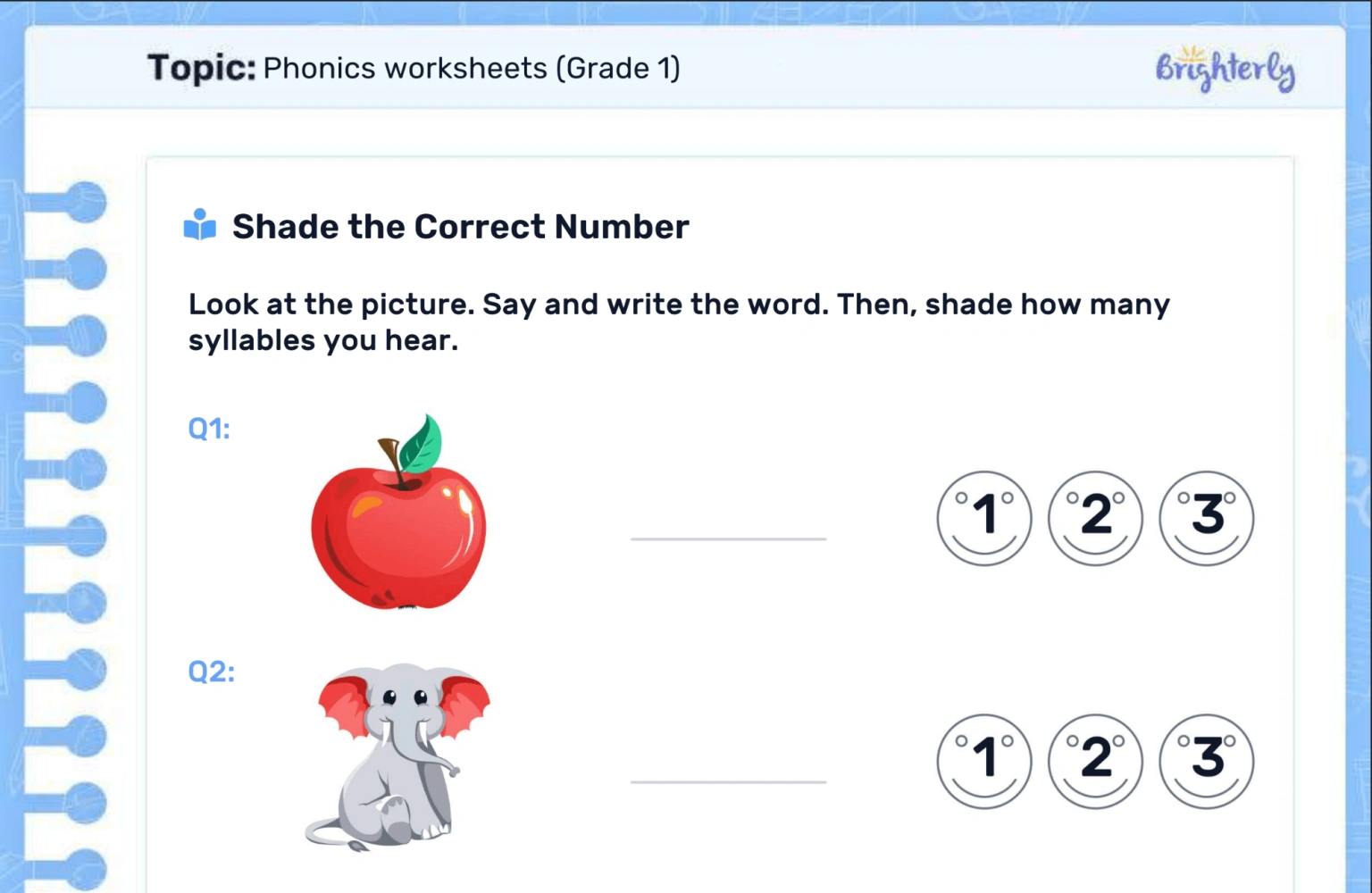
Parents often tell me their child finally “got it” after a few days of worksheet practice. Printable tasks are a great invention to support teaching syllables at home, and they pair well with Brighterly’s individual lessons if a child needs extra help.
Teaching syllables with clapping and tapping
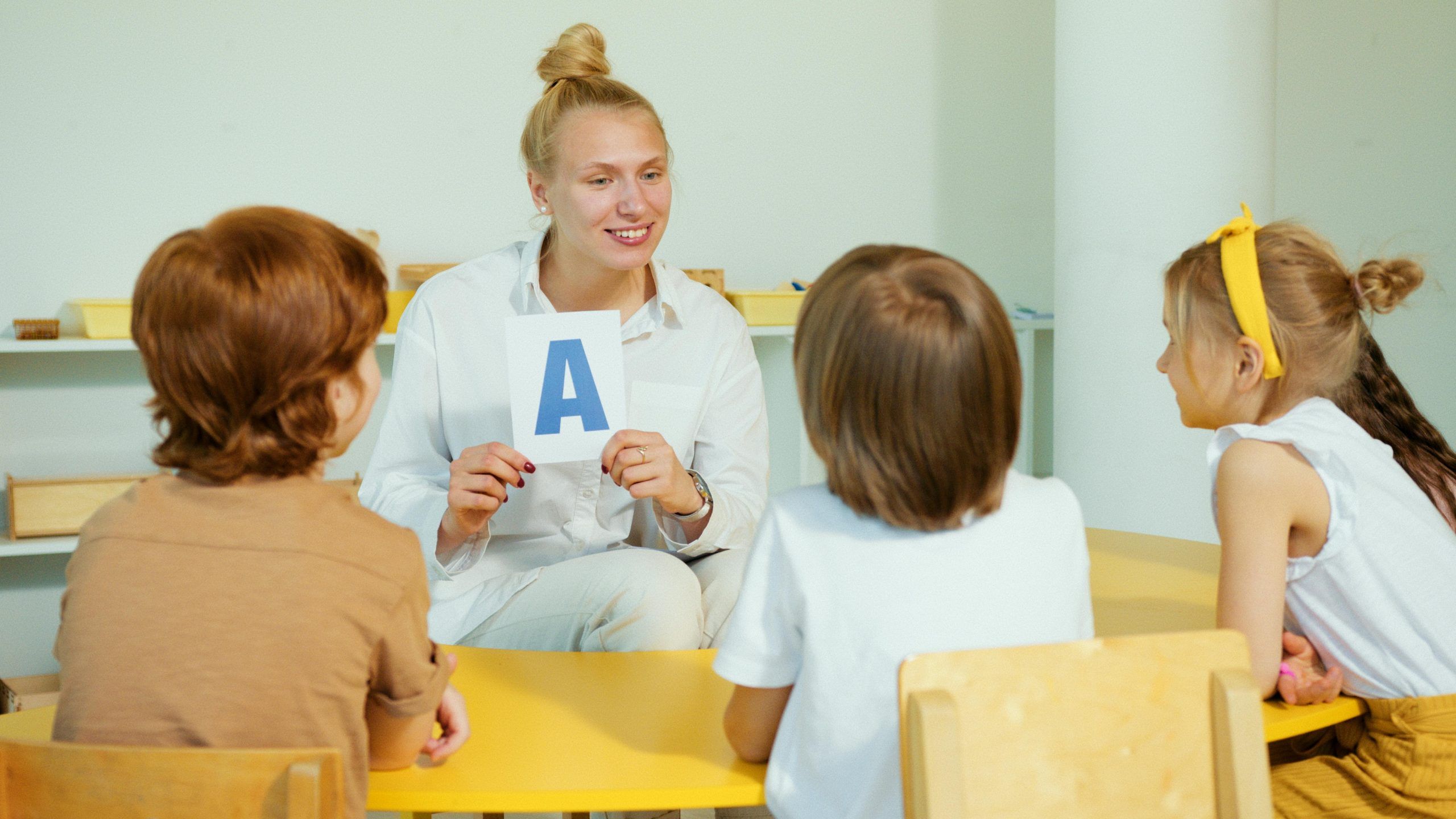
When parents ask me how to teach kids syllables, clapping might be my first suggestion. It’s simple and playful. Every clap matches a vowel sound, so kids instantly understand how words break apart.

Tapping works just as well. Some students tap the table, others tap their knees. Either way, movement helps them count and divide words into parts. This is especially useful when learning syllables in long, multisyllabic words.
I often use this method when families are looking for how to teach syllables to grade 1, or when a beginner needs a gentle way to hear each syllable clearly. It also prepares kids and their parents for more complex tasks later on in upper grades.
Tips for clapping and tapping
- Start with familiar words, say them slowly, then clap together
- Let the child lead once they feel excited
- Dance with your child!
- Switch between clapping, tapping, dancing, and chin checks
- Say a kid’s name: it always works as an anchor and helps focus on the task
This method trains early phonological awareness because your child will perceive learning syllables as a game with clear rules.
The chin-drop technique
This method answers the question of how to teach syllables to beginners, as it shows kids how syllables work through simple body movements.
Putting it into practice, parents can ask the child to place a hand under their chin. Then say a word slowly. Each time the chin drops, that’s one syllable.
Use this trick to explain syllables to a child who needs clear, physical cues to feel the vowel beats in a word. It’s also very useful when teaching open and closed syllables, because kids notice how the chin drops more strongly when the vowel is open.
Note: This exercise works well in both grade 1 and grade 2, and complements short practice tasks from the Brighterly reading program to strengthen the skill.
Color-coding syllable types
How to teach open syllables and closed syllables within larger multisyllabic words? Color-coding, also known as “rainbow” activities, makes this process visual.
Parents or teachers can assign one color for open syllables and another for closed syllables, then mark the vowel, the final consonant, or the whole syllable pattern. Kids see the structure inside a word and quickly notice why some vowels sound long, and others sound short.
So, how to teach open and closed syllables? Here’s the plan.
It would be logical to start with basic words and then progress to compound words. Only when your child masters these, proceed to multi-step reading tasks, such as open, closed, magic e (silent e), and vowel team syllables.

Stretching vowel sounds
One of my favorite methods is stretching vowel sounds. When I teach syllables, I elongate the vowels: “a-ni-maaall,” and kids hear each part clearly, count, and divide the word into beats. Probably, nothing helps better when you explain syllables to a child who struggles to hear the middle or final syllable, because stretching highlights which vowel is open or closed.
Tips for stretching vowel sounds
- Start with short words, then move to longer ones
- Combine with clapping or tapping for reinforcement
- Ask children to say the word slowly themselves
- Pair with reading worksheets
Note: After practice, check progress with reading tests to see how well kids identify syllables independently.
I use this method with grade 1 students, beginners, and even older children. I’ll provide more details on how to teach syllables to grade 3 later on.
Using vowel patterns
How to teach stressed and unstressed syllables most productively?
First, I introduce short and long vowels, then show vowel teams like ea, ai, or oa. Children understand how vowels behave when they see how each pattern shapes the “music” of the syllable. Some vowels speak loudly (stressed) while others stay quiet. Then I turn vowel spotting into a short detective task: “Which vowel is doing the talking here?” Children lean in, point to the vowel teams, and try to guess the sound before saying the word.
Note: Short and long vowel worksheets and vowel team worksheets are some of the best resources to answer your question on how to explain syllables by using vowel patterns.
Teaching open and closed syllables
It’s time to show how a vowel changes depending on the syllable type:
- An open syllable ends with a vowel that says its long sound.
- Meanwhile, a closed syllable ends with a consonant, keeping the vowel short.
Knowing the difference will help you a lot when you stumble on how to teach closed syllables. Now, to the practice.
Tips for teaching open and closed syllables
- Draw a box around each syllable to show where the vowel sits
- Have kids sort words into open/closed piles, then ask them to read slowly so they can hear the final consonant or open vowel
- Let them run a “syllable test”: cover the ending and predict the vowel sound
Sorting words by syllable type
When children place words into small groups (1-syllable, 2-syllable, open syllables, closed syllables, etc.), they learn the patterns much faster. While sorting seems like an interesting game, it quietly builds the core skills needed for clear spelling, reading, and writing.
Using “mouth shape” awareness
Some kids understand syllables better when they feel what their mouth is doing. That’s why I aim to show kids that their mouths open wider for open syllables and close quickly for closed syllables. They notice every vowel sound, every “beat,” and how the jaw drops for each part.
Teaching syllable stress with quick patterns
If you ask me how to teach stressed and unstressed syllables in the simplest way, I’ll say: use short rhythm patterns.
When kids move into longer multisyllabic words, they also need to hear which part gets the “push.” I tap louder for the stressed part and softer for the rest. Students repeat after me, and soon we all see how reading and spelling become smoother.
Using quick “beat-and-break” routines
For the last method, I stick to what works best: short, simple routines that don’t require long explanations. Children tap the beats, underline the vowel sounds, and divide words into syllables in just a few seconds.
Parents can easily practice this at home. Try a word from a storybook (ba-na-na), a tag on a stuffed animal (bun-ny), or even a street sign (Main Street). With just a few minutes each day, you’ll show your child how to recognize syllables, hear every vowel sound, and gain confidence.
What are the 7 rules of syllables for kids?
The 7 rules of syllables for kids are as follows:
- No syllable without a vowel sound
- Open syllables contain vowels at the end
- In closed syllables a consonant follows a vowel
- Every syllable has one vowel
- Double consonants usually split
- Final stable syllables stay together
- Stress matters
Keep these rules short to explain syllables to a child. Kids don’t need the full linguistic theory; they just need simple steps to help them read new words. So here are the rules fueling how syllables work:
Rule 1: No syllable without a vowel sound
If there is no vowel, there is no syllable. It’s the core of early learning syllables practice.
Rule 2: When a vowel is at the end of a syllable, it’s usually open
Children understand why words like ti-ger or pa-per sound the way they do. Think of the vowel as “stretching freely” at the end of a syllable. That’s why words of this type sound bright and clear.
Rule 3: When a consonant follows a vowel, the syllable is closed
It’s a key rule of teaching closed syllables. Kids see the pattern quickly: cat, lim-it, sun-set.
Rule 4: Every syllable has one vowel sound, even in vowel teams
Each syllable contains just one vowel sound, even when letters appear together, like ea in team or ai in paint.
Rule 5: Double consonants usually split
Like in kit-ten or hap-py. A very child-friendly way to teach syllables to beginners.
Rule 6: Final stable syllables stay together
The ending stays whole: ta-ble, lit-tle, can-dle. Kids enjoy spotting this “never break apart” pattern.
Rule 7: Stress matters
Some syllables in a word sound stronger than others. These strong beats, also known as stressed syllables, help readers pronounce long words correctly.
These rules are key steps in learning syllables for kids. Once your kid acquires them, sound patterns are no longer frightening, but something children can predict automatically.
Conclusion
Teaching syllables doesn’t have to be overwhelming for families or kids. With clear models, short routines, visual cues, and play, children learn to break apart words, hear vowel sounds, and develop reading skills naturally. But if you feel that your child can’t cope with the syllables alone and needs structured practice and step-by-step guidance, the Brighterly reading tutors are the best choice, as they know well how to teach about syllables.
Book free reading lesson now and see how those professionals can help your child!

Every child learns differently. This, coupled with the wide selection of writing programs available, makes choosing the best homeschool writing curriculum a big task. To help you decide, I’ve looked into some of the most popular platforms, and in this blog post, I’ll go over them in detail. Key points There are many writing homeschool […]

Dec 08, 2025

Certain types of writing for kids can indeed be confusing. Not for children, but for parents. Whether it’s narrative storytelling, an informative or argumentative essay, each has its challenges. I know that families may want to confront them with a one-size-fits-all approach. Yet, is it the right strategy, or should you consider multiple ones for […]

Dec 09, 2025
Math & reading from 1st to 9th grade
Looking for homework support for your child?
Choose kid's grade

Math & Reading for Grades 1–9
Build real confidence for your child with a Brighterly math or reading tutor.