Math Goals for IEP: Examples and Strategies
reviewed by Jessica Kaminski
Updated on March 4, 2026

Math IEP goals target specific areas of improvement for children with certain learning disabilities, including problem-solving, computation, and conceptual understanding. Setting those goals in a clear and effective way is crucial in creating long-lasting success for kids in math. Today, we’re looking into how to get math goals for IEP right.
Key points
- Math IEP goals are specific, individualized educational targets that are designed to help kids with disabilities build foundational math skills over time.
- The IEP goals for math are determined through the SMART framework and should be Specific, Measurable, Achievable, Relevant, and Time-bound.
- Good math goals examples focus on one academic year, are clear for students and educators, and reflect parent-teacher collaboration.
What are some IEP goals for math?
Math IEP goals depend heavily on the student’s grade level, skills, and learning gaps. Some of the IEP goals for math look like this:
- The student multiplies single-digit numbers with 80% accuracy.
- The student adds and subtracts decimals to the hundredths place in 4 out of 5 examples.
- The student is able to tell time to the nearest 5 minutes 90% of the time.
Note: Math IEP goals are specific, measurable goals, short and long-term, implemented into a student’s Individualized Education Program (IEP) designed to improve their math skills.
What makes a good math goal?
- Specific: The goal is adapted to the students’ strengths and challenges.
- Measurable: The progress is tracked through math tests , observations, and assignments.
- Achievable: The goal is realistic for the child’s level.
- Relevant: The goal is focused on developing skills needed in school and in real-life scenarios.
- Time-bound: Typically spans one school year.
Sheri Langston, a therapist and Director of Rocky Mountain Therapy Group, explains how having SMART math goals for IEP supports all participants in the education process.
“Standard best practice is the SMART goal format.”
I find that students often don't know much about their own IEPs, even any goals or accommodations they have. Having plain, clear language in the goals and accommodations sections can make a huge difference in getting buy-in from students and support at home with parents.
Teachers have so much on their plates these days as paperwork and administrative tasks are being piled on. Setting math goals in clear, simple language that are easily measured can be a game changer for teachers who are pulled in so many directions on a daily basis.


Below is a broader list of functional math IEP goals examples, so you can see how these skills apply to real life and can support your child’s learning.
IEP goal examples
Skill |
Math goal |
| Number and Operations |
– The student identifies and writes numbers 1-100 with 90% accuracy. – The students can correctly add and subtract within 20 using strategies like counting on in 4 of 5 tries. – The student multiplies single-digit numbers with 80% accuracy. |
| Fractions and Decimals |
– The student compares and orders fractions with like denominators with 80% accuracy. – The student adds and subtracts decimals to the hundredths place in 4 out of 5 examples. |
| Word Problems and Problem-Solving |
– In a word problem, the students will choose the correct operation and solve it with 80% accuracy. – The student is able to explain the stages of solving a word operation verbally or in writing. |
| Real-Life Skills (Applied Math) |
– The student counts coins and bills up to $5 and finds out the total value in 4 out of 5 examples. – The student reads and interprets simple bar graphs with 80% accuracy. – The student is able to tell time to the nearest 5 minutes 90% of the time. |
As you can see, these IEP math goals examples are pretty straightforward and clear, yet parents may struggle to determine which instructional strategies to implement to help children achieve them. Online educational platforms like Brighterly help kids reach these IEP objectives through comprehensive 1:1 math tutoring and personalized learning strategies that parents often find difficult to work into their math routines.
Let’s see how the Brighterly reading and math learning platform implements practical learning solutions to help parents and students in grades K-12 turn IEP math goals into progress (on the examples above).
Goals and solutions |
How Brighterly helps |
| Number & Operations (The student identifies and writes numbers 1-100, etc.) | Tutors implement indicative games and visual models to reinforce number recognition, addition, and multiplication. |
| Fractions & Decimals (The student compares and orders fractions with like denominators, etc.) | Brighterly utilizes fraction visuals, number lines, and real-life examples during a math class. |
| Word Problems and Problem-Solving (The students will choose the correct operation and solve it, etc.) | Tutors focus on reasoning skills, asking students to verbalize their thinking process while building confidence in their decision-making. |
| Real-Life Skills (The student counts coins and bills up to $5 and finds out the total value, etc.) | Brighterly connects math to everyday activities, making it age-appropriate, so kids can see that math is practical and useful. |
Note: Brighterly is an online 1:1 math and reading educational platform connecting US K-12 students with professional tutors.


With these practical examples in mind, let’s look into some foundational skills behind basic math goals for IEP throughout the student’s entire math journey.
Foundational skills behind functional math IEP goals
Math goal/Subject |
Foundational skills |
| Number & Operations |
– Comprehend place value + base 10 number system – Solve problems with decimals, percentages, and fractions – Build fluency with subtraction, addition, multiplication, and division |
| Geometry |
– Comprehend foundational geometric concepts such as angles, lines, and points – Figure out perimeter, volume, and area – Recognize and categorize shapes |
| Algebra |
– Recognize functions, patterns, and relationships – Solve inequalities and equations |
| Data Analysis |
– Analyze and interpret data and graphs – Comprehend basic concepts of probability – Collect, analyze, and represent data |
| Measurement |
– Understand units and measurement systems – Solve problems involving conversions between units – Measure and estimate length, weight, capacity, and time |
We often forget that math goals don’t just exist for the sake of existing. Each IEP goal is designed for students to acquire foundational skills that support learning and help translate math skills into real life.
IEP math goals for elementary students
Setting goals for elementary students, parents and teachers should focus on building solid number sense, problem-solving, and basic operations. As I’ve already mentioned, these goals should be specific, measurable, achievable, relevant, and time-bound.

Let’s review some specific IEP math goal and objective examples below.
Math IEP goals for 1st – 2nd grade
- The student recognizes, reads, and writes numbers 1-100 with 90% accuracy (example of the number sense concept in 1st grade math IEP goals).
- The student correctly identifies the value of digits in two-digit numbers with 80% accuracy (place value).
- The student solves single-digit addition and subtraction problems up to 20 with 80% accuracy (example of using addition and subtraction for 2nd grade math IEP goals).
Math IEP goals for 3rd – 5th grade
- The student reads, writes, and compares numbers up to 10,000 with 90% accuracy (example of 3rd grade math IEP goals related to number sense).
- The student correctly adds and subtracts multi-digit numbers with 80% accuracy (example of 5th grade math IEP goals for operations).
- The student identifies equivalent fractions using visuals with 80% accuracy (fractions and decimals).
IEP math goals for middle school students
Here are some of the math IEP goals for 6th – 8th grade:
- The student multiplies and divides multi-digit numbers with 80% accuracy (number sense).
- The student adds, subtracts, multiplies, and divides fractions with 80% accuracy and fluency (fractions, decimals, and percentages).
- The student uses drawings, diagrams, and other visuals to represent and solve real-world problems with 80% accuracy (problem-solving and word problems).
IEP math goals for high school students
Let’s review some of the math calculation IEP goals for high school:
- The student solves multi-step linear equations and inequalities with 80% accuracy (number sense and Algebra).
- The student applies the Pythagorean theorem to solve problems with right triangles with 80% accuracy (Geometry).
- The student applies unit conversions and scale factors in a real-life context with 75% accuracy (applied math).
Note: Brighterly focuses on grades K-12, so the platform can help students across all grades reinforce essential math skills, close learning gaps for earlier years, and prepare students for tackling more advanced math with confidence.
Strategies for math success through IEP goals
Implementing effective IEP goals for math requires more than just listing mundane objectives. Students need structured, well-adjusted goals (determined through the SMART framework), supportive guidance from both parents and teachers and/or tutors, and consistent practice.
Below are strategies that experts in child development and education recommend as they help kids improve memory, confidence, and math ability, without emotional hurdles and stress.
Top ways to deal with math IEP goals
- Take a holistic approach
- Break goals into small steps
- Use visuals and manipulatives
- Add real-life applications
- Encourage a growth mindset
- Leverage online platforms like Brighterly
Take a holistic approach
Sometimes struggling with math and the need to write IEP goals signals a wider issue, such as an underlying learning difficulty that expands beyond math. That’s why, before getting into specific objectives, you have to analyze the child as a whole individual (not just a poor mathematician) and look for an integrated solution.
This view is supported by Lisa Lightner, a special education advocate at A Day in Our Shoes, LLC.
“The most common mistake I see, as a Special Education Advocate, with Math IEP Goals - is focusing on the math.”
The same goes for executive functioning issues like visualization, sequencing, and more. If a child cannot visualize what 5 of something looks like, as compared to 2 of something - and cannot sequence which is bigger or more, they will struggle in math without those executive functioning supports.
If a child struggles with math, yes, get math help. (and get tested for dyscalculia). But if the underlying learning disabilities go unaddressed, they won't be successful at any of it.

Break goals into small steps
Whether you write multiplication IEP goals or IEP goals for math problem solving, it’s important to remember that strategies work best when they are broken down into small, measurable steps. An example? If a student’s goal is to memorize multiplication facts up to 12 x 12, start with 1-5 and gradually increase the range. Students who see their success step by step gain more motivation along the way.
Use visuals and manipulatives
I use visual tools in most lessons during the week — this is a powerful strategy for students with learning differences. Number lines, fraction bars, and geometric shapes are working wonders to internalize abstract math concepts. Also, it allows students to physically engage with math, improving retention and understanding.
Add real-life applications
Adding real-life scenarios as part of the learning journey is essential for students to succeed beyond the classroom. This is an effective long-term strategy for students to understand the relevance of math. Here’s an example: shopping, measuring, ingredients for a recipe, or telling time. This approach also directly supports math problem solving goals for IEP.
As a matter of fact, Chloe Terrazas, a math educator and Founder of Cute Calculus, offers some very practical examples on how to incorporate math into everyday activities at home.
“The best way to support an IEP is to narrate your own daily math at home into logic out loud.”

This models Executive Functioning and mental estimation without “performance anxiety” of a formal math session.
Encourage a growth mindset
Helping students see mistakes not as failures but as opportunities to learn is something that can shift how students engage with math and IEP goals. When kids believe that they absolutely can improve through practice and persistence, math stops being a scary monster and becomes an approachable thing.
Leverage online platforms like Brighterly
The online educational platform Brighterly provides American students with 1:1, fully personalized math support. Their math program is fully compliant with the US state standards, and the teaching philosophy of the platform is that students strengthen foundational and advanced math skills through an interactive, gamified approach. Brighterly allows parents to get expert help from professional math teachers in working towards their children’s math goals for IEP.
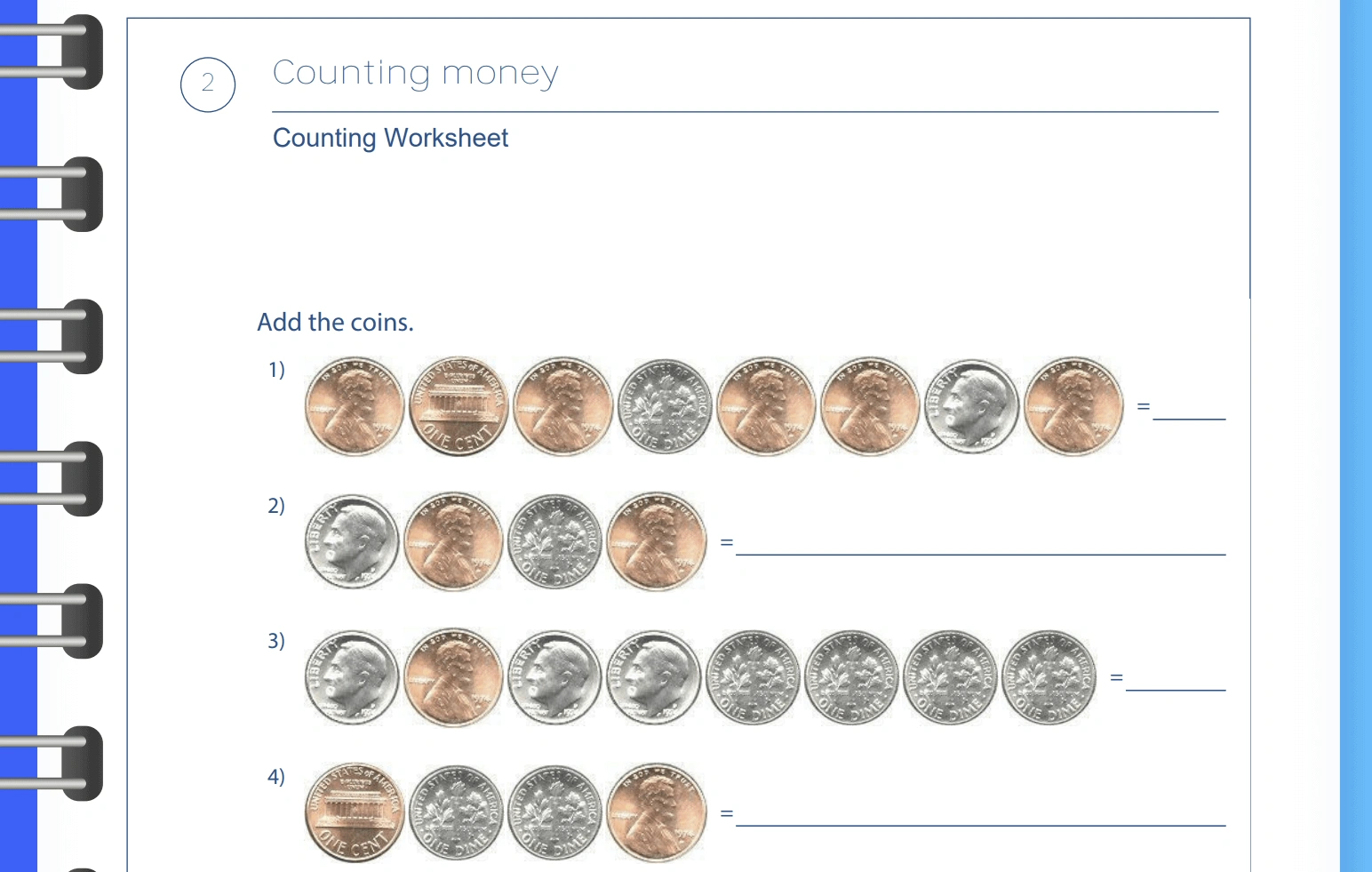
In addition to private online tutoring, Brighterly offers free-of-charge math worksheets. They use engaging visuals and real-world examples to let children practice the exact skills outlined in their IEP goals.
Meanwhile, Brighterly offers flexible pricing starting at $17.3 per lesson (when choosing the extended 12-month plan of 3 lessons per week plus a 20% discount). For comparison, the average tutoring rate per hour in the United States is between $25 and $80, which could cost parents upwards of $300 a month (one session a week).
Tips for writing effective math IEP goals
- Use the SMART framework
- Prioritize foundational skills
- Limit goals to one academic year
- Make goals understandable for students
- Collaborate with educators
- Celebrate accomplishments
Use the SMART framework
Start by using the SMART framework mentioned earlier – goals should be Specific, Measurable, Achievable, Relevant, and Time-bound.
For example, instead of writing “They are improving in addition and subtraction”, a more effective goal would be “They solve single-digit addition and subtraction problems up to 20 with 80% accuracy.”
Prioritize foundational skills
Advanced math is good, but it is certainly not useful when your kid hasn’t mastered the foundations and doesn’t have a solid understanding of number sense, operations, and place value. Progress over perfection matters!
Limit goals to one academic year
A key characteristic of math problem solving IEP goals is that they are constrained to a single school year. Educators, parents, and students should focus on short-term objectives to achieve real results. The skills of children can change drastically from one year to the next, so it doesn’t make sense to plan for the long term if you want goals to be relevant.
Sheri Langston emphasizes how significant this requirement is.
“Any goal listed in a student's IEP, whether an academic subject like math or a socio-emotional goal, should be a skill that the student can achieve during one school year.””
Make goals understandable for students
Sometimes adults use language that kids don’t understand when discussing issues that matter to them. Well-thought-through goals should use words and examples that make sense to kids and let them know what exactly is expected from them.
Once again, expert Sheri Langston shares her invaluable insights.
“It's important to have fewer well-defined, well-written goals that a student can remember.””
Collaborate with educators
Collaborating with teachers and tutors is a key factor. All sides should regularly communicate to track progress and be on the same page, plus to adjust goals when needed. This is why Brighterly tracks progress through regular progress reports for parents – this way, you can see whether your kid’s skillset aligns with your plans for the year.
Celebrate accomplishments
Finally, it’s important to praise your child when they make progress. In this way, you not only acknowledge their hard work but also show them that efforts get rewarded with achievements and positive feedback.
Dawn Pagliaro-Newman, an educator and a parent of a child with dyscalculia, highlights the significance of this step in the process of setting up and achieving math goals for IEP.
“Celebrate progress.”

Conclusion
To sum it all up, math goals for IEP are important pillars of a student’s Individualized Education Program, designed to improve their math skills. They are special, individualized educational targets that need to be crafted in accordance with the SMART framework.
Ultimately, math goals are an excellent thing to set measurable objectives for a struggling student and achieve them effectively. And if you want a platform that will help you create, track, and support math IEP goals, check out Brighterly! Book 1st math class free and see how learning can be truly student-centered!


The educational platforms market is saturated with reading intervention programs in 2026, but which one fits your needs? If you’re struggling to make an informed decision, this article is for you. I’ve reviewed the top 10 reading programs based on the parental reviews and my teaching experience — explore my best pick below. Key points […]

Aug 27, 2025

While choosing the best homeschool programs for your kid, consider their grade level, the desired learning format (self-paced or with live instruction), and how much structure and feedback they need. This roundup compares the 15 best options in 2026 based on their features, cost, and approach so you can make an informed decision. Key points […]

Sep 01, 2025
Math & reading from 1st to 9th grade
Looking for homework support for your child?

Choose kid's grade

Math & Reading for Grades 1–9
Build real confidence for your child with a Brighterly math or reading tutor.