What Do 9th Graders Learn in Math? Key Topics and Common Challenges
reviewed by Laila A. Lico
Updated on January 22, 2026
Jumping into high school math can be a hard leap to handle for a child. That’s why knowing the answer to a question, “What do 9th graders learn in math,” is a must for parents who want to be ready for what’s coming, especially if you see college as the next step on the map.
Being a tutor, I’ve seen plenty of students wrestling with math in 9th grade, but I also know there are effective ways to make it way easier for them.
Key points
- Most 9th graders take Algebra 1, learning about linear, quadratic, and exponential functions.
- Students progress from simple arithmetic to more complex tasks involving variables and abstract concepts.
- What they learn in grade 9 math sets them up for higher-level science and preparation for calculus.
- Personalized support from a Brightley math tutor can take a huge weight off a child’s shoulders, especially at the beginning of the 9th grade.
What is 9th grade math?
9th grade math is when students step away from just doing calculations and start dealing with tasks that call for formal logic and abstract thinking. Basically, math turns into a real tool for figuring things out and predicting what might happen, not just getting the answer and moving on.
In fact, students who stick with math all four years of high school are actually 140.5% more likely to be considered “college ready” and “calculus ready.”
But it’s not only about the stats. Grade 9 math is when kids are asked to explain their thinking. They need to make solid arguments and point out where someone else’s reasoning falls short.
When they’re working with algebra, for example, it’s not enough to get the right answer. Now they have to understand and explain why each step works the way it does. That’s a big change from just “answer-getting” to actually proving your thought process, and can be especially challenging for kids who are trying to reach math goals for IEP.
What do you learn in 9th grade math?
In 9th grade math, the course usually focuses on linear equations and functions. Children learn to solve for unknown variables, graph straight lines on a coordinate plane, and interpret data tables. The goal is to teach them how to handle equations and predict patterns through mathematical formulas.
So, what do you learn in 9th grade math? If we take a standard course, the curriculum is most likely to be divided into the following modules:
- The real number system: Understanding how rational and irrational numbers differ and performing operations with radicals.
- Algebraic reasoning: Solving for “x” in more and more complex scenarios, including multi-step inequalities.
- Modeling with functions: Using math to make sense of real-world trends, like population growth or interest rates change.
- Statistics and probability: Analyzing how data sets work, how to find the mean, median, and conditional probability.
Core ninth grade math skills that students develop
- Symbolic fluency: Manipulating algebraic symbols as if they were just numbers. This means learning to “reverse-engineer” formulas to solve for a specific variable, a skill necessary for higher-level physics.
- Visual-spatial reasoning: Understanding how geometric shapes occupy space, relate to one another, and transform. Students learn to visualize rotations and reflections on a coordinate plane.
- Algorithmic thinking: Making a complex problem solvable by breaking it down into smaller steps. This involves identifying which mathematical property to apply first, which is similar to the logic used in computer programming.
- Data interpretation: Reading graphs and charts to perform a thorough analysis of information.
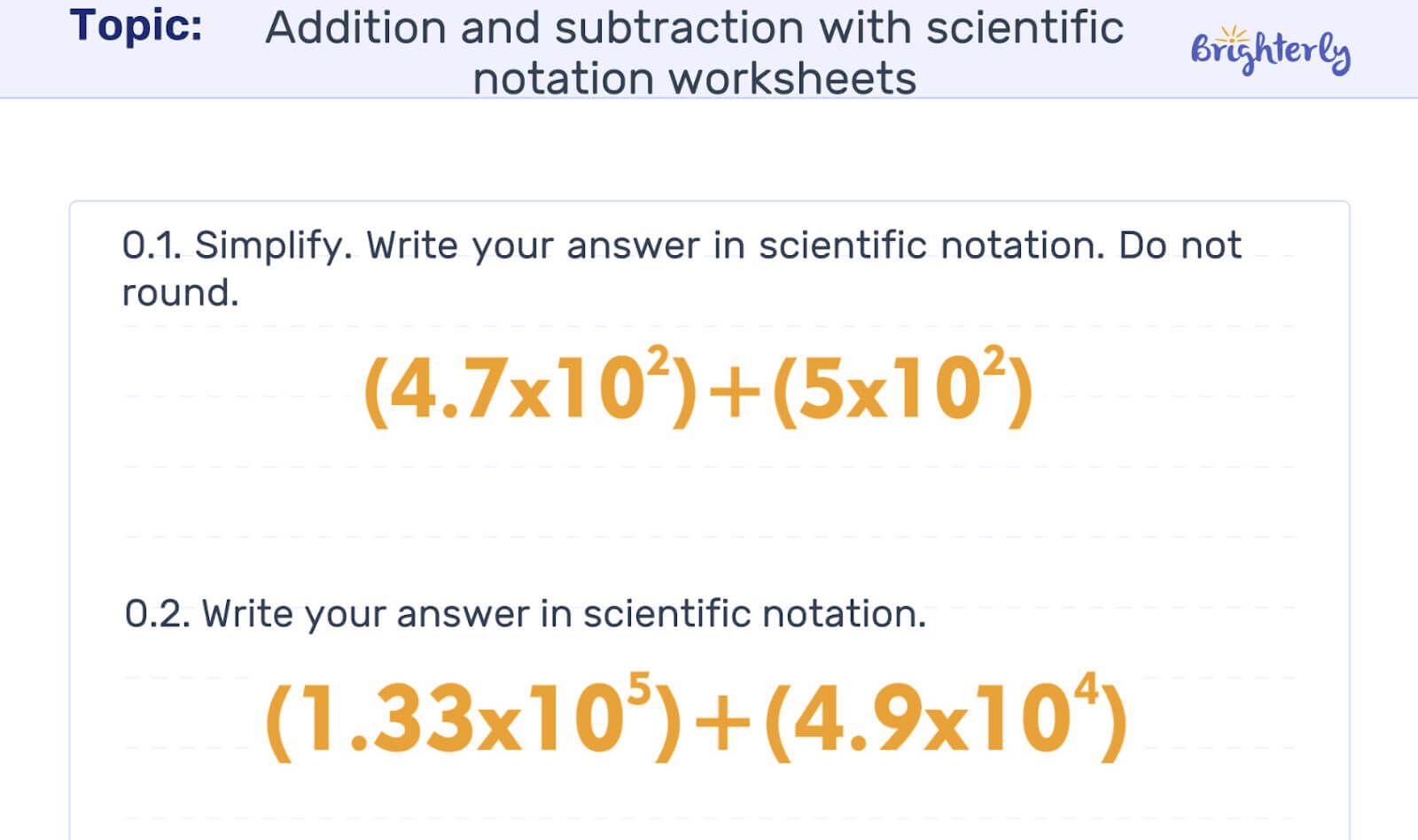
- Scientific notation: Handling both very large and very small numbers, which is necessary for chemistry and physics. This skill allows for calculating things like the distance between stars or the size of a single atom.
- Logical argumentation: Building real “if-then” arguments. It’s no longer enough to know the answer. You have to prove it, using theorems and postulates to back up every step.
How can parents help with high school 9th grade math?
Helping a teenager through 9th grade math curriculum isn’t really about teaching them every step of the way. It’s more about stepping back and letting them figure things out while you provide your support. Sure, they need to handle more on their own now, but they still rely on some structure.
- You can help with that by giving them 9th grade math worksheets to keep those classroom lessons fresh and to make sure they’re actually practicing. Those sheets are available for free, meaning you can download and use them without commitments.
- Another way to support your child is to try getting them to talk through their math problems out loud. You can give them a test and ask them to explain their thinking while solving it. They often catch mistakes before you even say a word.
- Staying organized makes a huge difference, too. Help them keep a dedicated math notebook. Have them jot down every formula, every theorem. That way, when homework comes around, everything’s right there.
What math do 9th graders take? That’s another important question we will cover. Depending on the course your child takes, be prepared for the material to get too tough and leave you both feeling stumped. That’s when external support from the Brighterly math and reading platform can help get your child back on track.
Their 9th grade math tutors create a no-judgment zone for errors, encouraging students to take the risks necessary for proper learning.


What math do you take in 9th grade?
Algebra 1
The first question parents usually have is, “Is Algebra 1 a 9th grade math?” For most students in the country, yes. In this course, students focus on the fundamentals of linear equations and inequalities. They learn how to represent relationships on a coordinate plane, work with quadratic functions, and factor expressions.
Algebra 2
So, what do 9th graders learn in Algebra 2? This is basically the next more advanced level after Algebra 1, which moves beyond linear patterns to more complex power functions and logarithms. There’s a big focus on transforming functions and tackling tougher polynomial identities.
What is taught in grade 9 geometry?
Grade 9 geometry basically moves on from variables to visuals. You get to play around with triangles, the Pythagorean theorem, and how coordinates work. It’s a different kind of math that focuses on proofs, definitions, and spatial reasoning.
For those with advanced math knowledge, the question, “What is honors math in 9th grade?” becomes topical. It’s an in-depth dive into math areas like Algebra I or Integrated Math 1.
Trigonometry
In honors courses, students move beyond basic geometry to study trigonometric ratios like sine, cosine, and tangent. The course also involves calculating missing angles and side lengths in triangles, providing a foundation for future pre-calculus coursework.
Probability
Advanced probability is basically where students analyze the likelihood of complex events. They solve 9th grade math questions regarding independent and dependent variables, which helps them prepare for the high-level data analysis in future studies.
Key 9th grade math topics
To truly understand what 9th graders learn in math, let’s look at the sufficient areas covered by most school programs:
| Key concept | Influence | |
Linear equations |
$y = mx + b$ | Underpins all functional analysis. |
Quadratic functions |
Parabolic curves | Used in physics and engineering. |
Systems of equations |
Intersecting lines | Necessary for studying business and economics. |
Polynomials |
Multiplying expressions | A must for higher-level math success. |
Exponents |
Laws of powers | Crucial for understanding compound interest. |
To add to these, students are often given math tasks that involve radicals, absolute value, and the laws of logic. Whether the student will master these 9th grade math concepts depends on the amount of practice and a willingness to try again and again, even when failing.
You can even check the kids’ performance right away by introducing them to a 9th grade math test.
Most common 9th grade math problems and how to overcome them
The main issue a student can face during high school 9th grade math is the so-called “math wall.” This happens when they try to move from “doing” math to “thinking” math. This is also often where students lose their confidence, feeling that math is simply not for them. Plus, there are other, more specific issues most math learners face in ninth grade. These include:
Struggling with abstract variables
A lot of children struggle when math stops being about apples and oranges and starts being about Xs and Ys.
Try this: Use visual models. If a child is solving 2x + 3 = 11, they can visualize a balance scale where 2x and 3 must equal 11. To maintain balance, they will need to remove 3 from each side of the scale.
Confusion between linear and quadratic growth
Another 9th grade math error students usually struggle with is treating every relationship like a straight line. They need to recognize that while linear equations grow at a constant rate, quadratic functions grow in a curve (parabola).
Try this: Encourage the child to use a T-chart to plot at least five points. Such visual analysis will help them see how the curve forms on the coordinate plane.
The “Negative sign” trap
A lot of students lose points on a 9th grade math test because they drop negative signs. This is especially common when distributing a negative number into a set of parentheses, like -3(x – 4).
Try this: Ask a child to circle the sign with the number before solving anything. Breaking the habit of rushing through algebraic expressions is key.
Fear of geometric proofs
In ninth grade math, proofs require a level of formal logic that might feel like learning a new language. Students often don’t even know where to start.
Try this: Use a two-column proof method. Start by stating the Givens and the Goal. Logically progress to the goal through steps that each have a reason.
What does 9th grade math look like in practice?
In practice, the 9th grade math focuses on solving linear equations, understanding geometric properties, working with rational and irrational numbers, and transferring new knowledge to domains like finances and data literacy.
A typical 9th grade math classroom is usually a fast-paced environment. A teacher might introduce a new topic every few days. This means that if a student is absent or loses focus for a week, there is a very high chance of falling behind. The curriculum is like a chain where every previous part connects to the next one, so a Monday’s lesson can be the foundation for a Wednesday’s quiz.
Homework is usually how students crystallize their understanding. It’s about practicing and understanding the steps until they become muscle memory. It’s also helpful to look ahead. For example, seeking answers to “What do 10th graders learn in math?” can help a student zoom out to see the bigger picture and why they are learning these specific strategies now.
Conclusion
Ninth grade math is a big deal in a student’s academic life. That’s when they receive the tools to interpret the world around them through a logical lens. This year is as much about building resilience as it is about learning algebra or geometry. As parents, you can support this journey by staying engaged with the 9th grade math curriculum and providing all the resources your child needs for learning.
If you want your child to build a rock-solid foundation and develop expert math problem-solving abilities in 9th grade, the best choice is Brighterly. Tutoring with Brighterly professionals makes learning both engaging and effective.
Book free lesson now and see your child succeed!


Today, online tutoring might be one of the best ways to conveniently, effectively, and tech-savvy improve your child’s knowledge. The Growing Stars platform promises its students high-quality individual lessons with experienced teachers. But what’s it really like in practice? For this piece, I, as a teacher, found useful Growing Stars reviews from parents and students […]

Jan 22, 2026

What is the right platform to help kids learn? As a tutor, I’m asked this question a lot, especially when parents ask about tutoring solutions. Lately, three of them turn up quite often: Varsity Tutors, Sylvan Learning, and Brighterly. So here’s my Varsity Tutors vs Sylvan vs Brighterly analysis, covering their learning approaches, effectiveness, pros, […]

Jan 23, 2026
Math & reading from 1st to 9th grade
Looking for homework support for your child?

Choose kid's grade

Math & Reading for Grades 1–9
Build real confidence for your child with a Brighterly math or reading tutor.