Math Skills for 2nd Grade: What Students Learn and How to Support Them
reviewed by Camille Ira B. Mendoza
Updated on January 11, 2026
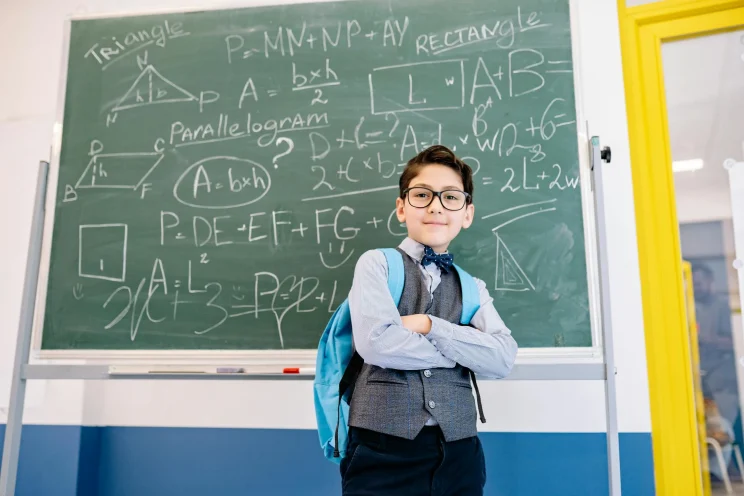
Second grade math introduces a lifelong journey of counting and drawing math figures. And as a parent, you probably can’t keep yourself from googling: how to help your 2nd grader with math?
I’m an experienced math tutor, and today I’m going to walk you through 2nd grade math skills, learning goals, and practical tips every parent should know.
Key Points
- In second grade, children begin to learn key concepts that will serve as a foundation for the years ahead.
- Kids explore math topics like adding and subtracting up to 100, place value, mental math, mastering units, basic geometry, money math, telling time, and more.
- Second grade math help involves practicing at home with fun, interactive math worksheets and relating math to real-life scenarios.
- Online math platforms like Brighterly offer 1-on-1 math support aligned with US school standards and guidelines.
What do 2nd graders learn in math?
In 2nd grade, kids begin to lay the foundation for their future math knowledge. It’s not about memorizing formulas yet, but about counting patterns, drawing math figures, problem-solving skills, and critical thinking. 2nd grade math skills also include mastering core skills: addition, subtraction, place value, and early reasoning.
Key math topics for second grade
Key math skills for 2nd grade include:
- Add and subtract up to 100
- Place value
- Mental math
- Measurement units
- Basic geometry
- Telling the time
- Money math
- Data and graphs
Add and subtract up to 100
Strong math skills for 2nd grade begin with adding and subtracting numbers to 100. The endgame of this segment is being able to add and subtract up to 1000 automatically without help.
Place value understanding
Place value helps kids understand that the number of digits is meaningful and indicates the value. The awareness of 3-digit numbers is a must in 2nd grade, while 4-digit or 5-digit numbers are not required.
Mental math
Second grade math skills like skip counting, number bonds, and fact families are necessary before 3rd grade. Kids should be able to use mental math confidently to solve problems and explain their thinking.
Measurement units
Children get to know basic weight, height, and length units. Through these second grade math skills, kids learn how and where they can use units of measurement like pounds, liters, centimeters, miles, and kilometers.
Basic geometry
2nd grade math topics also cover 2D and 3D shapes, symmetry, and basic fractions of shapes. Kids should be able to identify, compare, and describe shapes based on their attributes.
Telling the time
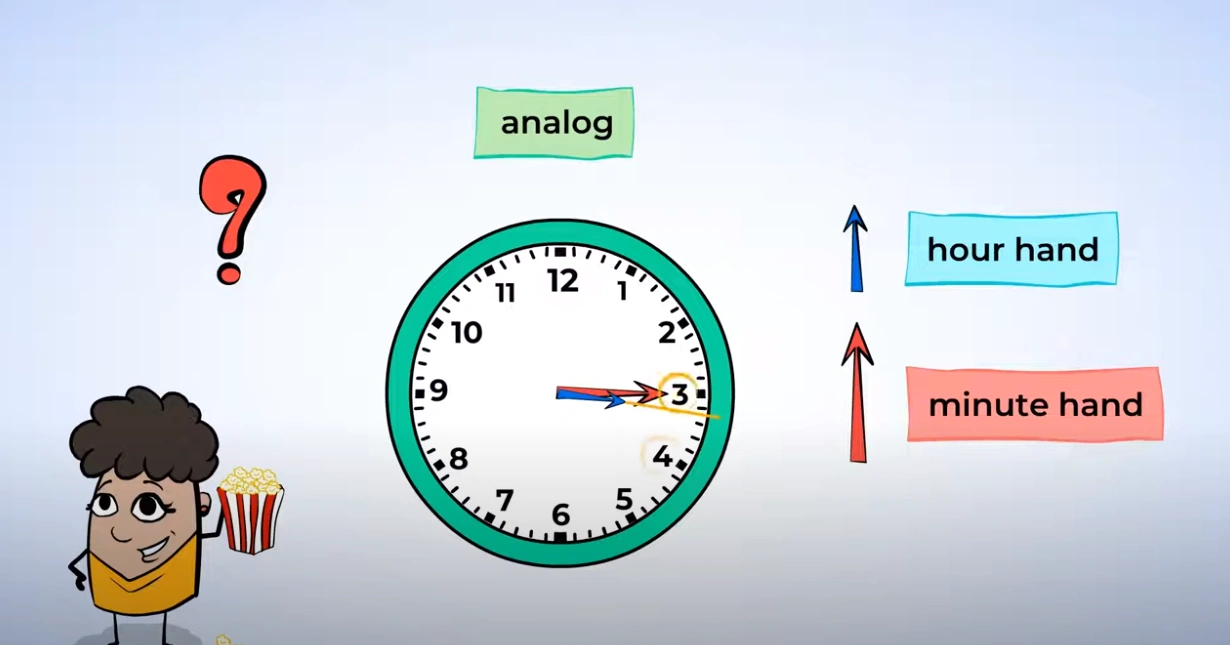
Children have to learn about the time and periods of the day. This crucial concept of indicating the period of the day, telling time up to 5 minutes, and counting the period to a certain time is among the core skills in teaching second grade math. Analog clocks and digital clocks come in handy in 2nd grade!
Money math
Money math is a great way to get to know arithmetic and place value. 2nd grade math skills require kids to learn to count, exchange, and solve other money-related problems.
Data and graphs
With this skill, children learn how to compare numbers. They discover how to analyze the proportion of visualized parts and make conclusions based on the pictures.
Core 2nd grade math skills (Checklist)
Here’s a second grade math skills checklist – what each kid should know how to do by the end of the second year in school:
- Problem-solving and reasoning
- Creating geometric shapes
- Solving daily tasks
- Number sense and operations
- Basic multiplication foundations
- Fractions
- Geometry
- Measurements
Note: Here’s a teacher insight for you – if a child can explain why a certain answer works instead of just calculating it, they are ready for third-grade math.
Problem-solving and reasoning
Critical thinking and problem-solving skills are the core skills in this block. Children learn how to deal with math problems, including globalizing and coping. They begin to analyze diagrams and bar charts, learn how to compare numbers, add and subtract numbers, and apply length, weight, and capacity units in everyday life.
Creating geometric shapes
2nd grade math concepts involve visualization skills, which are developed by drawing math figures like squares, triangles, circles, and rectangles. Children learn to divide shapes into equal parts and small pieces, and to analyze ratios.
Solving daily tasks
Key 2nd-grade math concepts also involve solving daily tasks. This particular skill is related to counting money: addition and subtraction, understanding three-digit numbers, and calculations up to a thousand.
Number sense and operations
By the end of the 2nd grade, children should feel confident working with numbers to 1,000. Plus, here are some core skills your child should absolutely be able to perform before the 3rd grade: reading, writing, and comparing numbers, understanding place values – hundreds, tens, and ones.
2nd grade math skills, like breaking numbers and rounding, are introduced, so kids can improve their math and overall confidence in math.
Basic multiplication foundations
Yes, you may think – isn’t it early for multiplication tables? In the 2nd grade, the idea is not to learn formal multiplication tables, but to understand the idea behind them. Kids learn that multiplication is, in fact, repeated addition. They explore it through equal groups and simple arrays. This skill helps them improve their logical thinking and helps them understand how numbers relate to each other.
Fractions
Math for second graders introduced fractions visually and conceptually. At this stage, kids learn to know what halves, thirds, and quarters are. They also learn that fractions represent equal parts of a whole. For better understanding, children use pictures, shapes, and real-life examples (such as sharing a pizza) rather than focusing on complex calculations.
Geometry
In 2nd grade, geometry is all about shapes – recognizing, describing, and creating them. Children draw basic 2D shapes, such as circles, squares, rectangles, and triangles. Common 3D shapes like cubes, spheres, cones, and cylinders are also explored.
What activities do kids do in this segment? They draw, build models, and engage in hands-on activities to learn about shapes. They are also able to recognize symmetry and spatial awareness.
Measurements
Math skills for 2nd grade actually help connect math to the real world. This is where measurements come into place. Second graders learn to measure length using units. They compare lengths, weights, and capacities.
In this segment, they learn to tell time, supporting their daily routines and time management. Here, money skills are also introduced to help kids internalize value, quantity, and comparison.
How to help 2nd grader with math?
To help with 2nd grade math concepts, you have to make it fun, relatable, and interactive, all while building their confidence with appreciation and sincere encouragement.
How parents can support 2nd grade math at home?
- Seek for extra math support
- Use hands-on tools
- Relate math to everyday scenarios
- Make math a game
- Break math problems into smaller steps
- Celebrate effort
- Practice patterns and sequences
- Focus on problem-solving skills
- Use technology
- Review basics
- Stay positive and patient
Extra math support
Second grade math concepts, although simple, can be hard to explain to a 7-year-old. If you’re a parent struggling to connect with your child when teaching them math, outsourcing learning to a professional math tutor for 2nd graders can be a helpful solution and a breath of fresh air.
Note: Hiring a math tutor doesn’t mean you fail as a parent. A tutor isn’t a replacement for parental support, but they surely know useful techniques that make math more approachable, less intimidating, and fun.
Personalized math support with Brighterly
The Brighterly math and reading platform is an education platform whose approach to learning resonates most with me. This resource focuses on teaching math and reading to children in grades 1 to 9, making the subjects more approachable through a personalized approach, 1-on-1 support, and adaptive teaching techniques, and alignment with the US standards.
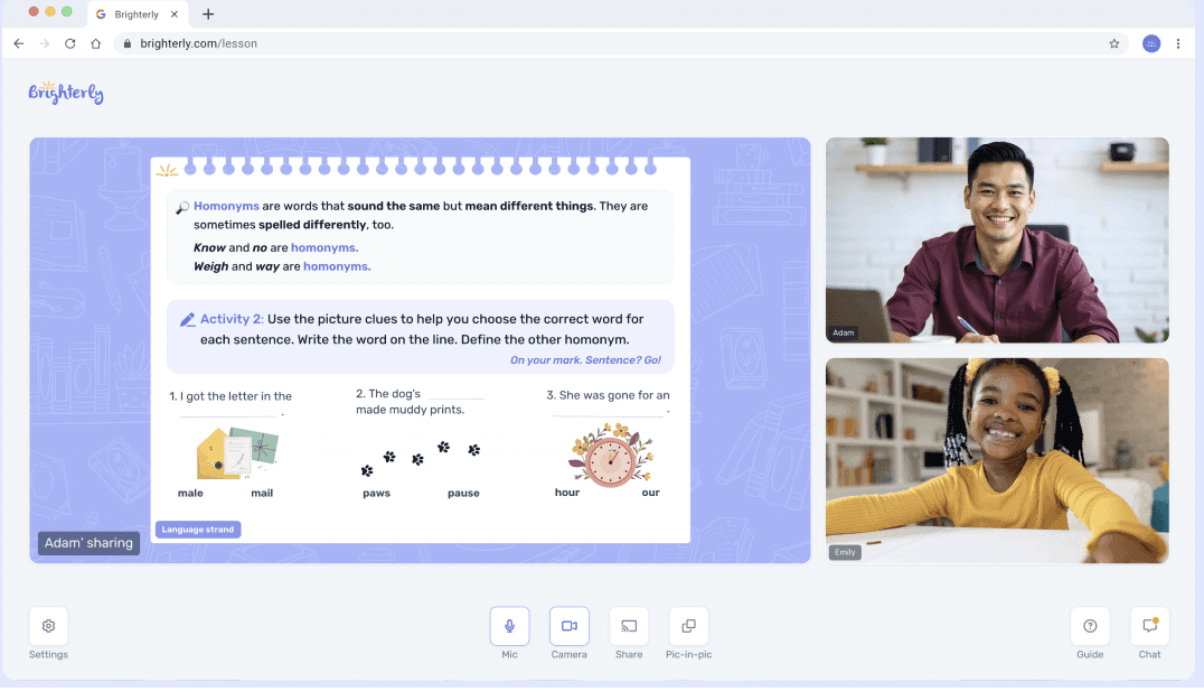
The Brighterly platform is quite popular among US parents thanks to its structured curriculum and engaging lessons. Tutors here simplify 2nd grade level math, adopting a practical, engaging, and entertaining approach to making kids learn. This way, math turns from being a dull experience into an interactive and memorable activity that drives excellent math skills.
What I like most about Brighterly is how satisfied the parents are with the service. 85% of parental reviews on Trustpilot are 5-star reviews, and parents recommend the platform to other families, which is a rare thing these days.


Firstly, Brighterly tutors will let your child take an online knowledge estimation. This will help tutors discover areas of strength and challenge for your youngster and draw the best curriculum tailored to their needs.
Note that you can also make a self-estimation independently at home, even before you start learning — this math test for grade 2 will help you!
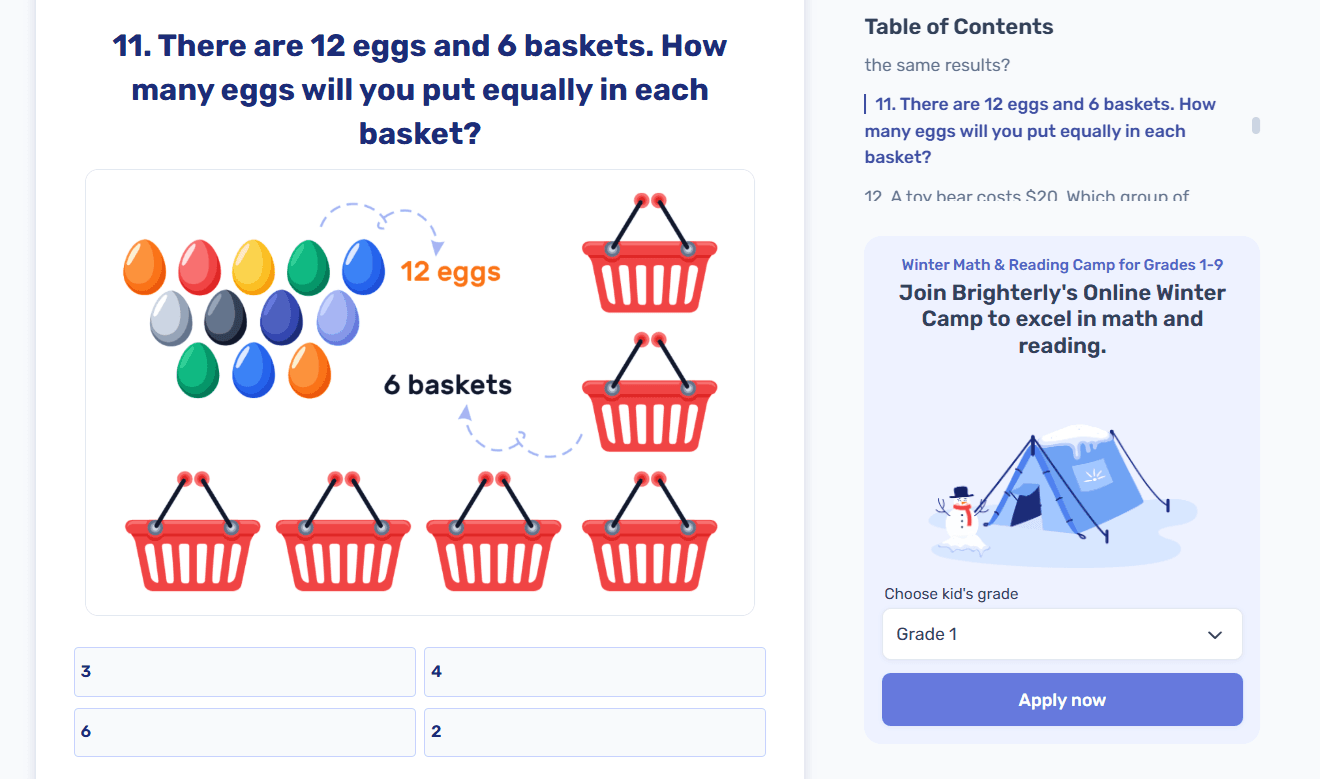
As a result, this comprehensive approach will ensure steady academic growth through regular and engaging one-on-one math lessons.
Also, Brighterly has an affordable price, starting at just $17.3 per lesson (when booking 3 lessons/week). This is quite cost-effective compared to the competitors on the market.
For example, platforms like this usually charge around $30-80/hour. Brighterly, alternatively, offers you the same benefits at the lower end of the cost spectrum.
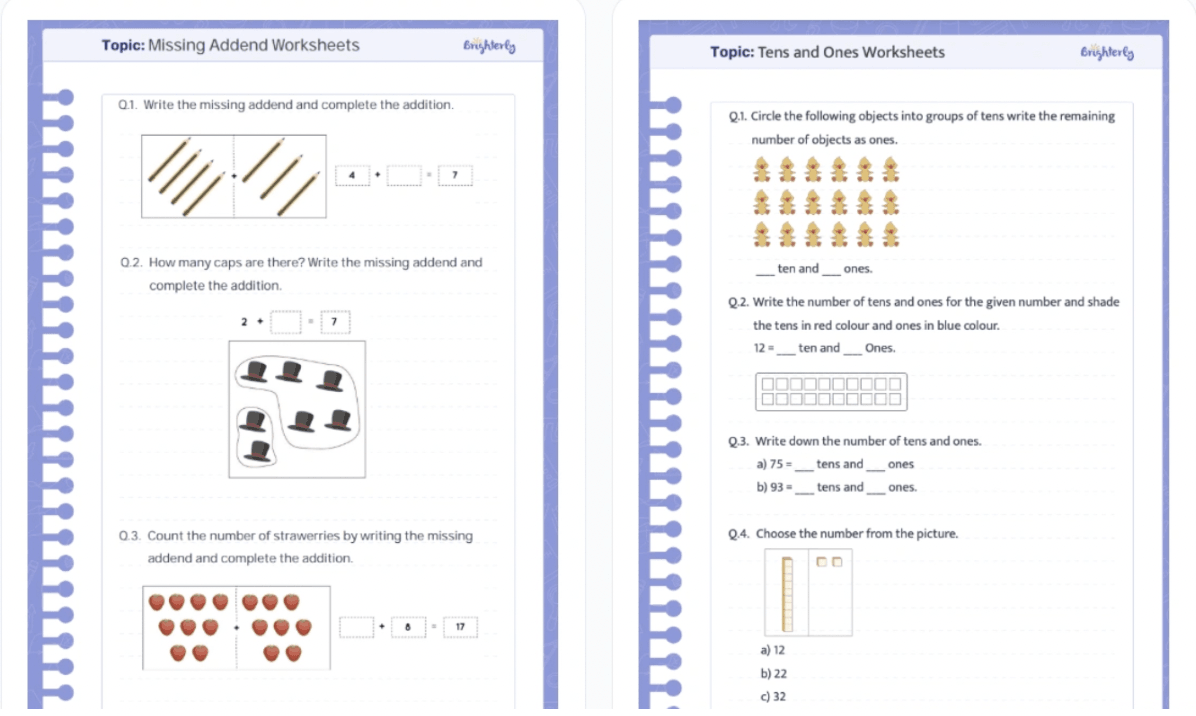
And, if you want to boost key 2nd-grade math concepts, but are still unsure your kid needs 1-on-1 support from a professional tutor, Brighterly offers users 2nd grade math worksheets for free. This way, you can get to know the platform without the pressure of committing long-term.
Use hands-on tools
Math for second graders includes using hands-on tools to reinforce math skills. Add objects like counters, blocks, or coins to teach addition, subtraction, and grouping in your classes. You can also encourage kids to draw pictures or use a number line to solve problems.
Relate math to everyday scenarios
One of the most practical math tactics for second graders is showing them how to use math in everyday life. For example, you can invite kids to come and cook with you to measure ingredients while cooking. Or ask them to count items during grocery shopping.
Another great way to teach 2nd grade math to your child is to use real-life scenarios, like dividing treats or sharing toys, to explain basic division or fractions.
Make math a game
Math-focused games work well with elementary school children. Incorporating games like Math Bingo and Dominoes can significantly boost your child’s overall understanding of math. You can also download math apps on your tablet or phone as an additional resource for math fun.
Break math problems into smaller steps
What should a second grader know in math? How to break it into smaller steps! Some common strategies involve decomposing math problems into smaller, more digestible chunks. You can also encourage them to verbalize their thought process to understand where they might struggle.
Celebrate their effort
Kids need to know they are in a safe space while learning math. Praise their effort by celebrating even the smallest wins, building their confidence, and letting them know they are doing great. Math help for 2nd graders also involves encouraging a growth mindset, where making mistakes is just a part of learning. Each correct answer is a small victory, leading to a big win over the process. Remember to tell your child how you are fascinated with the results, and don’t forget to praise them for that.
Practice patterns and sequences
If you see your kid struggling with patterns and sequences (which is quite common among 2nd grade kiddos), try creating patterns with beads or colored objects and ask them to predict the next sequence. You may also use songs or rhymes to teach skip counting (e.g., by 2s, 5s, or 10s) if your kid likes music.
Focus on problem-solving skills
If you google, “2nd grade math – multiple methods confusing child”, a bot focusing on problem-solving would be above the top methods. Problem-solving is one of the most important math skills for 2nd grade. They have to learn how to identify key information in word problems. In this case, you have to use simple, relatable examples to practice reasoning and critical thinking.
Use technology
Tablets, phones, and computers can be a great resource for elementary school kids if used correctly. Use age-appropriate math apps and games to reinforce math skills learned in class.
Review basics
Foundational second grade math concepts like number sense, addition, subtraction, and place value must be reviewed regularly if your kid doesn’t feel comfortable using them in word problems. Provide plenty of practice using both written and verbal exercises.
Stay positive and patient
Feeling frustrated or exhausted by math is normal for both you and your little one. Taking breaks and adjusting teaching styles based on the child’s needs is important. Note that you have to keep sessions short and engaging to match your kid’s attention span.
So, generally, In 2nd grade math, kids focus on building foundational skills that will help them introduce new concepts in later years. 2nd-grade math must prepare students for more complex math problems, giving them the necessary foundation to confidently tackle concepts like multiplication, division, fractions, and problem-solving strategies as they progress through their education.
How to help my 2nd grader with math? Conclusion
To sum it all up, if you want to help kids learn math, boost mathematical understanding, practice problems, and apply the theory and knowledge that will be useful further, you have to have the right resources and strategies at hand.
2nd graders begin to learn key math concepts and skills that will serve as the basis for their future math knowledge, and non-formal education tools can help you reinforce 2nd grade skills with ease.
Online math tutoring platforms like Brighterly are perfect places where tutors work individually with students of different ages, helping them focus on important second grade math topics that are fully aligned with the US state standards.
Ready to try? Book free lesson where our tutor determines your kid’s level of knowledge, analyzes it, and recommends practices that can improve the situation!



Is homework time turning into a battleground of multiplication tables? You’re not alone. Many parents struggle in those situations, feeling flashbacks to their own school struggles. That’s why we are here to help you. Read this article to discover 10 unique ways to help kids learn math. How to help my child with math at […]
Mar 29, 2024

Looking for effective and affordable online resources to boost your child’s academic results? Using my experience as a math tutor, I’ve ranked the 20+ best educational websites for kids that will help your family improve your little one’s knowledge and skills without unnecessary frustration and expenses. Key points Brighterly is the top educational website for […]
Apr 10, 2024
Math & reading from 1st to 9th grade
Looking for homework support for your child?
Choose kid's grade

Math & Reading for Grades 1–9
Build real confidence for your child with a Brighterly math or reading tutor.