Best Vocabulary Learning Apps 2026: 15 Picks to Explore
reviewed by Laila A. Lico
Updated on January 23, 2026
When your child struggles with finding the right words, you feel it too. As a math tutor with years of teaching practice for kids, I’ve gathered 15 best vocabulary learning apps that help boost speaking confidence and grades at school.
Key points:
- Customized, adaptive experience with spaced repetition is a must for the best free vocabulary learning app to really help kids improve.
- Most vocabulary learning apps have a freemium model, meaning you can try a basic plan for a certain period of time, then subscribe to unlock full functionality.
- Apps like Ultimate Vocabulary Builder and Magoosh are for vocabulary-based test preparation, while the best free vocabulary learning apps like VocabMagic and Quizlet are focused on helping you learn new words.
- Brighterly platform offers 1:1 reading tutoring services that provide complete support with the subject, something a vocabulary learning app cannot bring you.
Exploring alternatives?

What is the best app to learn more vocabulary?
The best vocabulary app to learn more vocabulary is one that focuses on personalized, adaptive learning that matches the learner’s level.
In more detail, the best vocabulary building app experience:
- Gradually adds new words in meaningful contexts
- Applies interactive forms like quizzes, flashcards, and games
- Uses spaced repetition for long-term retention
- Offers multimedia content — images, sounds, and example sentences — to engage various learning comprehension styles
- Tracks progress
- Provides instant feedback
- Encourages active usage of new vocabulary through writing or speaking tasks to deepen mastery
Last but not least, all the vocabulary building apps work better with a qualified tutor. That’s because tutors prepare customized lessons, can immediately clarify any question, and motivate students, making vocabulary learning more effective and enjoyable.
How can Brighterly help improve kids’ vocabulary?
- Practice learning app exercises together with tutors
- Improve vocabulary in tutoring sessions
- Get extra exercises for vocabulary practice
Practice learning app exercises together with tutors
The Brighterly math and reading platform offers teaching support for learning app practice. In dialogue with reading tutors, kids can overcome struggles and cement the new knowledge in a comfortable environment.
Improve vocabulary in tutoring sessions
Kids can enlarge their vocabulary during 1-on-1 reading and ELA sessions with tutors, as the Brighterly reading program plan frequently includes gamified exercises and reading aloud.
Get extra exercises for vocabulary practice
Reading worksheets from Brighterly are great for extra practice on improving vocabulary. In contrast to the paid vocabulary learning app options, you can download, print, and use them for free.
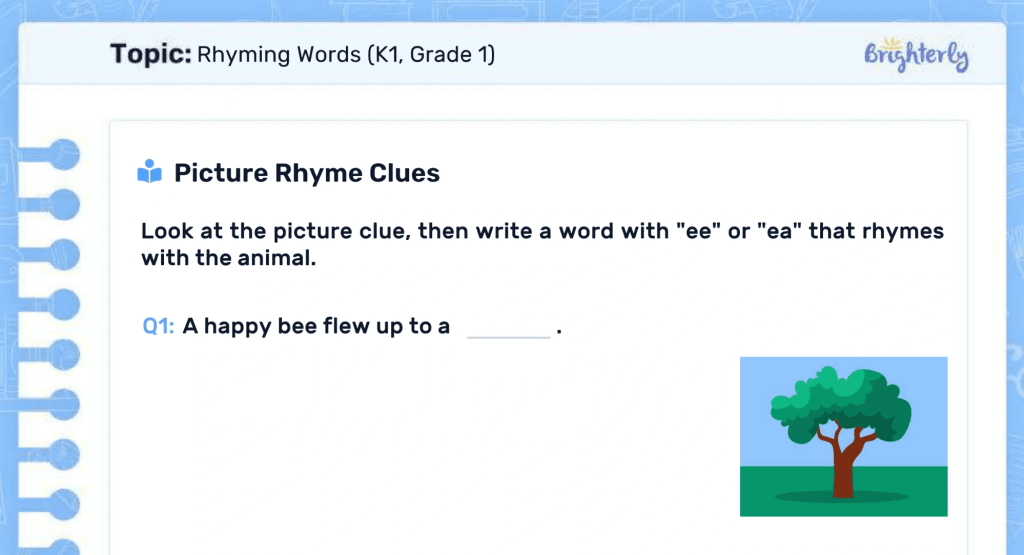
Here are some examples for you:
- Rhyming words worksheet that helps with seeing the rhyming connections between words
- Synonyms and antonyms worksheets that are great for practicing vocabulary and the meanings of words
You can download reading worksheets, along with reading tests, for free from the Brighterly website.


Top 15 best vocabulary building apps
- Vocabulary A-Z
- Quizlet
- Wordela
- WordUp
- VocabMagic
- Magoosh Vocabulary App
- Ultimate Vocabulary Builder
- Vocabulary.com
- Anki
- Memrise
- Vocab Genius
- LingQ
- Drops
- Linked Words — A Reverse Dictionary
- Word of the Day
Paid best apps for learning vocabulary: Comparison
Name |
Subscription cost |
Features |
Free plan |
| Vocabulary A-Z | $125/year | App for K-5 teachers and students with webinars | ✅ |
| Quizlet | From $7.99/month | AI-powered flashcards and study games | ✅ |
| Wordela | $47/lifetime | Unlimited custom word lists in a 520-million-word corpus | ❌ |
| WordUp | From $4.99/month | Knowledge Map for progress tracking | ✅ |
| Vocabulary.com | From $12.99/month | Vocabulary lists dedicated to various topics | ✅ Website version is free |
| Anki | $24.99 for iOS app | Flashcard-learning approach with deck-sharing available |
✅ Desktop & Android versions are free |
| Memrise | From $39.99/month | Goal-based learning with an AI coach available | ✅ |
| LingQ | From $14.99/month | Audio content with matching transcripts | ✅ |
| Drops | From $12.99/month | Gamified learning experience with over 5,000 real-life phrases | ✅ for 5 min/day |
| Word of the Day | From $59.99/year | Milestone-based progress tracking | ✅ |
Best free vocabulary building apps: Comparison
Name |
Features |
Paid extras |
| VocabMagic | Digital products for effective vocabulary development | Paid digital products start at $2.95 |
| Magoosh Vocabulary App | Free vocabulary building app | $149-$219 for full GRE prep course |
| Ultimate Vocabulary Builder | Exam preparation app for GRE, SAT, etc. | $47.99/year |
| Vocab Genius | Flashcard-based app with a spaced repetition algorithm | $6.99 for the full app unlock |
| Linked Words – A Reverse Dictionary | Searching for similar, more advanced words or phrases | The paid version has more options |
Best vocabulary learning app 2026: Vocabulary A-Z
Previously known as VocabularySpellingCity, Vocabulary A-Z is a game-based educational service with plenty of helpful materials for K-5 teachers and students. It offers in-depth materials and printable, auto-generated five-day lesson plans that contribute to the kids’ vocabulary development and enrichment.
Features:
- Multiple subjects and courses, including reading, foundation, science, writing, and vocabulary.
- Suitable for both teachers and kids
- Professional learning opportunities for teachers
Pricing
A yearly subscription to Vocabulary A-Z costs $125. You can purchase it after passing a 90-day trial period.
Vocabulary learning app A-Z: Pros and cons
Pros |
Cons |
| Plenty of learning options (Foundations, Kids, Science, etc.) | Can be pricey as the service has only yearly subscription plans |
| Adaptable, research-based learning approach | Device compatibility issues take place from time to time |
Quizlet vocabulary builder app
Quizlet is a freemium app that lets learners create flashcards to study new vocabulary. It lets both teachers and students improve their learning with fun and interactive tools.
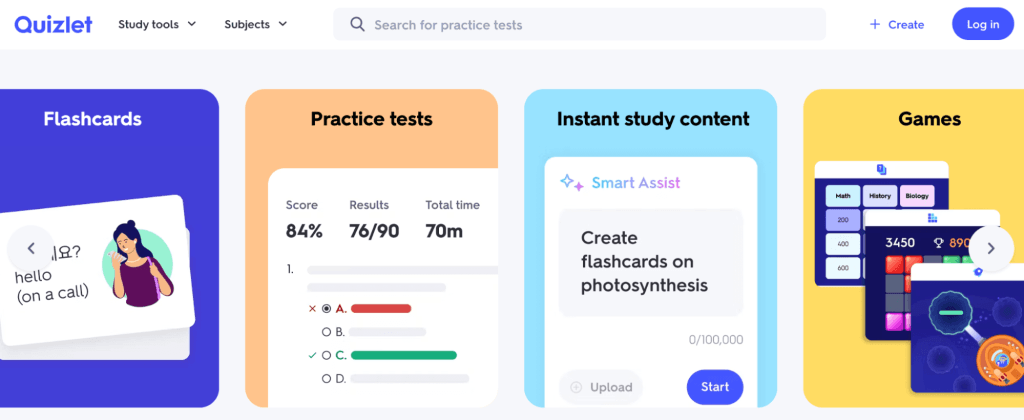
Features:
- Free flashcard sets
- Different study modes
- Quizlet Live in-class games
Pricing
A monthly subscription to Quizlet costs $7.99/month. But you can also purchase a yearly plan for $35.
Quizlet vocabulary builder app: Pros and cons
Pros |
Cons |
| Quick and easy flashcard generating system | AI content can be inaccurate |
| User-friendly study sets for classes |
Wordela vocabulary learning app
Wordella is a vocabulary-enhancing platform suitable for both regular and homeschooled students. Its multiple features help improve vocabulary extensively.
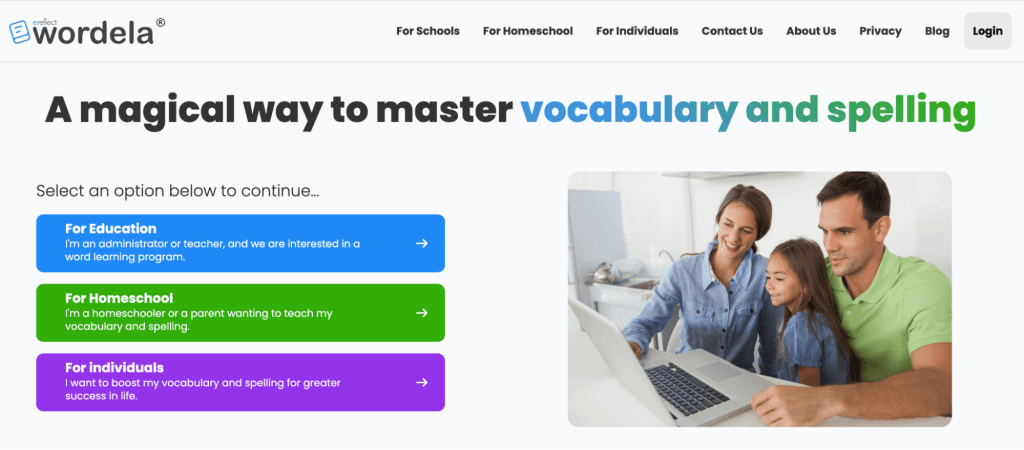
Features:
- Gamified learning with shareable profiles for knowledge exchange
- Custom word lists to collect and store words
- Helpful website blog
Pricing
Wordela offers unlimited lifetime access for $47.
Wordela pros and cons
Pros |
Cons |
| Multiple learning opportunities and features | Potential inaccuracies in AI-generated content |
| Free sign app | Lifetime access subscription only |
WordUp
Being one of the best vocabulary apps for personalized learning, WordUp is known for its Knowledge Map. This feature helps you to track your progress and plan your learning process accordingly.
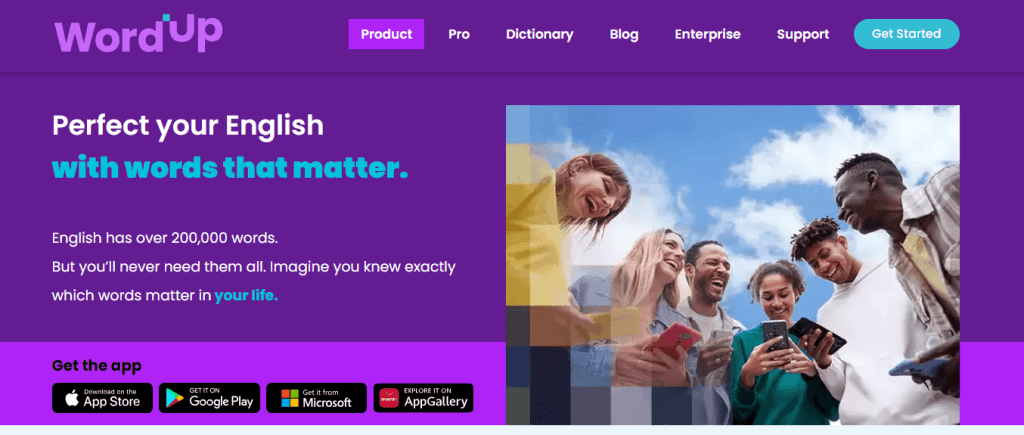
Features:
- “Built-in” web vocabulary with the opportunity to listen to the right pronunciation and see the transcription together with the word’s meaning
- An automated proficiency check to select the most suitable course tailored to your personal needs
- Multi-platform accessibility with various enterprise options for companies and schools
WordUp: Pricing
The monthly access starts from $4.99 per month, while Pro for a year is $59.99, and lifetime access is up at $189.99.
WordUp vocabulary learning app: Pros and cons
Pros |
Cons |
| Multi-platform access | More suitable for advanced students |
| Knowledge Map to see where your English stands and how to advance | Tasks are primarily on repetition and recognition |
VocabMagic free vocabulary learning app
Founded by two renowned teachers with years of experience, VocabMagic is a reliable platform for those seeking extra help with academic vocabulary proficiency. It comes as a set of digital products and a VocabMagic Quiz app available on the Amazon Appstore.
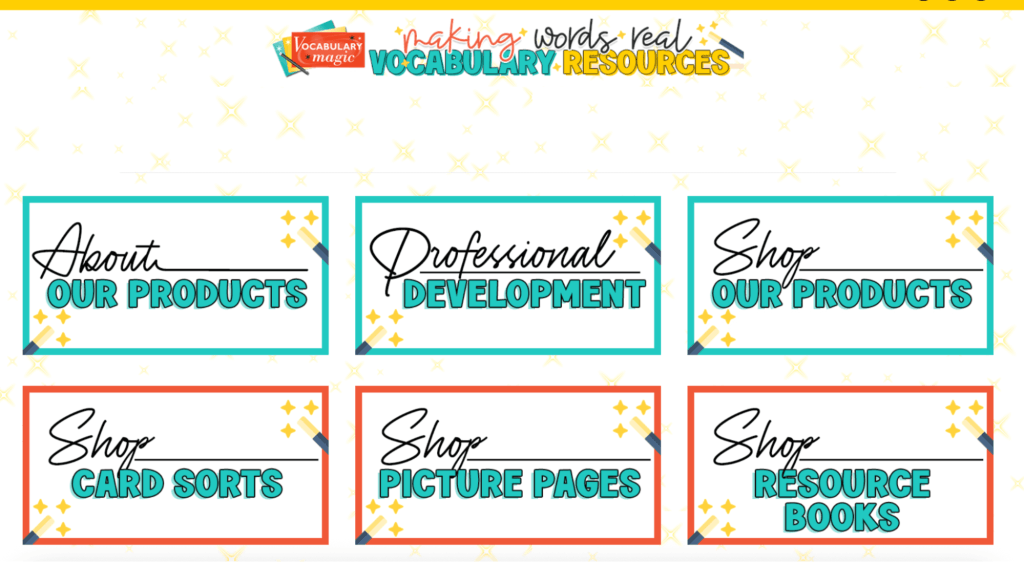
Features:
- Offer physical and digital books and worksheets
- Variety of subjects: from first words to math and biology
- VocabMagic Quiz app
Pricing
VocabMagic Quiz is free, while online and offline learning materials go at different prices, starting from $2.95 (shipping costs not included) and reaching over $500.
VocabMagic: Pros and cons
Pros |
Cons |
| Offers both digital and physical learning materials | The app is available on Amazon only |
| Accessible prices that meet any budget |
Magoosh Vocabulary App (free version)
Magoosh is a GRE prep app that applies AI-powered tools like an essay checker and an AI tutor to enhance your vocabulary skills and quickly detect areas of improvement.
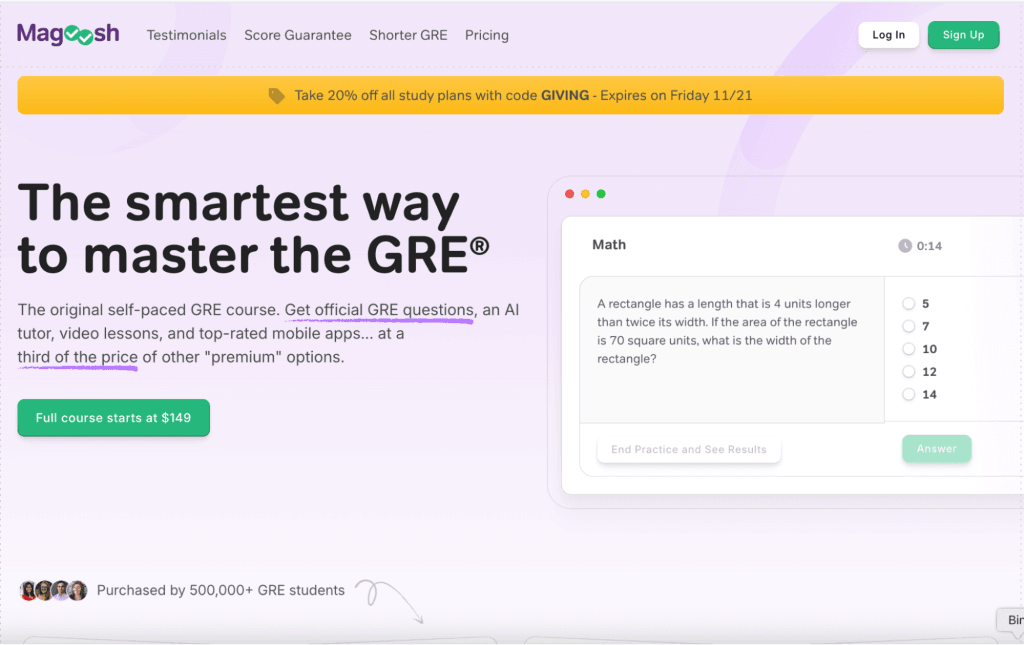
Features (Premium version):
- Instant, GRE-style essay scoring and targeted feedback
- Chat with an expert AI tutor
- Flashcard & Prep-on-the-go apps to facilitate learning
- 290+ curated lessons shaped by student feedback
Pricing
The Magoosh app is free. But for a deeper practice, you can purchase one of its Premium packages, which start at $149/month.
Magoosh vocabulary building app: Pros and cons
Pros |
Cons |
| Focuses on exam preparation | Premium packages are pricey |
| A decent vocabulary learning app for free |
Ultimate Vocabulary Building app
The Ultimate Vocabulary Builder is a free app that helps to learn over 1500 new words. It’s a nice, slick way to learn advanced vocabulary, their meanings, and pronunciations.
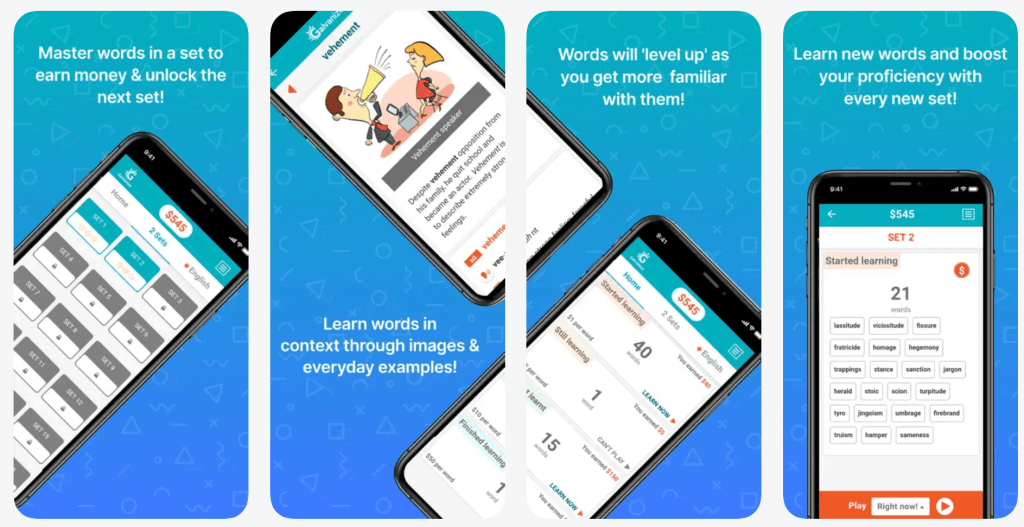
Features:
- In-game currency earned by completing stages
- Context-based word learning with real-life and fictitious examples
- Test prep
Pricing
Free.
Ultimate Vocabulary Builder: Pros and cons
Pros |
Cons |
| Free and works offline | Limited number of words |
| Multiple features and learning opportunities |
Vocabulary.com: Best vocab learning app
Vocabulary.com is an online learning resource with easily accessible free learning materials, an online vocabulary trainer, and pre-made word lists that can help you expand your vocabulary topic by topic.
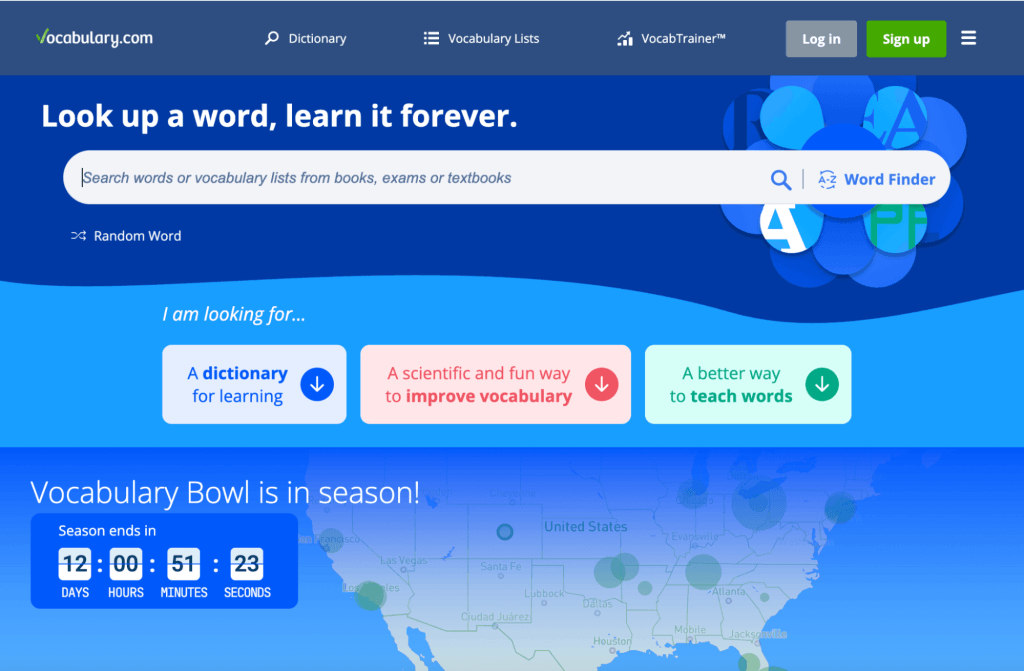
Features:
- “Built-in” web vocabulary with the opportunity to listen to the right pronunciation and see the transcription together with the word’s meaning
- An automated proficiency check to select the most suitable course tailored to your personal needs
- Vocabulary Jam and Vocabulary Bowl activities to encourage competition and strive for academic success
Pricing
Vocabulary.com subscription goes in different packages:
- 1 month for $12.99
- 6 months for $39.99
- 12 months for $59.99
Vocabulary.com best vocab learning app: Pros and cons
Pros |
Cons |
| Interactive events like Vocabulary Bowl to participate in global academic competitions and win rewards | Free trial available for 10 days only |
| Easily manageable VocabTrainer and word lists |
Anki
Anki is one of the best flashcard apps for vocabulary learning, serving as an open platform to create flashcards.
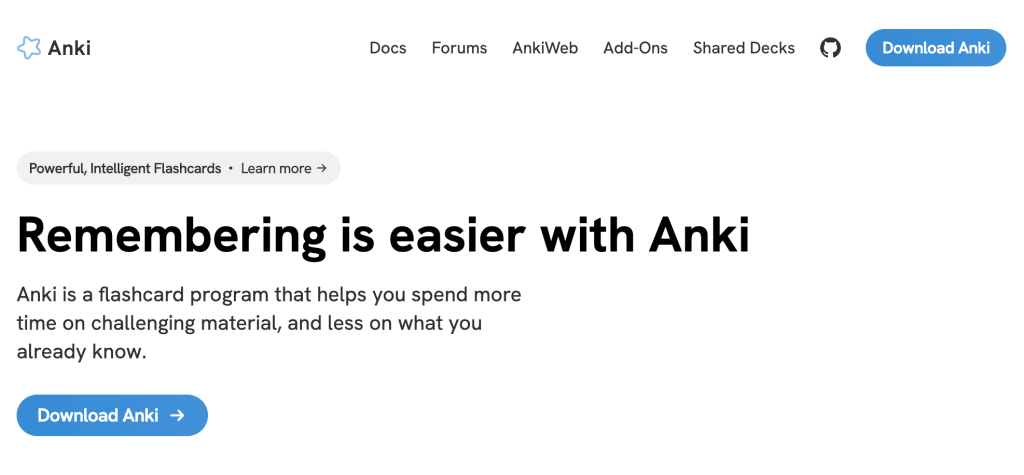
Features:
- Support for large card decks — even 100,000+ cards
- Search tool and custom categorization
- Instant sync
Pricing
You can get Anki on mobile app stores for $24.99. It’s an upfront payment you process as you download it, with no free trial available.
Anki: Pros and cons
Pros |
Cons |
| Allows handling decks of over 100,000 cards | Updates left by users can be inaccurate |
| Supports video, audio, images, and scientific markup |
Memrise vocabulary building app
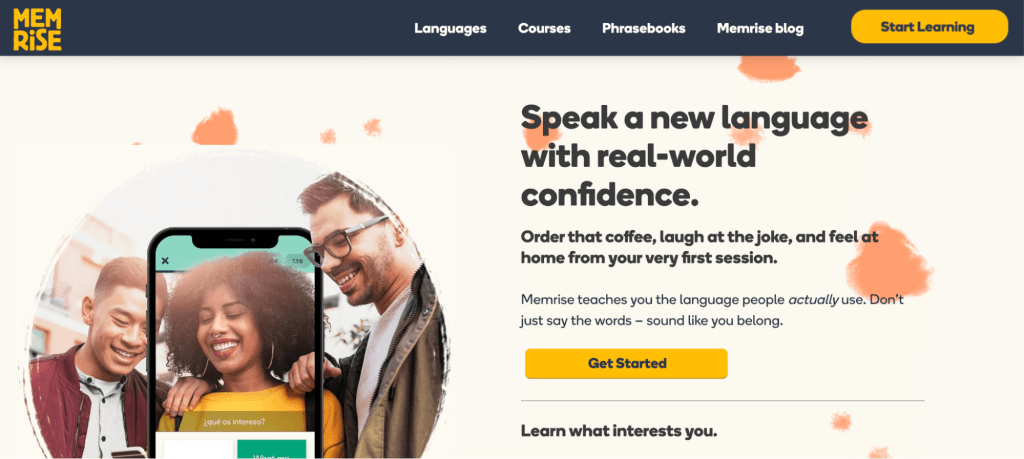
Memrise is an AI-based vocabulary learning platform that lets you practice vocabulary with pronunciation, which is extremely useful for people who learn better with a multisensory approach.
Features:
- AI-powered tools
- Target wordlists
- Grammar lessons
Pricing
A Memrise monthly subscription costs $24.99, but you can also purchase a lifetime licence for $329.99.
Memrise pros and cons
Pros |
Cons |
| Plenty of learning tools beyond vocabulary | Focus on language learning |
| Open-access phrasebooks | AI-powered tools may not be efficient |
Vocab Genius
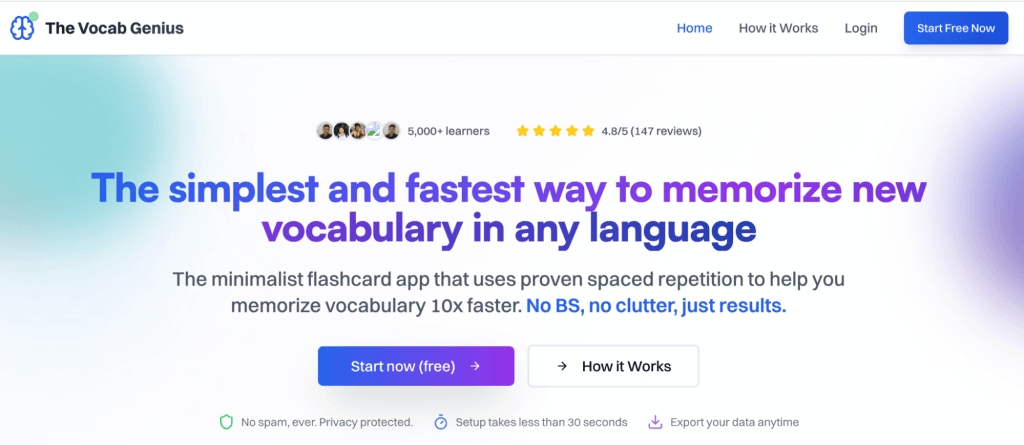
As a free vocabulary learning app, Vocab Genius lets you learn vocabulary with flashcards. The service’s algorithms will repeatedly show you the learned words so you actually memorize them.
Features:
- Flashcard-based learning
- Daily learning progression
- Tools for quick study sessions
Pricing
Free.
Vocab Genius pros and cons
Pros |
Cons |
| Free app | Most of the learning is based on repetition and recognition |
| Automatically adjustable learning algorithms and a convenient learning process |
LingQ vocabulary building app
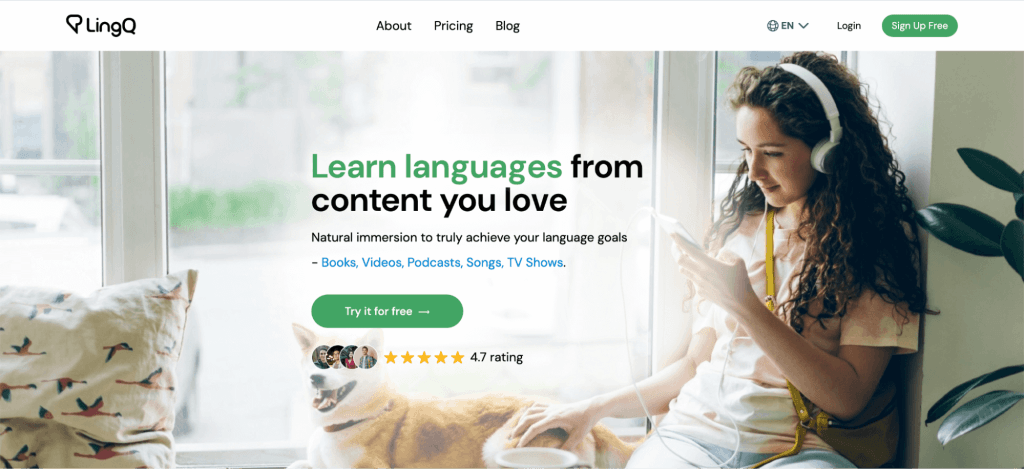
LingQ is a platform that lets you improve your vocabulary and language skills through multimedia learning. Precisely, the service allows you to discover new words via songs, books, podcasts, TV shows, and books.
Features:
- Learning through listening to audio content with transcripts
- Flashcard quizzes
- Playlists
Pricing
A monthly premium subscription to LingQ costs $14.99, and a yearly plan costs $215.76. To upgrade the service even more, you can get Premium Plus for $29.99/month and $269.99/year.
LingQ pros and cons
Pros |
Cons |
| Affordable pricing options | Focus on learning languages |
| Multisensory learning approach | The free plan has very basic functionality |
Drops
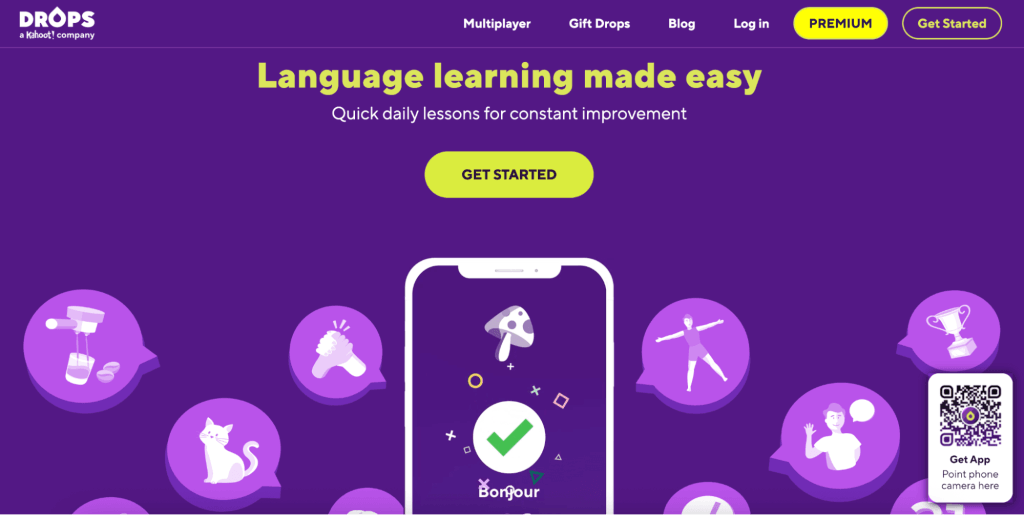
As one of the best apps for vocabulary building, Drops is a fun and easy-to-follow quiz game with a slick interface.
Features:
- Drops as a gift to others
- Multiplayer to study together with others
- Vocabulary practiced in real-life phrases
Pricing
A monthly subscription to Drops costs $13/month. A yearly subscription goes for $69.99, and the option for lifetime access will cost users $159.99.
Drops pros and cons
Pros |
Cons |
| A Kahoot-associated app that has good quiz functionality | Includes ads and limited content in a free version |
| Gamified learning experience suitable for quick and easy daily practices |
Linked Words — A Reverse Dictionary
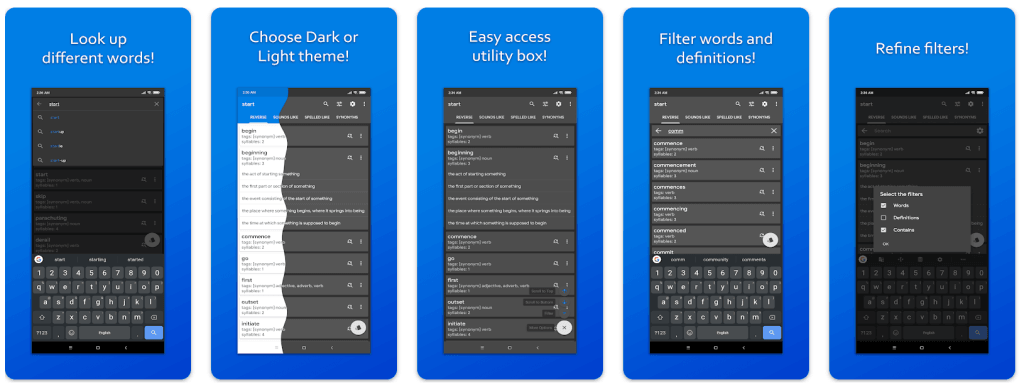
Linked Words is a free vocabulary learning app that helps users locate words through definitions, phrases, or descriptions. In contrast to traditional dictionaries, this app offers synonyms, antonyms, rhymes, and words with similar meanings or sounds, and assists with word-pattern searches.
Features:
- A simplified version of the app is titled Linked Words Lite
- Lets users search for a word by its definition or a descriptive phrase
- Includes filtering by definition and word (or both)
Pricing
Free.
Linked Words — A Reverse Dictionary pros and cons
Pros |
Cons |
| Free app | Contains ads |
| Wide range of connections between words (similar-sounding words, synonyms, word patterns, etc.) | UI/UX may feel outdated |
Word of the Day vocabulary learning app
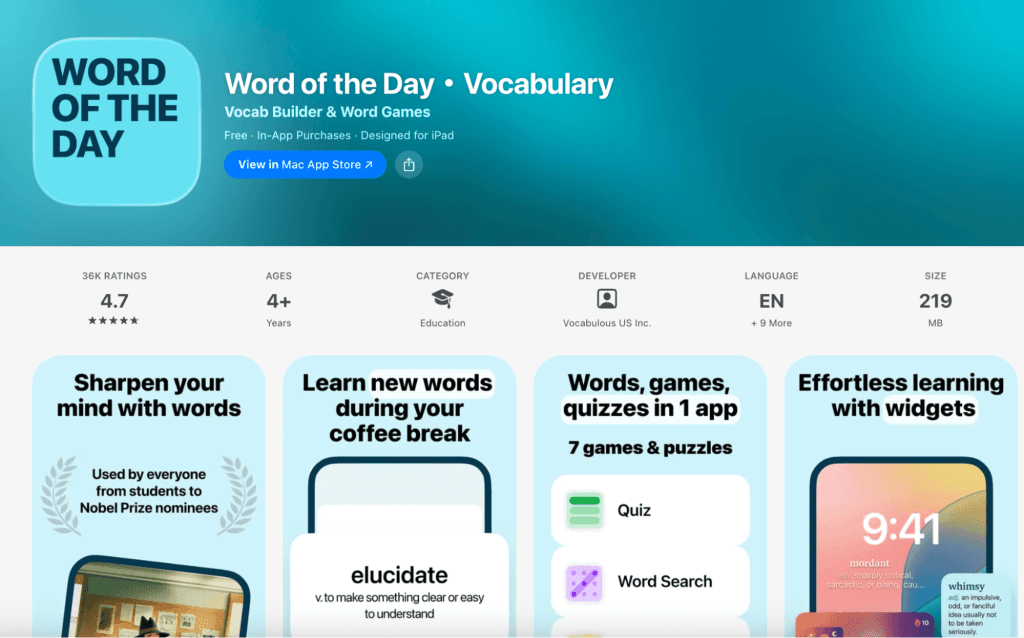
As its name suggests, the Word of the Day app automatically selects a word of the day and displays it for you to learn. It also offers various games for a more engaging learning experience, as well as the widgets you can set up on your phone to learn something on the go.
Features:
- Games and daily goals to keep track of your progress regularly
- In-app resources you can exchange for accessing specific features
- Automated proficiency test
Pricing
As you download the app, you can access some of the Word of the Day tabs for free. Still, you can be asked to buy add-ons upon completing a 7-day trial.
Word of the Day: Pros and cons
Pros |
Cons |
| Multiple games, daily goals, and other interactive features | The app may quickly ask you to purchase in-app extras to unlock full functionality |
| Ability to learn new words on the go |
Best vocabulary building apps 2026: Which one to choose?
The choice of the best vocab learning app among the 15 options mentioned here depends on your budget, study goals, and learning style. The more features an app has, the more likely it is to fit your needs, yet it may still ask you to subscribe.
For the final top 5 in this review, I recommend paying a closer look at Anki, WordUp, Ultimate Vocabulary Builder, Vocabulary.com, and Linked Words. Their functionality, customization options, pricing, and overall experience seem very balanced compared to the alternatives.
Nevertheless, neither vocabulary learning app can help your kid improve substantially. In this regard, online tutoring is extremely helpful to supplement the practice and make learning new words more interactive. With a reading teacher, your child can get support on their way to mastering English vocabulary, studying under a personalized plan that is tailored to their needs and matches their comprehension style.
If you consider supplementing vocab building app practice with 1:1 private tutoring system, book free reading lesson from Brigtherly! This won’t cost you a thing, yet it can potentially lead to developing a strong willingness to study and build vocabulary in your child.


As a parent, you must know that writing an essay is not an easy task. A young writer should think of preparation, brainstorming, writing, and revising. If you’re a bit confused by these parts, why not get help writing an essay? At least some helpful tips. Read on to explore how to write an essay, […]
Nov 24, 2025
When I first looked at Brilliant vs Khan Academy, I noticed a lot of families start looking for other options because their kid needs something different. I mean, more help, more of a challenge, or just something that fits them better. That’s why I took a closer look at how these platforms really stack up. […]

Nov 25, 2025
Math & reading from 1st to 9th grade
Exploring alternatives?
Take a short quiz!
Choose kid's grade