How to Solve Math Word Problems: Step-by-Step Strategies
reviewed by Jo-ann Caballes
Updated on October 16, 2026
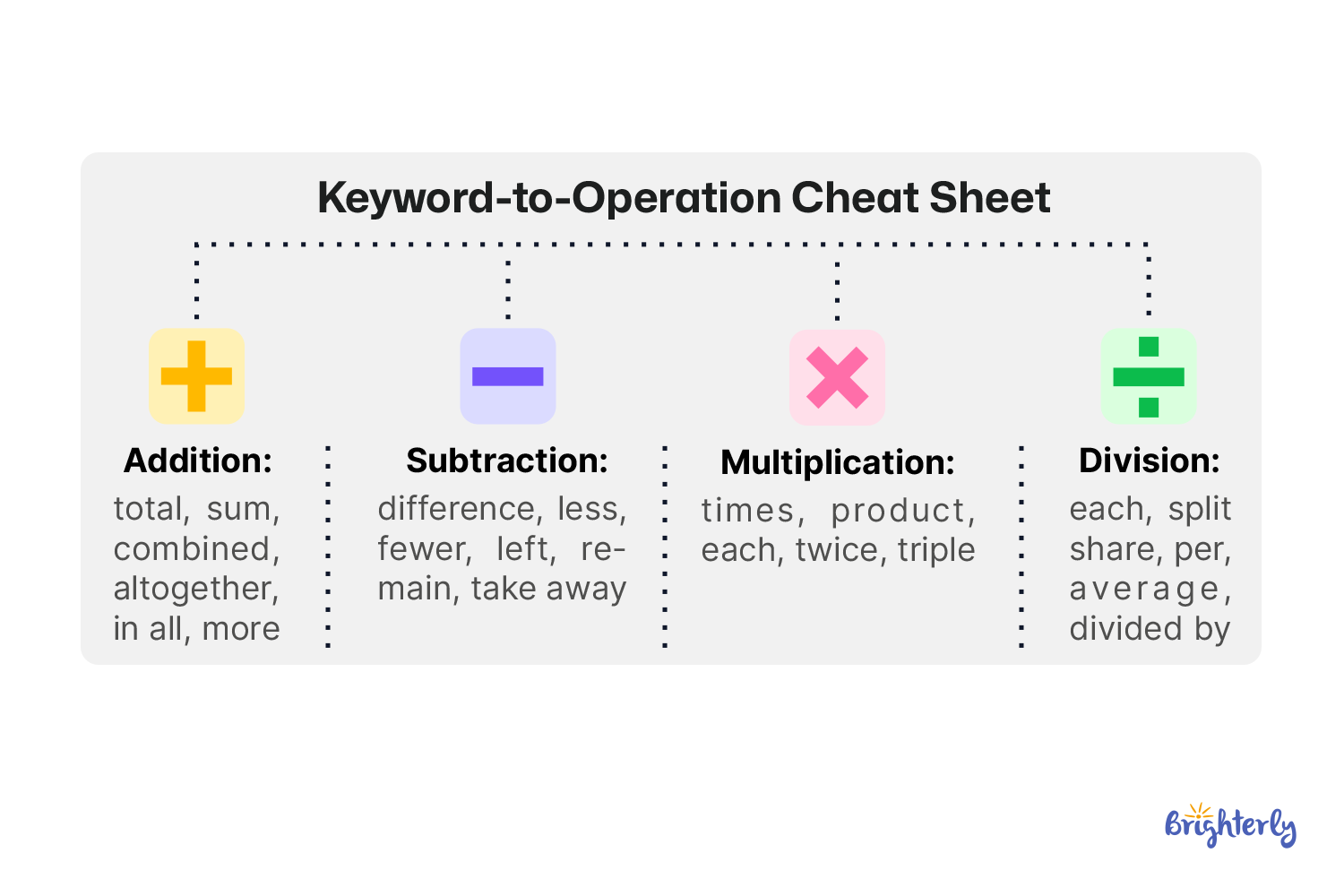
Key Points: Math word problems pop up everywhere, from the classroom to the grocery store to the sports field. Learning to solve word problems quickly and correctly can be tricky, but following a 5-step method can help your child to solve them easily, and they may even start to find them fun. The best way to solve math word problems is to follow an easy 5-step process that helps your child break the problem down, identify keywords, translate them into an equation, and then solve that equation. The final step is to check that their answer matches what the question is asking. Explore Brighterly Learning Experience Learn exactly how Brighterly helps students thrive through expert sessions, online tools, and proven feedback from thousands of satisfied parents The first step in solving word problems is to read the problem carefully. This might mean reading the problem two or three times to make sure your child has fully understood it. Make sure they understand every word in the problem before trying to decode it. Tip: If there are words that your child doesn’t understand, encourage them to use a dictionary or the internet to decipher them. You can’t solve the problem if you don’t know what the problem is actually asking. Sometimes the question is obvious, but other times it can be harder to decipher exactly what you’re being asked to find. Tip: Try highlighting or underlining any information you think is important. These might be words like ‘more than’ or numbers in the text. Keywords are words that are used to indicate what operation (equation) you will need to do. Some keywords are obvious, but others can be trickier to identify. Below is a list of common keywords you will find in math problems and the math symbols they typically represent. Tip: If the keyword isn’t clear, try looking at the final sentence. This often gives the biggest clue as to what math operation your child is meant to perform. Once they’ve identified the keywords and the operation they represent, your child can translate the word problem into an equation. Let’s look at an example: “Tom has 12 apples. He buys 5 more apples from the store. How many apples does he have now?” The word “more” is an addition keyword, so your child knows they need to add. Then they can place the numbers on either side of the equation to make the following: 12 + 5 = ? Tip: By practicing math word problems at home, your child will learn to confidently identify the keywords in the text. Start with simple problems and increase their complexity as your child gains experience. The final step in the 5-step problem-solving strategy is to solve the equation and check the answer. Make sure that the answer makes sense and matches the question being asked. Tip: As your child gains confidence answering math word problems, they can start by estimating the answer and then use that estimate to check their final answer. If their estimate and final answer are very different, then it’s worth redoing the problem to look for errors.
Looking for a better way to learn math?
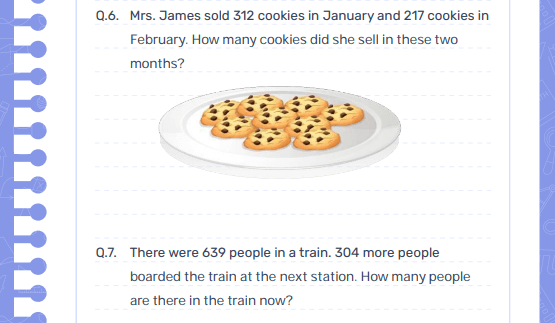
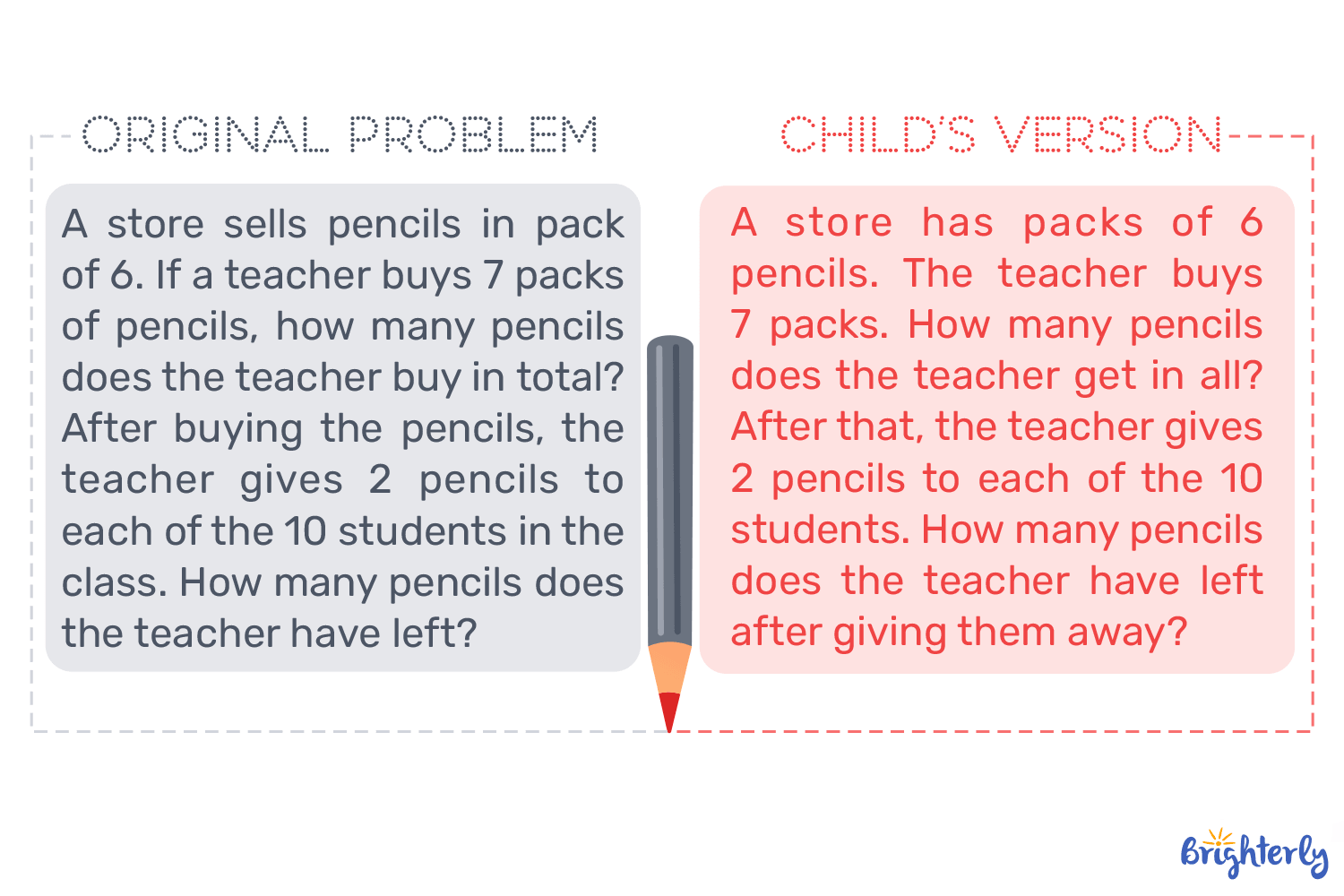
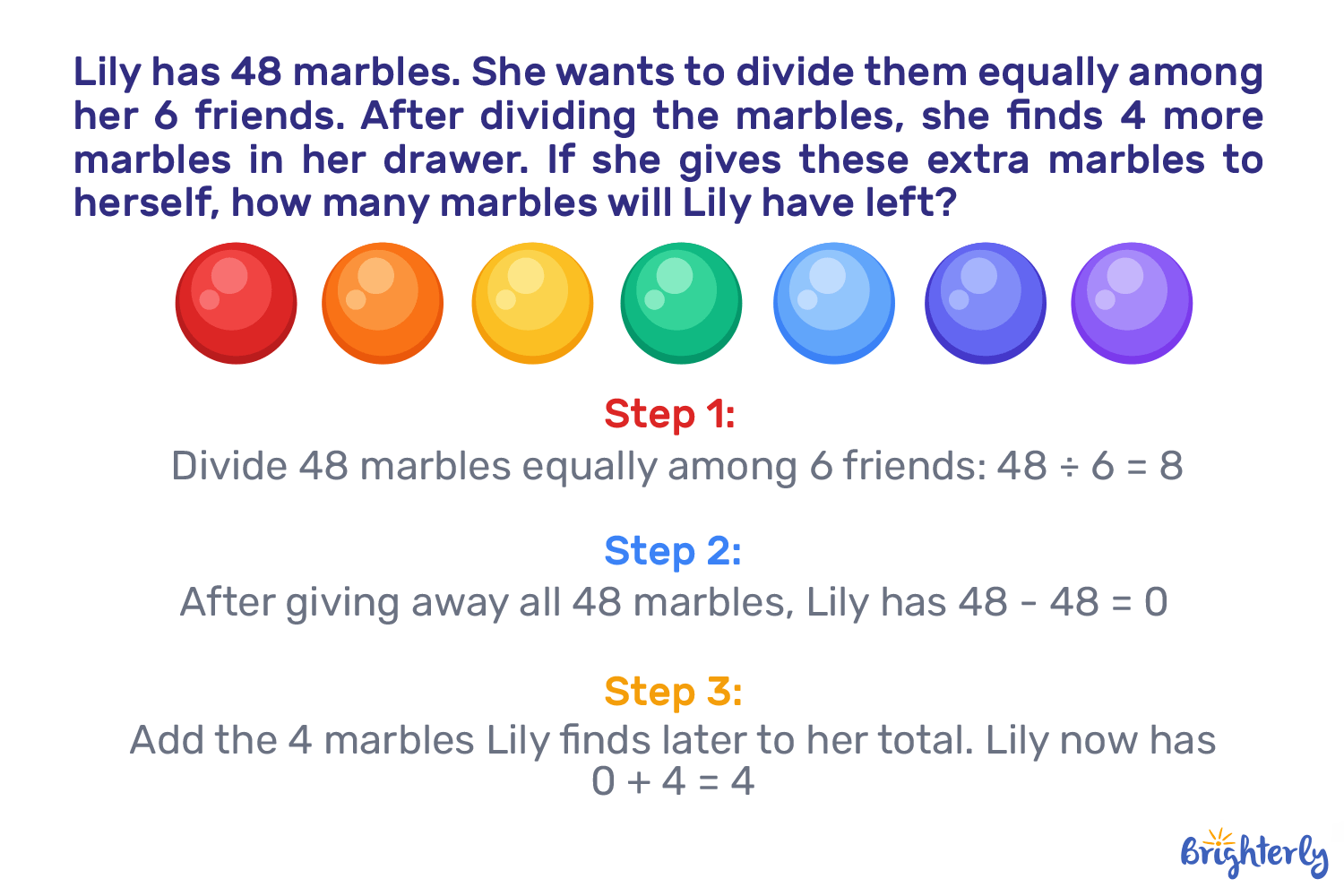
Let Brighterly’s experienced tutors help your child with math word problems. Worksheets are a great way to practice word problem strategies as they provide in-depth practice in a convenient and printable format. Using worksheets at home can help your child to feel more confident solving word problems in the classroom and in real life. If you wish to give your child extra math practice, our math worksheets can come in handy. Check some of them out: Tip: Use colorful markers to highlight important points and boost visual memorization. Benefits: According to Schoenherr et al., 2024, using visualizations as part of math education improves learning outcomes and has positive lasting effects among students across all age groups. Paraphrasing is when you rephrase someone else’s idea (like a sentence or text) in your own words. Being able to paraphrase a math word problem shows that the child fundamentally understands what the question is asking and helps them to break down multi-step questions into easy-to-manage steps. Tip: Encourage active reading with kids in any grade. Ask them to read the text aloud, then pause at each sentence and rephrase what they’ve just read. Benefits: Improves reading comprehension and helps them retain the information they have just read. If your kid is a visual learner, then drawing diagrams, geometric shapes, or simple pictures can help them to understand what the question is asking. Drawing a diagram can also help learners to clarify what the next step, or steps, are needed. Tip: The drawing doesn’t need to be complicated; a simple line is often good enough to represent an object. Benefits: Can be very useful for visual learners and promotes a creative approach towards problem-solving. When a math word problem involves multiple steps, it can quickly feel overwhelming and impossible to solve. If your child is getting frustrated, then a good problem-solving strategy is to first break the problem into smaller chunks. Start with the first equation in the word problem, as you typically need the solution to this problem to proceed to the next step. Below is an example of what word problem steps you can take to break down a complex problem. Tip: Write down each step as a separate equation and solve them in order. Benefits: Taking small steps prevents your child from feeling overwhelmed or getting lost in the question. Estimating the answer before translating and solving the equation can help your child to check their work at the end. If their estimate is close to their final answer, it’s a good sign they’ve solved the problem correctly. However, if the two answers are very different, then they may have made an error somewhere along the way, and it’s worth redoing the problem to check. An example of how to use the estimation strategy: “If a pencil case costs $7.45 and you buy 5 of them, approximately how much will you spend?” Estimation strategy: Our estimation and the official answer are close, which gives us a good idea that our answer is correct. Tip: Make sure your child knows how to round numbers and consider practicing estimated calculations when you’re shopping or budgeting to provide real-world context. Benefits: Estimation allows children to develop faster mental arithmetic and better math intuitiveness. Math is based on patterns. Once a child understands the pattern, they will know how to solve word problems step-by-step. Being able to recognize similar patterns in word problems, even when the context is different, and then follow a template, will allow them to solve equations quickly and smoothly. Check out the tasks below. They all follow the same pattern — can you spot it? Tip: Write down three word problems that follow a similar pattern and ask your child to write down a template to solve them. Benefit: Following a template will help the child to solve problems faster and can reduce frustration. Sometimes working backward from the answer can help kids form the equation. It doesn’t mean that they need to know the answer to begin with, though; instead, you typically replace the unknown answer with 𝑥. Let’s take this problem as an example: Twice a number subtracted from five times itself equals 27. What is the number? Here’s how you can solve linear equations with the backward perspective: Tip: Make sure your child has a solid understanding of the different keywords and knows how to do word problems that are simple before they move on to more complicated, multi-step problems. Benefits: Working backward from the answer helps with equation forming. Ask the child to reflect on their mistakes. Why were they wrong? How can they avoid the same mistake in the future? How to solve word problems in math with their current knowledge? Reflection and detailed analysis with an adult is one of the best ways to boost academic performance. Tips: Children can find it difficult to review their mistakes, so making it into a game and approaching mistakes as a learning opportunity rather than criticism helps them to review their errors. Benefits: Reviewing errors can build resilience and deepen a child’s understanding of fundamental math concepts. If your child is having difficulty with math word problems, then 1:1 support from a professional tutor can help them to solidify their math knowledge, build their confidence, and fill in any gaps in learning. Our learning platform offers personalized support for children in grades K-12. If your child needs help with their math homework, is generally struggling in class, or just needs some extra practice, our tutors will develop a personalized plan based on your child’s needs, interests, and pace. To find out what grade your child is currently working at in math, take our free math test today.
Turn confusing word problems into simple math
Brighterly tutors help kids decode math problems through interactive 1-on-1 tutoring. Now, let’s look at how to solve a word problem using these math word problem examples. Problem 1: Sarah has 24 blue marbles. Her friend gives her 15 red marbles and 7 green marbles. How many marbles does Sarah have in total? Solution: The strategy you can use is to find the key info So, you need to add the numbers together, like so: 24 + 15 + 7 = 46 Problem 2: The bakery had 60 cupcakes in the morning. By noon, they had sold 42 cupcakes. How many cupcakes are left? Solution: The strategy here is to translate the words into symbols. The word left shows that subtraction is involved. So, you need to subtract the number of cupcakes sold from the original number: 60 – 42 = 18 cupcakes left. Problem 3: A teacher has 45 stickers to give to 9 students. If she wants every student to get the same amount, how many stickers will each child receive? The strategy here is to break the problem down. The phrase each child and the fact that you need to distribute tickets evenly indicate that you need to divide. So, the solution is: Solution: 45 / 9 = 5 stickers for each child. Although challenging, math word problems don’t have to be scary. With the right approach, your child can learn the steps to solve a word problem quickly, apply those skills in the real-world, and even start to enjoy math. If you’re looking for extra support, our interactive learning platform offers 1:1 online math classes that meet your child’s needs, wherever they are. Book a free demo lesson today! Kids struggle with word problems because a word problem isn’t just a math equation. It requires reading comprehension, identifying keywords, and translating them into the correct symbol. Many children struggle to understand what the question is asking and find the amount of information provided overwhelming. But when they follow a step-by-step strategy, math word problems become a lot easier to decode and answer. Following a 5-step strategy to help your child decode what the question is asking, identify keywords, translate them into symbols, and then write out the equation is the trick to being able to solve word problems quickly. Identifying the keywords and translating them into the correct symbol is a vital step in solving any word problem. However, you also need to know which numbers go which side of the symbol, and for more complicated word problems, which equation you need to solve first. If you’re wondering how to do math word problems at home, then the best place to start is teaching your child the step-by-step strategy. You can then guide them through word problems until they can tackle them on their own, give them worksheets to practice with or use an online 1:1 math tutor for extra support. Like with most things related to math, consistent practice builds math skills and confidence. Schools typically start teaching children word problems around second grade. But, your child has likely come across them in the real-world much earlier. If you’ve ever asked your child something like how many carrots they will have on their plate if you gave them 2 more, or how much money you should give the cashier if you want to buy another apple, then you’ve already been practicing math word problems together. Older children might find it fun to work out how much to tip in a restaurant, or how many sweets they would each get if they shared the packet equally. There are so many opportunities in the real-world for kids to practice math in a fun and pressure-free way. Memorizing mathematical formulas isn’t always easy for children. In this article, I’m going to share some of the best ways to memorize math formulas quickly and effectively so you can solve math problems with confidence. Key Points Kids need to use strategies tailored to their learning styles to effectively memorize math formulas. The best way […] Jan 23, 2025 On the search for the best Time4Learning alternatives for homeschooling in 2026? Using my experience as a math tutor, I’ve identified the top competitors and ranked them based on specific needs. Find out their pros and cons to make the right decision for your child. Key points Miacademy, Acellus Academy, Bridgeway Academy, and K12 offer […] Jan 28, 2025
What’s the Best Way to Solve a Math Word Problem?
How to Solve Word Problems in 5 Steps
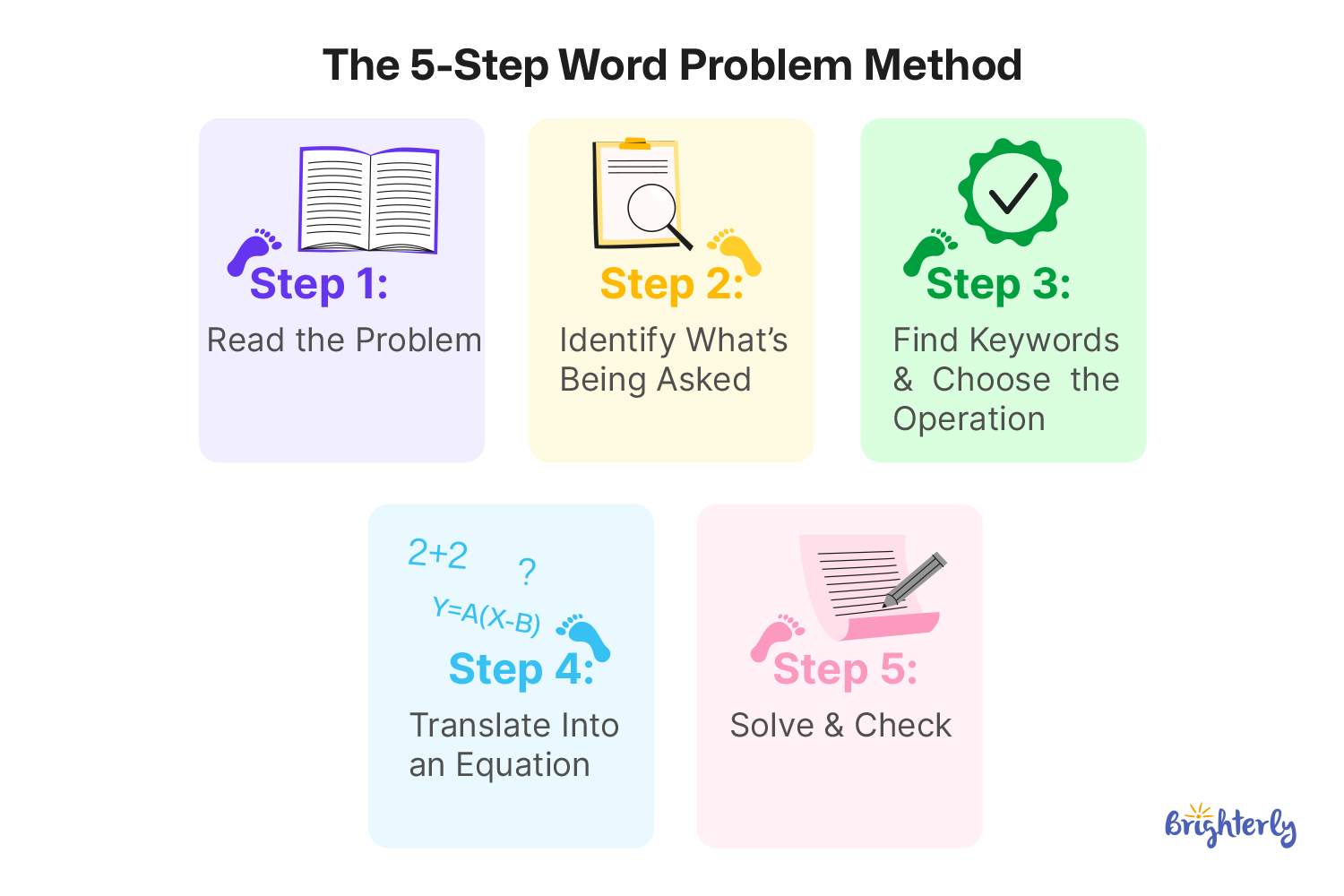
Step 1: Read the Problem Carefully
Step 2: Identify What’s Being Asked
Step 3: Find Keywords and Choose the Operation
Step 4: Translate Words into Equations
Step 5: Solve and Check Your Work
Additional Strategies to Strengthen Word Problem Skills


Practice with Word Problem Worksheets
Paraphrase the Problem
Use Diagrams or Visual Models
Break the Problem into Smaller Parts
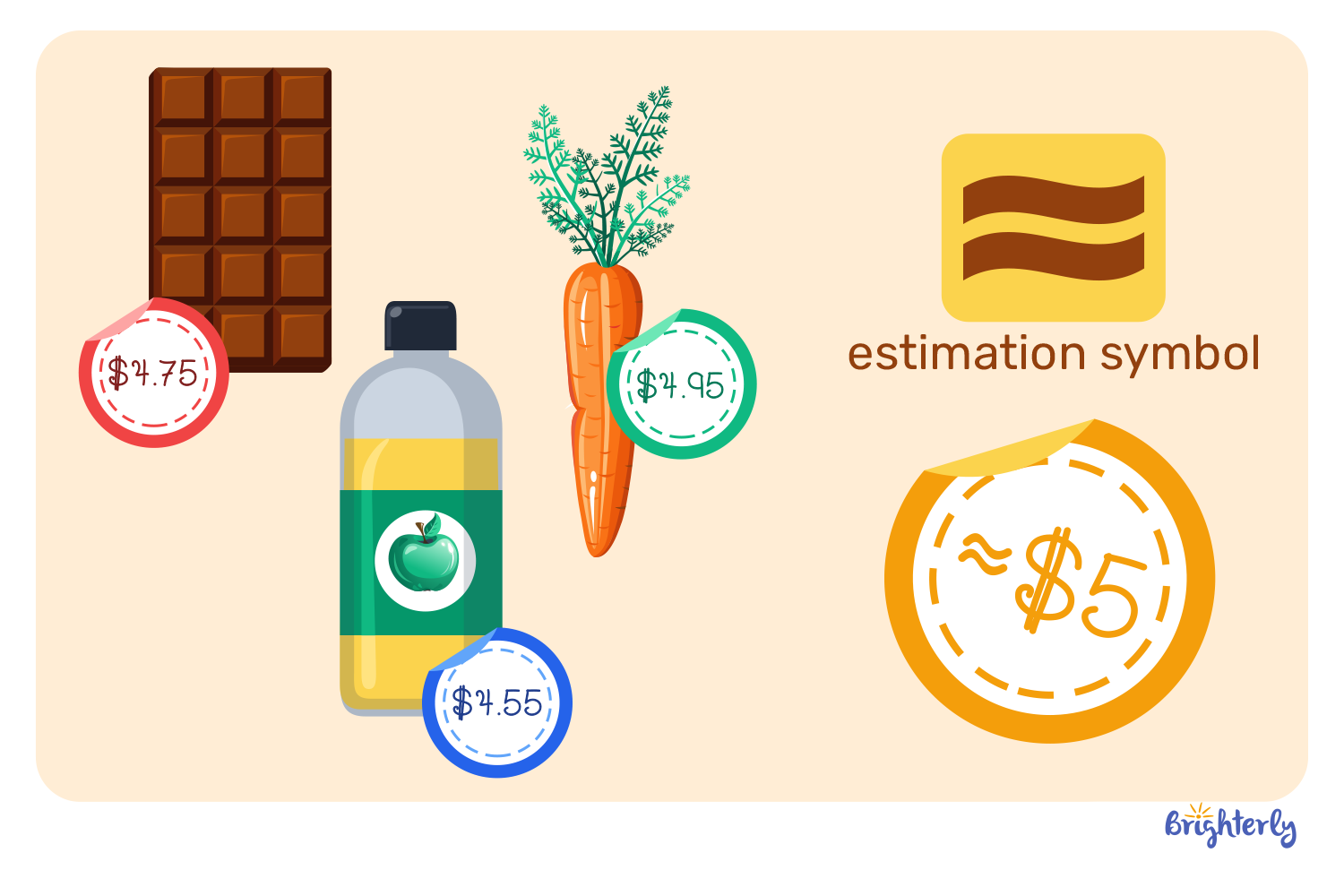
Estimate the Answer First
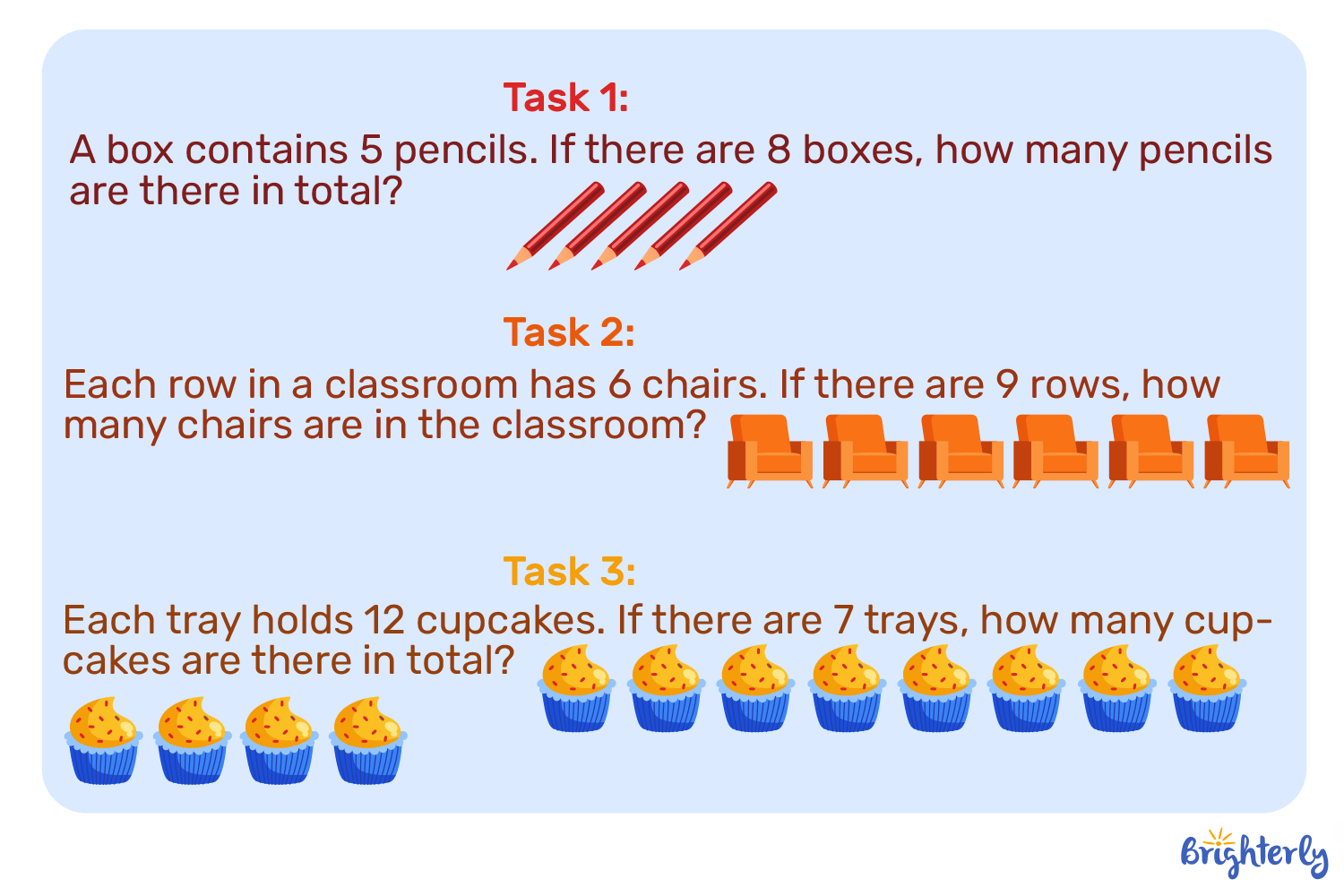
Turn Similar Problems into Templates
Work Backward from the Answer
Learn from Mistakes
Get 1:1 Support When Your Child Gets Stuck
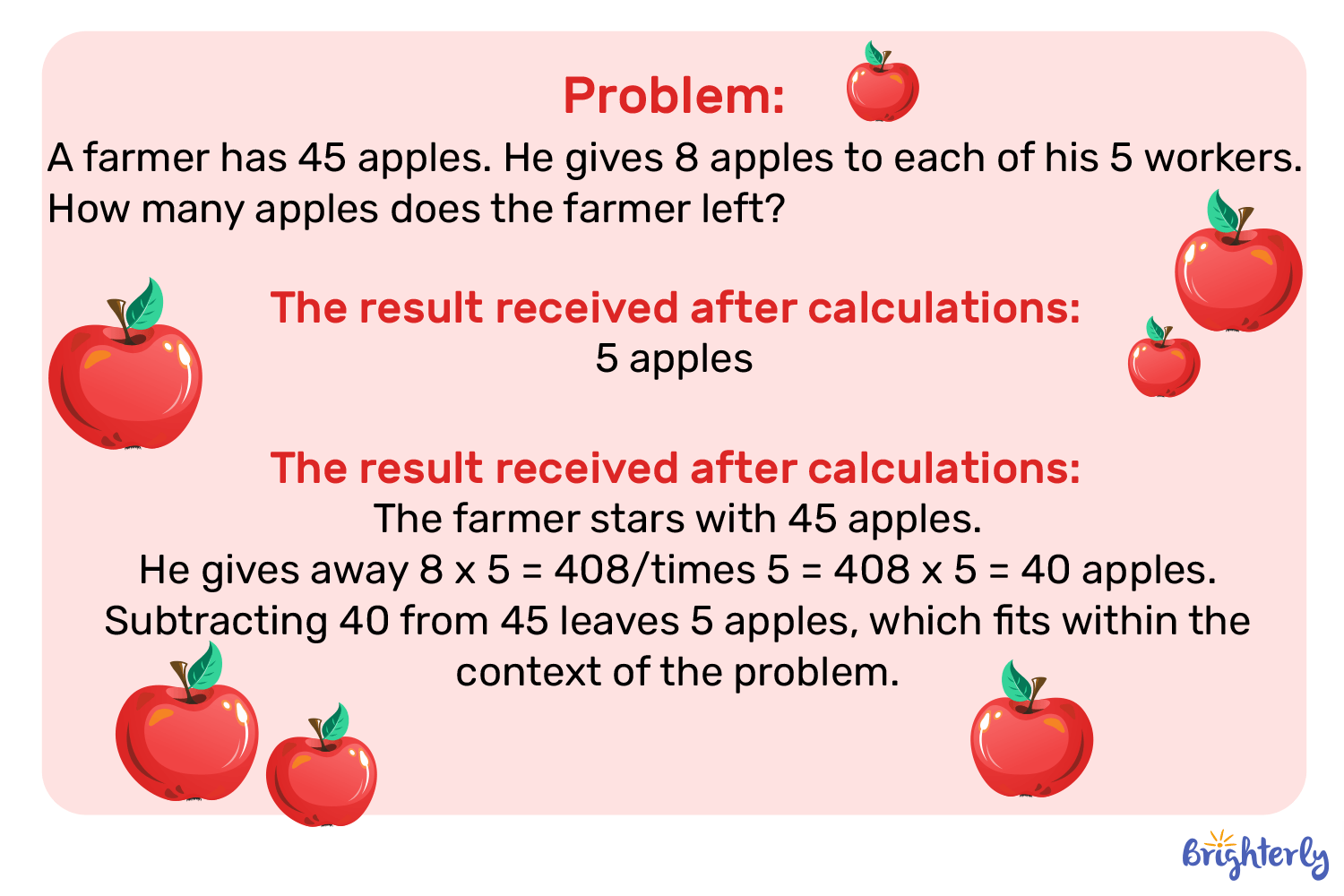
Worked Examples: Solving 3 Word Problems Step by Step
Conclusion
Frequently Asked Questions
Why Do Kids Struggle with Word Problems?
What’s the Trick to Solving Word Problems Faster?
Is Looking for Keywords Enough to Solve Word Problems?
How Can Parents Help With Word Problems at Home?
What Grade Do Kids Start Learning Word Problems?






Math & reading from 1st to 12th grade
Looking for homework support for your child?

Choose kid's grade

Math & Reading for Grades 1–12
Build real confidence for your child with a Brighterly math or reading tutor.