Stages of Spelling Development: How to Help Your Child Master Spelling
reviewed by Marvi M. Andres
Updated on March 5, 2026
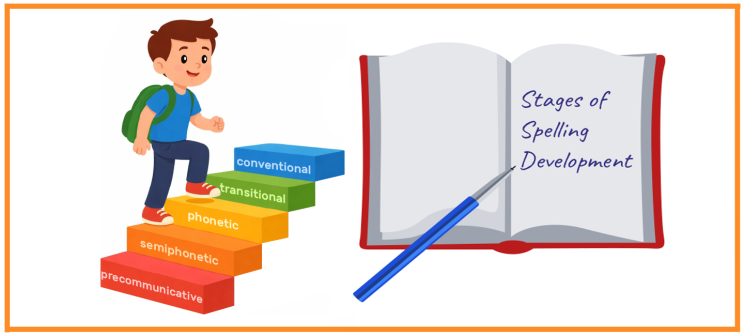
When a child starts writing, their letters and words don’t always look like we expect. The road to correct spelling isn’t perfect. Kids try things out, make mistakes, and come up with their own ways to write, and that’s exactly how they learn. All they really need is a bit of your attention and support. I’ll try to open you to the stages of spelling development and show how to help your child along the way. The clearer it is for you, the easier it is for your child.
Key points:
- Children go through 5 stages of spelling development: precommunicative, semiphonetic, phonetic, transitional, and conventional.
- Mistakes in the early stages are normal and show developing phonemic awareness.
- Each phase needs different strategies, from playing with letters to exploring patterns and grammar rules.
- Individual support and interactive learning, like on the Brighterly platform, help children master correct spelling faster.
What are the stages of spelling development?
According to the theory of American researcher J. Richard Gentry, a child learns spelling through five stages: precommunicative, semiphonetic, phonetic, transitional, and conventional. In other words, children first experiment with letters without understanding their connection to sounds. Over time, they start writing words as they hear them, and only later do they master the standard rules of spelling.
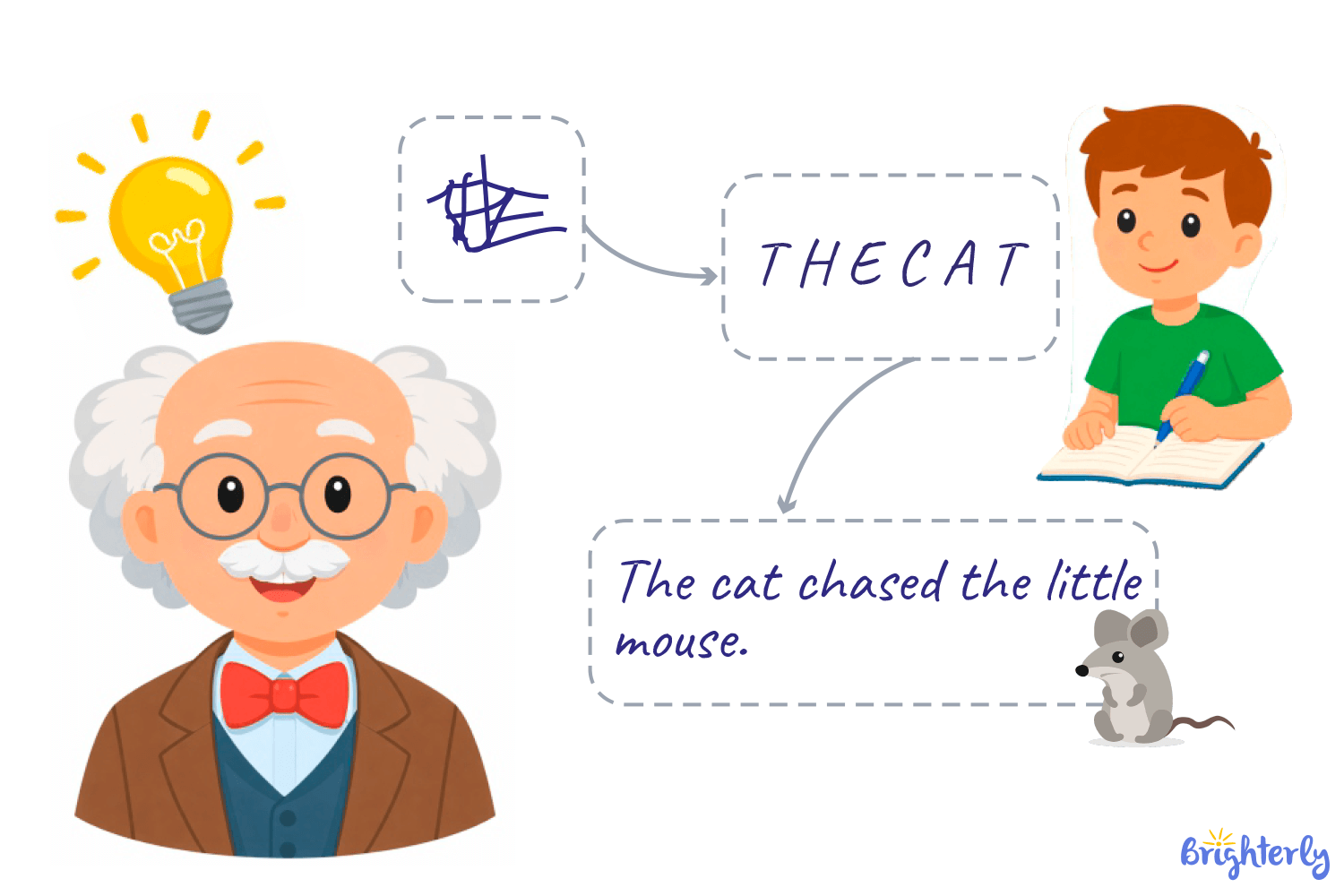
Back in 1984, Gentry classified the process of early literacy this way (according to the research published in the Texas Tech Journal of Education), and educators around the world still use his framework today. This knowledge gives teachers a clear roadmap to see what stage of spelling development a child is at and how to support them right then. For parents, it brings peace of mind – replace frustration, and instead, a better understanding of the learning process emerges
If you want this process to be smooth, fast, and guided by professionals, I know a platform where your child can get the support they need – it’s the Brighterly math and reading platform. The best part? Highly qualified teachers perform tête-à-tête with your child and adapt fully to their needs and learning style.


What are the 5 stages of spelling development?
- Precommunicative stage
- Semiphonetic stage
- Phonetic stage
- Transitional spelling
- Conventional spelling
Precommunicative stage
Typical age: 3-5 years
At this stage, kids are just beginning to explore writing. You may notice your child using letter-like shapes, even though they don’t yet understand the alphabetic principle, that letters represent sounds.
They also don’t clearly see the difference between uppercase and lowercase letters. Their writing often looks like scribbles or random marks, and that’s perfectly okay. It shows they are experimenting and learning how writing works.
Even now, your child is building important motor skills and starting to understand that writing has meaning. This is the very first step in spelling development and it’s an exciting one.
How can Brighterly help develop spelling skills at this stage?
At this stage, a child needs gentle guidance to understand the meaning of letters, their main characteristics, and sounds. It matters to help them recognize each letter not only in a workbook but also in real life. Next, they start connecting letters into syllables and then into words. With the Brighterly reading program, teachers give clear instruction and guide children step by step in a very interactive way.
Their lessons are rich and engaging, never boring for young learners. They include presentations, animations, fun games, video support, and plenty of interaction with the child. So, kids learn inventive spelling in a playful and effective way.
And, of course, all learning focuses entirely on your child. In an online lesson, it’s just the student and the teacher, so everything moves at the child’s pace and adapts to their individual needs. For little ones, lessons feel more like an online game than traditional learning.
Other ways to help kids on the emergent stage
Dear parents, you can support your child’s spell development without support. At this stage, you can teach letters using books or special boards that pronounce each letter aloud. At home, I always suggest turning letters into a game. You don’t need anything fancy. Kids can write letters with chalk, “paint” them with water outside, or build them using toys and blocks. When learning feels like play, letters stick much faster.
One of my favorite tricks is picking a “letter of the day.” We look for it everywhere – on cereal boxes, street signs, or even in family names. Kids love this kind of challenge, and it really works.
Note: At this stage, don’t focus too much on mistakes. The most important thing is that your child feels curious and enjoys the process.
Semiphonetic stage
Typical age: 4-6 years
At this stage, the child begins to understand the connection between sounds and letters. They slowly start writing words as they hear them. Usually, they focus on the most noticeable letters, often the first and last ones. For example, they might write “d” instead of “dog” or “bt” instead of “bat.” To an adult, this may look odd, but the child is thinking very logically: they are simply representing the sounds they hear most clearly. A full picture of the word isn’t there yet, and that’s completely normal.
Plus, writing is quite unstable at this stage. A child might write the same word one way today and another way tomorrow. This isn’t regression, it’s experimentation.
How to help kids at this stage of spelling development?
At the semiphonetic stage of spelling development, children pick up only certain letters when they hear words. Your task is to help them notice every letter in a word. Read slowly and clearly, and for best results, use magnetic letters to show how the word is built, highlighting the sequence of letters. Emphasize the sounds they tend to miss. You can start with any of these games:
- “Magic Whisper”
Whisper a word very slowly, as if it were a secret. The child then writes the letters or the whole word they heard. Whispering helps them focus on each sound. - “Broken Robot”
Pretend to be a robot that’s broken and only says individual sounds: c… a… t… The child has to guess the word or at least identify the letters they hear. It’s fun and highly effective for improving listening skills.
Phonetic stage
Typical age: 5-7 years
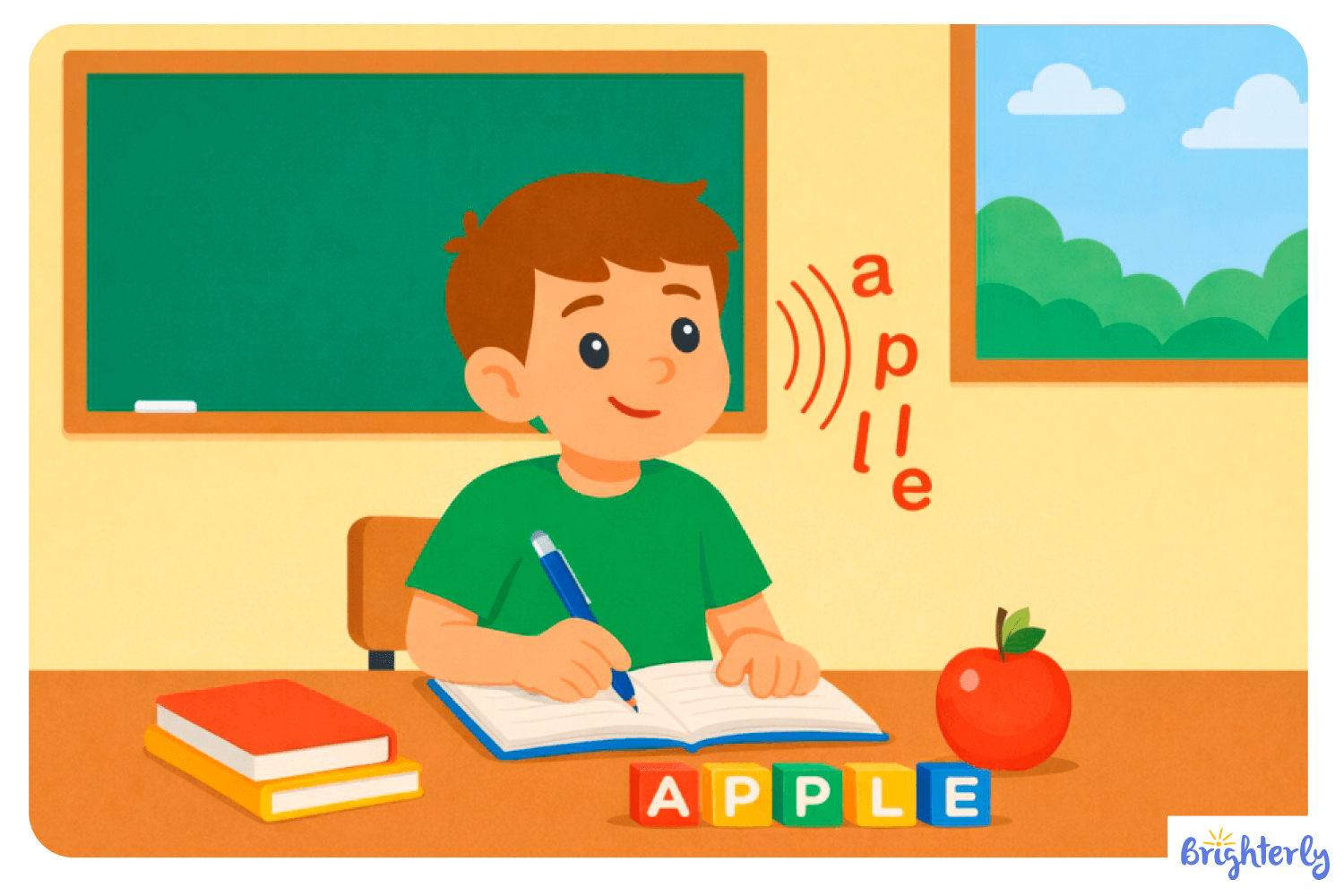
Here, children make a big leap forward. They no longer just pick up individual sounds; they try to write everything they hear in a word. That’s why words often look longer and “strange,” but still very logical. For example, they might write “frend” instead of “friend” or “sed” instead of “said.”
The child thinks, “I hear this sound, so I have to write it,” and they are right. Spelling rules are not the priority yet, and mistakes are completely appropriate. The focus at this stage should be on perfecting phonetics. That’s why trying to explain all the rules of English grammar now would only overwhelm the child. Be patient during the phonetic stage of spelling development.
How to help kids at this stage of spelling development?
Help your child “hear” the word from the inside, break it down, and explore systematic sound and spelling patterns. For instance, take the words cat, hat, and bat. They are spelled differently but sound similar at the end. This helps your child notice that the same sounds are often represented by the same letters, making sound recognition easier and faster.
Or, take the first identical letter and show how the vowel changes it. For example, look at a dog, dig, and dot. Ask your child which sound they share and how it is written. This teaches them to spot repeated sound patterns in words, which is an important part of the spelling development stages.
Effective daily learning methods:
- Read aloud regularly
- Do exercises with rhymes and similar words
- Practice short dictations in a playful way
Also, involve your child in daily writing tasks, like making a shopping list or jotting down notes.
Transitional spelling
Typical age: 6-8 years
In the English language, spelling often doesn’t match how words sound. At this transitional stage, children start to understand this well. Now it’s important to actively introduce grammatical rules and spelling patterns. Visual memory also plays a big role, helping the child internalize English spelling.
When a child reaches this stage, mistakes change. Instead of simple phonetic spellings, children begin to apply patterns. For example, they might write “runing” instead of “running” or “chas” instead of “chase.” This shows that they are starting to see the correspondence between sounds and spelling patterns, not just a string of sounds. It’s normal for a child to double-check, revise, or rewrite a word; this is a positive sign that internal monitoring is developing.
Transitional spelling stage: Time to practice grammar
You can check textbooks or the article on how to help kids with spelling to see which grammar rules to start with, or go for some of the tips I provide here:
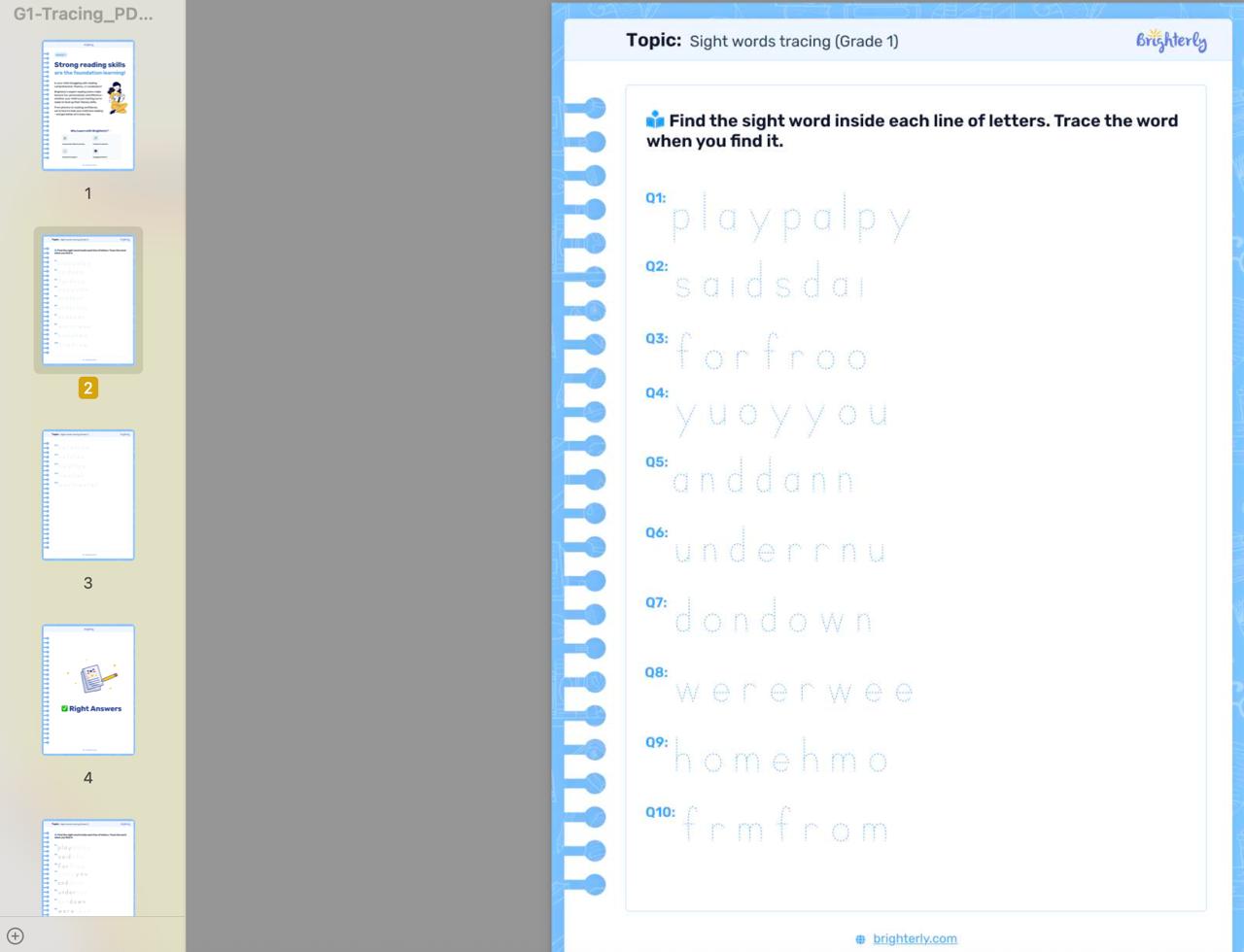
- Use workbooks. Nowadays, there are plenty of online grammar exercises, some of which are even free on platforms like Brighterly. You can simply download reading & writing worksheets suitable for your child’s age and practice at home. Worksheets strengthen visual memory: the child writes, sees, and remembers; it’s very effective.
- “Find the mistake.”Here’s a fun mini-game: write a word with an intentional mistake and ask your child to spot it. Believe me, children remember other people’s mistakes even better than their own!
Conventional spelling
Typical age: 8-9 years+
This is the final stage, where a child can correctly write most words and has a solid understanding of key spelling rules. They know that some words must simply be memorized, while others can be checked using familiar patterns. Writing becomes more confident and stable. Mistakes still happen, but often the child can spot and correct them on their own; this is already a high-level skill. At this stage, it’s important not only to write correctly but also to expand vocabulary.
To help kids at this stage, try to boost their writing skills
The best way to support your child at the conventional spelling stage is to have them write a lot in real-life situations. This could be short texts, letters, notes, or descriptions of favorite games or daily events. The more a child uses writing in everyday life, the stronger their skill becomes.
It’s also helpful to work with dictionaries, lists of new words, and regular, but short dictations. The key is to keep exercises fun and not feel like punishment, less is often more, as long as it’s consistent.
Note: The ages listed at each stage are approximate and reflect typical spelling milestones by age. Every child progresses at their own pace.
What are the developmental spelling stages?
Developmental stages of spelling, also called Gentry’s stages of spelling development, are a model of how a child’s writing skills gradually develop. Each stage naturally follows the previous one and lays the foundation for the next. This system helps you track your child’s progress without comparing them to others, adapt learning to their needs, and avoid overloading them.
You can read more about this topic in the article Stages of reading development.
What’s the difference between a beginning reader vs emergent reader?
An emergent reader is a child who isn’t reading independently yet but already understands that text has meaning. They recognize letters, “read” pictures, and recall familiar stories. In contrast, a beginning reader starts reading simple texts independently, using phonics and basic reading rules. In short, an emergent reader understands and retells stories orally, while a beginning reader can decode words independently.
Conclusion
Learning to spell is a gradual process that unfolds over time. Children don’t start spelling words correctly right away. Instead, they go through several predictable stages, gradually learning to combine sounds, letters, and word meanings. You’ve seen clear stages of spelling development examples – notice them and guide your child appropriately at each stage.
If you don’t have time to guide your child through each stage in a thorough way, consider high-quality tutoring, which is now also available online. For your understanding, Brighterly offers:
- A personalized learning program
- Highly qualified teachers
- Individual support with spelling stages
And to get started without spending money, you can book free lesson with Brighterly.


Learning how to develop a character turns simple ideas into unforgettable heroes. An engaging story is enhanced by strong characters. Study practical tips for building interesting fictional characters, along with a ready-to-use PDF template to help your child bring their ideas to life. Key points Understanding the character’s motivations and inner thoughts is essential for […]

Mar 03, 2026

Identifying signs of reading comprehension problems in young learners early enables you to ensure that your child doesn’t fall behind or lose confidence on their academic path. If you recognize the described indicators, you’ll be able to provide targeted support before frustration sets in. Key points A child may possess high reading fluency (speed and […]

Mar 05, 2026
Math & reading from 1st to 9th grade
Looking for homework support for your child?

Choose kid's grade

Math & Reading for Grades 1–9
Build real confidence for your child with a Brighterly math or reading tutor.