


Reviewed by Rachelle Bencio Yu
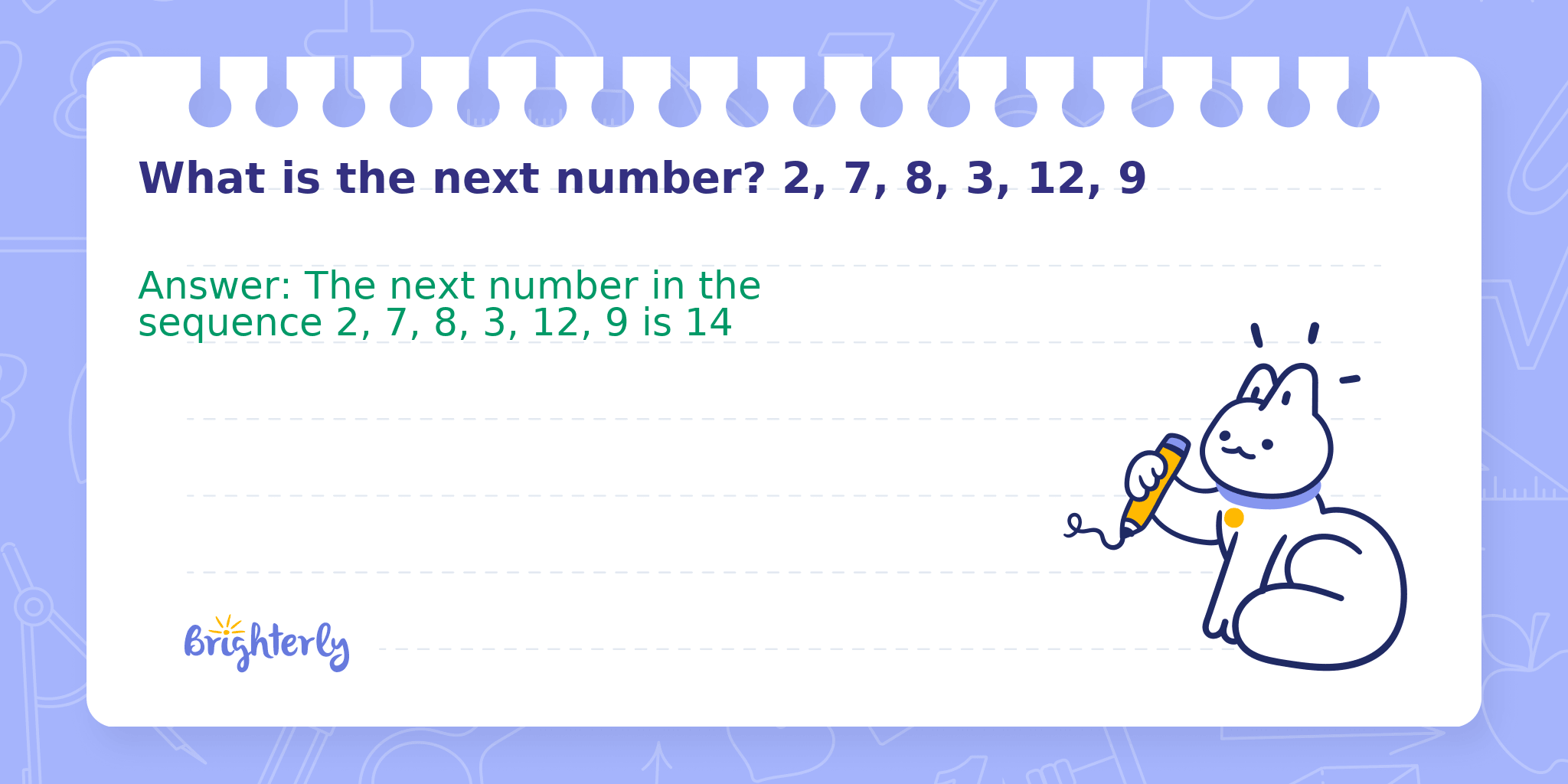
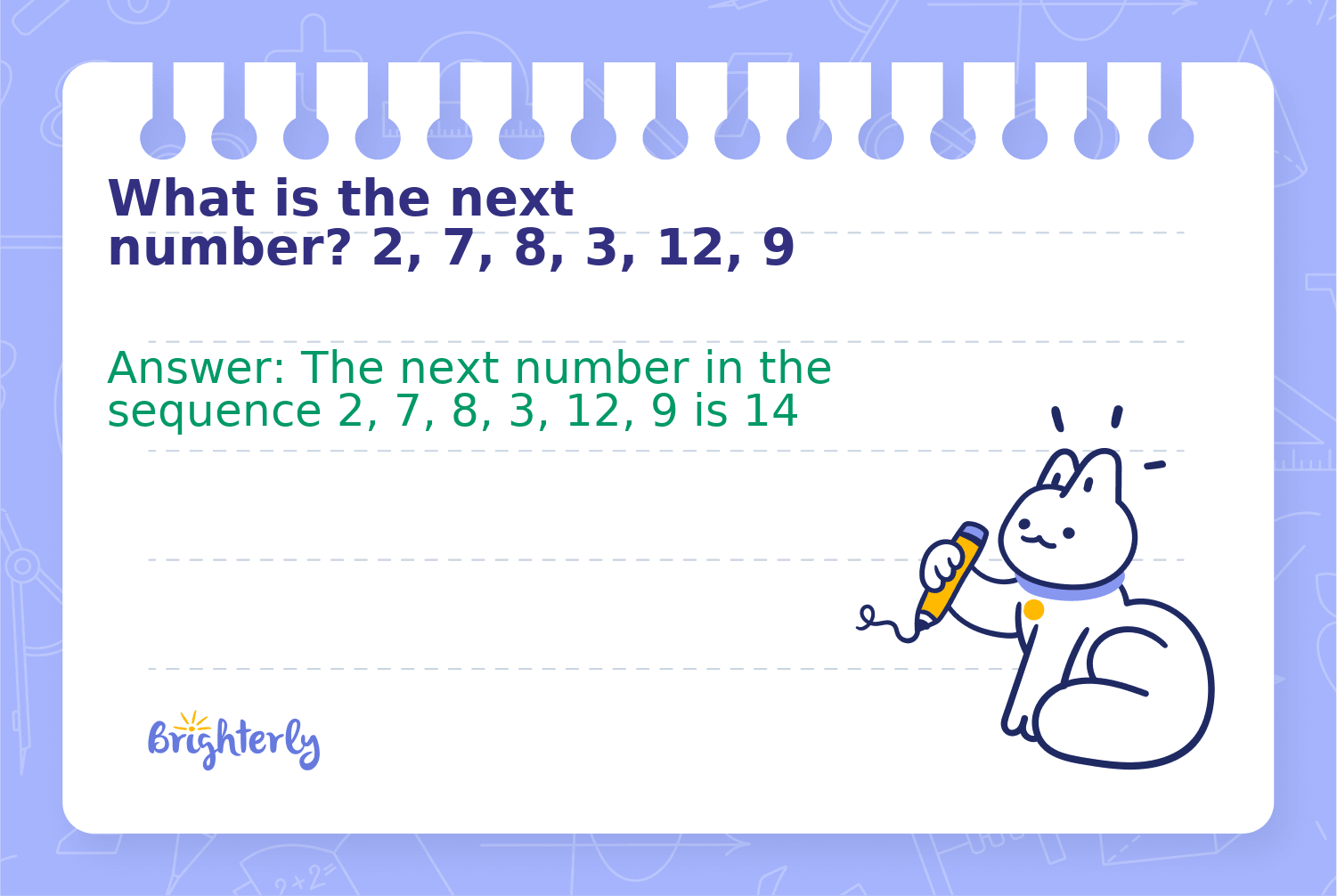
What is the next number? 2, 7, 8, 3, 12, 9
Answer: The next number in the sequence 2, 7, 8, 3, 12, 9 is 14
Number sequences like 2, 7, 8, 3, 12, 9 often follow a specific pattern or set of rules. By examining the differences and relationships between each term, we can identify the pattern and predict the next number in the sequence. These problems are helpful in enhancing pattern recognition and logical thinking skills.
Methods
Math Tutor Explanation Using Pattern Recognition Method
This method involves looking for alternating or repeating operations between numbers to identify a rule.
Step 1: Step 1: Observe the sequence and note the changes between each number
Step 2: Step 2: Notice that the numbers alternate between adding and subtracting; for example: 2 + 5 = 7, 7 + 1 = 8, 8 - 5 = 3, 3 + 9 = 12, 12 - 3 = 9
Math Tutor Explanation Using Alternating Operations and Differences
Here we look for alternating additions and subtractions in the sequence to discover a second-order pattern.
Step 1: Step 1: Write the sequence as pairs of operations: 2→7 (+5), 7→8 (+1), 8→3 (-5), 3→12 (+9), 12→9 (-3)
Step 2: Step 2: The sequence alternates between increasing and decreasing, sometimes with the same numerical difference but opposite signs
Step 1:
Step 2:
Math Tutor suggests: Practice Number Patterns and Sequences
Keep building your number sense by exploring more exercises on number sequences and identifying the next value in a pattern.
FAQ on Number Sequences and Patterns
How do I identify the pattern in a sequence?
Look for consistent changes between terms, such as adding or subtracting the same number, or alternating patterns of operations.
What if a sequence has more than one rule?
Some sequences alternate rules each step, so check for patterns over every two or three terms.
Can the pattern involve multiplication or division?
Yes, sequences can also involve other operations or a combination of them.
Why is it important to learn about sequences?
Understanding sequences helps develop logical thinking and problem-solving skills, which are useful in many areas of mathematics.
Math & reading from 1st to 9th grade
Looking for homework support for your child?
Choose kid's grade

Math & Reading for Grades 1–9
Build real confidence for your child with a Brighterly math or reading tutor.