Differentiated Reading Instruction: Strategies and Examples for K-12
reviewed by Franz Jerby Delos Santos
Updated on March 6, 2026
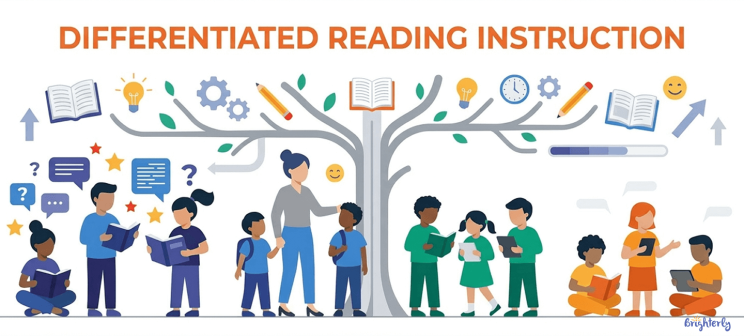
You don’t know much about differentiated instruction, but want to understand it and help your child improve their reading skills? Check out this easy guide to differentiated reading instruction to learn more about this approach and how to use it.
Key points
- Differentiated reading instruction helps children develop skills at their own pace, focusing on their real needs rather than the average grade level.
- This approach does not simplify learning. Instead, it adapts texts, tasks, and ways of checking understanding so everyone can show what they know.
- Flexible grouping, reading stations, multi-level tasks, and choice boards are special education strategies used in differentiated learning.
- If your school doesn’t offer this type of personalized learning, it may be worth considering tutoring. This approach is used by Brighterly.
What is differentiated instruction for reading?
Differentiated instruction in reading definition means teaching a kid to read in a way that makes sense and feels natural to them, not “like everyone else.” It’s like customizing tasks for each child. Every student is different: some read words easily but struggle to understand the text, while others understand stories well but read slowly or make mistakes. A differentiated approach recognizes these differences and helps.
The key thing to understand is that the goal isn’t to push a child to read faster, but to create conditions where they can develop reading skills gradually without stress. This doesn’t lower expectations or make learning easier. The tasks focus on the skills your child needs most right now, whether that’s phonics, fluency, vocabulary, or basic literacy. So reading gradually feels easier and more natural.
Grasping how differentiated instruction works in reading can open a window into your child’s learning world. You’ll see which parts challenge your child, how they approach difficulties, and what kind of guidance clicks with them. On top of that, you’ll stop comparing your child to others and let them grow at their own pace
Key elements of differentiated reading whole-group instruction
- Text level for the kid – books and exercises matched to the kid’s skills.
- Pace of learning – everyone reads at their own speed.
- Focus on weaknesses – work on the areas that are challenging.
- Different ways to show background knowledge – they can retell the text aloud, answer simple questions, or show ideas with a drawing; the main goal is understanding.
- Flexible adult support.
- Motivation and interest – allowing them to choose texts they enjoy.
Note: If you want your child to get differentiation in reading but aren’t sure how to do it yourself, and the school doesn’t offer it, don’t worry – there are lots of tutors and platforms that can help. The Brighterly math and reading platform works exclusively one-on-one, and programs and lesson plans are adapted to each student. A bonus for American families is that all instruction meets US school standards.


What are 3 elements of differentiated instruction in reading?
- Content: At this stage, pick material that fits your child. One student may do well with short, simple texts, while another may handle longer, slightly more complex ones. The goal is the same: to understand the story, the words, and the meaning.
- Reading process: When thinking about ways to apply differentiated instruction in the classroom, let the child read at their own pace. Notice how yours works with the text, how much time they need, whether they read alone or with an adult, and whether they repeat difficult words. Use these observations to guide support.
- Product: The way a student shows what they’ve learned matters most. Some retell the story in their own words, some answer a few simple questions, and others draw the events. The main thing is that the pupil demonstrates understanding in a way that works for them.
How to differentiate reading instruction?
Differentiating instruction means adjusting tasks, pace, and methods to fit each child. This covers picking texts that match their level, letting them read at their own speed, and giving support or explanations whenever they need it.
Differentiated instruction in reading for struggling readers
In fact, if a child has difficulty reading, a differentiated approach is especially important. After all, such kids see that they can’t do it right away and can quickly lose interest, or simply have difficulty concentrating. Sometimes these pupils make an effort, but still confuse words, donʼt understand the general meaning of the text. This is not a problem, just make sure that they get this approach.
How Brighterly supports differentiated reading instruction
Brighterly, which I mentioned earlier, has a special reading comprehension program for such cases. It is suitable for everyone, but especially for struggling readers. In general, Brighterly’s approach to learning is based on the rules of differentiated learning. Their tutors are mentors who carefully help everyone.
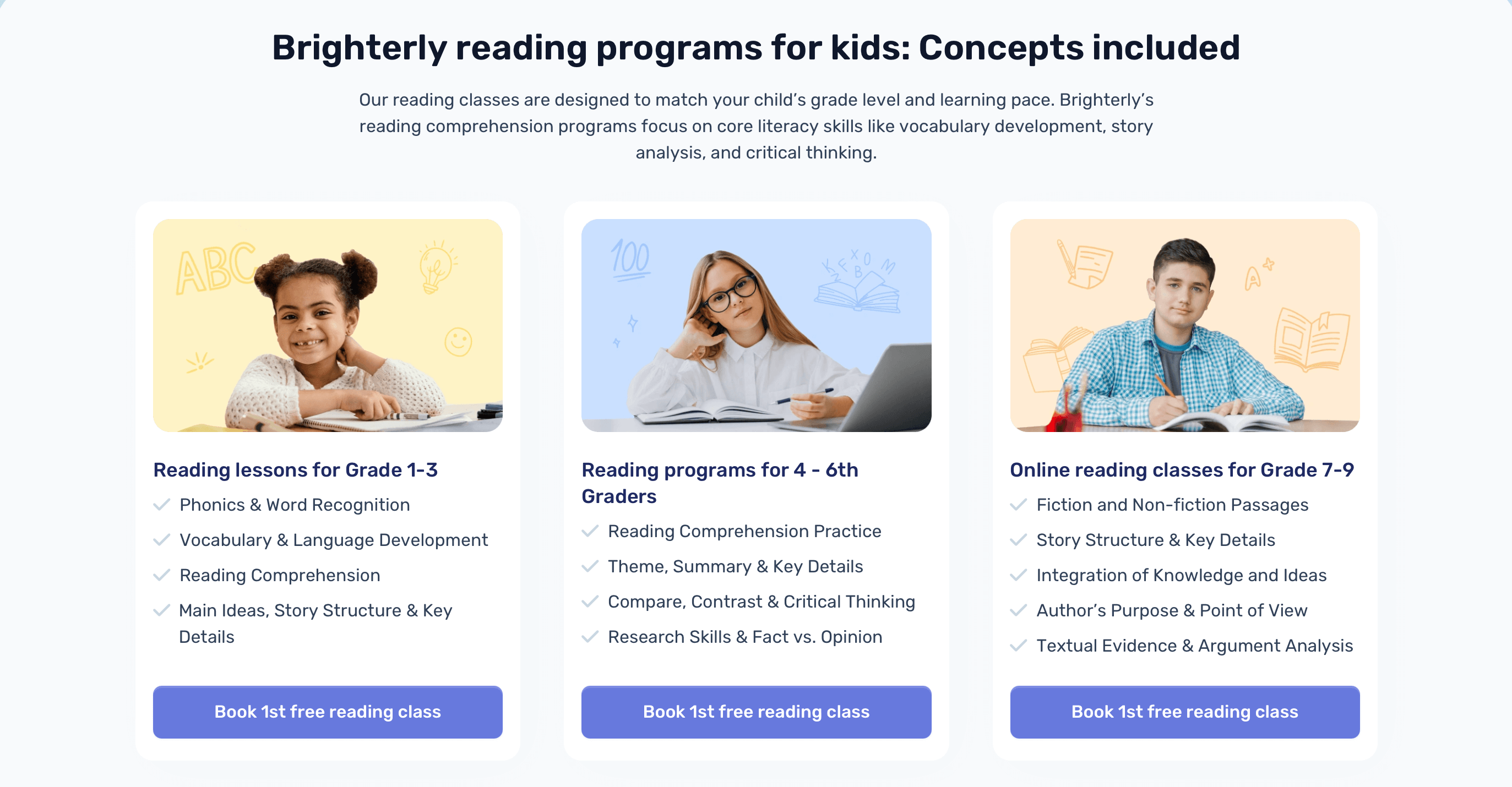
To ensure the best possible outcomes, lessons are held only individually, with just the teacher and your kid. The lessons are filled with various interesting things, such as animated presentations, games, and lots of communication, so that the child does not lose focus. Tutors prepare all lessons in advance and diversify them, using differentiation strategies to meet diverse learner needs.
By the way, you can get acquainted with the program now through their free, useful services. For example, on the site, you can find and take special reading tests to see what your kid knows perfectly. Then you can download reading worksheets to enhance various topics.
Reading differentiation strategies
- Flexible grouping
- Reading centers/stations
- Tiered assignments
- Choice boards
- Ongoing assessment & regrouping
Note: These learning styles are mainly useful for teachers. But, dear parents, I’m sharing them here so you can see whether differentiated learning is organized well at your child’s school or tutoring. You can also teach reading to kids at home. And if you want to check their reading level, see the article Lexile levels.
Flexible grouping
In schools using a differentiated approach, flexible grouping is often used. It’s one simple way to differentiate instruction, where children are divided into small groups for specific tasks or activities. These groups aren’t permanent; kids change partners or groups depending on the topic, task, or skill they’re working on.
I love this because your kid gets to work with peers at a similar level, instead of “reaching out to everyone.” It also helps them feel safe making mistakes and progress at their own pace. In short, this differentiated learning strategy makes lessons fairer and more supportive.
Note: Parents should pay attention to how groups are formed and ask the teacher if group changes are helping the pupil develop skills.
Reading centers/stations
Unlike flexible grouping, where the focus is on who works with whom, reading stations divide children based on the skills they need to develop, such as phonics, vocabulary, or text comprehension.
In practice, the lesson begins as a whole-class conversation. Then the room shifts: students spread out into different corners, like small workshops, where each group focuses on what matters most for them.
As students move between stations, each group works on the skill that matters most for them at that moment.
Tiered assignments
In tiered assignments, everyone explores the same text, yet the tasks vary to fit each student’s needs.
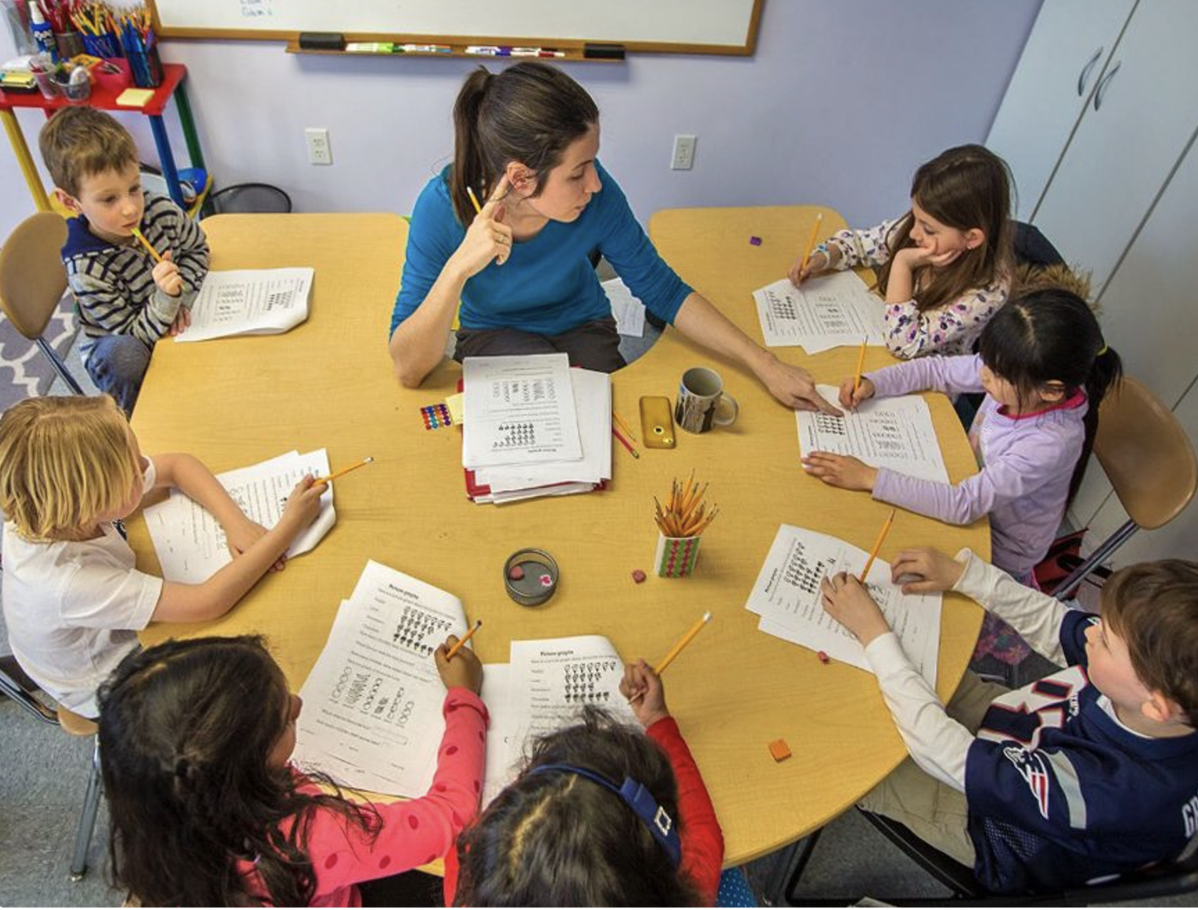
For instance, one student could read a short passage and answer a couple of easy questions, just to see what stands out or clicks for them. Another might tackle a longer text, identify the main idea, or explain what the characters do and why. A third child might draw a picture of the story’s main events. In the end, everyone talks about the same topic in a class discussion, but each child shares their understanding in their own way.
Choice boards
My favorite differentiation strategy in teaching is the choice board. Kids are more motivated to learn when they get to pick their own tasks, and this method is all about that. The teacher prepares a set of different reading tasks for the lesson, and the child chooses which ones they want to work on. This also gives them a sense of responsibility for their choices and control over their learning.
These boards can be designed so that students must pick tasks that practice several key skills, or you can set a required number of tasks to complete.
Ongoing assessment & regrouping
The key idea of differentiated instruction for reading strategy is that the teacher watches the pupils and adjusts groups as they grow and improve. As children gain confidence in reading, the teacher reviews tasks and moves students to new groups or gives more challenging material. This should happen regularly in small steps, not just once a semester.
For example, during a lesson or over the week, the teacher watches how each student reads, listens closely, and reviews short tasks. A confident reader might move on to a new group or take on more challenging material. A student who struggles gets extra guidance right away, before small difficulties grow into bigger hurdles.

Why does it work? The child doesn’t get stuck at one level or labeled as “slow” or “fast.” Their learning stays dynamic. Plus, they see that their progress depends on their own efforts, which helps them make bigger leaps in skills.
Examples of differentiated instruction for reading
Using the text Charlotte’s Web, I will try to show you how many skills can be developed and how each child can be given a separate task.
🟨 Phonics
Try this: Choose a short paragraph/text and read it aloud first. Then, you can go over the text quietly by yourself. Finally, read the paragraph one more time without stopping and follow the pauses. After this three-pass reading, ask your child which reading helped the meaning finally fall into place, and why they think it worked.
🟨Vocabulary
Goal: Students learn to use context clues to understand new words on their own.
You can take 4-5 words from the text (for example: lonely, kind, worried, gentle). Find them in the text and underline them. In your own words, explain what the word means in this story. Underline the part of the text that helped you figure it out.
🟨 Reading comprehension (deeper thinking)
Goal: Connect characters’ emotions with textual evidence
In this case, you can ask a child to answer questions using evidence from the text: Who are the main characters in this excerpt? What emotion does one of them feel? Also, share your opinion: Why do you think Charlotte helps Wilbur?
Understanding differentiated instruction meaning is important
So, as you can see, differentiated learning is a powerful strategy; if your school uses it, that’s wonderful! But at home, you can observe your kid and ask the teacher to slightly adjust tasks for them. This makes a big difference: reading becomes clearer, and learning becomes more enjoyable.
If your school does not use this approach, tutoring is a good alternative. Brighterly is a reliable online platform in the American market. Their teachers base lessons on differentiated reading strategies because they:
- adapt the curriculum
- provide individual lessons
- adjust the program as the child progresses
Book free reading lesson to see how differentiated instruction can help your kid thrive.



Collecting thoughts and making them sound coherent in writing can already be hard enough for a student. That’s why grammar usually becomes the least of concerns and the text may end up filled with errors. Luckily, now we have digital solutions that help detect and fix different types of mistakes in a few clicks. Check […]

Mar 06, 2026
Math & reading from 1st to 9th grade
Exploring alternatives?
Take a short quiz!

Choose kid's grade