How to Improve Handwriting in Kids? Practical Recommendations
reviewed by Laila A. Lico
Updated on December 25, 2025
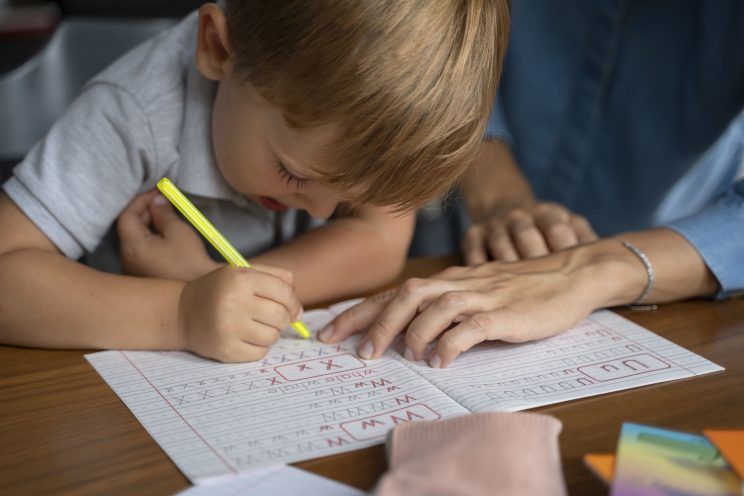
Handwriting appearance can be a mirror of kids’ confidence in their thoughts — or just a result of their muscle memory and grip memory. Whatever the cause, if you’ve noticed your kid struggles with this, you’re in the right place to help them overcome the problem. As a tutor myself, I’ve gathered here my 10 top recommendations on how to improve handwriting in kids.
Key points
- Involving your kid in a handwriting class and getting them worksheets and proper tools are the most effective methods to overcome handwriting problems.
- Brighterly tutors help to address and overcome common writing and reading problems, including ADHD and bad handwriting.
- Multi-sensory approaches and slowing things down are the best ways to reduce stress and tension while practicing handwriting
How to have better handwriting for kids?
Better handwriting comes with patient practice under proper supervision and with good writing tools. Most frequently, significant improvements in handwriting come with a correct pencil grip, proper letter formation, and regular daily writing exercises that involve notebook journaling or labeling objects. These things don’t come immediately.
Thus, for good results, remember to
- Slow down
- Focus
- Have fun!
Below, I’ll give you details on the exact tools and techniques you can apply to achieve better handwriting in kids.
10 ways to improve kids’ handwriting
- Writing classes for kids
- Worksheets with writing exercises to practice lines and letters
- Posture exercises
- Pencil grip practice
- Fine motor skills development
- Good set of handwriting tools
- Fun > perfection
- Multi-sensory approaches
- Slower writing speed
- More disciplined practice
Handwriting classes for kids
Enrolling your kid in specialized writing classes is the fastest and easiest way to work on several aspects of handwriting, including correct letter formation, pencil grip, and proper writing posture.
A typical handwriting class plan is:
- Practicing consistent letter shapes and sizes on lined paper
- Improving grip and posture to reduce fatigue and enhance control
- Tracing, copying, and dictation exercises that make the process more enjoyable
- Applying multisensory approaches that combine visual cues, tactile feedback, and auditory instructions
- Gradually increasing writing speed while maintaining neatness
Why improve child handwriting & reading with Brighterly tutoring classes
Brighterly math and reading platform offers 1:1 tutoring services to K-12 kids who struggle with math, writing, and reading at school. Operating as a school-supplemental learning platform, Brighterly hires top-notch tutors who apply various techniques and teaching methods to help kids overcome their math, reading, and ELA-related problems, including handwriting issues.

Once you decide to apply to the Brighterly reading program with writing, your kid gets an individualized learning plan that is tailored to their needs and learning style. This plan will include 1:1 lessons with a reading tutor, adaptive materials, and support while overcoming the gaps identified on the diagnostic test.
In case of persistent handwriting issues, writing and reading tutors from Brighterly will proactively choose and adapt one of the methods mentioned in this guide — or search for other ways to help your child boost their writing skills and confidence!


Worksheets with writing exercises to improve handwriting
A writing worksheet is a great tool for drills on lines and letters. Usually, they contain repetitive exercises that help children enhance their handwriting through structured, repetitive practice that directly focuses on letter formation and fine motor skills control.
How to use handwriting practice sheets for kids effectively?
- Prefer pages with dotted lines and arrows to guide strokes
- Start with simple letters before progressing to words and sentences
- Practice uppercase and lowercase letters separately
- Make handwriting sessions short
- For higher engagement, include multisensory activities, such as coloring or using textured writing surfaces
- Steadily incorporate lined paper to maintain consistent letter size and spacing
Regular use of writing worksheets develops muscle memory and boosts confidence, leading to neater and more fluent handwriting with consistent practice.
Note: Worksheets are highly effective as tools for learning and working on various problem areas, as practice with Brighterly math worksheets and reading worksheets shows.
Posture exercises
Posture improvement may sound like one of the non-obvious tips to improve handwriting, but it can make a huge difference for your kid. That’s because good posture is essential for fine motor control, endurance, and neat handwriting, along with making writing comfortable for your child overall.
How to teach proper posture to help children sit comfortably and write with better control?
- Check that their feet are flat on the floor and thighs are parallel to it
- Adjust a chair and desk of appropriate height that keep elbows bent at a 90-degree angle
- Encourage your kid to rest their forearms on the table for stability
- Align the paper with the writing arm, held at a slight angle
- Double-check their posture is relaxed with shoulders and back, avoiding slouching or leaning
- Use tools like slant boards to provide ergonomic support and lessen excessive pressure on fingers
- Don’t put too much pressure: make frequent breaks to reduce fatigue and maintain focus

How to improve handwriting for kids with proper pencil grip practice
Proper pencil grip, especially the tripod grip, enhances handwriting with better control, decreasing hand fatigue, and smoother letter formation. It helps children achieve neater, faster, less tiring, and more efficient handwriting.
Why pencil grip practice can be your key method to improve your kid’s handwriting?
- It creates the right balance between fingers while writing
- It improves precision by encouraging finger movement instead of whole-arm movement
- It strengthens wrist, shoulder, and finger muscles in an appropriate way for writing, drawing, or playing a musical instrument
- It relieves the writing stress and makes it more natural to your kid
You can start introducing the proper pencil grip around age 5, aligning it with the maturity of fine motor skills I’ll discuss in more detail below. This way, your kid will catch the proper handwriting mechanics fast and can concentrate on more creative tasks like narrative writing instead of struggling with the grip tension.
Improve kids handwriting with fine motor skills
Good fine motor skills provide the necessary strength to the hand and finger muscles that are crucial for improved handwriting in children. Since good handwriting is directly linked with precision and control in a hand, a weak grip may be the key reason for your kid’s struggles.
In case your kid has problems with any activities that involve hands and holding something with fingers, here are some activities that can train strength in these muscles:
- Play-dough sculpting (for hand strength and dexterity)
- Drawing shapes and letters (to practice pencil control and letter formation)
- Threading beads (to improve hand-eye coordination)
- Finger painting (to encourage finger muscle use and sensory exploration)
- Using tweezers or tongs to pick up small objects (to enhance the pincer grasp)
- Lacing cards or toys (to improve bilateral coordination and focus)
- Cutting with scissors (to develop precision and control)
Regular fine motor skills practices improve muscle control, coordination, and endurance, making writing easier and more legible for kids.
Getting the proper set of tools as the best way to improve handwriting
A good set of handwriting tools helps to tackle the exact writing-related problems your kid has and significantly accelerate their practice.
The top tools for handwriting
- Pencil grips: Encourage tripod grasp and reduce hand fatigue, making them suitable for all skill levels.
- Writing slant boards: improve wrist position and handwriting comfort.
- Tracing books to improve handwriting for kids: Provide step-by-step guidance on letter formation to build muscle memory.
- Magnetic drawing or marble tracing boards: Engage kids through sensory play to strengthen finger control and coordination.
- Adaptive pencils and markers: Include different thicknesses and textures to help kids find what feels best for grip and control.
- Line-stamped paper and handwriting stamps: Introduce spatial awareness and proper letter size positioning.
To find the right set, consider the age, exact handwriting problems, and learning style of your kid to make their practice enjoyable and personalized.

Why prioritizing fun over precision is so important to improve handwriting for kids
Focusing on fun rather than perfection fosters a positive attitude towards handwriting. In particular, it helps reduce frustration and anxiety and encourages creativity, regular practice, and confidence.
How to introduce fun to make the learning process enjoyable and more sustainable?
- Use game-like activities (can be letter scavenger hunts or drawing with colorful chalk)
- Incorporate sensory activities (like writing in sand, shaving foam, or with finger paints)
- Create storytelling or comic strip projects (to motivate writing)
- Allow children to experiment with different writing tools or surfaces (to build comfort and enjoyment)
- Celebrate progress with stickers or rewards instead of focusing on perfect letter formation!
This way, you will foster your kid’s love of writing and show that they can gradually enhance handwriting skills without pressure, making learning a joyful journey.
Multi-sensory approaches as handwriting help for kids
A multi-sensory approach to handwriting can significantly boost your kid’s handwriting skills. With engaging activities that involve touch, sight, sound, and movement, it provides alternative ways to learn and remember letter formation — thus helping overcome frustration. Usually, multi-sensory tools include textured materials, movement exercises, and visual cues, making learning more enjoyable and effective.
Some helpful tools you can incorporate
- Tactile materials (sandpaper, glitter, or textured paper)
- Movement-based activities (writing in sand, salt trays, or air)
- Voice and audios (singing letter songs or voice recordings)
- Visual aids (bright and textured paper or letter cards)
The great advantages of a multi-sensory approach are catering to different learning styles and enhancing fine motor skills with ease. Once introduced consistently and accurately, it can significantly improve handwriting skills, particularly for children with learning difficulties or those who benefit from hands-on, active learning.

Why slowing down writing speed facilitates kids handwriting practice
A slower writing speed eliminates the unnecessary stress from the handwriting practice for your kid. It helps them focus on letter formation, size, and spacing, improving overall legibility and handwriting quality.
How to turn slowing down into a handwriting booster?
- When children rush and get angry, encourage them to write slowly and deliberately, emphasizing neatness over speed
- Start a handwriting practice slowly, with tools like tracing exercises and copywork to practice accurate letter shapes
- Make writing sessions small-chunked, timed, and moderate-paced to build control and reduce stress
- Remind kids to breathe and relax their hand muscles to avoid tension
And don’t forget to provide positive feedback to motivate careful writing! Once rewarded properly, slowing down the writing speed fosters better muscle memory and attention, leading to gradual and natural improvement in handwriting clarity and fluency.
Improving handwriting with kids’ discipline
At times, the only handwriting problem your kid has is a lack of practice hours to master this skill. If you feel this can be the case, here are the techniques to help you.
How to build handwriting habits and make practices more consistent?
- Instead of setting 1-hour lessons, start with short daily sessions (5-15 min max)
- Start lessons with simple basic strokes, like lines, shapes, and simple letters
- In case of frustration, add one of the multi-sensory tools
- Celebrate even the tiniest successes to encourage progress.
Once your kid feels comfortable and entertained with short sessions, you can steadily make lessons longer and introduce more complex tasks.
How to improve handwriting in ADHD kids?
To help kids with ADHD improve handwriting, focus on reducing frustration and building motor skills through fun, well-structured practice. It’s important to make the whole process not overwhelming and relaxed, with patience for mistakes and distractions.
Recommendations for handwriting and ADHD problems
- Break all the tasks into smaller chunks, like half-sized worksheets, to lessen cognitive load
- Rely on multi-sensory approaches to engage the sense of touch and movement
- Practice consistent letter formation using verbal cues (also can be part of a multi-sensory approach)
- Use raised-line or dark-ruled paper to guide letter placement and size
- Use tools like pencil grips and spaced worksheets to support handwriting control and endurance
- Be patient and supportive to make the practice stress-free and enjoyable
Conclusion
As you can see, improving handwriting in kids is possible once you understand the source of their problem and are ready to dedicate enough time and patience to making the practice disciplined. At times, the problem is muscle weakness — or it can be that your kid lacks specialized tools like ADHD handwriting samples or writing apps for kids.
In any case, the tutoring support in a writing class is the best way for parents to get their kids professional assistance within a tailored learning plan. If you’re interested in trying this, just book free lesson from Brighterly tutors who will be happy to help your kid get the handwriting support they truly need.


Are you a parent choosing between ABCmouse vs Kiddopia? Choosing an educational platform is an ordeal, and in this 2026 comparison, I’ll make it easier for you. I am a professional tutor, and today I’ll break down how each stands up in terms of program, age range, cost, best features, and impact so you can […]

Nov 25, 2025

Does your child read well but still struggles to understand the text? You’re not alone: in American middle schools, about two out of three students have trouble with reading comprehension. This is the reason why I, as a reading teacher, want to share with you a wonderful method – a questioning reading strategy. It’s a […]
Nov 29, 2025
Winter Math & Reading Camp for Grades 1-9
Join Brighterly's Online Winter Camp to excel in math and reading.

Choose kid's grade

Winter Math & Reading Camp for Grades 1-9
Join our Winter Camp, boost your child's math and reading skills.