
How to Improve Reading Skills for Better Academic Performance
reviewed by Marvi M. Andres
Updated on September 22, 2026
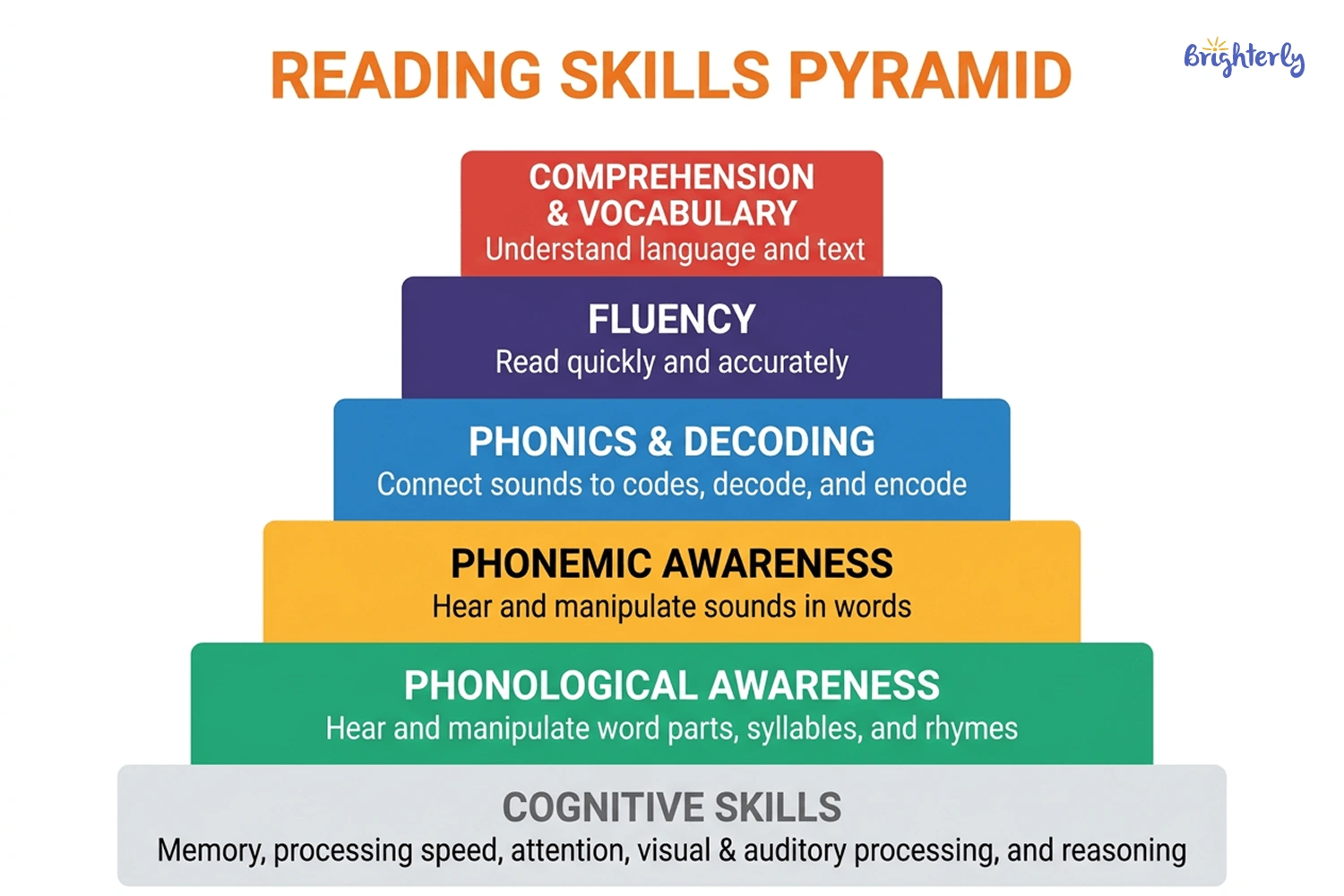
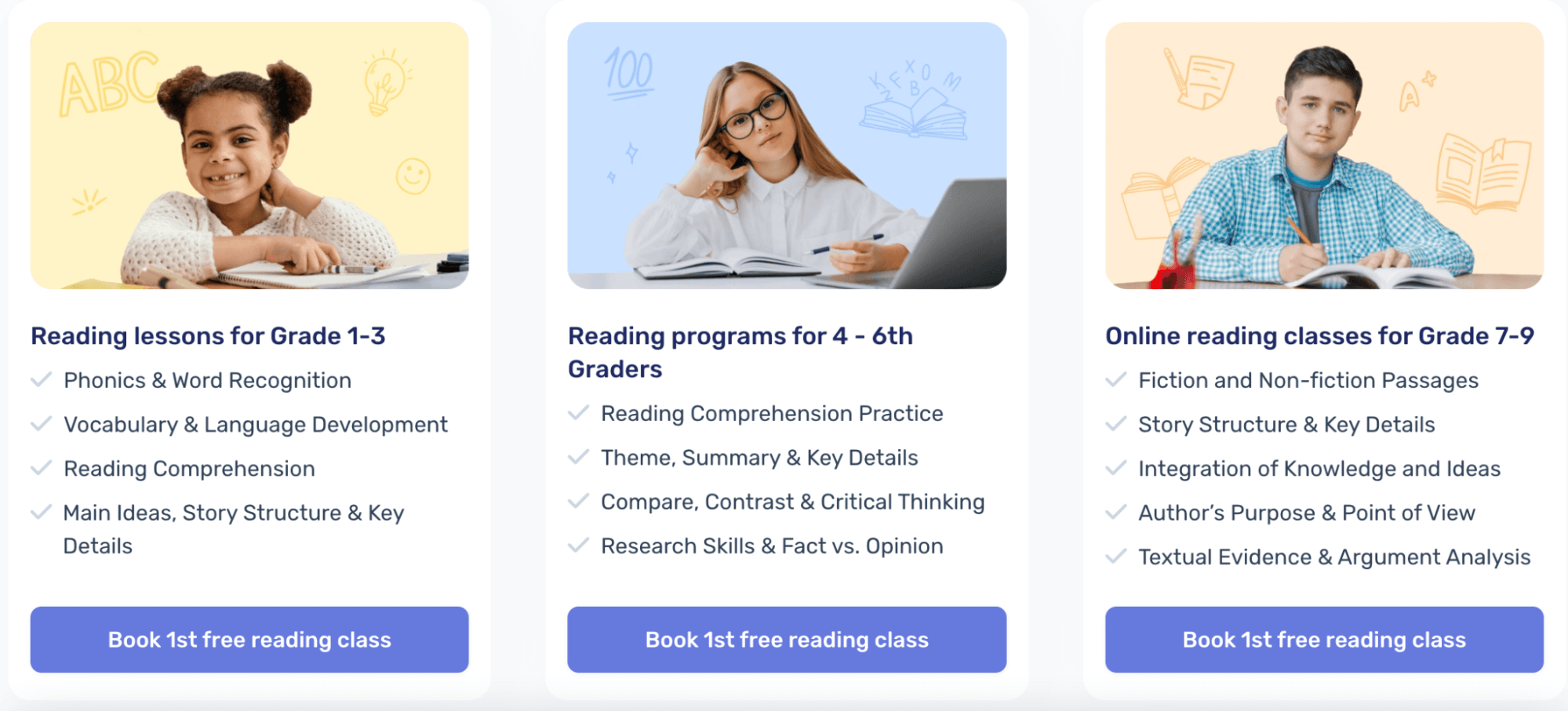
Top recommendations Knowing how to improve reading skills of your kid early can help you prevent gaps in the future. That’s for sure. Even if they do okay in a reading class, basic reading skills are a foundation, while advanced reading skills are keys to performance in middle school. Read on to know what matters in mastering reading skills and learn tips on how to approach kids’ reading skills improvement in the best way. The 5 basic reading skills are phonemic awareness, phonics, fluency, vocabulary, and comprehension. They are so-called the “Big 5,” the abilities and knowledge allowing the children to recognize and manipulate sounds, match them to letters, get meanings, and, thus, read and understand texts. The basic reading skills ensure the development of proficient readers and lay the ground for the science of reading. The primary ways to improve these skills refer to explicit phonemic and phonics exercises, decoding, and vocabulary activities. Explore Brighterly Learning Experience Learn exactly how Brighterly helps students thrive through expert sessions, online tools, and proven feedback from thousands of satisfied parents Note: These pieces of advice are unlikely to bring results if used inconsistently. They often target specific challenges, so combine them and allocate enough time to develop habits through repeated practice. Best for: kids of any grade and reading level Professional tutoring is an effective way to provide consistent reading support and cope with current knowledge gaps. The main benefit is that tutors have the capacity and knowledge to answer specific learning needs, like a pace or certain learning style types, and find interventions to challenge a lack of motivation. Besides, the tutoring practice offers a great variety of options, from personalized platforms to an offline tutoring center. How to improve students reading skills with reading tutors? Brighterly is one of the excellent examples of how tutors help students from 1st to 9th grade fix their current reading problems, get better grades, and recognize why reading is important. Brighterly reading program aims to improve reading skills via personalized and interactive methods, adjusting them to your kid’s knowledge gaps and interests. How does it work? This online learning platform concentrates on fundamental literacy abilities but also can teach critical thinking, story analysis, and vocabulary growth. The composition of the course will depend on your child’s needs and preferences.
How to make learning fun?
Start free with Brighterly tutors to get your kid interested in reading Best for: kids who have just started training their reading skills How to improve reading skills at a young age? By targeting a foundational skill. Daily decoding is a primary way for kids to improve linking letters to sounds. Why? It allows setting up a solid system as a ground for further development. You can look at it as a developing house foundation. How decoding practice helps children read new words Practicing each phonics aspect, including the alphabetic principle, segmentation, and blending, is like laying bricks. Once kids easily connect sounds with words and words with meaning, they obtain the skill of reading effortlessly. If we talk about new words, each brick allows recognizing word formation patterns. There, the practice covers the gaps between the letters and sounds and sets a decoding system. Here are the ways to make decoding a habit: Best for: kids who always want to have fun Combining games with phonemic awareness basics does a great job at keeping kids motivated and engaged. Try playing with rhymes, combining sounds, and replacing letters to create new words. The key here is to teach your kid phonemic awareness, but choose a game format to decrease the cognitive load of the child. How to improve reading skills in students with games
Check the basics behind this term
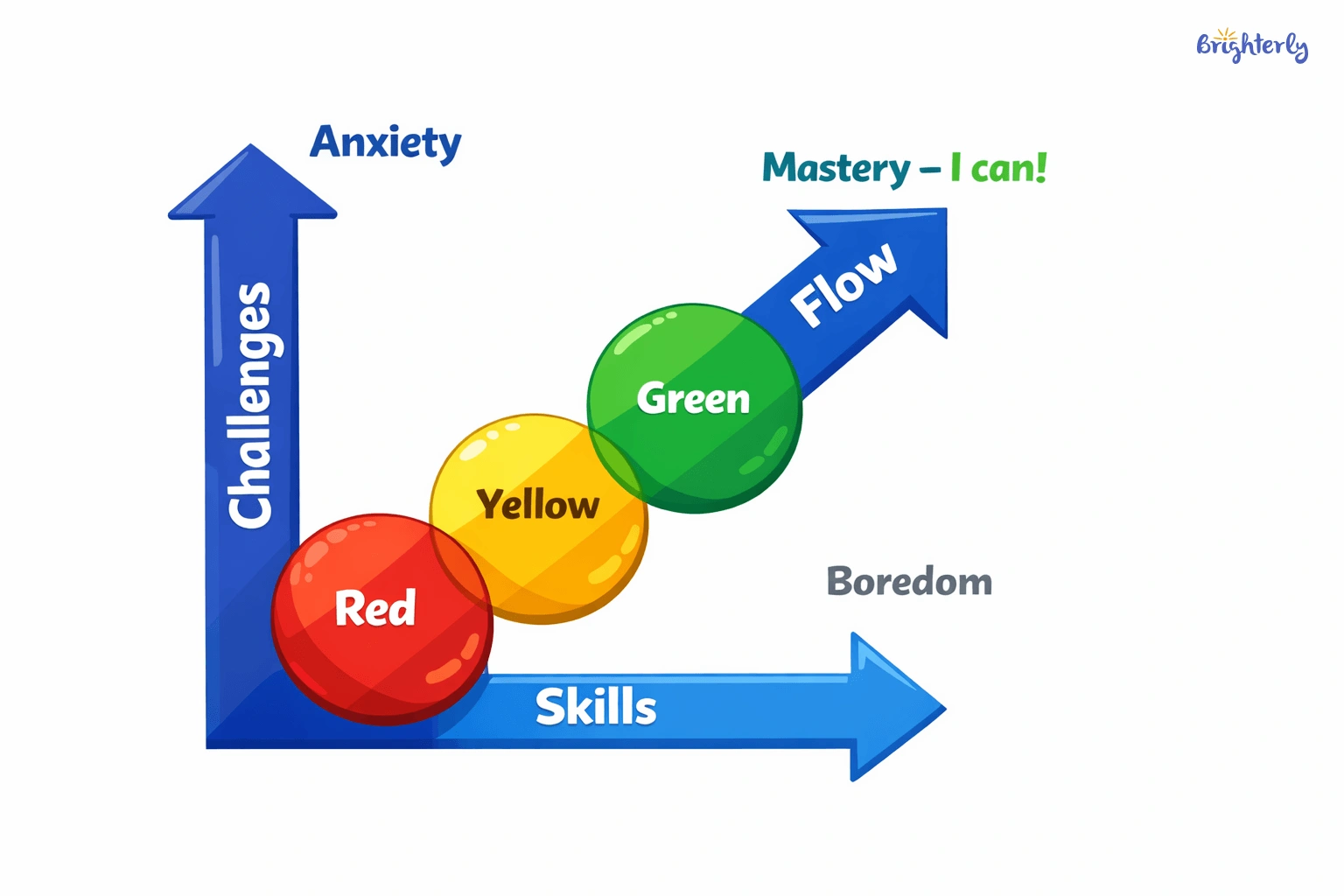
Take our quick quiz to discover the perfect learning solution based on your child’s needs. Best for: kids who need more time to understand all the details before learning Sometimes, kids need to reread the passage or reuse some letters one more time after a break to overcome their reading problems. If your child learns in this manner, make rereading your priority — but make sure it doesn’t overwhelm them. If you push it too hard, they can start associating reading with boredom. How repeated reading contributes to improved reading skills Rereading is equal to controlled processing, or the practice where a new skill gets extra effort and time to be performed with greater precision in the future. On the other hand, it contributes to increasing the accuracy, fluency, and speed of reading. Note: An automatic reading is the first step in shifting from “learning to read” to “reading to learn” mode. Best for: curious kids who get inspired by learning something new Unfamiliar words may be a stress factor for your kid. That’s why enlarging vocabulary is a key activity for most struggling readers. To make it effective, consider playing the Word of the Day game: find an interesting word, learn its meaning, discuss its application in your lives, and use it as your password in conversation for something special. How do vocabulary skills make reading easy? How to balance challenge and boredom when teaching vocabulary? When teaching vocabulary or playing games, make sure you don’t overload kids. You can resort to the READ approach explained by Sigmundson and their evaluation of challenges and skills. Note: Such a method is also an answer to “how to improve your reading skills and vocabulary” queries of high school students who encounter advanced topics. Best for: kids who need order and structure When your kid lacks focus and order, impacting memory and attention, it may negatively affect reading skills. In that case, you can apply structured reading. Use it when a kid has issues with deciphering words, starting a new topic, or when their focus regularly drifts. Under it, make sure a child has proper resources, frameworks, space, and time to read, work with the text, and see its nuances. How to improve reading skills with more structure? Best for: kids who can benefit from visual, auditory, kinesthetic, and tactile learning Applying several senses in learning increases the depth of perception, and you can use this specifically as an everyday tactic to improve reading skills. Introduce movement, gestures, touching, music, and drawing into reading practice in your teaching methods to help your kid absorb new information more easily. Examples of multisensory activities Best for: passive learners who are passionate about something It’s hard to hook a child into reading if their mind is constantly somewhere else. If you know what their current interests are, try to connect reading pieces and activities to them. There are so many ways you can do it, from writing the letters on their soccer ball to practicing dancing while telling the story of the text they just read. How to get better at reading via connecting to kids’ interests? Best for: kids who prefer their phones to everything in the world To improve reading skills with technology, you should do a little of your own research. Yet, the best ones target specific basic skills, receive praise from tutors, and allow your kid to set success goals and get a reward or some points for the right answers. Meeting these criteria will help make the practice interactive yet productive. A few things worth checking before picking a reading app or tool: Does listening to audiobooks improve your reading skills? Yes, it does. When you combine written text with its audiobook version, you involve a multisensory approach in learning and influence the depth of perception. Also, audiobooks cover the gap between word recognition and pronunciation, which can boost your kid’s ability to understand complex syntax and enlarge their vocabulary. Best for: kids struggling with basic reading skills Lastly, mix reading and writing activities, from writing down vocabulary to storytelling. It helps to target several basic reading skills all at once. In particular, the 2023 EdWeek post provides that if kids practice writing when working with decodable texts with controlled vocabularies, they better understand texts and how narratives work. To make writing exercises work, whether in elementary and middle school, link writing tasks to both reading and personal experience. It can support their confidence and help them enjoy reading. What are great ways to use writing for reading skills Kindergarten 1st grade Decoding via phonics (simple words), recognition of common sight words, and blending sounds into words. 2nd grade 3rd grade 4-5th grades 6-8th grades 8-12th grades Note: Developing reading skills looks like an ascending spiral. It implies that kids can catch up in the next grade if there are gaps. Yet, an ignored gap in the 2nd grade can be a reason for a major challenge in 4th grade. For a closer look at what happens at each step of this progression, see the stages of reading development. Poor reading skills in children may arise from different factors that relate to cognitive development, environment, and instructional approach. Nevertheless, the most common causes refer to: We can say for sure that improving reading skills is a matter of time, effort, and the right approach. Remember that the strength of reading depends on such skills as phonemic awareness, phonics, fluency, vocabulary, and comprehension. Reading is a big part of the picture, but not the whole of it — see how it fits into a child’s broader literacy development, which also covers writing and language skills. Thus, you should be consistent and use different activities that target all basic reading skills, especially ones you kid struggle with. What are some ways to improve reading skills? Here’s our top: Note: Once your kid is comfortable with these basics, you can build on them with more advanced reading comprehension strategies that help them dig deeper into meaning, not just decode words. If you don’t have enough time to proactively support your kid in increasing reading skills but want to see the results, check how tutoring works – try Brighterly platform and book 1st free reading class. Foundational reading skills are the skills that kids learn before 3rd grade and lay the base for the subsequent reading growth. In addition to the basic reading skills, foundational skills include alphabetic knowledge, oral language, print concepts, and high-frequency words. To practice reading skills, encourage kids to read regularly (up to 15 minutes a day), try active reading with note-taking, read aloud, analyse and summarize the texts, and work on expanding vocabulary. Besides, in higher grades, a kid can practice reading by skimming or scanning and starting discussions after a reading session. To teach reading skills to kids, we recommend using tactics targeted at basic skills, ensuring daily reading practice, and creating experiences that engage kids to read. There, effectiveness depends on the grade and the kids’ reading needs. Nevertheless, you can use shared experiences, whether it’s a reading aloud or decoding, encourage discussions, and casually use the 3-2-1 approach (name or write 3 things learnt upon reading) To develop critical reading skills, focus on activities that encourage engaging with the text, its goals, ideas, and evidence, and its rhetorical devices. Developing reading skills in that case may include active reading via questioning the text, note-taking, reflecting, summarizing, and discussions. Reading Eggs vs ABCmouse vs Brighterly all serve young learners, but their formats diverge significantly. Brighterly offers live, one-on-one online tutoring with certified educators. Reading Eggs uses a gamified app structure built specifically around phonics and literacy skills. ABCmouse casts a wider net with a self-paced digital curriculum spanning multiple subjects — math, reading, and […] Aug 17, 2025 Deciding among Mathnasium vs Sylvan vs Brighterly really comes down to what fits your child best. Brighterly offers online-only, one-on-one math and reading instruction built around gamified lessons. Mathnasium sticks strictly to math, delivered through small-group sessions either in person or online. Sylvan covers math, reading, writing, and test prep across both in-center and online […] Aug 18, 2025
What are the 5 basic reading skills?
Top 10 ways to improve reading skills
#1 Work with a professional reading tutor


#2 Daily decoding practice
#3 Use phonemic awareness games
#4 Repeated reading
#5 Focusing on vocabulary
#6 Structured reading support to back cognitive skills
#7 Multisensory ways to improve your reading skills
#8 Using kids’ interests and favourite activities

#9 Using technologies for reading
#10 Combine reading and writing activities
Reading skills by grade level: Methods to use
Reading skills to target
Effective exercises
Phonemic awareness, letter-sound correspondence, and early vocabulary.
Phonics games, rhyming, and reading aloud together.
Daily read-alouds, sight word lists, asking questions about stories, and guided reading.
Fluent decoding, larger vocabulary, reading short texts independently, responding to questions, and connecting to personal experience.
Repeated practice, drawing and retelling stories, and vocabulary building via experiences.
Reading with expression, the ability to identify main ideas, paragraph structure, and to draw conclusions.
Reading and discussion in groups, comprehension games, and vocabulary exercises.
Using context to comprehend vocabulary, identification of themes, opinions, elements of a story, and comparing perspectives.
Reading journals, vocabulary notebooks, clues games, and discussions.
Evaluation of texts, their purpose, understanding arguments and evidence, and narrative techniques.
Discussion-based learning, vocabulary notebooks, and note-taking.
Comprehending symbolism and rhetorical devices, analyzing arguments, and advanced critical reading.
Analytical and comparative writing, independent research, and discussions.
What causes poor reading skills in children?
Helping kids build strong reading skills
Frequently asked questions
What are foundational skills in reading?
How do you practice reading skills?
How to teach reading skills to kids?
How to improve critical reading skills?



Math & reading from 1st to 12th grade
Looking for homework support for your child?

Choose kid's grade

Math & Reading for Grades 1–12
Build real confidence for your child with a Brighterly math or reading tutor.




![Cuemath Reviews: All You Need to Know [2025]](https://brighterly.com/wp-content/webp-express/webp-images/doc-root/wp-content/uploads/2025/07/Cuemath-Reviews_-All-You-Need-to-Know-e1754582226241-360x200.png.webp)