Problems in U.S. Schools: What 380+ Parents Say
reviewed by Marvi M. Andres
Updated on July 7, 2026
Key Points:
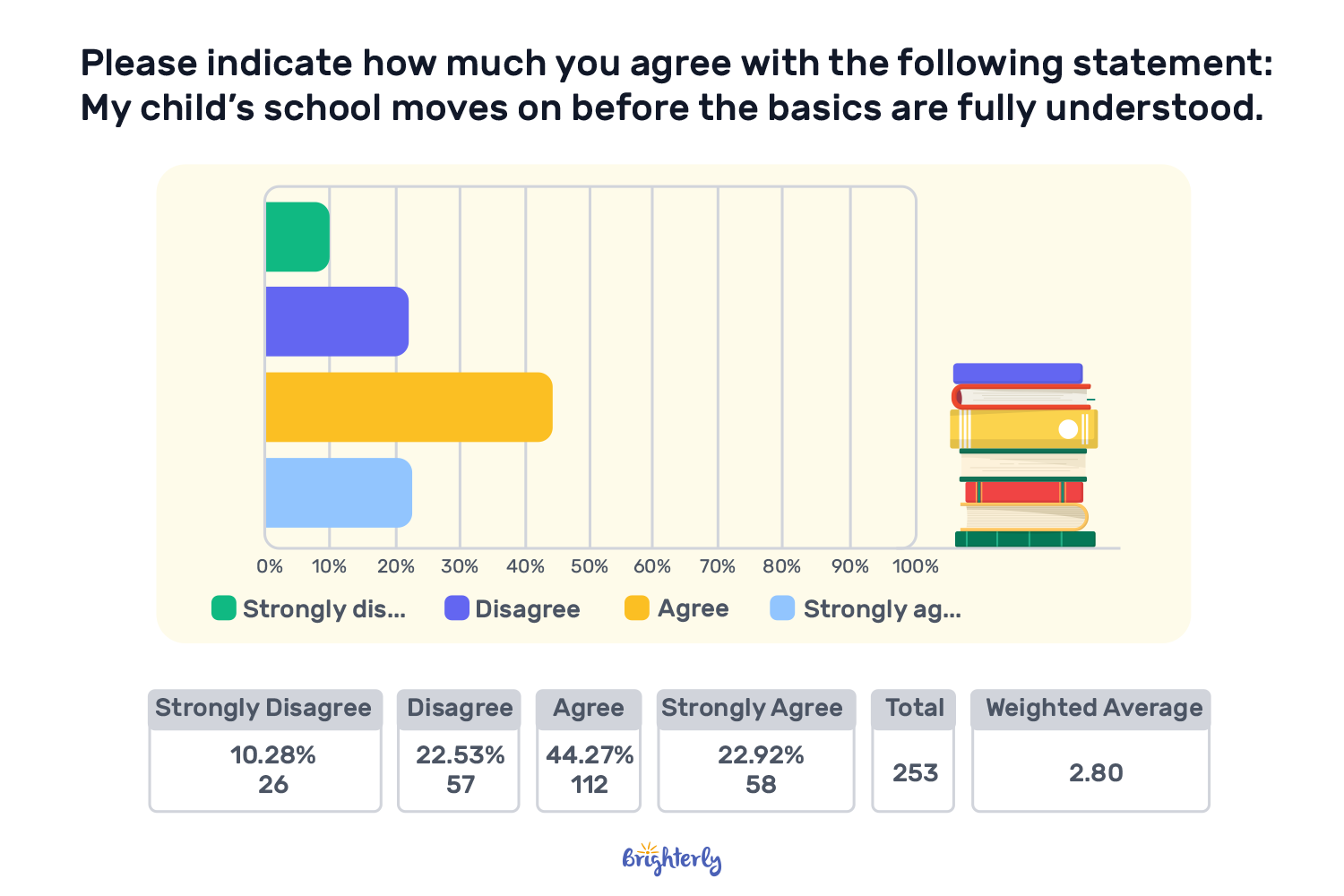
- 67.19% of parents agree or strongly agree their child’s school program moves on too fast, not giving enough time for a child to fully comprehend the basics — Brighterly K-12 Education Research, 2026, 253 U.S. parents surveyed.
- 44.66% of parents say teachers are usually either overwhelmed or don’t have enough resources to teach effectively — the #1 school complaint according to Brighterly K-12 Education Research, 2026, 253 U.S. parents surveyed.
- 88.53% of parents prefer a patient tutor who takes into account their child’s learning pace over the one who prioritizes fast results — Brighterly K-12 Education Research, 2026, 253 U.S. parents surveyed.
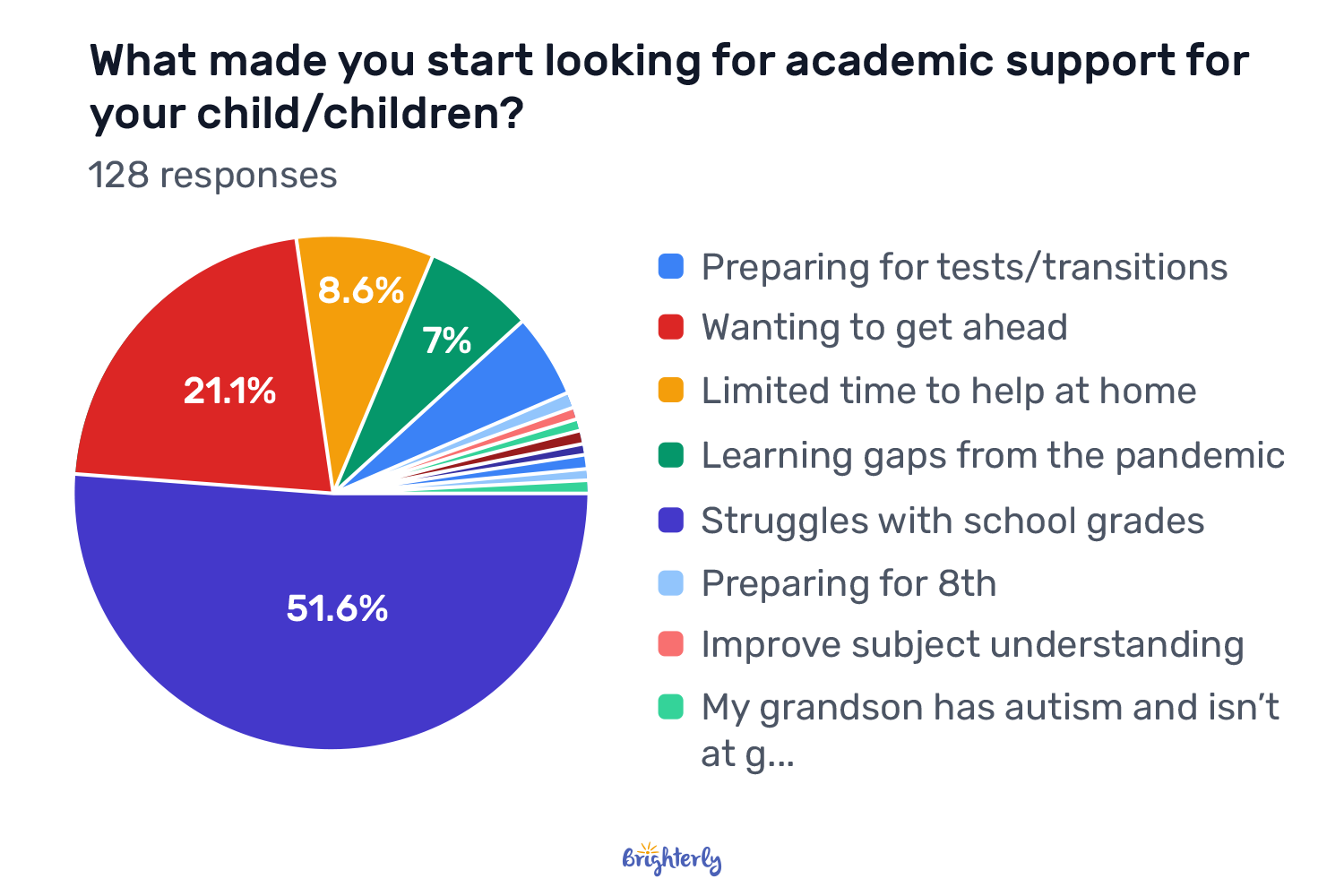
- 51.6% of Brighterly parents decided to look for external learning support for their child because of struggles related to school grades — Brighterly ICP Parent Survey, 2026, 128 Brighterly parents surveyed.
Homework meltdowns, report cards that don’t add up, the classroom that doesn’t seem to work for a kid — all these issues are familiar to parents of school students. To understand the most common problems in schools, we conducted a two-phase research, involving 381 participants: our own community of 128 parents of Brighterly students and an external group of 253 parents across the U.S. The research covers the issues parents identify as the most threatening to their children’s success and the ways to address them.
“When we launched Brighterly, we recognized the staggering decline in math proficiency across 4th to 8th grades in the U.S., a direct consequence of pandemic-related learning loss.”


What Are the Main Problems in Schools Today?
This data is based on different research and reports conducted and published in recent years by different media and organizations:
- AI: The January 2026 report by NPR shows that although the use of AI has some benefits, it threatens students’ cognitive development.
- Cellphone use: The 2025-2026 Education Insights Report by Discovery Education states that more than half of high schoolers use their phones in class, while roughly 80 percent of teachers say they have to constantly compete with phones and social media for the students’ attention.
- Teacher shortage: The 2025 IES research shows that 50% of public U.S. school leaders feel that their school is understaffed.
- Pandemic effect: The July 2024 research by NWEA shows that the gap between average students’ scores before and after COVID-19 has widened in nearly all grades by roughly 36% in reading and 18% in math.
Explore Brighterly Learning Experience
Learn exactly how Brighterly helps students thrive through expert sessions, online tools, and proven feedback from thousands of satisfied parents
What Parents Say About Problems in Schools
To understand the current educational issues in U.S schools, we carried out our own two-phase Brighterly research. First, we surveyed 128 parents who are using our online math and reading learning platform as extra study help for their kids. Then, we conducted a larger external research study with 253 parents across the U.S. and compared the results to understand how our users’ insights resonate with a broader audience and whether the identified issues represent systemic patterns.
Schools Push Kids Forward Too Fast
Our external survey shows that 67.19% of parents agree or strongly agree with the statement that their child’s school program moves on to new topics before their kids get to fully understand the basics.
Source: Brighterly K-12 Education Research, 2026, 253 U.S. parents surveyed
At the same time, 27.27% of parents said it’s the biggest educational issue in today’s schools.
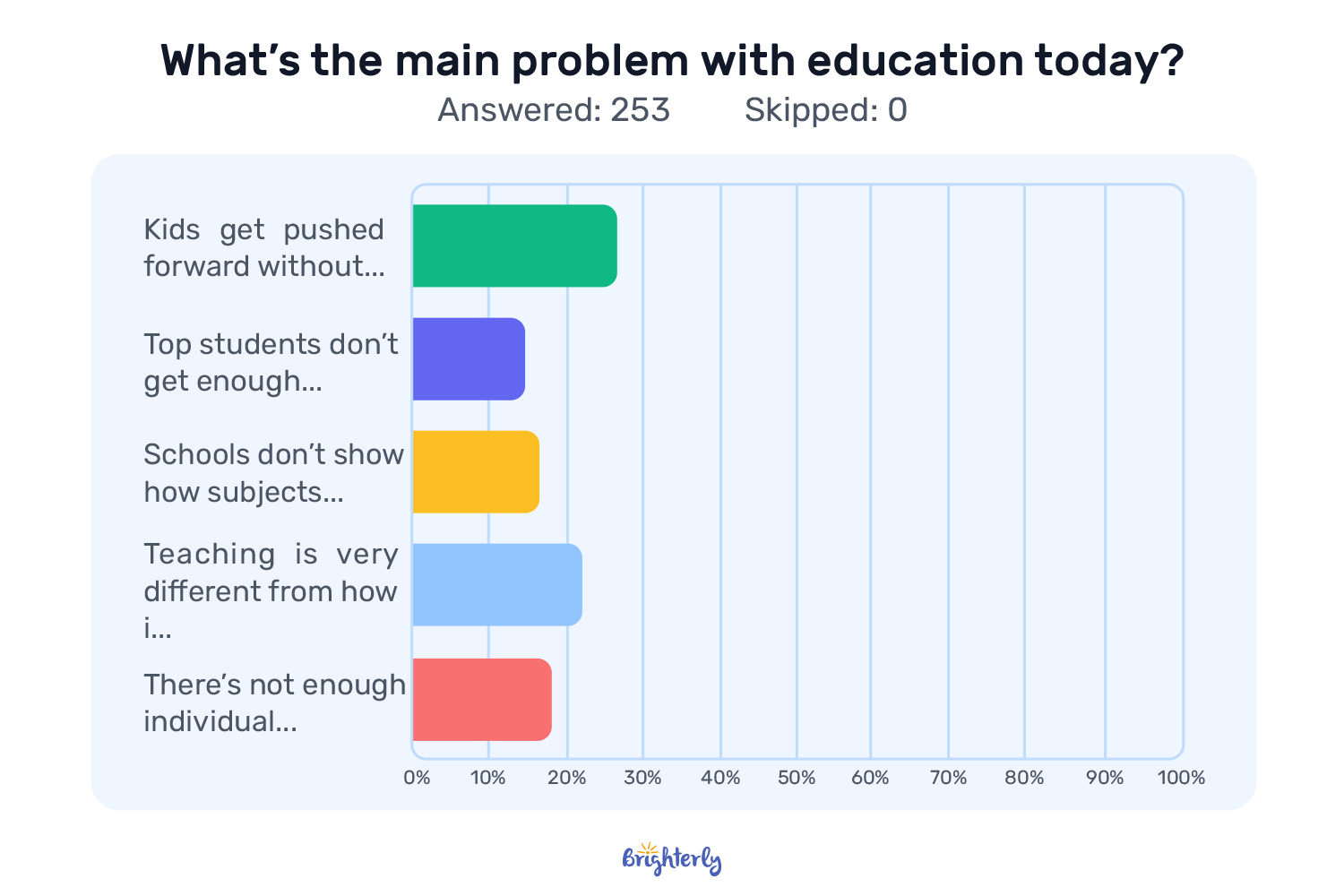
Source: Brighterly K-12 Education Research, 2026, 253 U.S. parents surveyed
Most parents in the internal research, 39.8% to be exact, completely agree with this, which also proves the severity of the issue, since even the families who sought learning help for their children outside of school still feel its consequences.
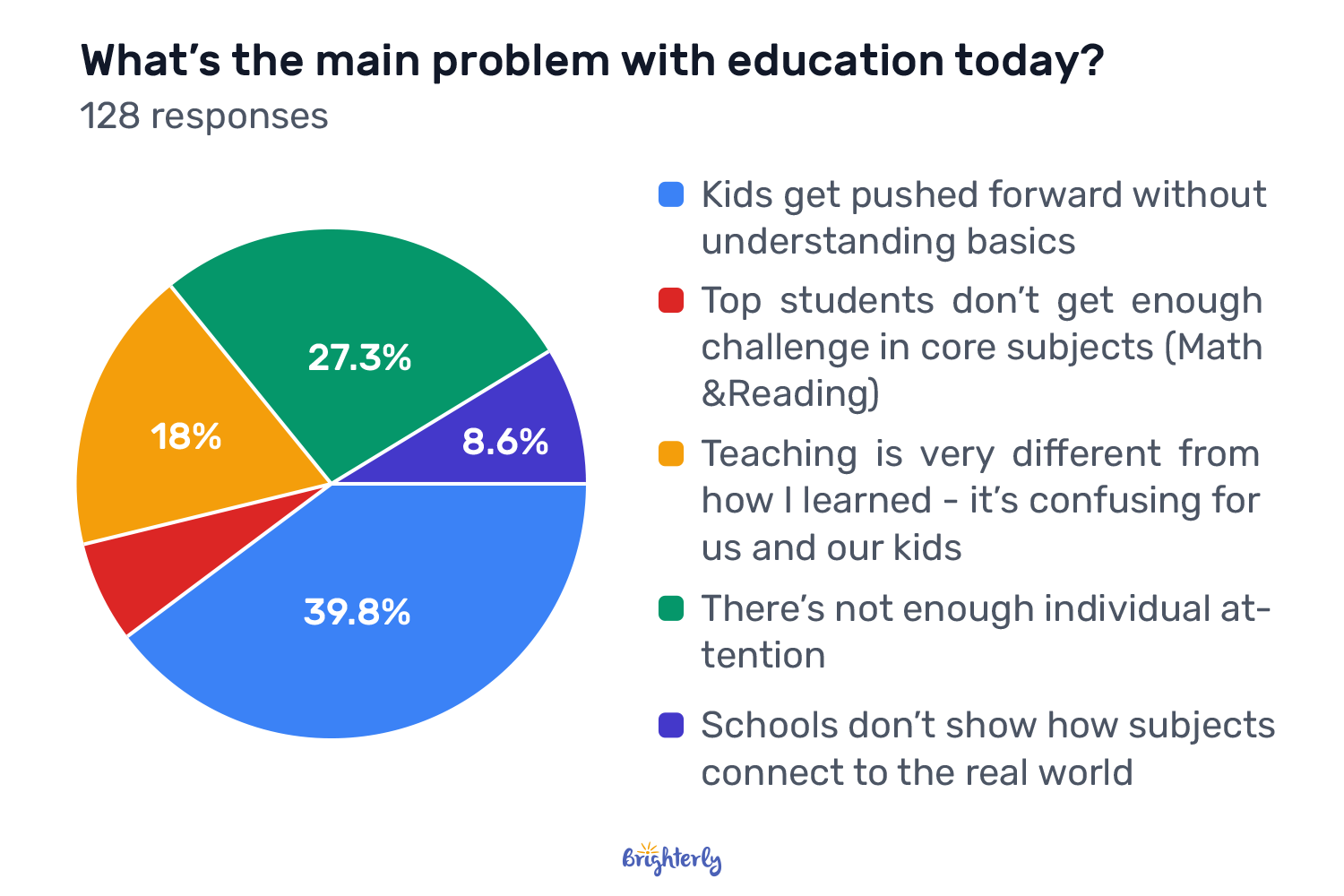
Source: Brighterly ICP Parent Survey, 2026, 128 Brighterly parents surveyed
Teachers Are Overwhelmed and Can’t Provide Necessary Attention
In our external study, 44.66% of parents believe teachers are overwhelmed and under-resourced, admitting this is what they dislike the most about their child’s school experience.
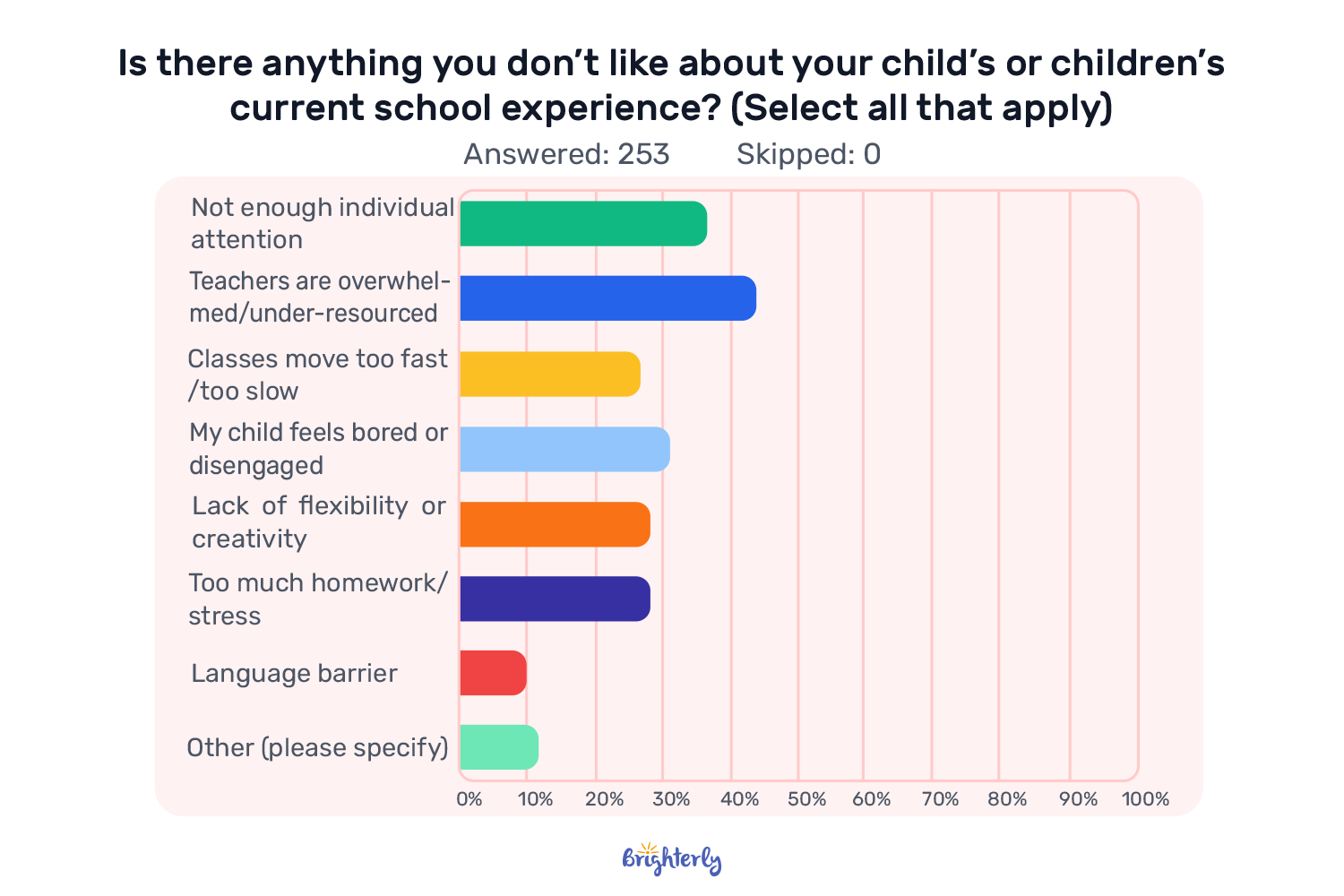
Source: Brighterly K-12 Education Research, 2026, 253 U.S. parents surveyed
In our internal community, only 28.9% of parents completely agree with this, while 58.6% of parents put the lack of individual attention at the top of their complaints regarding common problems in schools, which is also the issue that is a direct result of teachers being overwhelmed.
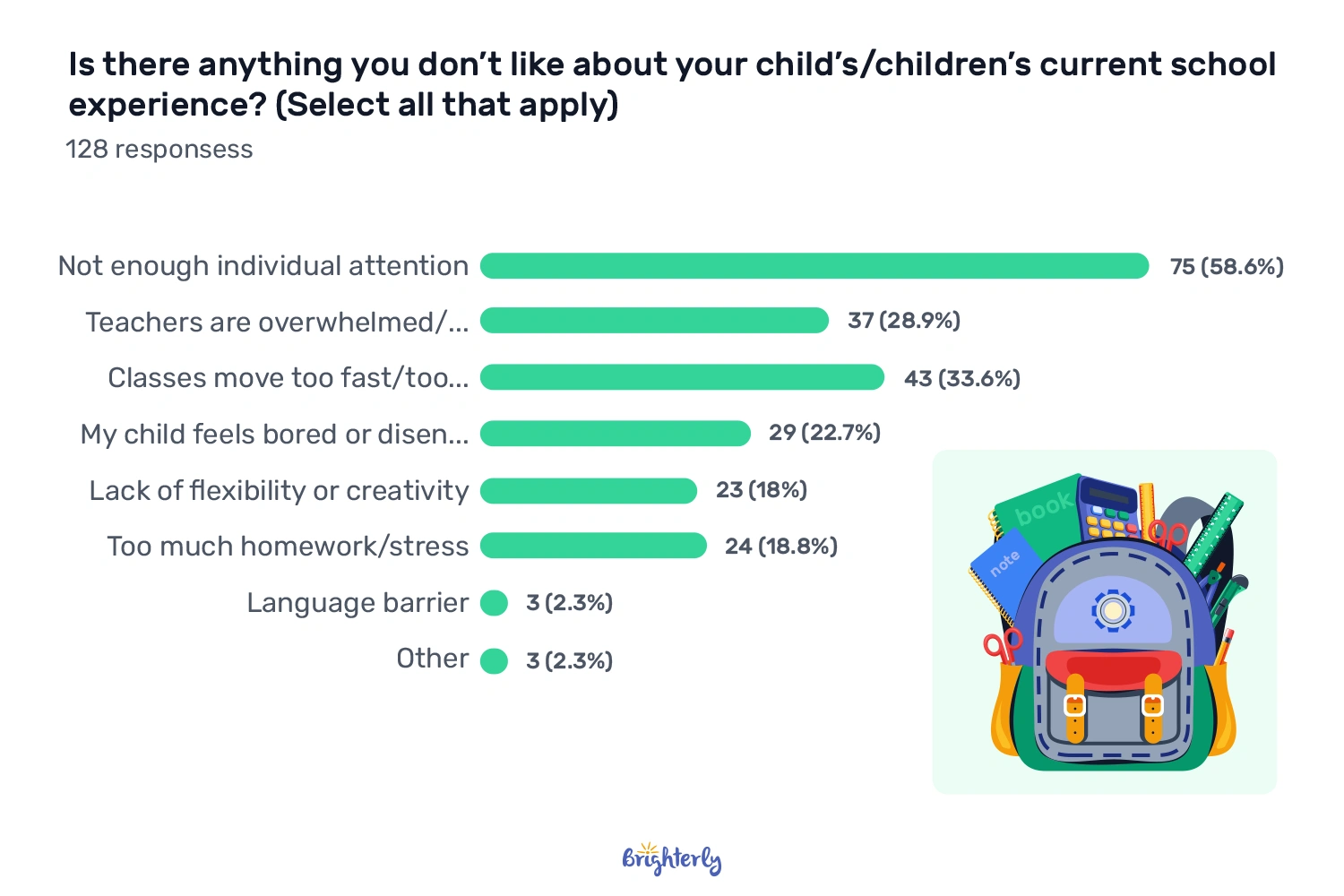
Source: Brighterly ICP Parent Survey, 2026, 128 Brighterly parents surveyed
The Educational Journey Is Emotionally Challenging
The results of our external research show a near three-way tie among the top emotional challenges that today’s education system creates for families: 23.72% of parents report experiencing daily stress related to homework, 23.72% notice their child losing confidence or motivation, and 22.53% worry about their child’s long-term academic success.
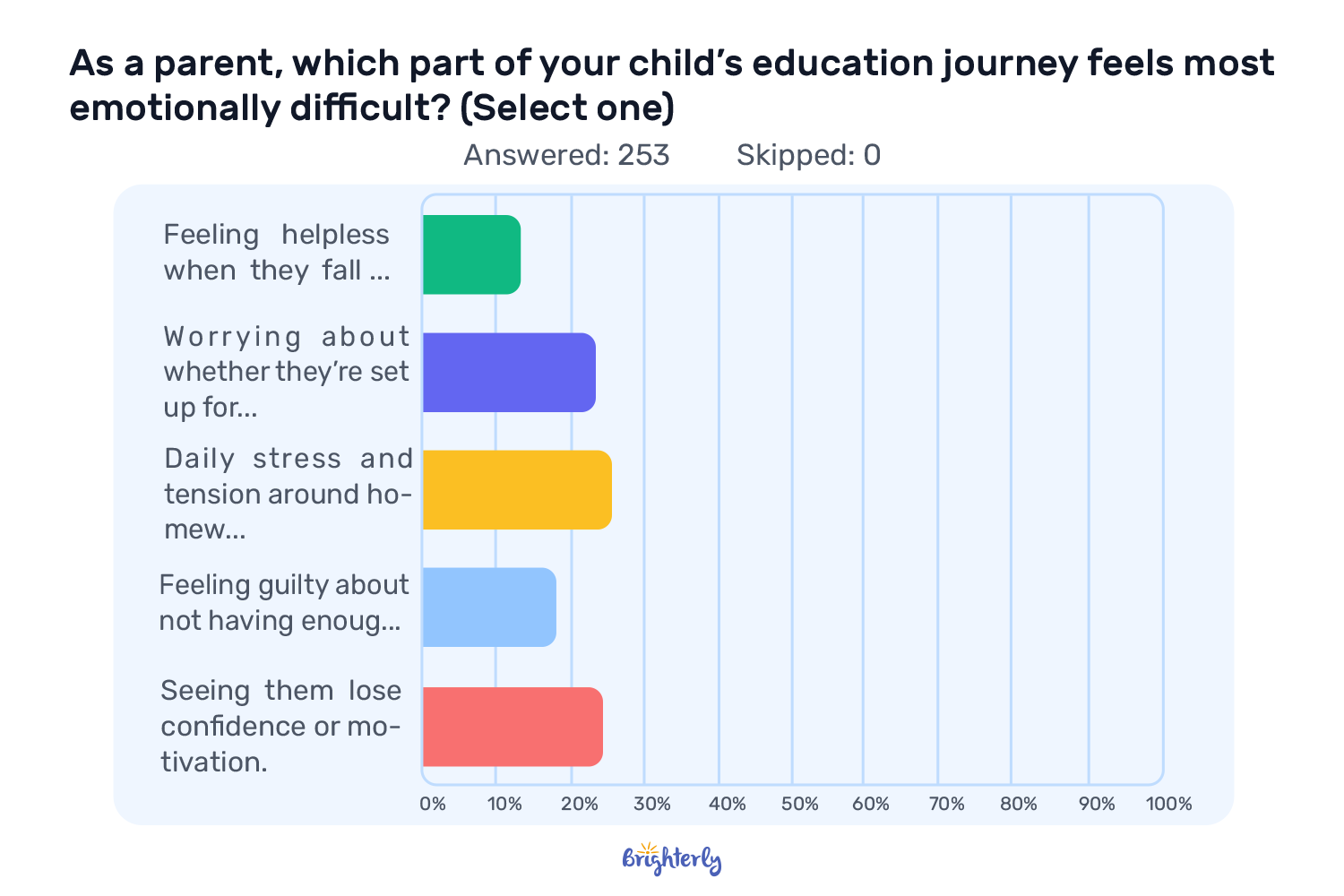
Source: Brighterly K-12 Education Research, 2026, 253 U.S. parents surveyed
Unfortunately, for our internal community, the school-related emotional weight they have to carry seems to be even heavier, since as much as 37.5% of parents choose “Seeing my child lose confidence or motivation” as their number one emotional difficulty related to the educational process.
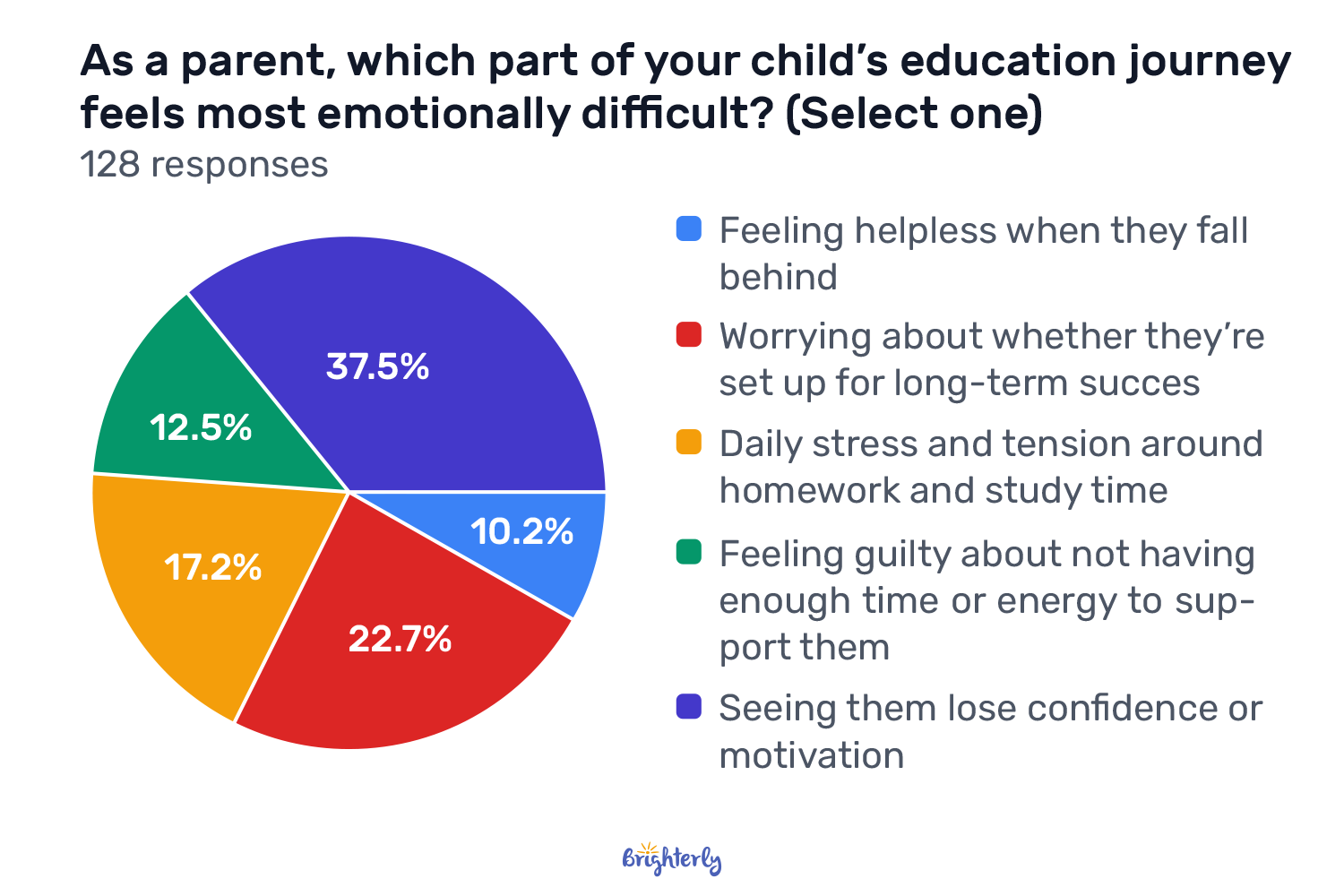
Source: Brighterly ICP Parent Survey, 2026, 128 Brighterly parents surveyed
Is your child struggling at school?
Get a custom learning plan with a tutor guiding your child through the program.
Why Do These Problems in Schools Happen?
These problems in education mainly stem from crises involving school staff, and the global pandemic has affected how schools are dealing with them to this day. This data is based on several national research studies and reports, each highlighting a specific issue.
Teacher Shortages Mean Less Attention Paid to Each Child
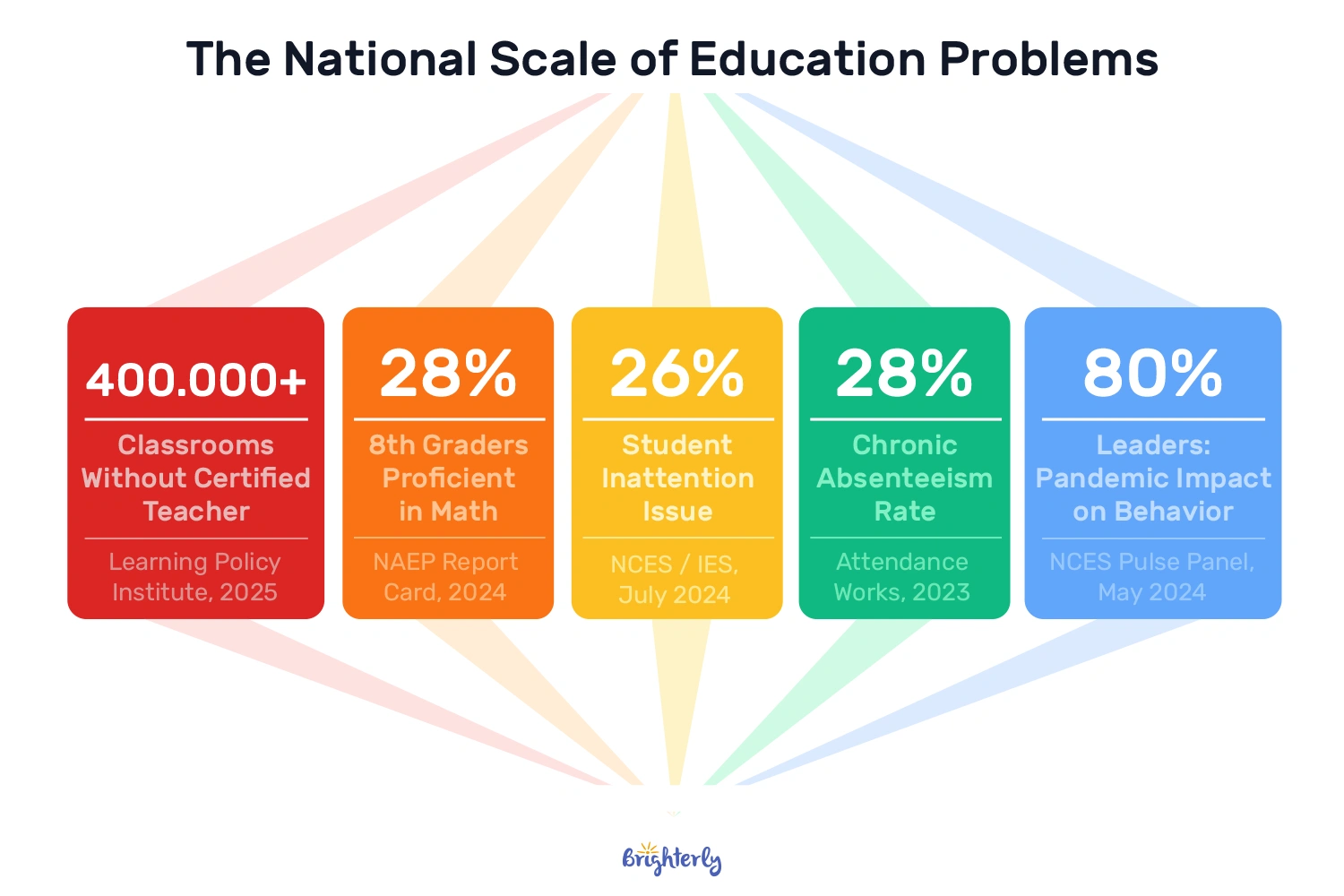
Research by the Learning Policy Institute, published in March 2025, found that over 400,000 teacher positions in the U.S. are either vacant or filled with uncertified staff, which means a huge professional teacher shortage in the country. The statistics on U.S educational trends proves this issue exists. The usual solution for a school is to increase the class size to compensate.
This data explains why 44.66% of parents in our external research feel that educators are overwhelmed, and why 58.6% in the internal study notice that their kids don’t get enough teacher attention in class.
The Pandemic Caused Issues the Schools Still Struggle With
NAEP 2024 Report Card shows that only 28% of 8th graders are at or above Proficiency level in math. For contrast, it was 36% in 2019, when the pandemic started. This shows that when schools move on without closing the learning gaps, they don’t disappear, which is exactly what 67.19% of parents in our external survey noticed.
This also means that although years have passed since the start of the COVID-19 outbreak, the schools still feel the pandemic effects on education. For example, the NCES Commissioner Peggy G. Carr says: “Schools continue to grapple with the ongoing impact the pandemic had on their students”. And the NCES research, published in July of 2024, proves this statement. It found that 80% of public school leaders believe that the pandemic still has negative effects on students’ behavioral development, with 26% agreeing student inattention is the worst among those effects.
Another pandemic-induced problem is an increase in chronic absenteeism rate. According to Attendance Works research, published in January of 2025, it was as high as 28% in 2022-2023 across all U.S schools, when before the pandemic only a quarter of schools had experienced such high rates of absence among students. Besides, the research adds that absenteeism also affects the teachers negatively, explaining that: “The churn from students in the classroom makes it harder for teachers to teach and set classroom norms while students must wait for their absent peers to catch up”.
Overall, research shows that the issues in today’s education system are caused by different factors rather than one specific problem. Both teacher shortages and the effects of a global pandemic create a whole system of challenges that needs to be addressed so that schools can teach all students effectively.
What Parents Do When Schools Fall Short
When it comes to problems in schools and their solutions, parents tend to take matters into their own hands. This usually means looking for some extra learning support for their child in the form of learning platforms with tutors and online resources for home practice.
Why Parents Start Looking for Extra Learning Support
In our internal survey, an overwhelming majority, 51.6% of parents, said they started looking for extra academic support for their child because of struggles with school grades.
Source: Brighterly ICP Parent Survey, 2026, 128 Brighterly parents surveyed
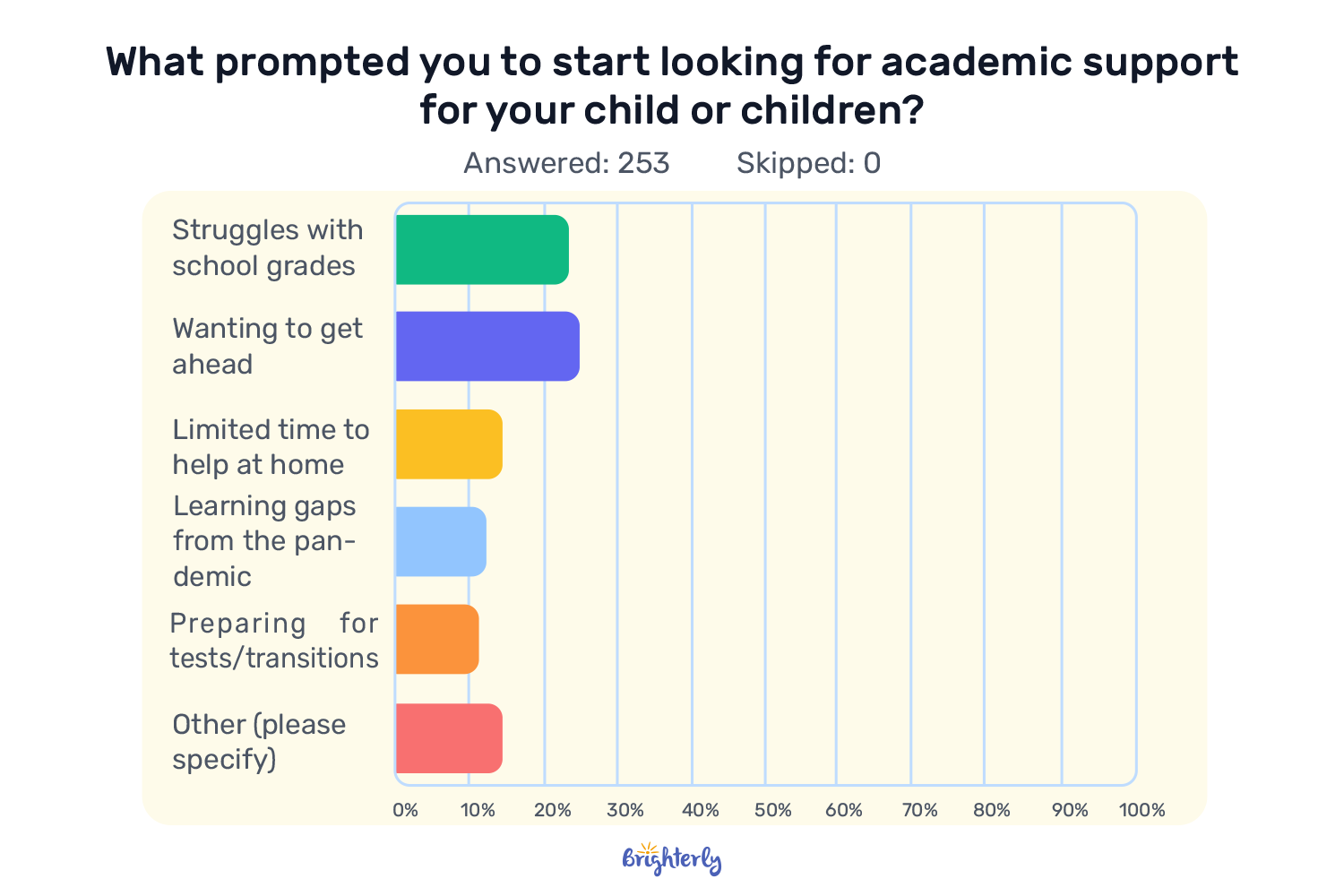
In the external survey, only 23.32% of parents share the same reasoning, while 24.90% say their main motivation to get extra learning help is for their child to get ahead in studies. So, even though the top reasons in both surveys are the same, the broader community shows more evened out results, not leaning towards one reason at all.
Source: Brighterly K-12 Education Research, 2026, 253 U.S. parents surveyed
Most Parents Already Use Learning Platforms
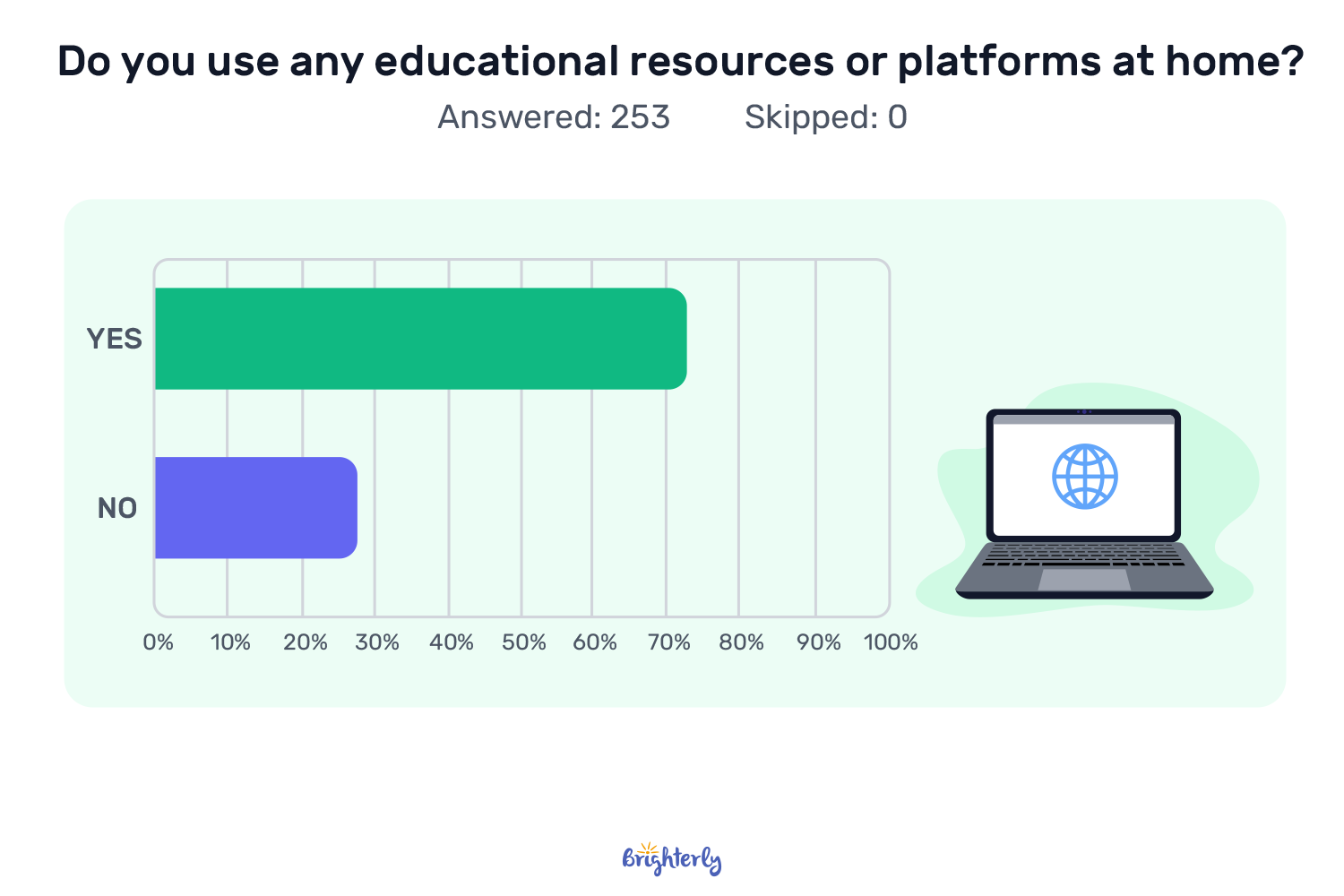
While only 50% of parents in our internal study say they use additional educational resources or platforms at home, that is due to all of them already using Brighterly. The external study reveals a broader picture, with 71.94% of parents admitting to using educational platforms at home.
Source: Brighterly K-12 Education Research, 2026, 253 U.S. parents surveyed
What Parents Look for in a Learning Service
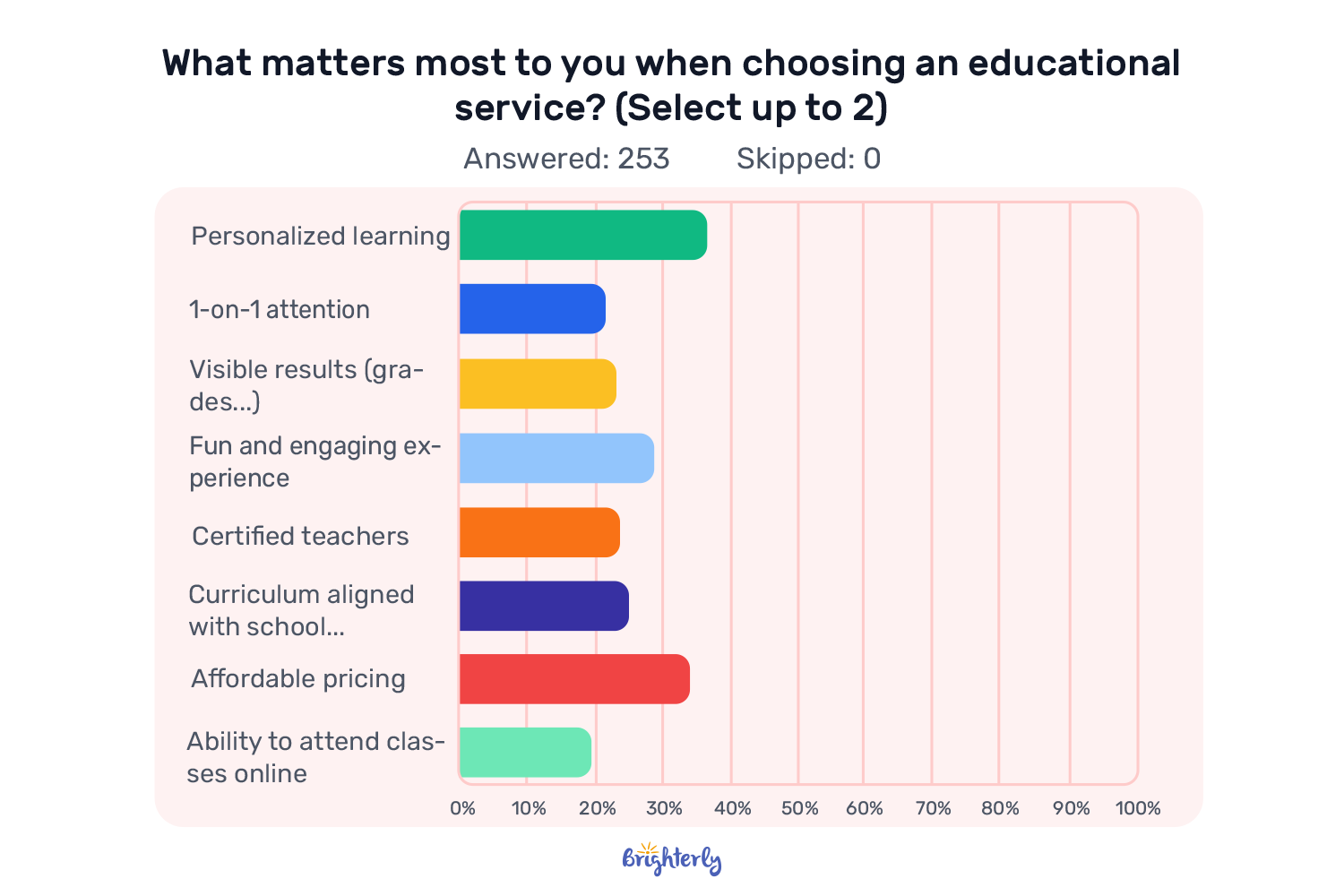
Our external study shows that when choosing a platform for supplemental learning, 35.18% of parents look for personalized learning, while 33.20% prioritize affordable pricing.
Source: Brighterly K-12 Education Research, 2026, 253 U.S. parents surveyed
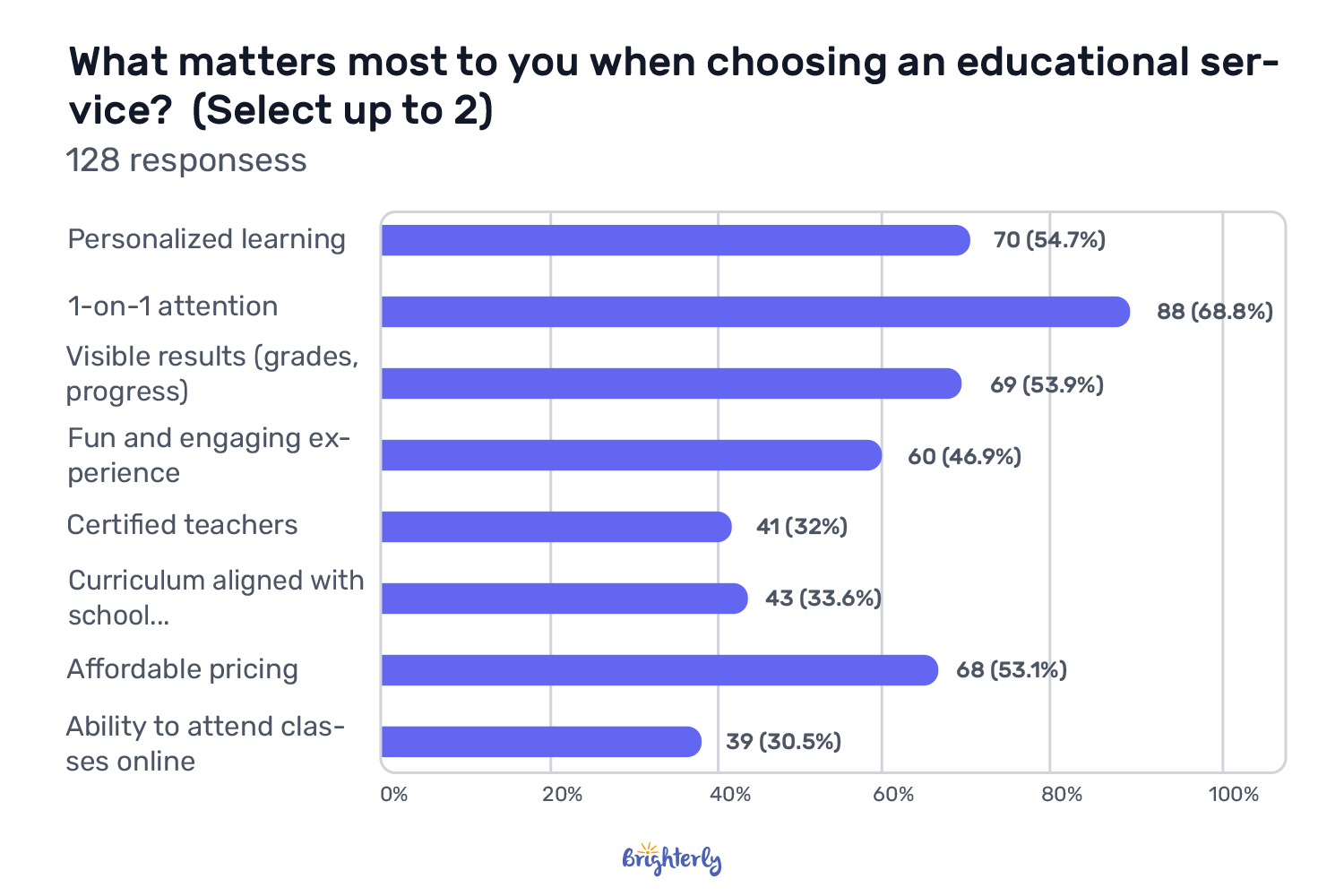
In contrast, for 68.8% of parents in our internal community, one-on-one attention is their number one learning platform requirement. This means that while the broader community puts personalization on top, those who already have experience with educational platforms know how effective it is when a child gets individual and undivided attention from a tutor.
Source: Brighterly ICP Parent Survey, 2026, 128 Brighterly parents surveyed
If, before considering a learning platform, you want to see your child’s current knowledge level, you can start by taking a free diagnostic math test.
What Parents Really Want for Their Child
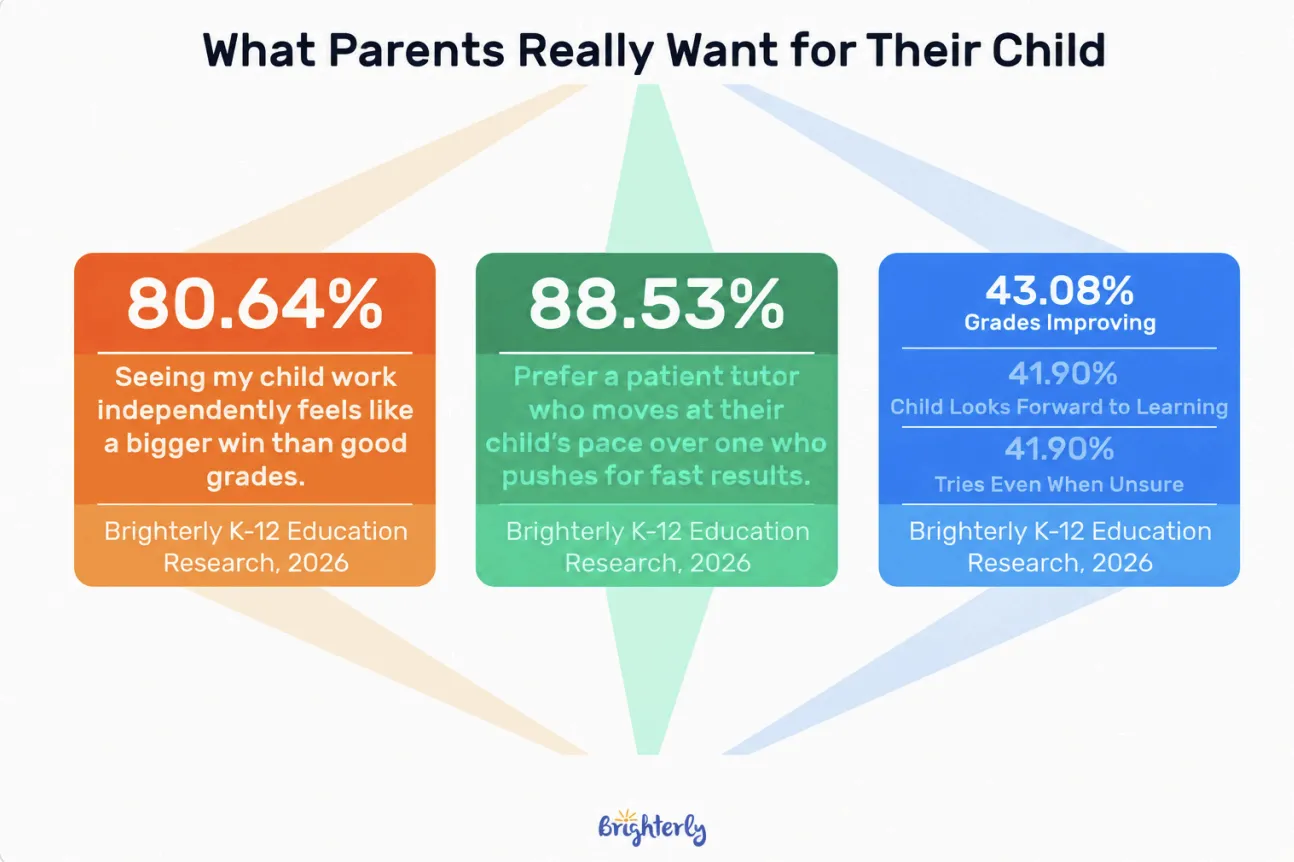
Both our studies show that when it comes to solving the issues in education, what parents want for their children is to be able to learn independently, rather than just get high grades. And when it comes to teachers, parents appreciate it when they put patience first, moving at the child’s speed, not trying to finish the curriculum faster.
Independence Over Grades
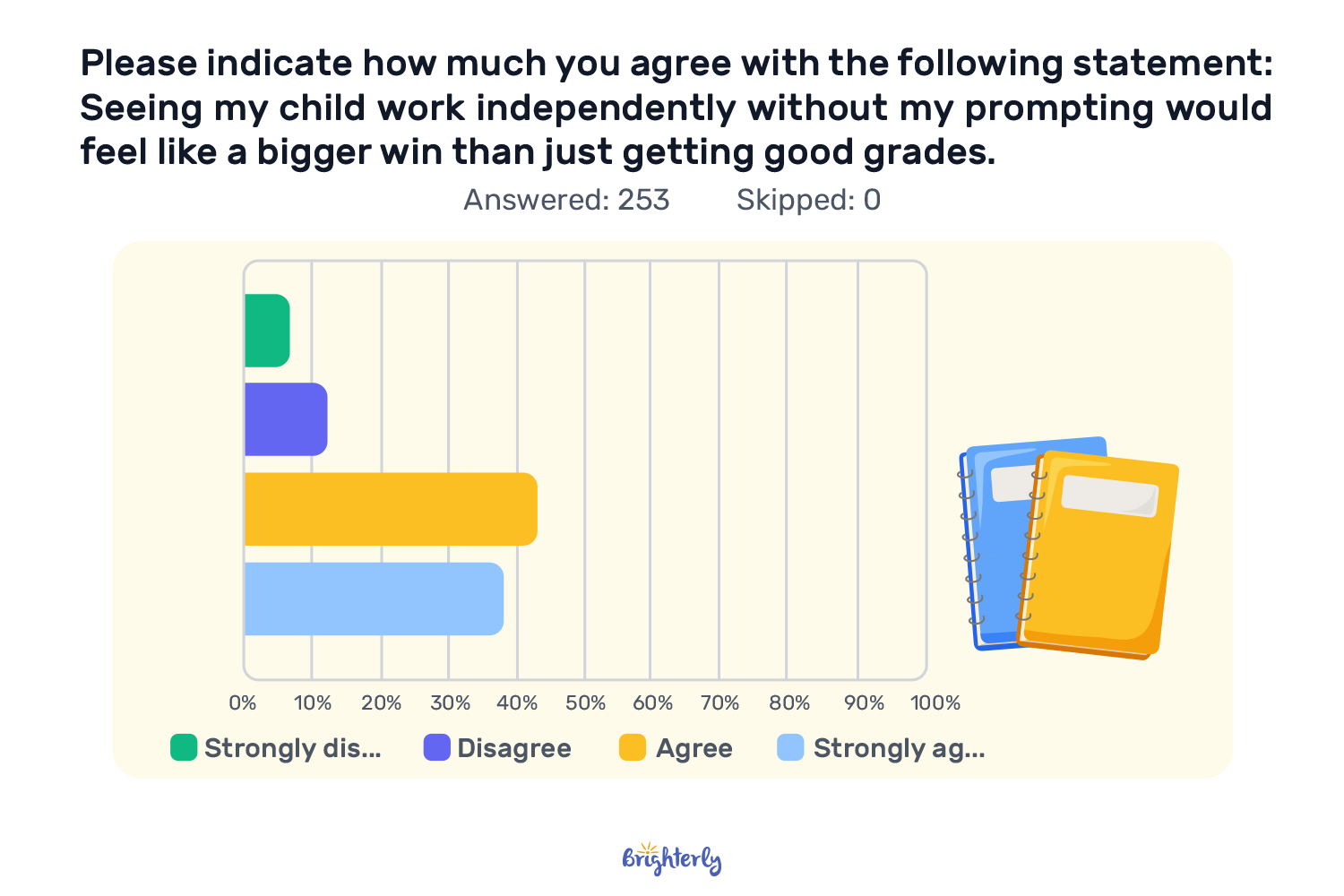
A striking 80.64% of parents in our external study agree or strongly agree with the statement that seeing their child work independently feels like a bigger win than them just getting good grades.
Source: Brighterly K-12 Education Research, 2026, 253 U.S. parents surveyed
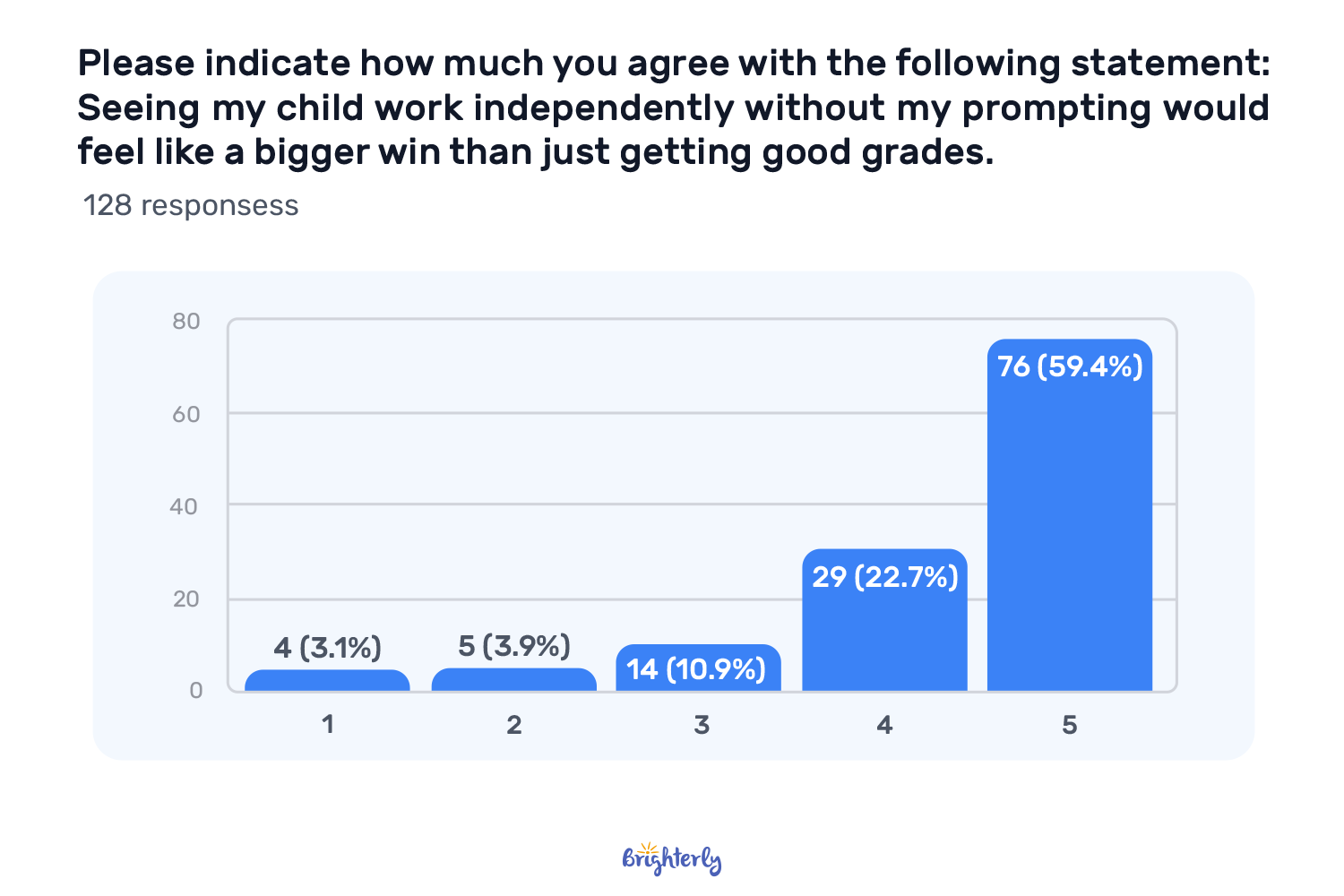
Our internal survey shows an almost identical result, with 82.1% of parents agreeing or strongly agreeing with the same thought. This means that, whether a child already has a tutor or not, parents want their kid to study with confidence on their own rather than just get good grades.
Source: Brighterly ICP Parent Survey, 2026, 128 Brighterly parents surveyed
Patience Over Speed
Our extended survey shows that 88.53% of parents prefer a patient tutor who moves at their child’s pace over one who keeps pushing for fast results, which is what usually happens in classrooms, creating one of the biggest problems in school.
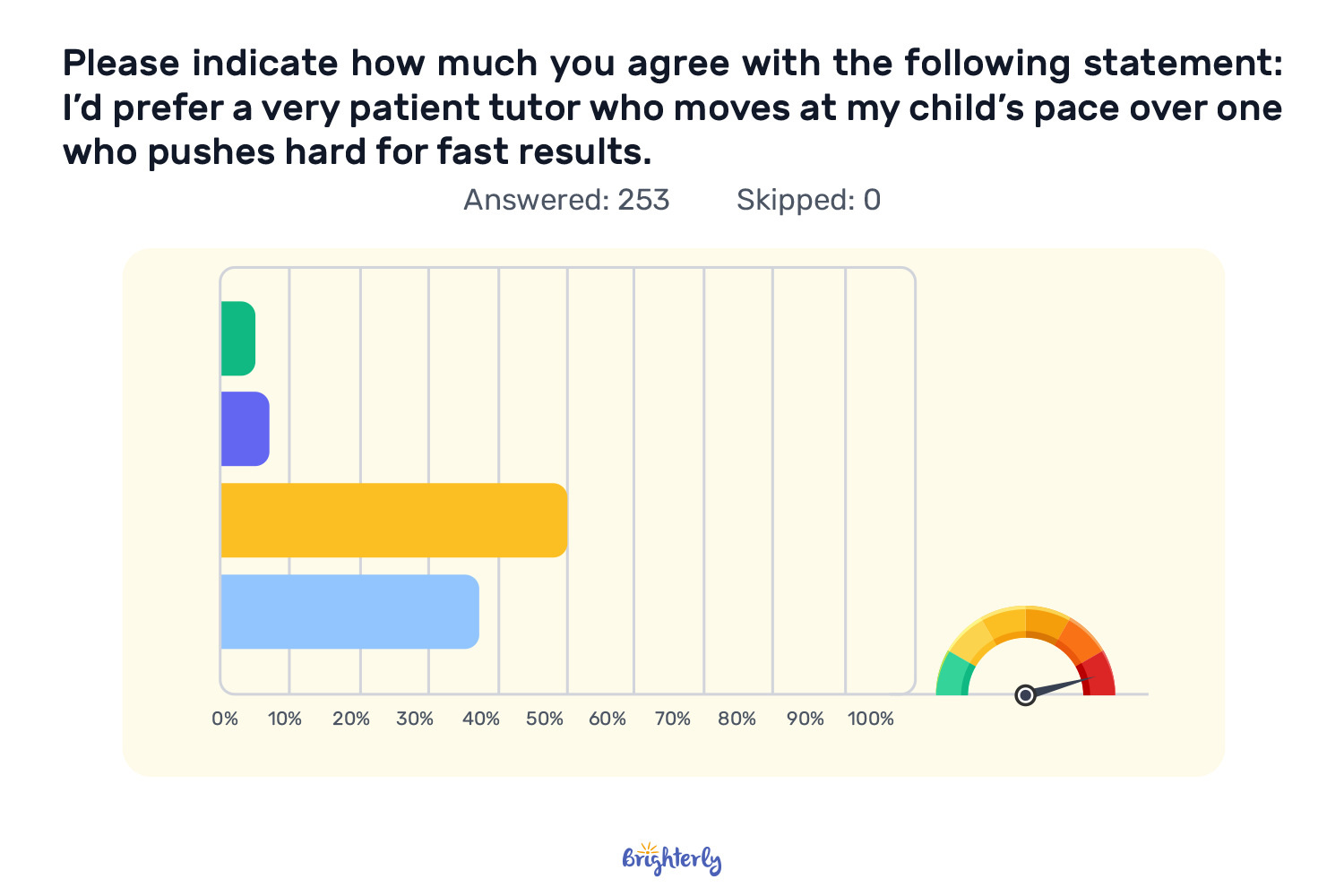
Source: Brighterly K-12 Education Research, 2026, 253 U.S. parents surveyed
While as many as 73.5% of parents in our internal community also value patience, this percentage might seem too small compared to the broader survey. However, this is because our users have already found a patient tutor who makes sure their kid is ready to move forward, rather than pushing them forward like school does.
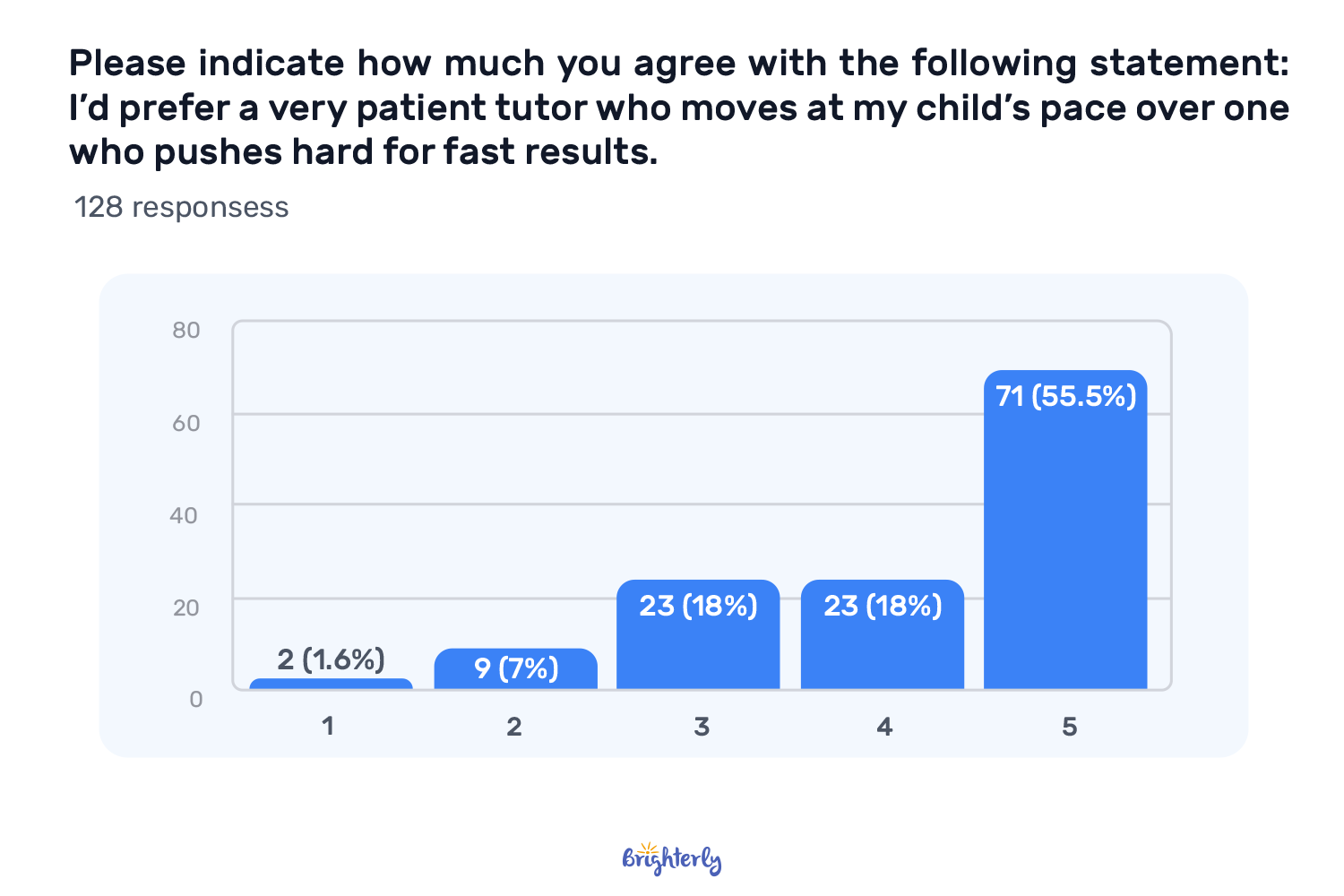
Source: Brighterly ICP Parent Survey, 2026, 128 Brighterly parents surveyed
Summing up, it looks like parents are shifting their focus away from grades towards how their kids learn. Most would rather see their child be confident to study independently than just bring home a high score. Besides, parents want a more patient approach to teaching, valuing educators who tailor the curriculum to the student’s pace instead of rushing them regardless.
Looking for a patient tutor for your child?
Our professional educator will move from one topic to another according to your child’s pace.
Conclusion
Our research on issues in schools points out a clear correlation: while 67.19% of parents feel schools move too fast, a whopping 88.53% actually think that a patient, tailored learning pace is essential for their kids to succeed.
Luckily, school problems are possible to fix with the help of the right learning support. By shifting our focus from how quickly a kid gets through the curriculum to making sure each child truly understands the material, we can help children regain their confidence and build the independence they need to continue their academic journey.
Frequently Asked Questions
What Are the Biggest Problems in U.S. Schools Today?
The biggest problems in U.S schools today are AI, cellphone use, a lack of personal attention, teacher shortages, and rushed curricula that prioritize speed over understanding the basics. Besides, a lot of schools struggle with the variety of different lingering effects of the pandemic, like student inattention and chronic absenteeism.
How Do Problems in Schools Affect a Child’s Learning?
The problems, if not addressed, lead to growing learning gaps, homework stress, and lost student confidence. For example, more than half of high school students in California consider homework as their main source of stress. When this stress builds up, it inevitably leads to lost confidence and a child falling behind.
What Do Parents Say Is Wrong With Education Today?
According to our research of 380+ parents, the most common complaints about issues in education today are overwhelmed teachers and a lack of individual attention. Also, parents believe it’s wrong to move on to new topics before their child has mastered the current material, prioritizing speed over basic understanding.
How Can Parents Help When Schools Fall Short?
Parents can help by seeking supplemental learning support through educational platforms and 1-on-1 tutoring. For example, you can find an online math program if your child struggles with math or a reading program for kids who have difficulties reading. Tutors in such programs tailor lessons to the child’s individual learning pace rather than just following standard curriculum speed and focus on building independent study habits to help fill study gaps and restore academic confidence.
Why Are Issues in Education So Difficult to Fix?
The educational issues are so hard to fix because they are nationwide and systemic, like school funding inequality and a shortage of qualified teachers. Solving these problems requires long-term policy changes and significant investments from the state. But even if implemented now, the effects of these changes would be seen in several years, not immediately.
What Do I Do If My Child Is Falling Behind at School?
If your child is falling behind at school, the first step is to identify the learning gaps and why they occur. You can start by talking to a child and their teacher, or take specific tests on online learning platforms. Once you know what the issue is, you can consider getting your kid learning support in the form of an online tutor.

In 2026, the top coding apps for kids focus on block-based coding, introducing concepts via puzzles and games, learning programming languages, and developing apps or games. Drag-and-drop coding apps make learning interactive for younger kids, while block coding and early language programming apps can support their interest. The middle and high schoolers need more complex […]

Apr 28, 2026
Is your child able to read every word accurately, but still stares blankly at the end of the story when you ask what it’s about? There is usually no problem with reading skills here, but rather a lack of background knowledge needed to connect the dots. Take a deeper look at the topic and explain […]
May 03, 2026
Math & reading from 1st to 12th grade
Looking for homework support for your child?
Choose kid's grade

Math & Reading for Grades 1–12
Build real confidence for your child with a Brighterly math or reading tutor.