Reading Comprehension Games: 12 Activities That Do Work
reviewed by Laila A. Lico
Updated on March 22, 2026
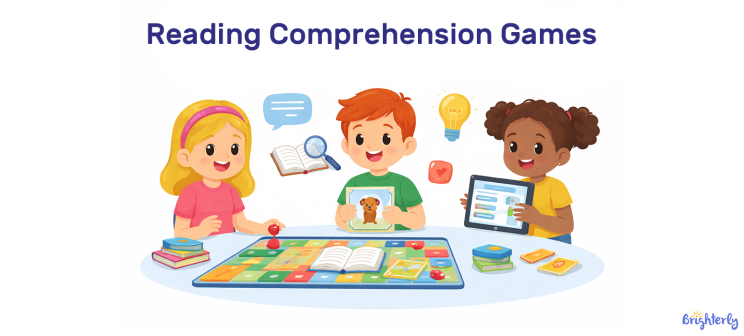
Reading comprehension games make the reading process more focused, engaging, and productive. Their use allows kids to better grasp the gist and deeper understand the meaning.
This article lets you grab 12 interactive reading games to help kids understand what they’re reading. You can use these games in class, at home, or online.
Key points
- Interactive reading games transform reading from simply moving through words on a page into a challenge that helps children grasp the meaning of a text.
- Young learners click with visual, playful activities that feel like a small adventure, such as Read and draw or the Question cube, and worksheets.
- Middle school students often enjoy imagination and some friendly competition: Prediction stop, quizzes, Sentence matching, or True or false.
- High school students are ready for deeper analysis, including discussions about characters, Character motivation games, or identifying the main idea with Guess the title.
What are the best games for reading comprehension? 12 ideas to use at home
- Worksheets
- Read & draw
- Sentence matching
- True or false challenge
- Question cube
- Prediction stop
- Guess the title game
- Digital story sequencing games
- Online Quiz-based reading games
- Interactive reading games with levels
- Character motivation
- Choose-the-ending
#1 Worksheets – printable reading comprehension games
Age range: K-12 grades
I’ll start with reading worksheets. These colorful and full of different exercises pages not only make reading illustrative but also boost comprehension and grammar skills. And the research from 2024 conducted by Fahri Haswani, Yeni Erlita, and Rika backs it up.
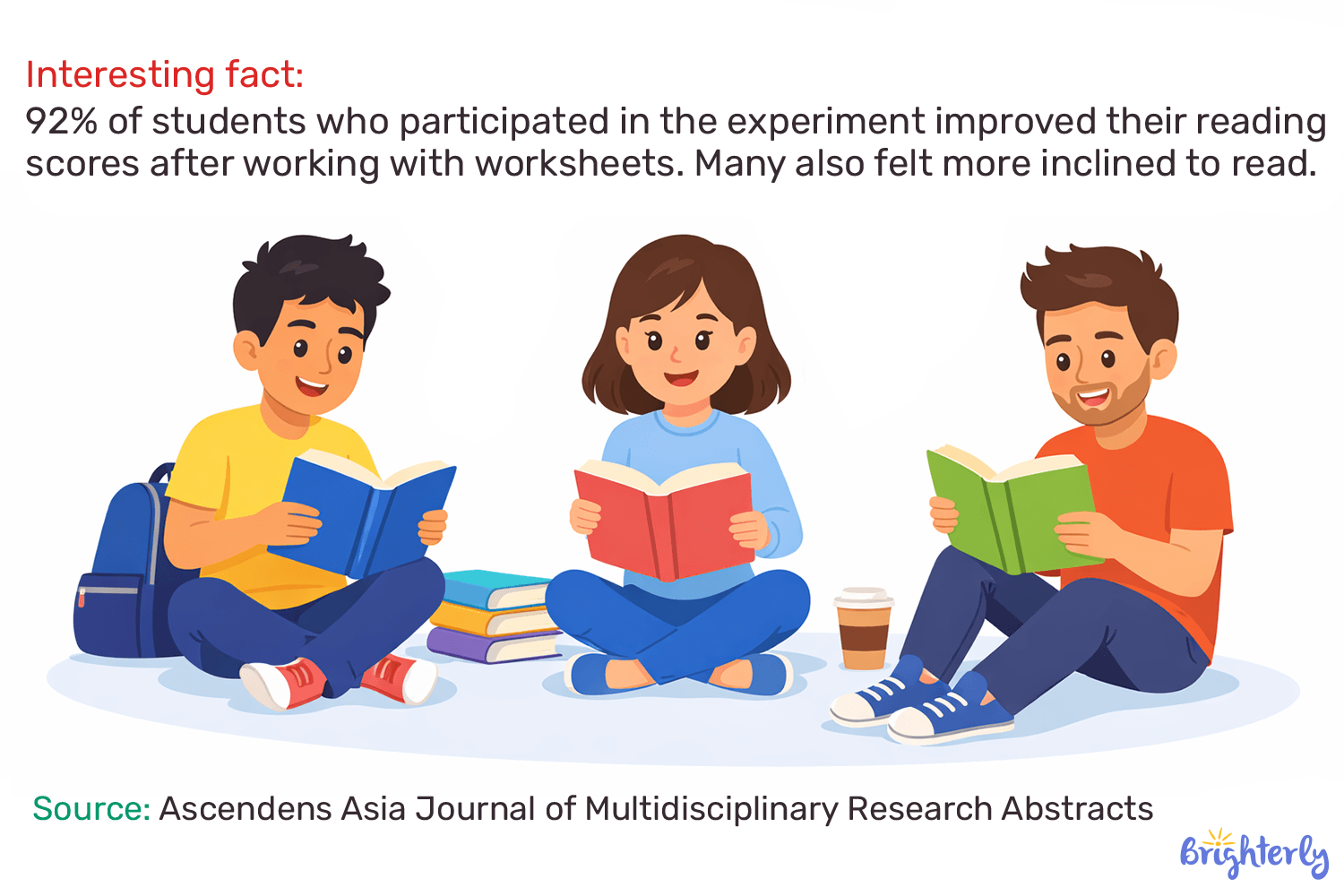
You will find a myriad of worksheets online, but the one that particularly stands out is Brighterly’s reading worksheets. Created by a team of professional teachers, they’re story-driven and packed with plenty of tasks. Reading comprehension games like these will improve phonics, comprehension, and the child’s creative thinking.
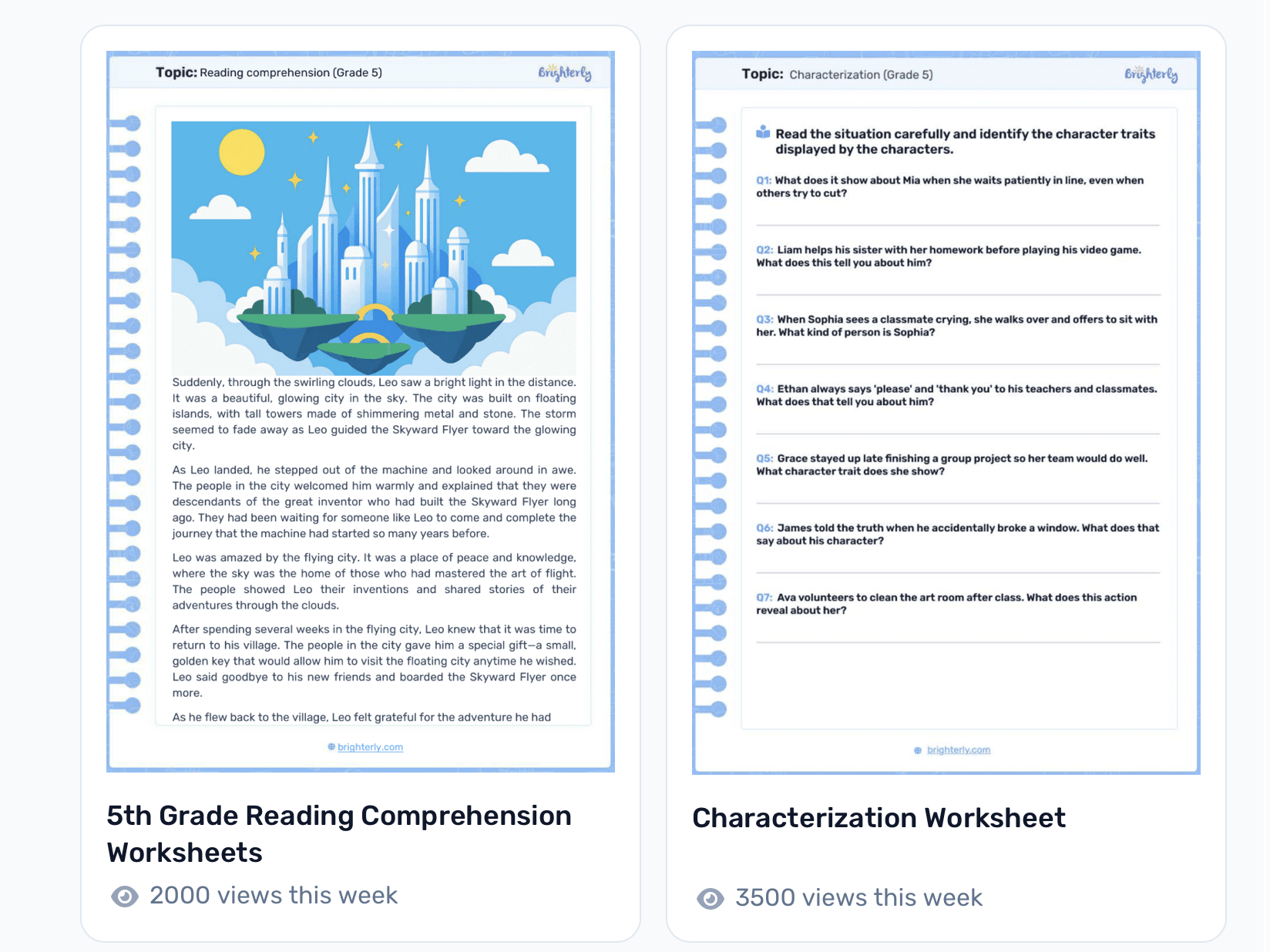
Extra tip: all these worksheets are free to download. Also, if you’re looking for something more comprehensive, Brighterly offers a reading program with individual tutoring. It contains a mix of tutor-led lessons, games, and activities that will make the learning process exciting.
Note: You can also check how well your kid is performing according to their grade level with these simple reading tests.
Brighterly’s program has a well-thought-out teaching approach. First, reading tutors evaluate the child’s current reading level with diagnostic tests and consider their individual needs before crafting a personalized plan. The lessons are far from being boring as tutors create fresh surprises to every session.


Check the basics behind this term
Take our quick quiz to discover the perfect learning solution based on your child’s needs.
#2 Read and draw
Age range: К-7 grades
The 2022 research conducted by Keith W. Thiede, Katherine L. Wright, Sara Hagenah, Julianne Wenner, Jadelyn Abbott, and Angela Arechiga and published on ScienceDirect shows that when students create their own drawings while reading, they tend to understand the text much better. For example, they can map out relationships or make graphics about relations between characters.
Here’s my advice: is your child creative and a visual learner? Let them bring the story to life on paper!
|
Drawing prompts for reading comprehension games for kids: – Sketch the scene a child thinks is the most important or exciting, and let them explain why they have chosen it – Draw a portrait of a character based on the text description – Try to make a diagram showing characters and their relationships – Create a “cover” illustration for the whole story – Build a simple timeline of main events – Make a short comic strip capturing the key plot – Draw a map of events, where and when things happened |
Drawing like this isn’t just entertaining but forces the kid to eventually analyze what they read, and improve creativity.
#3 Sentence matching game
Age range: Grades 1-7
There’s a brainy little challenge – the Sentence matching game. The idea of this activity is simple: kids match sentences together based on their meaning. You can make your own set of matches or grab one online.
|
Some examples of how sentences can pair up: – The beginning and end of a sentence – A sentence and its explanation – An event and its result – A question and the correct answer |
According to Frontiers in Psychology 2021 research conducted by Yuanke Sun, Jindao Wang, Yang Dong, Haoyuan Zheng, Jie Yang, Yaman Zhao, and Weiyang Dong, these exercises nurture English language reading comprehension and in general. It is explained by the fact that kids need to pay attention, compare meanings, and check if the sentences fit together. For advanced students, you can try matching larger chunks of text.
Note: For those struggling to boost their kids’ focus while reading, this article can be of much help.
#4 True or false сhallenge
Age range: Grades 2-12
True or false challenges are classic activities to improve reading comprehension. It’s simple: you give the child statements about the text, some of which are true, some are false, and they have to think it through and answer. Wasn’t the child able to remember the details? No problem, just ask them to find the proof in the text. It’s a basic way to get kids to pay attention and think critically while reading.
|
Text excerpt: Statements: 1. Emma went to the library before school. (False) 2. She was working on a history project. (True) 3. Emma borrowed three books from the library. (False) 4. The project was about ancient Egypt. (True) 5. Emma spent only a few minutes at the library. (False) |
#5 Question cube game
Age group: 1-6 grades
If you have a younger student at home, the Question Cube game is a fun little twist. Here’s the idea: make a cube together, like a mini DIY Rubik’s Cube, and stick a comprehension question on each side.
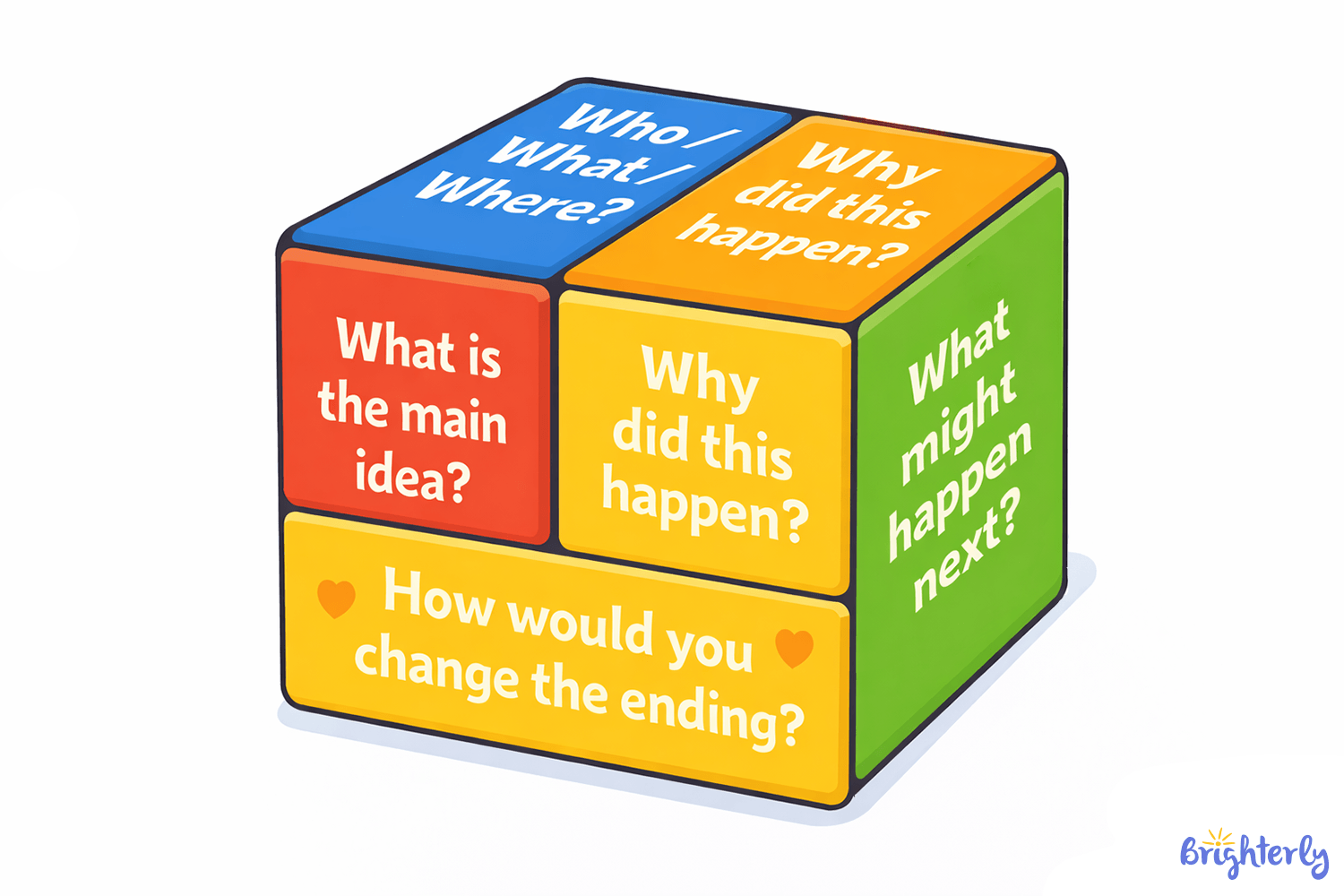
You can write full questions directly from the text, or just give them orally, so the cube works for different stories. Roll the cube, and the child answers whichever question appears. It seems a small thing, but that element of chance turns reading into quite a challenge.
Note: Fun games can boost reading motivation — check this article for some extra ideas on how you can do it at home.
#6 Prediction strategy
Age group: Grades K-8
A 2021 review in Frontiers in Psychology found that actively predicting and forming hypotheses while reading enhances comprehension. So, how can you use the strategy? Read a story with your child, pause at a key plot twist, and say something like this:
“Hold on, what do you think will happen to the main character now?” or “What might come next?” Then let them predict and explain their ideas. Let them also back up their ideas with clues from the text in a persuasive way.
These reading comprehension games for elementary and middle school spark creativity and sharpen logical thinking.
#7 Guess the title game
Age range: all grades
This one’s simple but super fun for a brain workout: a kid reads a few paragraphs and comes up with a spot-on title. You can even turn it into a challenge – whoever comes up with the best title wins.
|
For example, the text: Possible titles: – Maria Bakes a Birthday Cake – A Delicious Cake for Mom – Maria’s Baking Adventure |
Research from the Education Endowment Foundation shows that kids who can summarize a text have stronger reading comprehension. With these fun reading comprehension games, they will also develop sharper argumentative thinking.
Note: There are also other ways to teach summarizing — check this article for clues.
#8 Digital story sequencing games
Age range: Grades 1-6
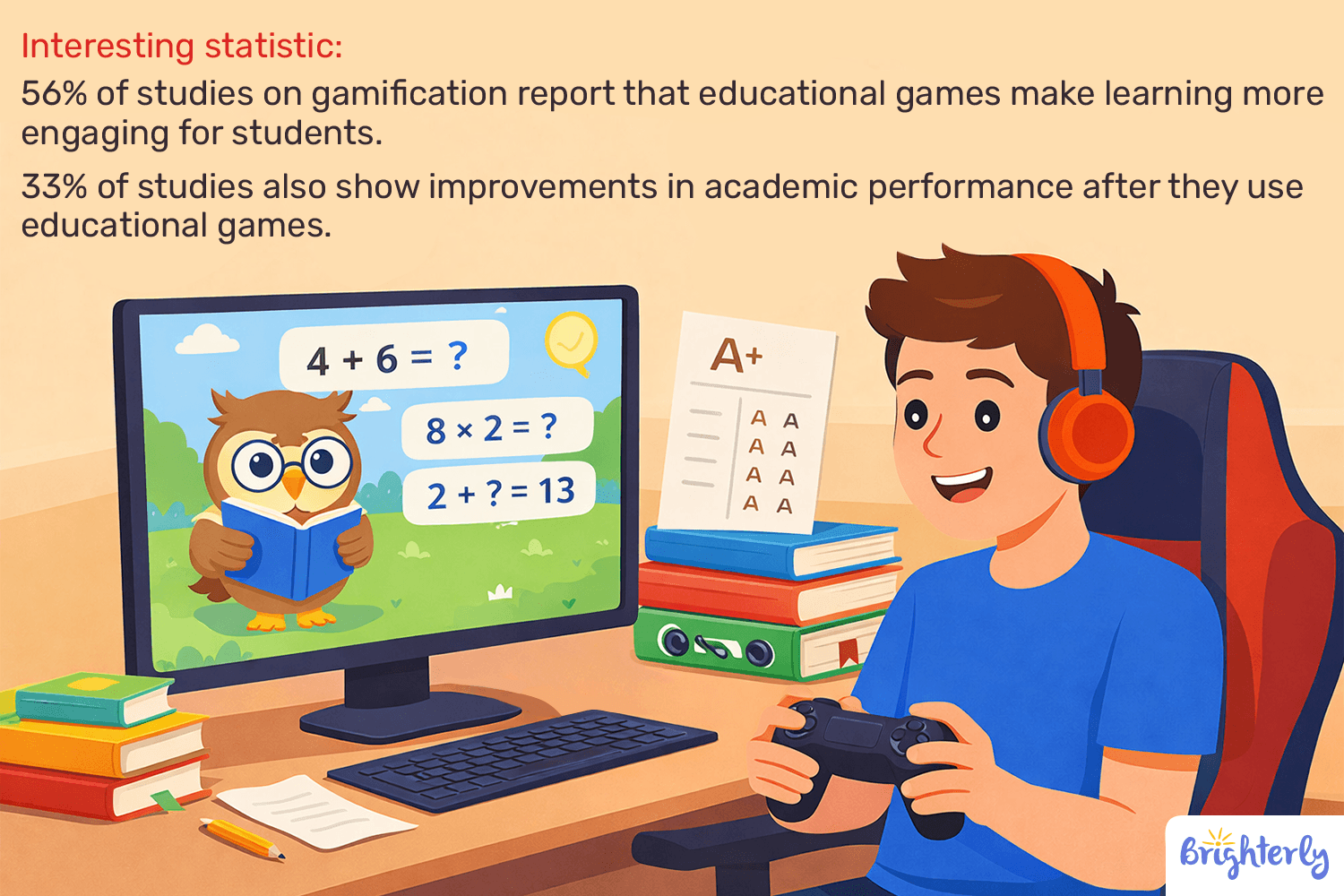
Let’s also talk about online reading comprehension games. Nowadays, kids spend a ton of time on their devices anyway, so why not turn some of that screen time into learning? One fun option you can find online is story sequencing games.
The idea is simple. A child reads a short passage first. After that, the game shows several cards with story events (4 to 6), but they appear in random order. The challenge is to place them in the correct sequence so the story makes sense again.
It may sound simple, but it trains several important skills simultaneously. Children revisit the text in their memory and rebuild the logical chain of events.
#9 Free online quiz-based reading comprehension games
Age range: everyone
Another simple activity worth trying is reading quizzes. After finishing a text, students answer a few quick questions – a good way to check if the key ideas and the author’s thesis stuck. You can turn it into a competition as well, which kids love.
|
A typical example of a quiz question on the topic “Endangered Animals”: 1. Which animal is NOT mentioned in the text? 2. True or False: The tiger population is increasing. 3. Match the animal with its habitat. |
Quizzes become much more exciting with a tiny reward. Small prizes will turn a simple reading check into a challenge.
#10 Interactive reading games with levels
Age group: all grades
Multi-level reading games include a mix of formats, like multiple-choice quizzes and matching challenges. Each level ramps up a little. The texts become longer, and the answer choices become trickier. Through this playful way, we would stretch a child’s reading skills.
A huge advantage of these online games is the instant feedback they provide. If a child slips up, the program gives hints, and the learner learns from mistakes.
#11 Character motivation game
Age group: Grades 5-12
Another reading game is a traditional calm discussion about the text and its characters. With this activity, students start to see the logic behind events and actions. It also helps to build empathy and critical thinking.
So, you can ask the child: Why did the main character act a certain way? Which goals did they have?
|
Example novel Questions for short speech: – Why did Harry act this way? (Possible motives: loyalty to friends, courage, responsibility.) – What might he feel inside at this moment? – How would you act in a similar situation? |
If you want to spark more interest in reading, try this small trick: ask the child to imagine themselves in the place of the main character while reading and tell what they would do in that situation.
#12 Choose-the-ending reading game
Age group: all grades
Choose-the-Ending works like this: you and your child read a book or short story together, then pause right before the final part. At that moment, you can ask the child to share their opinion about what will happen next.
The child shouldn’t just imagine an ending, but must give an argument for why they see the story finishing in this way. No wonder that after such activity, the kid will read the real ending with more curiosity.
|
Template of possible questions: – Why do you think this ending fits the story? – Which details in the text support your idea? – Why do some other endings not work? |
Conclusion: How to choose the right game
Although each activity includes the best-fitting age range, you can definitely use most games at any age. But remember:
- For early readers, you won’t be wrong having reading comprehension activities packed with visuals, easy questions, and hands-on interaction, such as drawing exercises or question cubes.
- Middle schoolers who start to develop their own life perception need games that explore cause and effect.
- Senior students benefit when you give them more voice: discussion, analysis, and simply room to share their ideas.
The key is regular practice. If it’s hard to keep up with all of this on your own, a trained mentor can always help your child along the way. Brighterly math and reading learning platform, offers games to help with reading comprehension, various reading lesson ideas, and a list of highly professional tutors.
Curious to see it in action? You can book free reading lesson and check it out firsthand.


The ACT and SAT are the two main college entrance exams in the US. Is the ACT easier than the SAT? Neither test is harder; the right choice depends on how a student thinks, manages time, and handles question formats. Picking the wrong exam can waste time and money, so it’s worth knowing the main […]
Mar 20, 2026
A neurodivergent child faces way more challenges when learning, compared to other kids. That’s why such kids need special attention and additional help to get through their studies. Some parents struggle to provide such support because they simply don’t know their child is neurodivergent. To make sure this doesn’t happen, read this guide on the […]

Mar 23, 2026
Math & reading from 1st to 9th grade
Looking for homework support for your child?

Choose kid's grade

Math & Reading for Grades 1–9
Build real confidence for your child with a Brighterly math or reading tutor.