Choral Reading: What It Is And How It Builds Reading Fluency
reviewed by Marvi M. Andres
Updated on April 10, 2026

How to help shy students who don’t like the spotlight on them practice reading fluency? One of the ways is to let them hide in the crowd and read out loud together with other students. But is choral reading effective? This piece is aimed at answering this question: when and how it can be used best, and when it’s better to avoid it.
Key points
- Choral reading helps shy students practice reading fluency without the pressure of reading alone.
- Group reading supports word recognition, pacing, fluency, and self-confidence in early grades.
- The best outcomes from choral reading can be expected when it’s combined with 1:1 guidance and feedback.
What Is Choral Reading?
Choral reading definition refers to the reading technique where a group of students at the same time reads a text aloud together. A teacher in class or a parent at home guides the pace so everyone follows the same words.
This technique is commonly used to support oral reading fluency, word recognition, intonation, and, vitally, self-confidence in reading. We can see this method sometimes used in elementary school reading instruction. However, the educators’ opinion about it varies.
Teachers and caregivers also use choral reading when working with struggling readers who learn better when they hear fluent reading modeled, and with kids with an auditory learning style.
Choral Reading Examples
Whole-Class Reading
A choral read usually follows a distinct rhythm so that students can read along together and they’re not falling behind.
With this approach, the teacher and all students read aloud together from the same text (as if they’re singing in a chorus). This is the most common form of group reading in elementary classrooms, where kids learn to track from left to right, sounding out words as they go.
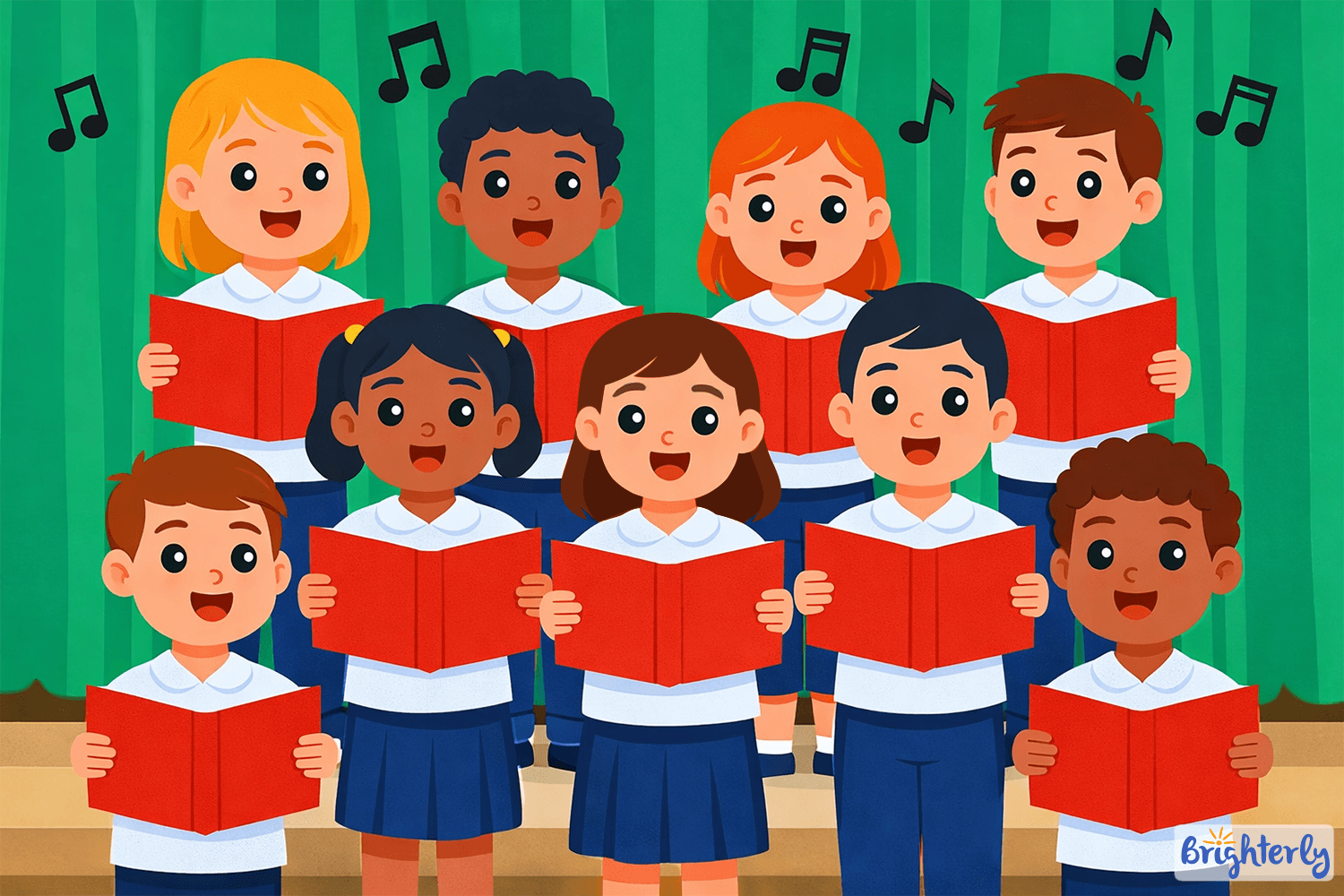
What do the first graders read? It may be, to name just a few:
- short rhythmic poems
- simple passages from a fairy tale
- predictable seasonal stories that the class has heard before.
The teacher must first show how to pronounce it, model the correct pacing and expression, and only then invite the little students to join in.
Small-Group Choral Reading
Choral reading activities can be highly adaptable and fun if you try them in a small group format. A reading teacher first divides students into small groups, and each of them reads a different part of the passage.
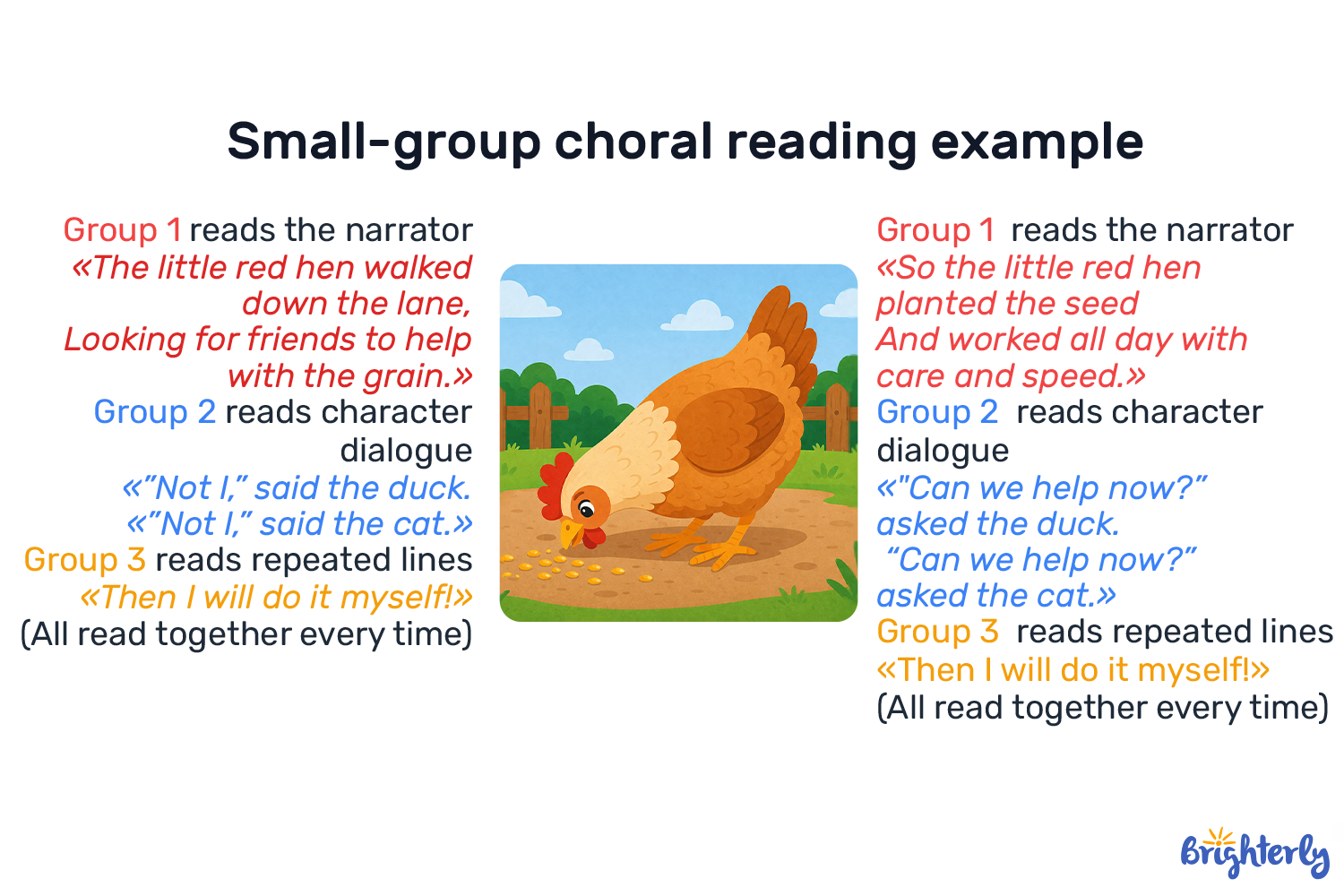
This format is really fun, it makes students reading interactive and keeps their attention focused during the whole time of practice. Parents also may try this choral reading example at home if they have more than one kid.
Note: If you’d like to teach your children to read with expression and not with a monotonous and robotic voice, check out this article.
Teacher–Student Choral Reading
When children are still developing word recognition, fluency, and pacing, some reading teachers use this method for repeated reading practice. The teacher reads along with the class and gives students a fluent model to follow and match the rhythm, pronunciation, and expression of an experienced reader. It may seem that students just follow the teacher’s voice, but shortly, you’ll be surprised that many begin to anticipate phrases, recognize patterns, and reach a higher reading level.
By the way, it’s very easy to define your child’s reading level if you don’t know it yet. Try Brighterly’s diagnostic reading test to see your kid’s strengths and weaknesses and to know what to work with. The free tests cover key grade-level skills and, importantly, they align with US state standards.
An experienced tutor can pick you up at any level and guide your child forward 

How well does your child read for their grade?
Choral Reading Activities
Choral reading meaning includes finding a natural rhythm and strengthening oral reading fluency. It seems that this widely used fluency reading strategy was developed specifically for shy students to make reading aloud much less intimidating for them. When the whole group reads together, one child does not feel as much stress as when put on the spot alone.
So, like many educators across the US, you can try several practical ways this group reading technique can be applied in classrooms or at home.
Repeated Poem Reading
Short, rhythmic poems are perfect for a choral read in elementary grades. The teacher reads the poem once, so children hear how it should sound, and then the kids read aloud together several times.
The sun is up,
The day is bright,
We grab our books,
And read with delight.
The first time, some students may stumble over words, bright or delight. But after reading the poem together a few times, most children begin to recognize the words quickly and keep a smoother pace.
Echo + Choral Reading
This activity mixes echo reading with a choral reading strategy, and works very well with beginning readers. What might it look like? Just like this: the reading teacher or a parent reads one sentence first: The puppy runs across the yard. Then the students repeat the sentence together. After a few sentences like this, the class reads the entire paragraph chorally.
No matter how small and simple this step may seem, hearing the sentence first is crucial for children to catch the right pronunciation and rhythm before they read along with everyone else.
Dialogue Reading
Stories with characters are an unbeatable choice for group reading because children love taking on roles! For example, a short story about a hungry bear might be divided like this:
- Group A (narrator): The bear walked through the forest looking for honey.
- Group B (bear): “I smell something sweet!” said the bear.
- Whole class: But where could the honey be?
Kids get excited about “their” part just in a heartbeat. Even children who are usually quiet join in more eagerly when they read with a group.
Rhythm Reading
Sometimes teachers add a bit of movement to keep the choral reading steady since young students naturally respond to rhythm. For example, a teacher might ask students to clap once at the end of each sentence, or maybe tap their desks when they see a period, as well as slow down their voices when the teacher raises a hand.
The little frog jumped into the pond. The children read the line together and clap once at the end. That small action reminds them where the sentence finishes and helps them notice natural pauses.
Note: If you want more information on how to improve your child’s reading skills, please read this article.
Benefits Of Choral Reading And Its Limitations
Choral reading can bring the following benefits:
- Choral reading makes reading practice more lively for young students, helping them build confidence, especially for shy and introverted kids.
- Another advantage is engagement. A group choral read is a shared activity, so students are usually more willing to participate. Children also hear the same words repeated several times, which can support vocabulary growth and word recognition.
But the method is not perfect, and many openly talk about its limitations:
- For example, a big challenge is pacing. In group reading, stronger readers may move faster, while children who struggle with decoding words fall behind. They seem to be participating, but in fact, they are skipping difficult words.
- The choral reading strategy has a good impact on oral reading fluency, but finds smaller gains in reading comprehension alone. When everyone is reading at the same time, it can be hard to tell whether each student understands the text. Some teachers say the activity may emphasize pronunciation and rhythm more than meaning.
Note: The National Reading Panel reported that guided repeated reading was helpful to improve speed, accuracy, and expression.
That is why parents choose to combine group techniques with individual instruction. Children progress faster when someone listens to them read, notices mistakes, and adjusts practice to their reading level. Brighterly’s reading program for kids focuses on 1:1 tutoring, so a child receives full attention.
Plus, individual feedback can make a noticeable difference for many struggling readers, because they get an opportunity to learn at a speed that fits their abilities.
Children need to understand what they read about, so Brighterly lessons help discover comprehension practice that one can’t find in group activities. It means that tutors always slow down when a student struggles with a word and explain the word’s meaning and the whole piece when needed.
Enjoy 1:1 tutoring and targeted comprehension practice with Brighterly 
Progress faster with an experienced tutor!
How Does Choral Reading Help Fluency?
Choral reading helps with fluency by having students read aloud together, so they can maintain a steady pace, hear correct pronunciation, and practice rhythm and expression. Repeated group reading helps children recognize words and reduces anxiety, so it’s easier for them to read more smoothly and with expression.
What is easy to follow and naturally encourages expressive reading? Of course, poems and short verses! Teachers widely use them to practice fluency reading in elementary and middle school. But poetry should not be the only type of text children practice with. They also need to learn how to read stories, science passages, and social studies texts fluently. These kinds of materials have different sentence structures and vocabulary, and learning to read them fluently is an important component of developing real reading skills.
What Age Is Appropriate For Choral Reading?
Typically, choral reading is used with younger learners who are still building reading fluency. 1st–3rd grade, when children are learning to read smoothly and feel more confident reading aloud in front of others, is the best age. Teachers sometimes use it with older students, too, but not as often.
Is choral reading effective in middle school? Probably not so much, as in these grades, most students focus on deeper reading comprehension and independent, thoughtful reading.
What Is The Difference Between Choral Reading And Echo Reading?
In choral reading, the whole class reads aloud together simultaneously, as if in a chorus. In echo reading, the teacher reads a sentence or short passage first, and students repeat it right after, and it resembles an echo. Children hear correct pronunciation and pacing before they read along themselves.
Both methods support reading fluency, but echo reading usually gives students a clearer model to follow.
Conclusion
Choral reading strategy and other group reading activities can make reading practice more engaging, build reading fluency, and confidence in kids. Nevertheless, children usually make the most progress when someone listens to them read, notices mistakes, and gives timely feedback. Individual guidance is key to developing not only fluency, but also reading comprehension.
FAQ
Does Choral Reading Improve Fluency?
Yes, it can improve reading fluency because students practice reading aloud together and hear a fluent model at the same time. However, the biggest gains usually happen when students also receive individual guidance and feedback.
Why Is Choral Reading Effective?
The choral reading strategy is effective because little students read along with classmates and follow the rhythm and pronunciation of fluent readers. Reading is less stressful and helps some children develop smoother oral reading fluency in the early grades.
What Is Another Name For Choral Reading?
Another way to define choral reading is unison reading, because all students read the same text together.


Power Homeschool has changed its monthly price recently, so it can be hard to figure out what you’re expected to pay for its curriculum in 2026. This guide covers every aspect of the current Power Homeschool cost, so that you can decide if it fits your family budget. Key Points Power Homeschool costs $99 per […]

Apr 10, 2026

AI in schools is no longer just an experiment – it’s part of everyday learning. Today, lots of students and teachers rely on AI tools to grade assignments, explain lessons, or complete tasks. These technologies speed up and customize learning, but they also bring new challenges. This article explores the risks of AI in classrooms. […]

Apr 10, 2026
Math & reading from 1st to 9th grade
Looking for homework support for your child?

Choose kid's grade

Math & Reading for Grades 1–9
Build real confidence for your child with a Brighterly math or reading tutor.