Creative Ways To Use AI In Education: 25 Ideas To Help Kids Learn Better
reviewed by Franz Jerby Delos Santos
Updated on April 8, 2026
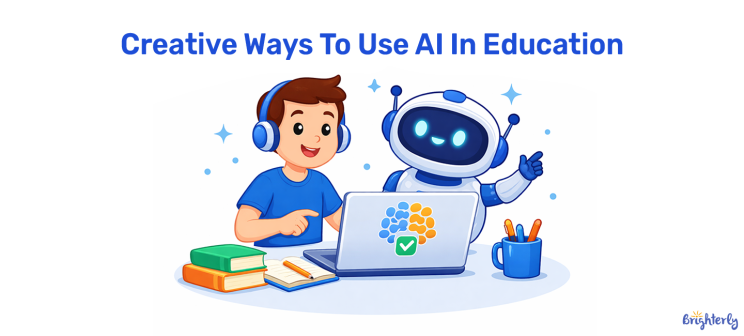
Looking for inspiration? There are hundreds of creative ways to use AI, from creative content creation to personalization. No doubt, it’s a real helping hand for teachers and parents. Read on to find some great AI ideas and prompts to apply, either at home or in a classroom.
Key ideas
- AI is a great instrument as it helps to personalize learning, boost engagement, and simplify topics for kids.
- Through stores, games, visuals, quizzes, and scenarios, AI allows supporting the development of reading, math, and language skills in a fun way.
- If used creatively and thoughtfully, AI allows parents and teachers to develop meaningful experiences and motivate kids.
How Can AI Help With Education?
- Creates summaries
- Back sight words practice
- Forms texts with mistakes
- Creates prompts for outdoor activities
- Turns math concepts into stories
- Teaches fractions with AI ideas
- Helps explore bias
- Supports explanation of metaphors
- Creates unique voices for characters
- Develops quizzes
- Generates story images
- Produces scenarios for role play
- Offers peer-like feedback
- Produces rhymes and songs
- Turns drawings into pictures
- Creates dialogues
- Brings absurd ideas into life
- Personalizes bedtime stories
- Teaches new vocabulary
- Turns “to-do lists” into “quests”
- Creates silent letter detective games
- Teaches critical thinking with fake news
- Asks for help with explanations
- Backs foreign language practice
- Helps learn history
#1. Use AI To Create Summaries
One of the effective AI applications in education is concerned with summaries. AI does a great job turning lessons into short recaps.
AI Use Example From Brighterly
At Brighterly, an online learning platform, we combine human interaction and AI touch. Our tutors provide interactive 1:1 reading and math lessons that answer specific learning needs.
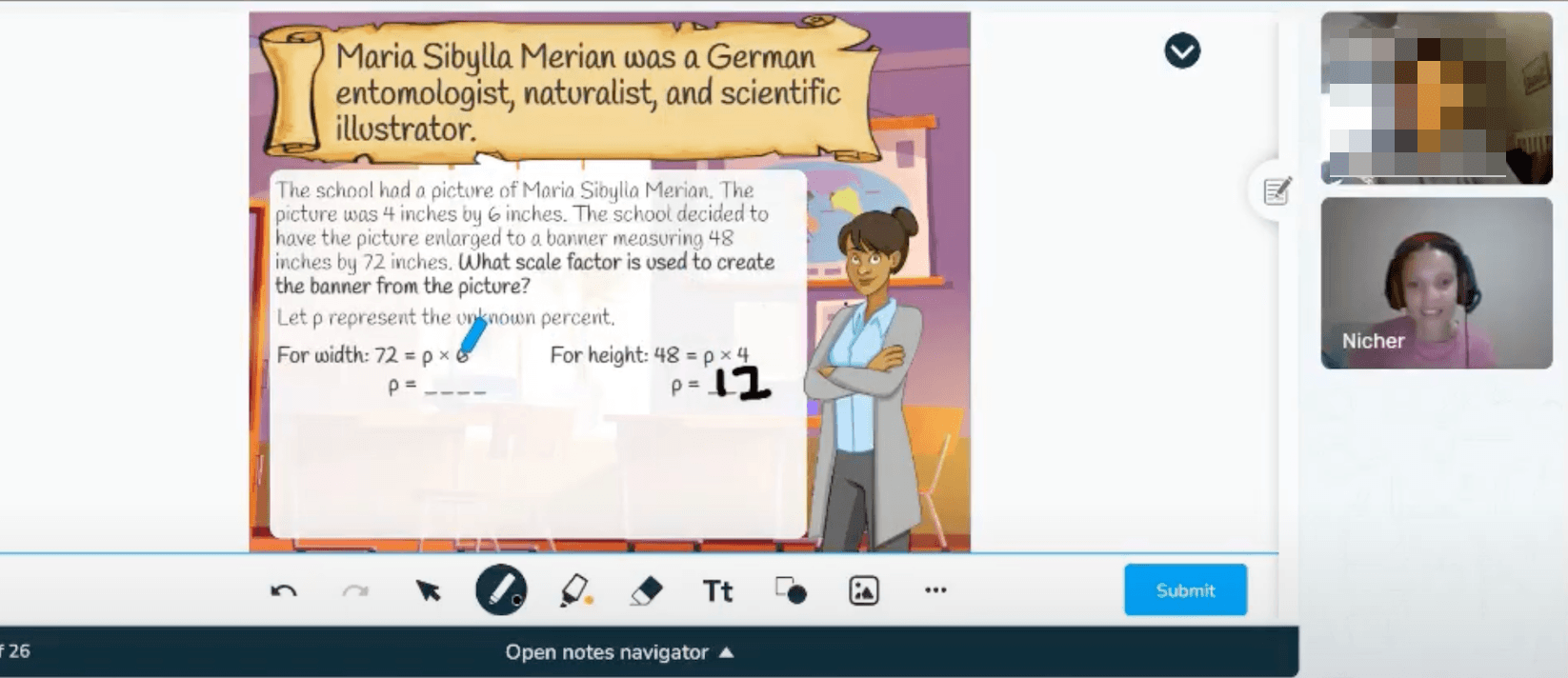
At the same time, after each lesson, we bring in AI-generated summaries for the kids. That way, it’s easier for them to repeat and retain information.
Good news: you can do the same at home. How?
- Prepare a lesson on a specific math concept, let’s say fractions.
- Set an AI recorder or note taker to record the lesson.
- Next, ask it to summarize the recording, using simple terms, mentioning age and topic.
Looking for a fun learning solution for your kid?
Brighterly offers personalized sessions that boost confidence
2. Develop Pieces For Sight Words Practice
On the other hand, you can easily use AI for students’ and kids’ decoding skills improvement.
- First, identify a list of sight words a kid struggles with. For instance, with words “they” or “was”.
- Next, give them to the AI agent to create a text that you would read to a kid.
- Determine their level and age, and make it easy enough to try.
3. Ask AI To Form Texts With Mistakes For Kids To Fix
Yeah, sometimes making mistakes deliberately is pretty hard, but not for an AI. So, generate texts with international grammar or spelling mistakes to make kids active editors. For example, you can:
- Make a list of your kids’ common mistakes.
- Then, ask an AI to create a 3-paragraph story with age-appropriate wording.
- Give it to a kid to correct mistakes.
4. Create Prompts During An Outdoor Activity
If you decide to go for a field trip, an AI can help you create prompts to learn new vocabulary. How? Make a quick photo of the surroundings and use contextual learning.
How to use an AI study assistant for such a scenario?
- First, upload a photo you took in a park.
- Next, ask AI to generate questions to practice narration with a kid.
- Encourage a kid to answer them naturally.
5. Turn Abstract Math Into Stories With AI
You teach new math concepts more easily with AI by generating relatable situations. How? By developing a scenario using math concepts. For practice, you can try recreating this live scenario:
- First, pick a math concept, let’s say addition.
- Take a kid’s favourite toy and describe it to AI.
- Ask to create a scenario or a story around shopping.
- Share it with a kid.
6. Learn Fractions While Eating
Did you know that you can use pizza slices to learn fractions? With AI, you can turn almost any food into a math game.
- Examine what you have in the kitchen. Apples, peas?
- Ask AI to turn them into food-based math activities.
- Ask a kid to divide them in half or quarters.
7. Learn Bias With AI
Here’s an example of using AI to learn bias, to question information rather than accept it blindly. To prepare such AI activities for students, you should:
- Take a story your kid knows and ask AI to make the character sound bad.
- Read it to a kid and expect them to comment.
- Encourage them to discuss whether a new version is unfair.
8. Use An AI Image Generator To Explain Metaphors
Kids may find it hard to get expressions and metaphors. There, generative AI tools, like DALL-E, can help with their visualization.
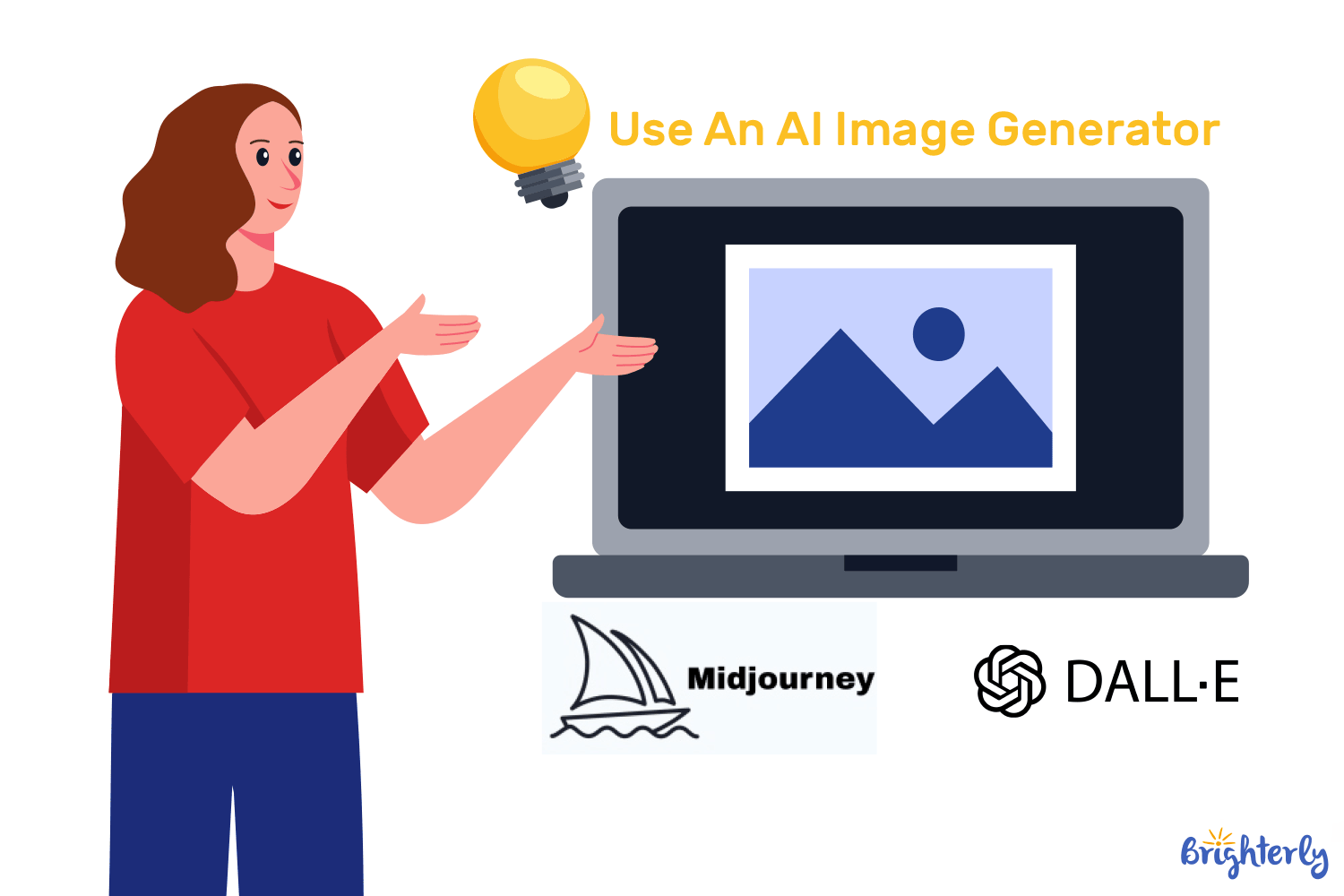
How to use a gen AI image for comprehension?
- Pick a metaphor, for instance, “bubbly personality”.
- Make AI generate a photo based on it.
- Show it to the kid and let them explain the connection.
9. Use Agents To Create A Unique Voice For Characters
With text-to-speech AI tools, you can now make any reading program more engaging. Leverage AI to narrate stories in different voices and help them model expressive reading.
The popular voice and AI in education examples are tools like ElevenLabs, which can be used to make book narration sound like a certain character. With such tools, you can modify the tone and depth of voice of the narrator. Some of the AI tools already have the pirate or witch-sounding voices.
10. Develop Quizzes Based On The Text
With AI, you can instantly transform any reading into a quiz by going through these simple steps:
- Read a passage with a kid.
- Share it with the AI agent and ask it to produce different types of questions.
- Encourage a kid to answer them.
11. Create Story Images For Lessons
AI-generated images can be great story starters. With prompts, it’s easier to begin writing or speaking tasks.
How To Use AI Learning Tools And Prompts For Stories?
- Try DALL-E.
- Ask an agent to “Develop a series of pictures for a story where.”
- Add setting and main character: “Animal-like robots develop their own religion.”
- Practice diverse vocabulary together.
“I have students use AI to turn their short stories into storyboards or comic strips.”


12. Generate Scenarios For Improvised Role Plays
To practice vocabulary, you can try generating role-play scenarios. Along the way, kids can practice decision-making and communication.
- Identify a topic or list of words you want to explore.
- Ask AI to set up a crazy scenario to practice it or explore.
- Encourage a kid to act out and decide what will be next.
13. Ask AI For Peer-Like Feedback
You can transform AI into a friendly peer reviewer. How? By teaching a kid to ask for constructive feedback. For this:
- Ask a kid to write a reflection essay.
- Next, agree with them to share it with AI and ask for friendly feedback.
- Wait for AI ot highlight unclear parts.
- Use to encourage reflection and check revision skills.
“Students will often learn more when they first explain their answer (i.e., provide a rationale for their answer).”

14. Make Rhymes And Songs Easily With AI
Making rhymes and songs can be quite a headache. Yet, with AI agents, you can create them almost without effort. The flow is also simple:
- Identify the specific words you want to practice.
- Ask artificial intelligence for a short rhyme with them.
- Try repeating a song with a kid.
15. Make Kids Drawing Alive
You can also leverage AI tools like DALL-E to motivate creativity during a read & draw activity or support storytelling.
How To Combine Sketches And AI For Studying?
- Read a passage about a character.
- Ask kids to draw a sketch.
- Upload it and ask AI to expand.
“A child might sketch a character, creature, or invention on paper, then use an AI tool like Adobe's Aqua app to transform that drawing into a simple 3D version they can place and explore in their room using augmented reality.”

16. Create Dialogues With Fictional Personas
Dialogues make kids engaged in reading. There, try using AI for personalized learning and generate dialogues with favourite characters:
- Create a fun dialogue between a [kid’s favourite superhero] and a character from [book 1], about [topic 1].
- Imagine a kid’s [favourite toy], [favourite animal], and [pet] are at the campfire, write a script for dialogue about [topic 2].
17. Bring Absurd Ideas Into Life
Kids love to brainstorm and imagine absurd things. How to use it? Turn their content ideas into images as a way of a break between sessions.
How To Use Gen AI In Education?
- Brainstorm wild ideas (like a flying dog that loves tomatoes)
- Write down what a kid says.
- Ask AI to generate an image or video from it.
18. Make Personalized Bedtime Stories
With AI powered tools, you can personalize bedtime stories. Succeeding in doing so can turn reading into a favourite habit. Here’s how to do it simply with your favorite AI:
- Ask the tool to connect each story to kids’ needs and preferences.
- Ask it to integrate a favorite toy.
- Change a POV, from yours to the favorite character, using AI.
Note: According to the 2025 EdWeek article on the use of AI in schools, 59% of teachers admit that AI enables more personalized lessons, while 55% underline that it increases time for interaction with students.
19. Teach New Vocabulary By Mixing Easy And Hard Words
If you read a lot to a kid, then AI can make it easier for you to teach new words. Scaffolded learning is the clue here, as it works by subtly adding new words into the stories.
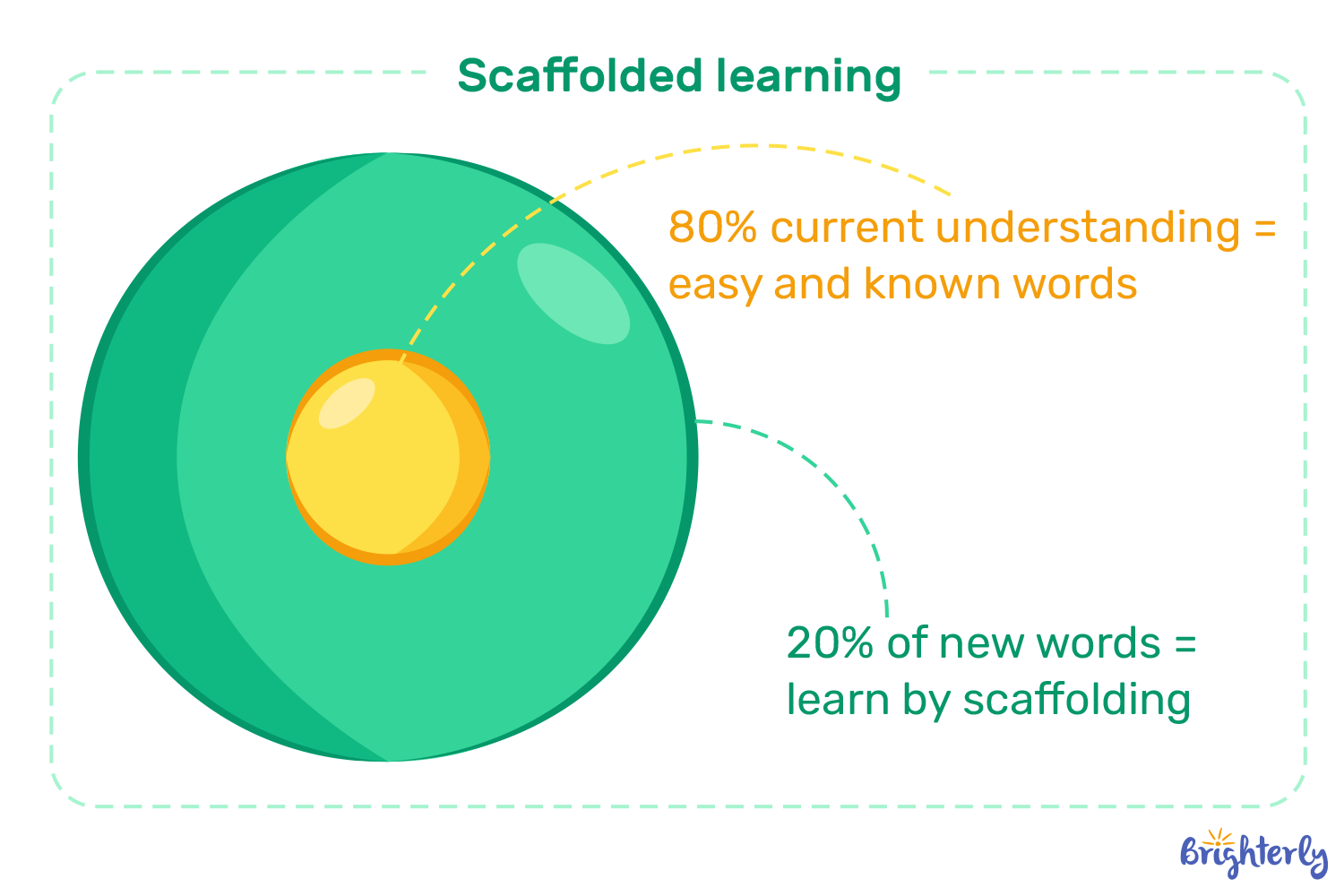
Learning Example To Try
- Pick a story kids enjoy.
- Give to an AI agent and ask it to blend in new words with context.
- Each time, add new words to try scaffolding.
20. Turn “To-Do Lists” Into “Learning Quests”
There are lots of personalization examples of AI in education. This one can help you make a structured routine a bit more fun:
- Share a math learning plan with AI.
- Ask to back it with fun learning quests, like explaining a new concept to a neighbor, based on kids’ preferences and interests.
- Reward a kid.
During 1:1 lessons, our tutors focus on interaction and fun to keep kids motivated.
Wonder how to engage a kid during math lessons?
21. Try AI To Play A Silent Letter Detective
Here’s a strategy to improve spelling via pattern recognition. Resort to AI to develop texts for a game around silent letters.
Ask the agent to write 2 paragraphs where every third sentence has a word with a silent letter. For instance, a “knight” or a “psychologist”. Ask a kid to “catch” the silent letters.
22. Generate Fake News And Mix It With Tabloid News
What about some tricky games for older students? Teach kids critical thinking and media literacy skills. Then, try this game:
- Make AI mix factual and fake news.
- First, ask to create 4 real and 1 fake headlines/stories in tabloid style.
- Mix them and make a child guess a fake one.
“A great activity for students to push their learning is to ask AI for other information about a topic and then vet the response.”

23. Ask AI To Give You Explanations
It may be hard for a parent to find words to explain some concepts. That’s when AI can be of real help. Here’s how you can use AI for homework help.
- If you get stuck, ask AI to explain a concept to you.
- Then, before you start helping a kid, try the “Explain like I’m Five” prompt.
- Now, you’re prepared to help them with homework.
24. Use AI To Practice A Foreign Language
If your kids learns a different language, try learning together. Yet, for it, you may need a certain situation. Let the AI write a role for you and prepare questions as if you are:
- A train station worker who needs help.
- Shop assistant selling a souvenir.
- A new exchange student who arrived in a city.
25. Let A Kid Use AI To Learn History
Lastly, teach a kid how to use AI in education, for instance, in history, to their benefit.
How Can AI Help With Education?
- Tell AI to act as a specific person. Who? Let’s say, Neil Armstrong or Marie Curie.
- Next, let the kids interview figures about their work and challenges.
“Students can focus on pushing their own thinking by using AI.”

Conclusion
AI uses in education have no limits indeed, as much as they depend on your imagination and goal. Whether it’s making learning easier or more engaging, AI agents offer quite a suite of tools. Yet, the key is balance. So, ensure that you use it to guide and support learning, not replace it with games and entertainment.
Looking for a balanced learning solution? Book free session to try Brighterly, offering personalized lessons and customized plans.
FAQ
How Can AI Help With Homework?
Students and teachers can use AI for school work and homework by seeking personalized feedback, explaining concepts, and showing solutions to the problems. Besides, it can help with schedules, summarizing, and plans for learning.
What Are Some Examples Of AI In Education?
The vivid AI examples relate to AI-powered platforms for instruction or feedback, AI chatbots and assistants, personalized learning platforms, and AI coaches. Besides, AI agents are also examples of offering smart content creation.
How To Teach Students To Use AI Responsibly?
To teach students to use AI responsibly, you should show them AI limitations and why they can be harmful. They refer to bias in responses, false information, and a lack of context. Also, it’s important to teach kids how to prevent AI thinking.
What Can AI Do Creatively In Education?
AI can be an assistant that helps to brainstorm ideas, produce audio, photo, and video AI projects, and explore topics from different angles. It allows turning ideas into creative projects and developing kids’ imagination.


When a child struggles to read, parents start searching for additional apps, programs, and learning platforms to help. They also look through tons of user reviews to understand what the experience is like. This guide is to help you sort through the noise in Reading.com reviews and analyze the platform to provide an unbiased overview […]

Apr 07, 2026
Looking for a BrightCHAMPS review that will answer all your questions? This article contains relevant, up-to-date parents’ feedback, key features, and important details to help you decide if BrightCHAMPS is the right platform for you. Key Points Range of features: 9/10. BrightCHAMP provides students with a good selection of features for STEM subjects, and the […]

Apr 08, 2026
Math & reading from 1st to 9th grade
Looking for homework support for your child?

Choose kid's grade

Math & Reading for Grades 1–9
Build real confidence for your child with a Brighterly math or reading tutor.