Diction Worksheets
Updated on August 31, 2026
Diction refers to an author’s deliberate choice of words to convey specific tones, moods, and deeper thematic meanings. Mastering word choice allows high school students to analyze complex literary texts and refine their own analytical writing skills. Telling formal diction from colloquial phrasing—and explaining why an author chose one over the other—gets easier when a literature tutor reads passages aloud and asks what shifts in tone.
Diction Worksheet 11th Grade PDFs: Examples
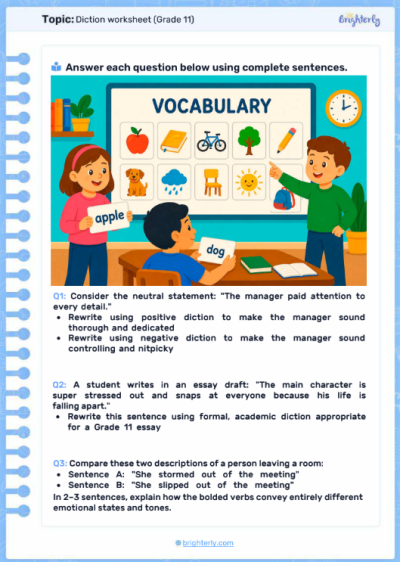
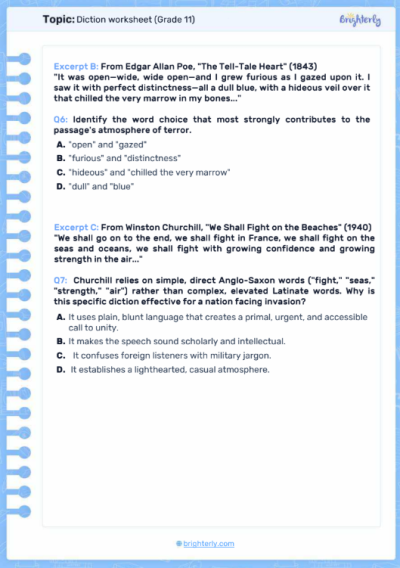
Download Diction Worksheet 11th Grade PDFs
Access our comprehensive collection of printable PDF exercises designed to help students analyze tone, connotation, and stylistic choices in sophisticated prose and poetry.
More tone and figurative language worksheets
Continue analyzing how word choice shapes meaning with worksheets on tone, mood, and figurative language.
- tone and mood worksheet
- tone worksheets
- figurative language worksheets
- poetic devices worksheet
- high school reading comprehension


Help your child reach their full potential!
Answer a few quick questions about your child’s learning, and we’ll recommend next steps.
Benefits of Diction Worksheet 11th Grade
Utilizing targeted diction worksheets provides high school students with essential practice in evaluating how specific word choices shape a text’s overall atmosphere and authorial perspective. By examining denotation versus connotation, students learn to distinguish subtle nuances in language, which elevates both their critical reading comprehension and rhetorical analysis capabilities.
Engaging with structured exercises prompts learners to look beyond surface-level plot details and investigate how formal, informal, pedantic, or abstract diction impacts tone. This rigorous analytical framework prepares students for college-level writing standards, standardized language exams, and advanced literary coursework.
Applying these observations to their own essays encourages students to replace vague vocabulary with precise, active phrasing and tailor their tone appropriately for different academic audiences — transforming passive readers into active analytical thinkers.


Math & reading from 1st to 12th grade
Looking for homework support for your child?

Choose kid's grade

Math & Reading for Grades 1–12
Build real confidence for your child with a Brighterly math or reading tutor.