ADHD and Exercise: How Physical Activity Helps Kids Focus and Learn
reviewed by Franz Jerby Delos Santos
Updated on April 5, 2026
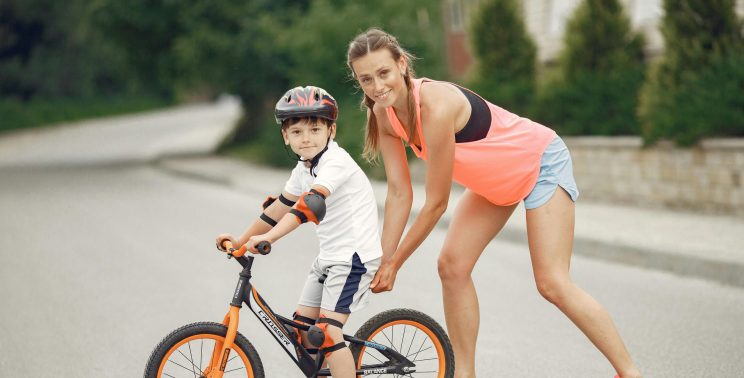
Daily movement, even in short bursts, is healthy for every child, but it’s vital for children with ADHD. Your kid can’t sit still, stay focused, and can’t make them complete homework tasks? Is their behavior impulsive and their frustration tolerance low? Let’s explore how ADHD and exercise are connected, and then choose the best exercises to help you solve these complex problems!
Key Recommendations
- Practice daily movement in short bursts
- Mix structured and free-play activities
- Choose exercises your child enjoys
- Avoid team sports
Does Exercise Help ADHD?
Yes, Regular exercise can help adhd children because physical activity directly affects how the human brain functions (its neuroplasticity). A healthier, active lifestyle improves attention focus, as well as impulse control and overall mental health condition. Even short sports sessions can become a part of behavioural therapy, so kids are able to better manage energy and regulate emotions.
However, here, we need to warn you about the possible dangers. Some kinds of sports may not be the right fit for an ADHD child. Surprisingly, some formats can even increase frustration, distraction, or unsafe behavior. So, read further and select the right exercise for your little one.
ADHD And Exercise: Key Benefits
- Short-term boost in attention (but it depends on the type of sports). Moderate aerobic exercise can improve attention and executive function for up to an hour after activity. Note that unstructured or overly complex, as well as team sports, may do very little to create this effect.
- Better cognitive function. Planned ADHD exercises with clear rules or repetition are excellent to improve the processes of task beginning and completion. However, if it’s a random or chaotic activity, it has no effect at all.
- Improved impulse control through rhythm and repetition. Exercises that include timing, patterns, or sequences train the ADHD brain to pause and respond thoughtfully, which is key for controlling impulsive behaviour.
- More stable emotional regulation (not instantly). Regular exercise reduce emotional swings. But this comes from consistency; one jumping practice a week won’t help.
- Support for working memory in learning tasks. Kids may better retain instructions after the right kind of movement. Here, we mean activities that combine physical and cognitive effort, such as martial arts drills or “listen and act” tasks where a child has to remember steps while moving.
- Healthier dopamine balance (from certain activities). The ADHD brain responds best to engaging, slightly challenging movement. Boring or repetitive drills without engagement can backfire.
- Better motor coordination and body awareness. Poor motor skills are among the common ADHD symptoms. That’s why targeted physical activity ( balance, rhythm, coordination workouts) are useful to build this foundation.
- Energy regulation. Exercises for ADHD kids should not exhaust the child. Vice versa, too much or poorly chosen activity can overstimulate. Team sports, for instance, with complex rules or low engagement, are the wrong choice. So, read further to learn how to select the most appropriate type of sports for your special child.
Note: Regular movement does help, and scientific evidence supports this statement. Nevertheless, it rarely solves all problems connected with attention deficit hyperactivity disorder. In many cases, children with ADHD symptoms still need structured academic support to stay on tracks, and Brighterly educational platform, with its short and humanly personalized lessons designed around a child’s attention span and learning pace, can be really useful.
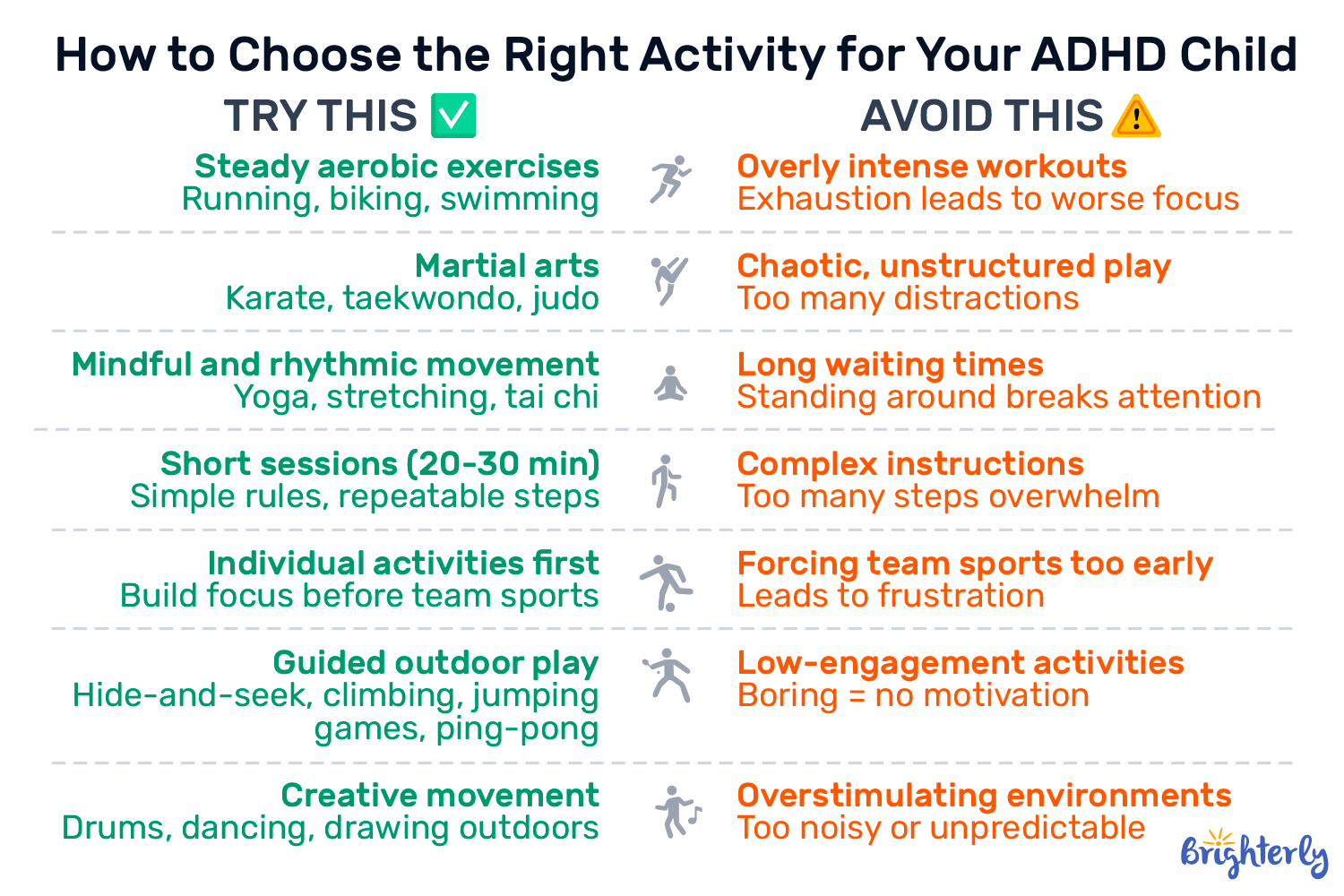
The way an ADHD child learns, as well as sports, does not work the same way, and some activities do improve attention and executive function. But others may lead to nothing but distraction, so kids with ADHD intuitively avoid them. This also affects adhd and exercise motivation, as the wrong choice increases the risk of resistance. Now, we have a big task: to choose the best exercises that would match your child’s pace and energy level.
Best Exercises For Children With ADHD
- Aerobic exercise
- Martial arts
- Yoga and the like
- Team sports vs. individual activities
- Outdor play and movement-based games
- Music and arts
Aerobic Exercise (Running, Biking, Swimming)
You won’t be mistaken if you include aerobic activities in the list of the best exercise for ADHD, and for a reason. Running, jumping, cycling, swimming increase blood flow to the brain, and dopamine levels jump high. Even 20 minutes of morning or evening cardio exercise can improve attention span and reduce impulsive behavior (for a short period of time). However, by no means should you exhaust your child; ensure steady, moderate-intensity exercise and avoid exhausting workouts.
Martial Arts And Structured Sports
Martial arts stand out because they combine movement with discipline. Kids follow rules, repeat patterns, and learn control.
Such options as karate, taekwondo, judo, and tai chi (for calmer, slower-paced practice) are excellent. Tai chi may suit children who get overstimulated easily, while more active forms fit kids who need stronger energy release.
This type is the most recommended exercise for ADHD children and adults as it improves impulse control, motor skills, and eases emotional strain.
Yoga And Mindfulness-Based Movement
Slower activities can be healing to some extent. Yoga, stretching, breathing exercises (sort of meditation), tai chi strengthen the mind-body connection and emotional balance, and alleviate stress. These are not always the first choice, but you can consider them as part of a balanced exercise routine.
Team Sports vs Individual Activities
Team sports develop social skills and cooperation, that’s right. But a team player should follow complex rules, and team activities come with lots of distractions (the need to strategize, anticipate moves and cooperate with other players), and all these things are hard for kids with ADHD to cope with. On the other hand, individual activities (swimming, biking, rock climbing in an indoor gym, or maybe exotic fencing or archery to choose from) are more effective and allow for avoiding troubled interactions with peers. Of course, you can try team sports later, preferably with the support of a coach.
Individual structured lessons with a patient tutor make learning easier for kids with ADHD. 

Explore a better approach
Outdoor Play And Movement-Based Games
Simple outdoor play is very much underestimated. Look into having your child try out hide-and-seek, jumping games, also ping-pong, because they all support physical activity, coordination, and energy regulation, and overall mental health. Nevertheless, these kind of play still needs light guidance with small goals, simple rules, or time limits.
Playing Musical Instruments And Arts
Creative activities also count as ADHD exercises when they involve movement and rhythm. Playing drums, dancing, or drawing outdoors are all wonderful activities to support attention, working memory, emotional regulation, and of course, if enjoyable, these activities increase dopamine levels. They engage the ADHD brain and can improve focus and motor skills after long-term training.
How To Encourage Exercise In Kids With ADHD? Top Tips
Frankly, getting a child with ADHD to move regularly and develop an exercise routine is a difficult task. Inattention, impulsive behavior, low frustration tolerance and many more sometimes unbearable symptoms stand in the way and it seems you can do nothing about it. About 1 in 9 children in the US are diagnosed with ADHD, and many adults live with it too.
Meanwhile, movement can become part of your child’s routine without daily battles, and here’s how:
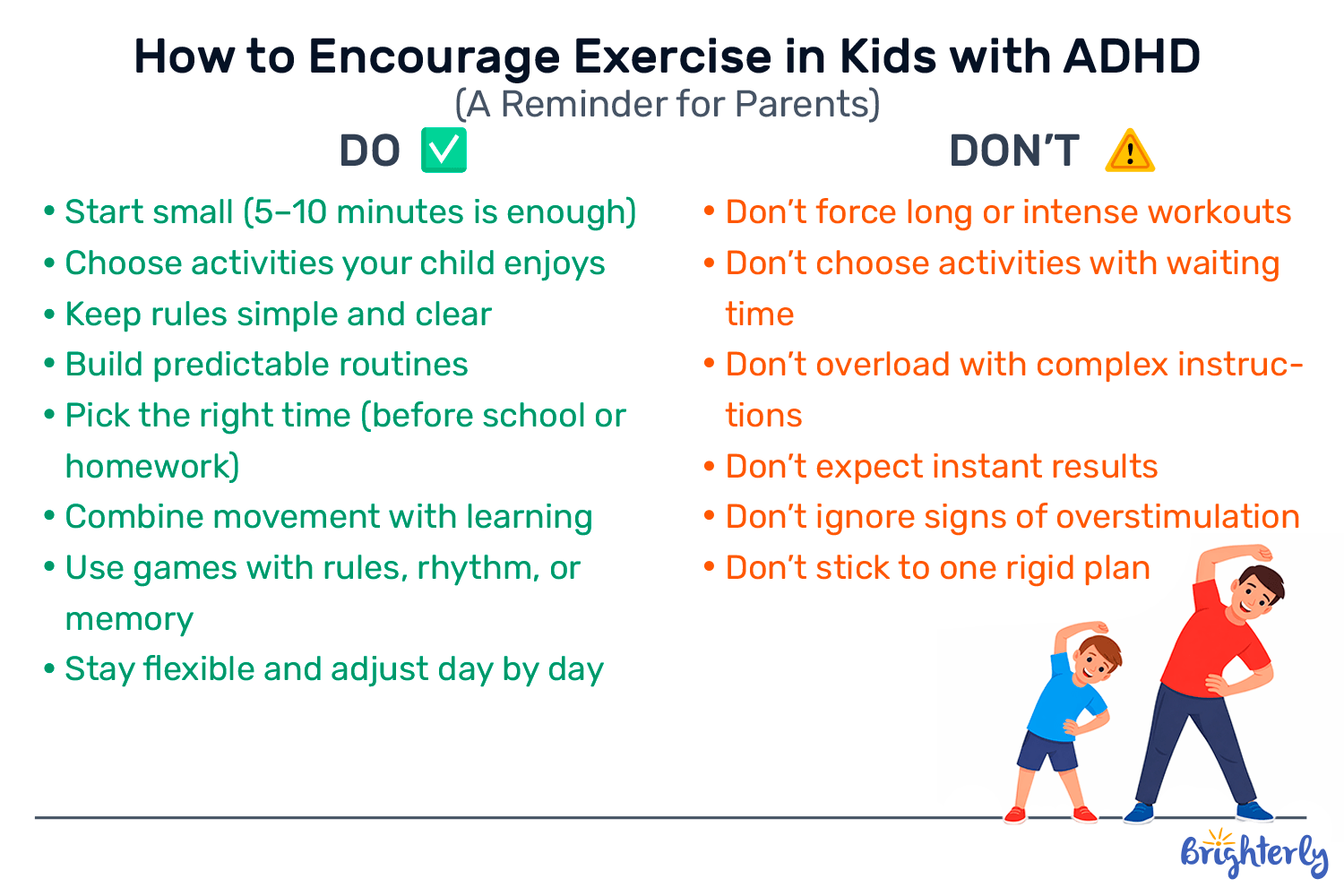
- Start small (really small). If your child resists movement, don’t push a full routine. Even 5–10 minutes of ADHD exercise is a good start. Consistency matters more than duration.
- Tie the movement to something they already like. Running laps may fail. But chasing a ball, biking to a favorite place, or playing a game can work. Motivation grows when the activity feels rewarding.
- Less pressure, more planning. Kids with ADHD respond better to clear, simple rules. A short plan like “10 minutes of jumping + 10 minutes of biking” works better than a vague “go play outside.”
- Pick the right time of day. Some ADHD kids need movement before school, others — before homework, in the evening. You’re lucky if you manage to find that window and improve your attention span during learning tasks.
- Combine movement with learning (when possible). After physical activity, kids are more ready to focus. This is a good moment for short academic tasks (reading, math, or writing).
You will notice better results when you combine sports with Brighterly learning sessions, such as online writing classes which are designed for shorter attention spans. - Avoid activities with too much waiting time. Long pauses (e.g., standing in line during team sports) may lead to distraction. Therefore, give preference to exercise with continuous movement instead.
- Watch for overstimulation. Too intense or chaotic activity does not calm the brain, but makes symptoms worse. If your child becomes more hyper after, adjust the type of exercise or its duration.
- Keep instructions simple and repeatable. Complex directions overwhelm the working memory of kids with attention challenges and stimulate impatience. This connects with how ADHD affects reading and writing skills: working memory and attention play a huge role in both.
- Be flexible. ADHD is not static. Energy, mood, and attention change daily and what works today may not work tomorrow. Try to be adaptable and avoid forcing a fixed plan.
How To Build An ADHD Exercise Routine
Long plans rarely work, but you can expect good results from short, repeatable blocks when building a routine for a child with ADHD.
Start with regular exercise at the same time each day. This reduces resistance.
Keep sessions short (15–30 minutes) and mix different types of physical activity, for example, one day aerobic exercise, another day something like yoga or guided play.
A simple exercise routine might look like this:
- 10–15 minutes of cardio exercise (running, biking)
- 10 minutes of structured movement (drills, balance, coordination)
- 5 minutes of calming activity (stretching or breathing)
You’ll see that some days it will work, others won’t. Also, link movement to daily tasks. For example, short ADHD exercises before homework can improve attention and make it easier to start.
Should People With ADHD Exercise Every Day?
In most cases — yes, but not in an intense or exhausting way. The activity should be moderate and varied. It doesn’t have to be a full workout! A walk in the park, short hikes, stretching, or light play also count. All these help regulate energy, support attention, and keep the always busy ADHD brain in balance throughout the day.
Conclusion
Is exercise good for ADHD? There’s science-backed evidence of that, but positive results come from the right kind of movement. Short and regular, preferably individual, activities can dramatically improve attention, impulse control, and overall mental health in the long run. However, some kids still need academic support, and if your children need it, Brighterly’s experienced tutors can be a helpful next step in this case. Read tutor reviews now and book a free lesson to try!
FAQ
What Is The Best Exercise Schedule For ADHD?
Short, repeated sessions are the best. 15–30 minutes daily, ideally at the same time each day. Individual sports are better for ADHD kids, than team activities.
What Type Of Exercise Is Best For ADHD?
A mix works best: aerobic exercise (running, biking, indoor rock climbing, martial arts, and calming movement (yoga, tai chi). The key is moderate intensity and clear structure.
Does ADHD Make It Hard To Workout?
Yes, it can. Inattention, impulsivity, and low frustration tolerance may get in the way. That’s why engaging activities your child really enjoys and short training sessions are more effective than strict or long and exhausting workouts.



If you’ve started looking for a private educational center to support your child’s learning in math and reading, you’ve probably come across JEI Learning Center and Kumon. Although they might seem quite similar, there are also important differences to consider. This is a complete JEI Learning vs Kumon guide to help parents choose the right […]

Apr 03, 2026
Math & reading from 1st to 9th grade
Looking for homework support for your child?

Choose kid's grade

Math & Reading for Grades 1–9
Build real confidence for your child with a Brighterly math or reading tutor.