ADHD Statistics in 2026: Global and US Trends Among Children
reviewed by Marvi M. Andres
Updated on August 14, 2026
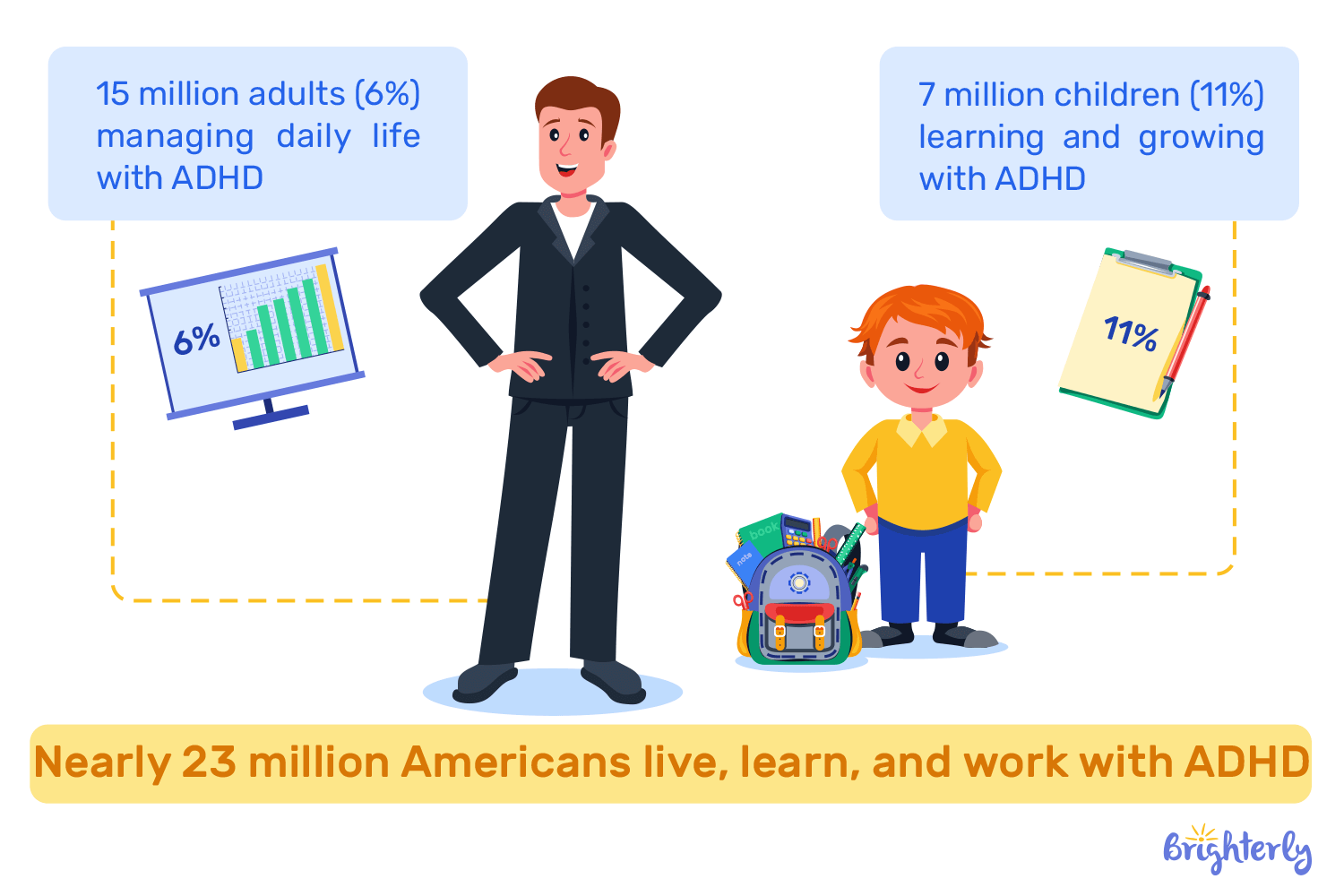
Key points Did you know that Attention Deficit Hyperactivity Disorder (ADHD) is one of the most common disorders among children and adolescents? Over the past four years, the rate among US children increased from 8% to 12%, meaning one in nine is diagnosed with ADHD. Among adults, one in seventeen lives with ADHD. This article presents the ADHD statistics 2023-2026 and explains what these numbers may reveal. The percent of the US population with an ADHD diagnosis is 6%, with roughly 15 million adults and 7 million children affected (according to the American Psychiatric Association). ADHD diagnosis statistics for kids in the US are more than 11% (as of the 2024 CDC report). On average, boys receive the diagnosis nearly twice as often, as their hyperactive and impulsive symptoms are much more noticeable, while in girls, ADHD often shows up as inattentiveness and is easier to overlook. “Girls with ADHD often present differently from boys, which can affect how easily they are identified.” Children of European and African American descent are diagnosed with ADHD nearly twice as often as their Asian peers, according to 2021 research published in the JAMA Network. The reasons are not fully understood, though cultural factors and differences in how symptoms are reported by parents are likely to play a role. ADHD in children statistics continue to rise each year, likely because nowadays parents and educators are more aware and notice symptoms earlier (as per a 2024 report published in People).
Help Your Child Reach Their Full Potential!
Start with this quiz to get a personalized learning path. As the 2024 CDC report revealed, Black and White children are diagnosed with ADHD more frequently than other races and ethnicities in the US (12% each). Asian kids are the least diagnosed (4%). Racial/Ethnic Group of Kids ADHD Rate White ~12% Black ~12% American Indian or Alaska Native ~10% Hispanic ~10% Native Hawaiian or Pacific Islander ~6% Asian ~4% Source: US Centers for Disease Control and Prevention, 2024 Still, parents should consider factors of underdiagnosis while evaluating ADHD stats by race and ethnicity. Researchers point to inequality in healthcare access, language barrier, differences in symptoms for boys and girls, clinical bias, and pandemic learning loss consequences as possible reasons why these statistics can be revised. Teen ADHD statistics show that almost 4 million adolescents aged 12-17 in the US have ADHD (2024 Journal of Clinical Child & Adolescent Psychology). The number is roughly 6 times higher compared to younger children, making Gen Z the most ADHD diagnosed group by May 2026. Age group ADHD rate 3-5 years old 2.4% (274,000 children) 6-11 years old 11.5% (2.8 million) 12-17 years old 15.5% (4.0 million) Source: Journal of Clinical Child & Adolescent Psychology, 2024 Greater awareness among parents and teachers on the percentage of Gen Z who have ADHD, along with an empathetic and transparent attitude towards the disease, contributes to the greater number of ADHD diagnoses among teens. Also, the statistics about social media can contribute to a shorter attention span. Still, the great portion of ADHD remains untreated, especially when masking mechanisms or co-occurring conditions are in place. Among all the kids aged 3-17 in the NSCH study, the majority (60%) of cases are already moderate or severe ADHD, and 70% had at least one co-occurring condition linked to the health state. Given the current ADHD statistics by ethnicity, age, and gender, teens require proper attention and support for recognizing symptoms and dealing with them properly, especially young girls from non-English speaking communities. Explore Brighterly Learning Experience Learn exactly how Brighterly helps students thrive through expert sessions, online tools, and proven feedback from thousands of satisfied parents ADHD (Attention Deficit Hyperactivity Disorder) is a behavioral neurodevelopmental disorder that affects attention, focus, impulsivity, and organization. Having trouble concentrating isn’t a sign of laziness – it means that the brain works a little differently. Millions of adults worldwide struggle with forgetfulness, distractibility, and other inattentive symptoms, which can worsen mental health and lead to stress, low self-esteem, or frustration. Now imagine if these adults were children today – everything could be different! Modern educational programs and platforms provide structured treatment and thoughtful care, helping children manage difficulties early so they can confidently learn, grow, and thrive from preschool through school and into adult life. Note: If you’re looking for a platform that attentively supports your child’s learning, Brighterly is a solution designed to nurture focus, confidence, and long-term success with a reading program and math program. Standard classrooms are not usually designed to adapt to the pace and needs of kids with learning differences. That’s why for children with ADHD, one-on-one support can make a big difference. Platforms like the Brighterly reading and math tutoring platform offer exactly this service, where certified and caring tutors support and gently guide your kid during interactive lessons under a personalized learning plan. Note: Brighterly curriculum is designed for grades K-12 and is aligned with US state standards. An ADHD math tutor will guide your kid and help them improve their academic performance.
ADHD Support That Works for Your Kid
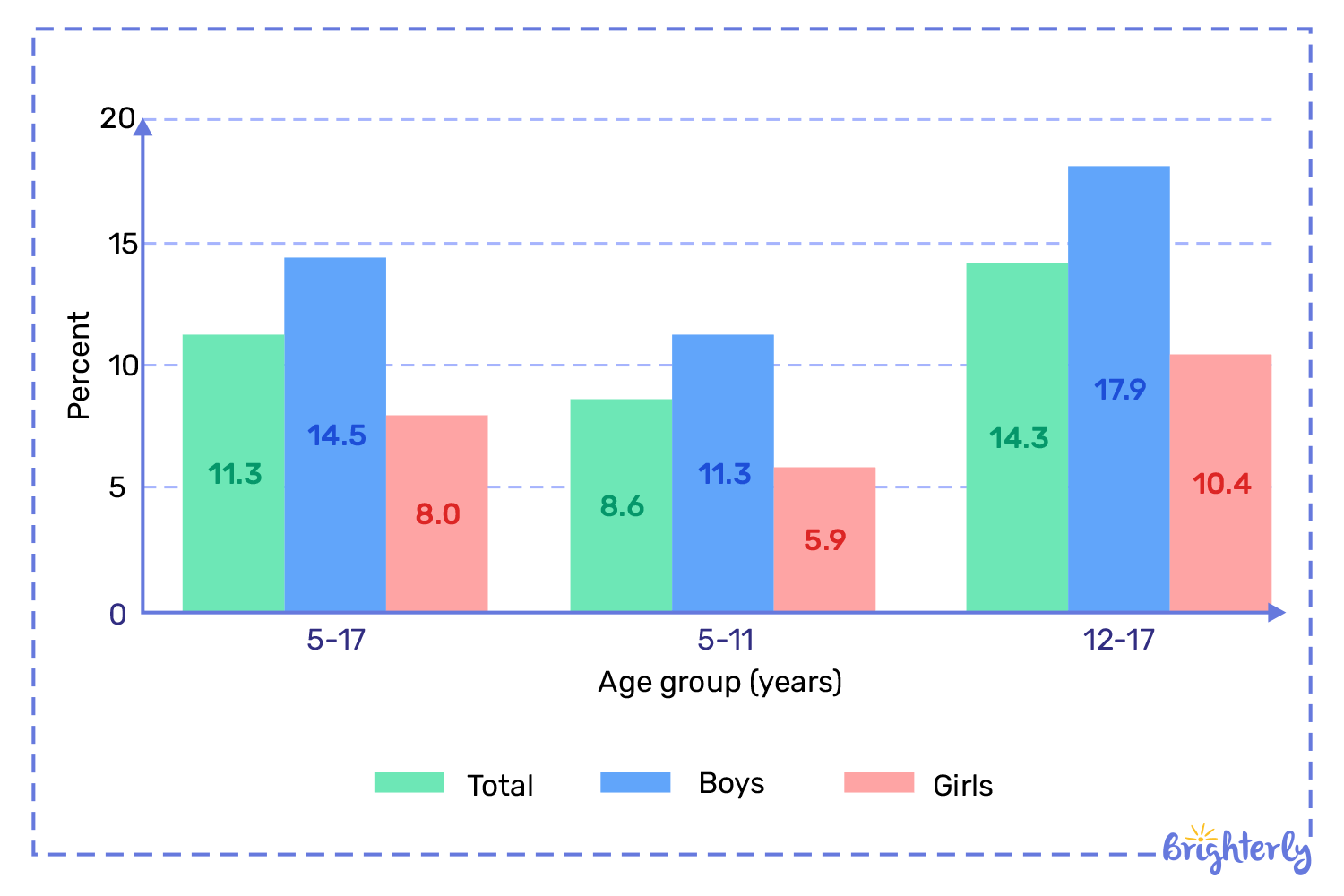
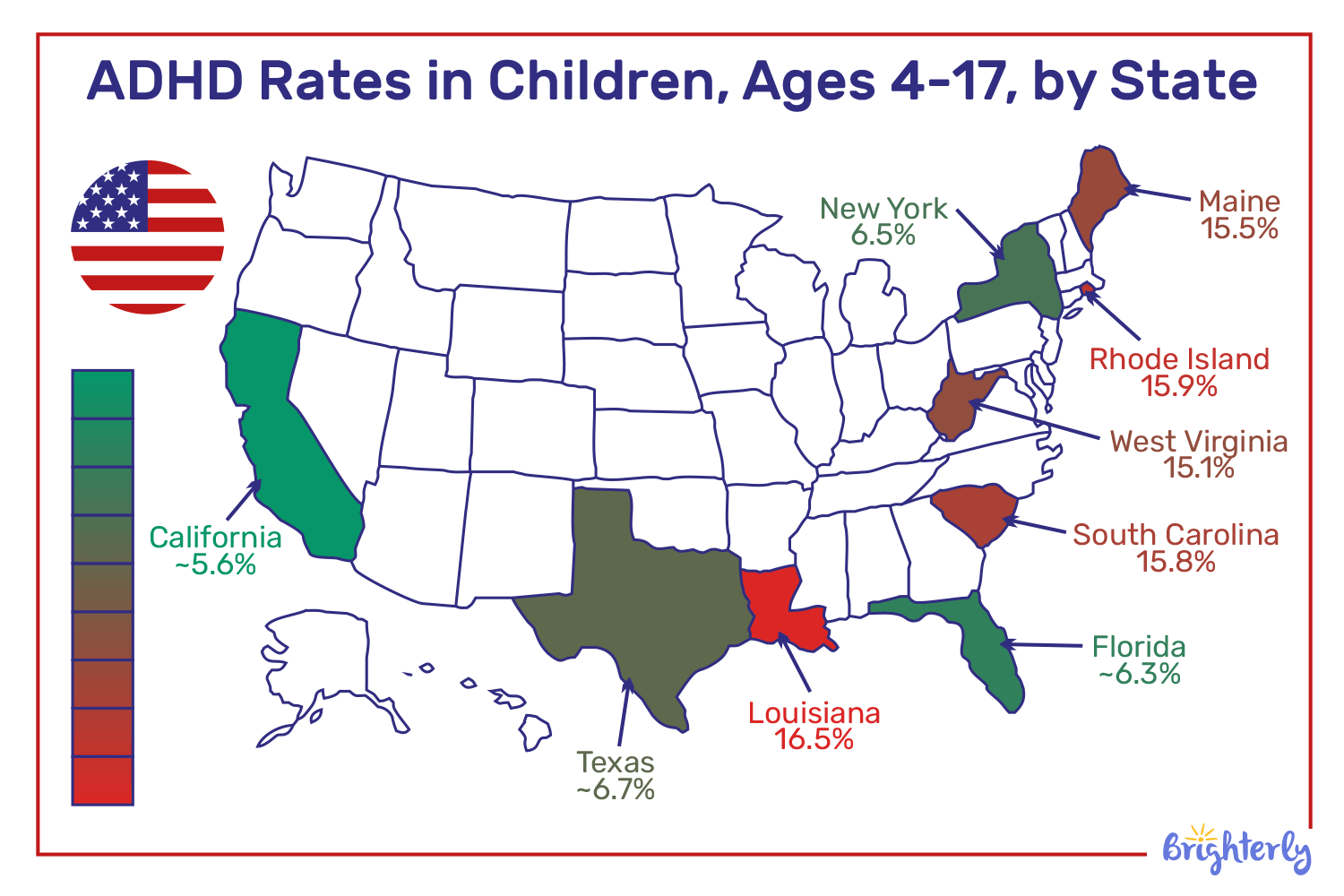
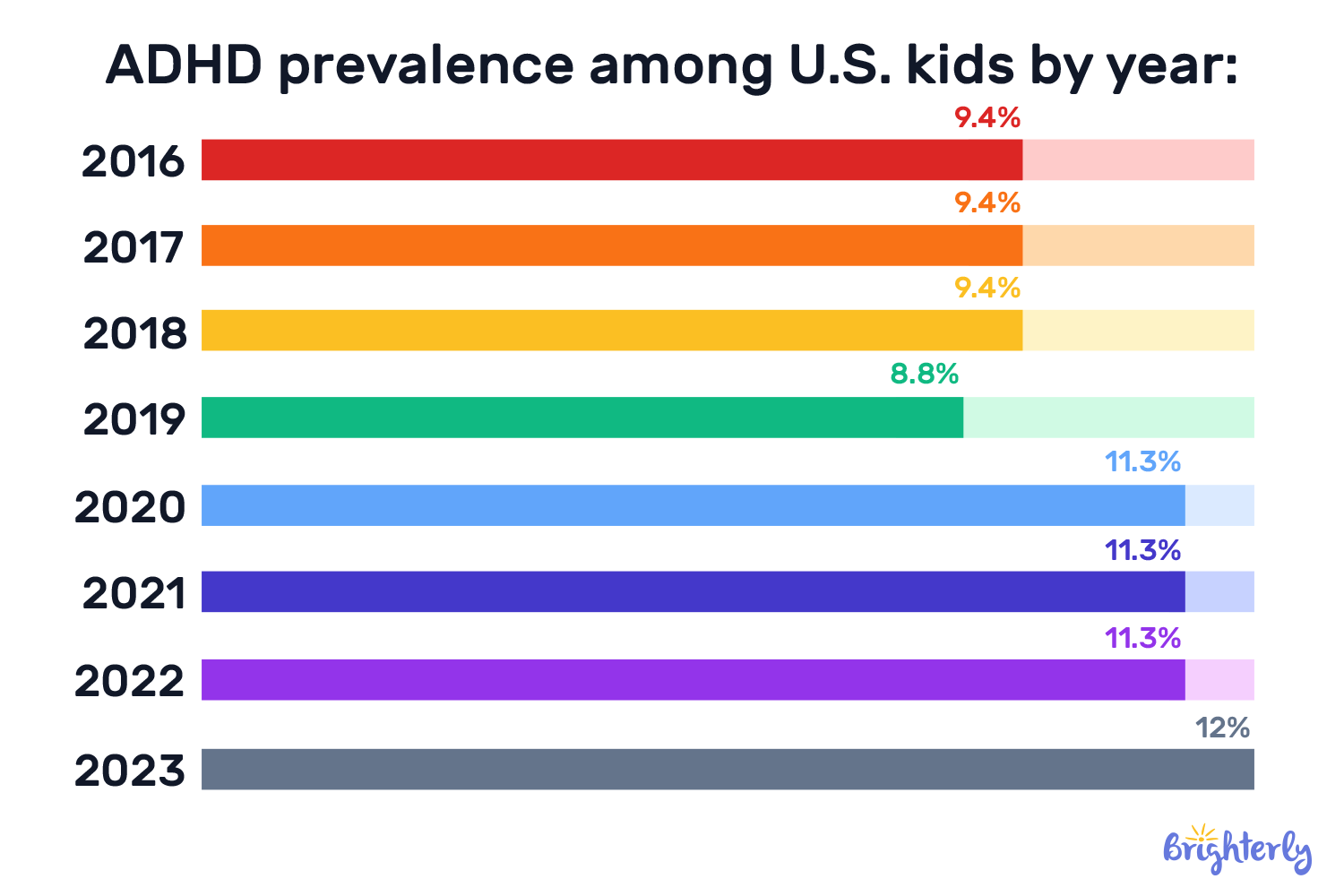
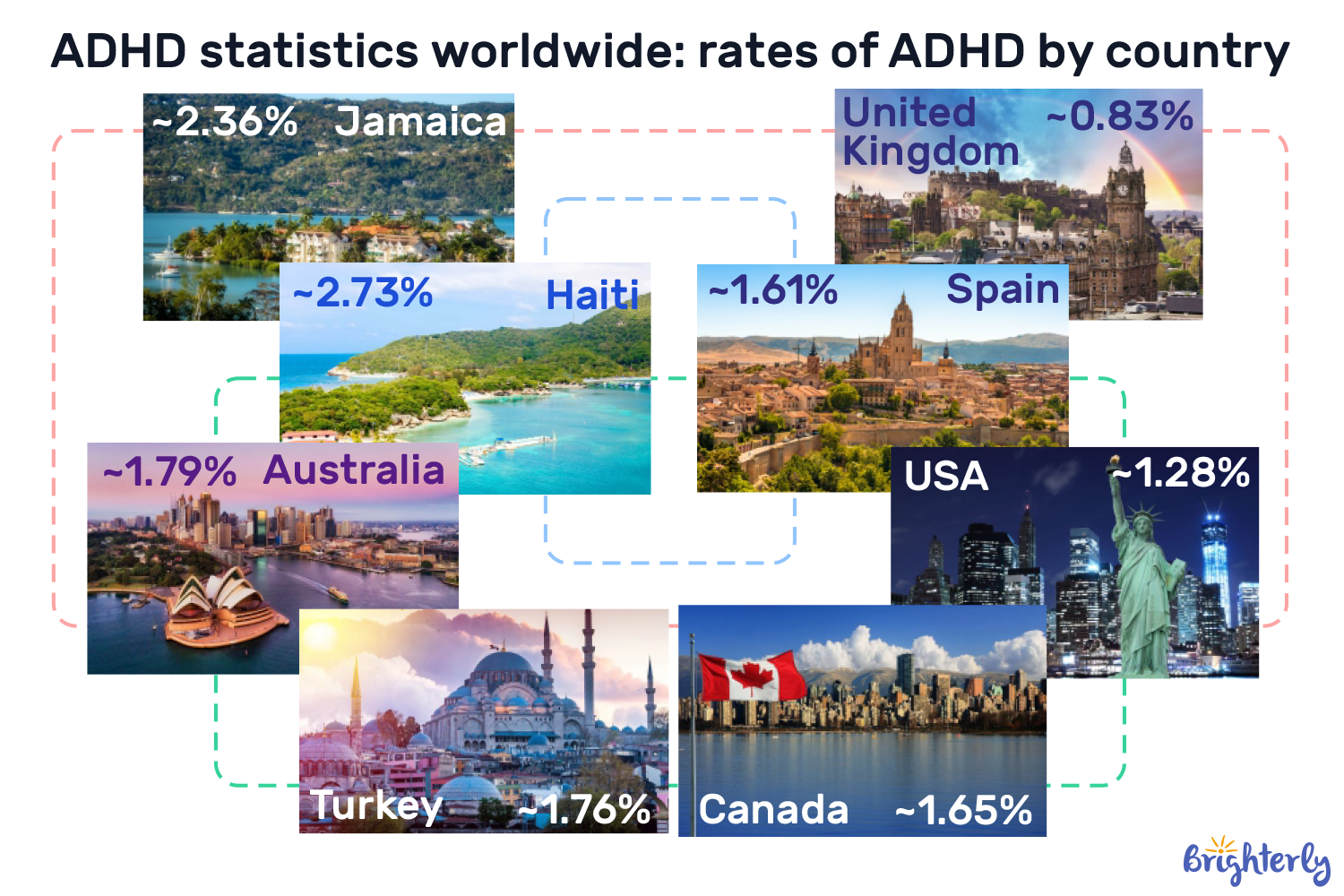
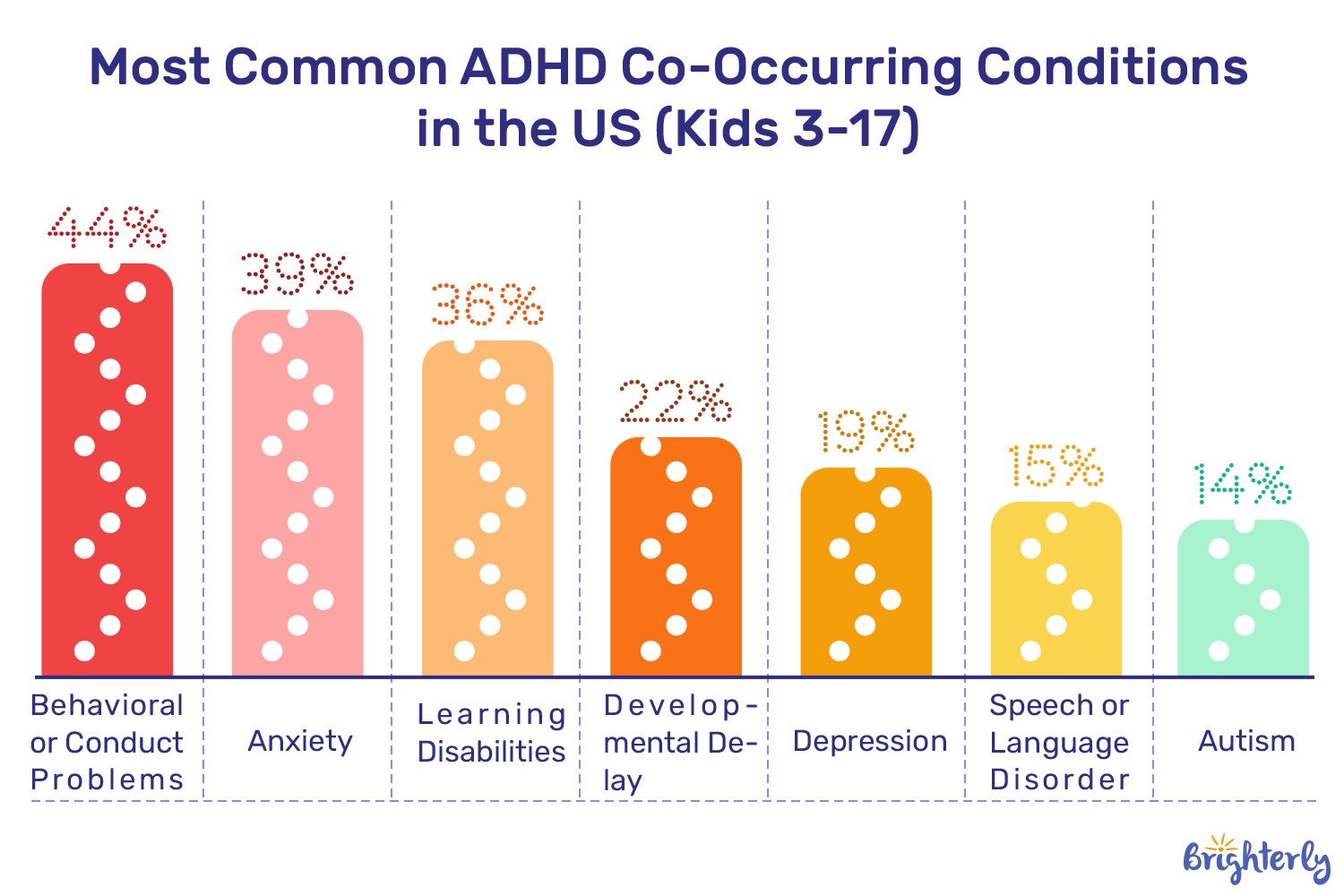
Engage your child with interactive Brighterly reading and math programs. ADHD percentage among children across the US ranges from 5% to 16%, depending on the state, according to the CDC. Louisiana, Rhode Island, and South Carolina have the highest rates of diagnosed ADHD among children aged 3-17, while California reports the lowest. However, these numbers don’t always reflect the actual prevalence. Keep in mind that they often indicate how aware doctors, parents, and teachers are, as well as the availability of healthcare services in each state. Between 2018 and 2026, the number of ADHD diagnoses among children in the US has been slowly going up. According to the Cureus 2023 report, in 2016-2018, about 9.4% of kids aged 3 to 17 had a confirmed diagnosis. That’s around 6.1 million children. In 2019, there was a small drop to 8.8% (about 5.7 million kids). However, since 2020, the national numbers have risen again: at that time, 11.3% of children were diagnosed with ADHD. As one of the possible explanations for the sharp increase in ADHD stats for kids, the wider use of mobile devices and changes in reading curriculum can be a reason. “Our culture has changed dramatically since 2012 with the widespread adoption of smartphones.” As of 2023 and 2024, CDC reports the number of kids diagnosed with ADHD in the US is 12% (roughly 7.8 million kids), with 15.6% boys and 8.2% girls. What percentage of people have ADHD in 2021 What percentage of people have ADHD in 2022 What percentage of people have ADHD in 2023 % of new ADHD diagnoses in adults ~0.7% ~0.8% ~0.9% Number of people ~1.8 million ~2.1 million ~2.4 million Source: American Psychiatric Association As the APA study in 2024 reveals, the number of new diagnoses of ADHD among adults increased from 2020 to 2023, showing a significant 15.2% upward trend compared to 2016-2020. The reason behind this can be that the knowledge of the ADHD symptoms has increased, and people are more open to being diagnosed with ADHD. “Increased knowledge of ADHD symptoms and better diagnostic criteria lead to more diagnoses.” Between 2021 and 2024, more than 1 million additional ADHD in adults were diagnosed in the US, or nearly 22,000 new cases each month (according to a 2024 report by the CDC). Over this period, the ADHD trends were negative, with the overall frequency of ADHD diagnoses surging by 27%. Note: The statistics count only people who received their diagnosis as adults. Unfortunately, there is no comprehensive, large-scale study that gives a clear and complete picture of the full global ADHD spectrum at this time. The figures in the table come from the most recent publications and rather reflect where ADHD is actually being tracked. Note that the worldwide ADHD statistics provide a whole-population estimate, not only teens and adults. Country ADHD Rate per 100k (2023) Germany 252 Japan 1,216 United States 1,287 Brazil 1,629 Australia 1,799 Saudi Arabia 1,922 Belize 2,687 Haiti 2,738 Source: World Population Review (2026) When it comes to the ADHD rates by country by age group, children aged 3 to 11 years rank first, with a prevalence of 7.6%. Among adolescents (12-18 years old), the rate decreases slightly to about 5.6%. In adults over 18, ADHD is diagnosed far less often, at only 3.1%. Age Group Children (3-11 y.o.) Adolescents (12-18 y.o.) Adults (18+ y.o.) ADHD Prevalence (estimate) ~7.6% ~5.6% ~3.1% Note: Learn how you can effectively boost motivation with an ADHD child in this guide. Researchers distinguish three ADHD subtypes, revealing the key fact that ADHD isn’t the same for every child (according to the 2025 article in Annals of General Psychiatry). The global review published in the Journal of Affective Disorders reveals that the inattentive subtype is the most common ADHD subtype among 3 million children, with possible hyperactive-impulsive and combined alternatives. These kids struggle with focusing, staying organized, and finishing tasks. You might catch them daydreaming or getting distracted easily – it’s like their minds are wandering on their own little adventures. This is the most common type. These kids are constantly on the move, fidgety, and sometimes interrupt or act without thinking. Younger children often show these traits first. It can be exhausting – for them and everyone around! This type is a mix of ADHD-I and ADHD-HI. Kids may struggle with focus and controlling impulses. They can be easily distracted, but also very energetic and spontaneous. The global meta-analysis found ADHD-C the least common, with 2.44% prevalence compared to 2.95% in ADHD-HI and 3% in ADHD-I. Still, remember that every child is unique, so it’s important to connect to their emotional state, be attentive to the non-obvious symptoms, and remain empathetic (especially for girls who are less often diagnosed with ADHD). “We want to stop conceptualizing ADHD as a behavioral disorder characterized by disruptive or explosive tendencies because this framing causes teachers and parents to miss the internalized symptoms and presentations.” There’s no one-size-fits-all approach. Work with a good doctor to plan the right support, and explore fun, high-quality learning tools to make their educational journey smoother and more enjoyable. A co-occurring condition appears in around 78% of cases for children with ADHD (CDC, 2024), so having them is becoming the norm for the disorder. Here are the detailed co-occurring conditions statistics for ADHD (taken from CHADD Coexisting Conditions and the 2024 CDC study): Note that you need a medical consultation to define behaviors as ADHD co-occurring conditions, so in case you spot some disturbing patterns in your child, ask for qualified support. And once a child grows into a teen juggling coursework and tests, parents often start looking into things like how to revise with ADHD, especially if anxiety or learning disabilities are part of the picture too. ADHD isn’t a life sentence, and it doesn’t determine what your kid’s future will look like. It’s just a different way the brain works and reacts to the world. Sure, it can bring some challenges at school, at work, or even in relationships, but it also often comes with a lot of creativity and energy. The key thing to keep in mind: a child with ADHD isn’t “lazy” or “naughty.” They just see things differently. What parents can do is support them, help them deal with the tricky parts, and encourage their natural strengths. Structured and personalized plans under 1:1 tutoring can make learning much easier for your kid. At Brighterly, teachers are trained to work with struggling students and adjust to their learning pace, guiding them steadily toward real progress. You can book free lesson to see whether one-on-one learning is the right fit for your child. Yes, the recent studies show a dramatic upward trend in the number of new ADHD diagnoses. Compared to 2016-2020, the scope of ADHD patients increased by 15.2%, with the teens aged 12-17 being the most diagnosed group. Still, the researchers commonly associate growing ADHD trends with greater awareness about the disorder and better screening. As of May 2026, the current scope of research doesn’t define a concrete country that has the highest rate of ADHD, since the number of up-to-date studies is limited and many cases of ADHD seem to be underdiagnosed. Given the available data by 2026, Haiti has the highest reported ADHD rate (2,738 per 100k of population overall). As of May 2026, teens aged 12-17 are the most diagnosed age group for ADHD. The 2024 CDC research found that 15.5% (or 4 million) of US adolescents are diagnosed with ADHD. The possible reason behind this high percentage is high awareness about ADHD these days and screening improvements. Yes, the gender gap in ADHD exists, as boys are diagnosed with ADHD roughly twice as often as girls. Still, the behavioral differences are the determining factor. While boys tend to be more hyperactive, girls commonly mask their ADHD symptoms by quiet inattentiveness, daydreaming, and lack of focus. Since these signs are less visible, the problem of underdiagnosis of girls with ADHD exists. Behavioral or conduct problems, anxiety, and learning disabilities are the three most common co-occurring conditions alongside ADHD. Other possible conditions include depression, speech or language disorder, or autism. Still, the most common co-occurring conditions vary by age group. For teens, anxiety is more widespread, while kids aged 3-5 are more likely to experience developmental delay as a co-occurring ADHD condition. The research estimates that around 20% of ADHD cases are undiagnosed, especially among adults. The most common reasons why it happens include gender gap (boys are more frequently diagnosed than girls), tendency for internalized symptoms, unequal access to healthcare, and delayed treatment (as the majority of ADHD cases diagnosed are at moderate or severe stage). ELA teachers play a super important role in developing skills like reading, writing, communication, and critical thinking. In this article, I’m going to break down their key responsibilities, competencies, and qualifications, so you can spot a good one. What is an ELA teacher, you say? Let’s find out! Key points ELA teachers are educators who […] Sep 26, 2025 To cancel Reading Eggs, head to your Family Dashboard, then My Account, then Manage My Subscriptions, and hit Cancel. This guide will break down the exact steps on how to cancel Reading Eggs and all the rules applied. You can also see user reviews if you’re still deciding on the platform. Can You Cancel Reading […] Sep 29, 2025
What Percent of the US Has ADHD?
What Percent of Kids Have ADHD in the US?


ADHD Statistics Men vs Women


ADHD Rates by Race and Ethnicity
ADHD Statistics in Teens
Why ADHD Statistics Matter: From Symptoms to Mental Wellbeing
Supporting a Child with ADHD at School
What Are the Statistics of ADHD by State?
ADHD Statistics for Kids by Year in the US

ADHD Statistics Among Adults by Year in the US

ADHD Stats for Adults Over 2021-2024
ADHD Statistics Worldwide
ADHD Statistics Worldwide by Age
10 Facts About ADHD
ADHD Subtypes in Children: Characteristics
Predominantly Inattentive Type (ADHD-I)
Predominantly Hyperactive-Impulsive Type (ADHD-HI)
Combined Type (ADHD-C)

Common Co-Occurring Conditions in Children with ADHD
ADHD Facts and Statistics: Conclusion
Frequently Asked Questions
Is ADHD More Common Now Than It Used to Be?
What Country Has the Highest Rate of ADHD?
What Percentage of Teens Have ADHD?
Do Boys Get Diagnosed with ADHD More Than Girls?
What Conditions Commonly Occur Alongside ADHD?
How Many People with ADHD Go Undiagnosed?






Math & reading from 1st to 12th grade
Exploring alternatives?
Take a short quiz!

Choose kid's grade