Kumon Vs JEI: Which Platform To Choose?
reviewed by Florence Khitsane
Updated on August 26, 2026
Key points
- Kumon tends to rely heavily on repetition to build speed and accuracy in math skills.
- JEI Learning Center relies on thorough diagnostic tests to identify weak spots and build a customized curriculum.
- Kumon could be a better choice if your child can handle daily, repetitive tasks, while JEI could be a good fit if your kid is more into slower-paced and knowledge-tailored curricula.
- Both Kumon and JEI offer classes in small groups, so if you prioritize 1:1 personalized instructions in math and reading, Brighterly can be your alternative.
Both JEI Learning Center and Kumon offer structured math and reading support, but take distinct instructional approaches. JEI’s method centers on building conceptual understanding first, while Kumon takes the opposite route, leaning on repetition and timed drills. This is a complete JEI Learning vs Kumon guide to help parents choose the right option for their situation.
Kumon vs JEI Learning Programs Comparison
| Kumon | JEI Learning | |
| Main goal | Building speed and accuracy | Building the concept’s understanding |
| Method | Linear (repetitive drills) | Spiral (rounds) |
| Program alignment with school standards | ❌ | ✅ |
| Grades/Ages | Pre-Kindergarten through 12th |
Pre-Kindergarten through 9th |
Looking at this Kumon vs JEI Learning programs comparison table, we can see that Kumon follows what’s called a “linear” learning path. What that means is that students follow the sequence of lessons one by one, moving from level to level through many repetitive drills, regardless of what they are learning currently at school. Such an approach is designed for developing speed and an automatic feel for numbers, meaning calculation should become almost like a reflex.
As for the JEI curriculum, it takes a “spiral” approach, where kids revisit the same math concept several times in rounds, with each round making the tasks increasingly complex. Unlike Kumon, JEI’s approach is more set to help students with understanding tricky concepts in the long run.
Exploring alternatives?
Customized Learning Program By Brighterly
When comparing JEI Learning vs Kumon, some parents might decide to look for the third option that could offer more. One of those could be Brighterly – an online learning platform where we match your child with a tutor so that they receive the undivided, one-on-one attention, support, and feedback they require.
Like Kumon and JEI, we at Brighterly specialize in math and reading, so you can choose a comprehensive math curriculum or a literacy program for kids in grades K through 12. What sets us apart in our teaching approach, aside from one-on-one lessons, is that after our professional tutors identify your kid’s knowledge level and how they learn best, they adjust the lesson plans and teaching methods accordingly.
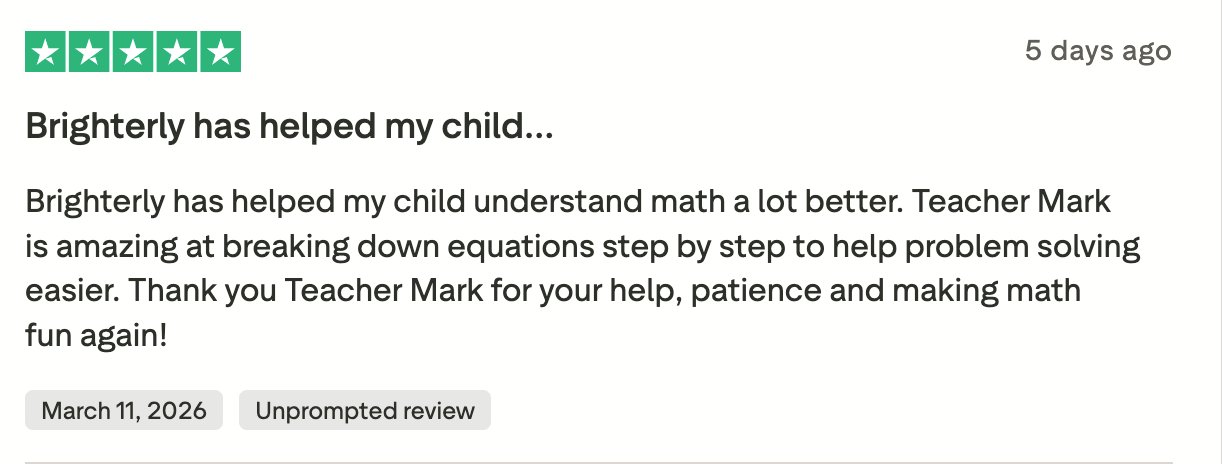
Here is one parent on Trustpilot (as of March 17, 2026) sharing their positive experience with the platform.
If you want to see how Brighterly works, why not take a math test to assess skills or practise with math and reading worksheets? All these resources are totally free.


Get a professional tutor for your kid
Help your child succeed in math and reading in a way that works best for them.
Explore Brighterly Learning Experience
Learn exactly how Brighterly helps students thrive through expert sessions, online tools, and proven feedback from thousands of satisfied parents
What Is Kumon School Best At?
Kumon is best at building strong math and reading skills through repetition. So, if you’re looking for a daily worksheet practice for your kid, Kumon could be it. Besides, the worksheets are structured and individualized, so that the kid can really self-learn without the involvement of a teacher or parent.
How Does Kumon Work?
Kumon uses a highly structured worksheet-based learning system. Basically, the process is the following:
- The kid takes the knowledge level test
- The instructor assigns them worksheets (each takes about 30 minutes to complete)
- The child completes the tasks on their own daily: twice a week in class at the center, and at home on other days.
Note: The tutoring model of Kumon is mostly observational. Kumon certified instructors just guide the process and grade the work after it’s done, rather than deliver a traditional, interactive learning experience.
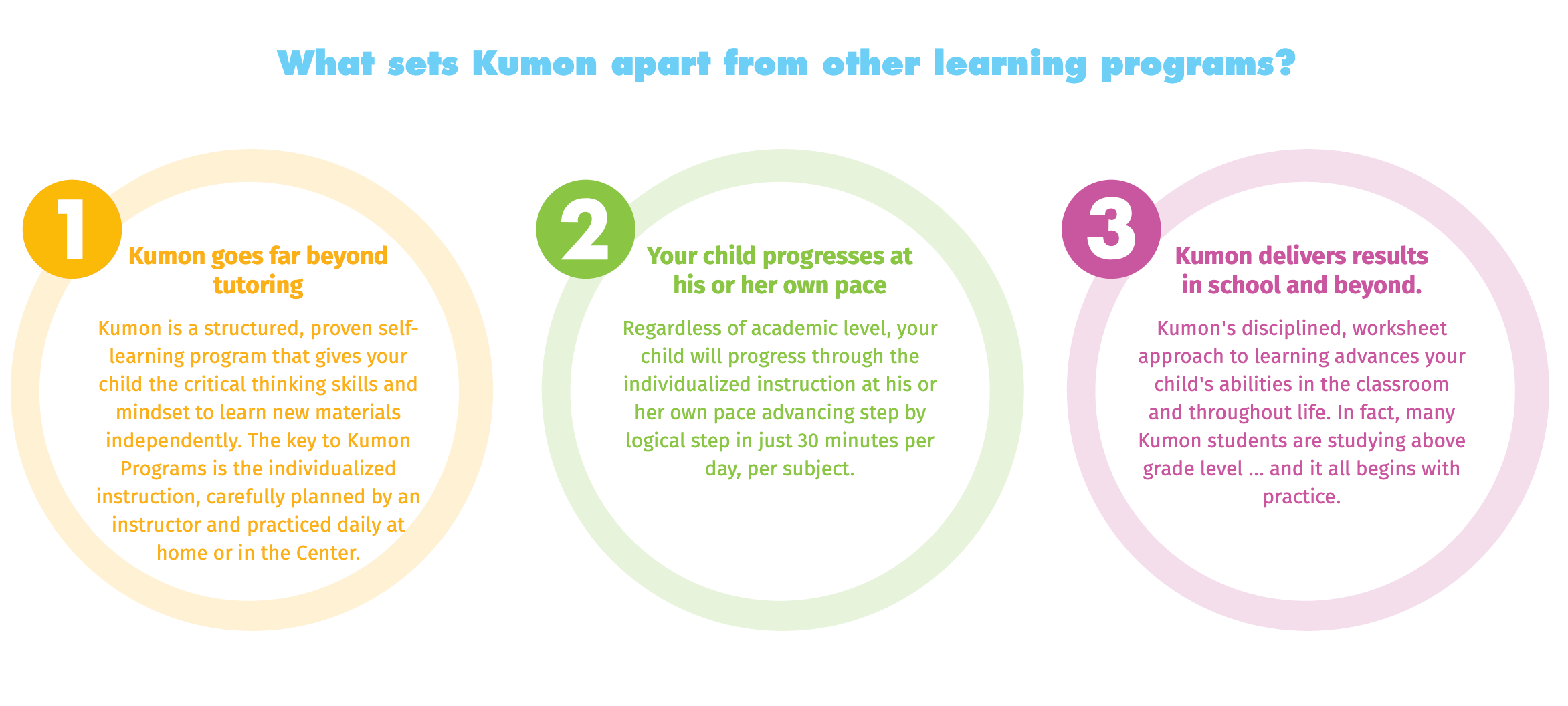
The program is divided into several levels, with each consisting of 200 worksheets. To move to the next level, a student must achieve a specific Standard Completion Time and Accuracy score. This is implemented to foster motivation by simulating a competitive testing environment. In case students keep making mistakes, they must find and fix them themselves, which is the core of Kumon’s self-learning philosophy. And while it’s great for building independence in kids, for those who need extra help and explanations during studies, such an approach may not be effective.
Is Kumon Expensive?
The cost you pay for Kumon services depends entirely on your location and the number of subjects you want your kid to take. In general, Kumon pricing is based on a monthly model and usually ranges between $140 – $200 per subject, depending on the country and state. For example, a monthly cost can be as low as $120 in Pennsylvania or rise to $250 if you’re looking for a Kumon center in New York. So, for a year, parents can expect to pay around $2,000 per subject.
Note: In addition to the basic monthly price, there is also a registration fee and expenses for learning materials, which can add roughly $100 to the final bill.
What Does JEI Learning Center Stand For?
JEI is short for Jaenung Educational Institute, which originated in South Korea and adopts a philosophy that every child is a lifelong learner. So, according to this belief, the role of the educational center is simply to help them study without creating more stress and additional obstacles, ensuring every child has an equal opportunity to receive basic academic knowledge.
How Does JEI Learning Work?
In terms of JEI Learning Center vs Kumon differences in learning approach, JEI focuses on identifying which skills the child is missing or needs to improve through a very comprehensive diagnostic system. Then, the program provides workbooks that address these specific areas. In general, JEI’s curriculum goal is to encourage critical thinking and problem-solving.
Here is how it works in practice:
- The kid takes a diagnostic test to generate an Individualized Progress Prescription Report (IPPR) that illustrates their specific learning needs
- Based on IPPR, JEI professionals develop a tailored program for the kid
- Students move to the next level only when they have mastered the current one.
As for timing, the students attend the JEI center for a 1-hour lesson per week for one subject. During this learning session, they review their work with instructors and receive the tasks for the next week. Aside from attending the center, kids are also given daily homework, usually taking no more than 30 minutes.
How Much Does JEI Learning Center Cost?
JEI Learning Center pricing largely depends on your location. The center encourages parents to check the local center pricing when considering enrolling a child there.
So, when it comes to JEI Learning vs Kumon cost, both charge based on where the center is geographically. As for additional costs, the JEI center also requires a one-time payment of $75.00 per child, which is a registration fee, and a $50.00 diagnostic assessment fee per subject.
JEI Learning vs Kumon Reviews
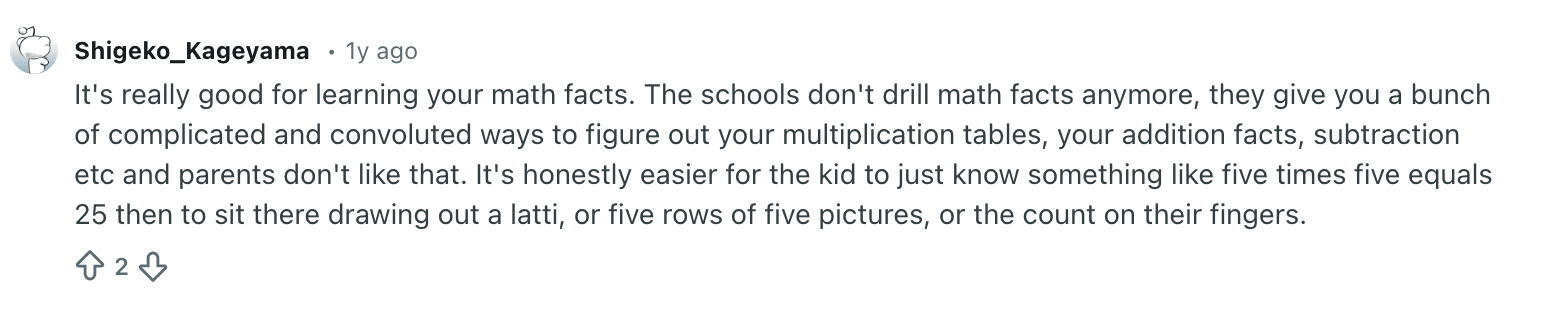
Analyzing Kumon reviews online, it seems the center can be a great option for those who want their kids to practice math daily. For example, here is one of Reddit reviews from December of 2024, mentioning the Kumon program’s repetitive style as effective for learning math facts.
Other users in the same Reddit thread (as of December 2024) also share thoughts that parents choose Kumon since it’s often the cheapest option for after-school tutoring.

In a discussion about Kumon started in June of 2025, a teacher also supports the argument that the service is good for those who prefer repetitive drills as a learning method.

In another Reddit thread that happened in July of 2025, several parents mentioned that with Kumon, everything depends on the exact center and whether you’re willing to commit to daily practices.

As for JEI, there is not as much recent feedback, but there is feedback for several different centers, with most comments being quite positive. For example, one parent on Yelp claims the center in Cerritos is affordable and effective.

Another parent also shares a very positive review about the center in San Diego.
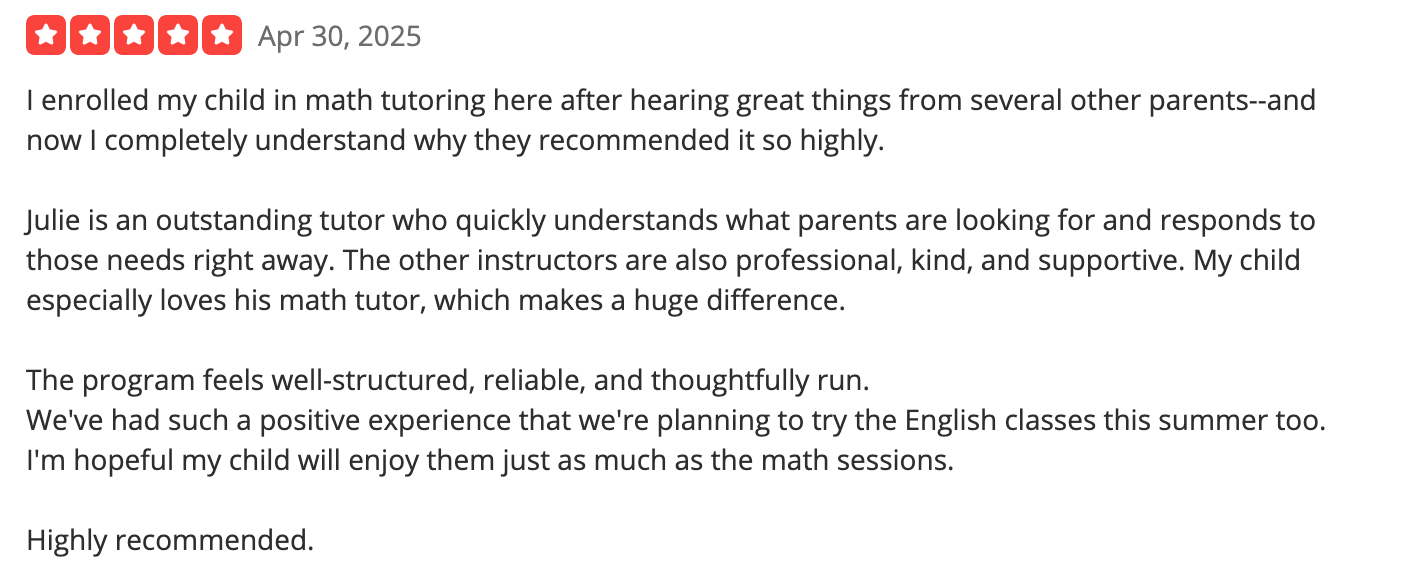
And a Yelp feedback left about the JEI center in Mountain House mentions the staff’s professionalism and their kids’ improvements in learning.

What’s The Main Difference Between JEI vs Kumon?
To evaluate JEI Learning Center on Kumon vs JEI differences, it helps to look at the route each takes when it comes to teaching. Kumon prioritizes building speed and accuracy through lots of daily repetition, while JEI circles back to topics, making them a bit more complex each time, aiming to build stronger critical thinking. Also, Kumon moves students forward based on how quickly and accurately they finish tasks, while JEI leans towards a slower learning pace, more focused on concept understanding.
JEI Learning vs Kumon: Which Is Best For Your Child?
When deciding between JEI Learning Center vs Kumon as the best option for your child, consider their learning style and the goal you want to achieve.
Choose Kumon if:
✔️You want a consistent daily learning routine
✔️You want a self-learning worksheet system for after-school practice
✔️Your child is good with daily repetitive tasks.
Choose JEI Learning if:
✔️You want a curriculum more tailored to your child’s needs
✔️You want a school-aligned curriculum
✔️Your child needs more time to grasp a concept.
But if you’re looking for an online platform that can provide the most customized learning experience for your kid, try Brighterly. You can book the first lesson for free and see how it goes.
Related articles
You can also check out the following related articles:
- Kumon vs Brighterly: Which Platform Is Better For Your Kid?
- 11 Kumon Alternatives in 2026
- Khan Academy vs Kumon vs Brighterly — Comparison 2026
- Abacus vs Kumon vs Brighterly: Making the Right Choice
- Kumon vs Huntington vs Brighterly: Which One Is Better?
Frequently Asked Questions
How Much Does Kumon Charge Per Hour?
Kumon charges $140 – $200 per month, with 1-2 lessons per week that last 30 minutes. This means an hour costs roughly $35 – $50. It depends on location and on how many lessons you take per week.
Is Kumon For Gifted Kids?
Yes, Kumon is for gifted kids, but not exclusively. Its program is designed for children of all skills. So, while it’s not specifically for gifted students, it works great for them by allowing them to move faster through the program, while others can take their time.
Can Kids With ADHD Do Kumon?
Yes, kids with ADHD can do Kumon, but since the program relies on highly structured, repetitive daily worksheets, it will require extra commitment from a child and support from parents.
What Age Do You Stop Kumon?
Kumon is for children from age 3 to 13+. So, a child within this age gap can start and stop attending Kumon at any time. Typically, students stop Kumon when they complete the entire program, or when they graduate high school.
Who Made JEI?
JEI Learning Centers was founded by Sung Hoon Park, an educator and entrepreneur from South Korea. He established the company in Seoul in 1977 and created the JEI Self-Learning Method, eventually bringing JEI to the United States 15 years later.


Acellus homeschool cost from $249. This guide provides full coverage of the Acellus cost, so that you can easily analyze the tiers and decide if there’s a fit. How Much Does Acellus Cost? Accellus Subscriptions Analysis Acellus Basic tier includes 6 courses. This means it could be a good option to consider for those who […]

Apr 03, 2026

Daily movement, even in short bursts, is healthy for every child, but it’s vital for children with ADHD. Your kid can’t sit still, stay focused, and can’t make them complete homework tasks? Is their behavior impulsive and their frustration tolerance low? Let’s explore how ADHD and exercise are connected, and then choose the best exercises […]

Apr 05, 2026
Math & reading from 1st to 12th grade
Looking for homework support for your child?

Choose kid's grade

Math & Reading for Grades 1–12
Build real confidence for your child with a Brighterly math or reading tutor.