Reading Motivation: Why Your Child Won’t Read and What Helps
reviewed by Marvi M. Andres
Updated on February 3, 2026
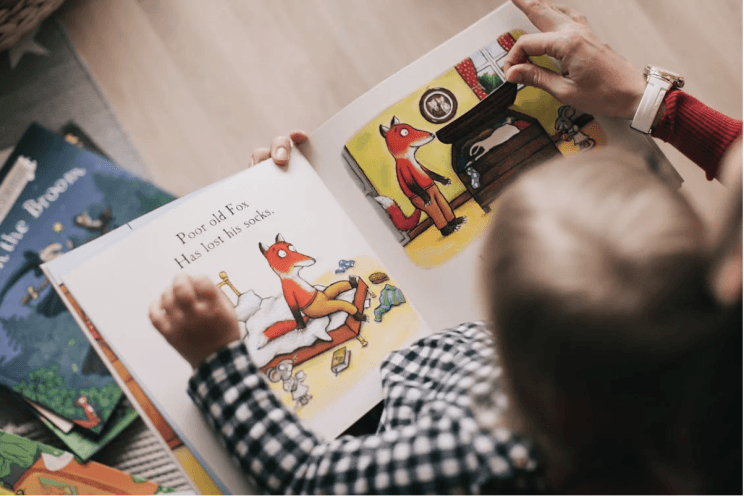
When reading motivation drops, parents may worry. One week, your child is happy and choosing their next reading story, and the next, they won’t even look towards the bookcase. What if the lack of interest in reading doesn’t pass? Let’s explore some helpful tips and strategies to help your kid boost reading motivation.
Key Points
- According to psychology research, when reading is tied to pressure, performance, or comparison, overall reading motivation drops.
- Struggling students respond best to reading that matches their specific interests.
- Parents and tutors can affect children’s interest in reading by using the growth mindset principles and various educational strategies.
- Working with professional math tutors can significantly boost reading motivation, since the right teaching strategies can be applied.
Why do children face reading difficulties?
Parents may assume their kids are reluctant readers because of laziness, but it’s hardly the main reason.
Lack of certainty
When something about reading feels unmotivating, frightening, uncomfortable, or emotionally loaded, young readers can subconsciously avoid it, alarming their parents. This is why it’s important to know the best reading comprehension strategies.
Note: Research shows that students are more engaged and motivated in reading when they feel capable and in control of the task. Motivation rises when these three basic needs are met: competence (I can do this), autonomy (I make the choices), and emotional safety (I feel safe). When reading is tied to pressure or performance, heading becomes a daunting task.
Reading has become too difficult
When reading motivation drops, one common reason is that reading has become too difficult. Kids can feel discouraged after a change in school expectations, a change of teaching methods, a mismatch of learning styles, or when earlier gaps begin to affect understanding and comprehension. Even if kids technically decode words, reading just stops being enjoyable and turns into something stressful.
Fear of failure
Emotional stress plays a role, too. Sometimes children experience big feelings without their parents realizing it. Anxiety, mood drops, and low confidence can make children associate reading with failure. You may notice them saying things like, “I’m bad at this,” and “I will never learn how to read”. This is their way of protecting their self-esteem.
Note: Children who choose their own stories will read more frequently. They may enjoy certain plots, authors, or themes. Some love dinosaurs, some cats and dogs — adapting reading to their interests is crucial for reading motivation.
Loss of interest
Finally, interest is important. If parents pressure their children to read what they have little to no interest in, reading motivation for children won’t be very high. Being able to read anything doesn’t mean they will, but it’s your responsibility to find what they will like.


Check the basics behind this term
Take our quick quiz to discover the perfect learning solution based on your child’s needs.
Why reading motivation matters for children?
Reading motivation matters because it boosts engagement, enhances skills, and gets kids accustomed with more difficult literature. Their personal interest naturally supports their educational goals. The consistent exposure to reading also improves vocabulary, reading comprehension, and academic achievement.
Alternatively, when children don’t entirely acknowledge the importance of reading motivation, the opposite can happen. Students can avoid reading more often than not, hindering their practice and progress. This creates a frustrating cycle: less reading leads to weaker skills, and weaker skills don’t motivate kids to read.
The most important thing is that parents can influence their kids’ interest in reading. Focusing on enjoyment rather than on pressuring and performance helps kids build a healthier attitude towards reading that will last beyond the school years.
Note: If you want to explore how to improve reading skills, check out this expert article.
Intrinsic reading motivation: What it is and how it shows up?
Intrinsic reading motivation is when children read because they want to, and they don’t need external reading encouragement from parents or tutors.
Intrinsic reading motivation comes from several points:
- Curiosity: a genuine interest in a topic or content
- Aesthetics: the ability to enjoy and experience a literary text
- Challenge: understanding difficult ideas
- Social: children bond over instruction and share ideas in social settings
Where reading motivation comes from? Intrinsic reading motivation shows in small, everyday actions where kids may choose their own books, talk about the characters and plots, and finish a chapter without anyone reminding them to. Parents may notice their picking up a book more often, rereading their favorite stories, and connecting what they’ve read to real-life situations.
Note: Intrinsic reading motivation grows when kids feel safe while learning. In reading, that manifests in not being afraid to make mistakes and feeling capable of reading complex texts.
Now, intrinsic reading motivation is not the same as reading skill. A child can read well but can lose motivation easily under pressure or constant correction. At this point, it is important not to focus on accuracy or performance, but to support your child and shift their focus back to enjoyment and curiosity.
Motivation for reading: when reading feels too hard
When reading feels hard, or your child can’t connect emotionally to it, don’t get frustrated. Like motivation for anything, reading growth motivation can dip. As parents, are we always ready to go to the gym or do some chores? No!
It is normal for reading motivation to fluctuate. This doesn’t mean it’s gone forever, but it does mean you have to adjust your expectations and reading environment to help your child find their interest again.
How to be motivated to read: a simple plan for reluctant readers
Teacher practices that impact reading motivation start with this principle: motivation doesn’t improve with pressure. For reluctant readers, reading should feel predictable, manageable, and emotionally safe. So, a simple, step-by-step plan can make things easier.
- Lower your expectations – even 5 minutes a day of reading is a win-win.
- Allow them to choose what they want to read.
- Separate reading from evaluation – don’t constantly correct your child’s reading.
- Align reading with the child’s interest – find what topics they’re interested in the most and choose content accordingly.
Reading motivation programs: when extra support helps
Sometimes, reading motivation programs may work the best. After all, professional reading tutors know how to deal with reluctant readers. Extra support doesn’t mean you fail as a parent: it means you’re looking for ways to help your child.
Here are a couple of signs you might need a little reading support:
- Your child avoids reading, even when the topic corresponds with their interests
- Your child shuts down completely during reading sessions
- No matter how hard you’re tutoring your child, you don’t see improvement
- Your child says things like, “I hate reading”, “I am bad at reading.”
- Grades go down
In these cases, a structured reading support can save the day. Let’s see what a good reading program can do for your child:
- Provide a clear structure and effective reading motivation techniques
- Align the reading program to the learning style and interests
- Spot learning gaps based on personal challenges
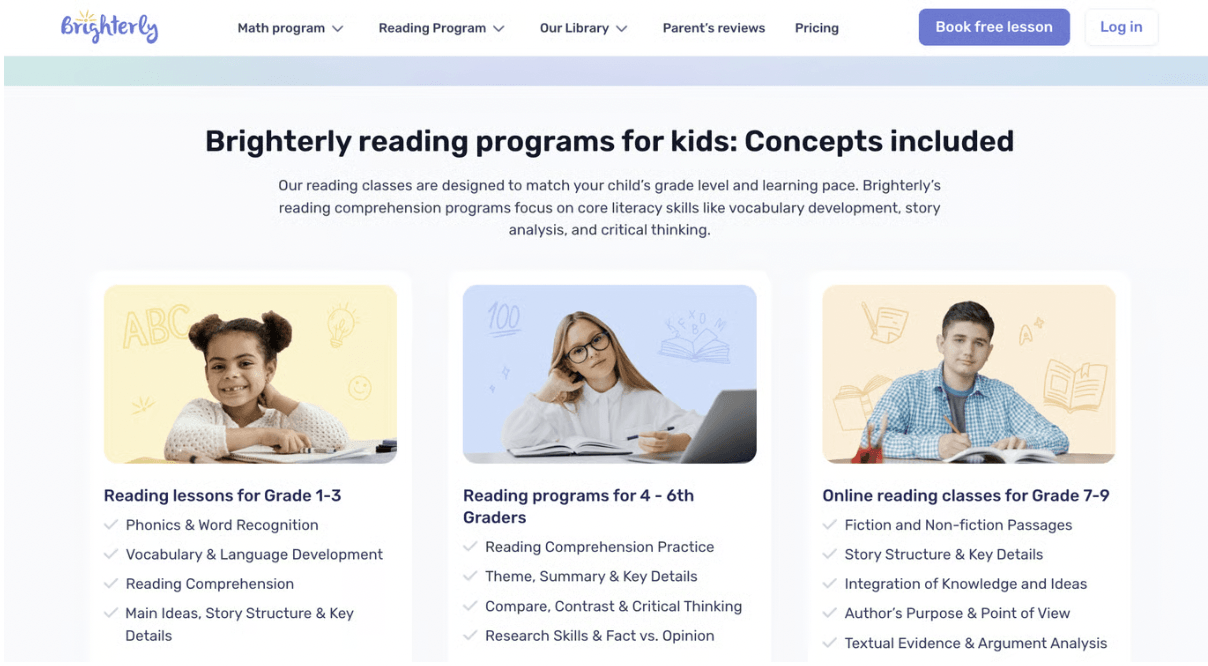
Platforms like Brighterly math and reading platform combine these strategies to help kids with reading. 1-on-1 lessons with a reading level match and a supportive environment are what they need to feel capable and in control again.
To help parents boost their child’s reading even more, Brighterly has created hundreds of reading worksheets for kids. They are ideal for home-based practice and don’t require much supervision from parents.
Check the basics behind this term
Take our quick quiz to discover the perfect learning solution based on your child’s needs.
Reading motivation strategies for kids
- Lower the entry barrier
- Give them a choice
- Don’t evaluate their reading
- Connect reading to their interest
- Get guided reading with a tutor
Lower the entry barrier
At this point, it’s important to make reading an easy task:
- Don’t make your child read what they’re not interested in
- Start with short text and familiar topics
- 5-10 minutes a day is enough
When reading is easy, motivation in reading rises – even one page is a win you should celebrate!
Give them a choice
Let your child choose activities they want to do – it can be reading books, magazines, or comics. It can even be reading tests for knowledge checks, as per their levels or bite-sized texts.
Choice increases autonomy, which positively affects motivation.
Don’t evaluate their reading
When you read together, constant correction is not something you want to do. Here’s what to do instead:
- Ask questions about what they read
- Celebrate each read chapter, page, or sentence
- Discuss the main idea or various concepts of what you’ve read together
These tactics help shift reading from performance to enjoyment.
Connect reading to their interest
Determine what your child likes to read about. It could be animals, cars, mysteries, real-life topics, or even science, if they’re older. Topics that are interesting to them can re-ignite that spark and boost reading motivation.
Get guided reading with a tutor
If the abovementioned strategies have not worked, then getting professional support can be a helpful next step. A reading tutor can provide the structure, support, and guidance your child needs in their lowest reading moments.
Platforms like Brighterly math and reading platform offer excellent reading programs that are:
- Affordable from $17.3 per lesson (the price includes a 20% discount and applies when you book 3+ reading lessons)
- Aligned with the school standards
- And personalized to each child’s learning styles and pace
Reading motivation: Conclusion and next steps
Parents often ask me, “Which reading motivation strategies help most?” To that, I answer – those who allow your child to feel emotionally supported.
Remember, reading motivation drops not because your child is lazy or stubborn. But it feels uncomfortable, emotionally loaded, or frightening. All this is curable with the strategies we discussed.
However, if you still feel like you need extra support, there’s always a platform that can help – Brighterly. Book free reading lesson now and help your child get their reading motivation back.



If you’re considering Beast Academy as your child’s math learning platform, then taking a look at Beast Academy reviews is the best way to understand if it’s the right fit. Current and past customers give the best insight into the platform, as they can tell us about their real experiences, both good and bad. In […]

Feb 03, 2026
When it comes to homeschooling, the first real step is choosing a platform that truly fits your child, because that choice affects real results. Many parents hesitate between Power Homeschool vs Miacademy. Both programs are popular, but their approaches are very different. So which one will work better for your family? In this article, I […]
Feb 04, 2026
Math & reading from 1st to 9th grade
Looking for homework support for your child?

Choose kid's grade

Math & Reading for Grades 1–9
Build real confidence for your child with a Brighterly math or reading tutor.






![Miacademy Cost: All You Need to Know [2026]](https://brighterly.com/wp-content/uploads/2025/08/Miacademy-cost-main-360x200.png)