Theme vs Main Idea: What’s the Difference?
reviewed by Marvi M. Andres
Updated on July 23, 2026
Key Points:
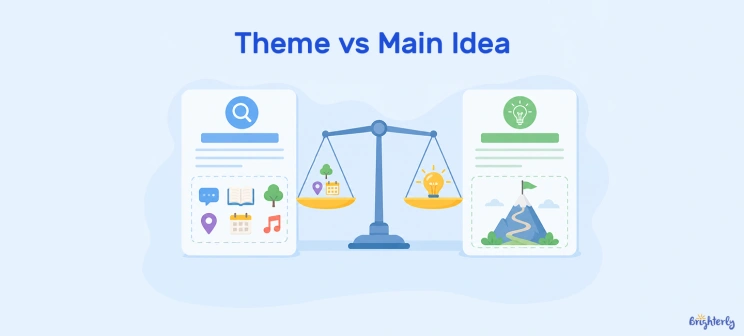
- A main idea describes what a text is about, and a theme reveals the underlying message behind those specifics.
- Students learn to recognize the theme vs main idea step by step through differnt reading comprehension strategies that separate events from meaning.
- A literary text usually contains several themes, while an informational text usually has a single central theme.
- As fables and fairy tales are simple and predictable, they aid students in observing patterns.
- Students gain a strong understanding by answering guided questions and organizing ideas visually rather than memorizing them.
The main difference between the main idea and the theme is that the former is a specific summary of what a text is about (the plot and characters), whereas the theme is the universal life lesson or underlying message the author wants to convey. Using examples, questions, and story practice, we break both terms down into clear parts.
What Are the Theme and the Main Idea?
The theme in reading is the moral of the text, while the main idea is the summary of its structural elements, like plot and characters.
The following definitions and examples will help you to understand the main idea and theme difference:
What Is the Main Idea?
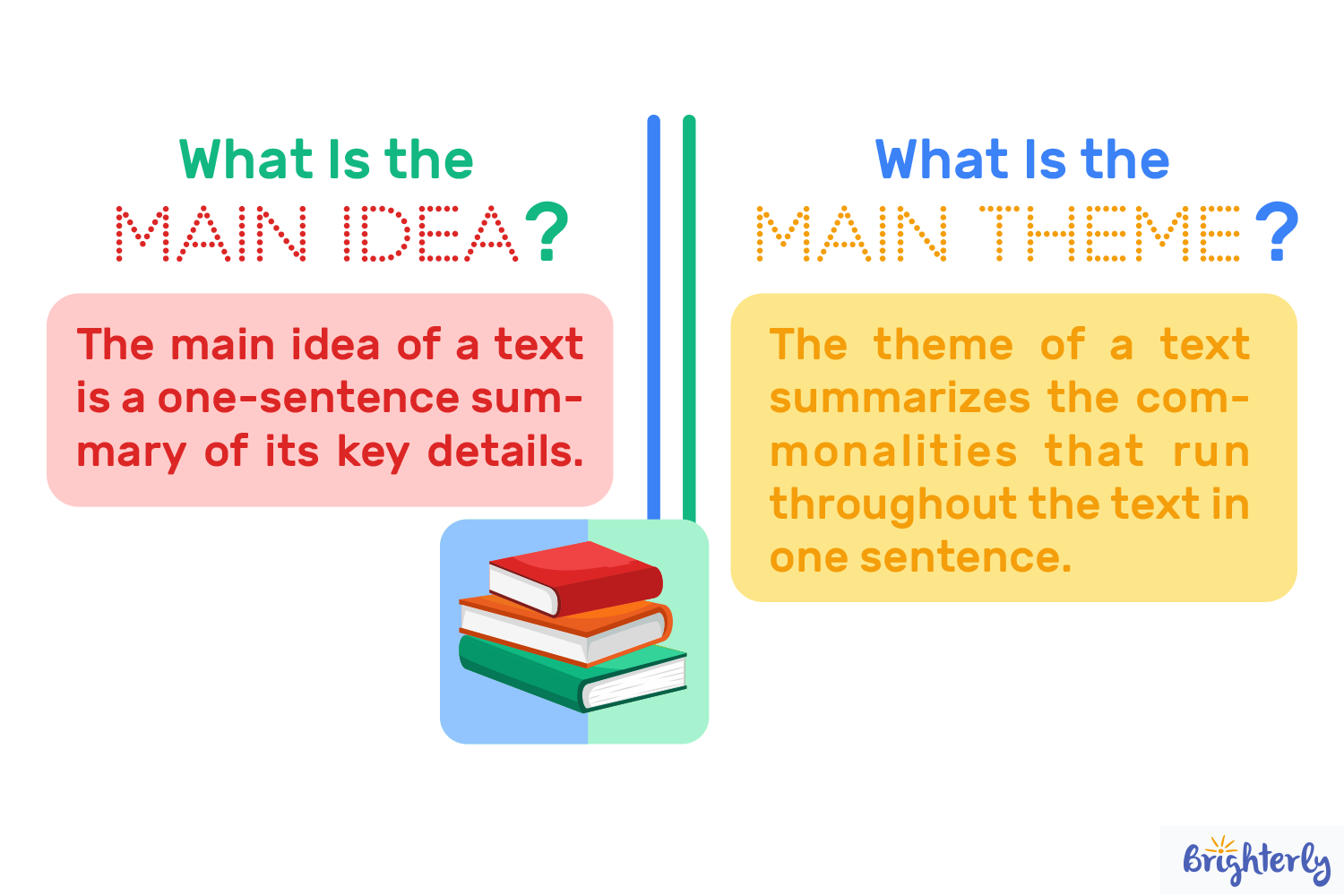
The main idea of a story is a one-sentence summary of its key details. This answers the question: What is the story mostly about? The main idea is sometimes confused with other terms like the central idea, the purpose, the summary, and the theme.
The one-sentence main idea of a literary text usually includes the name of the main character, their problem, and their solution.
In the Brighterly learning platform Grade 1–9 reading program, teaching the main idea is built through guided reading tasks and structured questioning, which helps kids quicker grasp the difference between the two concepts.
Build a Strong Understanding of the Main Idea
Personalized 1:1 lessons and worksheets improve reading comprehension
What Is a Theme?
The theme of a text summarizes the commonalities that run throughout the text in one sentence. It answers the question: What is the story’s message, lesson, or moral? Texts often contain multiple themes that run throughout the entire plot or structure.
To express this properly, a student often needs to craft a thematic statement, which is a complete sentence describing the universal human condition shown in the work. Themes reveal the text’s deeper message, moral, or lesson. It’s not about the sequence of events, but the underlying message the author wishes to convey.
Often, students can make connections between text and themes because they may represent real-life patterns or lessons. Close reading helps students notice these patterns and distinguish between the main idea and the theme.
Explore Brighterly Learning Experience
Learn exactly how Brighterly helps students thrive through expert sessions, online tools, and proven feedback from thousands of satisfied parents
What Is the Difference Between Theme and Main Idea?
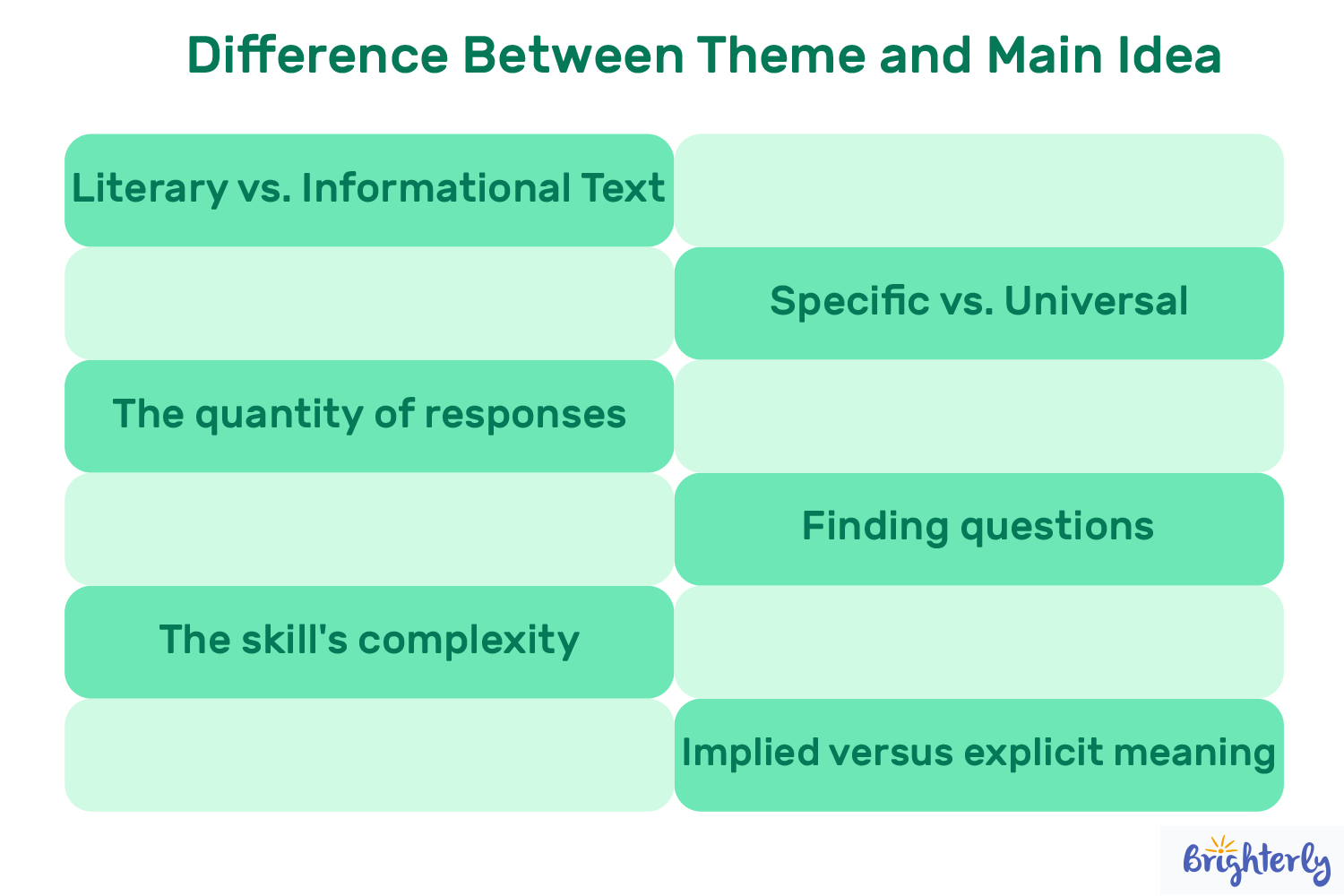
Literary vs. Informational Text
The term “theme” is mostly used in literature. It applies to works of fiction such as picture books, novels, and short tales. On the other hand, fiction and informational literature can utilize the word “primary idea.” People are still discussing the same idea even when they refer to informational materials as essential ideas.
Specific vs. Universal
A story’s theme and main idea difference lies in their scope. Encyclopedia Britannica explains that literary themes reflect “universal human experience,” which supports the idea that themes are broader and more universal than main ideas.
A story’s main idea always shares specifics. There is only one specific text that uses the characters’ or subjects’ names and unique plot points. A theme is a general, universal statement. The same theme can appear in different books with entirely different characters or plots.
For example, the Disney and Pixar films “Toy Story,” “Frozen,” and “Finding Nemo” could all share a theme like “Growth often comes from stepping outside your comfort zone,” but each story would have its own main idea.
The Number of Entities in a Single Text
Every text has one major concept. Students may write or express it differently, but the concept will always be the same. On the other hand, a single text may contain several themes, particularly if it is lengthier. Throughout a book, some themes may be more evident or developed than others, but that doesn’t mean they can’t exist.
Finding Questions
To identify the difference between theme and main idea, students pose several questions.
To identify the main idea, ask the following questions:
- What is the text about?
- Can you tell me what happens in the story?
- What are the plot’s most important details?
To identify the theme of the story, ask the following:
- What is/are the story’s topic(s)?
- In what ways does the author imply that the topic is important?
- How did the characters overcome obstacles?
- Which decisions did the characters make that were important?
- Throughout the story elements, how have the characters changed or grown?
Implied Versus Explicit Meaning
Since most themes aren’t explicit, identifying them requires higher order thinking. To locate them, students must read between the lines. The plot and the characters’ words and deeds convey them.
The core theme is more obvious, especially in nonfiction or informational works. The topic sentence, a heading, or the text’s title may help students identify the primary point.
The Complexity
Students need higher-order thinking to identify the topic. Since it teaches students to make connections between concepts and identify what is most important in a text, this is an essential component of building strong reading comprehension skills.
Note! According to the 2025 Harvard Graduate School of Education research by Elizabeth M. Ross, reading comprehension instruction helps students move beyond recalling details toward understanding deeper meaning and interpretation in texts. Researchers emphasize that comprehension involves helping students “grasp the meaning of what they were reading.
For building reading comprehension skills, structured support is important. At Brighterly, the 1:1 learning platform, we offer interactive and personalized reading lessons for students in grades K to 12. Each student receives a personal online reading program according to their needs.
Our reading lessons are guided by a professional tutor and held in a 1:1 setting, allowing students to ask questions about themes and ideas, and inquire about the stumbling blocks. With this method, pupils can actively understand details rather than just memorize them.
Additionally, the program includes reading and ELA worksheets designed to reinforce understanding. Brighterly curricula follow the US-accepted educational standards at the same time.
Personalized Reading Support for Grades 1-9
Interactive 1:1 reading lessons and worksheets build strong comprehension skills
Theme vs. Main Idea: Examples from Well-Known Stories
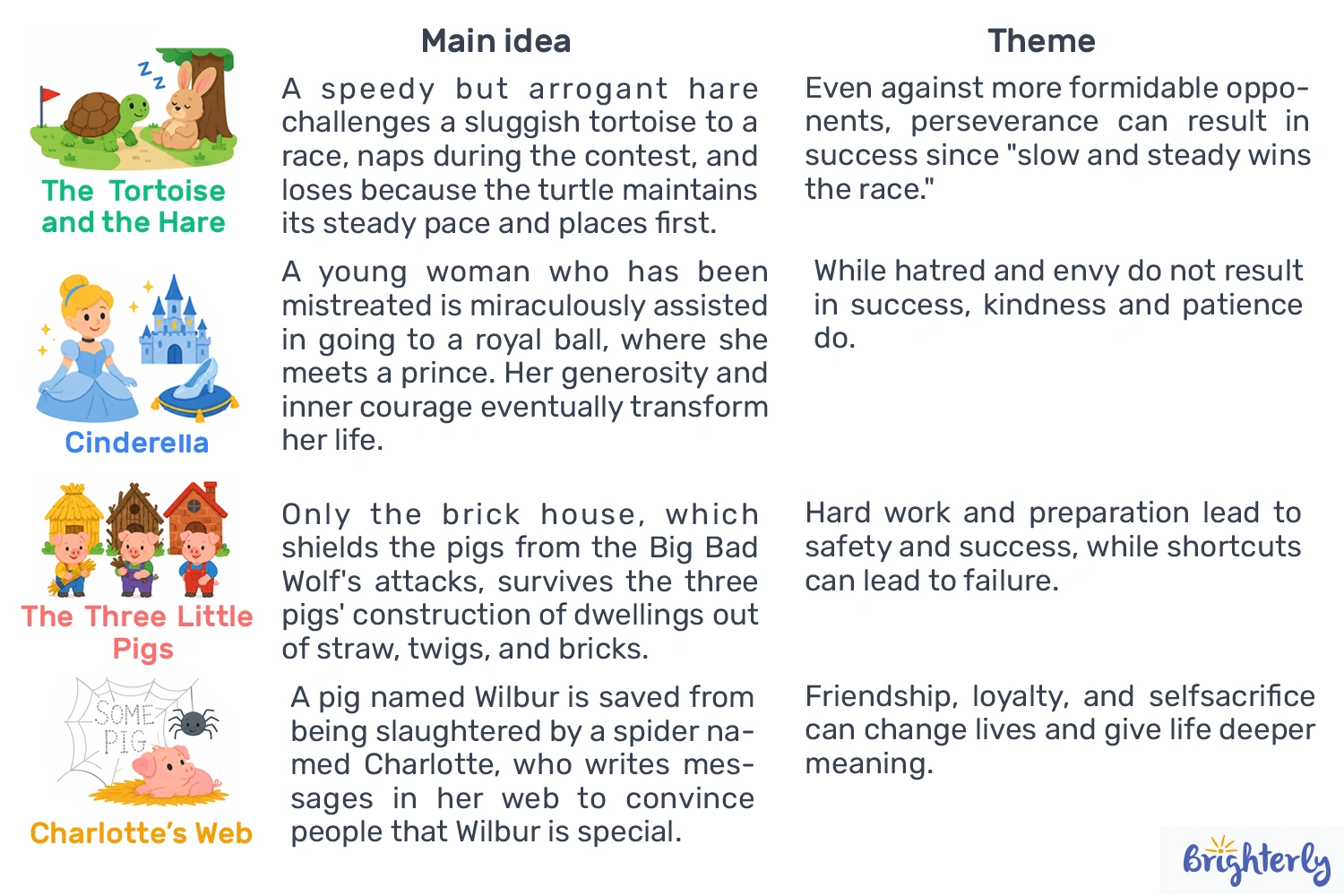
The Tortoise and the Hare
Main idea: A speedy but arrogant hare challenges a sluggish tortoise to a race, naps during the contest, and loses because the turtle maintains its steady pace and places first.
Theme: Even against more formidable opponents, perseverance can result in success since “slow and steady wins the race.”
Cinderella
Main idea: A young woman who has been mistreated is miraculously assisted in going to a royal ball, where she meets a prince. Her generosity and inner courage eventually transform her life.
Theme: While hatred and envy do not result in success, kindness and patience do.
The Three Little Pigs
Main idea: Only the brick house, which shields the pigs from the Big Bad Wolf’s attacks, survives the three pigs’ construction of dwellings out of straw, twigs, and bricks.
Theme: Hard work and preparation lead to safety and success, while shortcuts can lead to failure.
Charlotte’s Web
Main idea: A pig named Wilbur is saved from being slaughtered by a spider named Charlotte, who writes messages in her web to convince people that Wilbur is special.
Theme: Friendship, loyalty, and self-sacrifice can change lives and give life deeper meaning.
How to Help Your Child Differentiate Between Theme and Main Idea?
Distinguishing between deep messages and literal plots is a skill that flourishes with personalized guidance, such as the 1:1 sessions offered by a professional ELA tutor. By using a specialized reading platform like Brighterly, students can bridge the gap between simple retelling and true literary analysis through interactive, tailored support.
Additionally, you can use a number of tailored techniques at home.
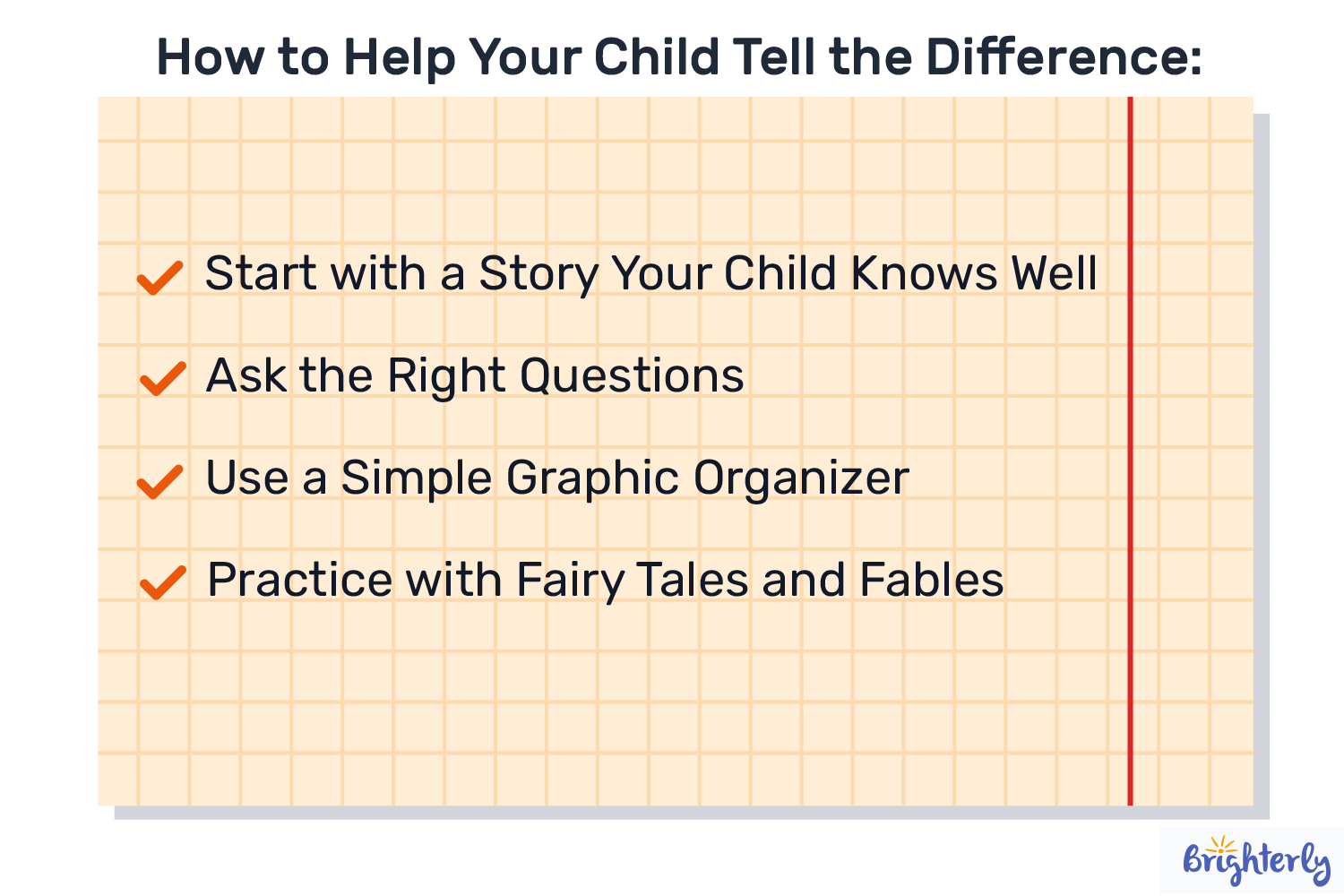
Start with a Story Your Child Knows Well
Children find it easier to analyze the theme versus main idea in familiar stories because they already know the plot and don’t need to focus on “what happens next.” Singing task cards with these familiar stories is an effective way to provide focused practice without overwhelming the student.
In “The Tortoise and the Hare,” the race begins, one character becomes overconfident, and the outcome is logical. When the storyline is predictable, children can pay attention to what the story is saying about behavior or life, not just the events themselves. Short story writing gives the same advantage because it keeps the plot simple and easier to follow.
Ask the Right Questions
Children’s reading habits are shaped by good questions. The more vague the questions are, the vaguer the answers will be, so structure is more important than quantity. Ask simple questions about the story’s events, such as what the character did or what changed. In this way, the text anchors the reader’s thinking. You can then move on to meaning-based questions that ask what you learned after reading. From actions to interpretation, we shift our focus.
During “Cinderella,” one question can focus on what happens at the ball, while another can focus on kindness and treatment of others to help students distinguish the theme VS central idea.
Note: Figurative language activities support this step by helping students notice how authors use words to convey ideas beyond their literal meanings.
Use a Simple Graphic Organizer
To keep their ideas organized, use a graphic organizer, which gives reading a visible structure. Without it, the main idea and theme are often muddled together.
A two-column table works well: one side for the main idea, another for the theme. By doing so, the focus remains on the key information rather than on the complexity of the language.
To help students see how the same story can be split into different types of thinking, teachers often complete one example from a main idea worksheet together first. When repeated across multiple texts, the organizer trains the brain to separate story facts from the message behind them.
Practice with Fairy Tales and Fables
Reading short, familiar thematic stories is one of the most effective reading strategies for struggling readers, as it reduces the amount of reading load and allows the reader to focus on the meaning of the story. Fables like “The Tortoise and the Hare” or “The Three Little Pigs” are useful because their structure is simple and their message is clear.
In these stories, events and lessons do not sit in the same place. While the lesson is situated outside of the event itself, the plot depicts what occurs. For instance, the building materials used in “The Three Little Pigs” have a direct impact on the result, making cause and effect easier for kids to understand the main idea vs theme.
When students compare different stories, they begin to notice that different characters and plots can still carry similar ideas. This comparison strengthens their ability to separate the main idea from the theme without relying on memorization.
Frequently Asked Questions
Is the Central Idea the Same as the Theme?
While the central idea and theme are related, both representing the core message or “big point” of a text, they are not identical. The difference between central idea and theme lies in their application: the central idea is the primary, specific message about a text’s topic (what it’s mostly about), while the theme is a broader, universal life lesson or underlying principle.
Can a Story Have More Than One Theme?
Yes, a story can have more than one theme. Usually, complex, engaging narratives (especially novels and films) have multiple secondary themes to enhance the plot and characters, in addition to a primary theme. These layers often make the distinction between theme vs main idea so vital for deep comprehension.
What Is the Difference Between Theme and Main Idea in a Poem?
The main difference between a poem’s main idea and its theme is that a poem’s main idea summarizes what the poem is about, while a theme conveys the poet’s universal message about life. The main idea is text-specific and concrete, whereas the theme is broad, abstract, and applicable beyond the poem.
What Grade Level Do Students Learn About Theme vs. Main Idea?
Students begin learning to distinguish between theme and main idea in 3rd grade, with 3rd-5th grade being the primary focus for mastering this difference. The Common Core State Standards, which are widely used in U.S. education and referenced by universities and researchers, explain that in the Grade 3, students are expected to:
- “Determine the central message, lesson, or moral” of stories (theme-related skill)
- Identify the “main idea” of informational texts separately.

Meet Kaliyah Hicks, the 4th grader and winner of our Spring Scholarship Program, who demonstrated her immense curiosity and dedication to math. Get to Know Our Winner! Kaliyah Hicks proves that persistence and interest are the two key factors for academic success. She openly admits that math has always been both challenging and intriguing for […]

May 18, 2026
SMART goals for kids are things that your child hopes to achieve through a well-organized plan. Your child can use the SMART principles for both academic tasks and personal habits. This guide shows parents how SMART goals work and how to help your kid write them, including examples by category and age. What Are SMART […]

May 20, 2026
Math & reading from 1st to 12th grade
Looking for homework support for your child?
Choose kid's grade

Math & Reading for Grades 1–12
Build real confidence for your child with a Brighterly math or reading tutor.