What is Digital Literacy? Definition and Skills
reviewed by Marvi M. Andres
Updated on April 9, 2026

In our increasingly digital world, understanding what is digital literacy is no longer a nice-to-have, but a requirement. For your child to succeed in the digital world, they need to know how to find, evaluate, analyze, and communicate information. They also need to know how to spot misinformation on the internet and what sources to trust.
Key Points
- Digital literacy equips students with the critical thinking abilities to evaluate why and how information is created, and check whether that information is correct.
- It provides children with a safety shield against phishing, cyberbullying, and sharing personal information online, and teaches them about the consequences of a digital footprint.
- Knowing how to use the internet correctly can open doors to unlimited knowledge for students and turn them into independent researchers
- Children can also learn the strengths and weaknesses of GenAI tools, as well as how to use those tools to their benefit in a safe and ethical way
- True digital literacy also equips children with knowledge and skills to self-regulate the time they spend online and how they spend it
What Is Digital Literacy?
Digital literacy is an umbrella term for a collection of skills people need to have regarding using technology. More specifically, know how to be adaptable to technology developments, how to find and evaluate information effectively, and how to stay safe online, among other things. Many people, when hearing digital literacy, assume it’s about computer skills. It may have been true some years ago, but not anymore.
The main difference between digital literacy and computer skills is that computer literacy focuses on the hardware and software side, like knowing how to open a folder or create a document, while digital literacy is more about the cognitive skills your child needs to navigate the internet and digital media.
What Are The Main Principles Of Digital Literacy?
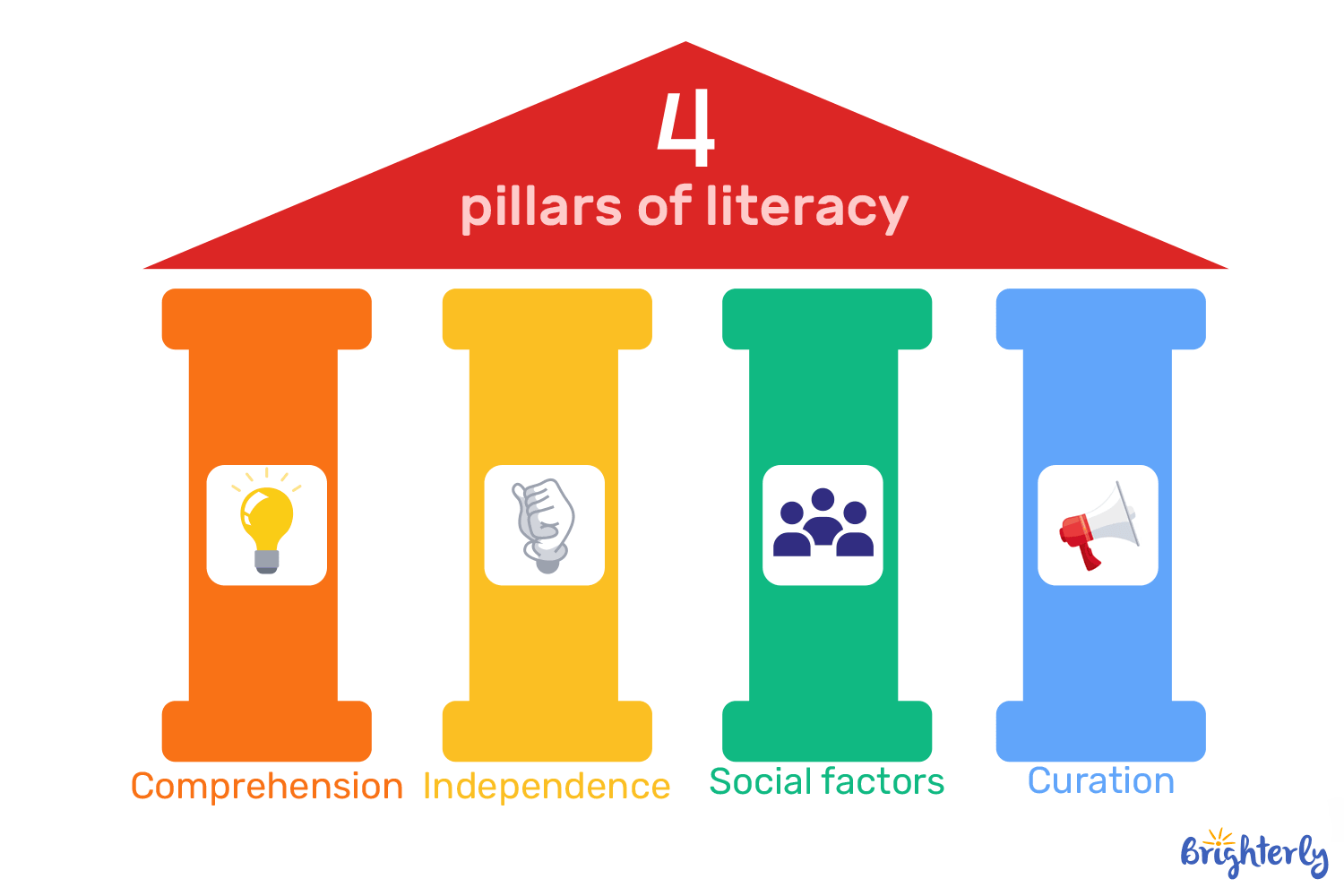
- Comprehension is the basic ability to extract ideas from digital media resources, like understanding both the literal meaning of the text as well as the hidden messages. Reading comprehension is a pillar of education in general, not just information literacy.
- Independence. Digital media is not independent; it doesn’t operate in a vacuum. Different media forms and platforms are connected and are in collaboration with each other, and children need to know that they may need to depend on different resources to get a full picture of a topic.
- Social factors play a key role when sharing and receiving information online. Understanding who is sharing information, why they are sharing it, and how it spreads is an important part of digital literacy for students, and a skill your child will need.
- Curation. It wouldn’t be an exaggeration to say that the supply of information today is endless. In this environment, being able to find, organize, and save digital content that your child prefers, instead of simply accepting what they are served, is a truly valuable skill.
Note: These principles, known as the Potomac Model, focus on four essential pillars your child will need for digital literacy, acknowledging and meaningful information processing.
Why Is Digital Literacy Important For Students?
In this environment of rapid digital usage growth, digital literacy is becoming a critical tool for safeguarding oneself from harmful online materials and incorrect information, among other things. In a modern digital classroom, as part of online learning, or when doing research online, children need to first determine whether the source and the website they use are reputable and whether the information there can be trusted. They also need to collaborate on shared documents with other students and protect their personal data. Online safety, cybersecurity, and critical thinking skills to understand what’s going on in the digital world around them have become non-negotiable.
Note: According to the United Nations, in 2025, around 82% of young people aged 15-24 used the internet. Another source, the Digital Education Council, reports in its 2024 report that 86% of surveyed students use AI tools regularly for their studies. These are only two of the many findings out there that suggest that the internet and online tools are becoming an inseparable part of life of young students..
Help your child think critically and stay safe online with Brighterly 
Build strong digital literacy skills today
Benefits Of Digital Literacy In Education
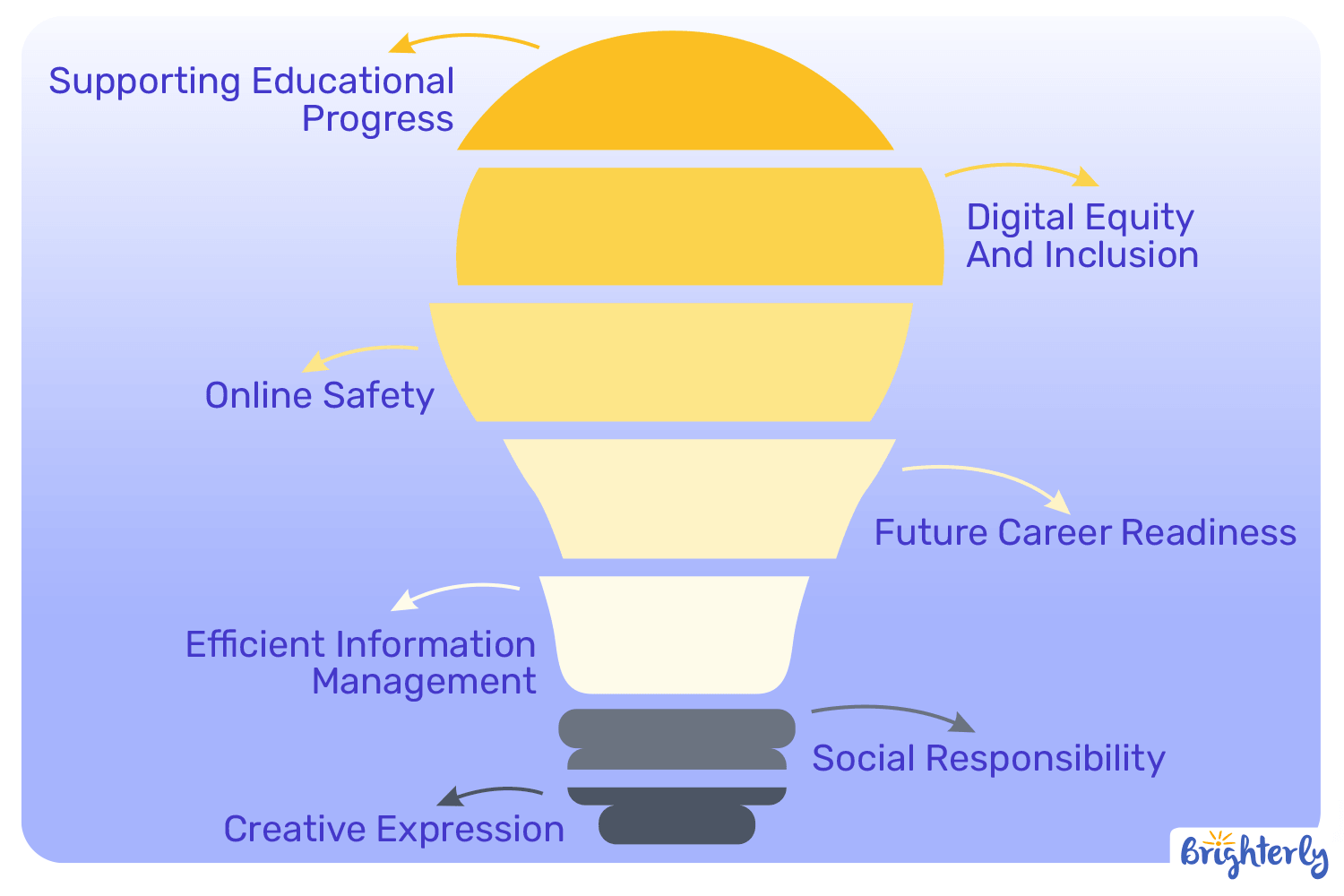
- Supporting educational progress
- Digital equity and inclusion
- Online safety
- Future career readiness
- Efficient information management
- Social responsibility
- Creative expression
Supporting Educational Progress
First and foremost, digital literacy helps students to take control of their learning and choose the right one. The internet can be an invaluable help for learning anything, but only if used correctly. Digitally literate students will know how to find quality learning materials, educational apps, co-study partners, and so much more that match their learning style.
Digital Equity And Inclusion
Building on digital literacy in education, you can think of it as a great equalizer. When kids learn digital tools and how to use them properly, they get access to the same high-quality resources, global libraries, and educational platforms regardless of their physical location or socioeconomic background. This will make sure that no student is left behind because they cannot navigate a digital tool or a portal, or don’t have access to materials.
Online Safety
Understanding the importance of online safety, as well as knowing how to protect themselves online, is an increasingly important skill. It will provide your kid with an armour not only against cyberbullying, but also against privacy risks, phishing, and just generally oversharing information online. Ishdeep Narang of ACES Psychiatry says that families can direct children towards more careful and safe internet usage with simple rules.
“Families can teach kids to spot unsafe content by giving them one clear, repeatable rule they can use in the moment.”


Future Career Readiness
For most modern careers, students will need at least some level of proficiency in digital tools. Learning these tools early on helps students to not only learn how to do specific things but also helps them develop a sense and intuition for working with technology. This way, they will be more prepared to transition to the professional workforce when the time comes.
The good news is, students today are what many call digital natives: they grew up with technology, and developed an intuition for it.
According to Sandro Kratz, the founder of Tutorbase, they are good at picking up tech skills, but do so even better with targeted tasks.
“Working on education software showed me that kids pick up tech faster with small, practical tasks.”

Efficient Information Management
Have you heard the term “information overload”? It refers to when the volume of information is so much that it exceeds the individual’s processing capacity. Children have access to so much information all the time now that knowing how to curate and organize the information they have and manage what they are consuming is a superpower. Through digital literacy, they not only learn to keep their research and curated information accessible, but also understand how to filter out the information they are bombarded with online.
This is especially important for younger students, since noticing they cannot determine what information is correct can undermine their confidence in their analytical and critical thinking skills. Dr. Nir Baharav, OCD/Anxiety Specialist and a psychologist, says that this can turn into a vicious loop.
“When a child cannot find a structured way to determine if the information they find online is accurate/false will lead to the development of anxiety about finding reliable information online.”

Social Responsibility
Among the digital literacy skills examples and benefits, this one is less obvious. Digital literacy teaches kids the unwritten rules of the internet, so to speak. They learn about copyright laws, crediting sources properly, and being empathetic in digital communication. This helps to create a safe and more respectful online community and helps to avoid accidental plagiarism. This ethical and responsible use of technology even has a term, digital citizenship.
Creative Expression
Creative expression is the last benefit. Through technology, children can demonstrate their knowledge in ways that paper and pencil cannot. They can design games, make video essays, design engaging infographics, and so much more. Digital literacy gives them the creative freedom to express complex ideas in new ways.
This is not an exhaustive list of the benefits of digital literacy in the classroom and education in general, but these are the key ones you need to consider.
How Brighterly Supports Digital Learning
At Brighterly, we don’t just teach math and reading. Here, you can find an environment where digital literacy happens naturally. Children learn to use digital tools as they learn to use the interactive platforms on which our reading program and math program are built. They navigate the interfaces, use the online learning materials, and communicate via video, all under the guidance of a professional tutor to make the learning process as safe as possible.
The goal of our programs is to help children develop critical thinking skills and analyze what they read, a critical digital literacy skill for everyone.
Prepare your child for the digital future.
Help your kid build critical reading and thinking skills through 1-on-1 classes with experienced tutors.
Key Digital Literacy Skills Every Student Needs
To understand further what is digital literacy in education, it’s important to know the specific skills that students need to have:
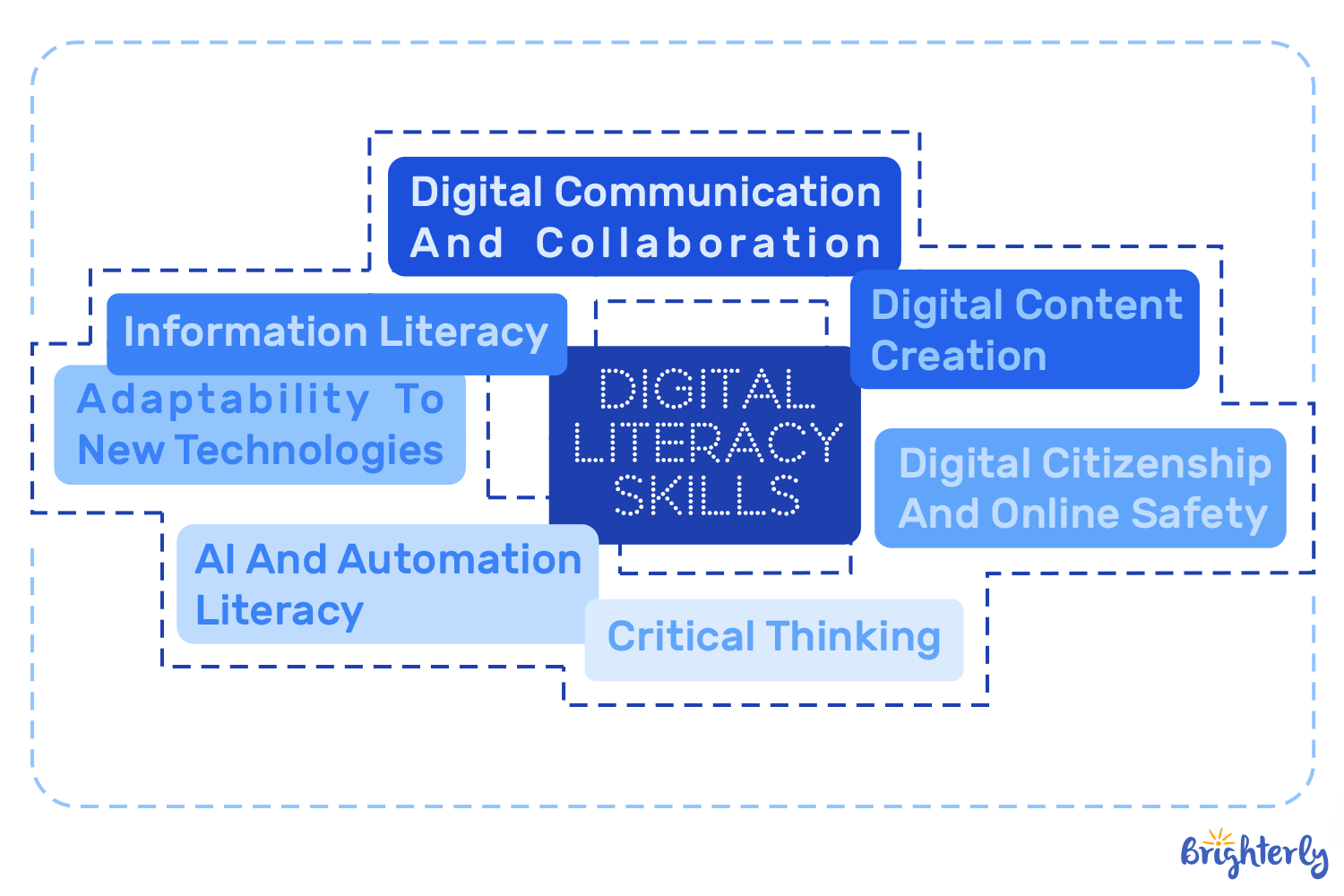
- Information literacy
- Digital communication and collaboration
- Critical thinking
- Digital citizenship and online safety
- Digital content creation
- AI and automation literacy
- Adaptability to new technologies
Information Literacy
In the era of information overload, simply typing a question into a search engine (or, more recently, into GenAI tools) isn’t enough. Students need to learn how to distinguish between credible sources and “fake news”. They also need to be able to trace back the information they found to see if it’s correct.
For example, not every “Scientists say that…” article is true, and the importance of digital literacy here lies in knowing this. A key part of this skill is source verification. Children need to be taught to check the About Us pages on the website, look for author credentials, and cross-reference sources across multiple reputable platforms to avoid falling for misinformation.
Digital Communication And Collaboration
Kids aren’t isolated at school, and they aren’t isolated online either. Today, online communication includes emails, instant messages, video conferencing, and collaborative platforms like virtual classrooms. As your kid is using these tools for education, they need to learn the social code of online interaction. This code is actually so important that it even has a name, “Netiquette”. This includes understanding the appropriate tone for an email to a teacher versus a text to a friend, as well as the importance of clear, concise writing.
Collaboration is a vital component of this skill. Digital literacy not only teaches students how to work on a shared document in real-time and manage version histories, but also provides constructive feedback through digital comments without overstepping their peers’ work.
Critical Thinking
Let’s come back to access to too much information again. Digital literacy and the ability to go through so much data won’t be possible without critical thinking skills. Because the internet allows anyone to publish anything, students must act as their own editors. They need to ask critical questions: Who created this content? What is their goal? Is this a neutral fact or a sponsored advertisement? This skill also involves recognizing logical fallacies and emotional manipulation in digital media. Students need to develop a skeptical eye and a critical mind to navigate the online content and know which sources to trust.
Digital Citizenship And Online Safety
Being a good digital citizen means acting ethically and legally online. This starts with online safety and cybersecurity. Children need to understand how, and more importantly, why, to create a strong password, learn to recognize phishing and scams, know which personal details to avoid sharing ever, and be extra careful with whom they interact online.
Principal IT and Cybersecurity Consultant Edith Forestal says that cybersecurity is indeed one of the top 5 digital literacy skills.
“Cybersecurity awareness and safe online habits reduce exposure to threats and teach caution with personal data.”

Another important thing here is the digital footprint. The internet is a medium that never forgets, and part of digital literacy skills meaning is that children know that their online trail in the form of comments, photos, likes, and much more, can be permanent. Knowing how to build a positive online reputation for yourself while keeping it safe is one of the most important digital skills.
Digital Content Creation
Today, students (and almost everyone else, really) are not just consumers of media, but also creators. This includes expressing ideas through various digital formats like images, videos, or just texts in a blog. Whether your child is making a slide deck for their school project, editing a short video, or coding a basic website, content creation is another sub-skill of digital literacy and will allow them to share what they’ve learned creatively. Content creation also entails an understanding of copyright and digital ethics, so that students don’t accidentally use someone else’s work without proper citations.
AI And Automation Literacy
When discussing digital literacy in 2026, omitting generative tools would be a major oversight, as AI in education is growing rapidly. Students need to understand the mechanics of Artificial Intelligence to be safe and prepared for what’s happening on the internet. From a safety side, they need to be able to distinguish visuals and texts created by GenAI tools and verify them.
From the usage side, they need to realize that AI is not just about asking a chatbot for an answer. Instead, it’s knowing how to ask the right questions to get accurate results. AI literacy is also about not relying on AI too much and understanding its limitations, biases, and weaknesses. Digitally literate students know how to use AI as a collaborative partner, rather than a replacement for their own thinking.
Adaptability To New Technologies
Digital literacy is no longer about computer skills. One reason for that is that technologies move too fast right now, and there is something new available not every day but every minute. That’s why the most important skill for digital literacy in education is adaptability.
This means that children develop the intuition and the confidence to explore new interfaces without getting overwhelmed every time they come across a tool they don’t know. This adaptability is about a growth mindset in general, and it’s an important skill not only for digital literacy, but for everything else in life.
How To Develop Digital Literacy Skills
Now, let’s move to the more practical side and explore how you can help your child to develop digital literacy skills. But before that, it’s important to note that building digital literacy is not a one-time lesson. Technology evolves, and so do digital literacy skills, so it is a continuous process of exploration and questioning. Since children often understand the interface but not the implications, they need guidance.
How To Build Digital Literacy Skills
- Teach your child to check who created a source
- Practice comparing two sources on the same topic
- Show them how to spot ads, sponsored content, and AI-generated material
- Set clear rules for passwords, privacy, and sharing
- Use one short fact-checking exercise each week
Tips For Parents
At home, your goal as a parent should be to shift your child’s perspective from being a passive consumer to an active user of technology who pays attention to what they consume.
Model Healthy Digital Habits
Children mirror what they see. If you are constantly checking your phone or sharing articles without verifying them, they will likely do the same. Instead of trying to limit their usage of technology without explanations (e.g., setting an arbitrary screen time limit), show them your digital process. Explain why you chose a certain password, how you spotted a suspicious email, why you decided not to post a particular photo, or why you thought that article was a credible source.
Aja Chavez, the Executive Director of Mission Prep Healthcare, also suggests that simply discussing digital habits with children can help with steering them towards the correct usage.
“Just talking with teens openly about what they do online really works.”

Active Questioning
Next, spend time co-viewing content. While watching a YouTube video or reading an article together, ask the child open-ended questions on who they think is the author, what the incentive is behind it, and if they think it’s AI-generated. Keep them engaged and thinking critically, so they form the habit of thinking deeply about what they see.
Similarly, when they ask you a difficult question, instead of simply giving them the ready answer, suggest finding a reliable source together. Navigate to an educational database or a reputable news site and show them how to filter results. Discuss why a “.edu” or “.gov” site might be more trustworthy for a school report than a blog post. Haley DeSousa, the Head of Curriculum and Instruction at Haven, highlights the importance of hands-on activities.
“Young children learn digital literacy best through hands-on, real-world connections.”

This is also confirmed by Kari Brooks, CEO of Team Treehouse.
“Real projects change how children act online.”

Create An Education-First Environment
Show your child that they can use their devices not only for entertainment, but for education as well. Introduce them to virtual museum, different interactive science simulations, online science programs, and more. You can also introduce them to platforms that gamify learning. The goal is to show your child that the internet is much more than games and social media.
Tips For Teachers
In the classroom, digital literacy should not be an isolated subject taught once a week in a computer lab. Instead, teachers should weave it into every academic discipline.
Incorporate Research Challenges
At school, teachers can engage students with challenges. For example, in history or science classes, give students a viral fact and challenge them to find three independent, credible sources that confirm or debunk it. This teaches children to navigate search engine results and look beyond the first page of Google or what ChatGPT tells them. At this stage, an educator can prohibit the usage of GenAI tools to see how they think about the problem. Later, it’s also important to ask them to confirm the truthfulness of a GenAI output as an additional challenge.
Stephanie Simoes, an Educator and the founder of Critikid, highlights the importance of challenging students to make them into better fact checkers.
“Controlled exposure to misinformation improves children’s ability to fact-check.”

Teach Them How To Self-Regulate
Part of being digitally literate in 2026 is through managing one’s attention, and it’s a skill teachers can help their students learn in the classroom. Introduce them to the concept of the attention economy and how many platforms today are designed to make visitors stick around. Infinite scroll is one example of that, while constant push notifications and rewards for coming back are others. Discuss these psychological triggers with them. On a more practical side of digital literacy skills training, help them set up app limits and focus modes to control their time and avoid being constantly stimulated.
Digital Literacy Checklist
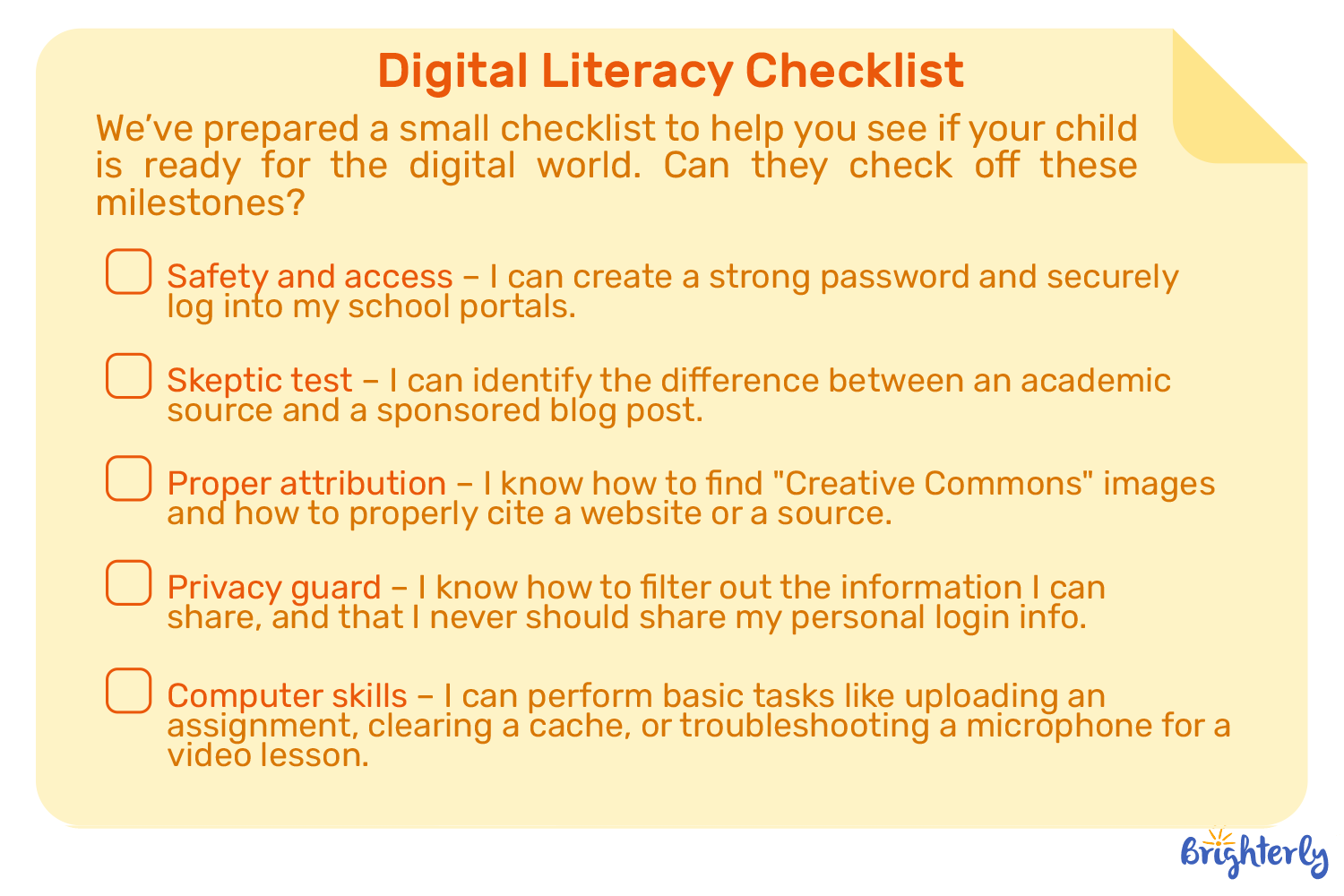
We’ve prepared a small checklist to help you see if your child is ready for the digital world. Can they check off these milestones?
Conclusion
Digital literacy is the bridge between simply using technology and being governed by it, and becoming a power user who knows what they are looking for. By understanding what are digital literacy skills, why your child needs them, and how to learn them, your child will transform into a critical thinker who can navigate the vast digital world confidently. In our digital world, where everything seems to go online, including education, these skills are no longer optional.
FAQ
What Are Examples Of Digital Literacy Skills?
The key examples of digital literacy skills are knowing how to find and verify facts, staying safe and ethical online, understanding how to use GenAI tools responsibly, and using the internet beyond entertainment.
What Are The Three Main Skills Of Digital Literacy?
While the skills needed to become digitally literate are broad, the big three, which we can also use as umbrella terms for other skills, are:
- Finding and evaluating information
- Communicating and collaborating online
- Staying safe and paying attention to cybersecurity.
How Do I Test My Child For Digital Literacy?
The checklist we included earlier in the article is a good way to check your child’s digital literacy skills. You can also give them a specific task or a challenge, like asking them to verify the information in an article and find sources supporting or refuting it.

Studocu remains a popular platform among high schoolers and university students. But is it actually safe and worth using? In this guide we analyze online Studocu reviews from different sources to see what its users have to say about that, so that you have real feedback to rely on in your decision. Score summary Core […]

Apr 09, 2026
Math & reading from 1st to 9th grade
Looking for homework support for your child?
Choose kid's grade

Math & Reading for Grades 1–9
Build real confidence for your child with a Brighterly math or reading tutor.






![Cuemath Reviews: All You Need to Know [2025]](https://brighterly.com/wp-content/uploads/2025/07/Cuemath-Reviews_-All-You-Need-to-Know-e1754582226241-360x200.png)