What Is Genre in Literature and Why Does It Matter?
reviewed by Laila A. Lico
Updated on May 5, 2026
Key Points:
- The mani literature genres are fiction, nonfiction, poetry, and drama.
- Genre classification acts as a mental roadmap, helping readers navigate different types of genres.
- By understanding genre in literature, readers know what to expect from a text, which helps them follow the structure and meaning more easily.
- Recognizing these patterns helps students organize their own thoughts when they engage in creative writing.
Genre in literature is a way of organizing texts into categories based on shared features such as structure, style, and content. This article explains what genre means, breaks down the four main genres of literature, and shows how students can identify them using simple practical steps and examples.
What Is Genre in Literature?
Genre is the organization of literature into categories based on shared characteristics: content, form, or style.
The genre meaning in literature tells the reader what to expect before they even turn the first page. A mystery book, for example, follows a specific plot structure. To build suspense, the author plants clues early on. Using these hints, readers can improve their literacy skills.
Knowing genres makes it easier to classify any text. The four primary types below cover the foundation of that classification.
Build Your Child’s Reading Skills Today
Explore genres with a personalized 1:1 Brighterly tutoring.
Start Now
Explore Brighterly Learning Experience
Learn exactly how Brighterly helps students thrive through expert sessions, online tools, and proven feedback from thousands of satisfied parents
What Are the 4 Main Genres of Literature?
Most literary works fall under four primary categories. The following table provides a quick reference for students and parents to help categorize their reading material.
| Genre | Definition | Key Features | Examples |
| Fiction | Fiction is a type of prose that is not based on reality. It’s up to the author to create a story based on characters or events that are a product of their imagination. As with poetry, this genre also uses figurative language, but its structure follows more closely grammatical conventions. | Imaginative concepts, prose structure, grammatical conventions, figurative language, and Freytag’s plot pyramid |
The novel “Slaughterhouse Five” by Kurt Vonnegut is an example of a fictional story about the main character’s experience with his self-acclaimed ability to time-travel. “Harry Potter” by J.K. Rowling is a fictional story that explores themes of friendship and good vs evil, as the main character discovers he is a wizard. |
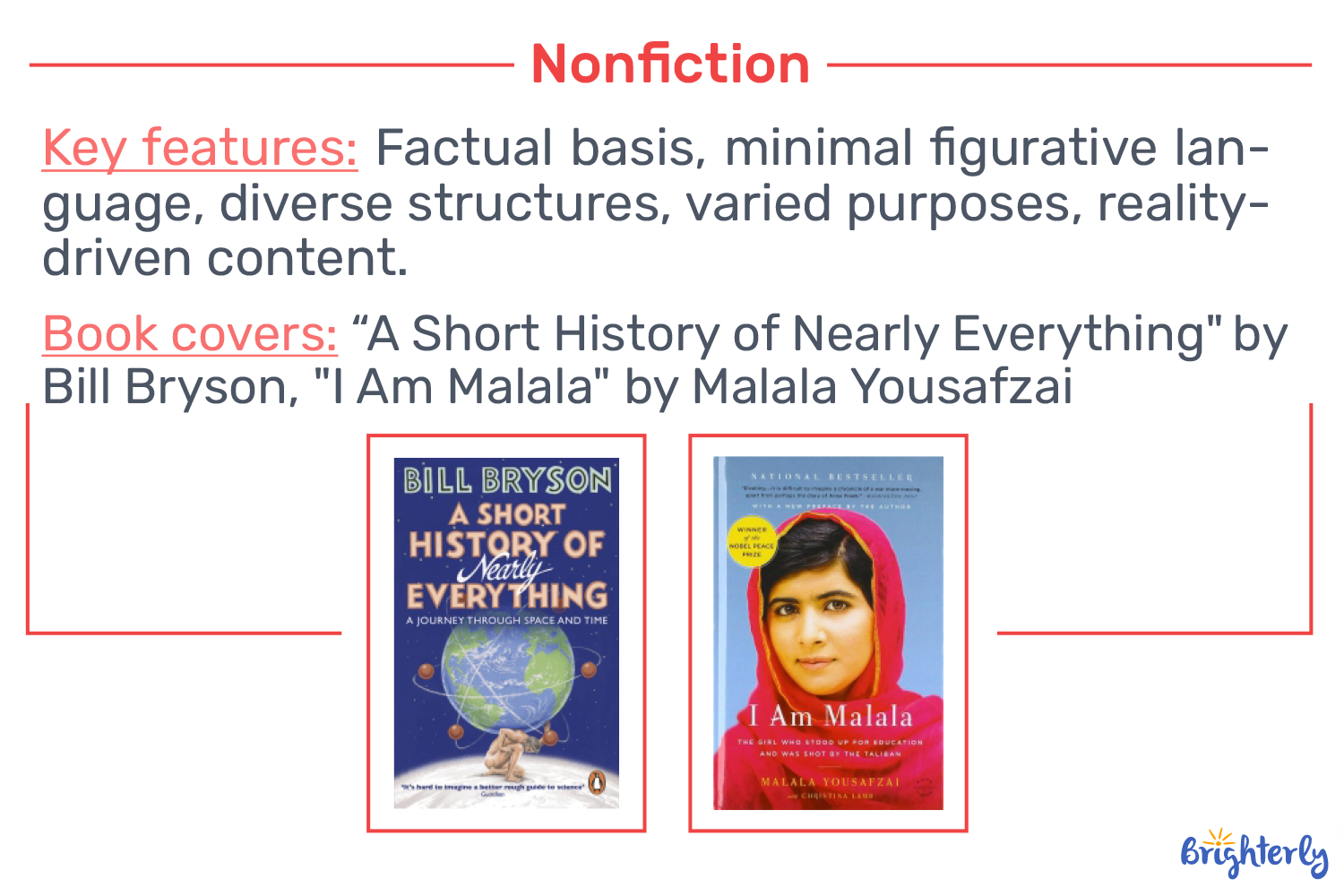
| Nonfiction | As one of the main genres of literature, in contrast to fiction vs nonfiction, nonfiction is based on facts rather than imagination. As it’s less imaginative and more factual, it may use fewer figurative expressions. A piece of nonfiction, however, can vary from one to another. Depending on its purpose, it may tell a story, like a memoir, or be strictly factual, like a history textbook. | Factual basis, minimal figurative language, diverse structures, varied purposes, reality-driven content |
“A Short History of Nearly Everything” by Bill Bryson presents complex scientific facts about the universe and human history in an engaging way that students can understand. “I Am Malala” by Malala Yousafzai is a real-life memoir about the author’s brave fight for education in her country and her personal experiences. |
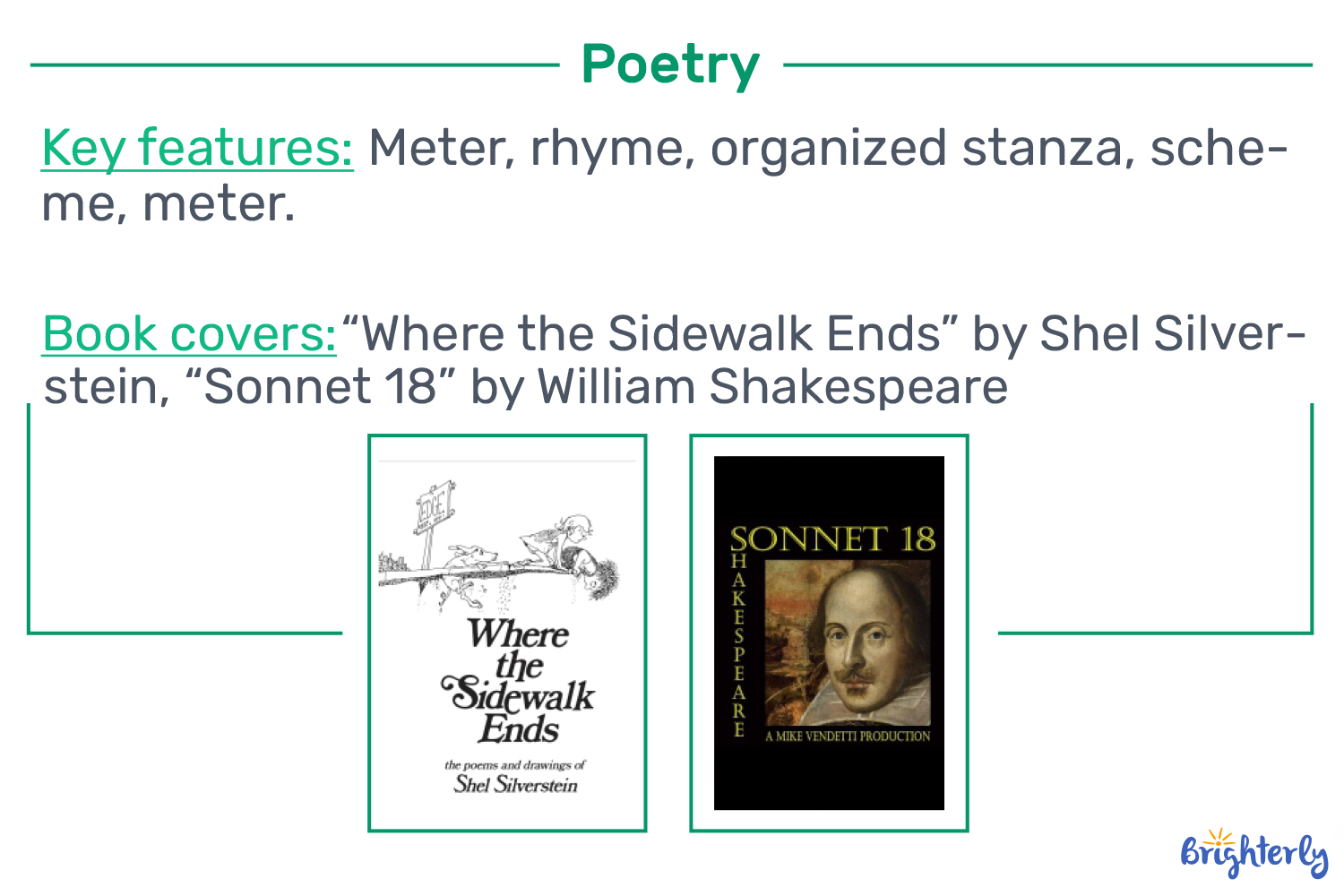
| Poetry | According to Britanniсa, poetry is literature that evokes a concentrated imaginative awareness of experience or a specific emotional response through language chosen and arranged for its meaning, sound, and rhythm. Poetry is characterized by having meter and rhythm in its lines. Unlike other writings that use sentences divided into paragraphs, these lines are put together to form a stanza. It’s common for poetry to use figurative language to convey meanings and create images for the reader through metaphors and similes. | Meter, rhyme, organized stanza, scheme, meter |
“Where the Sidewalk Ends” by Shel Silverstein is for readers of all ages. These poems use imaginative language, steady rhythm, and humorous rhymes to create vivid mental images. “Sonnet 18” is a poem by William Shakespeare that falls within this category of literature. It’s a structured poem that consists of 14 lines that follow a meter (iambic pentameter) and a rhyme scheme of Shakespearean Sonnets. |
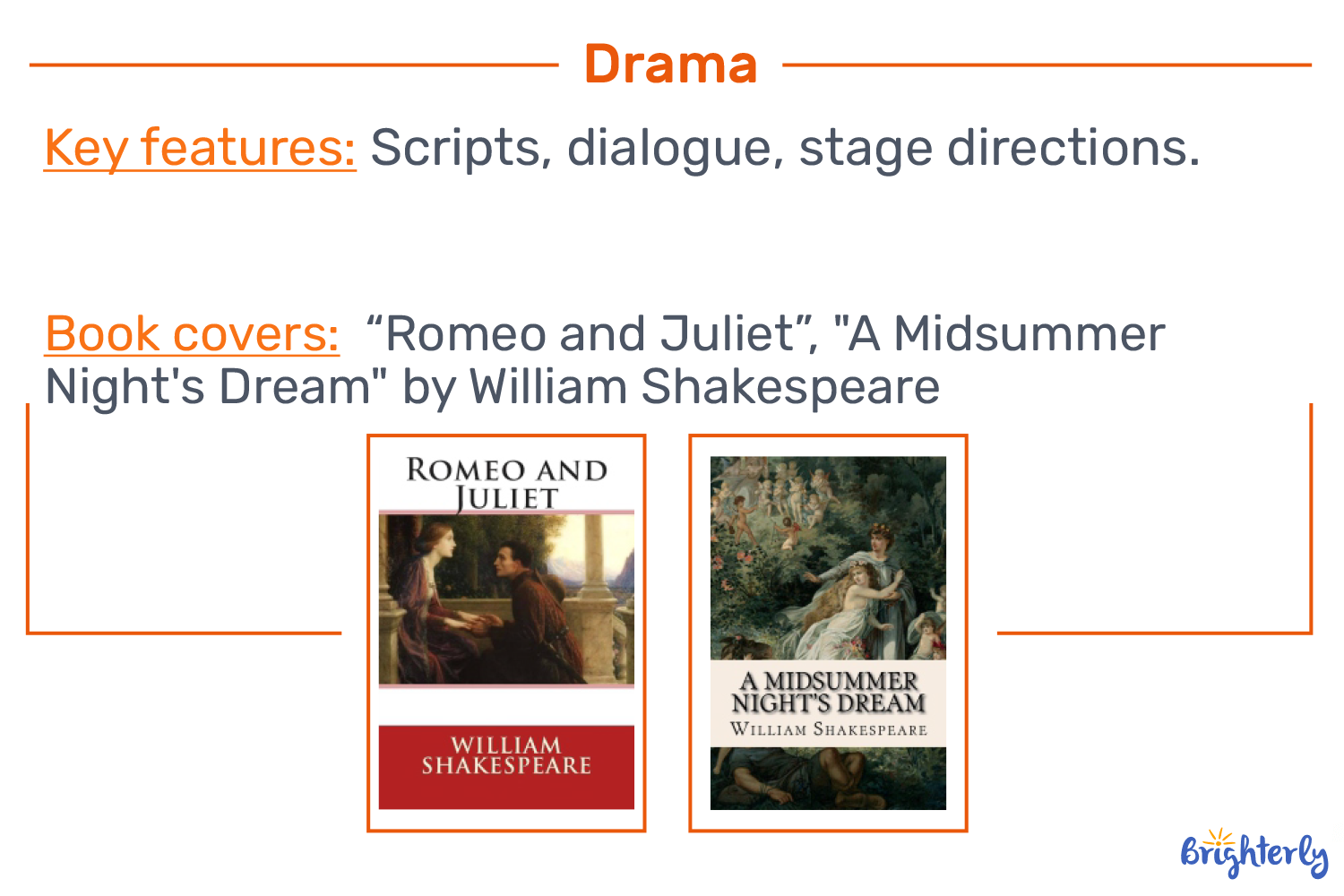
| Drama | In addition to being a genre in literature, this is also a public performance. A drama is written with dialogue and stage directions for the actors. It’s meant to be performed on stage, where meaning is created through speech, movement, and interaction between characters in front of an audience. | Scripts, dialogue, stage directions | “Romeo and Juliet”, “A Midsummer Night’s Dream” by William Shakespeare (school plays) |
Fiction
Fiction as a literary genre acts as empathy training. Reading a story allows students to live through a character’s challenges firsthand. They see the world through a perspective different from their own. This process strengthens their emotional intelligence. They translate this improved understanding into better social interactions in real life.
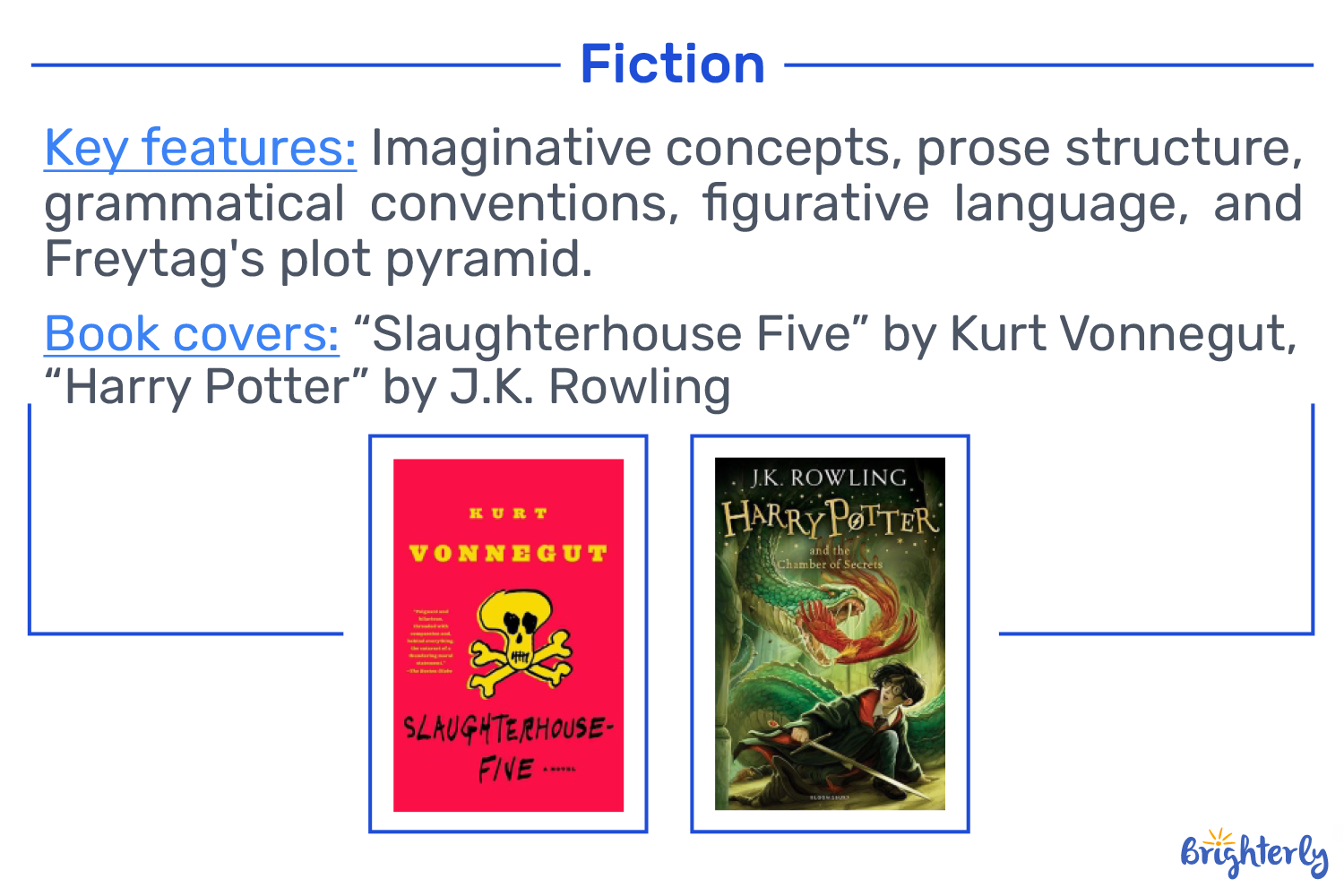
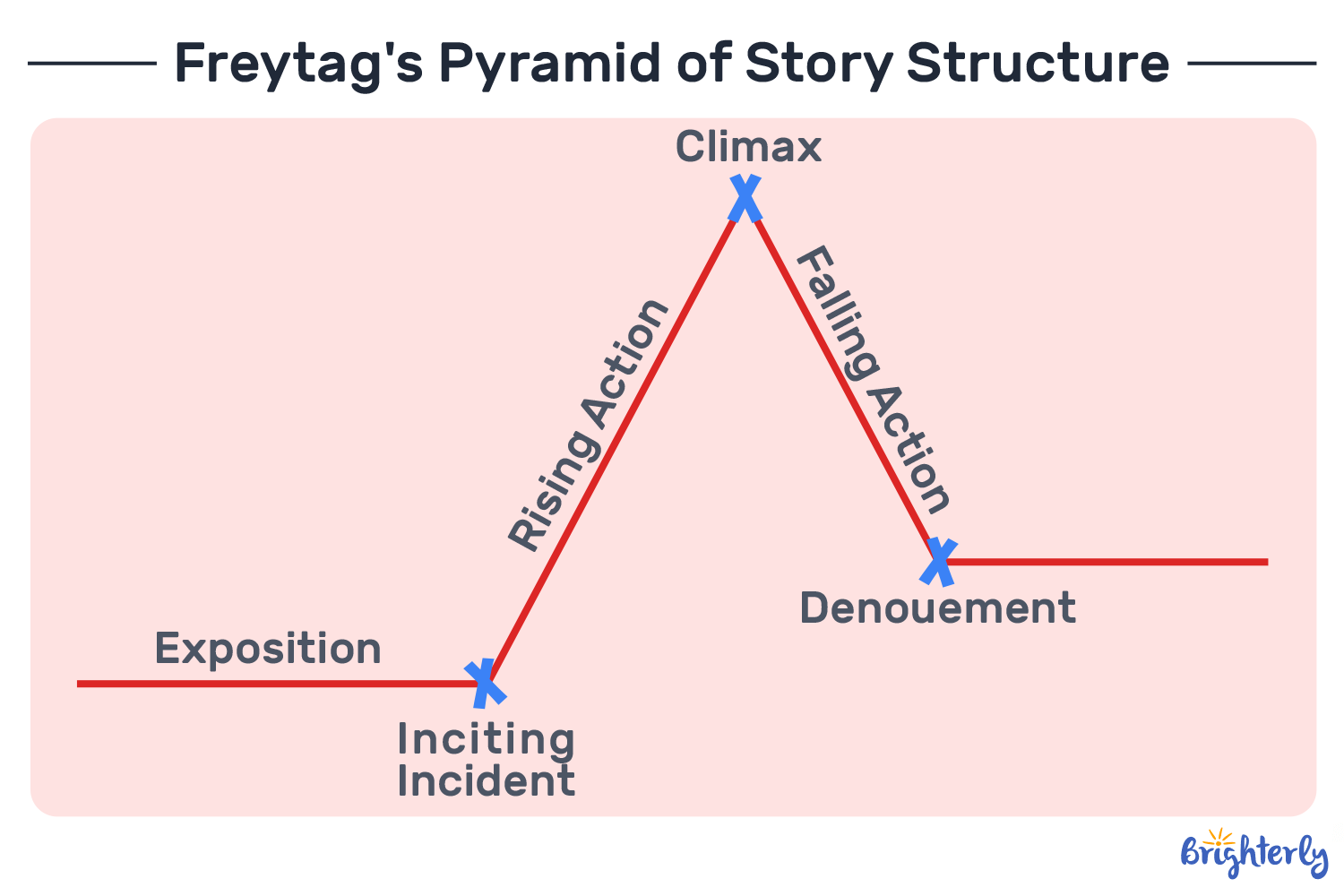
A common structure in fiction is Freytag’s plot pyramid, which includes exposition, inciting incident, rising action, climax, falling action, resolution, and denouement.
Nonfiction
The best nonfiction doesn’t just list facts; it tells the story behind the facts. Kids can learn how the world really works through a biography, a true adventure, or a science book. It teaches critical thinking by asking you to analyze evidence and evaluate sources. As an example, reading about a famous historical figure often leaves a greater impression than any lecture about the time period in question.
Poetry
Poetry is the genre of literature that is related to the art of compressed language. Every single word, comma, and line break matters, forcing the reader to slow down and savor the sound and meaning. This genre is about capturing an emotion or a moment vividly, which serves as a great exercise in learning to focus while reading. For example, a little haiku can give you a fresh, creative perspective on a straightforward downpour.
Drama
The goal of drama is to create an experience that allows the reader to feel and hear, rather than just read quietly. What characters say to each other and what they do (their actions) drive the entire story. By reading aloud, students learn to hear the tone of voice and understand the conflict entirely through dialogue, which forces them to engage their imagination. A performance, even a school play, reveals the power of a script in a way a novel cannot.
What’s the Difference Between Prose and Verse?
The main difference between prose and verse is the way authors arrange their words. According to Merriam-Webster, a verse is a speech or writing distinguished from ordinary language by its distinctive patterning of sounds and especially by its rhythm. While verse employs lines and stanzas to create a rhythm or tone, prose flows through phrases organized into paragraphs. Here are five key distinctions between these types of literary genres:
| Prose | Verse | |
| Structure | Uses sentences and paragraphs to convey concepts. | Uses lines and stanzas to establish structure |
| Rhythm | Adheres to the natural flow of speech. | Often uses meter and rhyme scheme to produce a melodic beat. |
| Focus | Places a high value on logical text structure and precise description | Emphasizes condensed expressiveness, music, and picture are all highlighted in verse. |
| Language | Use figurative language, but usually in a more direct way. | Often conveys greater meaning in fewer words. |
| Visual design | Fills the page from margin to margin. | Leaves gaps to organize concepts into rhythmic units. |
Subgenres of Literature
Genres are often split into smaller groups called subgenres. These categories help readers find exactly what they enjoy and focus on unique themes, settings, or characters.
Fiction Subgenres
Fiction subgenres guide readers toward specific types of imaginary stories.
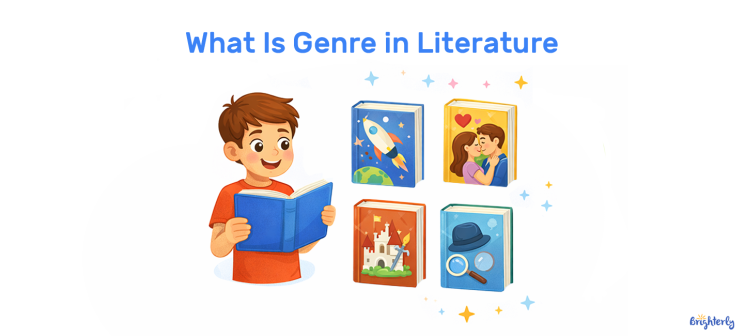
- Fantasy: Stories include magic, mythical creatures, or supernatural powers (e.g., Harry Potter).
- Science fiction: Plots focus on futuristic technology, space travel, or scientific theories (e.g., The Wild Robot).
- Mystery: Characters solve a puzzle or a crime through logic and clues (e.g., Nancy Drew).
- Romance: The story centers on the development of a relationship between characters.
Nonfiction Subgenres
Nonfiction subgenres organize factual texts by their specific purpose or subject.
- Biography: An author writes the life story of another real person.
- Memoir: A person writes about their own personal life experiences and memories.
- How-to: These books provide step-by-step guides for learning a new skill, replacing complex literary devices with clear, practical language that makes learning accessible for every student.
- Informational: Books like history or science texts explain real facts about our world.
Poetry Subgenres
Poetry subgenres differ based on their length and how they communicate emotion.
- Lyric: This short poem expresses personal thoughts or feelings.
- Epic: This long narrative poem tells the story of a legendary hero.
- Haiku: This brief poem follows a strict structure of seventeen syllables.
- Free verse: This style has no set rhyme or rhythm rules.
Note! Personalized reading comprehension program for grades 1–9 helps students learn to analyze any text independently and navigate various literary genres with confidence.
Help Your Kid Fall in Love With Reading
Expert Brighterly tutors guide kids through every genre and reading level.


Why Is Understanding Genre Important for Students?
Knowing genre definition in literature gives readers a mental blueprint. If a student knows they are reading a mystery, they scan the text for clues rather than just focusing on facts:
- Students can predict the structure and content of a book before reading begins.
- Readers apply the correct strategies tailored to the specific text type.
- Active focus on the most relevant information improves overall comprehension.
- Exposure to diverse vocabulary and writing styles broadens language skills.
- Critical thinking skills sharpen during independent text analysis.
- Confidence grows when students tackle new or complex books.
By knowing what to look for, the student directly improves reading comprehension.
Note! Our Brighterly reading program provides a structured path for developing reading skills. Qualified tutors guide students through specific topics to strengthen their comprehension.
A student who understands genre patterns can mimic them in their own online writing lessons. For example, having read many biographies, a child knows how to structure a life short story chronologically.
How to Identify a Genre: Practical Tips
Students can identify what is genre in literature by finding specific clues across the text. This simple checklist helps readers decode the author’s intent before they finish the first chapter👇
| What to check | Likely genre | Example | |
| Opening lines | How the text starts: scene, fact, or emotion |
Scene → Fiction Fact → Nonfiction Image/feeling → Poetry |
“Once upon a time…” → Fiction |
| Point of view | First-person, third-person, or narrator type |
Narrator telling a story → Fiction Author’s voice → Nonfiction Speaker’s inner thoughts → Poetry |
“I remember the day…” → Memoir |
| Conflict type | What drives the story plot |
Good vs evil → Fantasy Unsolved crime → Mystery Emotional struggle → Drama |
Hero battling a dark lord → Fantasy |
| Time period | When the story takes place |
Past era → Historical fiction Present day → Realistic fiction Future → Sci-fi |
Story set in 1800s London → Historical fiction |
| Tone/mood | Emotional feel of the text |
Suspenseful → Thriller Scary → Horror Lighthearted → Comedy |
Creepy old house, strange sounds → Horror |
| Plot pattern | How events unfold |
Quest or adventure → Adventure Romance arc → Romance Rising clues → Mystery |
Two characters falling in love → Romance |
| Visual cues | Illustrations, fonts, formatting |
Picture-heavy → Children’s book Panels → Graphic novel Written in ines and stanzas → Poetry |
Speech bubbles + art → Graphic novel |
| Reader reaction | What the text makes readers do or feel |
Learn facts → Nonfiction Imagine a world → Fiction Feel deeply → Poetry |
“I pictured the scene clearly” → Fiction |
Note: If identifying genres in literature is still too hard, you can try our Brighterly genre worksheets for more practice.
Conclusion
Students who master the various types of genres in literature will be able to approach any text with clear expectations. This knowledge builds critical thinking skills, whether studying a comedy’s structure or a tragedy’s emotional impact.
At Brighterly, we encourage young readers to expand their worldviews and strengthen their literacy by exploring diverse categories. These patterns help students become lifelong, enthusiastic readers by gaining confidence today. Children can also try to pass free reading test, so parents can see if their child can accurately spot these differences in new texts.
Frequently Asked Questions
What Are the 8 Genres of Literature?
The main 8 genres of literature are fiction, nonfiction, poetry, drama, fantasy, mystery, thrillers, horror, biography, and autobiography. These categories group books based on specific writing styles and narrative patterns. Knowing these distinctions helps readers choose materials that align with their personal interests and learning goals.
How Do You Identify a Genre?
To identify a genre, check the text’s purpose, structure, and content. Does the author aim to inform, entertain, or persuade? Look at how the narrative moves and what kind of language the writer uses. Analyzing these elements quickly reveals the book’s classification.
What Is the Difference Between Genre and Theme in Literature?
The difference in genre refers to the category of a book (e.g., mystery), while theme refers to the central message or underlying idea the author wants to convey (e.g., courage or friendship). Genres describe the type of story, like a framework or setting. Themes represent the deeper meaning or moral lesson that remains with the reader after the story ends.
What Are the Most Popular Genres of Books Among Kids?
The most popular genres of books among kids are fantasy, mystery, and adventure. Kids usually love them because these genre examples in literature offer high-interest storylines that keep readers engaged.
Is Prose a Genre or a Form of Writing?
Prose is a form of writing defined by its grammatical structure, whereas genres are categories of literature based on content and style. Prose uses standard sentences and paragraphs instead of poetic line breaks. You can find prose within almost every genre, from a biography to a mystery novel.

If you’re wondering “What is a metaphor for kids?”, it’s a figure of speech saying one thing is another, and a powerful tool that helps make language alive, create comparisons, and understand the world better. Once children know how to use metaphors, they can explain concepts more easily, express emotions, and be more creative. This […]
May 05, 2026
Cuemath offers 1:1 math and coding support, but it doesn’t work for kids who need help in other subjects. This guide compares the formats, subjects, and costs of 7 Cuemath alternatives for students with diverse requirements. Among Cuemath competitors, Brighterly offers US standards-aligned math, reading, and writing tutoring, while Khan Academy provides free, self-paced coverage […]

May 08, 2026
Math & reading from 1st to 12th grade
Looking for homework support for your child?

Choose kid's grade

Math & Reading for Grades 1–12
Build real confidence for your child with a Brighterly math or reading tutor.