Writing IEP Goals: Examples by Skill Area and Grade Level
reviewed by Franz Jerby Delos Santos
Updated on October 15, 2026
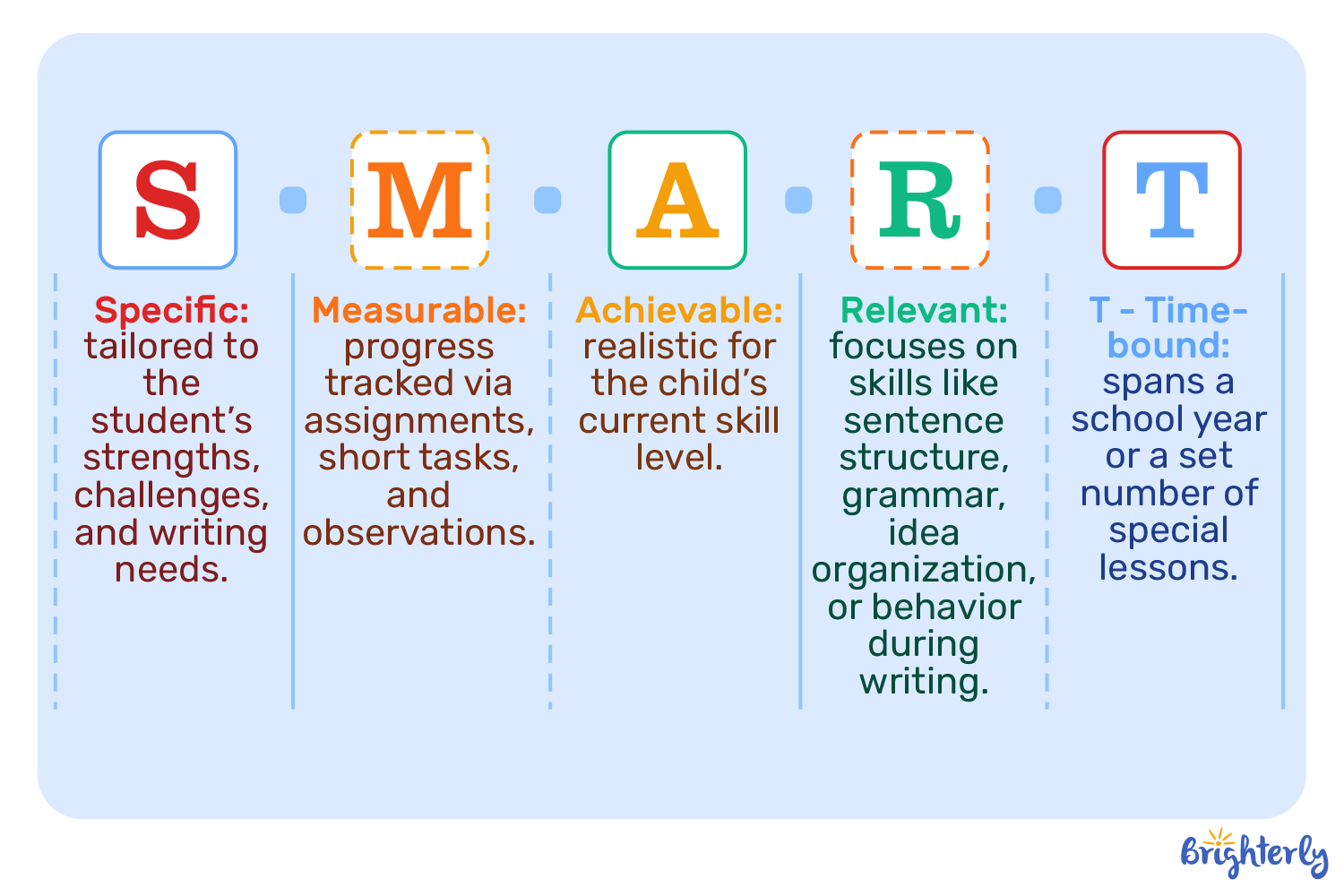
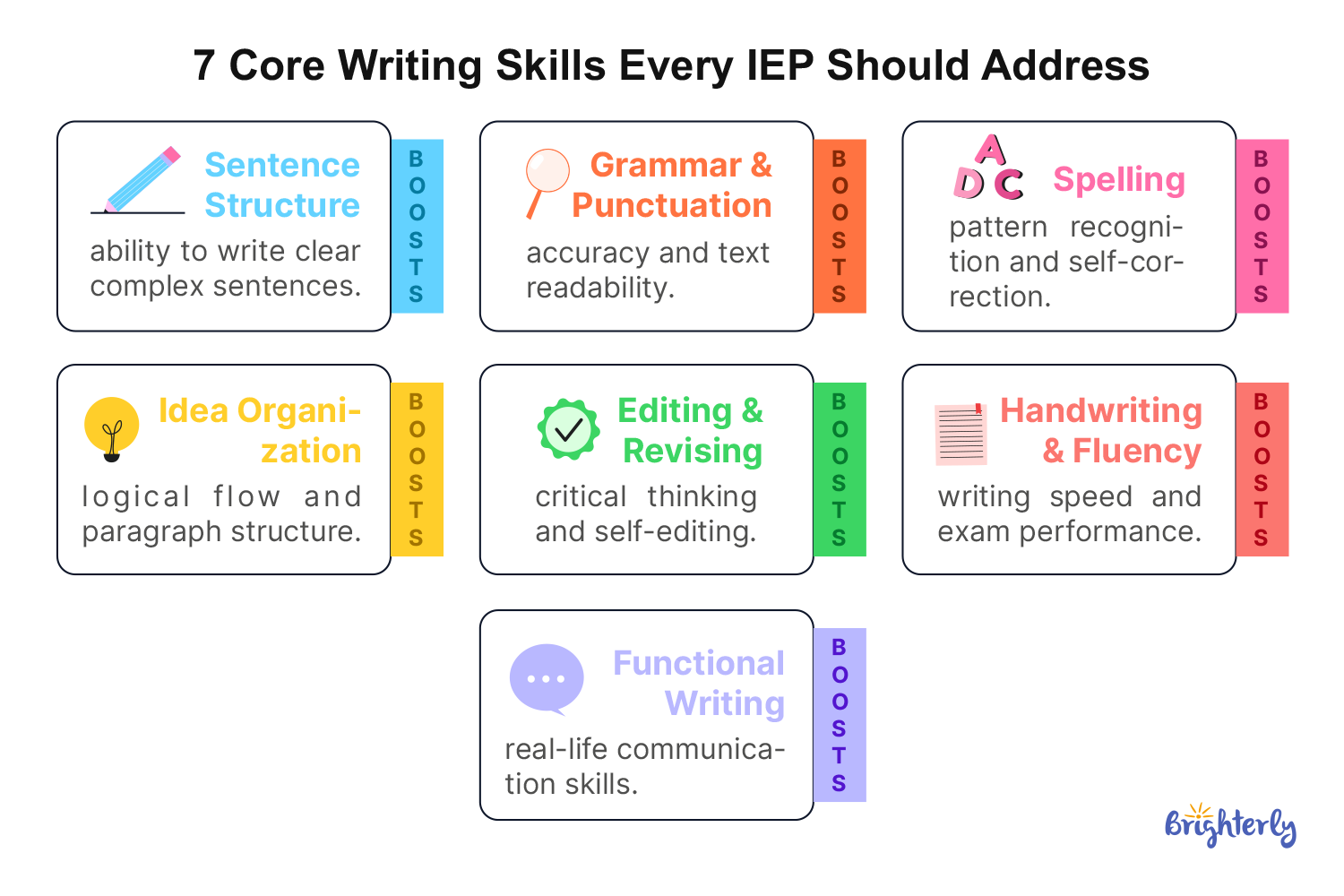
Key Points: Some children still struggle with writing even when an IEP is in place and the problem often comes down to goals that are too vague to act on. Here you’ll find what makes writing IEP goals actually work, examples for every grade level, and a practical look at the SMART formula. A strong IEP writing goal is a very specific goal because it is built on the student’s real skill gap. That is, it is not a general “needs to learn to write better,” but a clear, actionable task. These goals are also called SMART goals more on the formula and how to apply it in the next section. IEP writing goals outline the skills that the child needs to develop in writing such as spelling, grammar, organization of thoughts, sentence structure, or short essays. In short, when parents or teachers read a strong goal, they immediately understand what the child needs to work on and what the path looks like. Note that these goals aren’t a step-by-step program with all tasks and strategies, but rather a list of short-term and long-term targets. For example: Writing measurable IEP goals and objectives is essential – they help teachers, tutors, and parents select the right assignments and create an individualized path toward steady progress or parents to select the right assignments by creating. Note: Writing goals are usually set by a team of teachers and specialists, using data on your child’s present level. SMART is a formula that helps write IEP goals in a way that actually works as recommended by the IRIS Center at Vanderbilt University. Each letter is a guidepost, something that helps you shape the goal as precisely as possible. Here is a quick visual guide: To illustrate how you can use the formula in practice, imagine you want to teach your child to use periods correctly. Without SMART, the goal sounds like this: the child writes better. Here is what you get with SMART: Put it all together: “Within 4 weeks, the child will independently place a period at the end of each sentence in at least 4 out of 5 attempts.” That is roughly how this formula works. Additionally, Lucilla Davila, special education expert, highlights how a SMART-style goal looks in practice: “A strong writing goal must be observable and rooted in a functional context.” Explore Brighterly Learning Experience Learn exactly how Brighterly helps students thrive through expert sessions, online tools, and proven feedback from thousands of satisfied parents Writing skills can’t be developed all at once, they have to be built layer by layer. Below are the seven core skill areas that IEP goals for written expression typically target, each with practical examples your child’s IEP team can use or adapt. Sentence structure development goals are where writing actually begins. Instead of short, simple phrases, a child should be able to express their thoughts on paper in a more complex or sophisticated way in the future. Otherwise, without this skill, it will be difficult to write any meaningful longer sentence, not to mention paragraphs or entire texts. IEP goals for writing simple sentences usually start with something simple, for example, combining two sentences into one. Examples:
What if writing finally clicked for your child?
Brighterly tutors turn IEP goals into real progress lesson by lesson.
Grammar and punctuation were developed to make a text understandable to the reader. Without proper punctuation even a good thought can get lost. The goals presented below are designed to help your child understand not just the rules, but the logic behind a period and a capital letter. IEP writing goals examples: Kids make spelling mistakes all the time when writing, e.g. “nite” instead of “night” is one classic example. It is common and is not a problem, but it does need some solid work so that the brain memorizes and locks in as many patterns as possible. With the right spelling goals and consistent practice, the correct spelling will come naturally, like second nature. Examples of IEP goals for writing: The skill of paragraph organization solves the chaos in a child’s head. When a student knows the rules and logic of paragraphs, they will understand the text much more easily and be capable of deciding what to write at the beginning, what goes in the middle, and how to end a thought effectively. Indeed, the lack of a plan before starting an essay is among the top reasons why children struggle with writing. In this case, idea organization goals can help to fix this problem. Goal examples: As much as kids would like, writing does not end at the moment when you put down the pen. The second and arguably more responsible part is the ability to edit yourself: review the text, find its weak points, and make it somewhat better. It is exactly this skill that turns an ordinary text into something strong. Writing IEP goals examples: Don’t underestimate the ability to write quickly. This skill can earn lots of points during an exam because virtually all tests are time-constrained, while slow writing can cost much more than most expect. So yes, this one is worth practicing too. Goal examples: Functional writing is the name of applied writing that we use on a daily basis from work emails, text messages to teachers, to shopping lists or creative writing . These are essential skills that are absolutely worth passing on to your child. Goal examples: Professional tutors know the ropes of school education and children’s difficulties. Through individual lessons, they quickly scan what the child is struggling with and help to solve the problem fast. This is exactly how our Brighterly ELA tutors work. In our online writing classes, your child will improve their writing exclusively 1:1 with a mentor. We ask our teachers not to follow a template program, but to build each lesson around a child’s specific IEP goals. So your child can work with texts from every angle, we combine writing and reading programs for expression and understanding respectively. What exactly we work on: We always try to keep things interesting, that’s why we teach through games and presentations. Between classes, you can use our free reading and writing worksheets at home.
Help your little ones boost writing skills
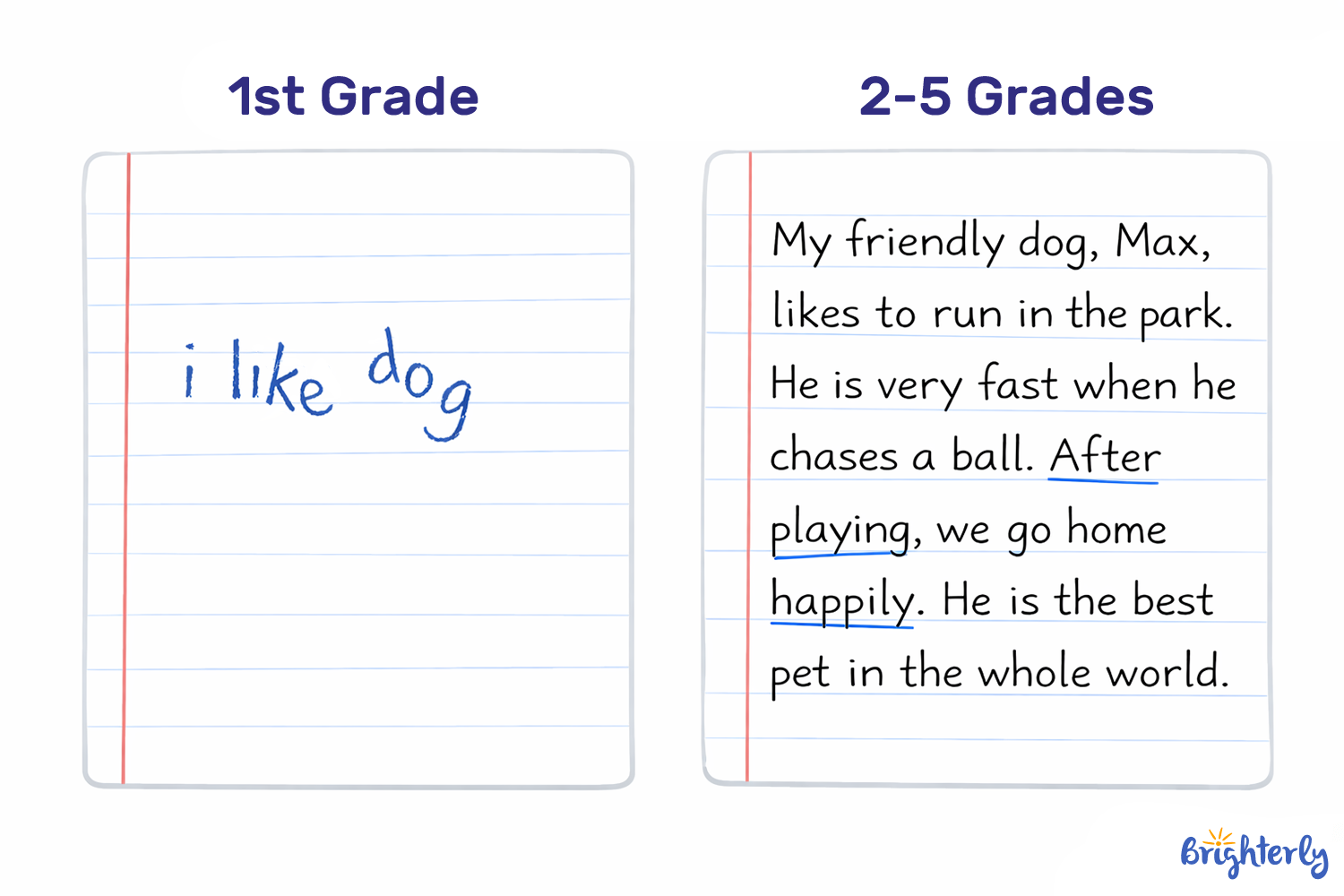
Brighterly’s online lessons make learning fun, focused, and effective. Writing IEP goals for early grades should focus on the most basic standards: By grades 2-5, children are usually ready to work with longer texts and more complex sentences. So, the elementary writing goals IEP include: Good examples: In middle school, writing goals for IEP encourage kids to practice different written forms, which build stronger and more general writing skills over time. At this stage, children should learn how to write organized paragraphs, use transitions for flow, strengthen grammar and punctuation, and practice short essays, letters, or summaries. Goal examples: Further, in high school, students learn to collect ideas and information from reliable sources and turn them into clear essays or research papers. They also practice sharing their writing with various members of their community: teachers, classmates, and even future employers. These skills make a real difference as they move toward graduation and the next steps in life. Goal examples: Helping your child achieve their IEP goal writing can seem challenging at first, but simple executive strategies make a difference. By monitoring progress and keeping a collection of their written work, you can easily see how much they are improving. With steady support, writing can become enjoyable and build confidence. Here are a few strategies to help your child succeed. Aim for short, regular writing sessions each day. Such sessions help children get comfortable expressing their thoughts in writing. For example, you can start with a journal, letters to friends, or short stories. Primary advice is to focus first on short sentences and paragraphs, gradually increasing their complexity instead of expecting a long essay right away. Note: If you’d like to manage the whole learning process yourself, check out this guide on how to teach kids to write. There is no better way to teach than to show examples of well-written sentences or paragraphs and review them together with a child. It will definitely help them understand structure, logical flow, and even basic grammar rules. Work together with your child to spot and correct mistakes step by step – first grammar, then punctuation, then style. If you don’t have the time to monitor every detail, a tutor is a great option. A professional reading or writing teacher can guide your child, track progress, and ensure the IEP writing goals are met. Praise your child! When they make specific achievements, highlight them: “You used capital letters correctly!” or “Your paragraph is very clear!” It will boost their confidence and motivate them to keep writing. Ultimately, the key to achieving an IEP writing goal is consistency, regular practice, and attention to both progress and challenges. With the right support, children build real skills and confidence in their writing. Brighterly makes this process enjoyable and structured for both young learners and high school students. Certified teachers provide personalized guidance for each child’s needs. Book a free lesson with our reading tutors to see if it’s the right fit. “The student will become a better writer by the end of the year” – that is a poor goal because it’s too vague. There’s no way to quantify ‘better’ and it doesn’t specify whether the student will improve in spelling, length of writing, grammar, or creativity. It also doesn’t state the particular level of accuracy expected. There is no set number, but in practice, 1-3 writing goals per school year are sufficient, with short-term goals being updated more frequently, usually quarterly or every semester. Setting too many goals is distracting and makes it difficult to track progress. Generally, it is better to have one well-articulated goal that actually works than five vague ones that no one tracks. An IEP goal is an overall annual outcome that a child should achieve. An objective is a smaller, specific step that leads to that goal. For example, a goal: “write coherent paragraphs.” An objective: “use transition words in at least 4 out of 5 attempts.” A goal shows where we are going, while objectives help us reach that goal step-by-step. IEP goals are formally reviewed once a year during an annual team meeting that includes parents, teachers, and school specialists. Still, progress monitoring happens more frequently, usually quarterly or every semester. If a child has reached a goal faster or, vice versa, got stuck, the team can adjust the goals at any time. First of all, educators from the IEP team analyze the child’s test results, review their written work, and listen to observations from teachers and parents. After that, they compare the gaps between what the child can do and what they should be able to do according to their age. Only then can educators draft writing IEP goals and objectives for the year. As a rule, goals start with building fundamental skills first, such as sentence structure. And only later do the goals move toward research writing. Figuring out “How much does iReady cost?” can be difficult, as the official website doesn’t offer this information. This guide summarizes key iReady pricing details to help districts estimate how much they will need to pay for subscription, assessment, and books. The cost depends on the number of students, subjects, and membership length. How […] Sep 12, 2025 A comparison between IXL vs Prodigy shows that IXL is best for adaptive PreK–12 skills practice across multiple subjects, Prodigy for highly gamified math and English practice, and Brighterly for K–12 students who need live 1:1 math or ELA instruction. This guide compares their learning formats, personalization, subjects, pricing, and reviews to help families choose […] Sep 15, 2025
What Makes a Strong Writing IEP Goal?
What Is the SMART Formula for Writing IEP Goals?


Written Expression IEP Goals by Skill Area
Sentence Structure IEP Goals


IEP Goals for Grammar and Punctuation
IEP Goals for Spelling
IEP Goals for Idea Organization and Paragraph Structure
IEP Goals for Editing and Revising
IEP Goals for Handwriting and Fluency
Functional Writing IEP Goals
How Tutor-Guided Learning Can Help With Writing IEP Goals

Writing IEP Goals by Grade Level
Elementary (Kindergarten–5th Grade)
Writing IEP Goals for 1st Grade
Writing IEP Goals for 3rd Grade
Writing IEP Goals for 5th Grade
Middle School (6th–8th Grade)
High School (9th–12th Grade)
Strategies for Achieving IEP Goal Writing
Create a Daily Routine to Achieve a Writing Goal
Break Tasks into Small Steps
Use Models and Examples
Provide Support in Changing and Revising the IEP Writing Goal
Use Positive Reinforcement
Conclusion
Frequently Asked Questions
How to Write Goals for an IEP?
What Is an Example of a Poorly Written IEP Goal?
How Many Writing Goals Should Be Included on an IEP?
What’s the Difference Between an IEP Goal and an IEP Objective?
How Often Are IEP Writing Goals Reviewed?
How Do IEP Teams Decide Which Writing Skill to Target First?





Math & reading from 1st to 12th grade
Looking for homework support for your child?

Choose kid's grade

Math & Reading for Grades 1–12
Build real confidence for your child with a Brighterly math or reading tutor.