
Fahrenheit 451 Worksheets
Updated on August 31, 2026
Ray Bradbury’s Fahrenheit 451 offers a profound look at censorship, technology, and the value of critical thought in a dystopian society. Analyzing this classic novel helps high school seniors develop advanced literary analysis skills while examining complex thematic elements. Seeing how Bradbury turns a burning book into a symbol of a much larger idea is easier to unpack with a literature tutor guiding the discussion chapter by chapter.
Fahrenheit 451 Worksheet PDFs: Examples
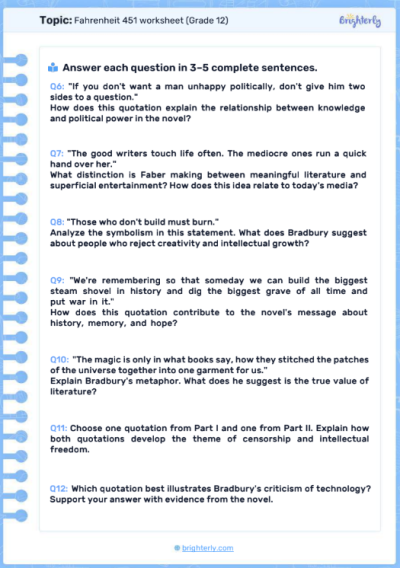
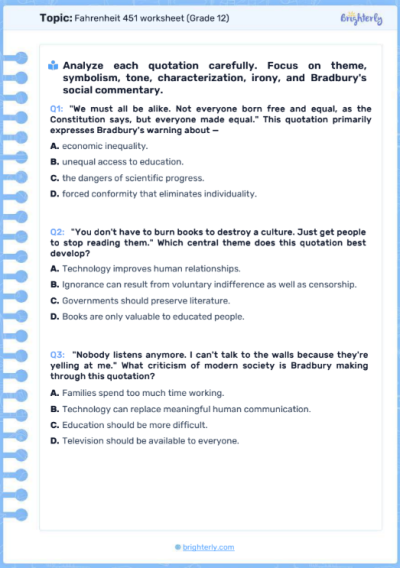
Download Fahrenheit 451 Worksheet PDFs
Access high-quality, printable PDF worksheets designed to support high school students in analyzing key themes, character development, and literary devices in Fahrenheit 451.
More literary analysis worksheets
Continue exploring theme, symbolism, and character development with worksheets built for advanced literature study.
- figurative language worksheets
- character analysis worksheet
- author’s purpose worksheet
- high school reading comprehension
- 10th grade reading worksheets


Help your child reach their full potential!
Answer a few quick questions about your child’s learning, and we’ll recommend next steps.
Benefits of Fahrenheit 451 Worksheet
Engaging with structured worksheets for Fahrenheit 451 encourages high school seniors to perform rigorous textual analysis and strengthen the critical thinking abilities required for college-level literature courses.
By evaluating Ray Bradbury’s use of symbolism, imagery, and other figurative language activities, students gain a deeper understanding of how authors construct complex societal critiques.
These exercises guide learners through thematic explorations of state-sponsored censorship, mass media reliance, and intellectual suppression, tracing Guy Montag’s internal conflict and transformation from a compliant enforcer to a free-thinking rebel.
For educators, these printables serve as assessment tools to track student comprehension, vocabulary acquisition, and analytical writing skills, while equipping learners to draw connections between fictional themes and real-world technological trends.


Math & reading from 1st to 12th grade
Looking for homework support for your child?

Choose kid's grade

Math & Reading for Grades 1–12
Build real confidence for your child with a Brighterly math or reading tutor.