
Gender Gap in STEM Statistics 2025-2026
reviewed by Jo-ann Caballes
Updated on August 20, 2026
Key Points:
- A girl’s interest and confidence in math today can shape whether she sees STEM as part of her future, making early encouragement and support especially important.
- The gender gap in STEM statistics shows that globally, women make up 35% of STEM graduates (2026) and 28.2% of the STEM workforce (2024).
- The main reasons behind the underrepresentation of women in STEM are a lack of confidence, the absence of role models, harmful workplace culture, wage differences, and limited career growth.
- Exposing children to STEM early, providing visible female role models, and addressing cultural and workplace obstacles can help alleviate the gender bias in STEM.
If your daughter loves math, struggles with it, or worries that STEM “isn’t for girls”, the gender gap in STEM statistics can help you understand the challenges she may face and why her interests are worth exploring. The gap remains significant as women represent about a third of STEM graduates worldwide, but girls who build confidence and strong STEM skills today have every reason to see themselves in STEM careers tomorrow.
What Is the Gender Gap in STEM?
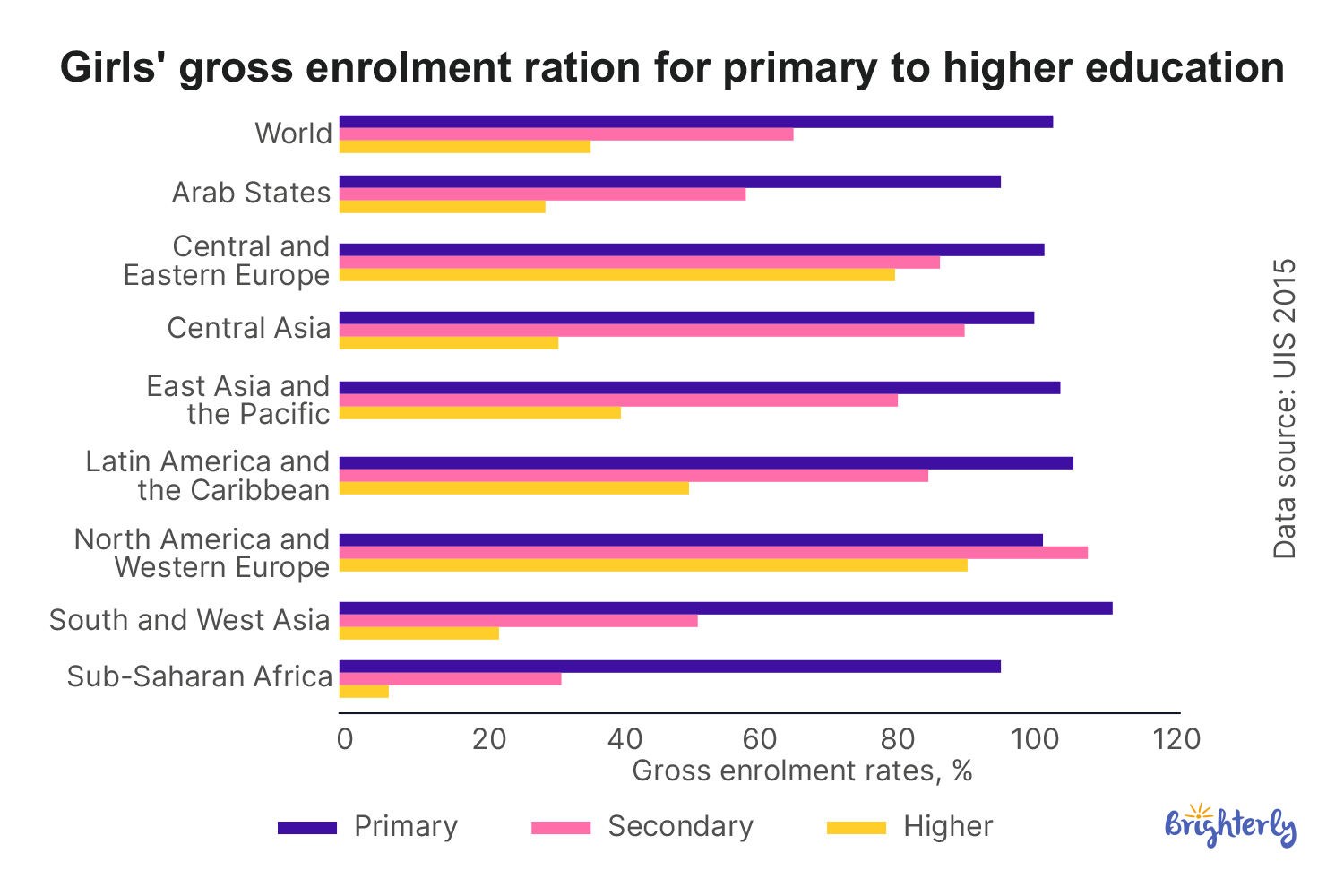
The STEM gender gap is a persistent imbalance between the representation of women vs men in science, technology, engineering, and mathematics, both in education and the workforce. Globally, women represent 35% of STEM graduates, according to 2026 UNESCO data. The discrepancy in education continues into the professional world, where fewer women choose STEM-related careers than men and make less on average.
For girls still at school, this gap can start with something as simple as whether they see themselves as good at math or capable of pursuing a STEM subject.
STEM Gender Gap Examples
For a girl interested in STEM, the gap can appear at different stages of the path from school to a future career. Examples of the gender gap in STEM include:
- High-school girls showing less interest in advanced STEM subjects (63% of Gen Z girls vs 85% of boys according to Gallup).
- Fewer female students (35% according to UNESCO) graduating in STEM-related disciplines.
- Fewer women holding leadership positions (12% of C-suite positions according to the WEF) in technical fields.
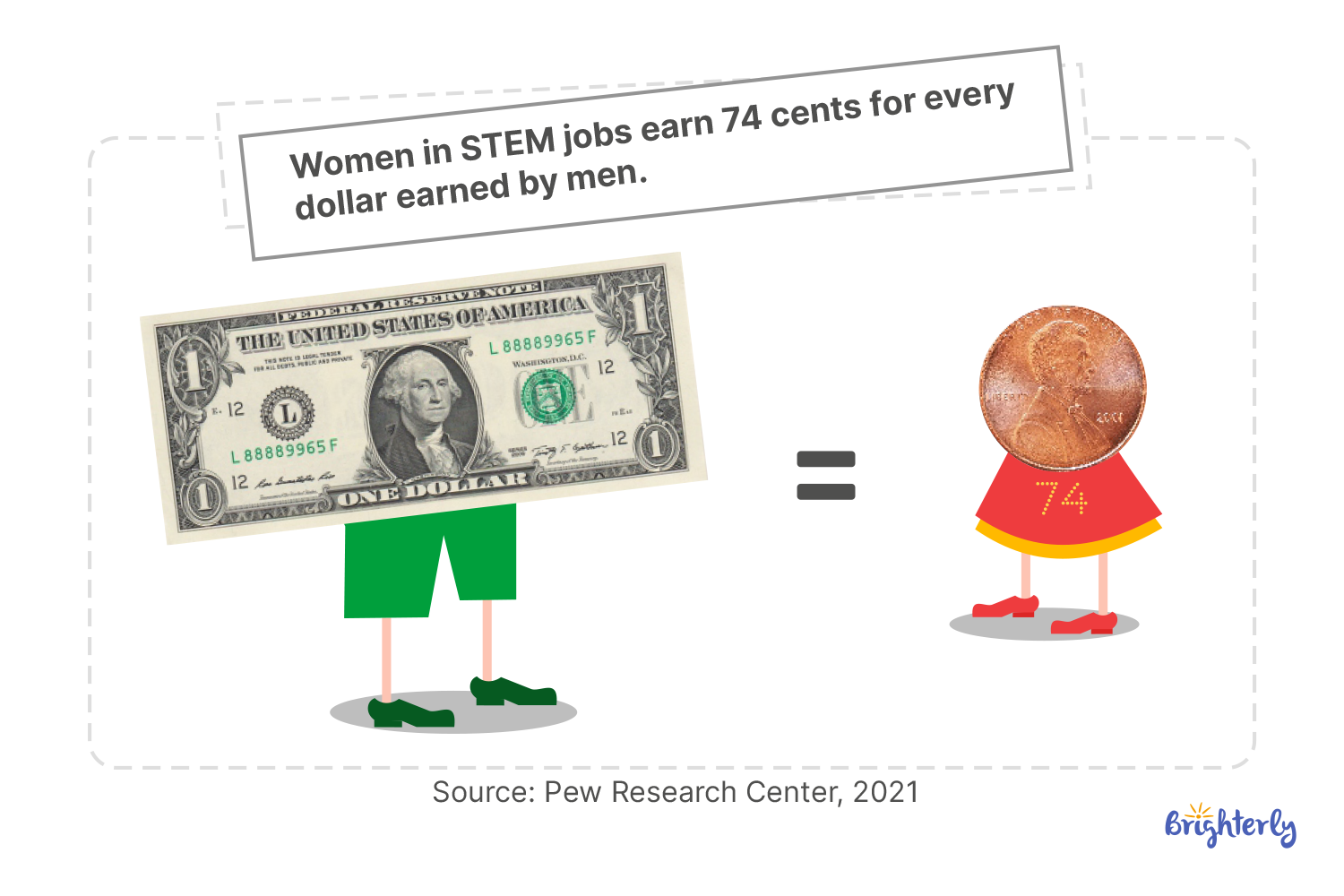
- Female scientists being paid less than their male counterparts (gender pay gap of 13.1% in science and 9.5% in engineering according to HR Dive).
Explore Brighterly Learning Experience
Learn exactly how Brighterly helps students thrive through expert sessions, online tools, and proven feedback from thousands of satisfied parents
Gender Gap in STEM: The Key Numbers for 2026
- Based on girls in STEM statistics from UNESCO 2026, 35% of graduates in STEM fields are female.
- The participation of women in the STEM workforce reaches 28.2% according to data from the World Economic Forum 2024 (latest available data).
- One in three global scientific researchers is a woman, based on 2023 data from UNESCO.
- In 2024 (latest available data), HR Dive estimated the gender pay gap in STEM in the US at 13.1% in science and 9.5% in engineering, compared to 6% across all professions.
STEM-focused math tutoring for your child!
Our teachers customize learning to your kid’s current level & future goals.


Global Gender Gap in STEM: How the US Compares
UNESCO reports that globally, women constitute 35% of STEM graduates, while in the US, reporting similar numbers in 2021-2022 (latest figures). The US ranks at the lower end of the STEM education gap at 35.5% while many other countries boast higher numbers, including 22.3% in Switzerland, 27.4% in Finland, 27.6% in Germany, 28.5% in Norway, 31.4% in Canada, 31.8% in France, and 35.5% in Sweden (WEF data).
In the US, the percentage of women employed in STEM roles reached 52% in 2023, according to the International Labor Organization’s (ILO’s) latest data, compared to 28.2% for women globally (World Economic Forum 2024 data – latest). In the 84 countries examined by the ILO, the female representation in STEM employment ranged from 17% in Iraq to 57% in Mongolia, with 35% in Austria, 39% in the UK, 42% in Japan, and 43% in Switzerland.
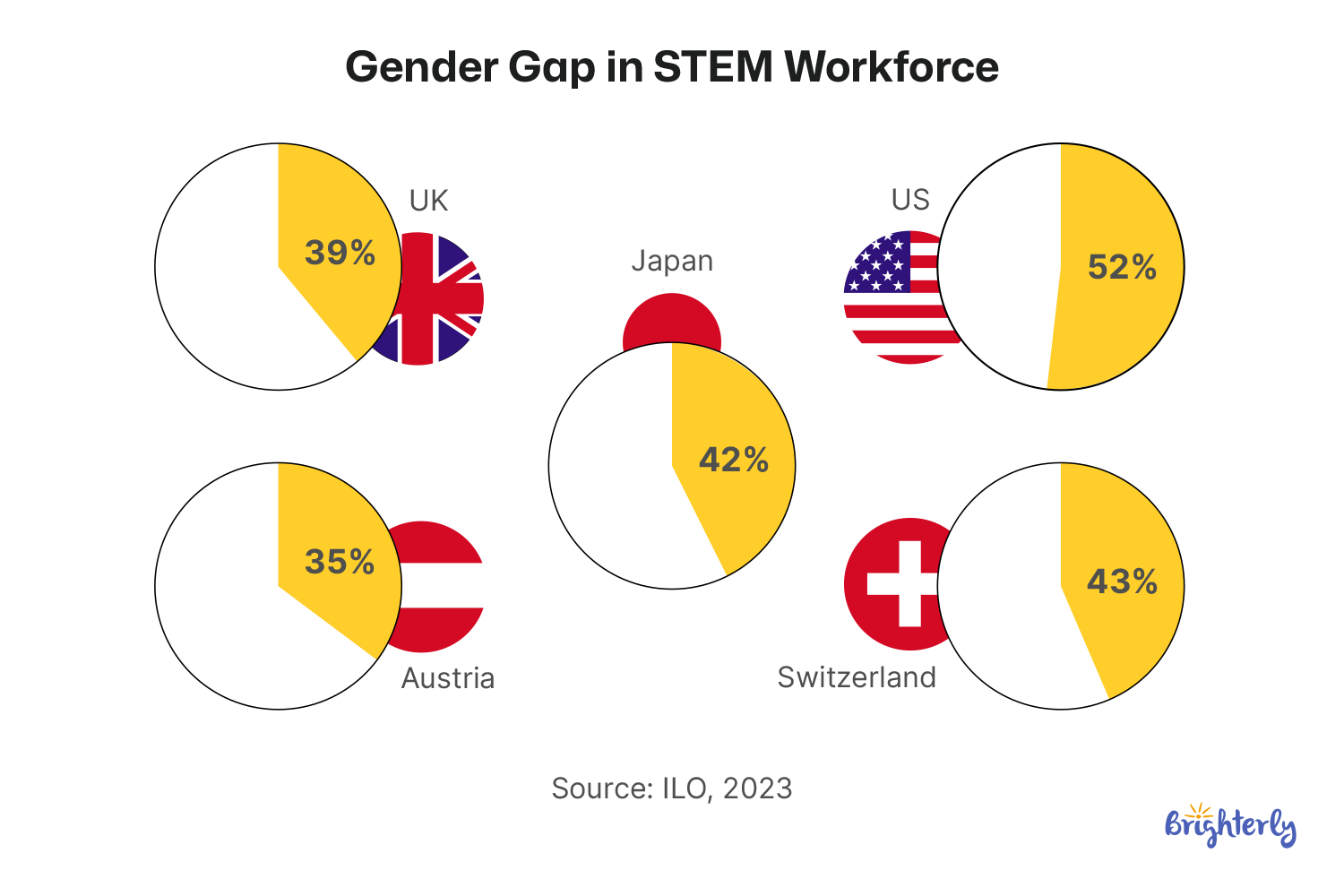
Note: According to NCES data, women occupied 36% of STEM jobs in the US in 2024. Women in STEM statistics sometimes vary due to different methodologies.
Gender Gap in STEM Statistics: US K-12 Girls’ Participation
Math and science are obligatory in grades K-12 within the US educational system. Still, differences between boys’ and girls’ participation in STEM show up in early years and expand with age. The gender inequality in STEM seems to originate from children’s own perceptions and interests and gets further exacerbated by educational system mechanisms that push boys towards STEM and girls away from it.
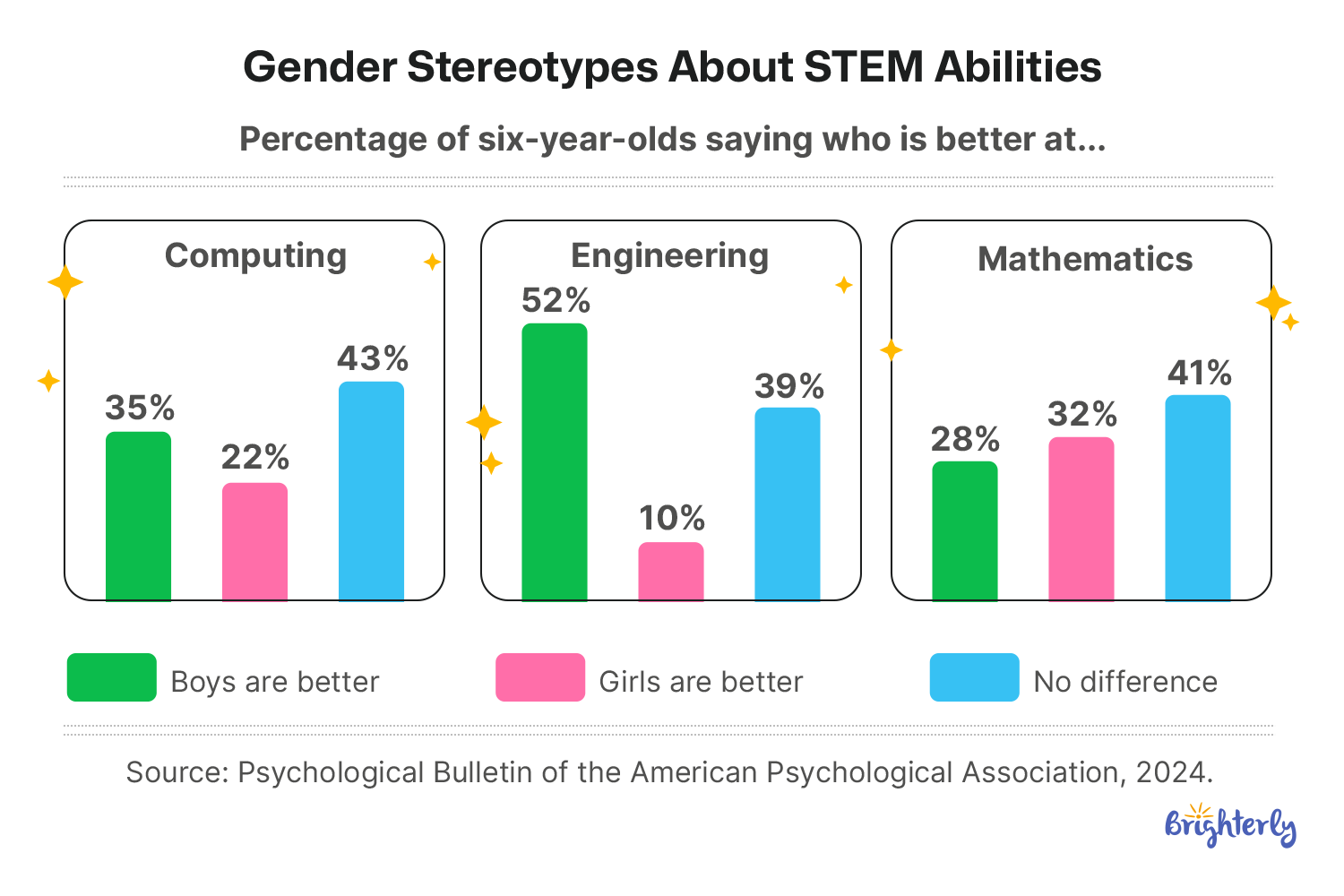
According to 2024 research in Psychological Bulletin, at the age of 6, kids already perceive girls as worse in computing and engineering (but not math) than boys. A 2025 article published in Computers and Education Open states that the computer science gender gap grows from minimal in elementary school. Another 2025 study in Psychological and Cognitive Sciences calculates that the gender gap in personal interest in computer science and engineering measured on a scale of 1-6 increases from 0.39 in grade 1 to 1.68 in grade 12. A 2025 report from Code.org Advocacy Coalition adds that girls in computer science high schools in 2024/2025 in the US were 34%.
SAT Math Gender Gap: 2017-2026
The women in STEM meaning extends beyond participation in STEM subjects and careers to gender differences in educational outcomes, including standardized tests like the SAT. In 2017-2025, female students achieved lower Math SAT scores than male students, according to College Board data. The gap, however, decreased from 22 points in 2017 to 15 points in 2025.
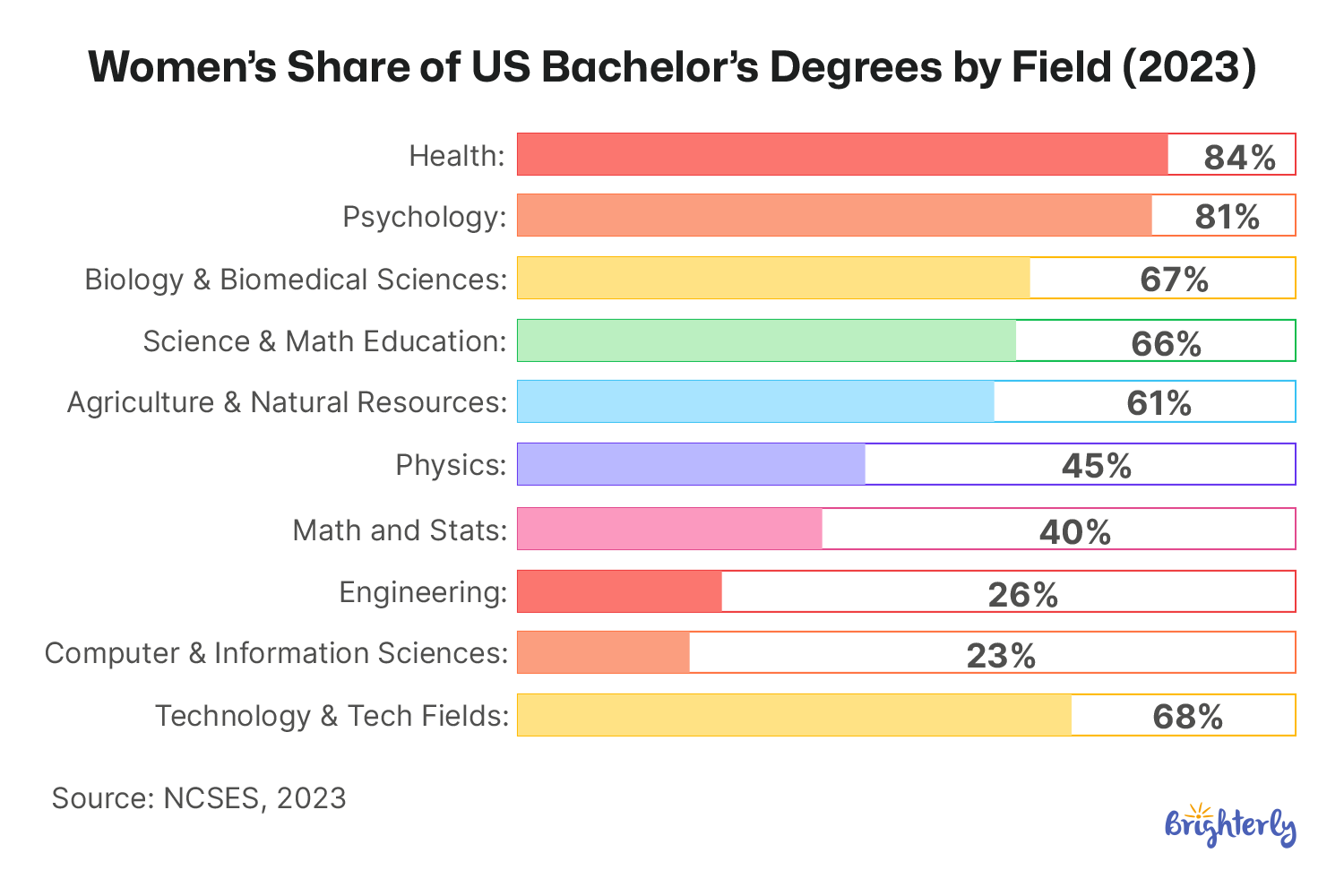
Year Average SAT Math Score: Male Average SAT Math Score: Female Gender Gap in SAT Math Scores A growing body of research by the Harvard Gazette shows that neither boys nor girls are born better at math. Nevertheless, according to TIMSS results, in 2023, 4th grade boys outperformed girls in math in 81% of global education systems; at 8th grade, the gender gap favored boys in 47% of education systems and girls in 11%, with no gap in 42%. IEA, UNESCO, and many country-specific studies point to the gender-based differences in math performance with disparities in learning experiences, including student attitude and instructional practices, rather than innate ability. According to NCSES 2023 data (latest), the biggest gender gaps are present in STEM technical fields like technology, computer sciences, and engineering (based on graduations). Meanwhile, there are more female graduates than male ones in STEM caregiving fields such as health, psychology, biological & biomedical sciences, science & mathematics education, and agriculture. What percent of STEM majors are female by field:
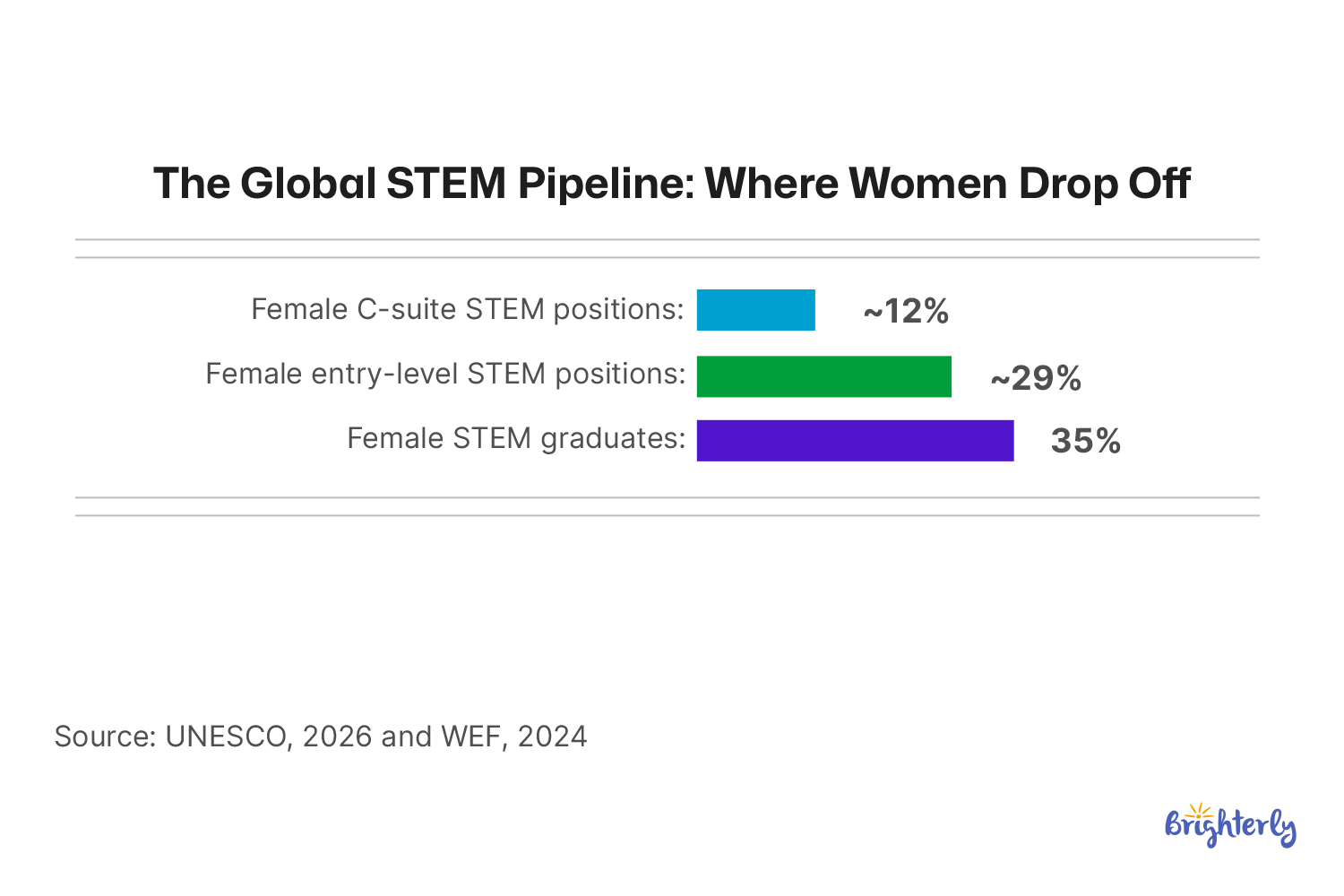
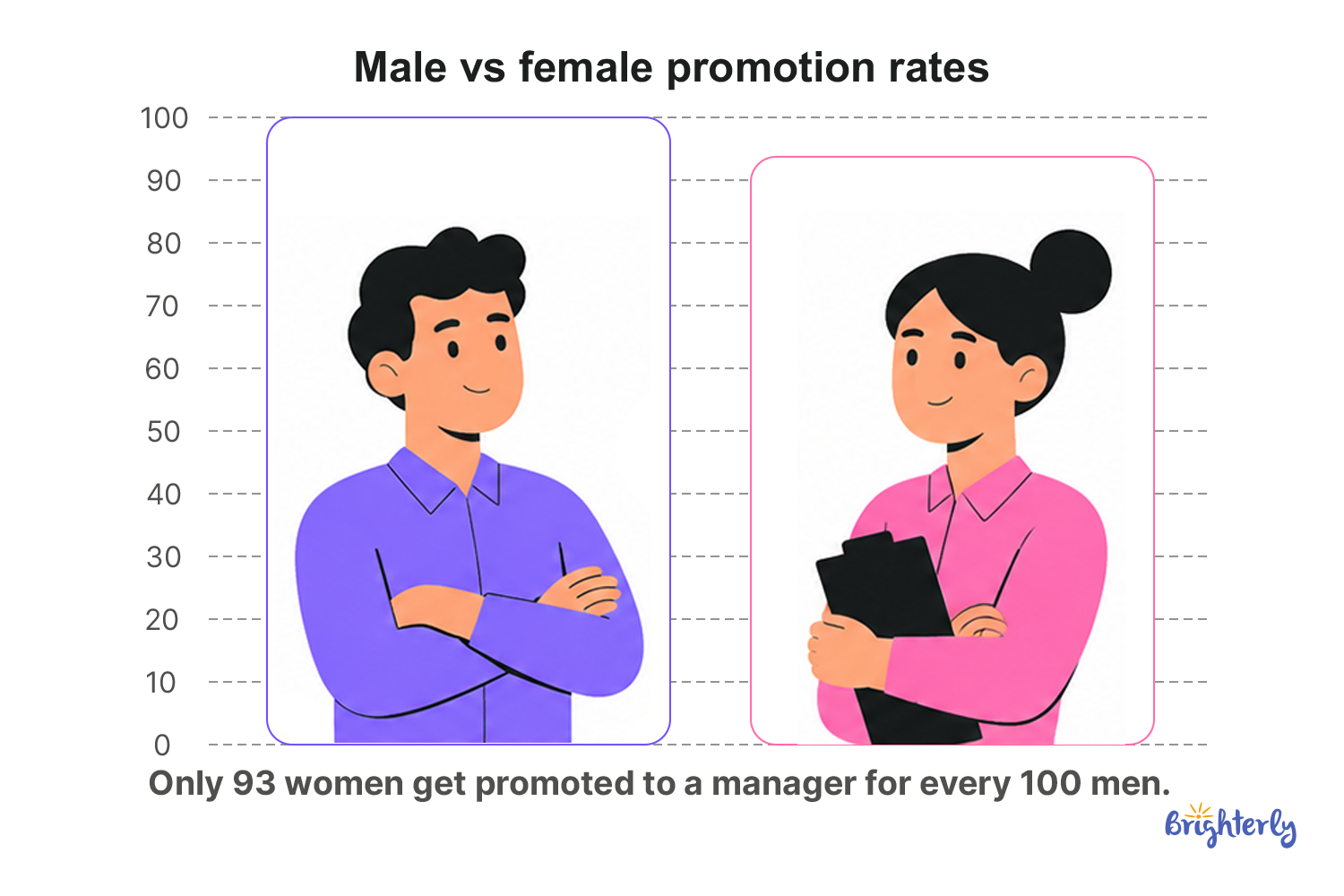
Source: NCSES, 2023 At the global level, the percentage of women in STEM roles is 28.2% (WEF, 2024). Female representation in STEM careers shows a sharp drop to the top: while women make up about 29% of entry-level STEM professionals, the share of women in STEM leadership reaches only 12% of C-suite positions. While McKinsey’s Women in the Workplace 2025 report doesn’t focus on STEM careers specifically, it highlights important issues. Women are increasingly underrepresented as they climb the corporate level: 49% at the entry level to 29% the C-suite level. Women face a “broken rung” at the first step to a manager position, as only 93 women get promoted to a manager for every 100 men.
1:1 personalized online math classes!
Help your child build foundational math skills for a STEM career.
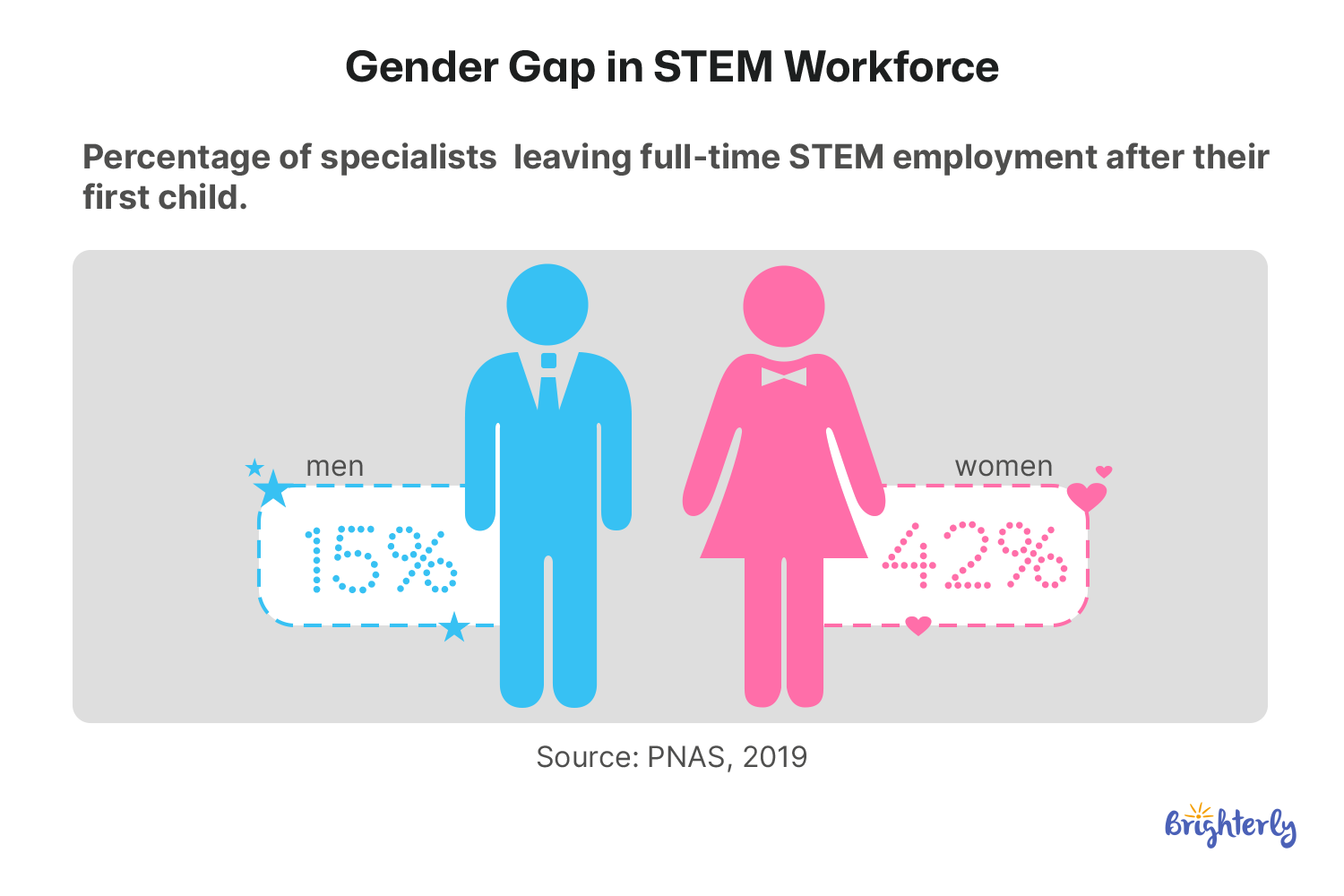
The main reasons for the low participation of women in STEM fields include a lack of self-confidence, interest, insufficient female role models, and the existing male-dominated culture of the industry. Unequal pay rates and career growth limitations further contribute to the STEM gender gap. A driving factor behind the few women entering the STEM pipeline is girls’ low interest in the field. According to 2023 Gallup data, 63% of Gen Z girls (vs 85% of Gen Z boys) are interested in at least one STEM field. As many as 61% of young girls simply don’t enjoy STEM, while the corresponding number is 58% for boys. More stark, however, is the difference in the perception of their own STEM-related skills between the genders. The same survey discovered that 57% of Gen Z females don’t think they’d be good at STEM subjects, and the proportion is only 38% for boys. Geillan Aly, Founder and CEO of Compassionate Math, shares her insights on why girls often turn away from STEM: “Girls’ disengagement from STEM comes from many things, including the perception that being smart isn't cool for girls.” This is where role models and mentorship come in. If the picture of an engineer in a girl's mind is a man, and that girl has never seen/interacted with a female engineer, then that girl may not consider being an engineer a possibility for girls. Girls (and society in general) need to see counterexamples to all the factors I outlined above. If we can spotlight scientists who look like these girls, scientists who are successful mothers, women who are highlighted as a valuable member of their team, STEM can be more enticing. The overall lack of female role models in STEM is another factor fueling the gender gap. As few women enter the STEM workforce and even fewer make it to leadership positions, young girls don’t get exposure to many role models in their immediate surroundings or in the media, creating a cycle where the STEM gender gap feeds itself. Interestingly, a 2024 study published in the Journal of Science and Technology found that STEM graduates expect their role models to be: This list of preferred role model characteristics highlights an important contradiction: qualities like ambition, charisma, and expertise are admired in STEM role models, yet gender stereotypes mean that women displaying these same qualities in everyday careers are not always perceived positively. Once employed, women working in STEM face hostile environments, a lack of inclusive policies, gender-based violence, and sexism more frequently than women employed in other fields, as highlighted by AAWU. 2022 data from Canada also confirms that isolation, mockery, and sexual harassment prevent women’s recruitment, retention, and advancement in male-dominated fields like STEM. As a result, the female attrition rate in STEM is 45% higher than the male (2020 data – latest), with women in tech being 2.5 times more likely to leave their job before the age of 30 than in other fields, according to Accenture. Moreover, 50% of women with tech jobs quit before the age of 35. Another reason why women leave STEM is the discrepancy in remuneration based on gender rather than objective criteria, such as experience, qualifications, and skills. Compared to a national gender pay gap of 6% in the US in 2024 (latest data), the difference between what men and women make in science and in engineering is 13.1% and 9.5%, respectively. This injustice becomes one more reason young female scientists and engineers quit. Hardships to career growth are yet another factor that pushed women away from STEM. The WEF (2024) reports that the drop to the top – C-suite to entry-level positions – is noticeable in STEM professions at 42%, compared to 46.3% in other fields. Forego also highlights that in 2024, only 52 women moved to tech management roles for every 100 men. Women are also more likely to take and need maternity time, with a documented 42% of women leaving their full-time STEM role after the birth of a child, while only about 15% of men exit their role. (2019 – latest data). According to the U.S. Bureau of Labor Statistics, in 2024 the median annual wage for STEM occupations was more than double the median for non-STEM jobs: $103,580 vs $48,000. While estimates of the gender pay gap in the US vary by source, all agree that women make less. Research (2024) by Jon Goh at the University of the West of Scotland shows that STEM activities performed with parents at home or during science museum visits directly impact children’s interest in science and academic performance. Talks about the application of technology and math in the real world also have a positive effect on students. Furthermore, parents’ careers influence the participation of girls in STEM. A 2024 article in Advances in Life Course Research states that daughters of mothers working in STEM are 6% more likely to choose a STEM career themselves. Shelley Gupta, Founder of BāKIT Box, highlights how the role that educational institutions play in the formation of statistics about women in STEM has changed in recent years: “For in-person schools especially, cooking and homemaker classes are pushed more towards girls, while other programs like wood shop, STEM-focused classes are pushed more for boys.” The participation of women in the STEM labor force increased from 26.1% in 2016 to 28.2% in 2024, according to WEF data. This change of 2.1 percentage points slightly exceeds the increase in the labor force participation of women in non-STEM fields of 1.8 percentage points. The COVID-19 pandemic worsened existing gender gaps in education. In the early 2020s, girls experienced more significant pandemic learning losses in mathematics and science than boys. Closing the STEM gender gap can contribute to fairness and equity, but it also affects economic growth, innovation, and the ability to meet future workforce demands. In 2015, McKinsey estimated that advancing women’s equality (in STEM and beyond) can add $12 trillion to the global economy by 2025, and the numbers are likely to be significantly larger by 2026. Hannah Hagon, Author and Founder of Unplugged Tots, proposes the following ideas to increase girls’ participation in STEM: Our K-12 STEM-focused math program connects your child with a professional online math tutor who prepares a personalized learning plan to support your kid’s educational needs aligned with their STEM aspirations. Our tutors combine 1:1 instruction with gamified exercises to help your child learn algebra online and practice geometry with a real teacher. Additionally, you can access free math worksheets with which your child can build foundational skills for STEM education. You can also use the free math tests to diagnose your kid’s current level and any learning gaps to focus on. Our pricing plans start at $17.70/lesson, with a 12-month plan covering 2 lessons/week and including a 20% discount – below the average hourly tutoring rates in the US in August 2026, $25-$80. Plans come with a free trial lesson. The gender gap in STEM is an ongoing Through teaching skills such as sequencing, logic, critical thinking and problem solving through screen free activities, girls develop the confidence and agency to advocate for themselves and their peers in collaboration work.problem despite minor improvements in recent years. The solution requires a multifaceted systemic approach that removes the root causes of the issue. If you need help in preparing your child for a career in STEM, we can help with online math classes tailored to the requirements and goals of your kid. If you’d like to test Brighterly, you can book a free lesson. Around the globe, 35% of STEM graduates are women and 65% men (UNESCO 2026), so women earn significantly fewer STEM degrees than men. Still, there are major differences across countries, and in some locations – like Algeria, Oman, and Benin – more females graduate with STEM degrees than males. Despite girls’ obtaining lower average scores on standardized tests like the SAT, there is no scientific evidence that they are inherently worse at math than boys. Recent research attributes the gender gap in STEM statistics to girls’ attitudes and interests, as well as to social stereotypes to some degree. Recent data shows that the STEM gender gap is slowly closing, but there’s a long way to go until men and women get equal treatment. Globally, the share of female STEM professionals grew from 26.1% in 2016 to 28.2% in 2024, but women are still 2.5 times less likely to pursue a STEM career than men. The exact age depends on how exactly you define what is a STEM gender gap. By 6 years of age, kids from both genders already see girls as having worse skills in computing and engineering, leading to the engineering gender ratio. According to WEF 2024 data, the country with the smallest gender gap in education statistics was Algeria, where 58.17% of STEM graduates were women. Oman with 55.73%, Benin with 54.88%, and Brunei Darussalam with 54.34% also had the highest percentages of female STEM graduates. In 2024, a total of 2,299,000 women worked in engineering and computer science in the US, making up 3% of all employed women (U.S. BLS data). The number of men working in engineering and computer science was 7,640,000, 3 times the number of female employees. The Mathnasium cost ranges from $200 to $500 per month, based on publicly available information on the official website and user reviews in 2025-2026. This guide reveals the details of how the Mathnasium pricing model in 2026 works and what you can expect from it. Mathnasium Pricing * The monthly prices in the table are […] Apr 27, 2025 The COVID-19 pandemic is behind us, but unfortunately, the pandemic learning loss is still impacting education in the U.S. and globally. In this article, we’ll explore key statistics on this learning loss with exact numbers by state and global regions, talk about 5 negative effects of COVID-19 on education, and more. Key points As of […] Apr 29, 2025
2017
538
516
22
2018
542
522
20
2019
537
519
18
2020
531
516
15
2021
537
519
18
2022
530
512
18
2023
515
500
15
2024
514
496
18
2025
515
500
15
Are Girls Worse at Math Than Boys?
Which STEM Fields Have the Biggest and Smallest Gender Gaps?
STEM Field
Bachelor’s Degrees: Female
Bachelor’s Degrees: Gender Gap
Master’s Degrees: Female
Master’s Degrees: Gender Gap
Health Professions and Related Programs
84%
-68
82%
-64
Psychology
81%
-62
83%
-66
Biological and Biomedical Sciences
67%
-34
65%
-30
Science and Mathematics Education
66%
-32
72%
-44
Agricultural Sciences and Natural Resources
61%
-22
63%
-26
Physical Sciences
45%
10
40%
20
Mathematics and Statistics
40%
20
40%
20
Engineering
26%
48
29%
42
Computer and Information Sciences
23%
54
34%
32
Technology and Technical Fields
68%
68
33%
34
Workforce Gender Gap in STEM Statistics
Women in STEM Leadership and the “Broken Rung”
Key Factors Behind the Gender Gap in STEM
Confidence and Interest Gaps


Fewer Visible Role Models
Workplace Culture and Retention
The Gender Pay Gap in STEM
Career Advancement Barriers
How the Gender Gap Affects Future Earnings
Statistics on Parents’ Involvement in STEM

Gender Gap in STEM Over Time (2020-2026)
STEM Education Gender Gap
Year
Gender Gap STEM Stats
Source
2020
Female graduates earned 20.6% of computer sciences, 22.7% of engineering, and 42.3% of mathematics and statistics bachelor’s degrees in the US.
NCSES
2021
Women got 37.2% of physical sciences, 62.4% of biological and biomedical sciences, and 60.5% of agricultural sciences and natural resources master’s degrees in the US.
NCSES
2022
US girls scored 13 points less than boys on the PISA math test.
PISA
2023
Women earned 82.5% of health, 81% of psychology, 26% of engineering, and 15.7% of technology bachelor’s degrees in the US.
NCSES
2024
Girls represented 34% of students enrolled in foundational high school computer science courses in the US.
Code.org
2025
Female students scored 15 points less, on average, than male students on the SAT Math test.
College Board
2026
Women make up 35% of STEM graduates globally.
UNESCO
STEM Workforce Gender Gap
COVID-19 Impact on the Gender Gap
Why Does the Gender Gap in STEM Matter?
Closing the Gender Gap in STEM

Conclusion
Frequently Asked Questions
Do Women Earn Fewer STEM Degrees Than Men?
Are Girls Worse at Math Than Boys?
Is the Gender Gap in STEM Getting Bigger or Smaller?
At What Age Does the STEM Gender Gap Start?
Which Country Has the Smallest Gender Gap in STEM?
How Many Women Work in Engineering and Computer Science?





Math & reading from 1st to 12th grade
Looking for homework support for your child?

Choose kid's grade

Math & Reading for Grades 1–12
Build real confidence for your child with a Brighterly math or reading tutor.