Homer vs Reading Eggs: Key Differences in 2026
reviewed by Jo-ann Caballes
Updated on August 14, 2026
Key Points
- Homer and Reading Eggs offer very similar programs for children in pre-K through elementary school. Both include lessons in letters, phonics, stories, and early numeracy, covering all essential skills.
- Homer’s main advantages are its single, easy-to-use app with a modern design and a superior focus on phonics. Reading Eggs, on the other hand, offers a wider variety of read-aloud stories.
- In terms of cost, Reading Eggs is a bit more affordable short-term at $8.33/month or $167.88/year, while Homer costs $12.99/month or $79.99/year for full access.
- For parents seeking a solution, Brighterly stands out as a solid alternative, offering live 1-on-1 tutoring that ensures children spend their learning time effectively.
Reading Eggs vs Homer: Comparison
|
Homer |
Reading Eggs |
|
|
Age group |
2-8 years | 2-13 years |
|
Focus areas |
Reading, math, social-emotional learning, creativity | Reading, phonics, spelling, vocabulary, grammar, math (via Mathseeds) |
|
Learning approach |
More personalized, play-driven | Structured, with leveled lessons |
|
Free trial |
✅30-day free trial | ✅30-day free trial |
|
Progress tracking |
Regular email updates and detailed reports | Automated progress reports |
|
App structure |
Single, unified app for all subjects | Multiple apps for different subjects |
|
Offline resources |
✅Printable worksheets | ✅Printable worksheets and activities |
The main difference between Homer and Reading Apps lies in the structure of their learning content and the design of their materials. Homer offers a unified modern app, while Reading Eggs distributes its lessons across multiple apps, which look slightly outdated.
Both programs share many similarities and the same goal of developing early reading skills. Both Reading Eggs and Homer target children of preschool and elementary school ages, with Reading Eggs offering a slightly broader range for learners up to 13 years.
Exploring alternatives?

Explore Brighterly Learning Experience
Learn exactly how Brighterly helps students thrive through expert sessions, online tools, and proven feedback from thousands of satisfied parents
Reading Eggs vs Homer: Cost Comparison (2026)
|
Homer |
Reading Eggs |
|
|
Monthly plan |
$12.99 / month | $13.99 / month |
|
Annual plan |
$79.99 / year ≈ $6.66 / month |
$99.99 / year ≈ $8.33 / month |
|
Combined reading + Maths plan |
❌ | ✅ |
|
Child profiles included |
Up to 4 | Up to 4 |
|
Supported platforms |
Web, iOS, Android, Windows, Mac | Web, iOS, Android, Windows, Mac |
Brighterly: Alternative for Personalized Learning
When comparing Homer and Reading Eggs, one key limitation stands out: neither of these platforms offers live instruction. Brighterly math and reading program, in contrast, provides personalized sessions with experienced tutors who design learning plans on an individual basis. Because each session involves just the child and the tutor, the quality and focus of learning are much higher.
Brighterly: Main Features
- Experienced tutors
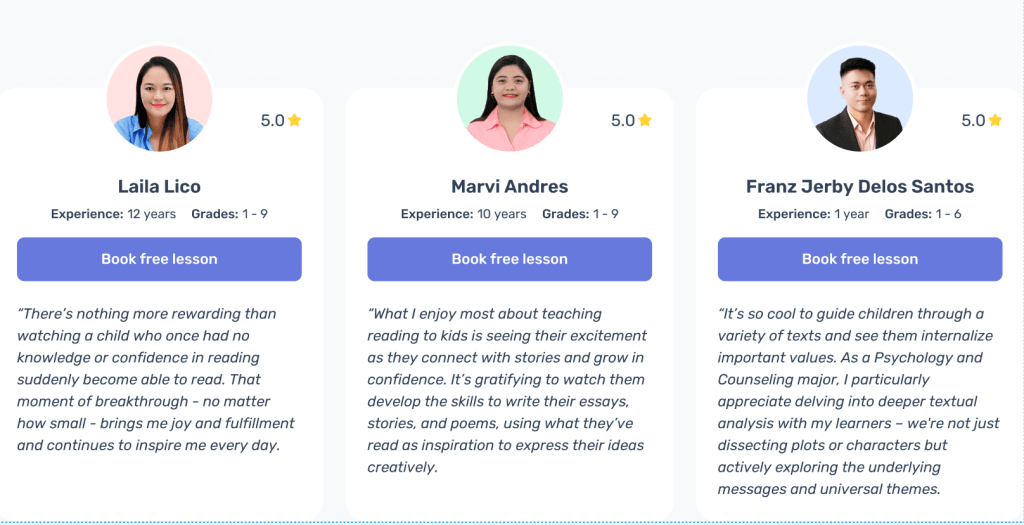
The Brighterly math and reading platform works exclusively with certified and carefully selected reading tutors, which is a major advantage. These educators are trained to support children who struggle or need extra encouragement.
- Free sample materials
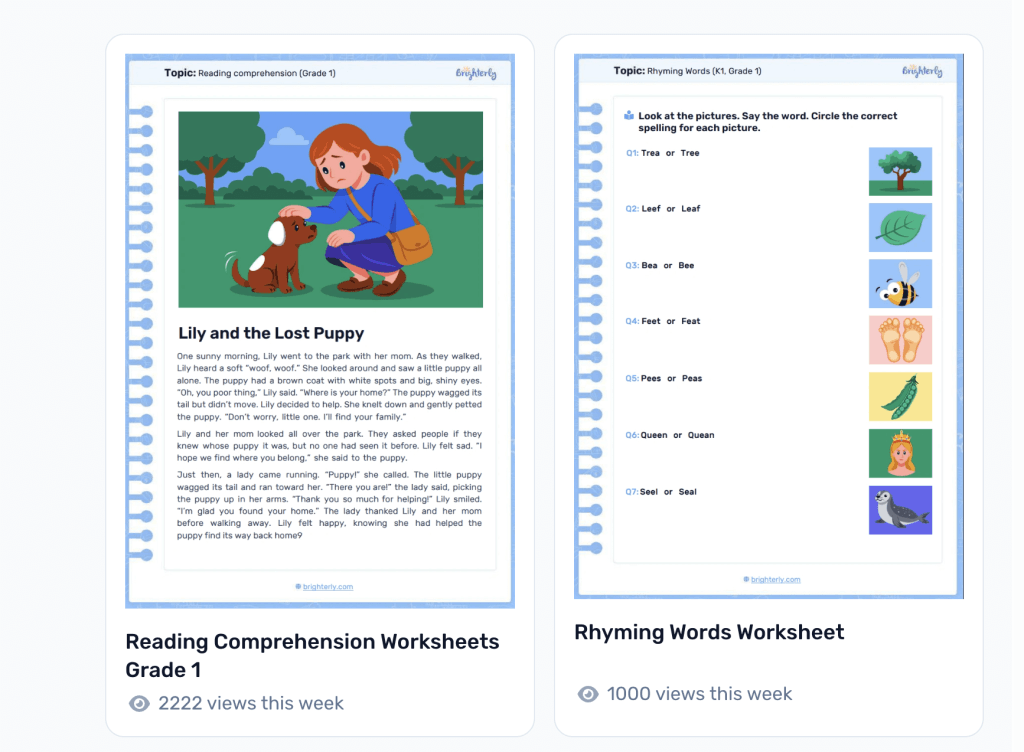
In addition, unlike resources available at Homer vs Reading Eggs, the Brighterly website offers a wealth of helpful resources, such as reading worksheets and articles. There are also reading tests that parents can use at home to check their child’s progress and understanding.
- Effective progress tracking and alignment with U.S. educational standards
Brighterly supports both children and parents at every step. Parents receive clear progress reports showing what their child has mastered, practical home tips, and access to helpful resources online. After each lesson, learners receive a detailed AI lessons summary for prompt revision.
Finally, Brighterly’s curriculum is also aligned with U.S. education standards, so you can be sure your child is learning the right skills for their grade level and academic requirements.
What Is the Brighterly Price?
Because it’s live tutoring rather than pre-made content, Brighterly is more expensive than Reading Eggs vs Homer. Still, it does offer a complimentary demo lesson along with a wide range of free math and reading resources. The longer the subscription plan, the lower the cost per lesson. Below is an overview of Brighterly’s pricing plans:
- 12-month plan: $17.70 per lesson
- 6-month plan: $20.20 per lesson
- 3-month plan: $21.40 per lesson
- Monthly plan: $21.90 per lesson
* Prices specified with a 20% discount when booking 2 lessons/week.


Need More Than Reading Eggs for Reading?
Brighterly 1:1 reading tutors create lessons matched to your child's level
What Is Homer Reading Best at?
Superior Phonemic Learning
Homer was developed with phonics in mind and excels at teaching the basics of reading. Homer resources show first how to spell sounds properly rather than expecting that a child will learn it intuitively. Children blend sounds into words, listen to a word and segment the individual sounds, and identify the first sound of words.
Balanced Interaction and Simplicity
What parents particularly like about Homer is that it is very intuitive yet interactive and engaging. Of these two: Reading Eggs vs Homer, the latter is more child-friendly and easier for independent use. Thanks to its well-designed interface, many children indeed enjoy spending time on Homer, often choosing it over cartoons or mobile games.
Broad Range of Content
Homer goes beyond the reading – it also offers basic math, creativity, thinking, and social and emotional learning. Children can combine core reading lessons with learning about feelings, shapes, practicing numbers in songs, etc. Thus, parents enjoy having all of this pre-school and elementary school content in one place.
How Does the Homer Reading Work?
Homer is a modern interactive platform that uses the four-step “Homer method” – introduce, practice, apply, and transfer – to help children build and retain reading skills. It’s also said to be based on a proven body of research on how children best learn to read.
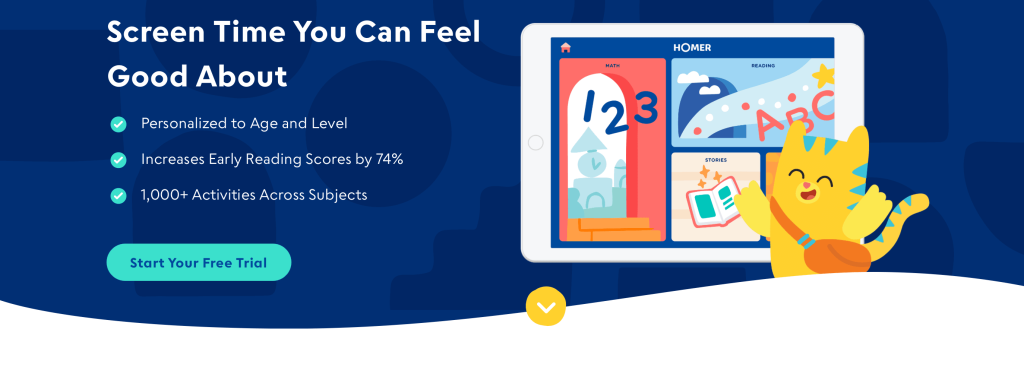
As such, with Homer, children follow a set path that starts with the introduction of a letter sound and its corresponding letter and moves step-by-step toward reading and spelling words using the targeted sound together with sounds a child has already mastered.
It can be concluded that learning with Homer largely relies on phonemic teaching and awareness. Furthermore, the website praises classic children’s literature, featuring stories written by notable authors such as Ernest Hemingway and Mark Twain, among others.
What Is the Homer Reading Price?
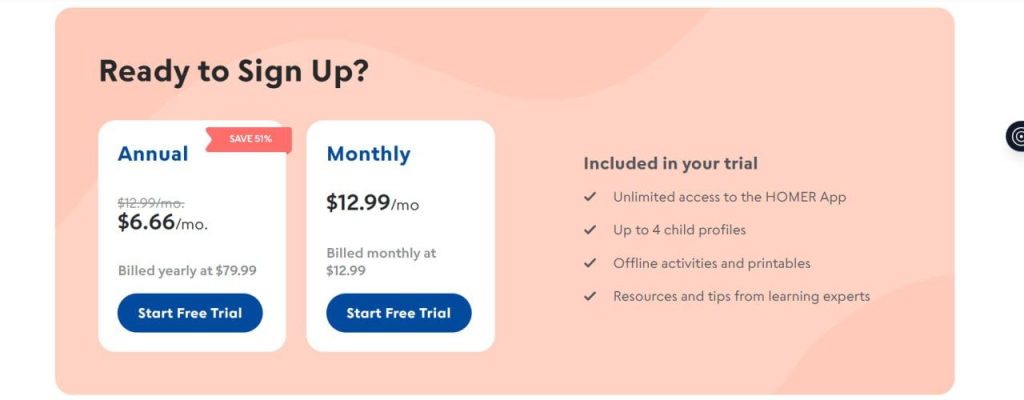
The monthly Homer reading price is about $12.99, while the annual subscription costs $79.99, which works out to about $6.66 per month. Each subscription allows for multiple child profiles and includes a free trial, letting families explore the app and assess its value before committing.
What Is Reading Eggs Best at?
Large Library
One of Reading Eggs’ most appealing features is its rich library of 250+ leveled read-aloud e-books and animated stories. The platform’s video catalog offers hundreds of animated and real-life videos.
Free Printables
Reading Eggs offers a good selection of free printable worksheets and sample lessons. On the website, parents and children can explore simple stories together, complete memory challenges, or solve jigsaw puzzles. Even without paying, families can try these activities and see how well their children understand the material.
Wide Curriculum and Adaptability
Just like our former discussion point in Homer vs Reading Eggs, the platform goes beyond basic phonics and covers spelling, vocabulary, grammar, and reading comprehension. The learning blocks cover foundational reading skills, including learning colors and counting, developing listening skills and memory, etc.
How Does Reading Eggs Work?
Reading Eggs teaches young children essential pre-school knowledge through gamified cartoon-like content. When a child starts, the program runs a quick placement test to assess their reading levels and automatically places them on the right path.
Early lessons are structured around phonics, sight words, and comprehension, then move from simple sounds and letters to full sentences and stories.
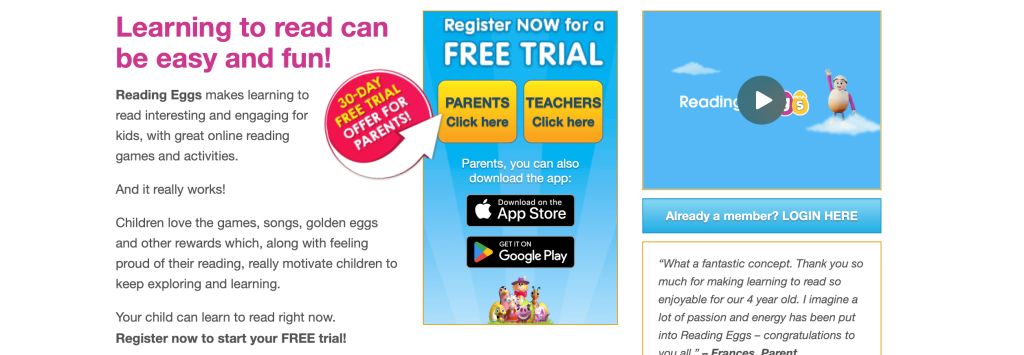
Each completed activity unlocks rewards such as golden eggs, characters, or new storybooks. So, this site is more successful in boosting motivation in the Reading Eggs vs Homer combo.
The platform also provides parents with a dashboard to track progress or identify areas where their child might need extra parent support.
Note: However, unlike all-in-one platforms, Reading Eggs uses several separate apps, such as Reading Eggs, Reading Eggspress, and Mathseeds, each focused on different skills. It feels a bit inconvenient to switch between them.
What Is the Reading Eggs Cost?
The monthly Reading Eggs cost is about $13.99 for all reading programs, while the annual plan is $99.99. Families can also choose a Homeschool Math program for $41.90 per month or $24.92 per year ($299.00 yearly payment).
Each subscription covers up to four children and includes a 30-day free trial, making it a cost-effective choice for multi-child households.
Homer vs Reading Eggs Reddit & Trustpilot Reviews
On Trustpilot, Homer has been reviewed over 300+ times, earning an average rating of 2.2, with about 45% of users giving it the top 5-star award. Reading Eggs, in contrast, has only 25 reviews and an average rating of 2.5, with nearly 40% of reviewers awarding it 5 stars (as of August 2026).
On the App Store, however, the picture looks more favorable for both platforms. Reading Eggs scores a high 4.7 stars, from around 7,000+ reviews among iPhone and iPad users. Homer holds a slightly lower 4.4-star average, yet this rating comes from a much larger pool of over 25,000+ reviews (as of August 2026).
Homer Reading App Reviews
On Trustpilot, Homer clients often praise its slim, smooth, and pleasant design. Kids enjoy spending time with this app and usually make quick progress.
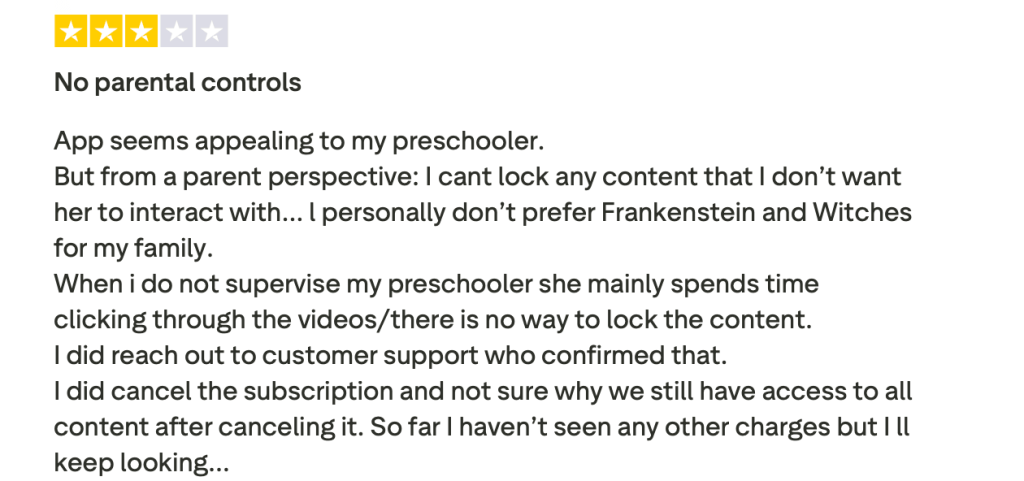
On the other hand, on Trustpilot (as of September 2023), I could find complaints about certain content, such as stories with Frankenstein, and the fact that children still prefer clicking videos rather than solving tasks. That’s understandable, and it means that parents need to take control of how their child is doing, rather than blindly relying on a magical app.
Reading Eggs Review
Users of Reading Eggs on Trustpilot (as of April 2025) also recognize its efficiency, citing the progress of their children and the interesting gamified content.
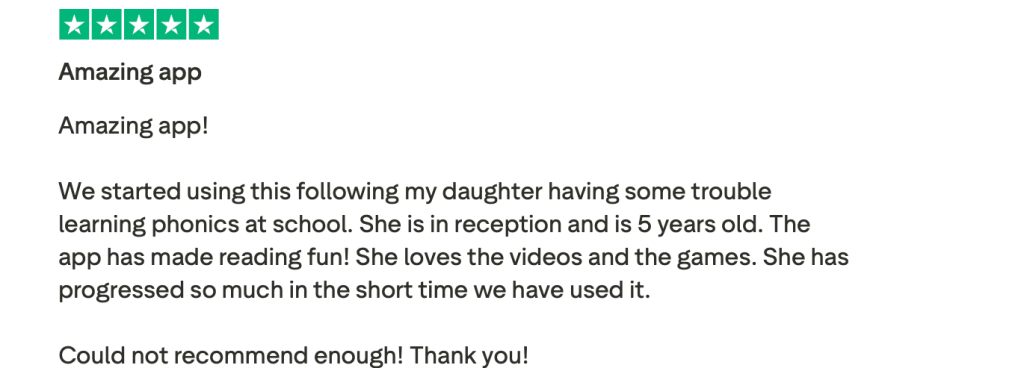
Meanwhile, Reddit customers raised the issue of gamification, saying that the app by itself is not informative, and further parental explanations are necessary for children’s comprehension. There is also a dedicated article on Reading Eggs reviews that you can check.
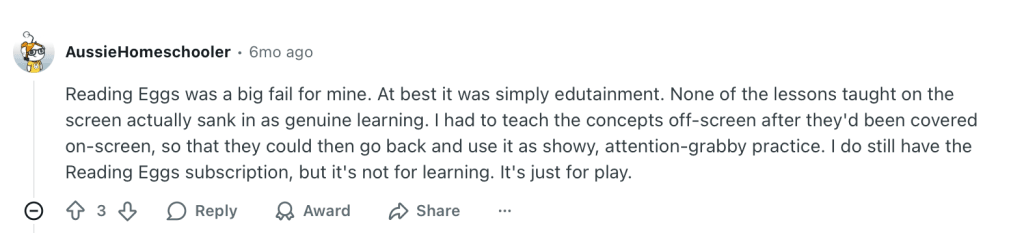
Brighterly, on the other hand, eliminates this gap with its tutoring, where a teacher explains concepts, answers questions, and adapts lessons to the child’s understanding in real time. This approach also saves parents time, as they can simply review the tutor’s feedback and stay informed about their child’s progress.
Reading Tutoring Beyond Apps
Brighterly reading tutor works with your child on fluency, vocabulary, and comprehension
What’s the Main Difference Between Homer Reading vs Reading Eggs?
The major difference between Reading Eggs vs Homer is Homer’s strong focus on explicit phonics instruction. Additionally, Homer delivers all lessons within a single, unified app. Instead, Reading Eggs has a fragmented structure, with different learning modules that must be downloaded separately.
Which Is Better: Homer vs Reading Eggs?
To conclude, if you care about structured lessons, modern design, and an all-in-one app learning experience, then Homer is the winning choice.
If you opt for a wide variety of reading materials to keep your child exploring different topics, then Reading Eggs might suit you more.
However, if you are looking for tailored 1-on-1 lessons, structured progress tracking, and combined math and reading tutoring, Brighterly could be the perfect fit. Give your child the chance to excel – Book free reading lesson today!
Other platforms comparison
If you’re still unsure which program is right for your child, check out the best reading program for kids or these comparison articles. They cover all the pros, cons, and potential pitfalls of each platform in detail:
- Homer vs ABCmouse: Which Program Works Better for Early Learning
- Reading Eggs vs ABC mouse: What You Need to Know Before Choosing
- Reading Eggs vs Hooked on Phonics: Which Platform to Choose for Reading?
- How to Cancel Reading Eggs?
Frequently Asked Questions
Can Homer or Reading Eggs Be Used Offline?
Only partially, and differently for each. Homer lets kids replay any lesson they have already completed once it’s downloaded, so previously played content works without internet. Reading Eggs works mainly online, though it offers a large library of downloadable, printable worksheets for offline practice rather than true offline gameplay.
Are Homer or Reading Eggs Good for Kids with Dyslexia?
Neither app is built specifically for dyslexia tutoring, but many parents use both as a supplement rather than a replacement for dyslexia-specific intervention.
Can Homer or Reading Eggs Replace a Full Homeschool Reading Curriculum?
Neither is designed to replace a full homeschool reading curriculum on its own. Both work best as a supplement: Homer builds early foundational skills for ages 2 to 8, while Reading Eggs extends further with Reading Eggspress for ages 7 to 13. Homeschooling families typically pair either app with additional literature, writing practice, or a tutor to cover comprehension and skills the apps don’t fully address.

Homer vs ABCmouse? Two popular online programs that help little kids learn basic skills. If you’ve read through loads of information and reviews but still don’t know which one to choose, I’m here to help. As a teacher and a mom, I’ll guide you through all the details and help pick the program that’s just […]

Oct 21, 2025

The simple view of reading (SVR) is a foundational literacy model that implies that reading comprehension equals decoding multiplied by language comprehension. First introduced by Hoover and Gough (1986), it helps identify whether a child’s reading difficulty stems from word recognition, language understanding, or both, and provide teaching instructions accordingly. Key points The simple view […]

Oct 22, 2025
Math & reading from 1st to 12th grade
Exploring alternatives?
Take a short quiz!
Choose kid's grade