
How To Get Better At Writing: 18 Practical Tips
reviewed by Marvi M. Andres
Updated on May 10, 2026
How to get better at writing comes down to three core habits: reading regularly, practicing daily, and actively seeking feedback. These habits build vocabulary, sharpen grammar, and develop a natural writing voice for students and adults alike. The 18 tips below cover each of these areas with specific, actionable steps you can start today.
Key Points
- Writing is a physical and cognitive skill that improves only through repetition – writing even if only 3-5 sentences daily builds fluency and long-term confidence.
- A 2024 study by the School of Foreign Languages at Southeast University states that reading, practice, and constructive feedback activities are critical for steady writing practice.
- Tutoring, worksheets, extensive reading, journaling, and writing for real-life tasks are primary strategies to improve writing skills.
Ways To Improve Writing Skills For Students And Adults
- Both students and adults should treat writing as an ongoing process that involves much reading, regular writing, critical revision, and maintaining a logical structure via planning and organizing.
- Ask tutors and peers for feedback and edit and review, then, accordingly.
- Writers of all ages in all times build confidence and fluency through regular practice of all of that.
Explore Brighterly Learning Experience
Learn exactly how Brighterly helps students thrive through expert sessions, online tools, and proven feedback from thousands of satisfied parents
How To Become A Better Writer
- Review grammar basics
- Read for 10-15 mins/day
- Draft 3-5 sentences daily
- Step away, then proofread
- Ask one specific question for feedback
- Book a 30-minute tutoring session
- Outline for 5 minutes before drafting
- Identify your target reader
- Read your finished piece aloud
- Play one 10-minute word game
- Complete one grammar worksheet
- Write one private journal entry
- Post one short blog update
- Explore one new writing app
- Write a real-life list or note
- Share your work with a friend
- Participate in one writing club meeting
- Send one physical or digital letter
Review Grammar And Spelling
Best for: everyone
The mechanics of language is first and foremost, agree? Solid grammar and spelling frame your ideas and make your message understandable. For students, it entails learning how to build proper sentences. For adults, though, it ensures that professional communication remains polished and credible.
Reviewing these language basics enables you to focus more on what you are saying, not bothering about how to spell a word or where to place a comma. It refers to all writing styles – from creative storytelling to academic essays.
“Literacy and attendance are deeply connected.”


How To Write Better Reviewing Language Mechanics
- Write down words that you frequently misspell and review them once a week.
- Prior to finishing a piece, check specifically for subject-verb agreement and consistent tense.
- Spend ten minutes a day on quick exercises that focus on one particular rule, like using apostrophes or semicolons correctly.
- During reading, pay attention to how professional authors use punctuation to create rhythm in their sentences.
Read More
Best for: everyone
Reading is one of the best ways to become a better writer. When students immerse themselves in books, stories, and articles, they expose themselves to new vocabulary, proper grammar, and interesting writing styles.
Reading naturally teaches kids how to structure stories or how to develop and organize ideas.
“Daily reading sessions will build a love of learning that will keep children engaged in school, relationships, and life.”

What Are The Reading Strategies For Improving Writing Skills?
- Set aside a dedicated reading time for a kid.
- Read together with your child or read aloud to them.
- Discuss stories and think critically.
- Ask them to write a reflection.
Strengthen writing via reading
Brighterly reading tutors help with vocabulary, grammar, and storytelling instincts 

Write Daily
Best for: everyone
Another universal tip: to improve your writing skills, you should practice them daily. Why? Because writing is a skill. And just like with any skill, the “practice makes perfect” approach applies.
So, writing practice, from a short journal and quick story, can help kids build fluency, develop voice, and gain confidence.
What Are Decent Writing Tips For Kids On How To Start Practicing?
- Write 3-5 sentences about your day in a notebook.
- Try free writing and give kids a treat upon completing a streak.
- Don’t focus on grammar or spelling at first.
Proofread Your Work
Best for: students and adults
When your writing is free of spelling, punctuation, and grammar errors, your readers can focus entirely on your ideas. That’s the main reason for you to thoroughly polish your rough draft by catching errors that can distract your reader from the core idea of the finished text.
For that, students must understand and catch the difference between a confusing sentence and a clear argument. Adults, when at work, should ensure their emails and reports maintain a high level of professionalism.
How To Improve Your Writing Skills With Proofreading
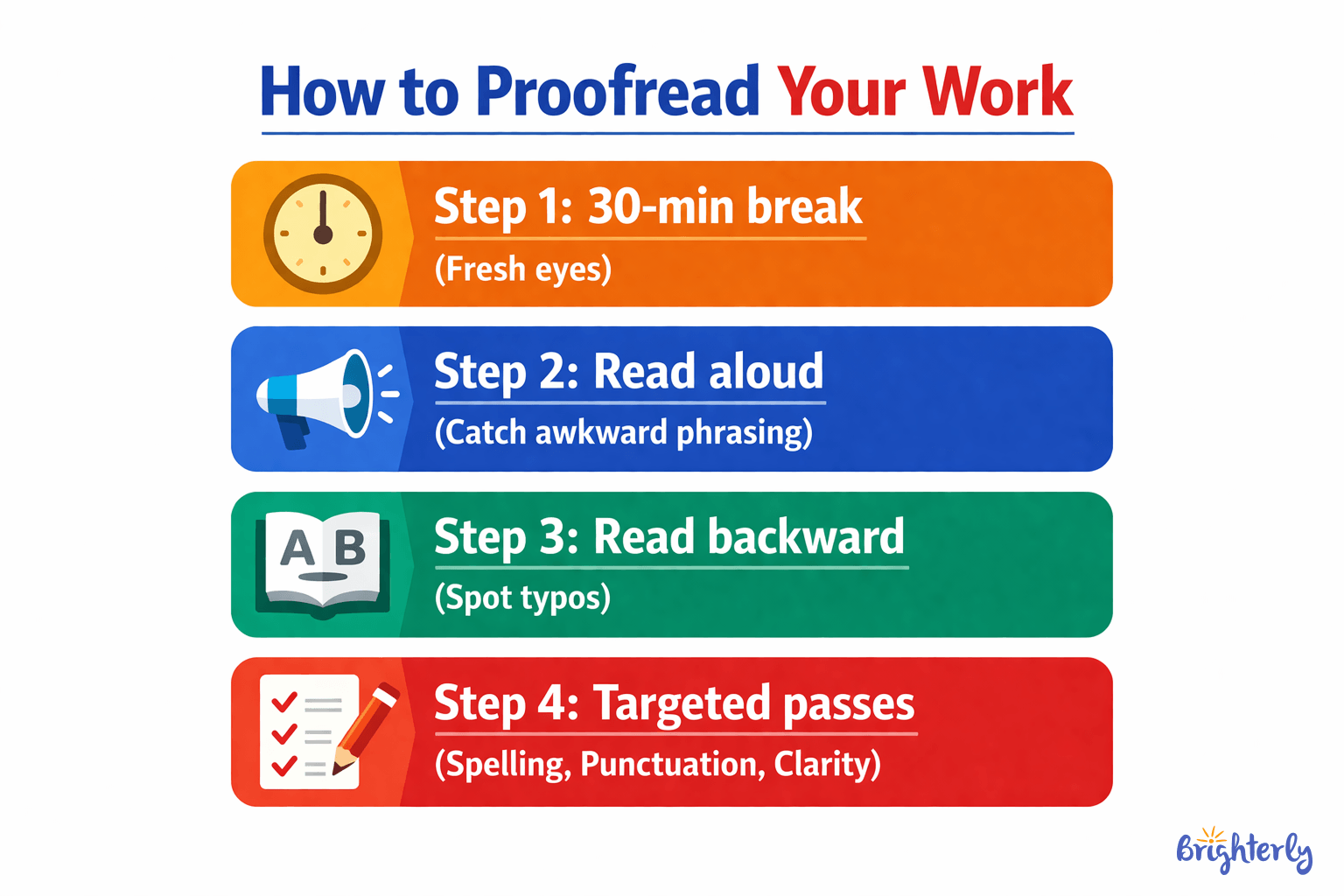
- Leave your writing for at least thirty minutes before proofreading (fresh eyes see mistakes faster and more easily).
- To focus more on individual words and punctuation (not the whole story for now), try reading your text from the last sentence to the first.
- To prevent your eyes from skipping over ‘invisible’ typos, use a finger or a pen to track each word during reading.
- Do one pass just for spelling, another for punctuation, and a final one for clarity.
Get Feedback On Your Writing
Best for: everyone
When you write, you might be too involved in your own ideas and, hence, miss out on where your point needs more evidence, for instance. Ask others to review your work and, therefore, give you a different perspective. It may highlight your strengths and specify areas for further enhancement.
Getting feedback and treating your writing accordingly makes you more confident to keep sharing your voice and more resilient to refine your work. Constructive criticism also contributes to the clarity of your writing and a collaborative learning experience of its creation.
How To Get Feedback On Writing And Process It Afterward
- ‘Is this good?’ is not enough. Ask, instead, ‘Is my main argument easy to follow?’ or ‘Does this paragraph make sense?’
- Find a writing partner (or family member) and agree to read each other’s work regularly.
- Don’t feel defensive when listening to suggestions – perceive it as your way to improve the text and not their way to judge you as a writer.
- Start a log of the most common critiques you receive. If, for instance, you are repeatedly told that your sentences are too long, you’ll know exactly what to focus on next time.
Practice With A Tutor
Best for: grades 1-12
Working one-on-one with a tutor is one of the most effective ways to boost kids’ writing skills. Why? It provides room for individualized guidance and feedback.
Unlike a busy classroom, during online writing classes, an ELA teacher can focus on kids’ needs and target specific areas, from vocabulary and grammar to organization of ideas.
Note: Wonder what is an ELA teacher? Click to know more.
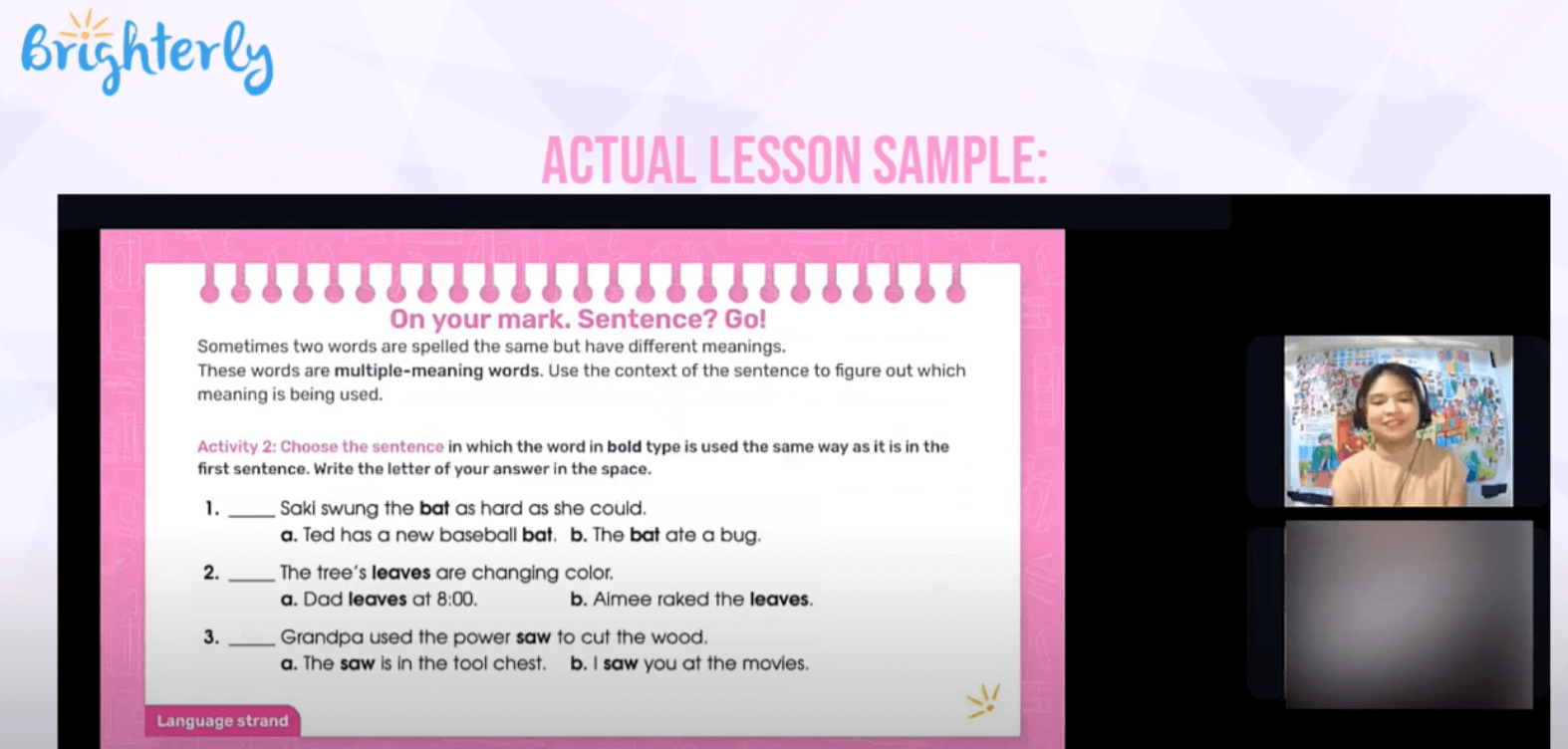
Our Brighterly online learning platform offers personalized tutoring sessions for 1st-9th graders, providing guidance, a structured learning environment, and engaging writing lessons.
Our reading tutors are ELA teachers, focusing on writing techniques, grammar rules, and vocabulary.
What Else Does The Brighterly Reading Program Offer?
- A learning plan customized to specific needs and following national standards.
- Interactive lessons that engage and boost kids’ confidence.
- Professional feedback and cost-effective pricing (from $17.7/lesson if committed annually with 2+ lessons per week, now 20% discounted).
Boost kid’s writing with a personal tutor
Brighterly personalized sessions help master grammar, structure, and writing fluency.
Plan And Organize Before Writing
Best for: grades 3-9
Knowing how to plan and outline a writing piece can dramatically enhance writing clarity and structure.
Young writers and students often ask themselves how to start their essays. And planning is what gives them a roadmap, as it teaches them to organize ideas or decide on essay goals and logic.
“What do you want the person reading this to know when they're done?”

What Are Relevant Writing Tips For Kids, Students, And Adults?
- Learn pre-writing strategies, including brainstorming and outlining.
- Consider techniques like “story mountain”.
- Resort to the basic elements of a story.
- If you are a parent, show an example, write a piece, and show your outline.
Know Your Audience
Best for: students in grades 3-12 and adults
Before you write a single word, you must consider who exactly will be reading your piece. Based on that, you’ll need to adapt your tone, vocabulary, style, level of detail, and other characteristics. Suiting your readers, your message will be understood and appreciated.
With audience awareness, students become more empathetic and versatile in their expression. They also learn to recognize and apply different approaches to different writing styles (for, say, academic essays, personal narratives, etc.) And adults’ profit from choosing the right words is sounding more impactful in their writing.
Tips To Improve Writing Skills With Audience Awareness
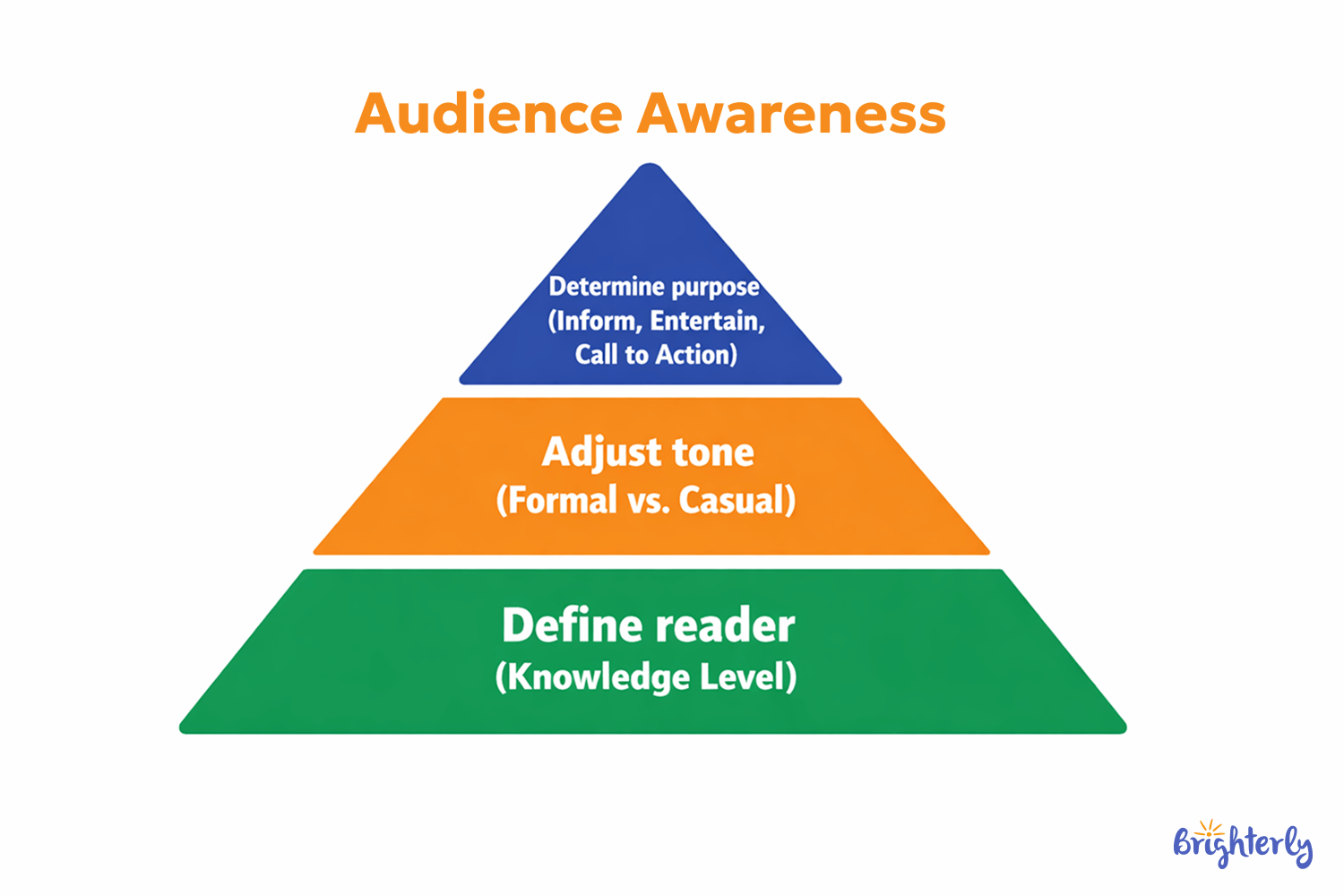
- Prior to the start, write down who your main reader is and what they already know about your topic.
- Practice rewriting the same paragraph for two different audiences – for example, explain a game to a younger sibling and to a teacher.
- Define whether you need formal language or may use casual and conversational phrasing.
- Decide on what you want your audience to take away from your piece (information, entertainment, a call to action, etc.)
Read Your Work Aloud
Best for: kids and adults
When you read the work aloud, you:
- “Hear” the writing and find mistakes or awkward phrasing that often slip.
- Understand when to break a sentence, as it leaves a writer breathless or confused.
- Leave room to recheck spacing and clarity.
Note: According to the Writing Center of North Carolina, reading aloud is one of the best ways to proofread the work. So, it’s a great answer to the “How to improve reading skills in English?” question.
Use Creative Prompts And Games
Best for: students and adults
Creative writing prompts and games with words can turn writing into an adventure, a play, rather than a chore. They can be an excellent tool to give kids a jumpstart.
If you ask yourself, “How to help my child write better?”, then prompts and games may be a part of the answer. Try these fun tools to spark writing:
- “Imagine your dog or toy, instead of barking or beeping, could talk – what would they say?” prompt.
- Storytelling dice, but with writing.
- Prompt jar challenge.
- Mad Libs game or story cards.
If you need motivation or are fond of more social activities, try co-writing a story with a sibling or a friend. And if you strive to become more confident in writing, plotting, and character development, then turn to fan fiction – write stories based on characters or worlds that already exist in books, movies, or games you love.
Note: If you wonder how to develop storytelling and narrative writing, read our article on “What is narrative writing?”
Use Worksheets
Best for: grades K-12
Structured worksheets are great for practicing fundamentals, including early writing skills and handwriting. However, different worksheets suit different students and goals.
- For younger students, worksheets may include tracing letters to develop handwriting and letter recognition.
- For older kids, the worksheets cover grammar exercises, writing prompts, and vocabulary practice.
If you help your child learn how to write better and would like to ensure they feel less pressure, it’s one of the methods to use.
How To Apply This Technique At Home?
- Incorporate worksheets into the weekly routine.
- Combine it with other activities.
- Ask for guidance or pick the ones that suit your kid’s grade.
- Review the completed worksheet together.
If you are seeking a credible source of worksheets, we at Brighterly offer an array of different ones, including writing worksheets, reading worksheets, and materials on storytelling.
Keep A Writing Journal
Best for: everyone
A daily or weekly journal is a tried-and-true method to improve the writing of kids and adults. Look at it as a private space to pour thoughts, daydreams, and reflections on events.
As this activity is not graded, kids feel more comfortable writing there, without fear of making mistakes or being judged. This freedom allows for expressing ideas, boosting confidence, and preparing for high school.
What Can You Do To Make Journaling A Habit?
- Present a special journal or notebook.
- Encourage them daily and ask them to share their favorite entries.
- Respect their privacy and choice.
Start A Blog
Best for: grades 4-9 and older
For older or tech-savvy kids, a blog can be a way to bring their journaling or storytelling to an advanced level. Starting a blog gives a genuine reason to write, a purpose, and an audience.
Kids know that their work will be read by family, friends, and others, and it sparks them to put their best effort.
How To Write Well With A Blog
- Set up a simple and safe blog for kids and use child-friendly blogging platforms.
- Make it private at first, then ensure the feed is positive and safe.
- Choose a theme with your child and start posting.
- Set a posting schedule and help with editing posts.
Use Writing Apps And Tools
Best for: grades 3-9
Today, countless learning platforms and writing apps for kids make practice interactive and fun. How? They often have such features as creative story prompts, story builders, or feedback loops.
To make the most of them, choose an app that suits your kid’s age and writing needs.
- For younger kids, think of handwriting and phonics game apps like Writing Wizard or iWritewords.
- For 4-6 graders, consider story-writing and vocabulary platforms like NightZookeeper or Mad Libs.
- For all students and adults loving creative writing, some good resources to improve writing skills are Toontastic 3D or Write About This apps.
You might already be aware of your kids’ needs or struggles. If not, you can resort to these reading tests and find out how your kid is doing.
Try Real-Life Writing Tasks
Best for: K-6
Show children how writing is useful and applies to real life. Such tasks prepare them and can motivate them to write more frequently.
So, if your question is “How to help my child with writing skills?”, introduce them to the following real-life writing tasks:
- Have your kid help you with a grocery list, ask them to write down items as you dictate.
- Encourage writing on occasions, like a birthday card or thank-you note.
- If going on a trip, ask kids to help with the checklist or instructions.
Share Your Work
Best for: students in grades 5-9 and adults
You get good at writing when writing becomes more meaningful, when there’s a real audience involved.
A reason for sharing a work can be different: connecting with others or a need for recognition. Yet, when writers get published, they want to show their best.
In such a case, a young writer is more likely to:
- Choose a more suitable vocabulary.
- Re-read multiple times to fix mistakes.
- Resort to emotions and stories to be more empathetic.
If you want to improve writing skills of your kids, look for projects like the Writers Project, kid sections on forums, and school contests.
Join Writing Communities
Best for: students in grades 5-12 and adults
Joining writing clubs can significantly inspire a young writer to improve, offering an environment, guidance, and opportunities.
Why Are Writing Clubs So Effective?
- They provide a community that supports and encourages practicing.
- They offer space for the students to share and compare works.
- They have mentors who offer professional guidance, advice, and feedback.
Some parents might search online using queries like “How to get better at writing Reddit”, but within a club, your kid would already be practicing the best tips. In a writing community, students will flourish and become more at ease with writing.
Write Letters
Best for: everyone
Encourage kids to write a letter monthly. To whom? Friends, grandparents, authors, or kids from other countries. Take Postcrossing, for example.
This practice gives kids purpose and teaches how to structure thoughts, follow writing rules, and ask questions. Besides, a reply from a writing pal can be an exciting event and help improve written communication skills.
Conclusion
Improving writing is a gradual process; it takes time, the right tools, and everyday practice. Through various exercises, from storytelling and blogging to journaling and worksheets, kids can become confident and creative writers. Whether they love writing or struggle with it, there is surely a decent strategy for them.
Yet, if a voice inside still asks you, “How to improve my child’s writing skills?”… Well, maybe it’s a sign to call an expert. Brighterly platform offers guidance and personalization. Why not give it a try and book free reading lesson ?
Frequently Asked Questions (FAQ)
What Are The 7 strategies Of Writing?
- Planning and organizing. Think about the purpose and audience; brainstorm ideas and conduct research.
- Writing a draft. Just get your ideas down on paper, don’t stop to edit grammar or word choice for now.
- Revising the structure. Re-see your work structurally.
- Editing. Read your work aloud and revise it for technical accuracy.
- Engaging the reader. Intriguing question, a startling fact, dialogue, or whatever works for your target.
- Sharing and getting feedback. Check with others if your message is clear.
- Reading and writing, A LOT.
How To Improve Writing Skills In English?
To get better at writing, you need to read every day. When you read books or articles, you naturally see how grammar works and learn how to organize your ideas. You also have to practice writing all the time. Another great trick is to read your own writing out loud – it’s the best way to hear mistakes or awkward parts that you might miss.
What Makes A Good Writer?
- The ability to organize ideas logically and structurally.
- Using descriptive details instead of general statements.
- The discipline to review work, focusing on grammar, spelling, sentence variety, vocabulary, and structure.
- Understanding who the writing is for and adapting vocabulary and tone accordingly.
- Perseverance in gradually achieving a long-term goal with a focus point on an ongoing skill refinement and a positive attitude.
How Long Does It Take To Improve Writing?
There is no specific number of days to become a master. But the speed of your progress depends on your consistency. If you write only once a month, your growth will be very slow. However, if you stick to a daily habit of writing at least 3-5 sentences every day, your fluency and voice will become more expressive faster. And remember that learning to trace letters on a worksheet might take a few weeks for a young child, yet mastering the structure of an academic essay (with evidence and citations) is a longer-term goal for older students.
How Do I Train Myself To Write Better?
To train yourself to write better, you have to convert writing from an occasional task into a daily discipline centered on active reading and critical self-revision.
- Read as much as you can before you sit down to write.
- Write daily, even if it’s only a few sentences in a journal.
- Outline your work before starting out – you need a plan!
- Read your work aloud to catch awkward phrasing or errors.
- Share your work with others – to gain an audience and hone your craft.
How To Get Better At Writing Without AI?
- Read aloud. It’ll help you hear really confusing phrasing and grasp which sentences need to be broken up for better flow.
- Practice to build skills. Take physical journals and pour out thoughts without worries about grading.
- Connect with others. Join writing clubs or start letter exchanging to give your writing a purpose and a real audience.
- Play creatively. Word games, storytelling dice, creative writing prompts – all for you to light up your imagination.



⭐Average Rating: 8/10. As the average rating across 6 categories, SplashLearn’s overall rating shows a good adaptive learning platform for young independent learners who enjoy self-paced activities. The score is not perfect because some users report occasional technical bugs, unclear pricing, and slow customer support. Rating Methodology: This article uses SplashLearn reviews from reliable third-party […]

Nov 18, 2025
An introductory paragraph tells your reader what to expect from your paper. It provides the context the reader needs to understand what follows and explains why they should continue reading. When learning how to write an introduction paragraph, students first need to understand its purpose and what it includes. Following a step-by-step guide can make […]

Nov 20, 2025
Math & reading from 1st to 12th grade
Looking for homework support for your child?

Choose kid's grade

Math & Reading for Grades 1–12
Build real confidence for your child with a Brighterly math or reading tutor.