What Is a Math Learning Disability? Signs, Causes, and How to Help
reviewed by Maila Caliao
Updated on September 21, 2026
Key points
- A math learning disability or dyscalculia affects the ability to learn math concepts and perform math-related tasks — it’s not a result of laziness, low intelligence, or lack of education (ADDitude, 2020).
- Signs of a math-related learning disability vary by age/grade level, ranging from trouble counting in preschool to feeling math anxiety and making mistakes with numbers in adulthood (WebMD, 2024; Understood)
- The common causes of dyscalculia include differences in brain development and executive function, as well as genetic and environmental factors (WebMD, 2024; Stanford Medicine, 2026).
- Professional support from an online math tutor can help a child with dyscalculia build and strengthen math skills.
Detecting learning disabilities, including ones affecting math, can be hard, especially before these disabilities start impacting the child’s grades and overall performance. Find out what signs can point to a math-related learning disability, why this disability may appear, and ways to help a struggling child at home.
What Is a Math Learning Disability?
A still relevant ADDitude 2020 article states that math learning disability (also known as dyscalculia, number dyslexia, and math dyslexia) is a disability that affects a person’s ability to learn number-related concepts, perform math calculations accurately, solve math problems, and perform even basic math skills in general — it doesn’t stem from laziness, lack of education, or low intelligence.
The Virginia Department of Education offers a similar dyscalculia definition, describing it as difficulty understanding and remembering math concepts, formulas, rules, and basic computation, alongside having trouble grasping number concepts and the number system, which are essential for developing more advanced math skills.


Professional help with a math learning disability
Expert tutors know how to help kids with dyscalculia improve math skills regardless.
Explore Brighterly Learning Experience
Learn exactly how Brighterly helps students thrive through expert sessions, online tools, and proven feedback from thousands of satisfied parents
What Are the Signs of Dyscalculia?
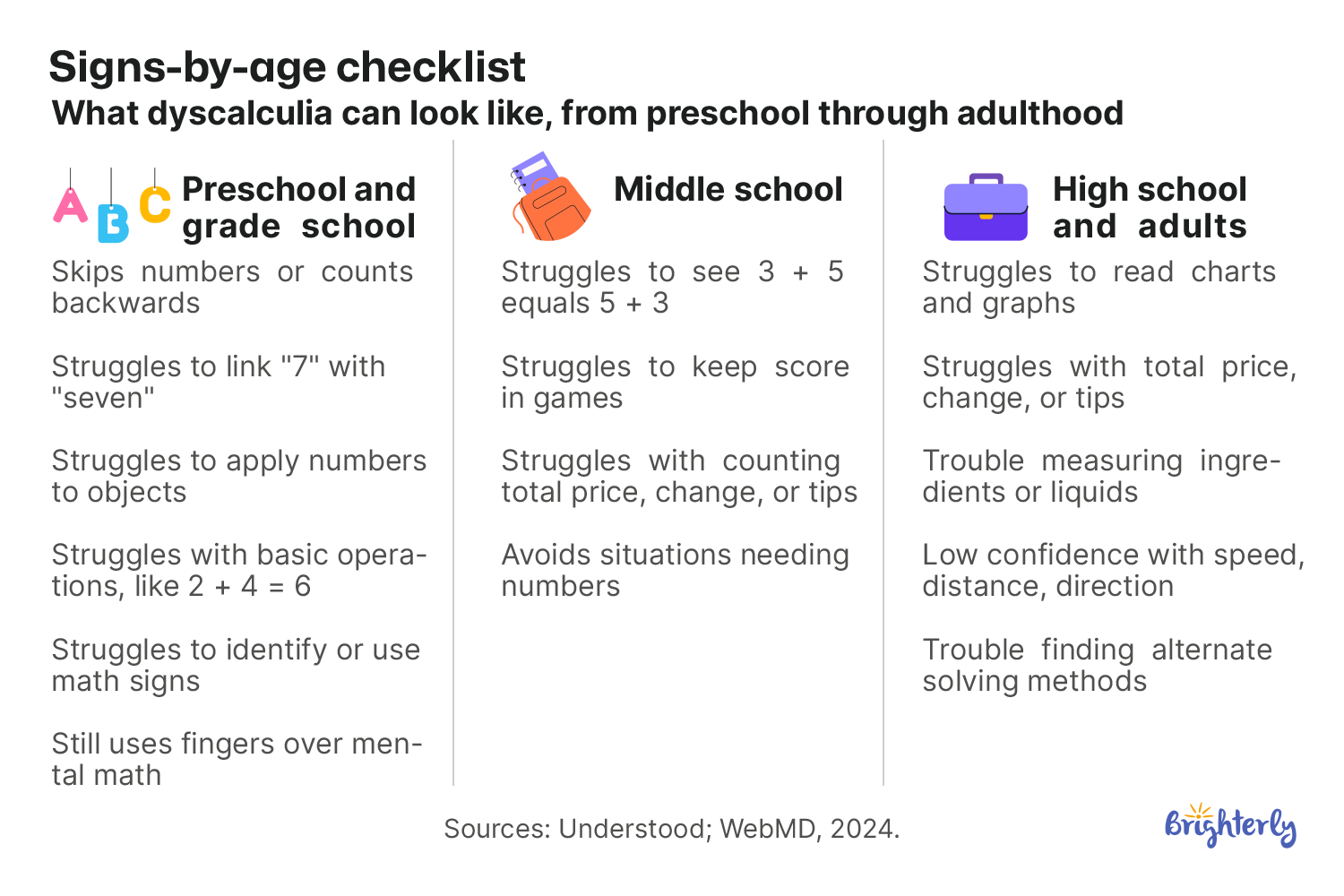
According to an Understood article, dyscalculia symptoms or signs differ across grade levels and ages, ranging from trouble counting and understanding number symbols in preschool to struggles measuring in high school. WebMD November 2024 article offers a general list of symptoms for all school-aged kids and adds insight on adult dyscalculia, which manifests itself in mistakes and math anxiety.
Note: Web MD article also adds that school-aged kids might develop physical symptoms of dyscalculia, which include nausea, vomiting, sweating, and stomachache.
Signs in Preschool and Elementary School
According to the Understood article, signs of dyscalculia in preschool and elementary school include trouble counting, understanding number symbols, tying the number to an object, learning and recalling basic math facts, identifying math signs, and still using fingers to count.
What exactly to look for:
- A kid skips numbers or counts backward
- A kid struggles to understand that “7” means “seven” (same for any other number)
- A kid struggles to understand that numbers apply to objects like food, toys, cars, etc.
- A kid struggles to perform basic math operations, like 2 + 4 = 6
- A kid struggles to identify math signs and use them correctly
- A kid still uses fingers when counting instead of more advanced strategies like mental math.
Signs in Middle School
According to the Understood article, signs of dyscalculia in middle school include a struggle to understand math concepts, keeping score in sports games and activities, figuring out the total price of things, and avoiding situations that require understanding numbers in general.
What exactly to look for:
- A kid struggles to understand concepts like 3 + 5 is the same as 5 + 3
- A kid struggles to keep score in sports games and activities
- A kid struggles with counting the total price, change, or a tip
- A kid avoids situations that require them to understand numbers (like math-based games).
Signs in High School and Adults
According to an Understood article, signs of dyscalculia in high school include struggles with reading charts and graphs, applying math to money, measuring, finding different approaches to the same math problem, and a lack of confidence in understanding speed, distance, and directions.
What exactly to look for:
- A kid struggles to read charts and graphs
- A kid struggles with counting the total price, change, or a tip
- A kid has trouble measuring ingredients and liquids in recipes.
- A kid lacks confidence in activities that require them to understand speed, distance, and directions (gets lost easily)
- A kid has trouble understanding different approaches to problem-solving, such as that they can just add the length and width of a rectangle and multiply it by two to find the perimeter instead of adding all four sides.
As for the signs of dyscalculia in adults, the WebMD November 2024 article says that they are basically the same as in children — the difference is only in the settings and responsibilities. For example, adults might be more likely to make number-related mistakes or have math anxiety when number-related tasks come up at work.
What Causes a Math Learning Disability?
Researching what causes dyscalculia, studies point to several factors that can contribute to this disability, but are not necessarily a definitive trigger. For example, a February 2026 Stanford Medicine study found that children with a math learning disability show lower levels of neural activity in brain centers involved in executive function when solving problems with number symbols.
This Stanford Medicine finding could mean that kids with dyscalculia are simply unable to use their brain resources on a level necessary to solve math problems efficiently.
WebMD November 2024 article also offers a list of factors that might contribute to dyscalculia:
- Brain development — differences in brain areas responsible for learning, working memory, and decision-making
- Genetics — children of parents with dyscalculia have a higher chance of having it too
- Environment — exposure of a fetus to alcohol and premature birth (low birth weight), possibly leading to delays in brain development
- Brain injury — acquired dyscalculia that may appear due to injuries in certain brain parts.
How Is a Math Learning Disability Diagnosed?
Before suspecting dyscalculia diagnosis, the WebMD November 2024 article suggests to rule out vision or hearing issues and talk to a child’s teacher and a doctor. If a parent still suspects a child has dyscalculia, it’s advised to talk to a learning specialist who will talk to the child and ask them to take a dyscalculia test.
The American Psychiatric Association states that in 2013, the DSM-5 changed the diagnostic criteria for Specific Learning Disorder (SLD) to combine all three learning disorders (dyslexia, dysgraphia, and dyscalculia) into one. An official diagnosis comes from a combination of observation, interviews, family history, and school reports, with possible neuropsychological testing to help find the best way to help the individual with a specific learning disorder.
The American Psychiatric Association also adds that an official diagnosis/legal status opens the door to dyscalculia accommodations at school under IDEA. According to the ADDitude August 2020 article, the accommodations under IDEA for kids with dyscalculia may allow kids:
- More time on math assignments and tests
- The use of calculators
- Adjustment of the task’s difficulty
- Separation of complicated problems into smaller steps
- The use of posters with basic math concepts
- Tutoring and access to supplemental information through computer-based interactive lessons.
How Is a Math Learning Disability Treated?
The American Psychiatric Association states that dyscalculia treatment usually includes multisensory instruction and accommodations, like using manipulative and assistive technology. WebMD’s November 2024 article adds treatment options like developing custom teaching plans (extended times or additional use of tools), playing math-based learning games, and increasing math practice frequency.
How to Help a Child With a Math Learning Disability at Home
To help a child with a math disability at home, you can start by taking our diagnostic math test — it’s not a test that can be used for official diagnostics, but it can show what exactly your kid is struggling with.
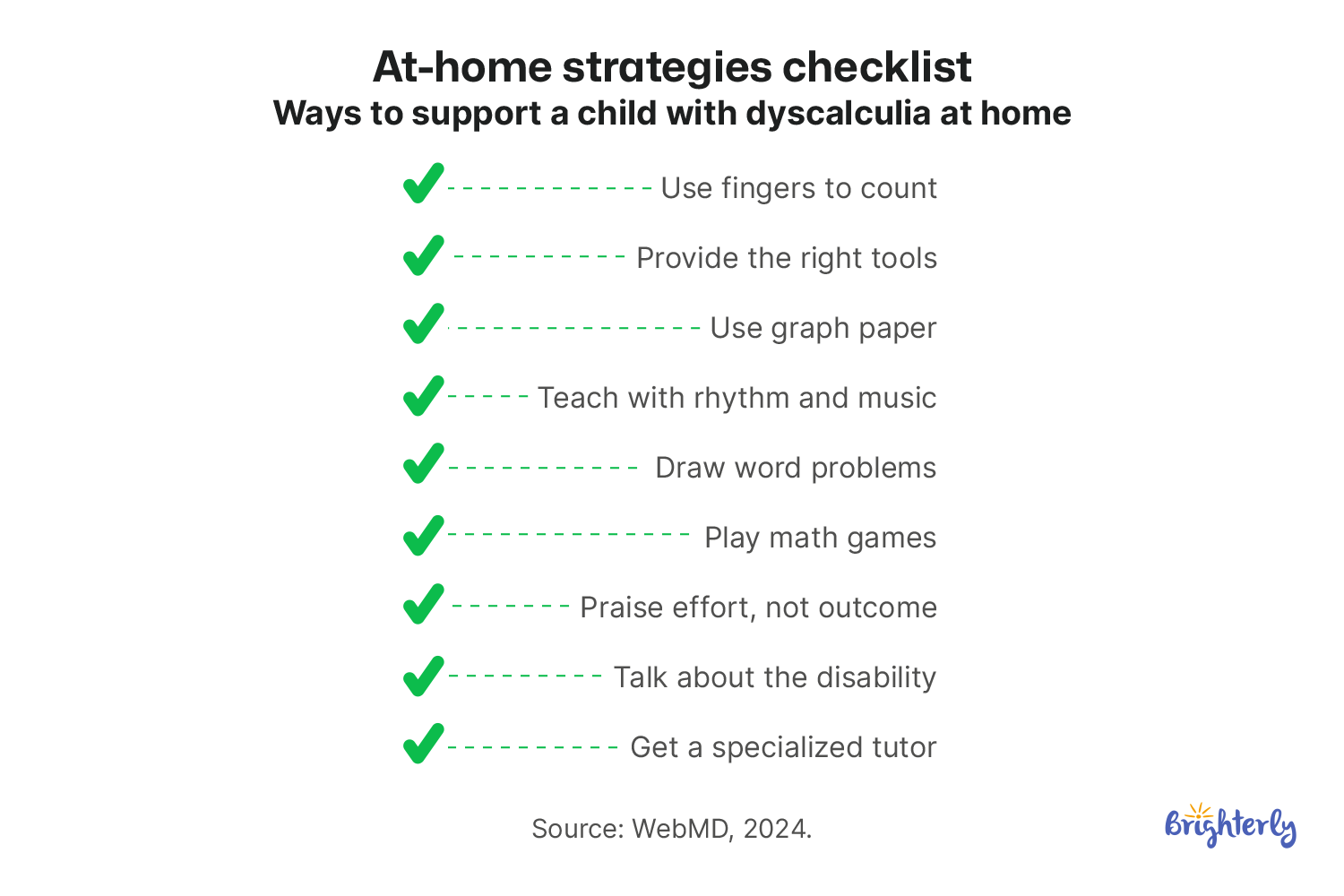
WebMD’s November 2024 article suggests the following tips for helping a child with dyscalculia:
- Let the kid use their fingers when they count
- Make sure a kid has the tools they need (calculator, erasers, etc.)
- Offer a graph paper to help a kid keep columns and numbers straight and neat.
- Use rhythm and music to teach math facts and steps
- Draw pictures of math word problems
- Schedule and play math games
- Praise the kid for trying instead of focusing on the outcome.
- Talk to the kid about their learning disability — explain where their struggle comes from
- Get a math tutor with experience working with dyscalculia.
One-on-one math tutors on our online math courses have experience with teaching math to K-12 students with dyscalculia effectively. While aligning it with the U.S. standards, the tutors adapt the online math program to a child’s pace, struggles, and current skill level. The cost of one lesson in tutoring pricing plans ranges from $17.70 to $21.90, with a 20% discount applied.
Experienced math tutor to target dyscalculia
Interactive and gamified lessons help kids gain confidence and improve math skills.
Math Learning Disability vs. Dyslexia and ADHD: What’s the Difference?
The difference between dyscalculia, dyslexia, and ADHD is that dyscalculia and dyslexia are specific learning disabilities that affect math and reading skills, respectively, while ADHD is a neurodevelopmental disorder — not a learning disability. However, dyslexia and dyscalculia are often present in kids with ADHD.
For example, the WebMD November 2024 article states that up to 60% of people with ADHD have some form of a learning disorder. Providing more insight, the May 2025 ADDitude article shares that nearly 1/3 of children with ADHD also have a math learning disability, while 25% of children with a math learning disability have ADHD. Our 2026 article supports these findings, mentioning how math and ADHD often overlap.
Note: Facing ADHD? Consider hiring a professional Brighterly math tutor for ADHD, or check this list of tips to help ADHD learners.
Conclusion
Dyscalculia is a learning disability that manifests itself in struggles with numbers, from early counting difficulties to adult math anxiety — it’s not a result of laziness or intelligence issues. Differences in brain development, genetics, and environment are among the factors that may contribute to dyscalculia.
Consistent support at home, at school, or/and/or from a professional tutor can help a child with dyscalculia improve math skills and gain confidence. Book a free demo at Brighterly to see how we can help your child.
Frequently Asked Questions
Is a Math Learning Disability the Same as Dyscalculia?
Yes, a math learning disability is the same as dyscalculia. Math learning disability is the broader term, while dyscalculia is the clinical name researchers and evaluators usually use. You can also come across terms like number dyslexia and math dyslexia — they also mean the same as math learning disability and dyscalculia.
Can a Child Outgrow a Math Learning Disability?
No, a child can’t outgrow a learning disability, math-related or other, according to the Child Mind Institute October 2025 article. However, special technology, organizational strategies, and school accommodations can help a child with learning disorders. Also, the earlier a child with a learning disorder gets support, the easier it will be for them to get better later.
At What Age Can a Math Learning Disability Be Diagnosed?
Although signs of a math learning disorder may appear during preschool, the formal diagnosis usually happens once a child is old enough for a standardized test that reliably measures math skills against grade-level expectations — usually, this happens in early elementary school.
Is a Math Learning Disability Considered a Disability Under U.S. Law?
Yes, a math learning disability is officially considered a disability in the U.S. under the Individuals with Disabilities Education Act (IDEA). In the act, math disability is mentioned as a specific learning disability that has to do with an imperfect ability to perform mathematical calculations.
How Common is a Math Learning Disability in Children?
The data on how common dyscalculia varies by study and diagnostic criteria. For example, a 2018 comprehensive research review in Translational Pediatrics says that roughly 3–7% of school-age children have dyscalculia, while the WebMD November 2024 article specifies that up to 7% of elementary students have dyscalculia.
Can a Math Learning Disability be Cured?
No, math learning disability can’t be cured — there’s no medication that treats dyscalculia directly. The only exception might be an acquired dyscalculia caused by a brain injury. For developmental dyscalculia, the only possible treatment is consistent, structured learning help and support.


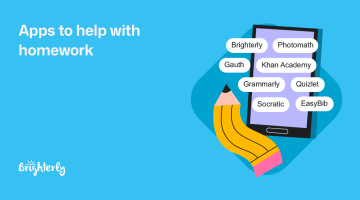
Some of the best apps for homework include tools like Photomath, Socratic, Gauth, Grammarly, EasyBib, Quizlet, and Khan Academy. Each app serves a different purpose — to solve an equation, create a bibliography, check grammar, or practice across subjects. However, when a child’s homework struggles are constant, and an app alone can’t solve it, it […]

Sep 04, 2026

We’re happy to announce our Brighterly Math Equity Scholarship winner, Leilani Gainer, a sixth-grade homeschooler who loves math, has worked hard to rebuild her confidence, and is now aiming higher than ever. Leilani Gainer — Brighterly Scholarship Awardee Leilani stood out as a persistent student, determined to keep improving in math. Even after struggling with the […]

Sep 09, 2026
Math & reading from 1st to 12th grade
Looking for homework support for your child?

Choose kid's grade

Math & Reading for Grades 1–12
Build real confidence for your child with a Brighterly math or reading tutor.