SMART Goals for Kids: What They Are And How to Write Them
reviewed by Marvi M. Andres
Updated on May 20, 2026
Key Points
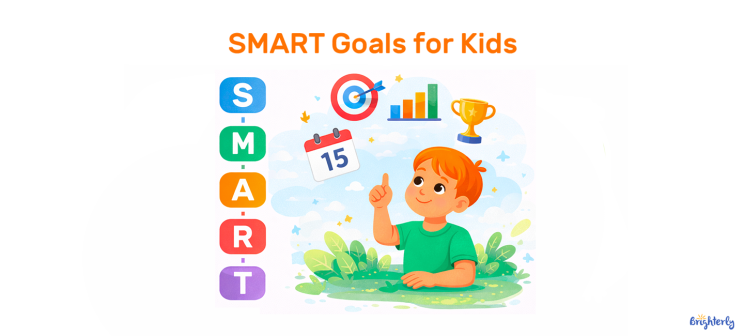
- SMART goals examples for students are Specific, Measurable, Achievable, Relevant, and Time-Bound.
- 87% of people believe they’ll achieve goals, but only 7% do, so you should use a SMART goals template for kids to boost motivation (ASU Prep Digital, 2024).
- Align goals with your child’s age and interests for better results.
- Write clear objectives together with your kid and mark each milestone to succeed with SMART goals.
SMART goals for kids are things that your child hopes to achieve through a well-organized plan. Your child can use the SMART principles for both academic tasks and personal habits. This guide shows parents how SMART goals work and how to help your kid write them, including examples by category and age.
What Are SMART Goals for Kids?
SMART goals for kids are Specific, Measurable, Achievable, Relevant, and Time-Bound objectives that your child plans to work on. Using the SMART framework helps build a growth mindset for your kids by enhancing study habits, personal skills, and self-esteem. SMART goals improve focus and build lifelong organizational capacities.
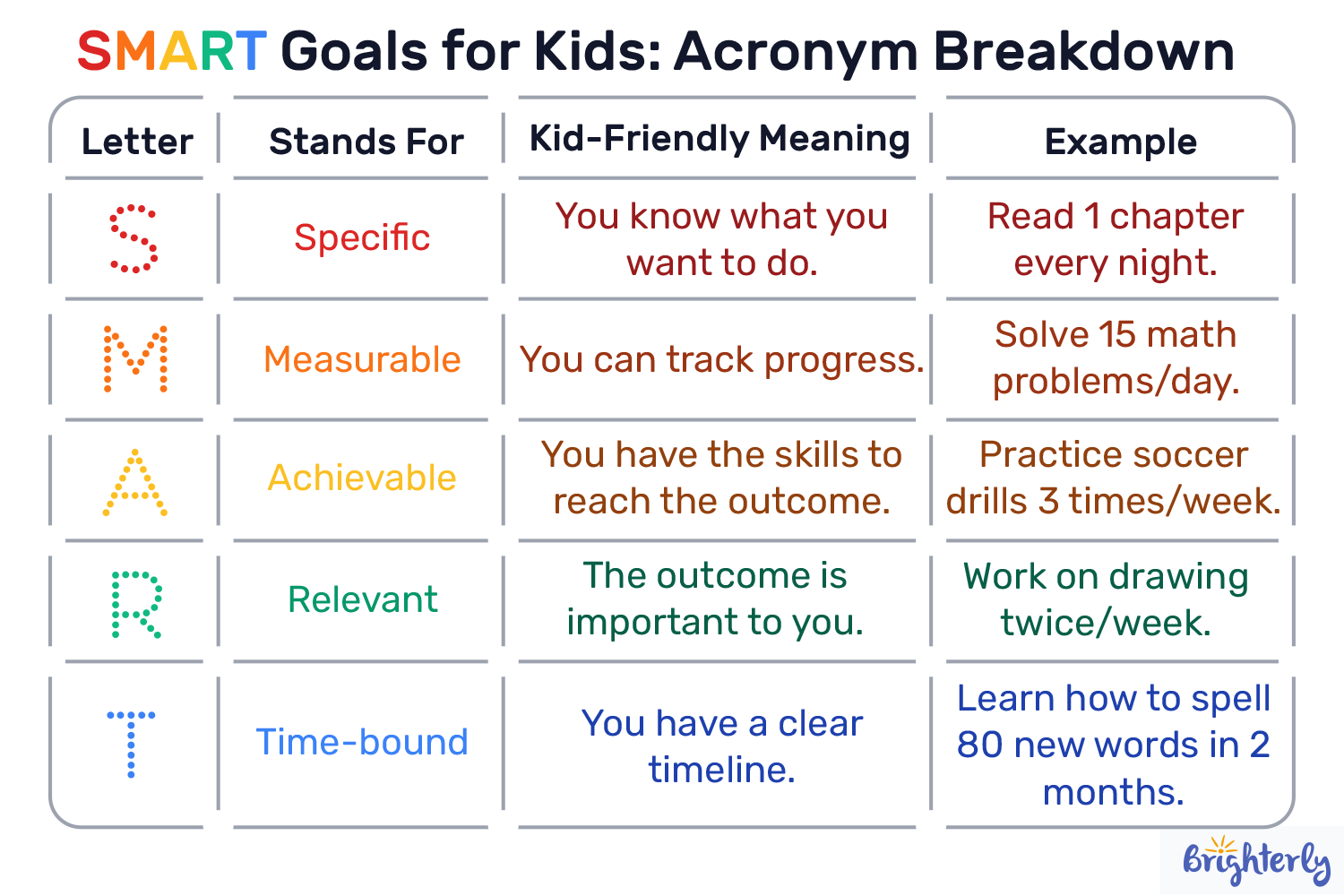
S – Specific
A specific goal states exactly what your child plans to do. Kids understand and follow clear goals better. Help your child set up a specific goal by asking “What do you want to improve?” and “What will success look like?”
Example: I will read 1 book chapter every night before bed.
M – Measurable
Measurable goals can be tracked numerically to see how close your child is to the aim. Kids feel motivated when they cross off steps and see progress. Make goals measurable by adding numbers and progress tracking.
Example: I will complete 15 math practice problems every weekday.
A – Achievable
When your child has the skills to complete a goal, it’s achievable. Kids don’t want to work on things they don’t believe they can complete. So, make aims tangible and attainable by breaking them into small, concrete actions.
Example: I will practice soccer drills for 20 minutes 3 times/week.
R – Relevant
Relevant goals matter to your child. Kids want to work on things they care about. Help in setting SMART goals by connecting them to your child’s interests.
Example: I will practice drawing twice a week to get into the art club.
T – Time-Bound
A time-bound goal has a clear timeline for implementation. Deadlines help kids build routines, stay focused, and avoid procrastination. Add a specific deadline and realistic weekly schedule to make goals timely.
Example: I will learn how to spell 10 new words every week for the next 2 months.
Explore Brighterly Learning Experience
Learn exactly how Brighterly helps students thrive through expert sessions, online tools, and proven feedback from thousands of satisfied parents
How to Write SMART Goals with Your Child
For setting SMART goals for your kids, start by choosing a goal that your kid feels close to their heart. Then make the goal precise, easy to track, and achievable before adding a clear deadline. Write down the goal and track progress together to boost motivation and build confidence over time.
Start with What Your Child Cares About
Come up with a goal that your kid genuinely wants to achieve and that will contribute to their wellbeing. Don’t force objectives that are important to you because your kid might push back. Children feel more motivated when goals match their aspirations, interests, and hobbies. Ask questions to find out what really matters to your kid.
Make It Specific and Measurable
Turn loose ideas into concrete actions that your child can keep track of. Add numbers, routines, and small milestones to make progress easier to see and keep your child encouraged. Rather than thinking “Read more”, create a goal like “Finish a 100-page book every month”.
Check That It’s Achievable and Relevant
Write goals that challenge your child to go outside their comfort zone without feeling overwhelmed. Realistic goals create an incentive and avoid frustration, especially when balancing school, extracurricular activities, and family routines. Make sure the objective feels meaningful to your kid so that they persist long enough to complete it.
Set a Deadline
Timelines with milestones and deadlines give your child a clear target and prevent procrastination. Time limits make goals easier to organize into daily activities. Depending on your child’s age, the deadline could be a week, a month, or the end of the year. For example, turn “Do more math” into “Memorize the multiplication table by the end of the month”.
Write It Down and Track Progress
Putting goals on paper makes them real and helps remember them. Progress charts, checklists, and weekly check-ins keep your child on track and encourage them by recognizing small wins. According to research cited by Arizona State University (ASU) Prep Digital in 2024, 87% of people setting SMART goals are confident they’ll complete them, while only 7% actually do. So, keeping track matters for success.
To identify your children math learning gaps, you can start with a grade-appropriate free diagnostic math test or reading test. Next, you can decide to go over one SMART goals worksheet for kids per week (free math worksheets and reading worksheets are available here).
SMART Goals Examples for Kids by Category
SMART goals can support different areas of life, including education, personal habits, sports, and friendships. Using diverse goals helps children build independence, responsibility, and self-esteem in various fields. The following SMART goals examples can help you create realistic, trackable objectives for your kid.
Academic SMART Goals for Kids
Reading/ELA SMART goals examples:
- I will read for 20 minutes/day for at least 5 days/week for the next 3 months.
- I will finish reading 4 age-appropriate chapter books by the end of the semester.
- I will summarize 1 chapter from my reading assignment every school day this month.
Math SMART goals examples:
- I will complete 5 multiplication problems 5 evenings/week for the next 8 weeks.
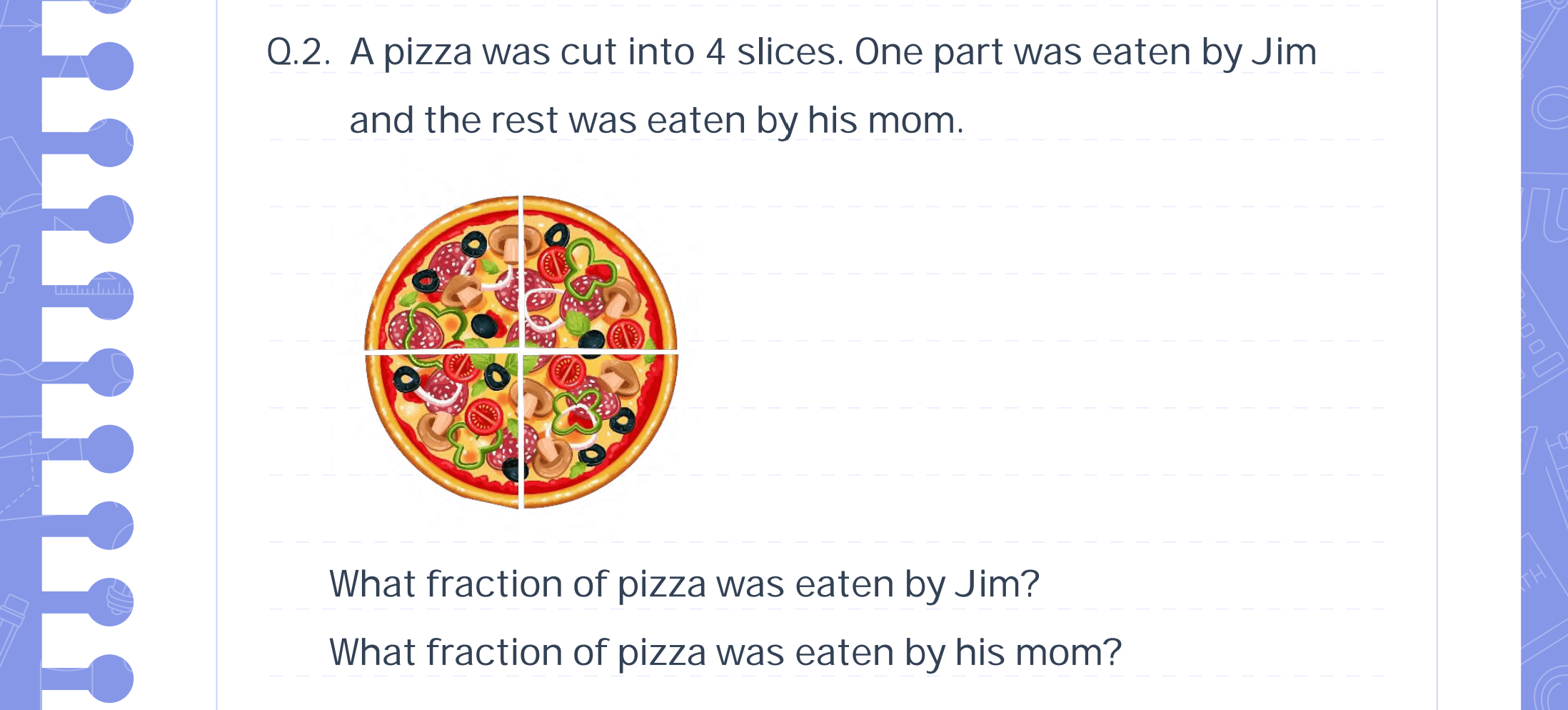
- I will practice fractions using a SMART goals for kids worksheet for 20 minutes every Monday and Wednesday this month.
- I will memorize all division facts from 1 to 12 by practicing 10 minutes daily for 10 weeks.
Note: Our online learning platform offers fully personalized 1:1 math and reading tutoring that can help your child set and achieve grade-appropriate academic goals for students. Our experienced tutors customize K-12 online math program and reading program to the gaps and needs of your child to hit their SMART goals on time.
Personal SMART Goals for Kids
- Health-related: I will drink water instead of soda during the next 3 months.
- Habit-related: I will put away my toys and school supplies before bedtime every night this month.
- Chores-related: I will help with laundry every Saturday for the next 2 months.
Social and Extracurricular SMART Goals
- Friendship-related: I will invite 1 classmate to talk or play during recess twice a week this month.
- Sports-related: I will practice basketball free throws for 15 minutes 3 times/week for the next 6 weeks.
- Hobby-related: I will spend 10 minutes a day practicing guitar during the summer.
1:1 help in meeting your SMART goals!
Our tutors tailor math & reading classes to your child’s personal SMART goals.


SMART Goals for Kids by Age Group
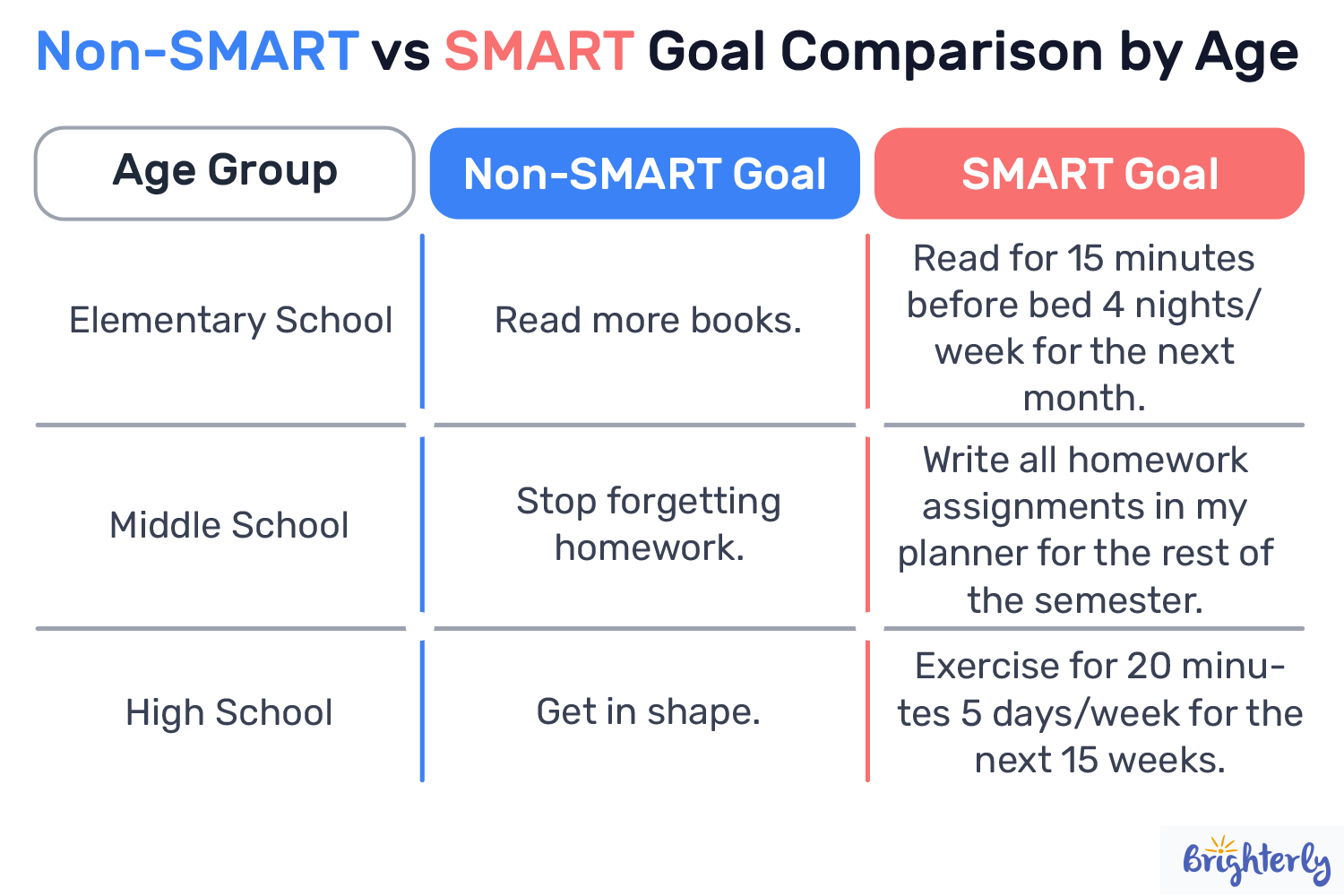
Goals need to correspond to your child’s age and skills to motivate them. Younger kids need simple, short-term goals, while older children can handle more complex objectives with longer timelines. The following SMART goals for kids examples can help you support your child in establishing appropriate plans.
SMART Goals for Elementary School Kids (Ages 5-10)
- I will read 1 short story every night before bed for the next month.
- I will practice science facts for 10 minutes/day for 2 months.
SMART Goals for Middle School Kids (Ages 11-13)
- I will study ELA for 20 minutes each weekday for the next 2 months to raise my average from 70% to 80%.
- I will work on baseball hitting for 20 minutes, 3 times/week for 8 weeks.
SMART Goals for High School Kids (Ages 14-18)
- I will improve my algebra grade from a C to a B by attending weekly online or in-person tutoring sessions for the rest of the semester.
- I will exercise for 30 minutes 5 days/week for the next 12 weeks.
Common Mistakes Parents Make When Setting Goals with Kids
Despite your efforts, sometimes SMART goals examples for students fail because your kid feels disconnected or pressured. Parents often make goals too broad, difficult, or kid-unfriendly. Avoid the most frequent mistakes when goal setting for your kid with the tips below.
Making the Goal Too Vague
Sometimes parents use general statements like “Do better in math” when setting personal goals for kids, which makes it hard for children to understand what they should do. Kids can’t complete something they don’t understand.
Fix: In goal setting activities for kids, focus on specific actions. Use numbers and deadlines, such as “Solve 1 addition worksheet/night 3 nights/week for the next month”.
Setting the Goal for Them Instead of with Them
Some parents choose goals for their children without involving them in the decision-making, making the objective impersonal. Brigida Aversa, Co-Owner and Founder at Tiny Hoppers, explains why not involving your child is a major mistake and how to help kids set goals that are meaningful to them:
“The most common mistake is setting a goal that doesn’t actually belong to them.”
To fix this and get back on track, they have to make sure the goal connects to something they genuinely care about. Even a small reason can make a difference. Once it feels like their goal, they’re much more likely to stay engaged and follow through.


Not Celebrating Small Wins
Some parents forget to recognize small achievements along the way to the big goal. When parents don’t reward progress, children lose ambition and quit early.
Fix: Praise your kid’s efforts. Use a printable SMART goals template to track advancements and give small rewards to encourage your kid.
Let Brighterly help with your child’s goals!
Our professional teachers can guide your child in setting & achieving math & reading goals
Conclusion
A SMART goal for students helps them organize their plans into manageable steps they can easily follow. When you create clear, age-appropriate goals together with your child and track progress consistently, the process becomes more organized, satisfying, and successful.
Frequently Asked Questions (FAQ)
What Is a SMART Goal Example for a 10-Year-Old?
“I will practice multiplication for 15 minutes after school 4 times/week for the next 6 weeks” is a SMART goal example for a 10-year-old kid. The goal creates an understandable, achievable objective with a definite deadline. Your child knows what to do to reach the goal.
How Do You Teach SMART Goals to Kids in a Fun Way?
Use simple language, colorful charts, and playful stickers to have SMART goals explained for your kids in a fun way. Use a child goal setting worksheet to gamify goals into challenges with rewards. Your child can color in a chart whenever they complete a reading session or a chore.
How Many SMART Goals Should a Child Have at One Time?
Most children can handle 1-3 SMART goals at a time, depending on age, personality, and schedule. At elementary school, start with 1-2 specific objectives and see whether your kid can manage them. As your child moves to middle school, add an extra goal. Your high schooler can successfully work on 3-5 goals at once.
Can SMART Goals Work for Kids With Learning Differences?
SMART goals can help students with learning differences because they break large tasks into small, manageable steps. Using milestones, routines, and trackers can improve the focus of neurodivergent kids and teach patience. With SMART goals, you can adjust difficulty and timelines to your kid’s learning pace.
At What Age Can Kids Start Setting SMART Goals?
The best age to start setting SMART goals is 5-7 years old. Begin with short, simple goals so your child can learn the SMART framework and how to implement it. As your kid grows, gradually introduce longer timelines, more detailed planning, and independent progress tracking.
What Should I Do If My Child Gives Up on Their Goal?
If your child can’t achieve a goal, be supportive. Find out together what made the goal impossible. Maybe the timeline was too long, the goal was too hard, or your child wasn’t interested. Help your kid adjust the goal into smaller, easier steps and start again without putting pressure on them.
What Does Attainable Mean in SMART Goals?
An attainable SMART goal means that your child can achieve it with their current skills. A good goal is challenging enough to encourage improvements, but not to the point where it becomes impossible to achieve. For example, practicing piano for 15 minutes a day is more attainable than mastering an entire song in a week.



The main difference between the main idea and the theme is that the former is a specific summary of what a text is about (the plot and characters), whereas the theme is the universal life lesson or underlying message the author wants to convey. Using examples, questions, and story practice, we break both terms down […]

May 18, 2026

The Ukrainian-founded math and reading educational platform joins ASU+GSV event for leaders in the education and skills sector. Las Vegas, NV – May 12, 2026 – The CEO of Brighterly, Eugene Kashuk, joined the 17th annual ASU+GSV Summit in San Diego. Established in 2010, ASU+GSV Summit is the premier global forum for leaders reshaping the […]

May 27, 2026
Math & reading from 1st to 12th grade
Looking for homework support for your child?

Choose kid's grade

Math & Reading for Grades 1–12
Build real confidence for your child with a Brighterly math or reading tutor.