Multiple Meaning Words and Homonyms Worksheets
Updated on October 15, 2026
Multiple meaning words, also called homonyms, are spelled and pronounced the same but have different meanings, like bat (an animal) and bat (used in baseball). These free worksheets for grades 3–5 help students build vocabulary and reading comprehension by using sentence context clues to choose the right meaning.
Download Multiple Meaning Words Worksheet PDFs
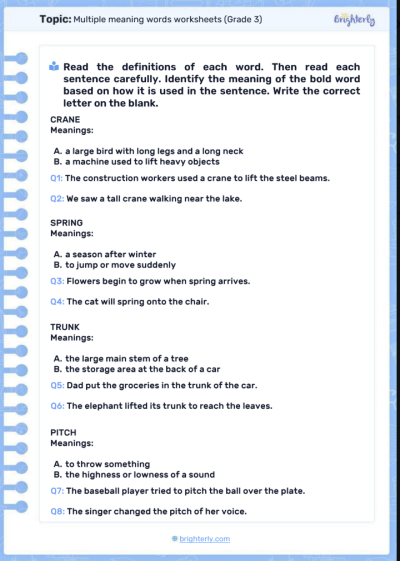
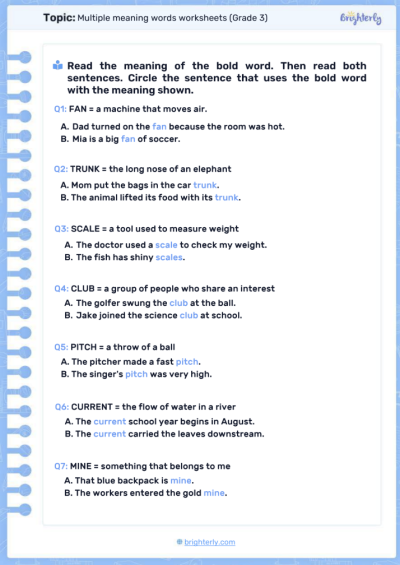
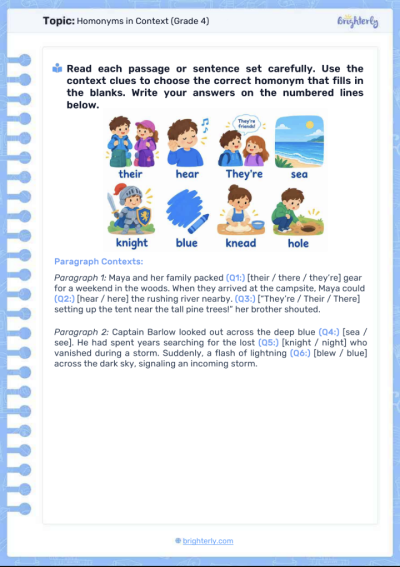
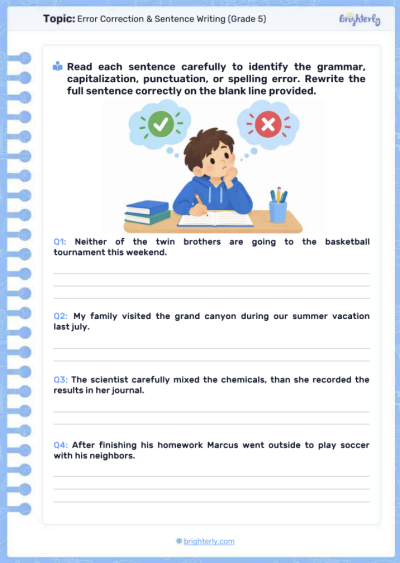
Grade 3 worksheets focus on finding the meaning of a word from context. Grade 4–5 worksheets add choosing the correct homonym, fixing word errors and writing sentences that use each meaning.
More reading worksheets
Expand your elementary language arts curriculum with additional vocabulary and reading practice.
- Homophones worksheets
- Prefixes and suffixes worksheets
- Context clues worksheets
- Shades of meaning worksheets
How to Figure Out a Multiple Meaning Word
Read the whole sentence and look for clue words around the tricky word.
- The bat flew out of the cave at night. “Flew” and “cave” show it’s an animal.
- He swung the bat and hit the ball. “Swung” and “ball” show it’s sports equipment.
If you’re not sure, swap in a word with the same meaning. If the sentence still makes sense, you picked the right one.
Benefits of Multiple Meaning Words Worksheets
Structured practice with multiple meaning words helps elementary students develop vocabulary analysis and context clue skills.
By examining how common words change meaning in different sentences, students sharpen their reading comprehension and learn to look beyond the first definition they know.
Mastering homonyms also strengthens writing, because students learn to choose words that say exactly what they mean.
Teachers and parents can use these printable worksheets for independent practice, small-group instruction or targeted intervention.
Frequently Asked Questions
What are multiple meaning words?
Multiple meaning words are spelled and pronounced the same but have different meanings, like bark (a dog’s sound) and bark (a tree’s covering).
What’s the difference between homonyms and homophones?
Homonyms are spelled and sound the same. Homophones only sound the same and are spelled differently, like hear and here.
How do kids figure out which meaning is right?
Kids read the whole sentence and look for clue words. In “The dog’s bark woke me up,” the words “dog” and “woke” point to the sound, not the tree.
After working with multiple meaning words, try our reading test to check how your child uses vocabulary and context alongside other reading skills.


Help your child reach their full potential!
Answer a few quick questions about your child’s learning, and we’ll recommend next steps.

Math & reading from 1st to 12th grade
Looking for homework support for your child?

Choose kid's grade

Math & Reading for Grades 1–12
Build real confidence for your child with a Brighterly math or reading tutor.