Background Knowledge: Definition and Ways to Develop
reviewed by Claire Smizer
Updated on May 3, 2026
Key Points
Is your child able to read every word accurately, but still stares blankly at the end of the story when you ask what it’s about? There is usually no problem with reading skills here, but rather a lack of background knowledge needed to connect the dots. Take a deeper look at the topic and explain what background knowledge is, and share six simple ways to help your child build a stronger mental library at home.
What Is Background Knowledge?
Background knowledge is the reservoir of facts, concepts, and experiences a reader brings to a text; in other words, it’s the total collection of vocabulary and imagination a person possesses. Reading is not an isolated experience for children. To make the new information on the page useful, they combine it with their existing database.
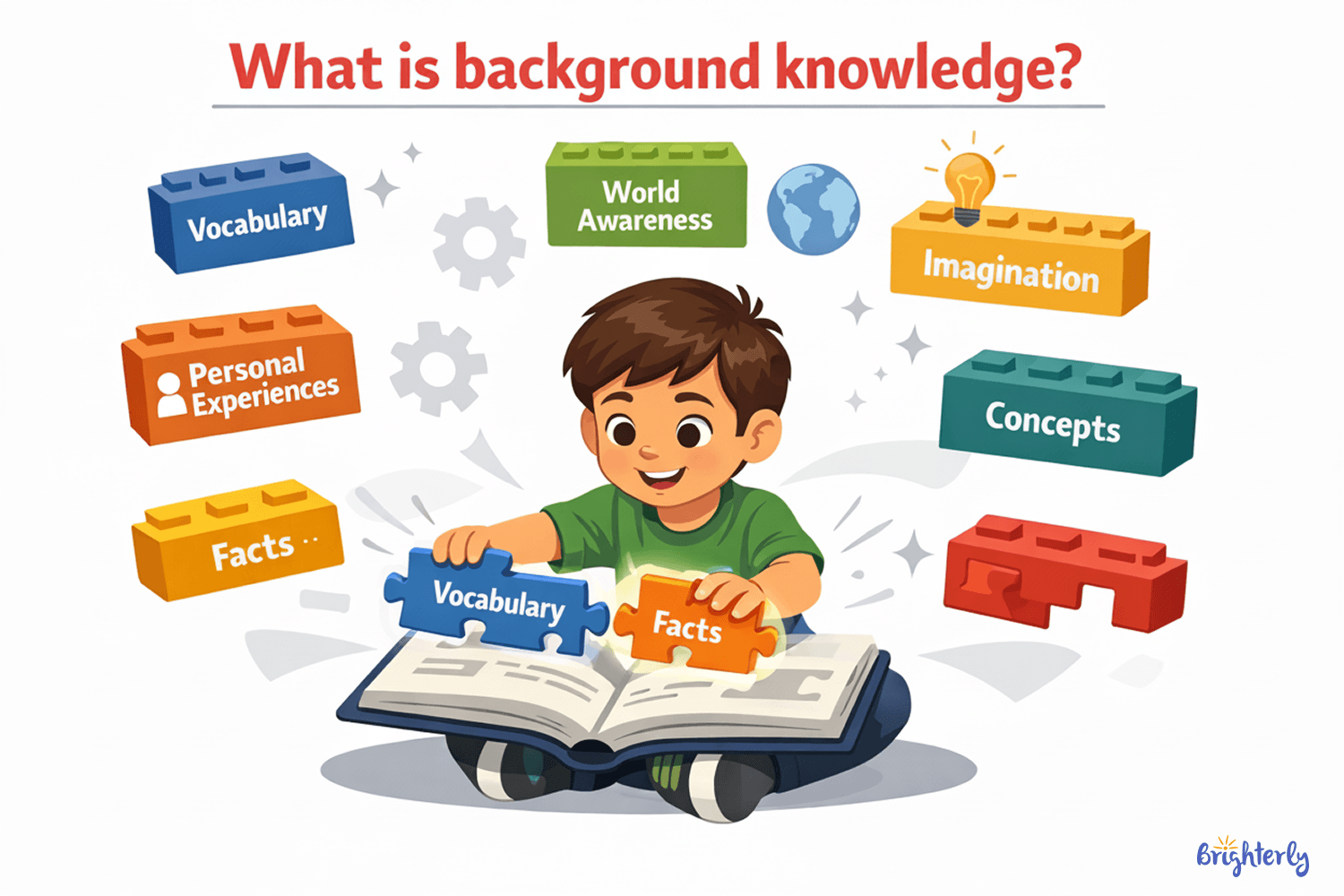
This process relies on schema theory, where the brain creates mental frameworks, or schemes, for different topics. While background knowledge in reading is often confused with prior knowledge, it’s useful to distinguish between the two.
Background knowledge is a larger, more expanded reservoir of general information that aids a child in understanding even subjects they have not directly encountered, whereas prior knowledge usually refers to specific, lived experiences. The brain easily integrates information when a text aligns with an existing schema.
On the other hand, the brain finds it difficult to incorporate new information if that schema is absent. Because of this, prior knowledge is the most important ground basis for reading comprehension skills; without it, new material just doesn’t have a place in the mind.
Background Knowledge vs. Prior Knowledge: What’s the Difference?
Despite their similarity, these terms have distinct meanings that often confuse parents. Prior knowledge in reading refers to specific personal experiences. This is a reflection of what a child has experienced. A child who visits the beach knows what sand feels like, for example.
Note! Recent research (Taylor & Francis, 2024) shows that prior topic knowledge serves as a vital cognitive resource, enabling students to verify information and navigate complex texts, shifting reading from a mechanical decoding process to an active, evaluative experience.
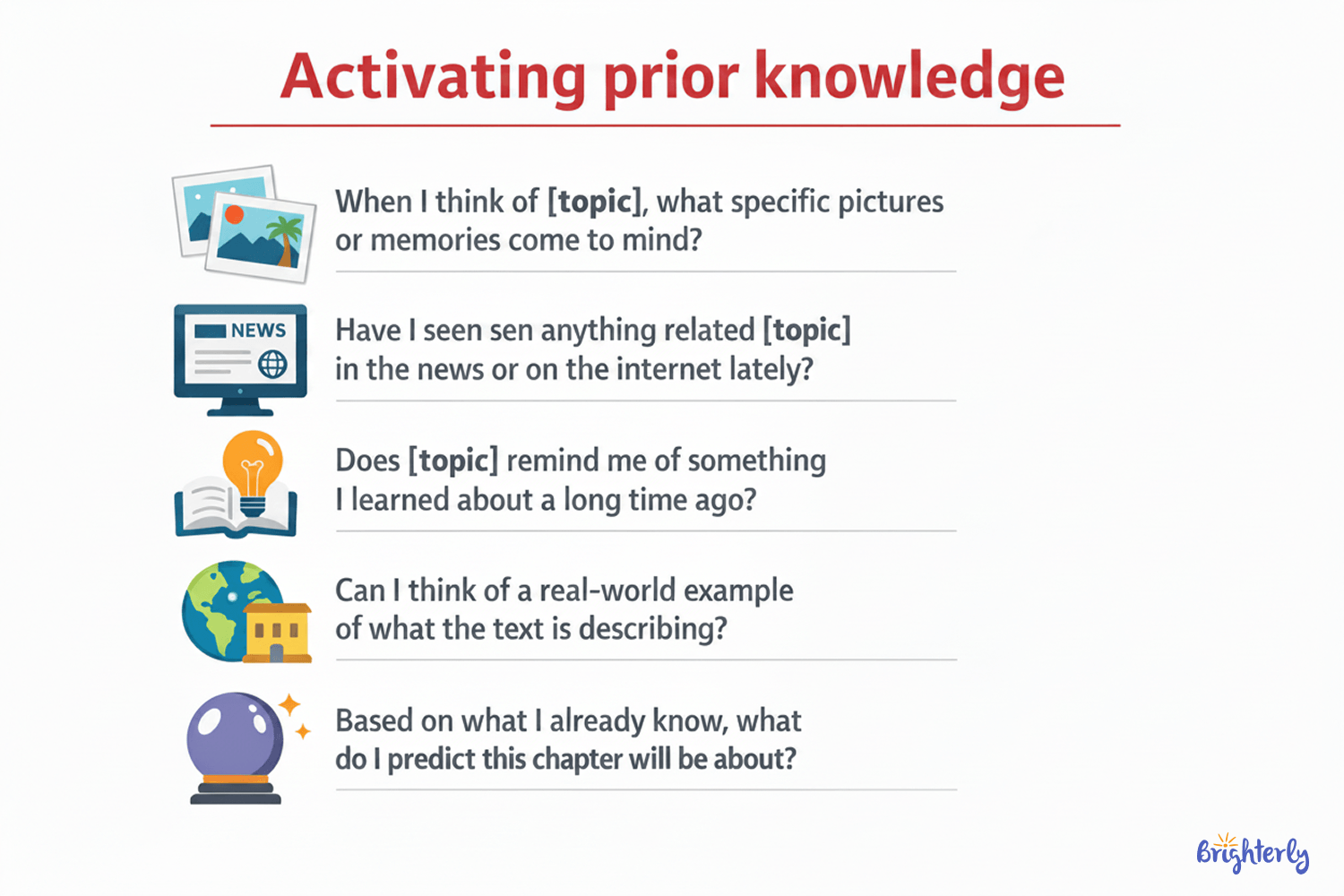
Background knowledge, on the other hand, acts as a broader concept. In addition to domain knowledge, world awareness encompasses a wide range of topics. Children might read about the American Revolution without ever visiting a battlefield, so they lack personal experience. However, they may possess strong knowledge in history, government, and war. Despite not having personal experience, they can still understand the text because of their broader knowledge.
Supporting reading comprehension at home
Brighterly tutors help identify learning needs and guide children’s reading development
Explore Brighterly Learning Experience
Learn exactly how Brighterly helps students thrive through expert sessions, online tools, and proven feedback from thousands of satisfied parents
Why Does Background Knowledge Matter for Reading Comprehension?
Background knowledge and reading comprehension are closely connected because existing knowledge acts as a mental framework that helps readers organize new information, make sense of unfamiliar ideas, and understand relationships within a text. When this foundation is weak, readers often focus on decoding individual words rather than grasping the overall meaning, which limits comprehension and slows processing. Strong background knowledge allows reading to become more automatic and meaning-focused, freeing cognitive resources for interpretation and inference.
Imagine a child reading a text about baseball. The child who plays the sport has internal definitions for terms like “home run” or “pitcher.” Instead of defining words, they focus on the narrative.
Note! According to research by Pearson and Cervetti (2017), reading comprehension is not a static skill but an active, cognitive process of meaning-making that has evolved to become the cornerstone of modern literacy instruction.
According to the NAEP Nation’s Report Card, students who have high content knowledge do better on standardized tests. It serves as the primary start engine of the science of reading. Conversely, if the same child reads about a sport they’ve never heard of, their brain consumes energy trying to define it. As a result, they’re unable to grasp the main idea. This phenomenon correctly explains why some children can pass a diagnostic reading test on some topics yet fail on others. Consequently, they’re not able to navigate the text effectively.
When Do Children Start Building Background Knowledge?
The process starts at birth.
- Birth–5 years: Infants and toddlers build knowledge through observation, play, and read-aloud sessions. Every experience adds a new file to their mental library.
- K–2: Students encounter structured information. A knowledge-rich curriculum introduces geography, history, and science concepts.
- K3–5: Reading volume increases. Children start to read to acquire information rather than just decoding.
- Middle school: Specialization occurs. Students focus on specific domains.
Note! If you notice your children falling behind at a particular stage of education, a personal reading tutor from the Brighterly team can help to identify and fill the gap.
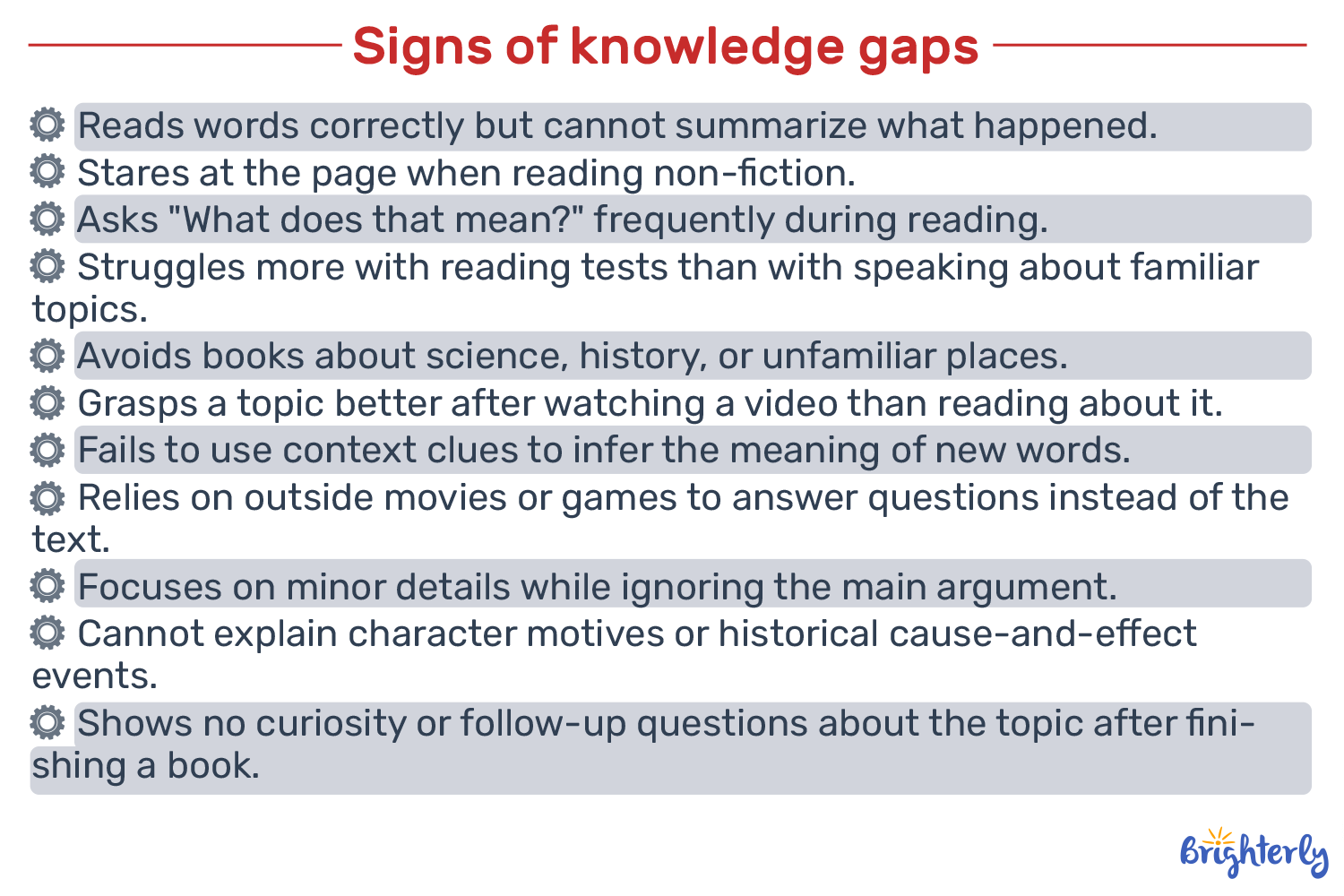
Signs Your Child Has Gaps in Background Knowledge
It’s common for parents to notice these gaps during or after reading activities, when a child can read the words but struggles to fully understand or explain the text. These patterns often become visible in everyday reading discussions and comprehension checks, especially after finishing a passage or story. Check out the list of possible signs below to understand if your child is failing in background knowledge.
How to Build Background Knowledge at Home
To build background knowledge at home, parents should leverage daily life as a curriculum, transforming routine conversations and experiential learning into foundational mental frameworks. By consistently applying targeted background knowledge strategies such as reading diverse genres, discussing real-world connections, and encouraging curiosity, you create the cognitive scaffolding necessary for your child:
- Get personalized guidance from a tutor
- Read widely across topics
- Use documentaries and educational videos intentionally
- Build knowledge through conversation
- Choose books that connect to each other
- Try vocabulary-first reading
Get Personalized Guidance from a Tutor
All parents try to provide consistent support for their kids at home, yet reading gaps remain. They often stem from different comprehension issues. To fix this matter, our Brighterly reading comprehension program provides a structured approach for struggling readers in grades 1–9.
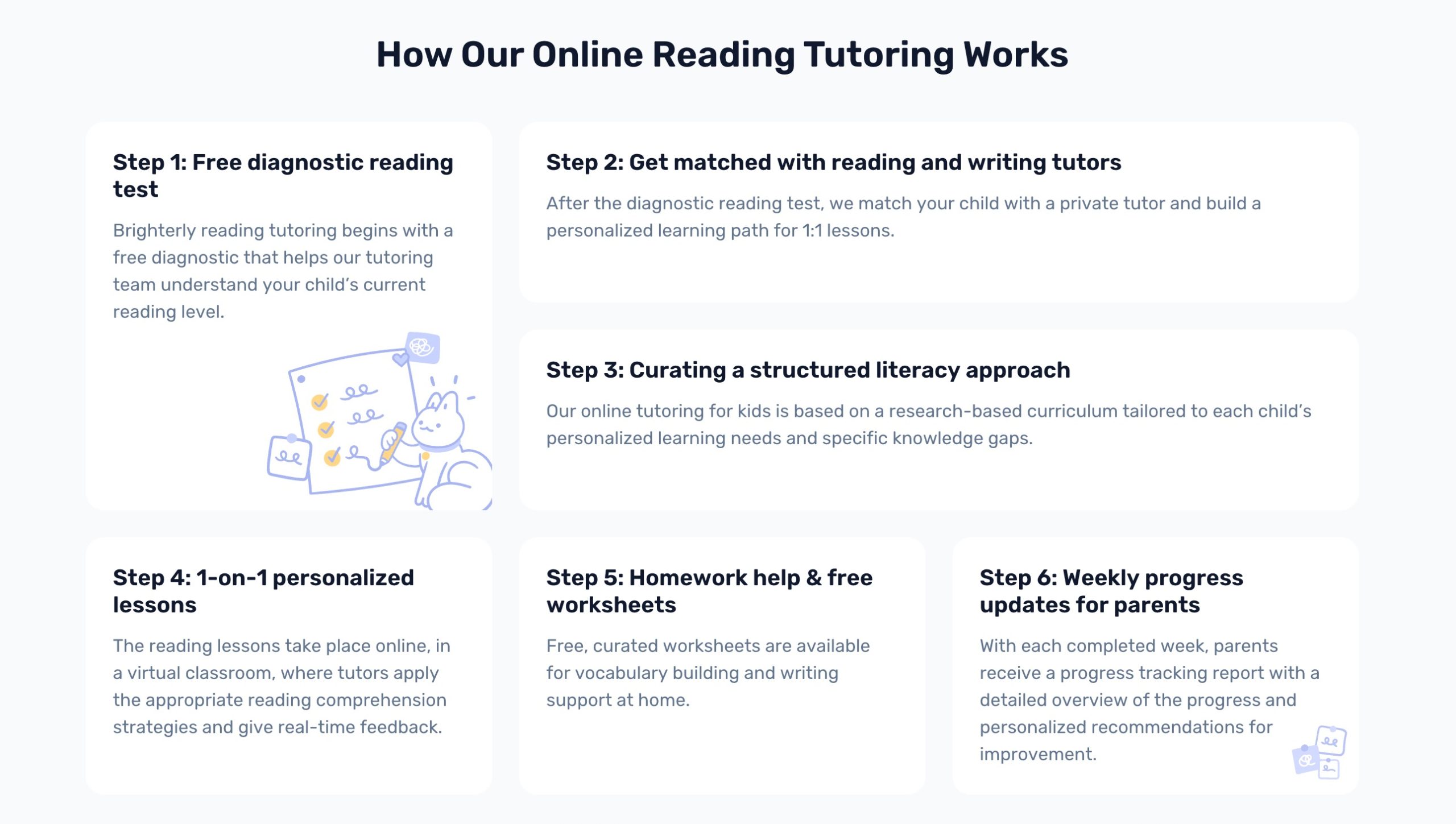
During the independent reading program, our tutors identify specific concepts that are missing. Then they craft customized lessons to fill in those gaps efficiently. Children learn how to use complex texts with clarity and confidence. As a parent, you can feel confident that your child is receiving targeted support that addresses their individual learning needs.
Read Widely Across Topics
Combining fiction and nonfiction within the same theme is a good idea. A story provides context. Fact books provide clear details. You can rotate topics each week by going to the library. Choose a series like Magic Tree House or Horrible Histories. It’s common for them to repeat ideas from book to book. In this way, you’ll support memory and help develop abstract thinking. Repetition across formats helps the child notice the same idea in various formats. Over time, this makes concepts more stable.
When you are at home, switch topics after a short period of time. Make sure you stay long enough to connect ideas. Ask the child to recall the links between the books. This is how to build background knowledge in small steps. A quick recap before the next book helps fix key terms. Short notes or simple drawings can support recall.
Use Documentaries and Educational Videos Intentionally
Try watching short videos related to what you are reading right now. Don’t watch it in the background; watch it together. Take pauses at key moments. Simply ask the question: “What did you notice? ” or “How did this happen?” Keep answers simple and precise.
Make a link between the video and the next book you plan on reading. As an example, you might want to show a short video about volcanoes before a nonfiction piece. These are strong background knowledge examples that prepare the child for new terms. When a word appears later in print, it feels familiar. This supports teaching kids to read with context, not guessing. Limit one video per topic cycle to keep focus.
This routine builds prior knowledge before the child meets the text. New ideas are easier to follow when they’re presented in a short preview. When kids have strong prior knowledge of reading, they become more efficient at understanding what they’re reading over time.
Build Knowledge Through Conversation
Talk daily about real topics, not only routines. At dinner, ask “why” and wait for a full answer. If the child says, “because it’s hot,” ask what makes it hot. Add one new word during the talk and use it again later.
This grows vocabulary and builds links between ideas.
Visits to museums or historical places give material for rich talk. After the visit, ask the child to explain one exhibit in their own words. Clear speech supports decoding skills during reading. It also helps the child become a fluent reader over time. Keep conversations short, focused, and regular. These small talks build background knowledge for kids in a steady way. Each new word links to a real situation, which makes it easier to recall later.
Choose Books That Connect to Each Other
Pick three books that stay on one clear topic, for example, space or ancient Egypt. Start with a simple overview book. It gives basic words and key ideas. Then, add a second book with more detail, such as daily life in Egypt or how astronauts live. Finish with a third book that focuses on one narrow part, like pyramids or planets. This order builds knowledge step by step.
When books connect, new facts attach to what the child already knows. A mention of “pharaoh” in book two makes sense because it appeared in book one. Repeated terms build word knowledge and stop feeling new. Reading becomes easier and faster for the child.
The way reading research works with text sets is as follows. It also totally aligns with the simple view of reading, where strong language knowledge helps retain information.
Avoid mixing random topics in one week. Keep one theme in mind for a few days. Discuss each reading afterward. Ask for one new fact and one link from the previous book. Fix ideas by taking notes or drawing a quick sketch.
Try Vocabulary-First Reading
Pre-teach three to five key words before your child picks up a new book. Explain what they are and show images. The purpose of this strategy is to scaffold comprehension. As the child encounters these words in the text, they recognize them. It prevents children from staring blankly when they encounter a new term.
Reading comprehension support for children
Brighterly helps address knowledge gaps and build stronger reading skills
A pre-teaching of vocabulary removes the biggest roadblock to fluency. When a child encounters a familiar word they have been taught, their brain doesn’t stop to decode its meaning. They maintain the story’s flow. By reducing their cognitive load, they’re able to concentrate their energy on comprehending the actual plot or argument, while simultaneously building background knowledge.
Conclusion
Background knowledge transforms reading into active meaning-making, replacing word recognition with genuine engagement. One book, one conversation, one topic at a time. By focusing on reading habits and everyday interactions, parents can build this base. Consistent exposure to new topics constructs the schema required for superior text comprehension.
Children are more likely to succeed academically when they have the appropriate context. The preparation for reading creates readers who are capable of acquiring new information and enjoying it. They’re more likely to succeed in the future if they strengthen this mental library.
Frequently Asked Questions
How Is Background Knowledge Different from Prior Knowledge?
Background knowledge is different from prior knowledge because prior knowledge refers to personal, lived experiences. Study, media, and conversation all contribute to background knowledge, which includes general facts, domain-specific information, and concepts.
Can Background Knowledge Be Taught, or Does It Develop Naturally?
Background knowledge develops naturally through everyday experiences such as conversation, reading, and exposure to media, but it grows much faster when it’s built intentionally. Parents can help children expand their mental frameworks more efficiently by guiding discussions, connecting new topics, and introducing related concepts. Over time, passive exposure becomes cumulative learning that strengthens comprehension skills steadily.
What Subjects Benefit Most from Strong Background Knowledge?
The subjects that benefit most from strong background knowledge, such as history, science, and social studies, require heavy reliance on existing schemas. However, literature also benefits, as specific knowledge helps children grasp character motivations and cultural contexts.
How Does Limited Background Knowledge Affect Reading Test Scores?
Limited knowledge forces a child to use all their mental energy on defining words and parsing sentences. This reduces the mental space needed for deeper thinking, which can lead to lower test performance.
At What Age Should Parents Start Actively Building Background Knowledge?
Parents should start actively building background knowledge from birth. Early oral language experiences, read-aloud sessions, and exploration provide the initial files for a child’s mental library.
How Does Background Knowledge Connect to Vocabulary Development?
Background knowledge connects to vocabulary development by providing the context for new words. When a child possesses a mental framework for a topic, they grasp the meaning of new, related vocabulary terms quickly, as they have a place to “hang” the new words in their mind.

Homework meltdowns, report cards that don’t add up, the classroom that doesn’t seem to work for a kid — all these issues are familiar to parents of school students. To understand the most common problems in schools, we conducted a two-phase research, involving 381 participants: our own community of 128 parents of Brighterly students and […]
May 01, 2026
Figuring out how to motivate a teenager starts with finding the reason for their disengagement or behavior. Upon it, you, as a parent, should find supporting strategies, determine the goals that make learning meaningful to them, and focus on developing a growth mindset. The best ways to motivate teenagers are to find the balance between […]

May 03, 2026
Math & reading from 1st to 12th grade
Looking for homework support for your child?
Choose kid's grade

Math & Reading for Grades 1–12
Build real confidence for your child with a Brighterly math or reading tutor.