20 Best Online Learning Platforms for Kids and Adults in 2026
reviewed by Jessica Kaminski
Updated on September 8, 2026
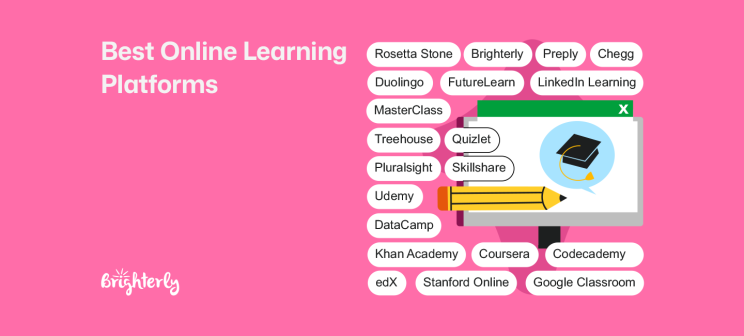
Key Points:
- Google Classroom manages school coursework, Quizlet and Chegg provide study resources, Khan Academy offers free self-paced lessons, and families mostly appreciate Brighterly for personalized 1:1 tutoring in K-12 math and reading.
- Coursera, edX, and Udemy are the most popular online learning platforms with a wide variety of courses available for free, on-the-go, or under a subscription.
- Skillshare and Masterclass are decent online learning platforms for creative hobbies and professions.
- DataCamp, Treehouse, Pluralsight, and Codecademy are digital learning platforms specialized in tech education.
- Duolingo, Rosetta Stone, and Preply are online learning platforms focused on language learning with optional support in math and other subjects.
- LinkedIn Learning offers courses for adults seeking professional growth, while Stanford Online and FutureLearn offer both professional and academic development.
Whether your child needs extra math support or you’re looking to switch careers, online learning platforms can make it happen. This guide describes 20 digital spaces to improve your skills and knowledge, comparing their pros and cons, prices, and learning focus so you can choose the best for yourself or your kid. Apart from the most widely used below-mentioned all-in-one spaces, if you need a narrower focus – consider additionally checking separate kids-only websites, diverse format-based tools, and special course platforms.
Top Online Learning Platforms Comparison
|
Platform |
Best for |
Main focus |
Key features |
Pricing |
|
K-12 students |
Math and Reading |
1:1 live personalized tutoring, US state standard alignment |
From $17.70/lesson** |
|
|
Pre-K – college, adults |
Multi-subject K-12 |
Self-paced videos, practice exercises |
Free; Khanmigo AI is $4/month |
|
|
Adults, college students |
University courses |
Partnerships with top universities, certificates, degree programs |
Select free audits; Coursera Plus is $35/month |
|
|
edX |
College students, professionals |
Academic degrees and professional growth |
Remote university-level courses, degree options |
Free audits; verified certificates cost $90-$300 |
|
Skillshare |
Creatives, hobbyists |
Creative skills and design |
Project-based learning, peer feedback |
$167.88/year |
|
DataCamp |
Professionals, tech learners |
Data Science and AI |
Practical coding exercises, daily challenges |
$25/month |
|
Udemy |
General audience, adults |
Vast course marketplace |
220K+ self-paced courses on business, tech, and personal development |
Individual courses cost $19.99-$199.99; subscriptions from $12.08/month |
|
Language learners, all ages |
Language tutoring and general subjects |
100K+ tutors, 1:1 live custom language and academic lessons |
Tutors set rates ($3-$40+/lesson) |
|
|
Master Class |
General audience, hobbyists |
Creative hobbies and lifestyle |
Video lessons taught by renowned experts and celebrities |
$10-$20/month |
|
Treehouse |
Tech enthusiasts, job seekers |
Coding and Web Development |
Expert-led tech videos and quizzes, 1:1 career support |
$25-$199/month |
|
LinkedIn Learning |
Professionals, job seekers |
Career and professional development |
22K+ short self-paced courses, integration with LinkedIn profile |
$39.99/month |
|
Duolingo |
Kids, adults |
Language learning |
Gamified lessons, progress tracking aligned with CEFR standards |
Free version + paid tiers from $13.99/month |
|
Codecademy |
Aspiring developers |
Programming and Tech |
Guided interactive coding paths, portfolio projects |
Free tier + paid plans from $14.99/month |
|
Pluralsight |
IT professionals |
Tech, Software Development |
Industry expert instructors, Skill IQ gap assessments |
$30-$55/month |
|
Google Classroom |
Educators, K-12 schools |
Coursework and classroom management |
Integrates with Google Workspace, simplifies assignments |
Free (for educators with Google Workspace for Education) |
|
Students, tutors |
Flashcard and test prep |
AI study guides, spaced repetition techniques, customizable practice tests |
$7.99-$9.99 per month |
|
|
Students, homeschoolers |
Homework help |
Step-by-step explanations, plagiarism check, proofreading tools |
$19.95/month |
|
|
Rosetta Stone |
Language learners |
Immersive language learning |
Focus on real-life scenarios, speech recognition, native-speaker audio |
$10.95-$14.95 per month or lifetime access for $199 |
|
Future Learn |
Adults, students |
Academic and short career courses |
Social learning environment, university and corporate credentials |
Limited free version + unlimited access for $24.99/month |
|
Stanford Online |
University students, professionals |
Advanced academic and professional programs |
Official Stanford University course credits, professional certificates |
Professional courses cost $495-$995; academic courses $1,575/unit |
* Statements about platforms’ features and pricing are based on the publicly available official data and are valid as of September 2026.
** Brighterly’s price reflects 2 lessons per week, a 12-month plan, and a 20% discount.
Exploring alternatives?

This guide updated in September 2026 examines each platform for content depth, learning model, pricing policies, and publicly available verified user reviews.
Key Aspects of Online Learning Platforms
- Content: The key aspect that defines what is an online learning platform and distinguishes it from others.
- Interactive elements: The presence of gamification, bite-sized learning tools, and social eLearning tools.
- In-platform capabilities: The way the service adopts AI technology, personalized learning capabilities, and delivers an engaging user experience.
- Analytics: Features for progress tracking, report generation, and overall performance metrics.
- Technical support: Customer service to help with different questions that users may have.
5 Types of Online Learning Platforms
- Learning destination sites: A course marketplace with content from different platforms.
- Learning experience platforms: Niche sites focus on high personalization and the most engaging user experience.
- Learning management ecosystem: Connects the best solutions from different online learning platforms in one place.
- Open source platforms: Free sites to build generic custom online learning courses.
- Custom-built learning platforms: Paid platforms to build complex and appealing custom courses.
Explore Brighterly Learning Experience
Learn exactly how Brighterly helps students thrive through expert sessions, online tools, and proven feedback from thousands of satisfied parents
Brighterly – Best for Personalized K-12 Math and Reading
We are a school-supplemental 1:1 online learning platform that is focused on teaching math and reading to K-12 students under a foundation-first approach. Tutors create an individual plan for an online math program or reading program to keep students engaged while learning.
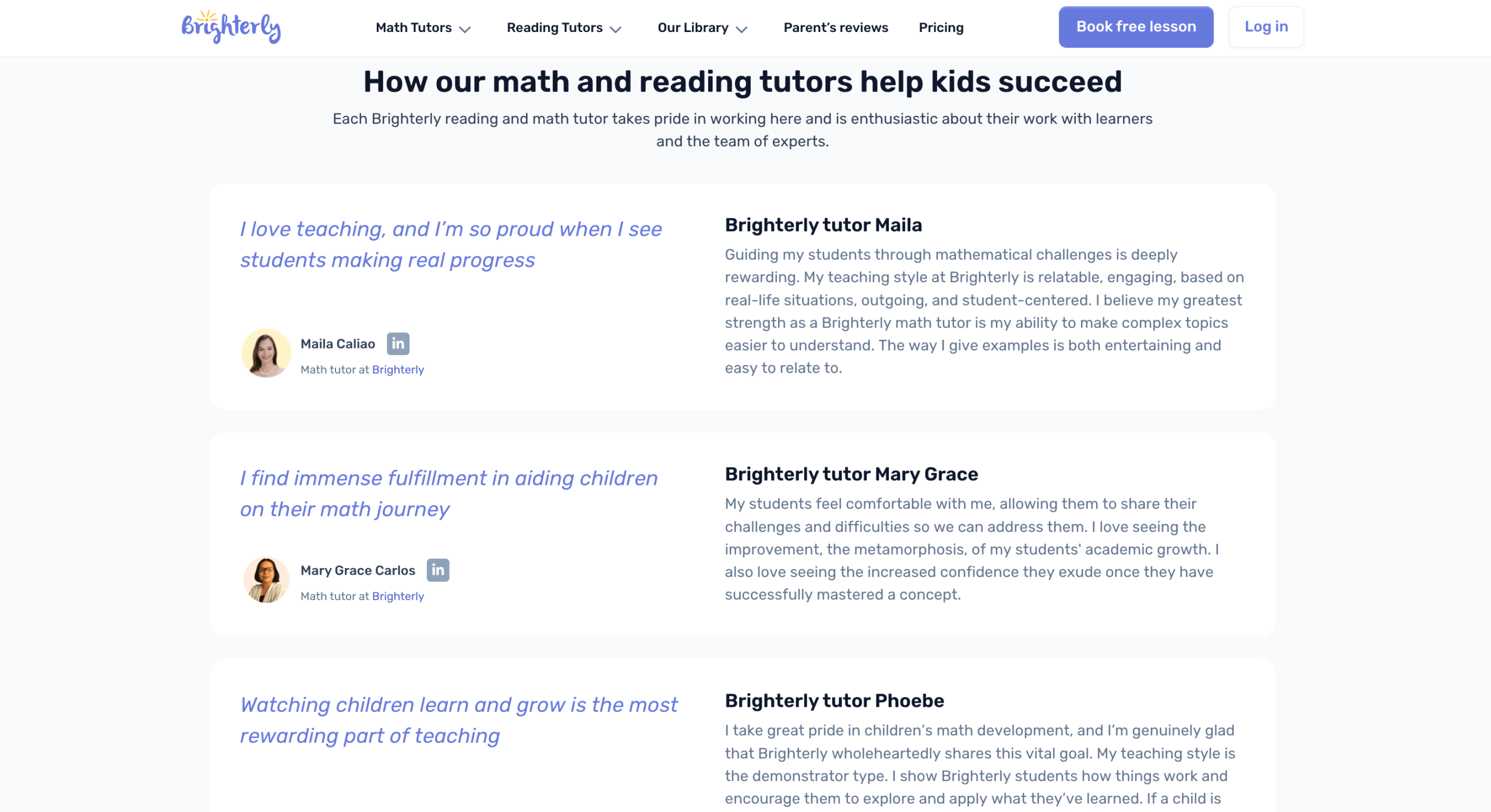
Our content aligns with US state standards, and each lesson has AI-powered summaries.
Brighterly Pricing
Brighterly cost depends on the length of the subscription and the number of lessons in it. As of September 2026, the prices start from $17.70 per lesson, or $141.60 per month (within an annual subscription, by taking 2 classes per week, a 20% discount applies).

Give your child a real academic advantage
Brighterly math & ELA tutors create a lesson plan based on your child's exact level
Brighterly Pros
- 1:1 lessons to make sure your child gets personalized help and attention
- Worksheets, games, and videos to keep children focused throughout the class
- Convenient tools for parents, as it includes free demos, subscription packages, and progress tracking
Brighterly Cons
- Heavily depends on internet connectivity
- Miscommunication problems may occur
Khan Academy – Best for Free Learning
Khan Academy’s mission is to create a free online education platform for everyone. Its courses cover a wide range of topics, from pre-K to college math, science, humanities, economics, and more. Once you sign up, you can access instructional videos, practice exercises, and a personalized learning dashboard.
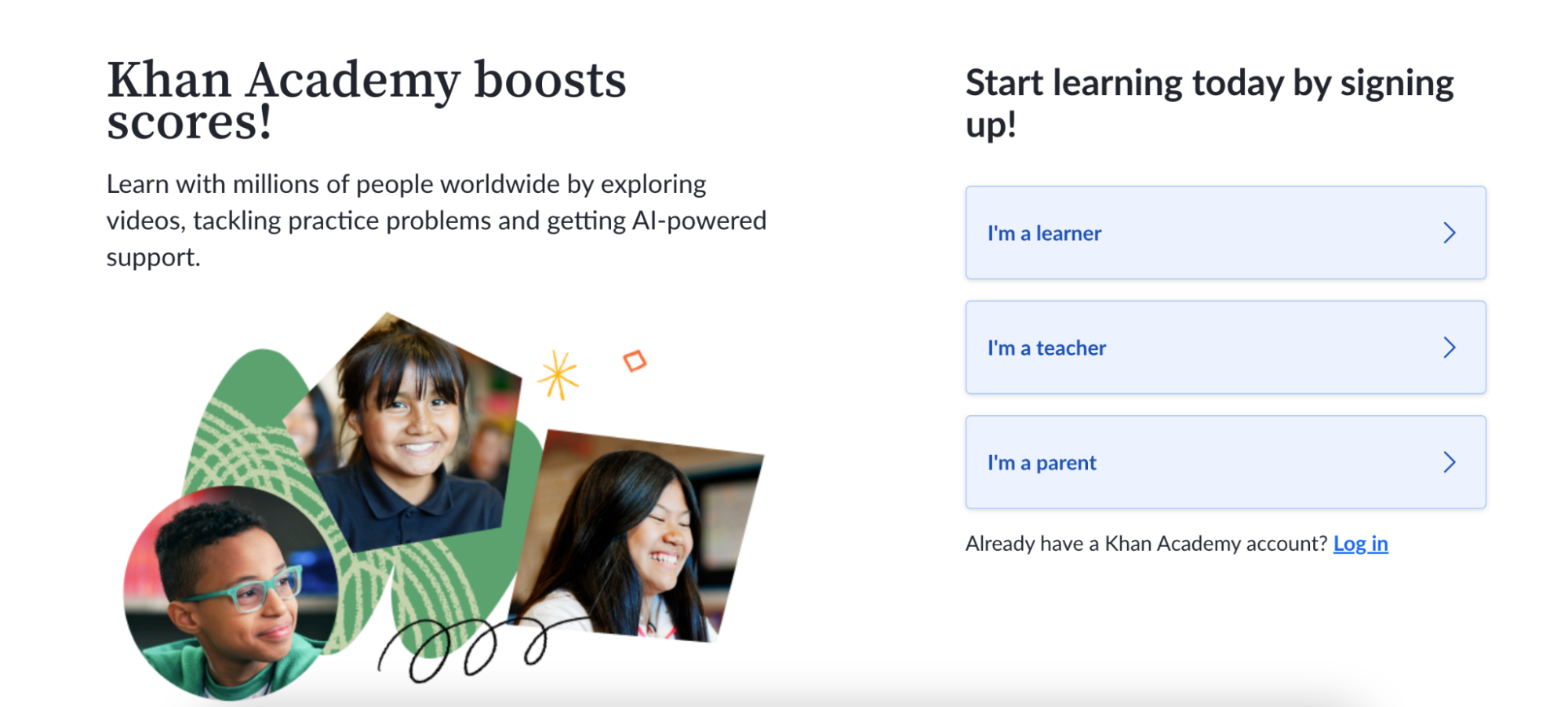
A big advantage of the platform is its self-paced courses, for children and adults to complete in their own time. Khan Academy has a paid AI tutor feature for personalized tutoring but doesn’t have live tutoring services with human tutors.
For faster results and better topic understanding, opt for tutoring platforms like Brighterly to get 1:1 feedback from math teachers.
Khan Academy Pricing
As of September 2026, Khan Academy’s resources and exercises are free. Its AI tutoring titled Khanmigo is among the best AI tools for school and costs $4 per month.
Khan Academy Pros
- Free resource
- Suitable for various subjects and levels
- Paid AI tutor to generate personalized lessons
Khan Academy Cons
- No live tutoring sessions with humans
- Teaching may feel repetitive to some students
Coursera – Best for Online Certificates and Degrees
Coursera has over 7,000 online self-paced courses, making it one of the most comprehensive digital learning platforms. What makes it stand out is its university and enterprise partnerships — you can get courses from industry-leading companies like Google and IBM.
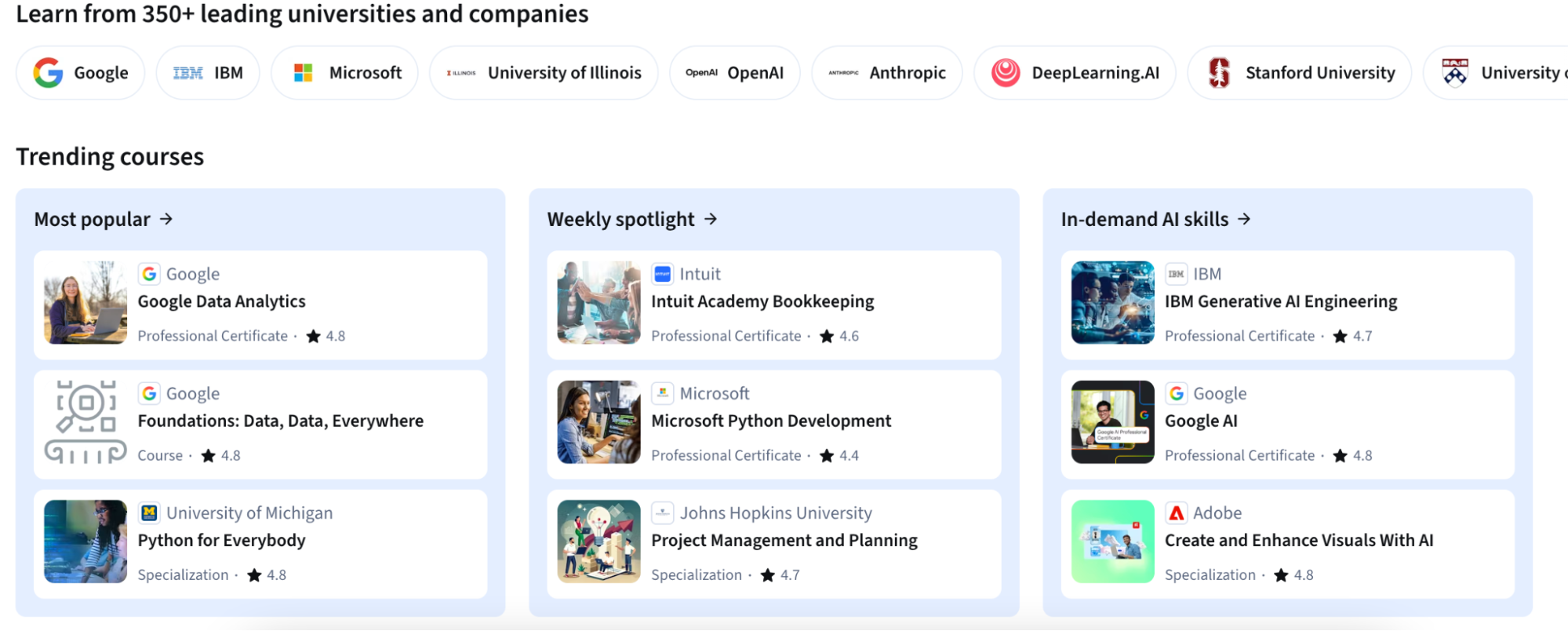
You can also enroll in a degree program — the platform hosts many top-tier universities, such as Imperial College London and the University of Michigan.
Coursera Pricing
As of September 2026, some courses on the platform are free. Others require an extra payment or a Coursera Plus membership for $35 per month after a 7-day free trial.
Free courses are audit-only, which means that they don’t include online certification. If you want to get a certificate to showcase on your CV, you’ll need to pay a fee to upgrade.
Coursera Pros
- Over 7,000 courses and degrees from reputable universities and companies
- Option to get a certificate, which can open up more educational and career opportunities
- Self-paced, flexible learning
Coursera Cons
- Some courses can be expensive, especially if you want a certificate
- Course quality depends on the instructor and the institution
edX – Best for Academic Degrees Online
edX is a great e-learning platform for students all over the world, as all courses are remote and accessible anywhere. Your options on the platform are wide open — you can take a course to improve your skills, general knowledge, or career.
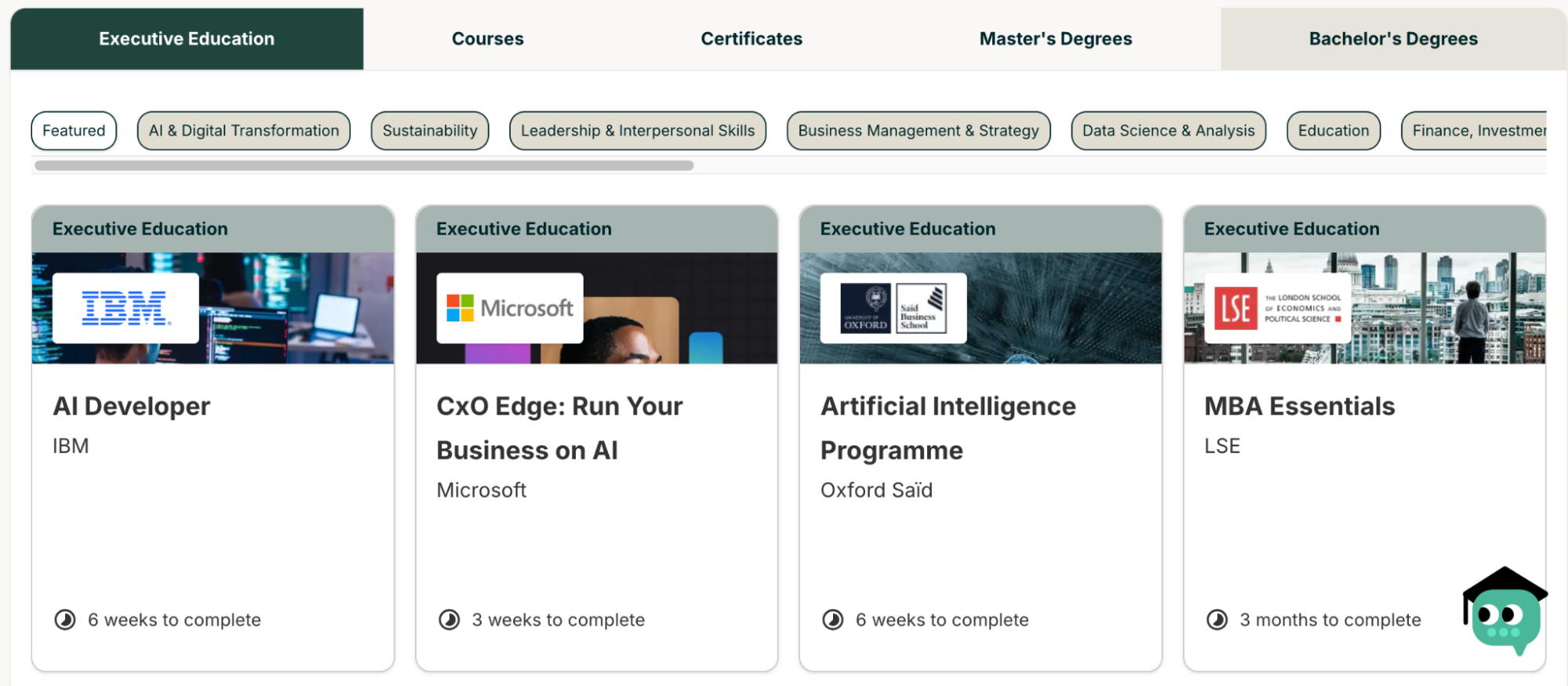
Dreaming of working in the cybersecurity industry? Start by looking at free courses or invest in a paid online course. And if you want to get a degree, you can do it from the comfort of your home.
edX Pricing
edX has audit-only free courses. You will also have the option to upgrade to the verified track by paying a one-time fee. The price depends on the course, typically ranging from $90 to $300 as of September 2026.
edX Pros
- 3,500 courses and degrees covering AI, cybersecurity, design, finance, and more
- Free and paid courses, with the option to audit courses for free or pay for a certificate
- Flexible, self-paced learning that suits working parents and students living in remote regions
edX Cons
- Doesn’t have as many courses as some of its competitors
- Self-paced learning means less interaction with the instructors
Skillshare – Best for Creative Skills
Skillshare is one of the most popular online learning platforms for students who want to improve their creative skills. Graphic design, music, painting, photography, and marketing — the platform has online classes for all these topics and more.
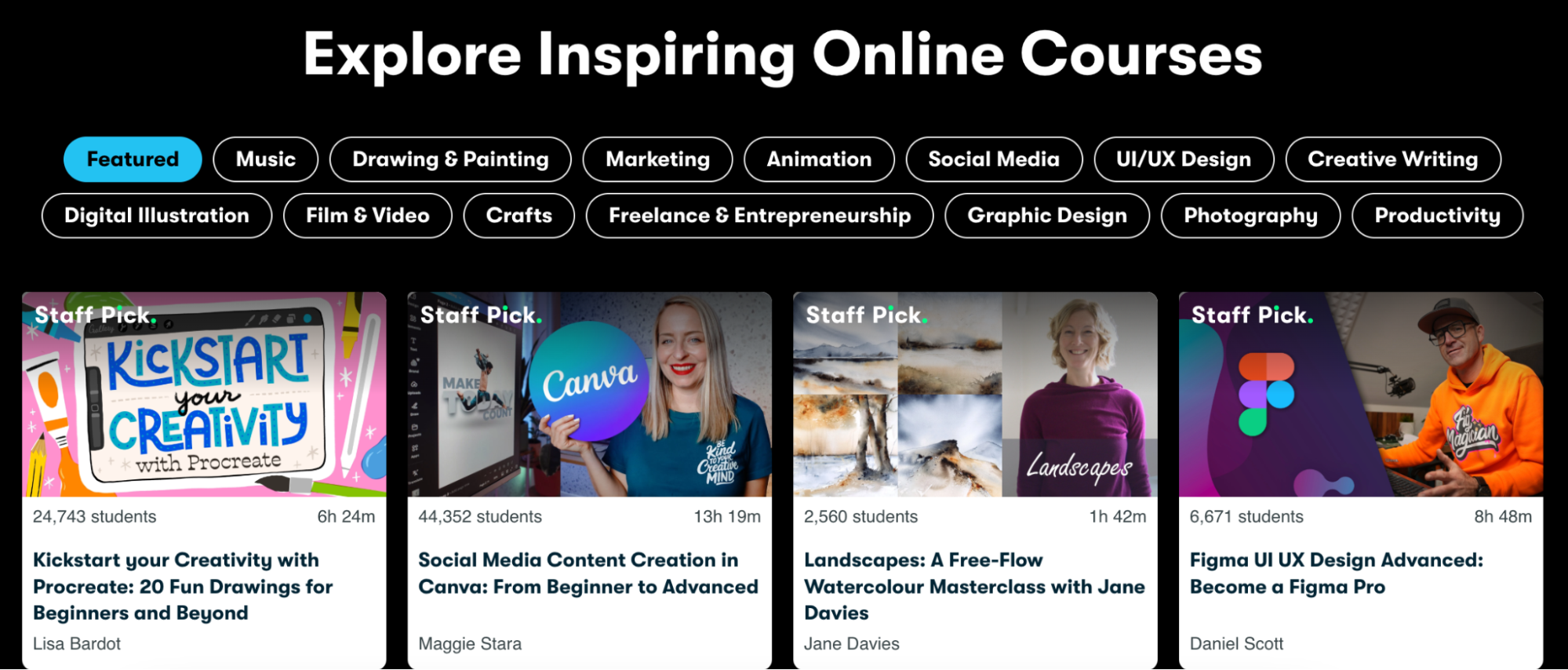
Make sure to browse the courses in advance to see if they’re a right fit. With a simple search, you’ll be able to view the course content, level, and the assignments involved.
Skillshare Pricing
As of September 2026, Skillshare’s classes require a subscription fee that costs $167.88 per year (the exact price depends on your region). Before you purchase a subscription, you can benefit from a 7-day free trial.
Skillshare Pros
- Courses taught by creative industry professionals
- Focuses on creative skills like design, photography, music, and more
- Learners can share their creative projects to get feedback from both peers and instructors
Skillshare Cons
- Only suitable for creative topics
- Monthly subscription option is available via the Skillshare app only
DataCamp – Best for Data Science and AI
DataCamp provides beginner, intermediate, and advanced-level courses for data science and AI skills. Once you sign up, you’ll have two learning tracks: a skill or a career track.
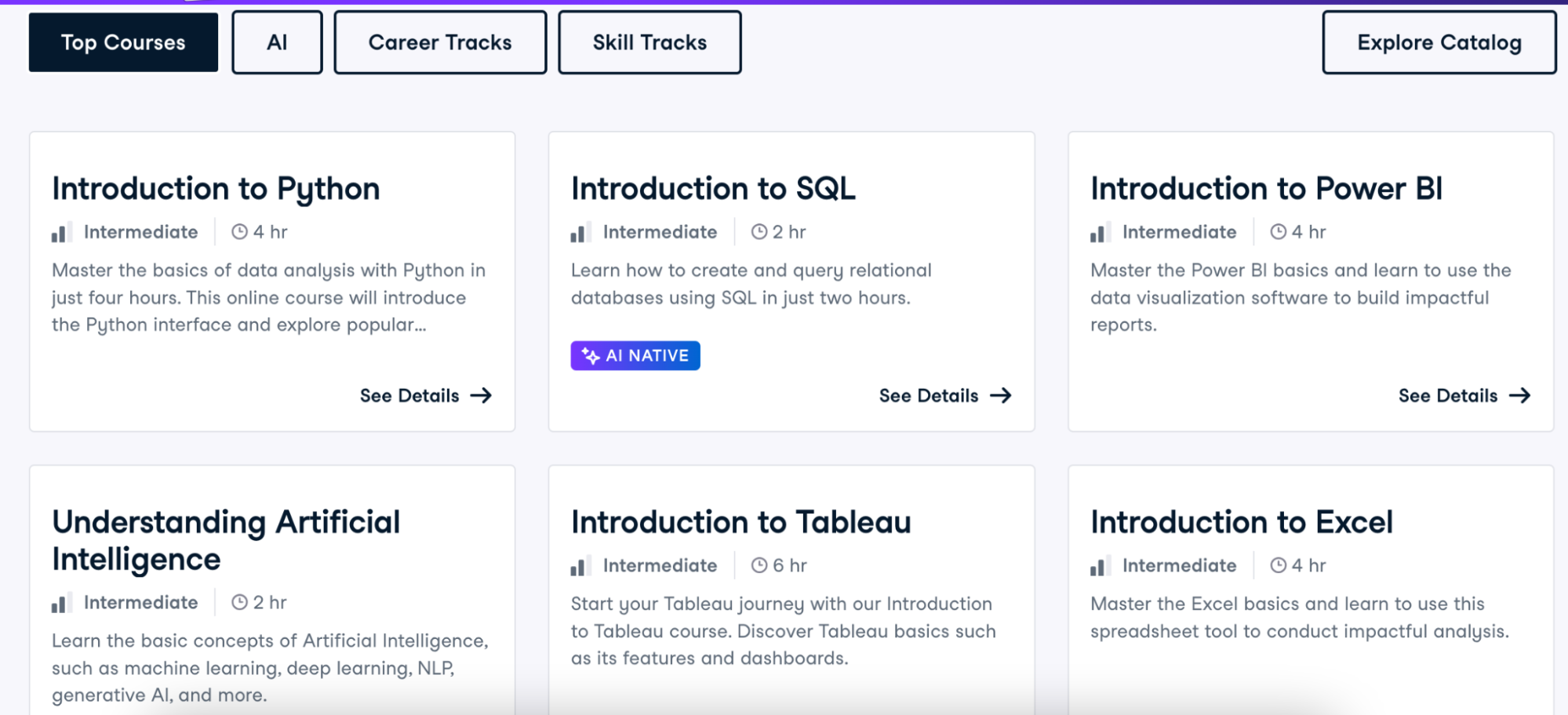
The skill track will equip you with a specific skill set or tool, such as Python, SQL, and Power BI. The career track will be more job-focused, training you to become a data analyst, machine learning scientist, or developer. DataCamp is a great online platform for learning data skills and tools but might be too advanced for students who have different gaps in foundational math.
DataCamp Pricing
Accessing DataCamp’s full course library costs $25 per month or $175 per year, depending on the chosen subscription length, as of September 2026.
DataCamp Pros
- Detailed learning paths focusing on specific data skills or career paths
- Hands-on exercises to learn while doing
- Daily challenges, real-world problems, and assessments to keep learning interactive
DataCamp Cons
- The free version only includes the first chapter of each course
- The exercises can feel too guided and lacking depth
Udemy – Best for a Course Marketplace
Udemy is a course marketplace featuring over 220,000 courses on all sorts of topics, from personal development to business administration. If you’d like to find coding classes for your child, Excel courses for your work, or an entrepreneurship course to start your dream business, you can do it here or check out other online course marketplaces like Udemy.
Preply – Best for Language Tutoring
Preply is an online learning platform that unites language tutors with learners in over 180 countries. The focus of Preply is on live tutoring in languages, with options to choose math, biology, accounting, and other subjects.
The platform lets students choose their tutors and start learning with them upon paying for a subscription with the desired frequency of lessons.
Preply Pricing
As of September 2026, Preply tutors set prices for their services individually, which range between $3 and over $40 per lesson. As per the monthly subscription, taking 2 classes per week will cost around $24 to $320 per month.
Preply Pros
- Over 100,000 tutors to choose from
- Individual learning plans
- Convenient platform for students
Preply Cons
- Customer support may lag
- No free trial lessons
MasterClass – Best for Hobbies and Entertainment Learning
Cooking classes from Gordon Ramsey? Acting classes from Natalie Portman? Filmmaking classes from James Cameron? They’re all on MasterClass, one of the best online learning platforms to learn from seasoned professionals.
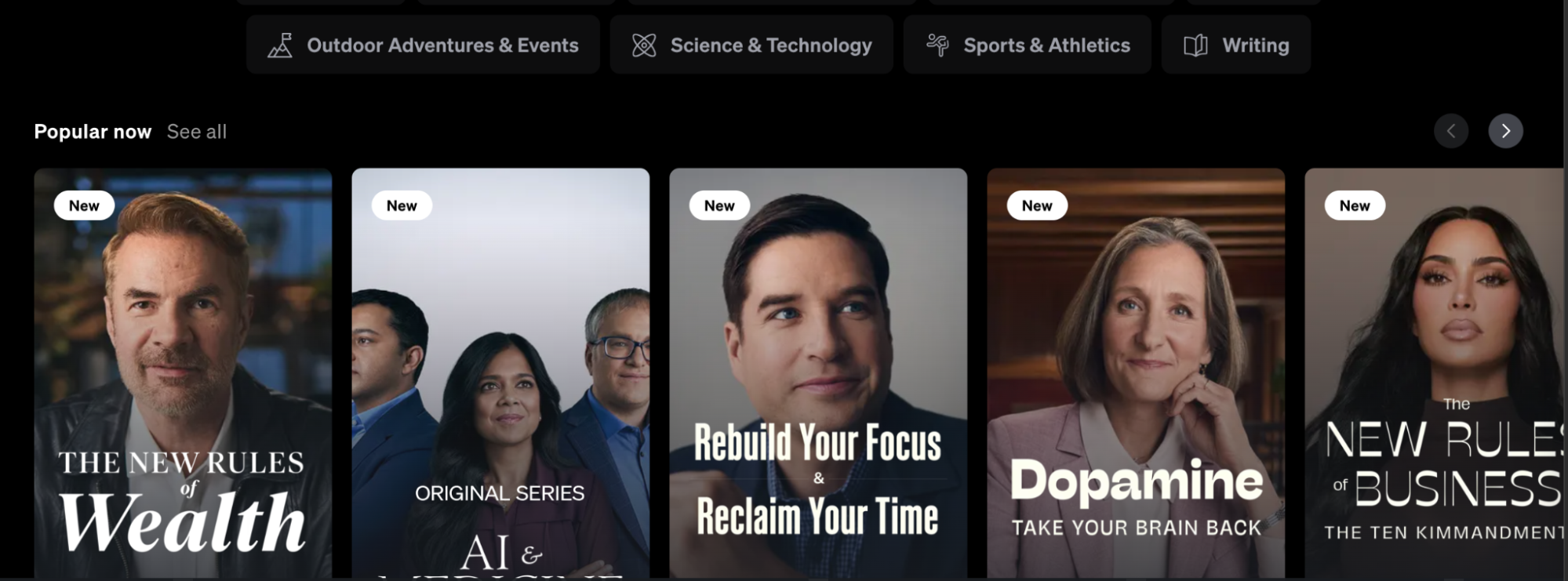
While it has other topics like business, administration, and entrepreneurship, MasterClass is particularly interesting for those who want to develop a new hobby or find inspiration to create a new lifestyle.
MasterClass Pricing
A standard MasterClass membership costs $10 per month, as of September 2026. With this membership, you can watch videos from only one device. You’ll need a stable internet connection with this plan.
If you want to unlock the offline mode and use more than one device at the same time, you can upgrade to the two-device MasterClass Plus ($15 per month) or the six-device MasterClass Premium ($20 per month).
MasterClass Pros
- Taught by world-renowned experts and celebrities
- High-quality video lessons
- Covers cooking, acting, filmmaking, writing, sports, and other topics
MasterClass Cons
- Doesn’t have certifications, which may be a drawback for users looking to add formal qualifications or online degrees to their CVs
- No assessments or real-life applications of skills
Treehouse – Best for Coding and Web Development
Treehouse offers expert-led videos, quizzes, and challenges on coding, programming, and design. Both beginners and advanced learners can benefit from the platform. Besides the coding courses, you can sign up for Techdegree, Treehouse’s online coding bootcamp.
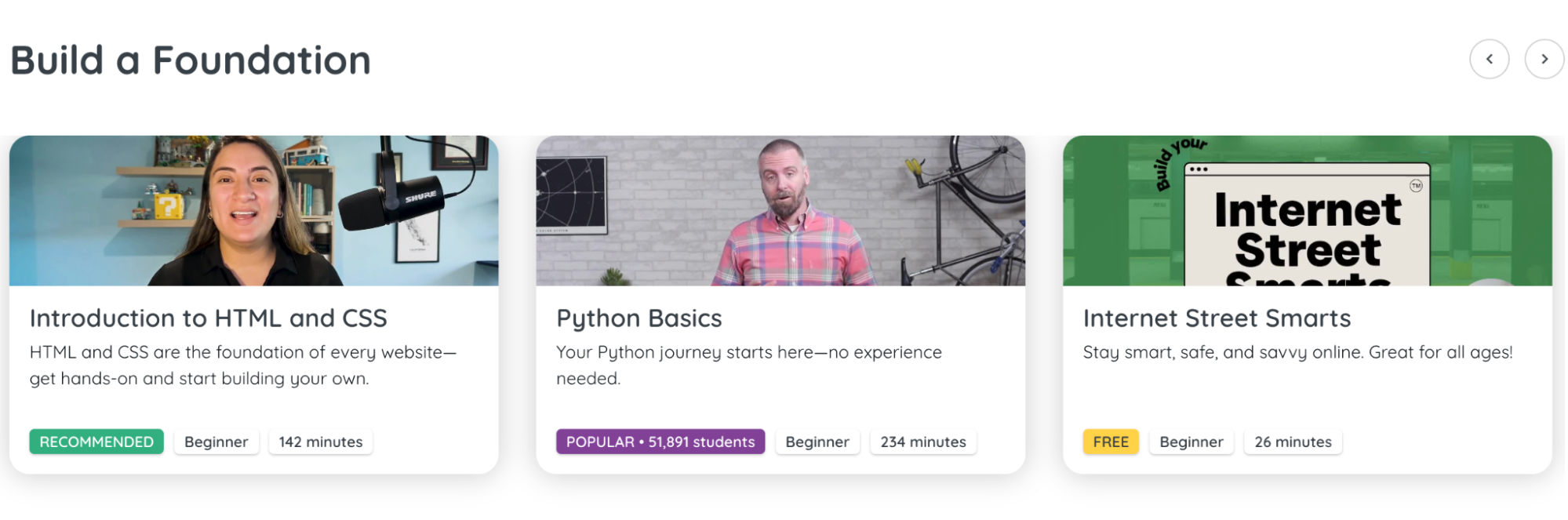
The platform’s courses focus on skills, while the bootcamp aims to prepare you for one of these coding-related careers: front-end web development, full-stack JavaScript, Python development, data analysis, or UX design.
Treehouse Pricing
As of September 2026, Treehouse has several product offerings:
- Courses package for $25 per month: Access to the Treehouse library, quizzes and challenges, and a student forum
- Courses Plus package for $49 per month: All the benefits of Courses, conferences, and additional coding content
- Techdegree bootcamp for $199 per month: All the benefits of Courses, curated curriculum, 1:1 career support, and an exclusive Slack community
Treehouse Pros
- Suitable for both coding enthusiasts and more advanced learners looking to launch a career in coding
- Teaches AI, JavaScript, databases, Python, HTML, CSS, and other topics
- Includes extra resources like CareerToolbox to boost employability and an online support community
Treehouse Cons
- Covers niche topics, which means that it’s not the right online learning platform for learners looking to explore other fields
- May lack fresh material and interactive learning tools
Personalized math for every learner
Brighterly 1:1 math tutoring is aligned with US state standards for grades 1-12
LinkedIn Learning – Best for Professional Development
LinkedIn Learning offers professional courses for adults to improve their work-related skills, with the ability to get a certification or enroll in a course that lasts less than 30 minutes.
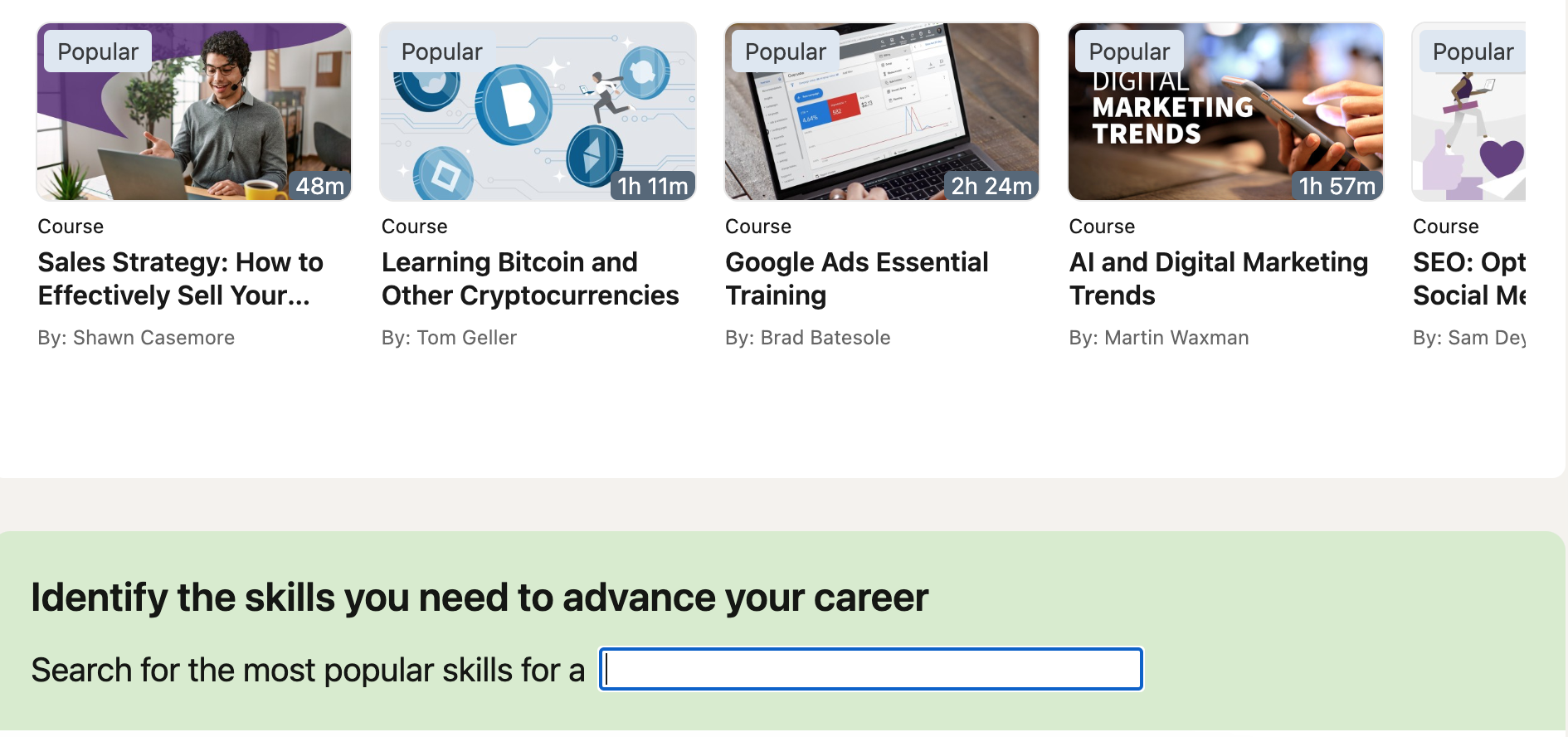
Adults can choose among over 22,000 self-paced courses and immediately display their completion on their LinkedIn profile, which is useful for professionals who use this social network for job search.
LinkedIn Learning Pricing
As of September 2026, LinkedIn Learning offers a one-month free trial, with a $39.99 monthly subscription option. For teams, the platform offers a $379.88 annual subscription per seat.
LinkedIn Learning Pros
- Thousands of courses for career development
- Connection with LinkedIn profile
- Reputable instructors for a professional network
LinkedIn Learning Cons
- No formal accreditation
- Content may feel outdated for experienced professionals
Duolingo – Best for Language Learning
Duolingo is a language learning app with advanced gamification and progress tracking capabilities. Duolingo online learning platform has a feel of a mobile game, yet its content is aligned with CEFR standards.
The bite-sized learning approach from Duolingo makes it suitable for kids and adults alike, while its regular notifications and a competition board are designed to keep the progress steady.
Duolingo Pricing
Duolingo has a free version with ads and limited functionality. Also, the Duolingo ABC app for kids aged 3-8 years is totally free. As of September 2026, the paid subscription is available after a 7-day trial and costs starting from $13.99 a month (the exact price depends on location and tax).
Duolingo Pros
- Highly engaging language learning app
- Answer explanations and grammar tips
- Progress aligned with the CEFR language levels
Duolingo Cons
- No live support
- Conversation practice is available in the most expensive packages only
Codecademy – Best for Learning to Code
Codecademy specializes in programming language teaching under guided paths and interactive lessons for any level. The range of subjects available on the platform includes standard Python and JavaScript, along with more advanced AI and cybersecurity skills.
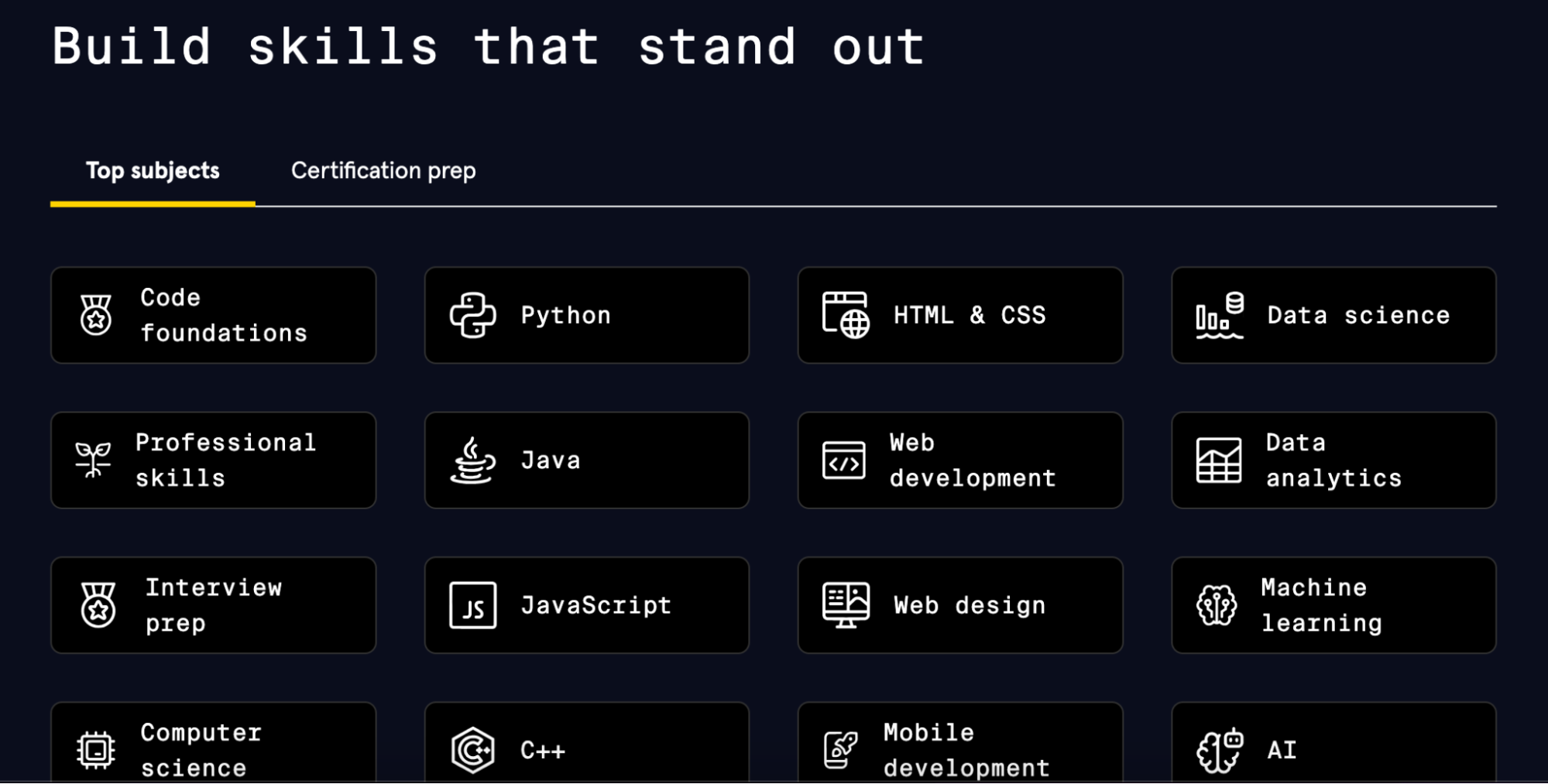
Beyond courses, Codecademy lets students prepare for tests and complete portfolio-worthy projects.
Codecademy Pricing
As of September 2026, you can start learning on Codecademy for free. For the monthly price starting from $14.99, students can unlock more courses, multiply their credits, and get online certificates for course completion.
Codecademy Pros
- Hands-on experience by building
- Structured career paths in coding
- Instant feedback
Codecademy Cons
- Makes it harder to learn independently and from mistakes
- Limited to coding
Pluralsight – Best for Tech and IT Skills
Pluralsight is another online learning platform specialized in developing tech skills but with a focus on professional development. Offering over 6,500 expert-led courses and several curated learning paths, Pluralsight helps students learn and cover their skill gaps by doing.
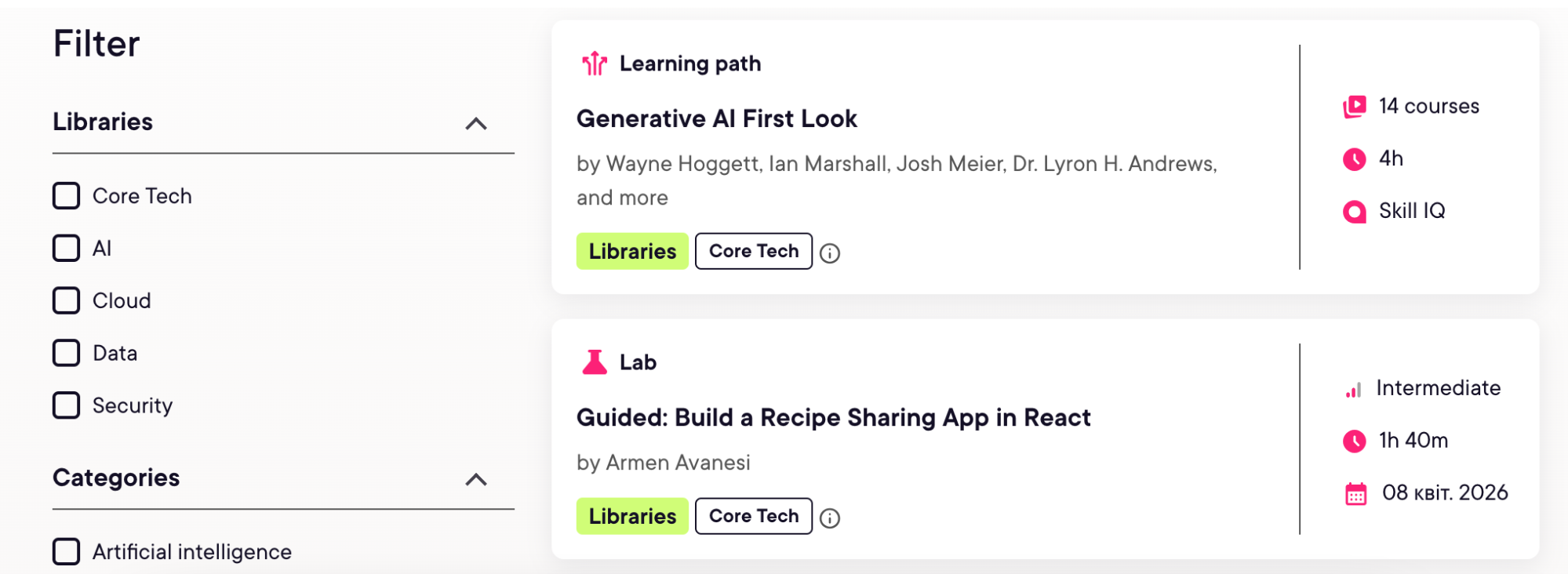
The broad topics Pluralsight covers include cloud, AI, security, data, and software development.
Pluralsight Pricing
As of September 2026, after a 10-day free trial, subscription options to Pluralsight include the Core Tech plan ($30 per month), Complete plan ($55 per month), and subject-focused plans like AI+ or Cloud+ ($35 per month).
Pluralsight Pros
- High-quality content relevant to professional growth
- Skill IQ to track progress and instantly detect knowledge gaps
- Industry professionals as instructors
Pluralsight Cons
- Expensive tiers
- Need the most expensive subscription for hands-on practice
Google Classroom – Best for Schools and Teachers
Google Classroom is a free Google service to support educators in managing their courses and measuring their effectiveness. Teachers and tutors can use it for working with the assignments, adding course materials, and communicating with the students.
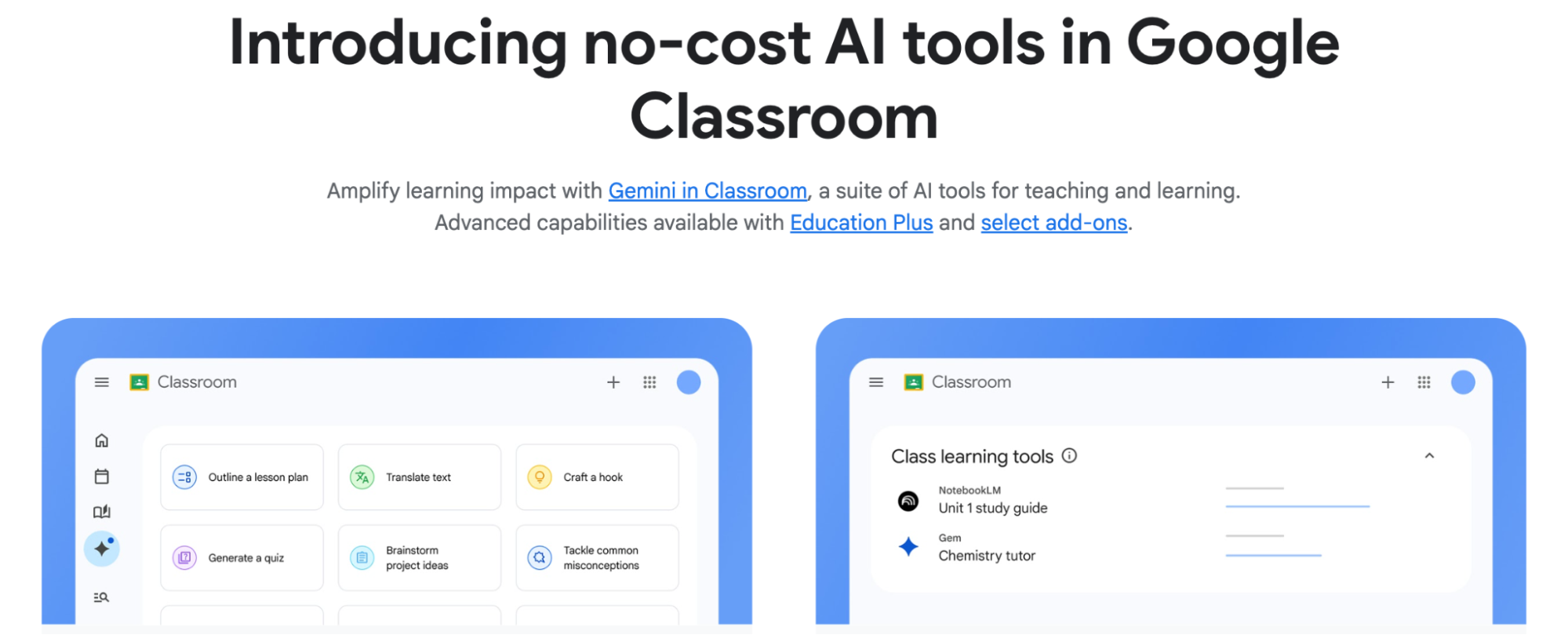
The Google Classroom personalizes learning, simplifies everyday tasks, and provides a dashboard for collecting and analyzing course-related data.
Google Classroom Pricing
As of September 2026, Google Classroom is a free service for schools with access to Google Workspace for Education.
Google Classroom Pros
- Easy setup and management
- Free service for educators
- Seemlessly integrates with other Google products
Google Classroom Cons
- Heavily depends on internet connectivity
- Relevant for course management only (not creating)
Quizlet – Best for Flashcard-Based Study
Quizlet is an online learning platform that helps to turn course materials into flashcards, test questions, or study guides, which is suitable for the learning needs of students and teaching needs of tutors alike.
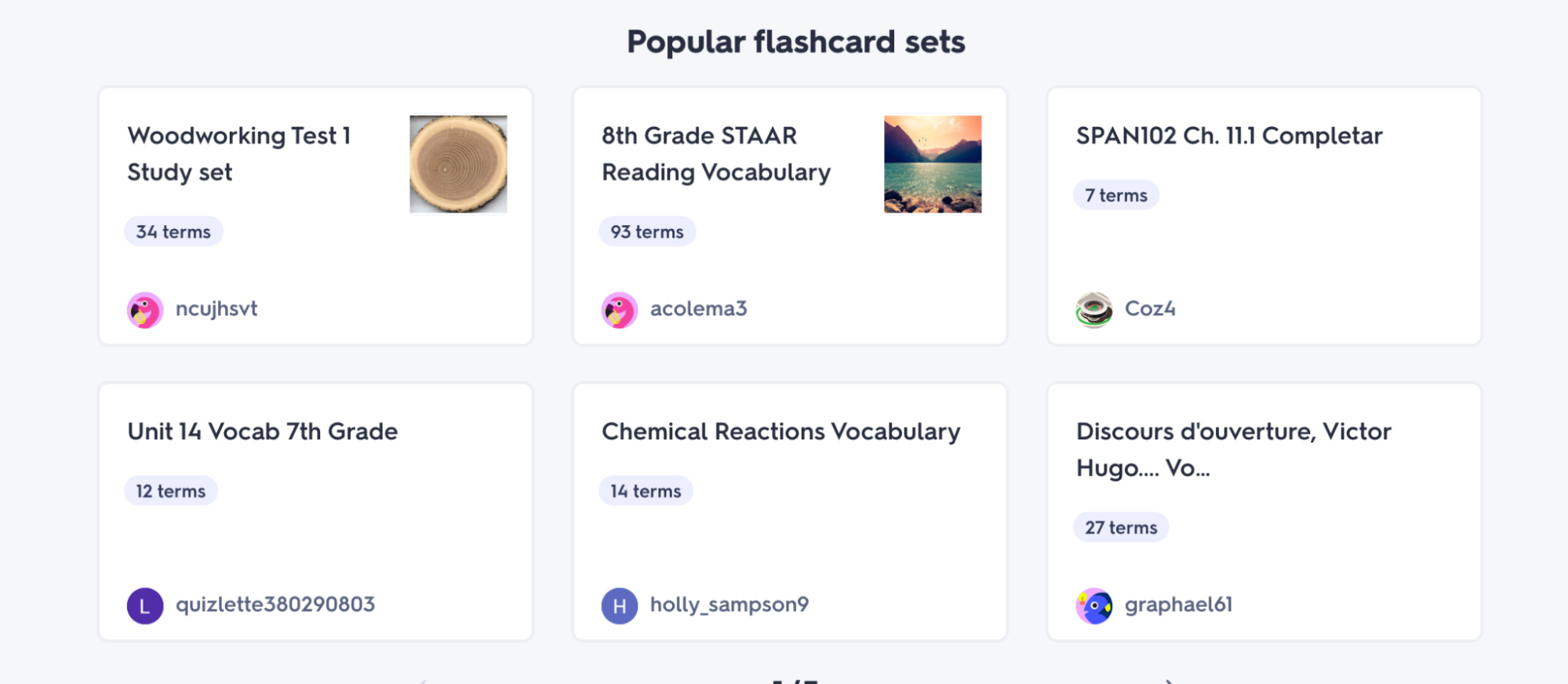
Quizlet is helpful in solidifying knowledge and practicing through personalized, self-designed tests.
Quizlet Pricing
As of September 2026, a monthly subscription to Quizlet costs $7.99 per month, with the ability to add unlimited access to all its tools for $9.99 per month.
Quizlet Pros
- Different learning formats (flashcards, study guides, tests, etc.)
- AI tools for faster creation
- Relies on spaced repetition techniques for learning
Quizlet Cons
- Limited to material review (no course creation)
- Cannot stand as an independent learning tool
Chegg – Best for Homework Help and Tutoring
Chegg is the AI-powered digital learning platform that helps with homework, offers textbook solutions, and provides step-by-step explanations for complex subjects. Additional services include plagiarism checks, proofreading, and citation suggestions.
Homeschooled learners value Chegg for reliable and personalized homework help.
Chegg Pricing
As of September 2026, Chegg Study Pack subscription costs $19.95 per month.
Chegg Pros
- Step-by-step explanations
- Easy-to-use textbook solutions
- Effective in releasing homework load
Chegg Cons
- Doesn’t encourage independent thinking with ready-made solutions
- Not all solutions may be helpful for individual learning needs
Rosetta Stone – Best for Immersive Language Learning
Rosetta Stone helps learners master new languages with everyday situations, interactive activities, and by listening to how native speakers speak. This way, Rosetta Stone aims to make the new language as natural as possible from the start.

Relying on the Rosetta Stone Method, the service helps millions of students be ready for real-life scenarios.
Rosetta Stone Pricing
As of September 2026, pricing tiers for Rosetta Stone include $10.95 per month (6-month subscription), $14.95 per month (3-month subscription), and a $199 lifelong subscription.
Rosetta Stone Pros
- Helpful for beginners in language learning
- Shows how to improve pronunciation
- Focus on real-life scenarios
Rosetta Stone Cons
- The pace of learning is not suitable for all learners
- No free plans
FutureLearn – Best for Short Online Courses and MicroDegrees
FutureLearn is an online learning platform that contains university-level content and courses from brands to help learners master new careers or engage with bite-sized learning.
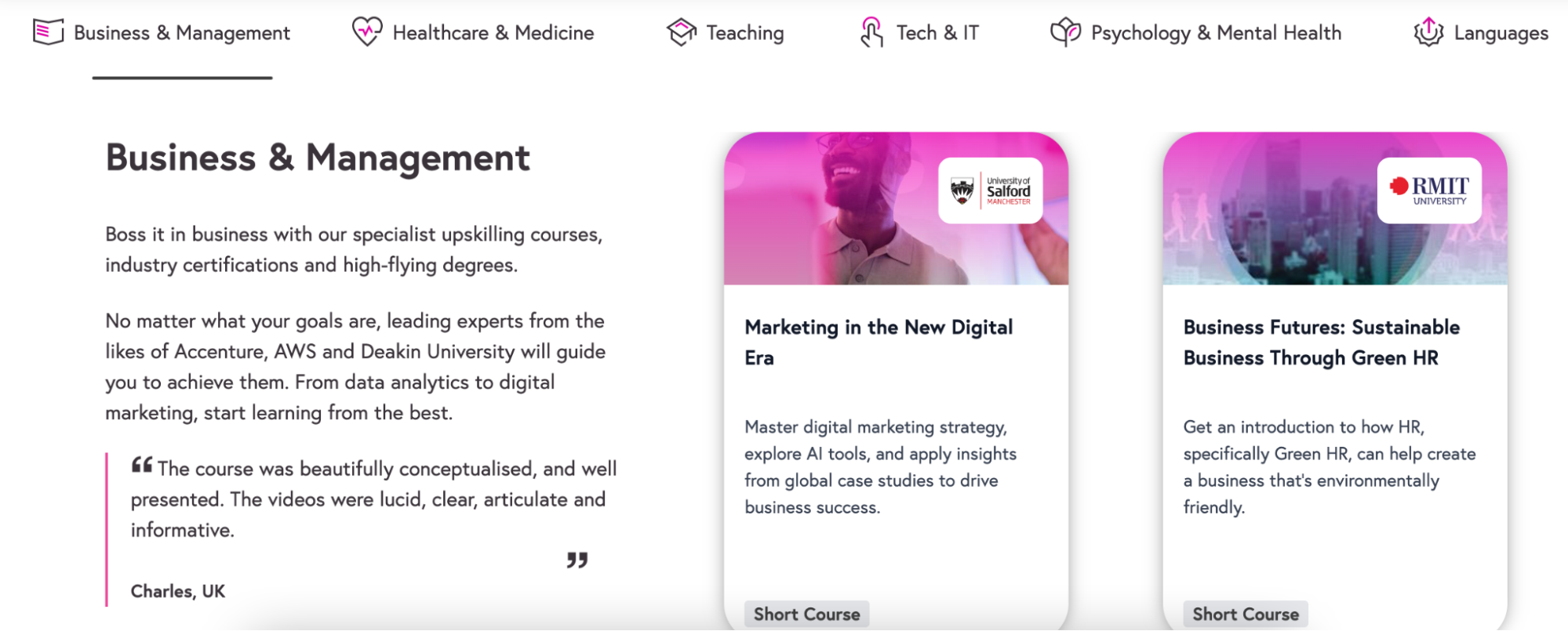
The subjects available on FutureLearn range from Business & Management and Law to History and Teaching.
FutureLearn Pricing
As of September 2026, the limited version of FutureLearn is available for free, with unlimited access for $24.99 per month.
FutureLearn Pros
- Social and interactive learning
- Content from top universities and organizations
- Diverse options for courses and certificates
FutureLearn Cons
- Not available on the mobile
- No flexible schedule
Stanford Online – Best for Free University-Level Courses
Stanford Online offers Stanford content with its credentials, ranging from a Statement of Participation to a Stanford University Degree as long as you proceed with the courses on the learning platform.
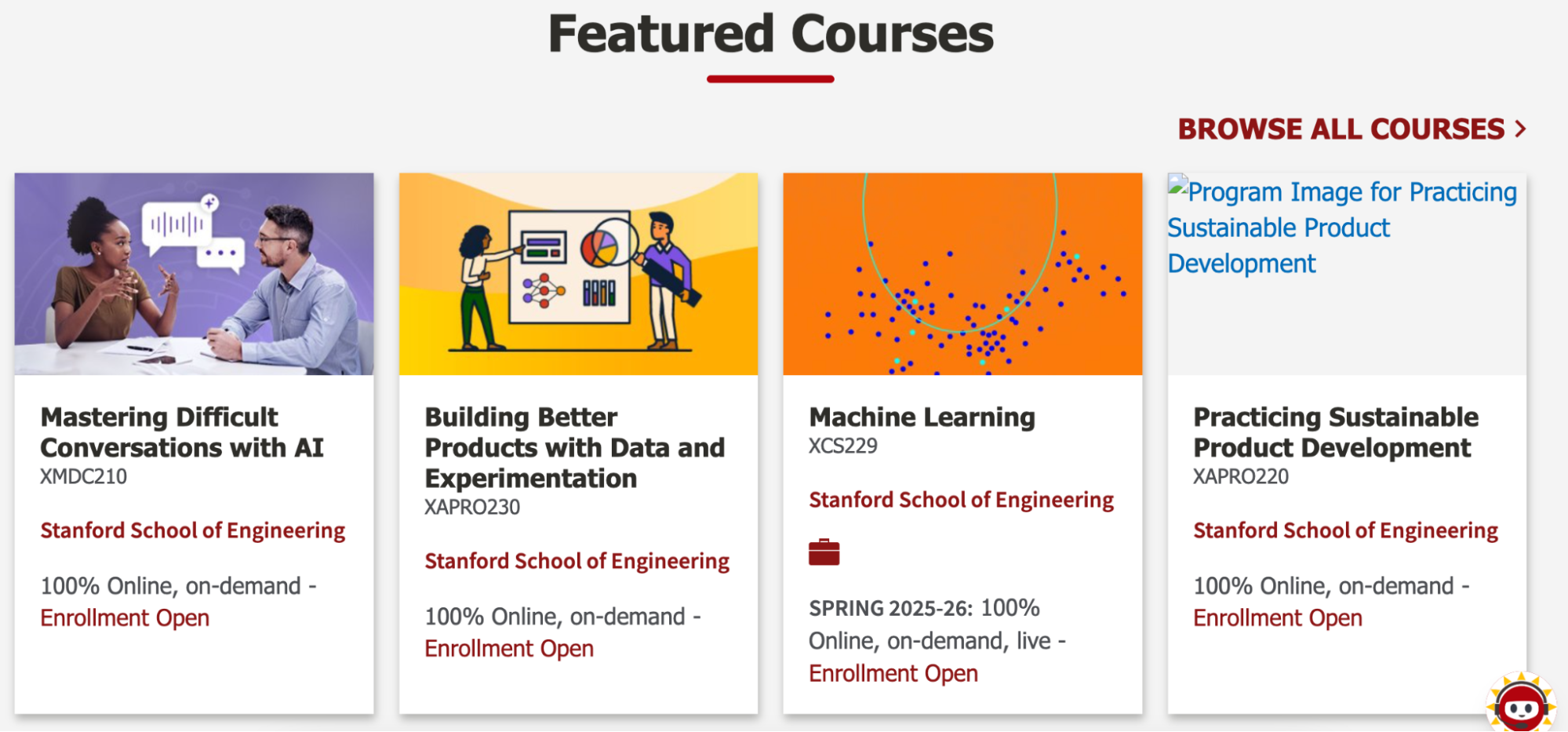
Many of the courses on Stanford Online are based on their interdisciplinary specialty fields and provide an opportunity to get an official Stanford University credit upon the course completion.
Stanford Online Pricing
As of September 2026, Stanford Online offers to purchase a course on a per-unit basis, with $1,575 per unit. The course typically ranges from 3-5 units, and getting a Master’s degree is approximately $70,000.
Professional courses typically cost between $495 and $995.
Stanford Online Pros
- Credited by Stanford University
- Offers both professional and academic content
- Flexible learning
Stanford Online Cons
- Some course content may seem outdated or too complex
- Expensive program
Conclusion
Given the variety of learning platforms available online, the final decision depends on who the learner is, what their learning goals are, and how much you are ready to pay:
- Your age: Some platforms are designed to help adults advance their careers (like LinkedIn Learning and FutureLearn), others are more useful to students (Stanford Online) and schoolers (Brighterly).
- Area of learning: Platforms like Codecademy and Treehouse have many helpful courses on coding, Skillshare and Masterclass help enhance creative skills, and Duolingo and Rosetta Stone are for language learners
- Budget: Online learning platforms for kids and adults have different pricing tiers and subscription models to fit different budgets.
If you want to start with a free service, check Khan Academy or book FREE lesson from Brighterly. And if you already know your needs and purposes, requiring more particular and focused online learning platforms, check out educational websites for kids, course platforms with certificates, and learning resources by format.
Frequently Asked Questions
What Is the Best Online Learning Platform for Kids?
The best online learning platforms for school-aged kids are Brighterly (offers K-12 math and reading after-school support in a 1:1 tutoring format), Khan Academy (free database of pre-recorded courses on dozens of subjects), Chegg (offers homeschooling help), and Google Classroom (a helpful tool for teachers and parents of homeschoolers).
Are Online Learning Platforms Free?
There is a limited number of totally free online learning platforms (like Khan Academy or Google Classroom), but most of them offer free tiers and offerings. For example, Coursera and edX offer some of their courses for free, while Duolingo has a free version with ads and limited capability. Other platforms like Brighterly offer a free demo call or free printable materials like reading worksheets.
What Is the Difference Between an Online Learning Platform and an LMS?
The key difference between online learning platforms and learning management systems (LMS) lies in their focus. While online learning platforms rely on content as their key differentiator in the EdTech market, LMSs invest heavily in training and reporting tools. Still, the current state of technological development makes the functions of the two types of learning platforms blend, with digital course marketplaces adopting the best LMS platforms’ features.
Which Online Learning Platform Is Best for Getting a Certificate?
Coursera, LinkedIn Learning, and Codecademy are among the best online learning platforms for adults with online certification, and the right choice among them depends on your age, budget, and desired skills. As an alternative, edX offers to pay extra for a certificate on top of its free audit-only courses.
How Do I Choose the Right Online Learning Platform for My Child?
The informed decision regarding online learning platforms for students should rely on their age and grade, subject needs, and preferred learning formats. On the latter, platforms like Brighterly rely on live tutoring to provide timely support you child when they struggle with math and reading, while apps like Duolingo will add an AI-powered explanation in some parts of learning only. After you have clarity on their learning needs, you can choose among various offerings based on your budget and expectations.
What Are Online Learning Platforms?
An online learning platform is a digital portal that usually contains educational content in the format of courses, recorded masterclasses, or live sessions with tutors. The wide variety of digital learning platforms nowadays covers various learning needs and subjects, serving kids and adults alike.
According to the Bridging the Digital Divide report from Digital Promise in October 2024, proper teaching should supplement an effective education on the digital platform. The growth of online learning platforms is the response to the pandemic learning loss in students, the popularity of distance learning, and the current boost in AI technology, which increases each platform’s capabilities.
How to Choose an Online Learning Platform?
- Revisit your learning goals: This helps with the category. If you want your kid to learn math and reading, there is no need to build a custom course from scratch. But for businesses that want to implement corporate training, it’s key to customize and protect sensitive data.
- Define your expectations: With clear expectations, it will be easier to choose the right group of platforms in the category chosen.
- Check the platform’s terms and prices: Get the one you like the most among the online learning platforms that address your learning goals and expectations.



In traditional educational settings, our children are constantly monitored through various assignments, such as tests, quizzes, homework, and projects. However, when monitoring student learning in the classroom, do teachers and parents really understand how well children progress with the subjects? Standardized tests aren’t perfect and can only compare your child’s performance with other students in […]

Aug 19, 2024
Back to school math activities are simple yet effective and hands-on games and challenges you can use to prepare your kid for the school year, while also keeping them relaxed. Long summer break leaves math gaps, and these activities can help your kid fill them, while also keeping it light and fun enough so they […]
Aug 19, 2024
Math & reading from 1st to 12th grade
Exploring alternatives?
Take a short quiz!
Choose kid's grade