Khan Academy vs Coursera: Which Is Better for High School?
reviewed by Rachelle Bencio Yu
Updated on August 10, 2026
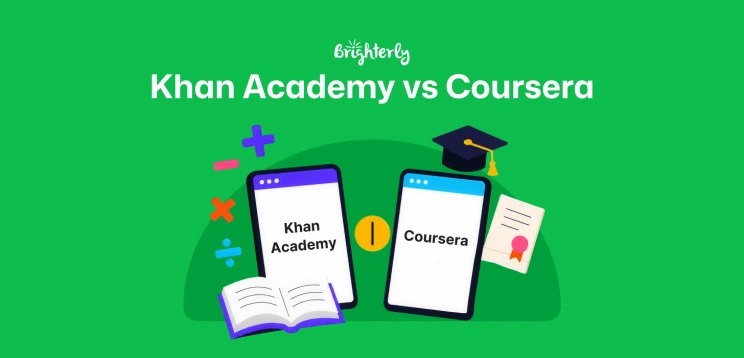
Key Points Khan Academy vs Coursera serve very different audiences. Khan Academy is entirely free and run as a non-profit, built around helping students master core subjects like math and science, along with test prep support. Coursera operates on a freemium model and partners with major universities to deliver professional certificates. If you’re finding it hard to decide which is better for your child, this comparison breaks down cost, courses, and certificates for you. Khan Academy Coursera Type Non-profit educational platform Online course marketplace Best For K-12 students, SAT prep, free self-paced learning Career skills, professional certificates, university-level courses Price (as of August 2026) $0 Free for no certificate; Coursera Plus $59/mo or $399/yr Certificate ❌ ✔️ — paid certificates from 350+ universities and companies, according to the official website Subjects All K-12 subjects + AT + SAT prep 10,000+ courses, according to the official website Audience K–12, early college Advanced high school, college, working professionals * All claims are made based on the official website data and user reviews as of August 2026. Exploring alternatives? Explore Brighterly Learning Experience Learn exactly how Brighterly helps students thrive through expert sessions, online tools, and proven feedback from thousands of satisfied parents Khan Academy Coursera Standard access Free Free (only video-based content) Full course access Free $49–$79/month for a single learning program Unlimited subscription Free $59/mo or $399/yr Certificates ❌ ✅ AI Tutor Yes — $4 per month, according to the official website Included with Coursera Plus Money-back guarantee ❌ ✅Yes Trial period ❌ ✅7-day free trial Note: All prices are as of August 2026. Coursera runs occasional promotions that reduce the annual price by 25% – 30%. Coursera vs Khan Academy free courses comparison is pretty straightforward: both provide free access. If your child wants to explore a certain course/subject/topic without getting accredited, both Coursera and Khan Academy work. Alternatively, if they want to get a Coursera certificate, you’d have to pay. At $399/year, Coursera Plus makes sense for a student taking five or more courses — but for a high schooler exploring one subject, a per-course subscription ($49–$79/month) is usually enough and often cheaper than committing to annual Plus. At Khan Academy, everything is free. Khan Academy is a free educational platform for school students and early college. Khan Academy promotes online learning for anyone, anywhere, so every student has access to lessons from top educators. On Khan Academy, children can watch videos on math, science, social studies, economics, computer science, and test prep (built in partnership with the College Board). Among the free online courses, Khan Academy is definitely the go-to choice for many parents and students (based on the Khan Academy reviews). However, it doesn’t offer live tutoring, so for students who need extra motivation, Khan Academy may not be the best fit on its own. Note: Khan Academy is often listed among the top learning platforms.
Let our tutors develop a learning plan for you!
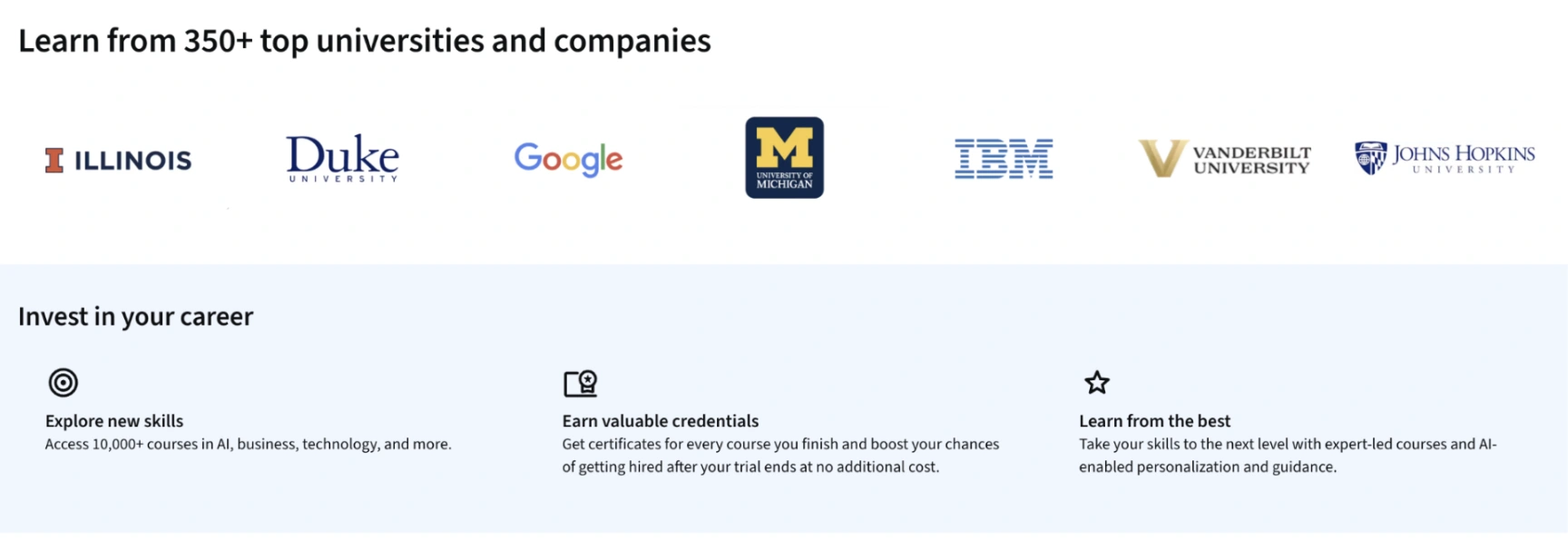
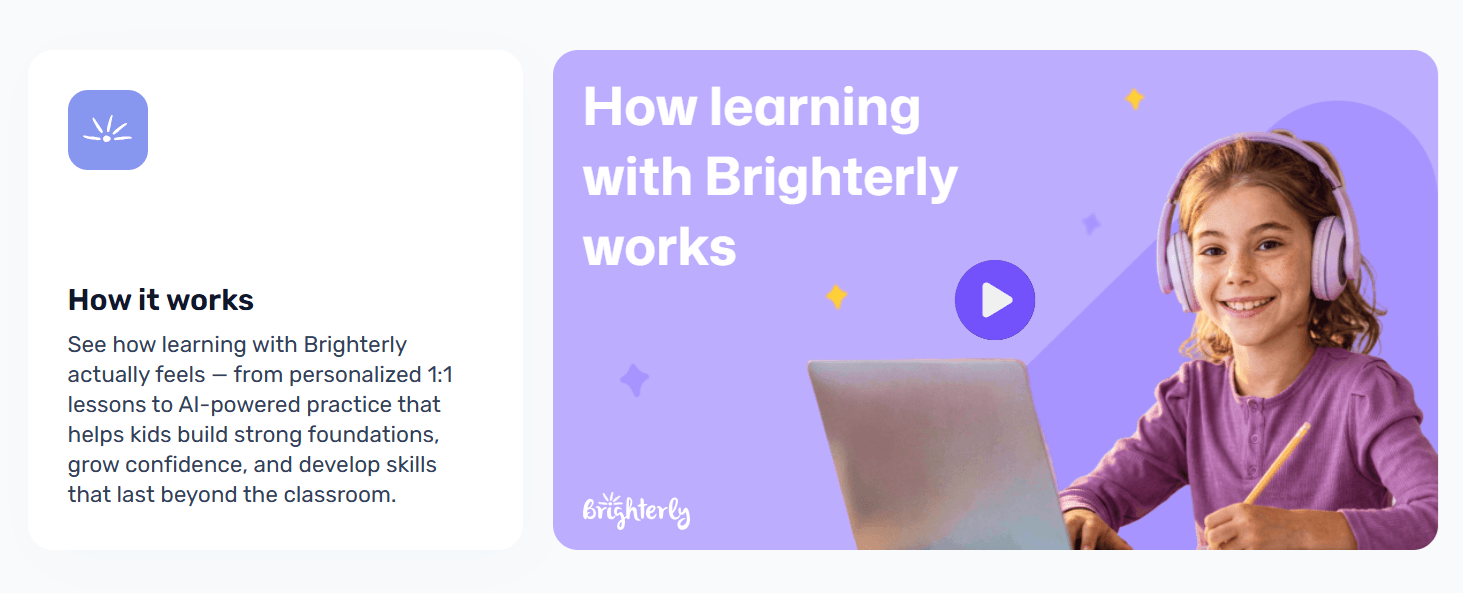
Learn with a personalized curriculum — starting from $17.70. Pros Cons ✅Completely free — ideal for families on a budget ❌Self-study tool. No live tutoring ✅Official SAT prep, co-developed with College Board ❌No accredited certificates ✅Mastery-based learning approach ❌AI tutor costs extra ✅Trusted worldwide, used in 190+ countries ❌The curriculum stays within grade level ✅Common Core aligned ❌Content quality drops past early college ✅Parent and teacher dashboard for progress tracking ❌Students lose the collaborative feel of the education process Note: Looking for a more gamified alternative to Khan Academy. This guide reveals how it compares to Adventure Academy. Coursera is an online course marketplace with over 10,000 courses for learners aged 17 years and working professionals. According to the official website, Coursera partners with 350+ universities and companies like Stanford, Yale, Google, IBM, Meta, and Vanderbilt. On the platform, students can get professional certificates and take university courses. Unlike Khan Academy, which focuses on K–12 education, Coursera provides university-level content and industry-recognized credentials. For high school students, Coursera could be a valuable tool in 2 scenarios: advanced courses beyond school level (data science, computer science, business) or earning certifications in the field they’re interested in. When students are considering Coursera vs Khan Academy, the price comes to mind first. Students can join Coursera for free. You can watch content without paying, but assignments, grades, and, most importantly, certificates, cost money. Pros Cons ✅Courses from leading universities and companies ❌Free access doesn’t provide certificates or assignments ✅Universities and employers recognize Coursera certificates ❌Not suited for foundational learning ✅Covers many subjects, including AI, business, data science, design, and language ❌Some professional certificates come at an additional price ✅Good value for money ❌No live instruction, all content is pre-recorded ✅All courses are available to watch for free ❌Content quality is not consistent Neither is essentially better. For high school students, comparing online tutoring platforms isn’t universal — everything depends on your child’s particular needs. Khan Academy is the better fit when high schoolers need to catch up to grade level or prepare for high-stakes exams. Khan Academy is also the right choice for students who learn best by going from basic to moderate to advanced concepts. Khan Academy uses a mastery-based approach, which doesn’t allow students to progress without demonstrating full understanding. For example, a student who has knowledge gaps in 10th-grade math or needs to practice for the SATs gets more from the Khan Academy than from other free online learning platforms. Khan Academy offers the official SAT prep in direct partnership with the College Board. It fully replicates the digital SAT format, including the Bluebook interface, and costs nothing. Parents on a budget also have a clear answer to the question: which is better, Coursera or Khan Academy? Khan Academy is completely free, and if your child is disciplined enough to learn on their own, this learning platform is a great option. Choose Khan Academy when your teen: Coursera is the better fit for high schoolers when your teen’s goal is accredited certificates. It’s best for advanced students who want to explore subjects beyond grade level, get career-adjacent skills, or view university-level content. For high schoolers who want to build a Python portfolio, get a Data Analytics certificate, or take a Yale psychology course before applying to college, Coursera is the better fit. Khan Academy doesn’t provide these kinds of credentials. Coursera is particularly relevant for college applicants who want to demonstrate initiative beyond the classroom. Students applying to STEM programs also find Coursera beneficial. For parents asking about Coursera or Khan Academy, Coursera is a more appropriate choice for advanced students. Choose Coursera when your teen: To choose the best online platform for your teen, you need to determine your priorities. If your child needs to catch up, build missing skills, or prepare for SATs, choose Khan Academy. If your teen is more advanced, wants to explore career fields, or build their college portfolio, choose Coursera. Some families choose both — Khan Academy for structured SAT prep and Coursera for certificates that will look good in a college application. In this full Khan Academy vs Coursera comparison, you might find that neither of the platforms really fits the bill. If neither platform fully meets your child’s needs, that’s a signal they may need more structured support. If your child needs accountability, a plan designed just for them, and a tutor who adapts their teaching techniques in real time, especially in subjects like geometry or advanced math, at Brighterly, we offer 1:1 lessons for K-12, with pricing starting from $17.70. We match students with vetted tutors for a personalized after-school math program, but its reading and writing support is also popular. Our tutoring is fully aligned with the U.S. state standards, with a first free session. It doesn’t directly replace Khan Academy or Coursera — Brighterly is a different kind of support. It’s best suited for children who need more than video instruction to reach their full potential. Finally, 1:1 online lessons are an evidence-backed approach to learning that helps students improve learning objectives. A 2024 meta-analysis published in the American Educational Research Journal (Nickow, Oreopoulos & Quan) found that tutoring programs consistently help students learn more effectively.
Not sure where your teen stands?
We’ll find out in the first free session — no commitment.
Both Coursera and Khan Academy can be optimal for high school. If you know what your teen actually needs, the call becomes quite obvious. Khan Academy is one of the most well-known free platforms for K-12 students. Strong math foundations, official SAT prep, and free access make it a top choice for high schoolers. Coursera offers a different kind of support: university-level certificates and career-ready skills look great on a college portfolio. To close this Khan Academy vs Coursera comparison 2026, if neither Khan nor Coursera works, Brighterly is a personalized alternative with 1:1 lessons and a foundations-first approach. Related articles: No, Khan Academy does not offer certificates. Students get badges as they progress, but colleges or employers don’t recognize these credentials. Khan Academy is a free learning tool where students learn via pre-recorded videos, and they don’t issue credentials. This is how Khan Academy remains fully free, so students from all over the world have access to lessons in math, science, social studies, economics, computer science, and test prep (built in partnership with College Board). Yes, you can use Coursera for free. Coursera offers free access to its video lectures and reading materials. Students can’t earn certificates with basic access, though. Free access doesn’t let students complete graded assignments and submit work for feedback. Auditing students can explore a subject or watch the pre-recorded videos, but if they want to earn a certificate, they need a paid plan. Yes, Coursera certificates are recognized by colleges. Coursera partners with 350+ universities and companies like Stanford, Yale, and John Hopkins. For admissions offices that look for demonstrated initiative beyond the classroom, having such a certificate is a big plus to a college portfolio. Professional certificates from Google, IBM, and Meta are also recognized by employers. On a resume, this can be a valuable asset for a hiring manager. That said, a certificate from Coursera can’t replace a formal degree or college credit. It’s a credential that strengthens students’ applications, but it can’t substitute it. Khan Academy is a better platform for SAT and test prep. Khan Academy’s SAT prep was developed in direct partnership with College Board. It includes official SAT prep resources and its digital SAT practice mirrors the actual exam format. Coursera offers some SAT content, but the platform targets professional skills rather than K–12 or college prep. It’s also not built with any official partnership and may not offer the same depth as Khan Academy. No, high school students can’t earn college credit through Coursera. A Coursera certificate can’t replace a formal degree or academic credit. However, some colleges accept Coursera coursework, so students have to directly contact the college to find out if they accept a Coursera certificate as academic credit. It depends on the student. Many students find both Khan Academy and Coursera enough to supplement learning, especially if they are motivated and independent learners. However, most students, especially if they’re not particularly confident, need more structured support. Platforms like Brighterly offer 1:1 learning support with structured accountability and real-time feedback so that learning doesn’t feel like a chore. Plus, 1:1 learning is a proven way to improve learning outcomes. Prodigy is used by more than 20 million students each year, but some families look for alternatives when game elements, paid upgrades, or independent practice no longer meet their child’s learning needs. Brighterly is the best overall choice for students who need personalized 1:1 ELA and math instruction, while Boddle Math is the closest alternative […] Jun 29, 2026 Kids often have lots of ideas and opinions, but the challenge is to teach the young ones to express them clearly and back them with reasons. This guide explains how to teach opinion writing, covering what each grade expects and which steps and activities make knowledge stick in the classroom and at home. What Is […] Jun 30, 2026
Khan Academy vs Coursera: Quick Comparison

Coursera vs Khan Academy: Cost Comparison
What Is Khan Academy?
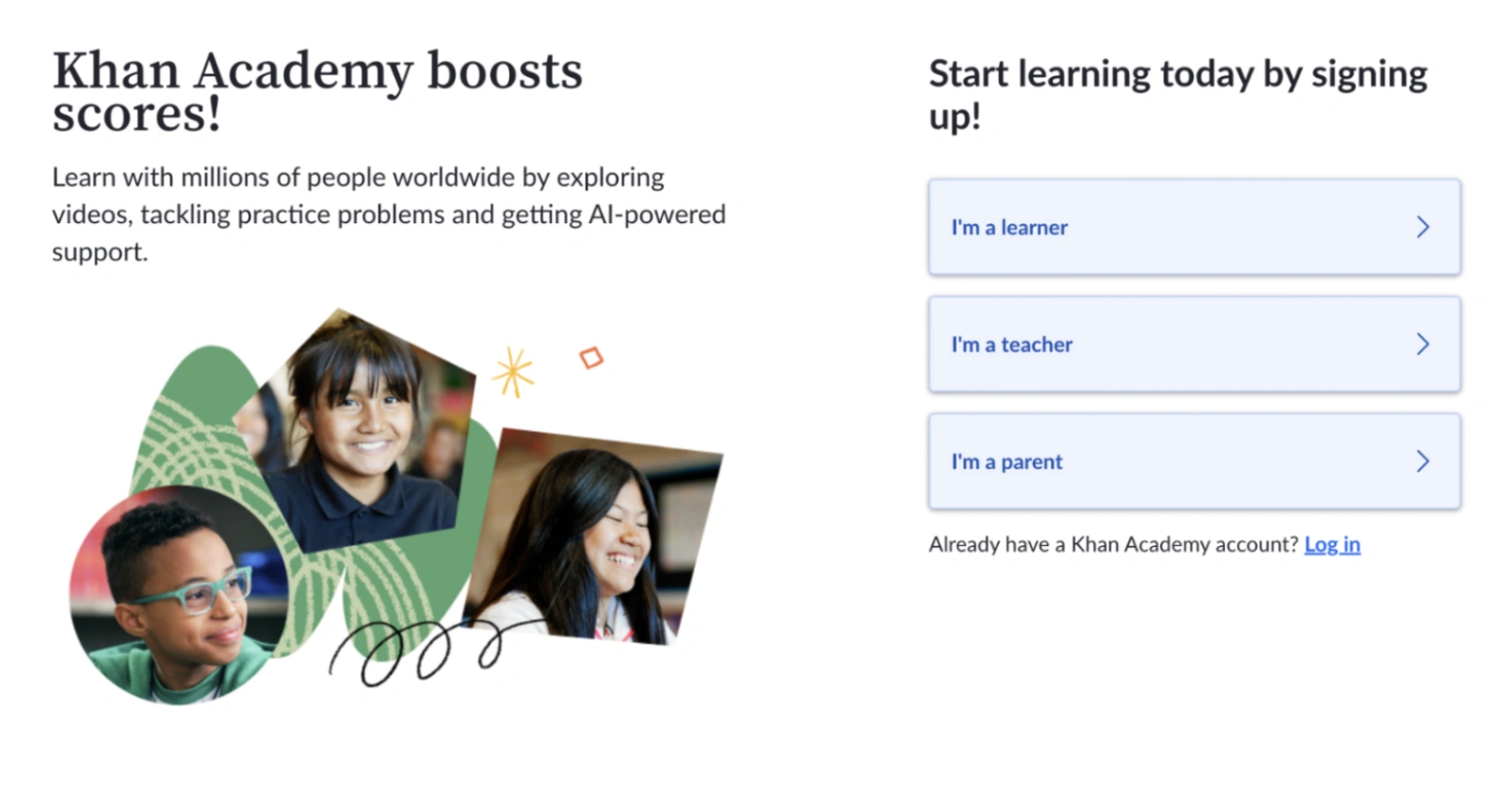 Khan Academy covers the entire core curriculum. For high schoolers, it’s helpful: students can learn concepts they didn’t fully understand in the classroom, practice problems, and work through SAT prep.
 Key Features


Pros and Cons
What Is Coursera?
Key Features
Pros and Cons
Which Platform Is Better for High School Students?
When Khan Academy Is the Better Fit for High School Students?
When Is Coursera the Better Fit for High School Students?
How to Choose the Right Platform for Your Teen?
Conclusion: Coursera vs Khan Academy Сomparison
Frequently Asked Questions
Does Khan Academy Offer Certificates?
Can You Use Coursera for Free?
Are Coursera Certificates Recognized by Colleges?
Is Khan Academy or Coursera Better for SAT and Test Prep?
Can High School Students Earn College Credit Through Coursera?
Do Students Still Need a Tutor if They Use Khan Academy or Coursera?




Math & reading from 1st to 12th grade
Looking for homework support for your child?

Choose kid's grade

Math & Reading for Grades 1–12
Build real confidence for your child with a Brighterly math or reading tutor.