Shakespeare Worksheets
Updated on October 13, 2026
Shakespeare worksheets help middle and high school students make sense of early modern English, complex characters, figurative language, dramatic techniques, and themes across Shakespeare’s plays and poetry. Brighterly’s combined worksheet collection includes practice for both Grade 8 and Grade 11, allowing students to move from accessible close reading and vocabulary work to more advanced literary analysis and evidence-based interpretation.
Shakespeare Worksheets PDF: Examples
Brighterly’s Shakespeare worksheets cover different ways of approaching plays and poetry. Students may decode unfamiliar vocabulary, paraphrase Shakespearean language, analyze quotations, explore rhyme and poetic devices, identify character motivations, or answer comprehension and literary analysis questions based on excerpts.
The difficulty can vary depending on the student’s grade and reading level, making the combined collection useful for introducing Shakespeare in middle school and developing more sophisticated literary analysis in high school.
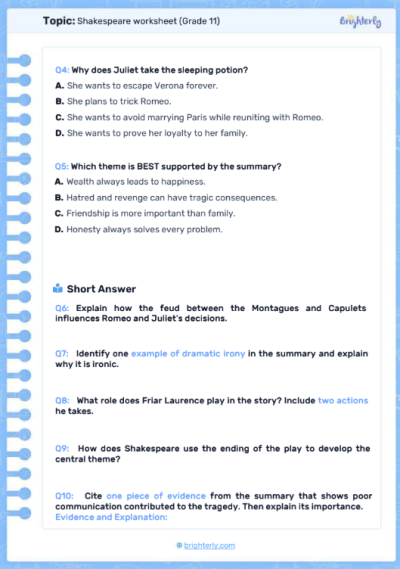
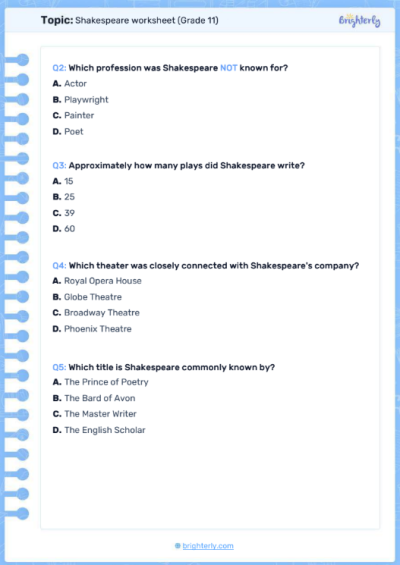
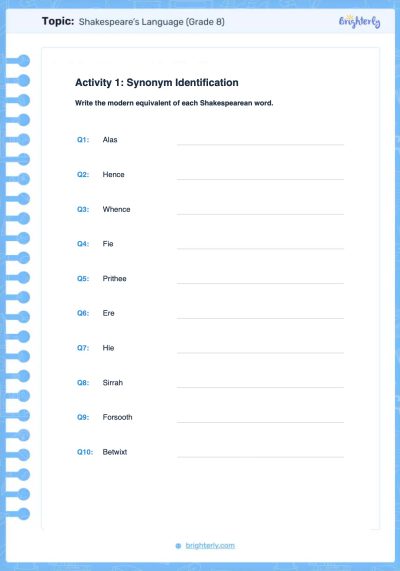
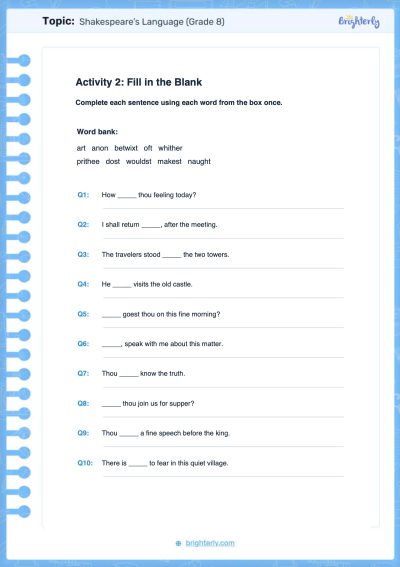
Shakespeare Worksheets for 8th Grade
Shakespeare worksheets for 8th grade help students approach challenging language without jumping immediately into advanced literary criticism. Learners can examine short excerpts, sonnets, quotations, and scenes while practicing vocabulary, figurative language, plot comprehension, character analysis, and interpretation. For example, students might read a short quotation, rewrite its meaning in modern English, and identify a metaphor or other literary device used in the passage. This level of practice helps eighth graders build the close-reading habits they will need when they encounter longer Shakespearean texts in high school.
For additional grade-level practice, students can use 8th grade reading comprehension worksheets or explore the full collection of 8th grade reading worksheets.
Shakespeare Worksheets for 11th Grade
Shakespeare worksheets for 11th grade move beyond basic comprehension to deeper analysis of plays, poetic structures, and dramatic choices. Students can examine character motivations, themes, diction, soliloquies, dramatic irony, figurative language, and the historical context surrounding a text. They may also support interpretations with specific evidence from a passage and explain how Shakespeare’s language contributes to tone or meaning. For example, an 11th grader might analyze how a character’s word choice in a soliloquy reveals an internal conflict, then cite lines that support the interpretation.
Students working at this level can reinforce analytical reading with 11th grade reading comprehension worksheets, citing evidence worksheets for 11th grade, and diction worksheets.
Shakespeare Worksheet [Free Download]
Download Brighterly’s free printable Shakespeare worksheets for Grade 8 and Grade 11 practice. The combined collection includes the PDFs from both worksheet sets, giving students access to activities ranging from introductory language and comprehension exercises to more advanced drama and literary analysis tasks.
Students can use the worksheets independently, for homework or review, or alongside a Shakespeare unit in class. Answer keys make it easier to check comprehension questions and revisit passages that require closer analysis.
If Shakespeare’s language continues to make comprehension difficult, a literature tutor can work through challenging passages and literary analysis skills one step at a time.


How strong are your reading skills?
A quick quiz can highlight comprehension and analysis skills that need practice
Students beginning with Shakespeare can strengthen their understanding of literary language through figurative language in poetry worksheets and poetic devices worksheets.
Older students writing literary analysis can move toward citing evidence worksheets for 11th grade and textual evidence worksheets for 11th grade to practice supporting interpretations with specific details from a text.
Benefits of Shakespeare Worksheets
- Make Shakespearean language easier to understand
Shakespeare’s vocabulary, word order, and expressions can make even a familiar story difficult to follow. Worksheets encourage students to slow down, examine individual lines, and paraphrase unfamiliar language in modern English.
This makes it easier to understand a scene before moving on to deeper questions about characters, themes, or literary devices.
- Build close reading skills
Shakespeare rewards careful reading because a short passage can reveal information about a character, conflict, theme, or mood. Students can annotate quotations, identify important words, and explain how details contribute to the meaning of a scene.
These close-reading habits are useful beyond Shakespeare and support comprehension of other complex literary texts.
- Analyze figurative and poetic language
Shakespeare frequently uses metaphors, imagery, wordplay, sound patterns, and other literary devices. Identifying these techniques helps students understand why a line communicates more than its literal meaning.
Students who need additional practice can use figurative language in poetry worksheets to review common devices before analyzing them in Shakespeare’s writing.
- Understand characters and their motivations
Characters often reveal their goals, fears, conflicts, and changing attitudes through dialogue and soliloquies. Worksheets can guide students to connect what a character says with what the character does and what happens later in the play.
At higher grade levels, students can support these interpretations with direct textual evidence rather than relying only on plot summary.
- Explore themes across plays and sonnets
Shakespeare’s works explore themes such as ambition, power, love, loyalty, jealousy, identity, and conflict. Students can track how a theme develops through specific characters, events, images, and language choices.
Comparing several passages can also help learners see how the same theme is presented differently across poems and dramatic works.
- Support literary analysis with evidence
Advanced Shakespeare study asks students not only to form an interpretation but also to prove it. Learners can select quotations, explain what they show, and connect the evidence back to a claim about a character, theme, or dramatic technique.
Brighterly’s citing evidence worksheets for 11th grade provide additional practice with this skill.
How to Use Shakespeare Worksheets
Start by choosing worksheets that match the student’s reading level. Grade 8 students may benefit from shorter excerpts, vocabulary support, paraphrasing, and direct comprehension questions before moving into interpretation.
For Grade 11 students, encourage annotation. Students can underline unfamiliar language, note literary devices, identify important shifts in tone, and mark lines that reveal character motivation or thematic development.
After completing a question, ask the student to return to the passage and point to the words that support the answer. This helps turn interpretation into evidence-based literary analysis.
Students can also read dramatic passages aloud. Hearing dialogue and rhythm can make sentence structure easier to follow and highlight how a character’s tone or language changes within a scene.
Frequently Asked Questions
What Grades Are Brighterly Shakespeare Worksheets For?
Brighterly’s combined Shakespeare worksheet collection includes activities for Grade 8 and Grade 11. Grade 8 practice focuses more on comprehension, vocabulary, figurative language, and introductory literary analysis, while Grade 11 materials move toward deeper interpretation, dramatic techniques, themes, diction, and textual evidence.
What Skills Do Shakespeare Worksheets Help Students Practice?
Shakespeare worksheets help students practice close reading, vocabulary, paraphrasing, reading comprehension, figurative language, character analysis, theme analysis, dramatic techniques, and using textual evidence to support interpretations.
How Are Grade 8 and Grade 11 Shakespeare Worksheets Different?
Grade 8 Shakespeare worksheets provide more accessible practice with excerpts, vocabulary, plot, characters, quotations, and literary devices. Grade 11 worksheets expect more independent analysis of complex language, dramatic structure, character motivation, themes, historical context, and evidence-based interpretations.
Do Brighterly Shakespeare Worksheets Include Answers?
Yes. Brighterly’s Shakespeare worksheet collection includes answer keys that students can use to check comprehension and analysis activities. Students should also return to the original passage when reviewing an answer so they can understand which textual details support the response.
How Can Students Make Shakespeare Easier to Understand?
Students can read a passage in small sections, define unfamiliar words, paraphrase each line in modern English, and read dialogue aloud. Once the literal meaning is clear, they can analyze characters, themes, figurative language, and dramatic techniques in greater depth.

Math & reading from 1st to 12th grade
Looking for homework support for your child?

Choose kid's grade

Math & Reading for Grades 1–12
Build real confidence for your child with a Brighterly math or reading tutor.