Number 2 Worksheets
Updated on August 31, 2026
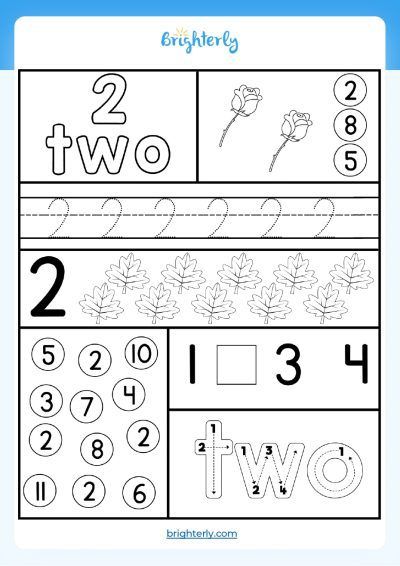
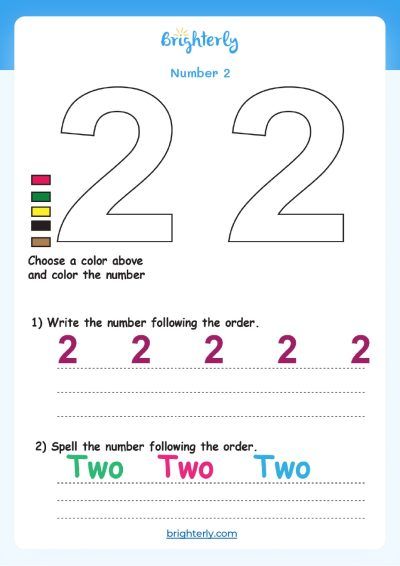
Number 2 worksheets help preschoolers build number sense by tracing, coloring, and counting exercises focused on the digit 2. These varied, hands-on activities cater to different learning styles, keeping kids engaged while strengthening early recognition and fine motor skills.
Number 2 worksheets: Examples
Here are some sample problems from Brighterly’s number 2 worksheets below.
Number 2 worksheets [free download]
Download Brighterly’s free printable number 2 worksheets in PDF format below, ready to print at home or in the classroom for hands-on practice.
Other number worksheets:


Help your child reach their full potential!
Answer a few quick questions about your child’s learning, and we’ll recommend next steps.
Printable number 2 worksheets for preschool: Benefits
#1: Building foundational learning
By understanding small single-digit numbers, kids build the foundational learning required to understand more complex math topics, equations and concepts.
#2: Improved physical skills
Tracing number 2 and coloring in aren’t just fun ways to learn – they also build physical skills in children, including fine writing skills, hand-eye coordination and fine motor skills.
#3: Encourages independent learning
With clear visuals and simple, repetitive tasks, number 2 worksheets let kids work through activities on their own with minimal guidance. This early independence helps build confidence and self-reliance before more structured schoolwork begins.
#4: Introduces early number comparison
Learning number 2 alongside numbers 1 and 3 helps kids start understanding order and quantity — recognizing that 2 is more than 1 but less than 3. This early comparison skill lays the groundwork for counting sequences and number lines later on.
#5: Supports multiple learning styles
By combining coloring, tracing, and counting activities in one worksheet, kids can engage with the number 2 in whichever way suits them best. This variety keeps learning fun and ensures the concept sticks, regardless of a child’s preferred learning style.
Practice: Number 2 worksheets and solved math tasks
Our number 2 worksheets for preschool include activities kids can use to test their knowledge. They can also take our practice test questions to further test themselves. Take our practice test questions now.
FAQ


Troubles with Numbers?
- Is your child finding it difficult to understand the concept of numbers?
- An online tutor could be the answer.
Choose kid's grade

Does your child need additional support with numbers concepts? Start learning with an online tutor.
Book FREE lesson